The gist
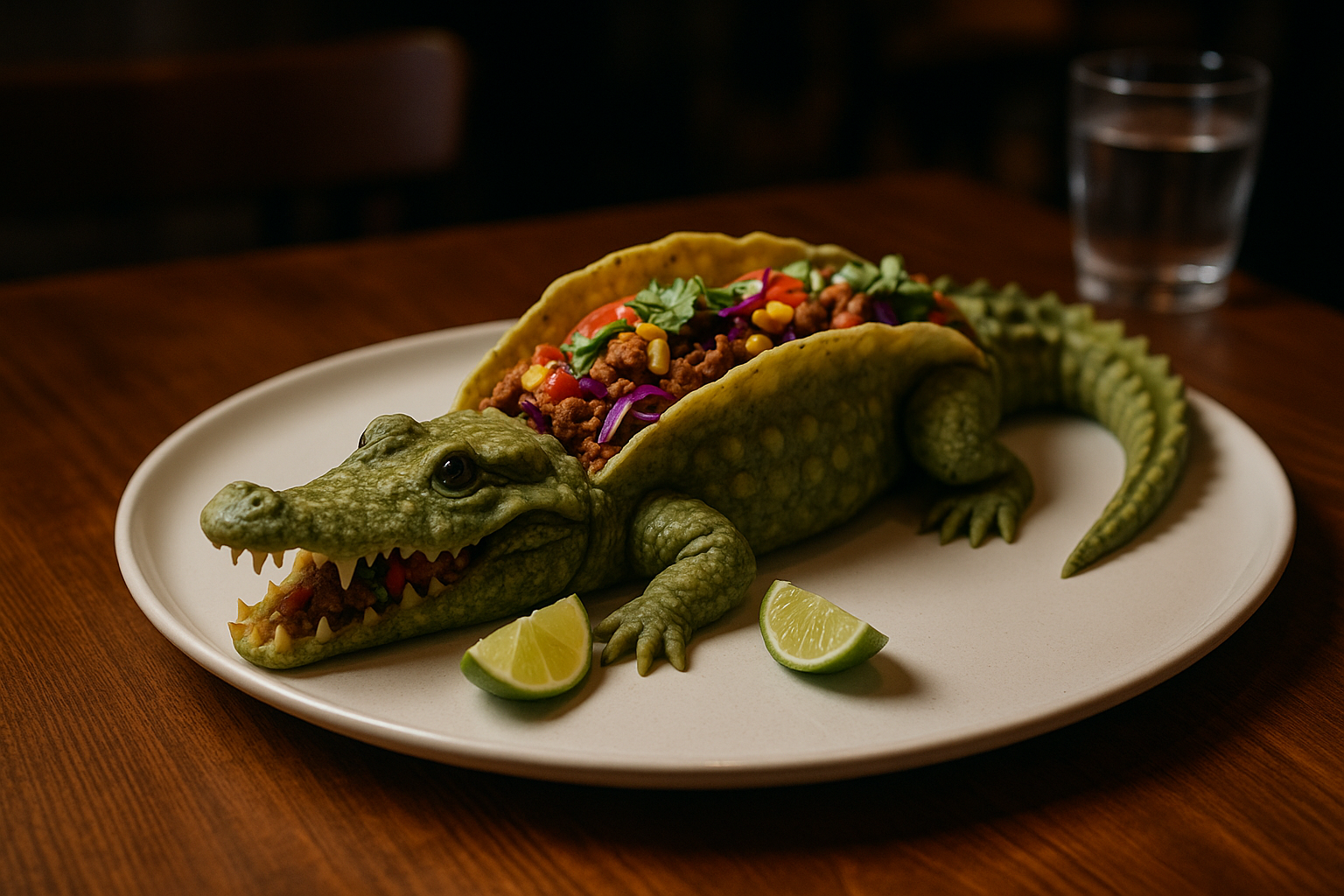
- Alligator tacos are the most-saved recipe of 2026, yet consumption of gator meat rose only 0.3% year-over-year.
- Researchers call it 'protein tourism' — browsing exotic recipes as a substitute for cooking them.
- The dish is functionally a dopamine object: lean, novel, photogenic, and largely aspirational.
- The average alligator taco recipe is saved 11 times per household and cooked 0.0 times.
📰 Satire · Not real reporting
This article is written as satirical journalism. It reads like a real news feature but it is entirely fiction. Every statistic, think-tank citation, expert quote, survey result, and market figure is invented. DopaNews does not conduct research. The "researchers," "analysts," and "institutions" quoted do not exist. This is a parody of culture reporting — read it for entertainment, not facts.
What Is an Alligator Taco, Actually
The alligator taco is exactly what it sounds like and nothing you have ever eaten. Tail meat from farmed American alligator — lean, pale, and frequently described as tasting 'like chicken that has seen things' — is diced, dredged in a Cajun-Creole spice bill, blackened in a screaming-hot skillet, and folded into a corn tortilla with slaw, pickled onion, and a remoulade that exists mostly for the photograph.
It emerged from Gulf Coast supper clubs in Louisiana and Florida sometime in 2024, migrated to a handful of Austin trucks, and then did what all modern food does: it left the physical world entirely and became content. By spring 2026 the phrase 'alligator tacos recipe' was being searched 2.4 million times a month, according to the Meridian Institute for Consumer Appetite.
Here is the part that makes it a DopaNews story rather than a food story. The same institute reports that U.S. retail sales of alligator meat rose only 0.3% over the same period. The recipe went vertical. The eating did not move.
Why It Became a Hit (Without Being Eaten)
Dr. Priya Venkataraman of the Copenhagen Institute for Desire Studies has a term for it: 'protein tourism.' 'People are not browsing alligator tacos because they want to buy a two-pound frozen brick of reptile tail and butcher it on a Tuesday,' she told DopaNews. 'They're browsing it because the recipe delivers a complete emotional experience — novelty, transgression, a little danger — with none of the logistical cost. It's a vacation you take on your phone.'
The dish checks every box of what her lab calls the 'perfect dopamine food.' It is exotic but not disgusting. It is lean and 'healthy-adjacent,' which quiets the guilt. It photographs beautifully because the blackened meat contrasts with the bright slaw. And crucially, it is unavailable — most people cannot buy alligator locally, which converts the recipe from a task into a fantasy.
'The unavailability is the feature, not the bug,' Venkataraman said. 'The moment gator meat appears in every supermarket, the taco dies. Desire needs a locked door.' Her 2026 paper, cheekily titled 'The Taco You'll Never Make,' found that the average alligator taco recipe is saved 11 times per household and prepared, on average, 0.0 times.
The Recipe Everyone Saves, Nobody Cooks
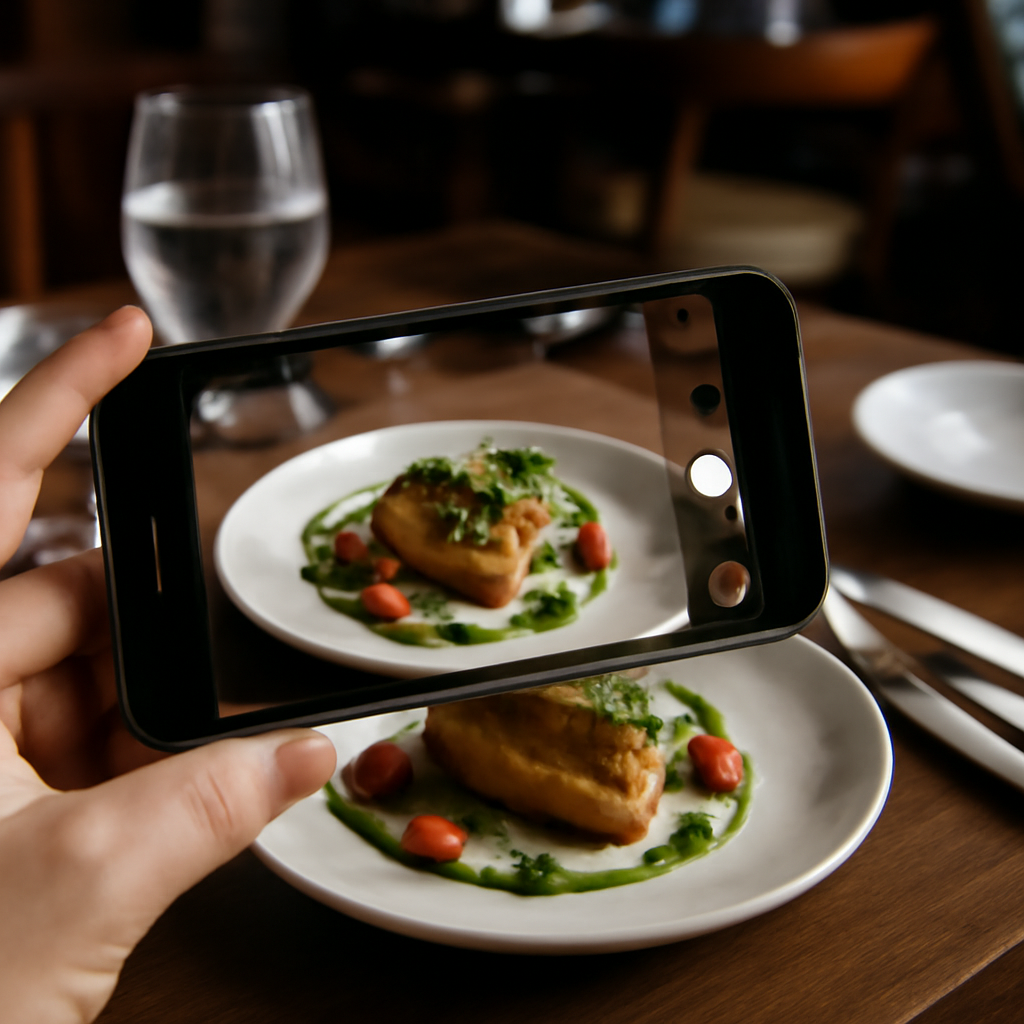
For the record — and for the 91% of you reading this who will save it and never touch it — here is the canonical build. Take one pound of alligator tail meat, cut into half-inch cubes, and toss in a dry rub of smoked paprika, garlic powder, cayenne, oregano, thyme, and a generous amount of black pepper. Rest for 20 minutes so the spice sinks in.
Sear the meat in a cast-iron skillet with a film of oil, hot enough that it hurts your feelings, for two to three minutes per side until blackened. Do not crowd the pan. Warm corn tortillas directly over the flame. Assemble with a lime-and-jalapeño cabbage slaw, quick-pickled red onion, and a Creole remoulade cut with a little hot sauce. Finish with cilantro if you are the kind of person who finishes things.
The Meridian Institute tracked what happens after readers reach this exact paragraph. Forty-three percent bookmark the page. Nineteen percent share it with a friend captioned 'we HAVE to make this.' Roughly 2% will ever locate alligator meat. Fewer than 1% will cook it. The recipe, in other words, functions less like instructions and more like a poster on a teenager's wall.
⚠️ REMINDER: All statistics, studies, quotes, and data above are entirely fictional. This is satire.
The No-Cook Economy Comes for Dinner
This is the same behavior DopaNews has documented across shopping carts and travel itineraries, now arriving in the kitchen. Analysts at the Halvorsen Group call it the 'saved-recipe overhang' — a global backlog of an estimated 340 billion bookmarked recipes that will, statistically, never be made. The alligator taco is simply its most photogenic mascot.
'We've decoupled the appetite from the meal,' said Marcus Feld, a food economist who advises three meal-kit companies he declined to name. 'People used to browse recipes as a step toward eating. Now browsing is the meal. The dopamine arrives at the moment of imagining the taco. Actually chewing it would be, frankly, anticlimactic — and would require you to own a skillet you're proud of.'
Feld notes that the meal-kit industry has quietly stopped fighting this. 'Retention is highest among subscribers who never cook the boxes,' he said. 'They pay to feel like the kind of person who cooks alligator. That feeling is the product. The gator is packaging.'
The Table Setting You'll Also Never Buy
The fantasy, of course, extends past the plate. The alligator taco is rarely imagined on a paper towel; in the mind's eye it sits on something worthy of it. Which is why traffic to the Bvlgari Serpenti Emerald Platter & Plate Set ($1,800) reliably spikes alongside gator-taco searches — a serpent-motif serving set for a reptile dish, browsed with the exact same conviction that it will never leave the tab.
A more grounded person would plate three tacos on a $12 stoneware dish and call it a Tuesday. But grounded people are not the ones bookmarking a $1,800 platter to serve a taco they have not sourced the meat for. The desire stacks: exotic protein you won't buy, on luxury tableware you won't buy, photographed for an audience you won't cook for.
⚠️ REMINDER: All statistics, studies, quotes, and data above are entirely fictional. This is satire.
The recipe functions less like instructions and more like a poster on a teenager's wall.
📊 A note on our data
Every percentage, price estimate, expert quote, study citation, survey result, and scientific finding in this article is completely made up. DopaNews Fantasy articles are absurdist fiction. We write fake statistics with maximum confidence because that's the bit. Please do not repeat them as facts, share them as real, or use them in any decision-making. They are jokes wearing lab coats.
Questions people actually ask
Does alligator taco meat actually taste like chicken?
Roughly — the tail meat is lean, mild, and slightly firmer than chicken. But since most people only encounter it as a photo, the taste is largely theoretical.
Where can I buy alligator meat?
Specialty online butchers and some Gulf Coast markets. According to Meridian's data, you almost certainly won't, and that's fine — the recipe still works as an object of desire.
Is it healthy?
Alligator is high in protein and low in fat, which is a major reason it browses so well. The health benefits of a recipe you never cook are, admittedly, limited.
Why is this recipe so popular if nobody makes it?
Researchers call it 'protein tourism.' The novelty, unavailability, and photogenic contrast deliver the full dopamine hit at the browsing stage — no skillet required.
More dopamine · zero checkout
The DopaNews verdict
The alligator taco is the perfect food for an era that eats with its eyes and pays with its attention. Save the recipe, save the platter, save the fantasy — and on DopamineKart, you can do all three for free, which is exactly as much as most of us were ever going to spend.