The gist
- Underground megacities are trading at $18,000–$42,000 per square foot, outpacing Manhattan penthouses.
- Developers pitch them as 'space stations without the vomiting,' citing stable gravity and real showers.
- The largest project, Terravault One, spans 11 vertical levels and houses a functioning vineyard on Sublevel 6.
- Waitlists now exceed four years, with escrow held in gold, art, and — for two buyers — racehorses.
🚀 You are reading DopaNews Fantasy Edition.
This article is 100% fictional satire. Every statistic, study, expert quote, price, product spec, and scientific claim is made up for entertainment. None of it reflects reality. Nothing here is for sale, investable, or actionable in any way. Read it like you'd watch a comedy sketch — for the laughs, not the facts.
All characters, organizations, research institutions, and data cited in this article are fictional or used satirically. Any resemblance to real studies is coincidental.
The Depth Is the New Altitude
While the rest of us argued about whether a rocket should be reusable, the world's wealthiest quietly redirected their infrastructure budgets straight down. According to the newly published Deep Asset Index, 37 billionaires have closed on residential units in purpose-built underground cities since January, with a combined transaction volume of $61 billion.
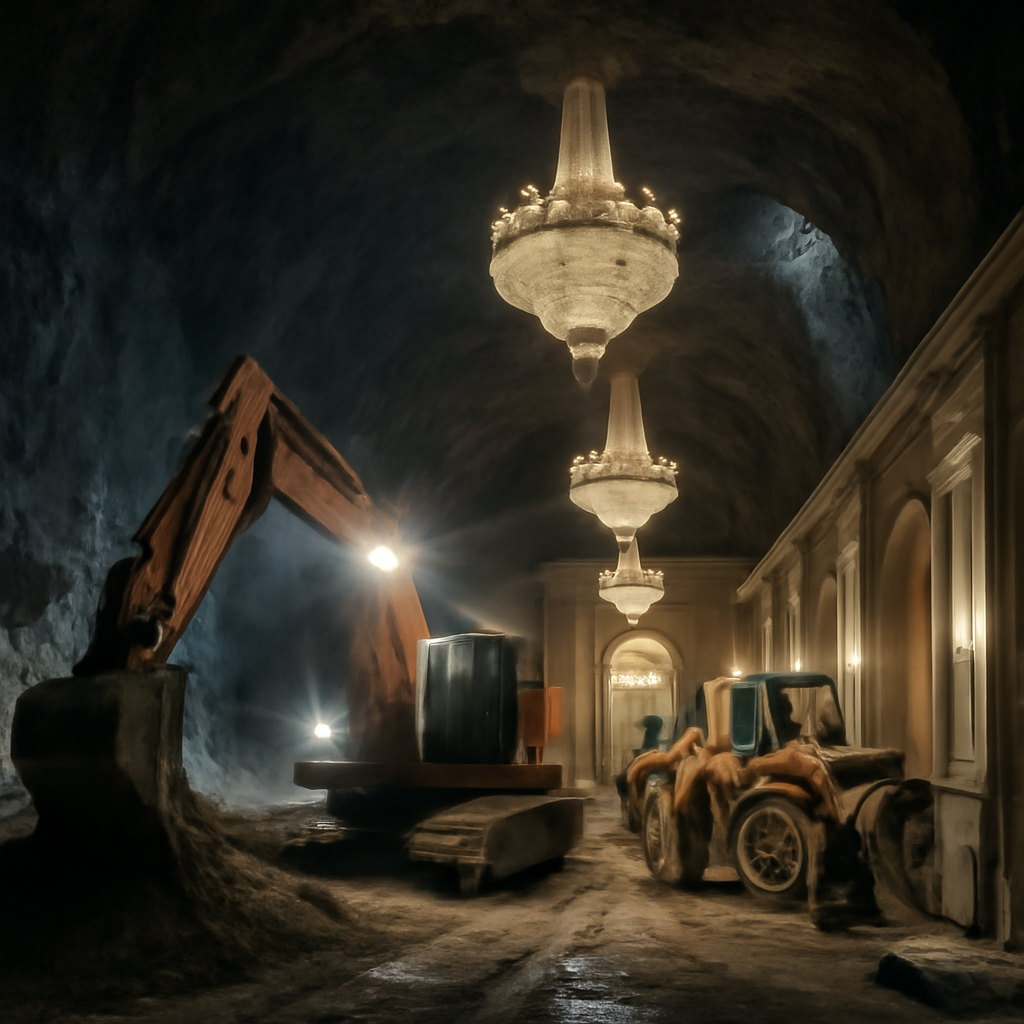
The flagship development is Terravault One, carved into a granite batholith 1,400 feet beneath the Nevada high desert. It descends across 11 engineered levels, each sealed by 9-foot blast doors and connected by a magnetic-rail funicular the developer insists on calling 'the Descender.' Top-level studios start at $14 million; the four 'Bedrock Estates' on Sublevel 11 sold within nine days for a reported $410 million apiece.
'Altitude was always a vanity metric,' says Priya Vanden-Holt, lead architect at the firm Chthonic Living. 'Anyone can go up. Going down — with breathable, humidified, geothermally regulated air — that's real engineering. That's a legacy asset.'
Why Underground Beats Orbit
The pitch is brutally practical. Space stations, for all their glamour, come with what industry insiders delicately term 'the fluid problem.' Champagne globs into spheres. Showers require vacuum hoses. And, per one leaked orbital-hospitality memo, 'zero-gravity fine dining resulted in a 74% garnish loss rate.'
Underground cities suffer none of this. Gravity is a stable, dependable 1G. Water flows downhill exactly as God and plumbers intended. And the ambient temperature at depth hovers around a constant 62°F year-round, meaning HVAC costs are a rounding error compared to keeping a tin can alive at -270°C in the vacuum of space.
'A space station is a $200 billion way to develop chronic nausea,' says Dr. Elias Frøm, a subterranean systems consultant. 'Our residents get a wine cellar that's also, technically, the entire world. The vineyard on Terravault's Sublevel 6 produces 900 cases a year under artificial sun. You cannot grow a Pinot in low Earth orbit. We've asked.'
The Amenities Are Aggressively Insane
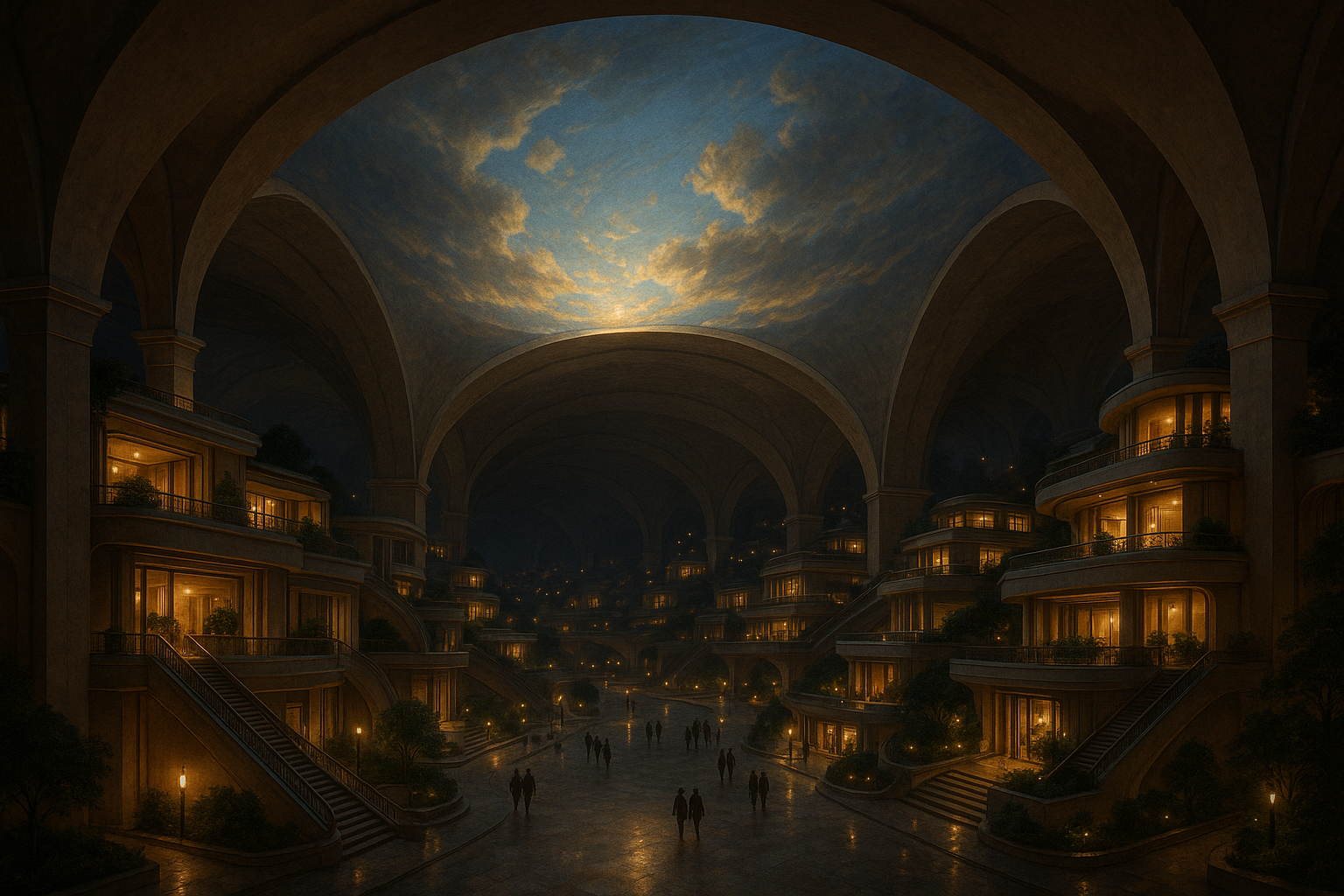
Terravault One's amenity manifest reads like a fever dream written by a concierge. Sublevel 3 houses a 'sky simulation atrium' with a 400-foot ceiling and a programmable weather system capable of producing a gentle drizzle, a dramatic sunset, or, per resident request, 'the exact light of a September afternoon in Provence.'
Sublevel 8 is dedicated entirely to what the brochure calls 'restorative infrastructure': a salt-water tidal pool that mimics real lunar tides, a hypoxic training gym, and a 'Silence Suite' rated at 20 decibels below the human hearing floor, which two residents have reportedly found unbearable and one has called 'the most expensive room I've ever fled.'
There is also, inevitably, a members-only restaurant. 'Bedrock' seats 22 and is helmed by a chef who signed a nine-year non-surface contract. The tasting menu runs $3,400 and features ingredients grown, raised, or fermented entirely below ground, including a controversial 'cave-aged everything.'
⚠️ REMINDER: All statistics, studies, quotes, and data above are entirely fictional. This is satire.
The Money Is Getting Weird
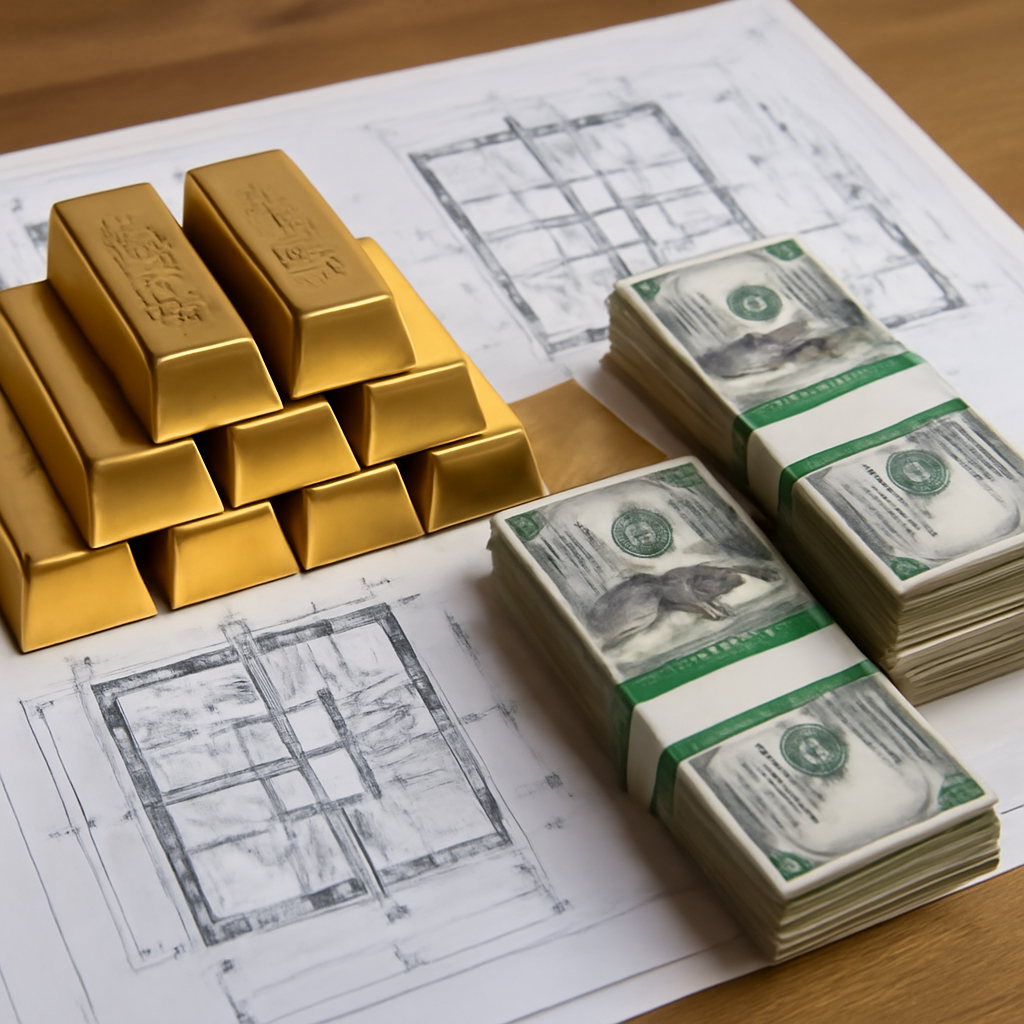
Standard mortgages don't really apply when the collateral is 1,400 feet underground and the buyer has more liquidity than a small nation. Escrow at Terravault has reportedly been settled in gold bullion, a Basquiat, a portfolio of water rights, and — in two documented cases — thoroughbred racehorses, one of which now technically resides on Sublevel 6 in a bespoke geothermal stable.
Pricing sits between $18,000 and $42,000 per square foot depending on depth, with the counterintuitive premium going to deeper units. 'Depth is prestige,' explains vanden-Holt. 'Anyone can afford Sublevel 2. Sublevel 11 means you survive things. That's what you're really buying — a floor beneath the apocalypse.'
The waitlist now exceeds four years, and a secondary market has emerged. One never-occupied Sublevel 9 unit flipped in April for a reported 60% premium, purchased sight-unseen by a buyer whose representative asked only whether the blast doors were 'certified for a bad decade.'
The Skeptics (There Are Some)
Not everyone is charmed. Urban sociologist Marta Behn calls the trend 'gated communities that have finally admitted what they always wanted to be — a hole.' She notes that the entire premise depends on being able to get in and out, and that a magnetic funicular has, historically, been a thing that can break.
There's also the psychological dimension. A pilot residency at a smaller Utah facility ended early when three of five test residents reported what clinicians termed 'unignorable ceiling awareness.' Terravault's response was to add the sky-simulation atrium and, tellingly, a full-time 'depth wellness' therapist on retainer.
Developers, for their part, remain serene. 'People said the same thing about skyscrapers in 1900,' says Frøm. 'Up, down — it's all just aggressive vertical living. We simply chose the direction that has a roof over it.'
⚠️ REMINDER: All statistics, studies, quotes, and data above are entirely fictional. This is satire.
A space station is a $200 billion way to develop chronic nausea. We give you a Pinot cellar that's also the entire world.
📊 A note on our data
Every percentage, price estimate, expert quote, study citation, survey result, and scientific finding in this article is completely made up. DopaNews Fantasy articles are absurdist fiction. We write fake statistics with maximum confidence because that's the bit. Please do not repeat them as facts, share them as real, or use them in any decision-making. They are jokes wearing lab coats.
Questions people actually ask
How deep are these underground cities?
Terravault One's flagship reaches 1,400 feet, with 11 engineered levels. Rival projects in Utah and the Swiss Alps range from 600 to 2,000 feet down.
What does an underground unit cost?
Between $18,000 and $42,000 per square foot. Entry studios start around $14 million; the deepest 'Bedrock Estates' have sold for over $400 million.
Why underground instead of a space station?
Stable 1G gravity, real showers, a constant 62°F temperature, and the ability to grow food and wine. Also, nothing floats into your dinner.
Can you actually see the sun?
Sort of. High-end developments pipe filtered sunlight and run programmable 'sky simulation' atriums that reproduce specific times of day and weather.
More dopamine · zero checkout
The DopaNews verdict
The billionaires have decided the future isn't up — it's down, at a stable 62°F with a cave-aged wine list. You may never afford a Sublevel 11 blast-door estate, but you can browse every over-engineered fantasy of them for free on DopamineKart, no gold bullion escrow required.