The gist
- Fine dining is 20% ingredient, 80% restraint, whitespace, and lighting.
- Microgreens, edible flowers, and flaky salt are the cheapest 'expensive' signals in any grocery store.
- Buy a big white plate and a squeeze bottle before you buy fancier food.
- Texture contrast (crunch on soft) reads as 'someone trained for this.'
The whole trick is negative space (and a $12 plate)
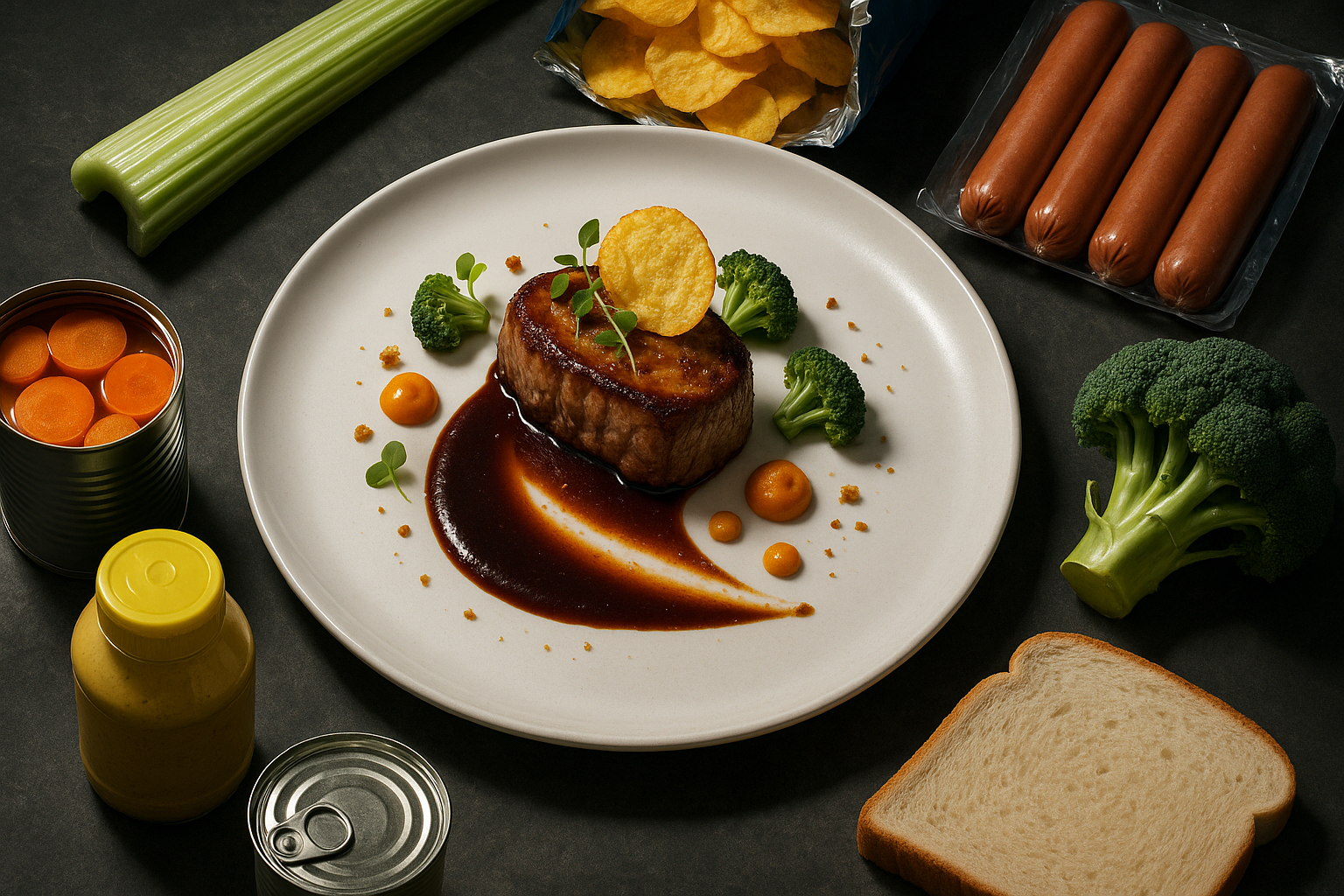
Before we touch a single ingredient: the Michelin look isn't the food, it's the framing. A giant white plate with a small, precise thing in the middle reads as 'this cost $60.' A normal-sized plate covered in food reads as 'Tuesday.'
Get a 12-inch matte white coupe plate. IKEA's OFTAST or GODMIDDAG lines run about $3–$8 a plate, and CB2's Marin white dinnerware sits around $10–$15 each. That's the single highest-ROI purchase in this entire article.
Then buy one plastic squeeze bottle (a two-pack is roughly $6 on Amazon or in any restaurant-supply aisle). Sauce dots and swooshes are the fastest visual shorthand for 'plated by a professional.' We'll use it constantly.
Microgreens: the $4 garnish that costs a restaurant nothing and signals everything
Microgreens are the single most efficient fine-dining tell. A clamshell of pea shoots, radish, or micro basil runs $3.50–$5 at Whole Foods, Trader Joe's, or a decent Kroger. Three sprigs placed with intention on top of anything — eggs, soup, a scoop of mashed potato — instantly reads 'chef.'
The rule: fewer than you think, and stand them up rather than scattering. A tiny nest of five leaves at an angle beats a fistful thrown across the plate. Restaurants use a pinch per $40 dish. You're not being stingy, you're being trained.
Flaky salt and good olive oil: the finish that photographs like money
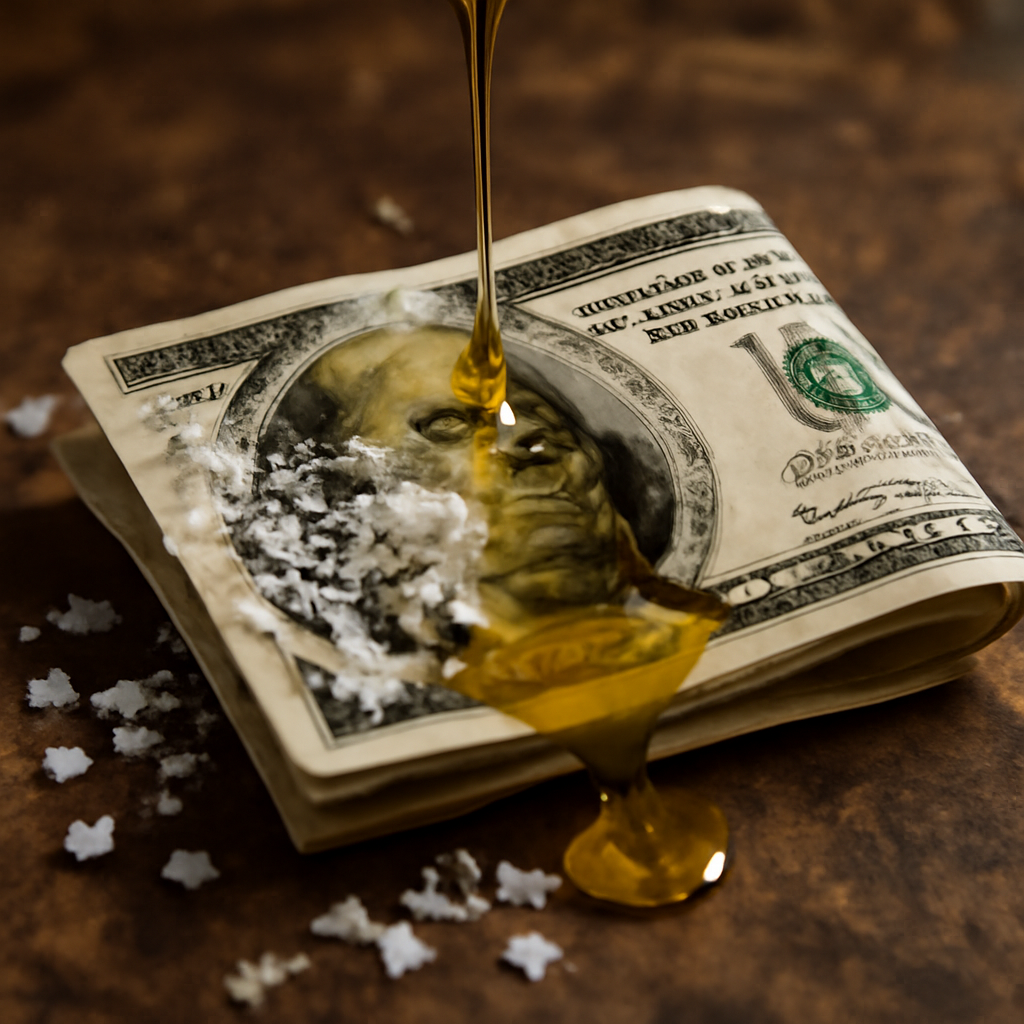
Maldon flaky sea salt is about $6–$8 for a box that lasts a year, and those visible salt flakes on top of a steak, a piece of fish, or a chocolate dessert are pure high-end signaling. It's the seasoning equivalent of a designer logo, except it also tastes good.
Pair it with a finishing olive oil — you don't need $40 bottles. California Olive Ranch or Trader Joe's Greek Kalamata run $10–$14 and give you that glossy final drizzle. A thin ribbon of green-gold oil over a white plate is the whole aesthetic in one gesture.
Edible flowers and a single scallop: the plate that fakes a $48 course
A clamshell of edible flowers (pansies, violas, borage) runs $4–$6 seasonally at Whole Foods and better grocery stores. Two or three on a plate and you've crossed into tasting-menu territory. They're mostly flavorless — that's fine, they're doing visual work.
For protein, sea scallops are the affordable luxury MVP: roughly $18–$24 a pound, and one large seared scallop per plate is genuinely how restaurants serve them. Sear hard, plate one, add three sauce dots, one flower, done. You've built a $48 course out of maybe $6 of ingredients.
Beets, radishes, and citrus: color you can slice into art
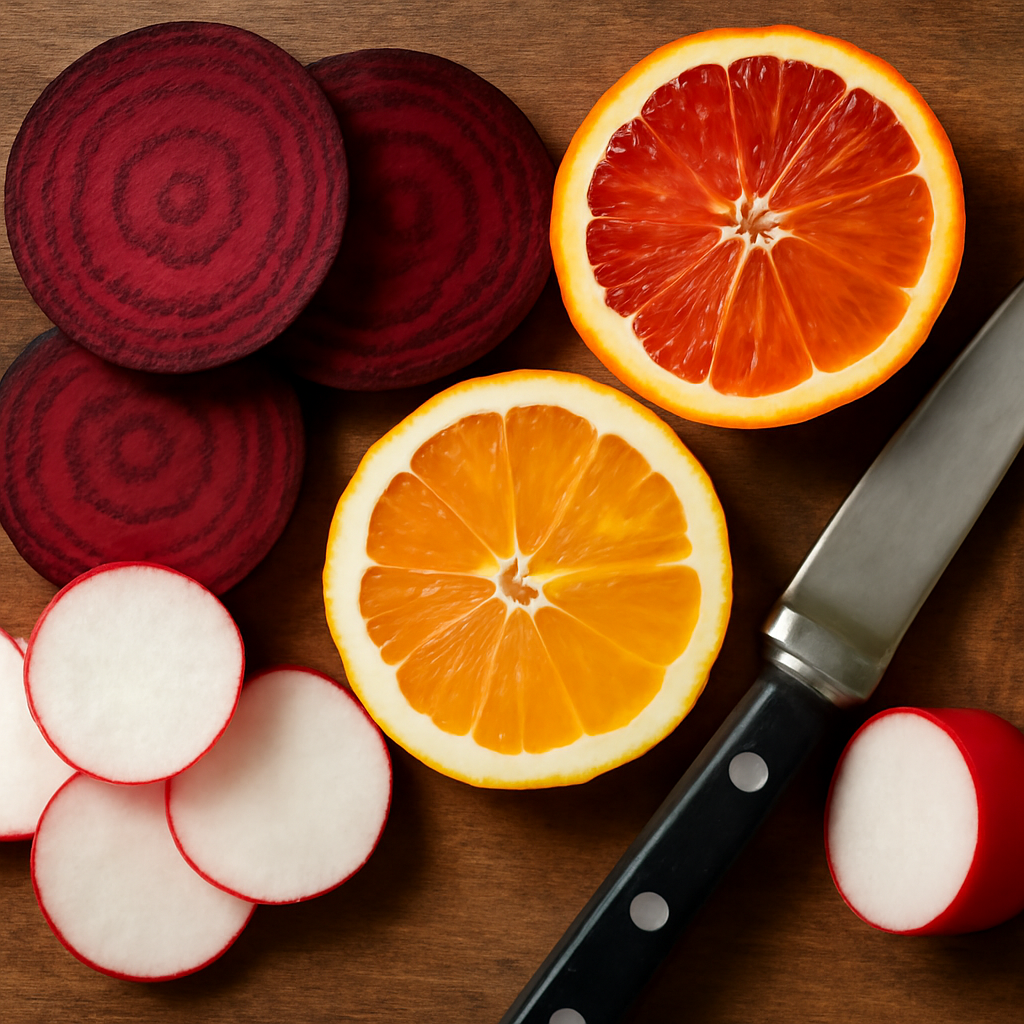
Fine dining loves anything you can slice paper-thin and fan out. Watermelon radishes ($3–$5 a bunch) are pink-and-green inside and look engineered. Candy-stripe (Chioggia) beets, roasted and sliced, give you those hypnotic concentric rings for about $3.
Supreme a blood orange or a grapefruit — cut out the segments free of membrane — and you've got glossy jewels that anchor a plate. This is knife-work, not money. A $2 citrus and ten minutes buys you something that looks like it came with a tweezers-wielding cook.
Skip the fantasy cart, upgrade your kitchen instead
It's very tempting to browse DopamineKart and drop a Fendi FF Monogram Air Circulator Fan ($1,550) into your cart to 'set the mood' while you plate. It's beautiful. It is a $1,550 fan. It will not make your scallop look better.
Here's the honest math: everything above — the plate, the squeeze bottle, microgreens, flaky salt, finishing oil, edible flowers, scallops, radishes, and citrus — comes to well under $80 total. That's less than a single fantasy tee, and it actually produces dinner.
Fine dining isn't expensive food. It's cheap food, a big white plate, and the discipline to use three leaves instead of thirty.
Questions people actually ask
Do I really need microgreens or can I use regular herbs?
Regular herbs work — pick small mint, basil, or cilantro leaves and place a few standing up. Microgreens just look more 'engineered.' Either beats a chopped scatter.
What's the one thing worth spending slightly more on?
The plate. A big matte white coupe plate ($10–$15) transforms every dish you'll ever make. Buy two or three.
How do I get clean sauce dots without a fancy tool?
A $3 plastic squeeze bottle and a slightly thickened sauce (reduce it, or whisk in a little butter). Dot, then drag a toothpick or spoon tip through for the swoosh.
More dopamine · zero checkout
The DopaNews verdict
The Michelin look is a magic trick, and the props cost less than $80 at any decent grocery store. Browse the Fendi fan and the fantasy cart on DopamineKart for the dopamine — then close the tab, buy a white plate and some microgreens, and actually eat like it.