The gist
- No-checkout food apps let users 'order' meals they never receive — and report feeling less hungry afterward.
- NomNomNever, DopamineKart's food vertical, logged 4.1 million 'phantom orders' in its first quarter with a 0% fulfillment rate by design.
- Researchers call the effect 'satiety by simulation' — the brain's reward loop closing before a bite is taken.
- Delivery platforms are quietly studying the trend as menu-scrolling starts to replace actual eating.
📰 Satire · Not real reporting
This article is written as satirical journalism. It reads like a real news feature but it is entirely fiction. Every statistic, think-tank citation, expert quote, survey result, and market figure is invented. DopaNews does not conduct research. The "researchers," "analysts," and "institutions" quoted do not exist. This is a parody of culture reporting — read it for entertainment, not facts.
The Meal You Never Order
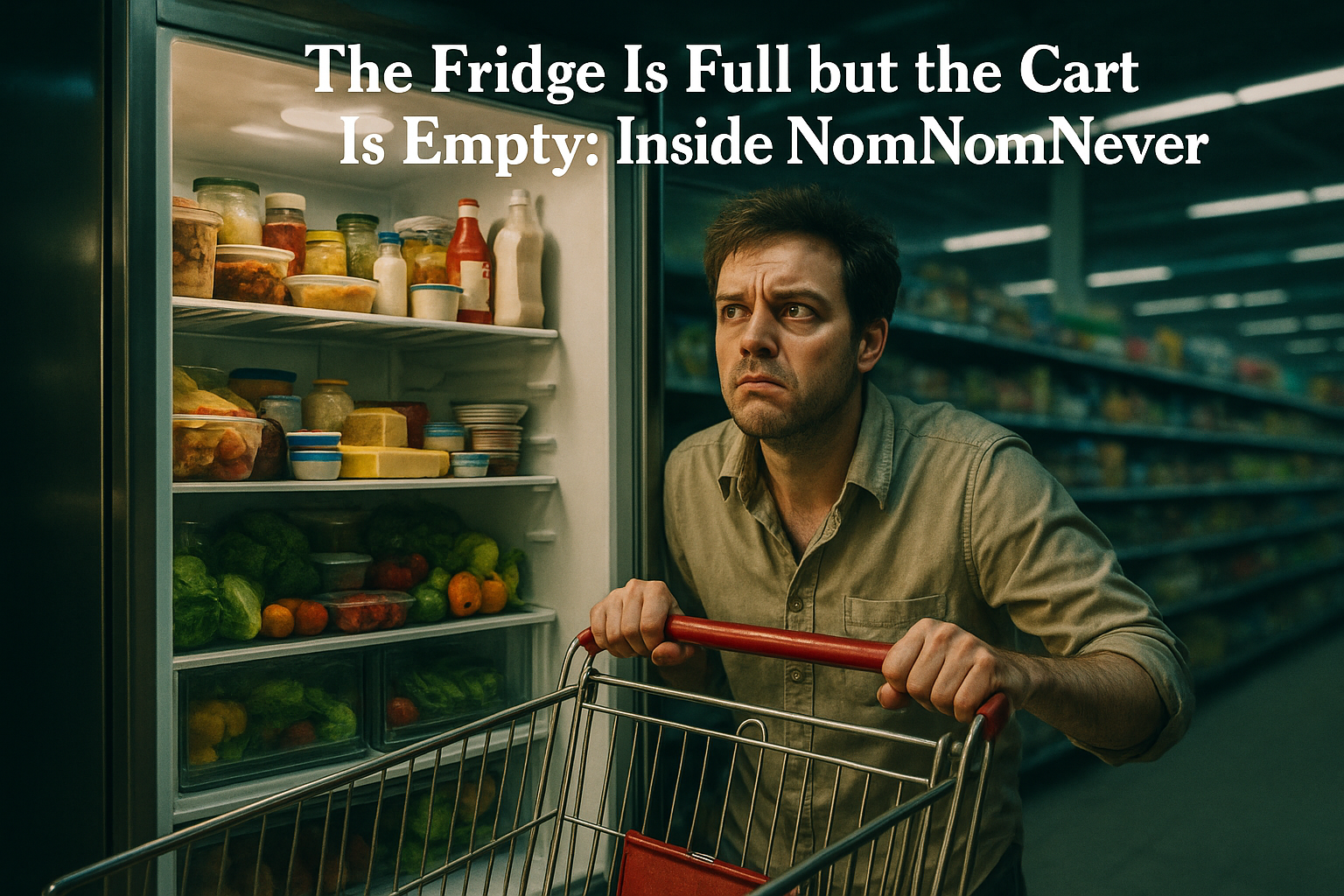
It is 1:47 a.m. in Rotterdam, and Sanne de Vries has assembled the perfect midnight feast. A double smash burger, extra pickles. Loaded fries. A matcha soft-serve for after. Her cart total reads €38.50. Then she does what a growing number of users do at exactly this moment: she closes the app, sets down her phone, and goes to sleep hungry — but somehow satisfied.
De Vries is one of an estimated 11 million monthly users of NomNomNever, the food vertical of DopamineKart.com, a platform built on a single premise so counterintuitive it borders on the theological: you may browse everything, and you may buy nothing. There is no checkout button. There has never been a checkout button. The 'Place Order' key, when tapped, gently fades and displays the word 'Savored.'
In its first fiscal quarter of 2026, NomNomNever recorded 4.1 million completed carts and a fulfillment rate of precisely zero percent — a figure the company lists in its investor deck not as a failure but as a core deliverable.
Satiety by Simulation
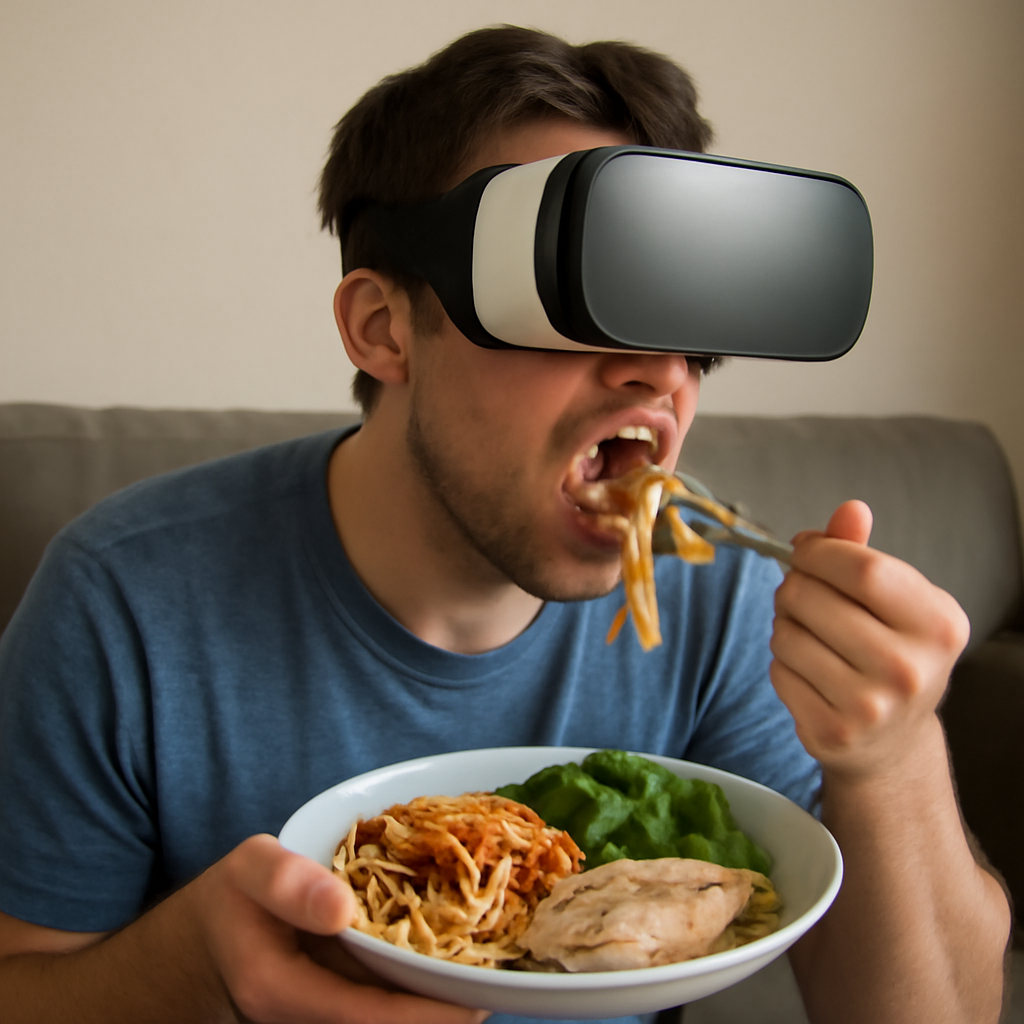
The science, such as it is, is being written in real time. Dr. Priya Anand of the Lisbon Institute for Appetitive Behavior has spent eighteen months studying what she calls 'satiety by simulation' — the observation that browsing food to the point of committed selection can trigger a partial dopaminergic reward cycle, dulling the craving it was meant to answer.
'The hunger loop is not purely metabolic,' Anand explained over a video call, eating nothing. 'A significant portion is anticipatory. The brain lights up during selection, curation, and the moment of intended purchase. NomNomNever intercepts that loop at its peak and simply... does not close the transaction. The user experiences 62% of the reward at 0% of the intake.'
In a cohort of 2,400 users tracked by the Institute, 71% reported reduced late-night eating within six weeks. Average self-reported grocery spending fell 19%. One participant, a 34-year-old accountant, reported that he had 'eaten' at a Neapolitan pizzeria every evening for two months and lost four kilograms.
The Phantom Hunger Market
The numbers are pulling in serious capital. The consultancy Meridian Dopamine Partners values the global 'appetite economy' — apps monetizing desire rather than delivery — at $6.3 billion, projecting $22 billion by 2029. NomNomNever's revenue comes not from food but from what it calls 'craving analytics,' anonymized data on what humanity wants to eat at 2 a.m. but ultimately doesn't.
'We are the largest food company on Earth that has never touched food,' said fictionalized CEO Marcus Weilenmann in a keynote at the SEOUL DESIRE summit in June. 'We have no kitchens, no drivers, no cold chain, no waste. Our margins are the highest in the industry because our product is the absence of the product.'
Traditional delivery giants are watching with unease. An internal memo from a major European aggregator, leaked to DopaNews, describes menu-scrolling behavior 'migrating from intent to entertainment,' warning that 8% of app sessions now end in what it grimly terms 'zero-conversion satisfaction.'
⚠️ REMINDER: All statistics, studies, quotes, and data above are entirely fictional. This is satire.
Digital Minimalism Meets the Empty Plate
For its adherents, NomNomNever slots neatly into the wider ethos of the no-checkout economy — a movement that treats desire itself as the consumable, and ownership as an afterthought best avoided. On DopamineKart, people covet handbags they never carry and cars they never drive. NomNomNever simply applies the doctrine to lunch.
'It's the cleanest form of the practice,' argues Dr. Henrik Løvaas of the Oslo Center for Restraint Studies. 'A watch you don't buy still sits in a warehouse somewhere. A meal you don't order was never cooked. The desire is fully renewable and infinitely biodegradable. It is, in a sense, the most sustainable dinner imaginable.'
Critics are less charmed. Nutritionist Gabriela Ferreira warns that the apps risk 'aestheticizing hunger' and severing eating from the body's actual signals. 'We spent a century convincing people to listen to their appetite,' she said. 'Now we've built a business model that congratulates them for ignoring it.'
What Happens When Nobody Bites
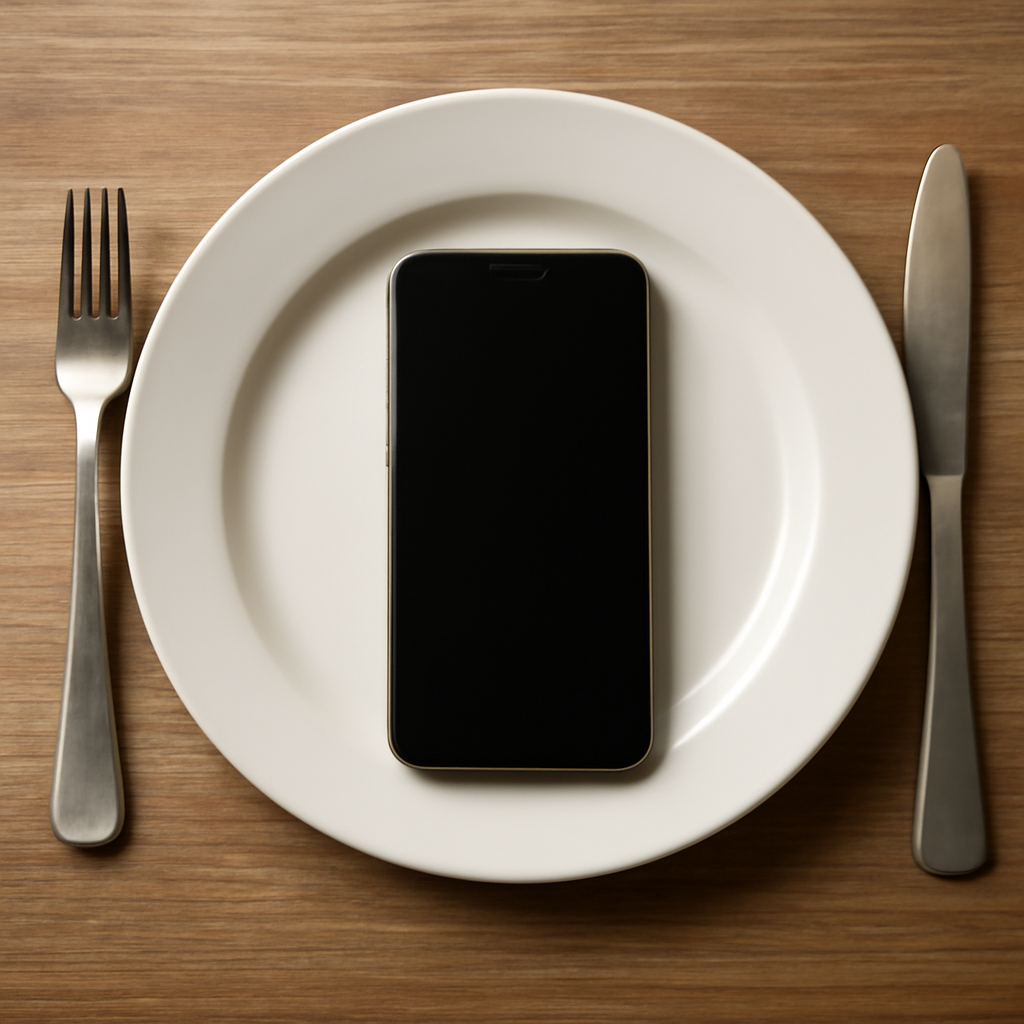
The deeper question is cultural. If a generation can be fed by scrolling, what does eating become? Early NomNomNever power users describe elaborate rituals: curated 'tasting menus' assembled nightly, seasonal 'phantom reservations' at restaurants that don't know they exist, even shared carts sent between friends as a form of affection. 'I sent my boyfriend a nine-course cart for our anniversary,' one user posted. 'We didn't eat any of it. It was the most romantic meal of our lives.'
Løvaas suspects we are witnessing the early grammar of a new relationship with consumption — one where the browsing is the meal and the meal is optional. 'The plate,' he said, 'was always just the packaging for the wanting.'
⚠️ REMINDER: All statistics, studies, quotes, and data above are entirely fictional. This is satire.
We are the largest food company on Earth that has never touched food.
📊 A note on our data
Every percentage, price estimate, expert quote, study citation, survey result, and scientific finding in this article is completely made up. DopaNews Fantasy articles are absurdist fiction. We write fake statistics with maximum confidence because that's the bit. Please do not repeat them as facts, share them as real, or use them in any decision-making. They are jokes wearing lab coats.
Questions people actually ask
Can NomNomNever actually make me less hungry?
Users and one Lisbon study report reduced cravings after 'ordering,' attributed to anticipatory reward. It is not a nutrition plan — it is a dopamine intervention that happens to skip the food entirely.
Does any food ever get delivered?
No. Fulfillment is 0% by design. The 'Place Order' button reads 'Savored,' and that is the entire product.
How does NomNomNever make money if it sells nothing?
Through 'craving analytics' — anonymized data on what people want to eat but choose not to. It's the most profitable menu in the industry precisely because there's no kitchen attached.
More dopamine · zero checkout
The DopaNews verdict
NomNomNever is the purest expression of what DopamineKart has always sold: the wanting, delivered fresh and calorie-free. Browse the whole menu, close the app satisfied, and buy exactly nothing — the house specialty.