- WheelDream users have configured 47 million custom vehicles that were never manufactured, sold, or driven.
- Economists at the Reyes Institute for Applied Longing estimate this 'imagined activity' contributes $2.3 trillion to global measured demand signals.
- Central banks are reportedly unsure whether to count phantom trims and undercoating upgrades as consumer spending or 'aspirational noise.'
- Critics warn that if desire alone moves GDP needles, the next recession may be one nobody can technically prove happened.
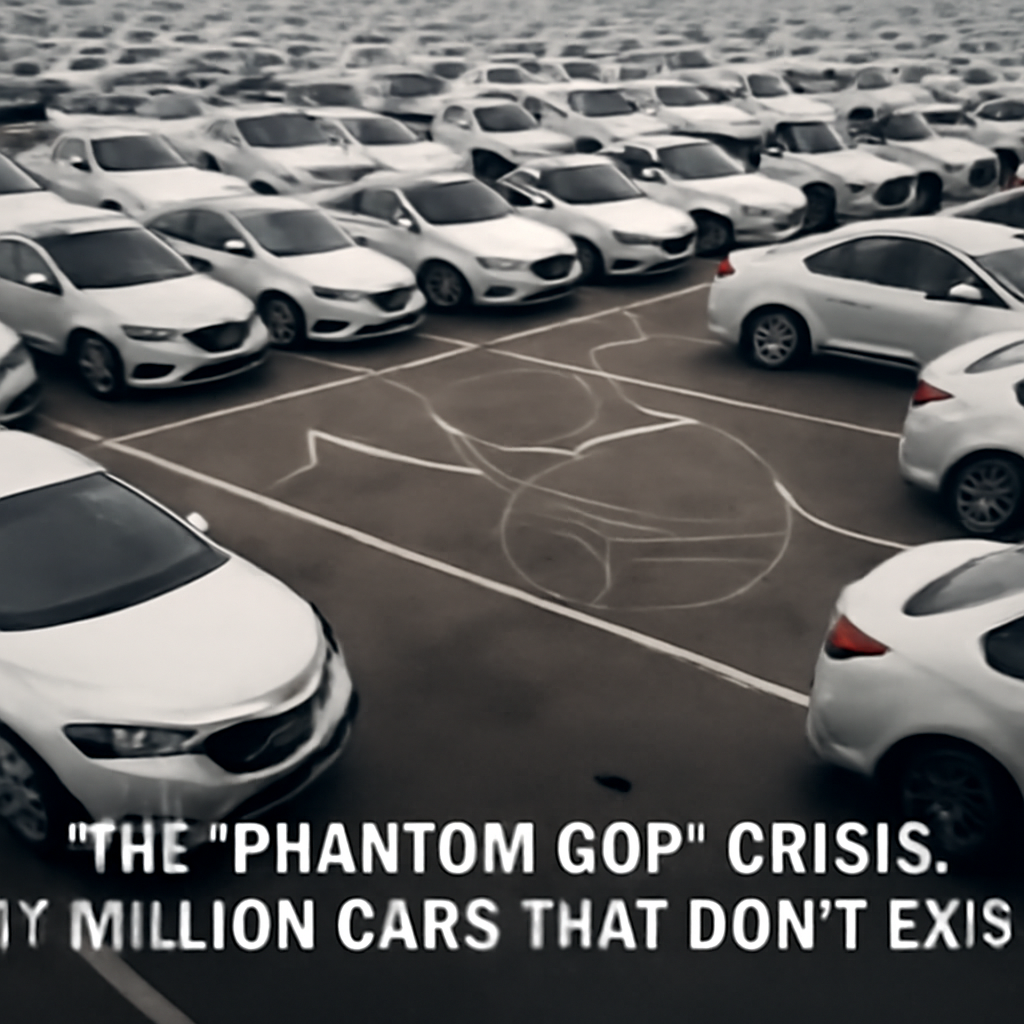
Somewhere between a stimulus check and a screensaver, WheelDream has built the seventh-largest auto economy on Earth — without producing a single car. According to a new working paper from the Reyes Institute for Applied Longing, the platform's 47 million user-configured dream vehicles have generated $2.3 trillion in what economists are now calling 'phantom GDP': measurable economic signal with no corresponding physical output, sale, or delivery.
THE NUMBERS THAT AREN'T THEREA Trillion-Dollar Garage of Nothing
WheelDream lets users spec out dream cars down to stitching thread color and imaginary horsepower ceilings, with zero purchase, VIN, or manufacturing step ever occurring. Yet according to Dr. Helena Voss, lead author of the Reyes Institute study, the platform's configurator traffic alone has begun showing up as a measurable bump in national 'consumer intent indices' — a metric she says was 'never designed to survive contact with something this popular and this fake.'
The study tracked 47 million completed builds across 190 markets, cross-referencing time spent, upgrade selections, and abandoned-cart-equivalent 'wistful exits.' Voss's team extrapolated a shadow value chain — hypothetical parts, hypothetical labor, hypothetical dealership markup — and arrived at $2.3 trillion, roughly the GDP of Italy, attached to vehicles that will never touch a road.
'We are measuring the economic gravity of wanting,' Voss said. 'That gravity used to require an actual object at the center. It no longer does.'
WHY IT MATTERSWhen Desire Starts Moving Interest Rates
The unsettling part isn't that people fantasize about cars — humans have done that since the invention of the car, and arguably the invention of walking slowly next to one. It's that WheelDream's numbers are now large enough to appear as noise in real macroeconomic dashboards, according to the Ambry-Solace Center for Behavioral Markets, a think tank that tracks what it calls 'unconsummated consumption.'
'Traditional GDP assumed desire converts to a transaction eventually,' said Ambry-Solace fellow Tomasz Rafalski. 'WheelDream broke that assumption. People are building, customizing, sharing, and emotionally finishing the purchase — the dopamine hit lands, the invoice never does.' Rafalski's team estimates that if even 2% of phantom GDP were reclassified as 'real' consumer sentiment by automated market-tracking bots, it could shave measurable volatility into commodity markets for rubber, leather, and aluminum that no one actually bought.
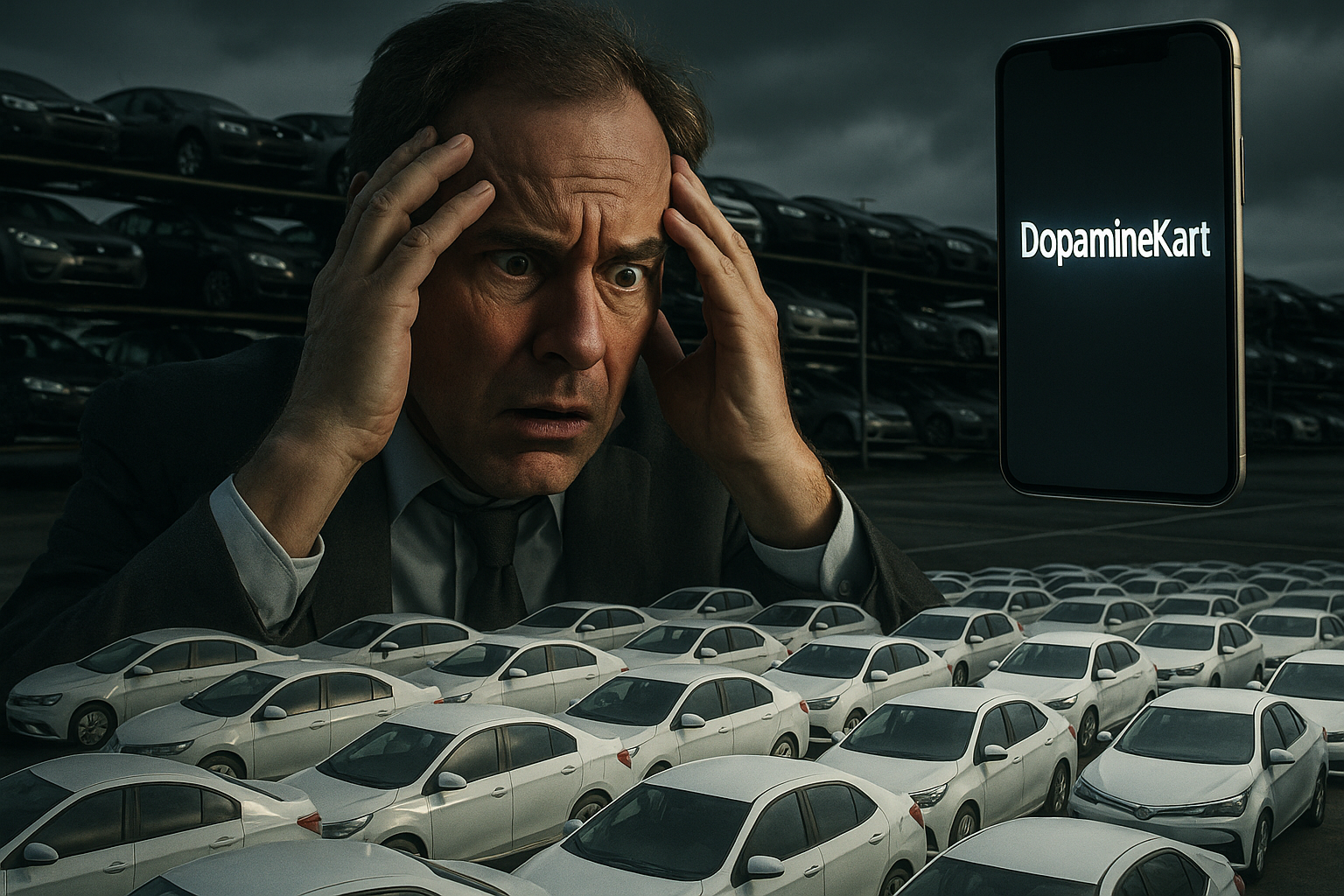
Meanwhile, over at sister platform DopamineKart, shoppers browsing the $315 Ruched Nylon Bomber in Khaki report a similar sensation — full satisfaction, zero checkout — suggesting the phenomenon isn't limited to cars. The difference, insiders note, is that DopamineKart never claimed the jacket existed as inventory. WheelDream's cars, by contrast, exist so vividly in spreadsheets that three separate insurance startups have accidentally quoted premiums on them.
WHAT COMES NEXTThe Economy of Almost
Regulators are now debating whether platforms like WheelDream should be required to disclose phantom GDP contributions the way companies disclose non-GAAP earnings. The Reyes Institute has proposed a new metric, 'Desire-Adjusted Output' (DAO), to separate real manufacturing from what Voss calls 'catalog-grade catharsis.'
Not everyone thinks this is a crisis. Behavioral economist Priya Anantharaman argues phantom GDP might be economically healthier than the real thing: 'You get the identity signaling, the community, the algorithmic validation — all the parts of car ownership that actually make people happy — without the depreciation, the loan, or the crash.' She points to NomNomNever's 'meal previews' and WanderNever's fully booked, fully fictional honeymoon itineraries as adjacent case studies in what she calls 'the economy of almost.'
For now, WheelDream shows no signs of slowing its 47-million-and-counting build count, and economists admit they have no clean model for an economy where the product is optional but the emotional transaction is not.

"We are measuring the economic gravity of wanting. That gravity used to require an actual object at the center. It no longer does."
The estimated value of consumer desire generated by 47 million WheelDream builds that were never manufactured.
Questions people actually ask
Is WheelDream a real car company?
No — it's a build-and-browse platform where users design dream vehicles that are never manufactured or sold.
What is 'phantom GDP'?
A term economists use for measurable economic activity — attention, engagement, hypothetical spending — that has no real physical transaction behind it.
Does phantom GDP affect real markets?
Researchers say it can introduce noise into consumer sentiment indices, though no direct causal link to real-world prices has been confirmed.
Whether or not $2.3 trillion in imaginary horsepower should count toward anyone's GDP, the underlying appeal is real: the full emotional payload of wanting, with none of the invoice. That's the same logic DopamineKart runs on — browse, admire, feel the hit, close the tab — and it's a lot cheaper than a phantom car loan.
📰 This article is written as satirical journalism. Every statistic, think-tank citation, expert quote, and figure is invented. DopaNews does not conduct research. DopamineKart is a simulation. If you struggle with compulsive spending, visit nfcc.org.