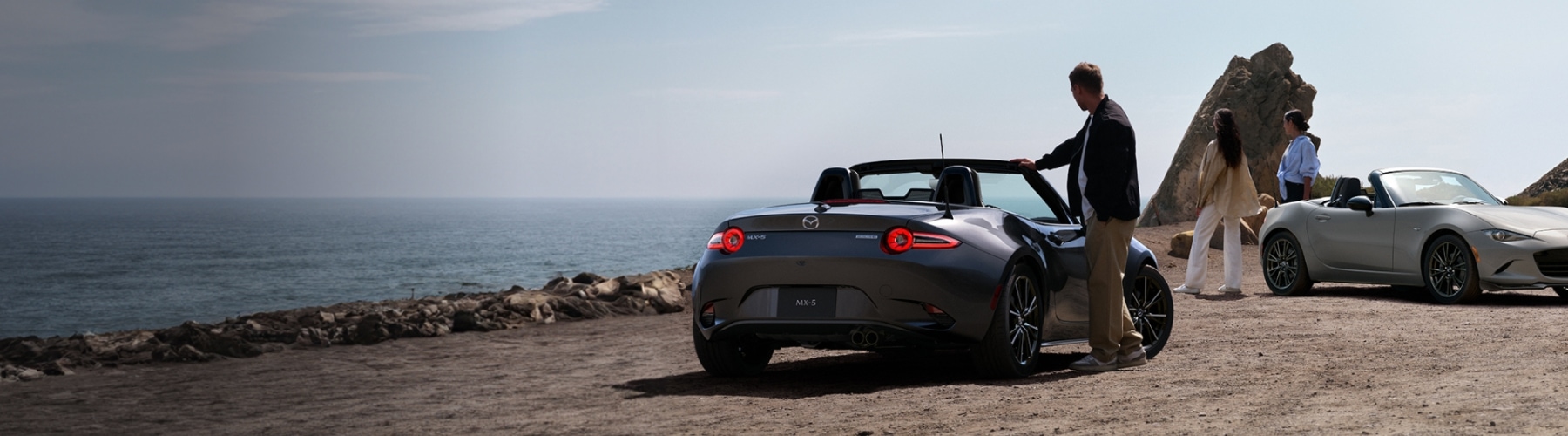
Quick take
- 181 hp and 151 lb-ft from a Skyactiv-G 2.0-liter four-cylinder — a modest figure by modern sports-car standards, which is consistent with Mazda's long-running philosophy that lightness and balance matter more than raw power.
- Near 50:50 front-to-rear weight distribution, which Mazda specifically credits for "smooth, connected driving" rather than treating it as a footnote spec.
- Starts at $30,430 MSRP — notably accessible for a rear-wheel-drive sports car, with an example as-shown build reaching $36,325.
- The RF (Retractable Fastback) variant offers a power hardtop that retracts in about 13 seconds, giving buyers a coupe-like look with open-air capability, alongside the standard soft-top convertible.
181 hp, and Mazda isn't apologizing for it
The MX-5 Miata's Skyactiv-G 2.0-liter four-cylinder produces 181 horsepower and 151 lb-ft of torque, per Mazda's own published specs — figures that would look unremarkable on a modern midsize sedan, let alone a dedicated sports car. That's a deliberate part of the Miata's identity: Mazda's marketing has never centered horsepower figures the way most performance-car pitches do, instead framing the car's appeal around low weight, chassis balance, and how directly the car responds to driver input at everyday speeds rather than only at the limit.
Near-perfect weight distribution, treated as a headline feature
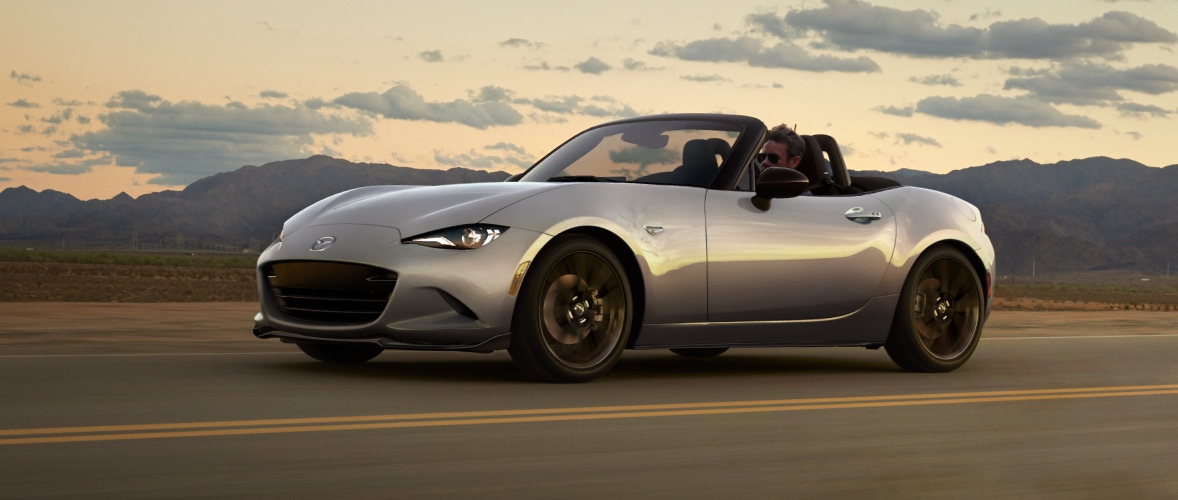
Mazda's own product page lists "Near 50/50 Weight Distribution" directly alongside the starting price and drivetrain on the car's primary spec summary — not buried in a footnote. A close front-to-rear weight balance is a genuine chassis-engineering goal that affects how predictably a car rotates through a corner, and Mazda's decision to foreground it says something about who this car is actually built for: drivers who care about handling feel over a bigger horsepower number.
Chassis details built for handling, not the options sheet
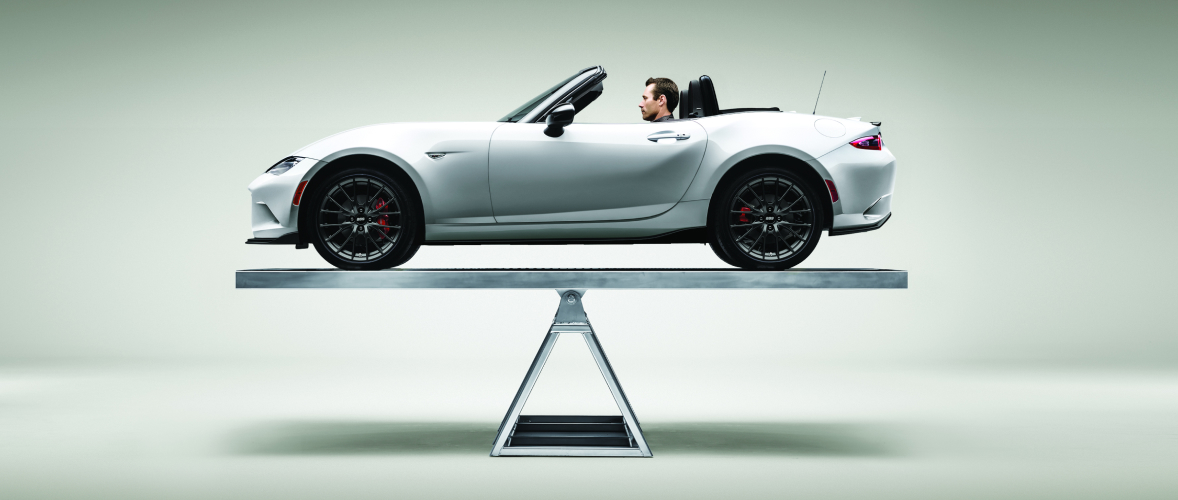
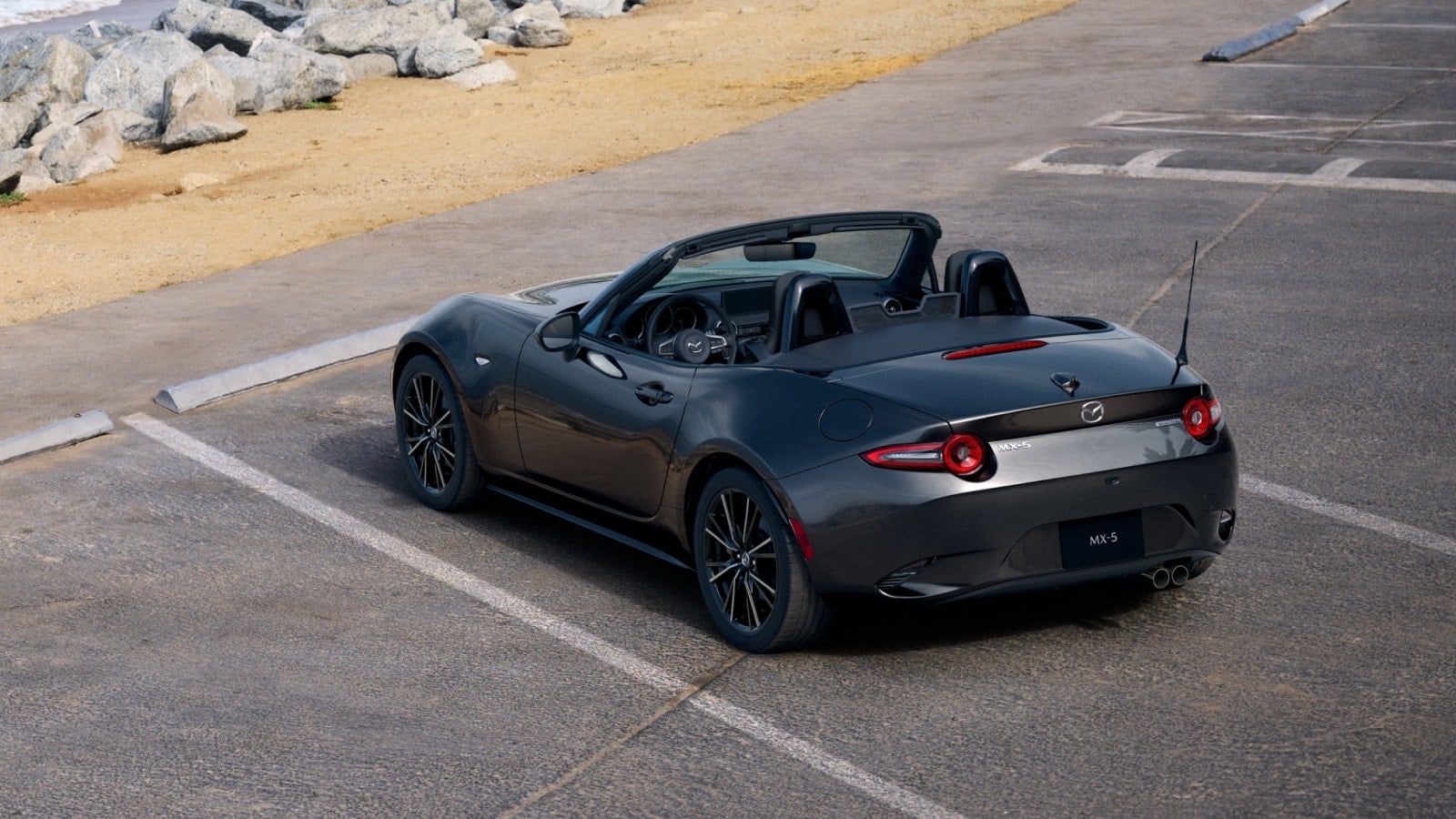
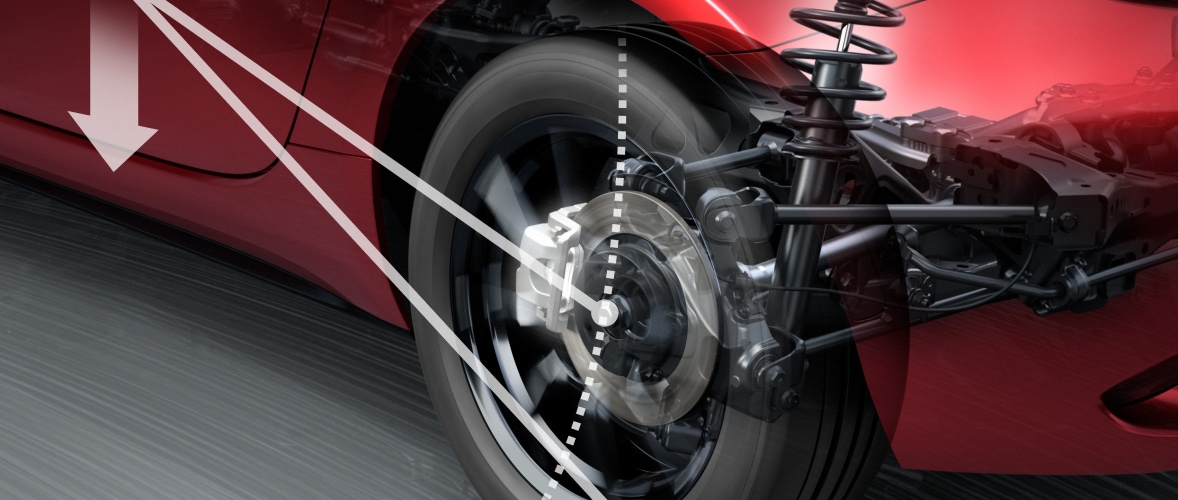
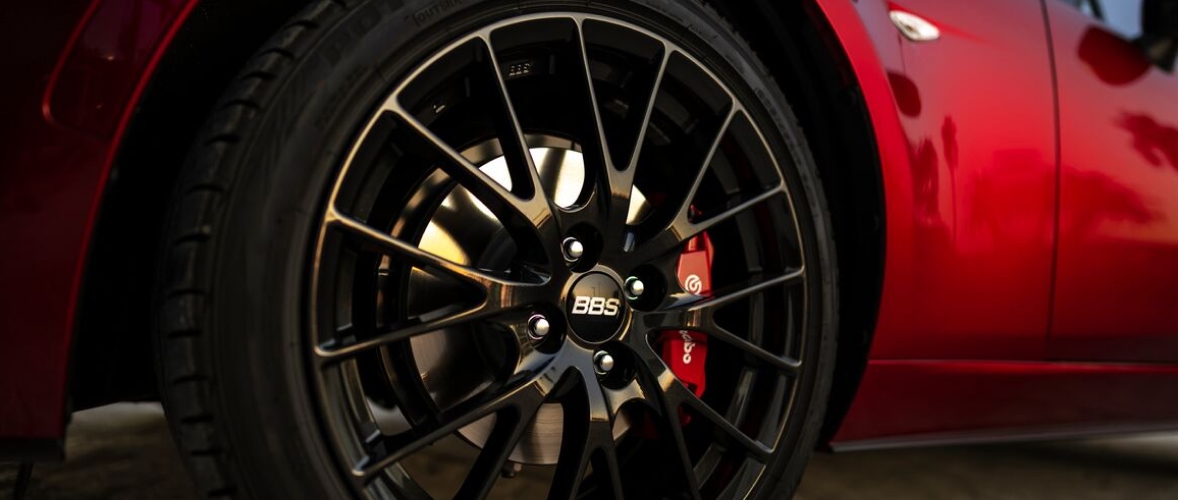
Beyond the base package, Mazda's materials highlight Kinematic Posture Control — a system that works with the suspension and brakes to help suppress body roll through corners — and an available asymmetric limited-slip differential, offered as part of a BBS/Brembo/Recaro package on Club models. These are the kind of chassis-tuning details that matter far more to actual cornering behavior than horsepower does, and their presence in Mazda's own marketing again reinforces the car's stated priorities.
RF hardtop: a coupe look without giving up open-air driving
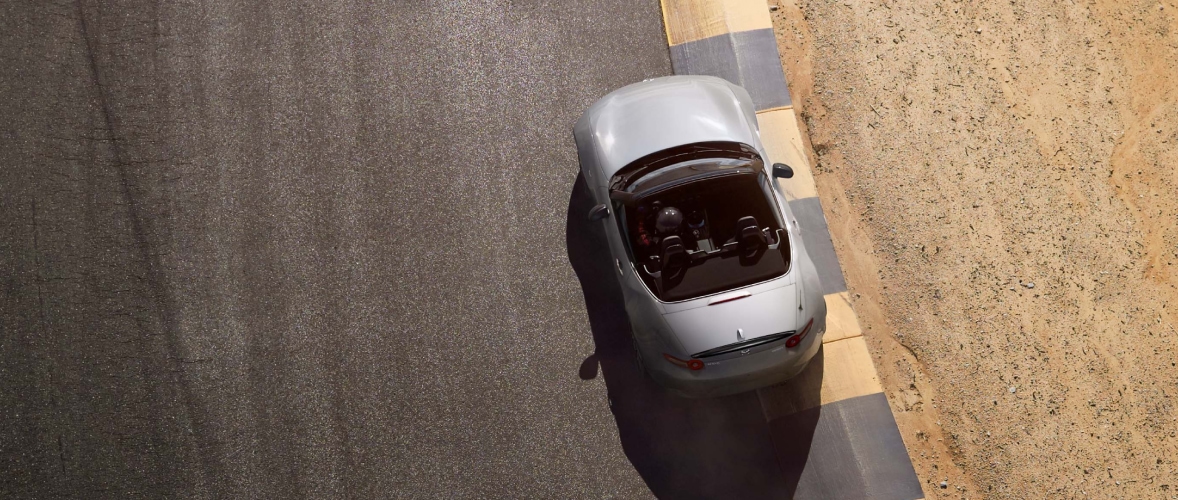
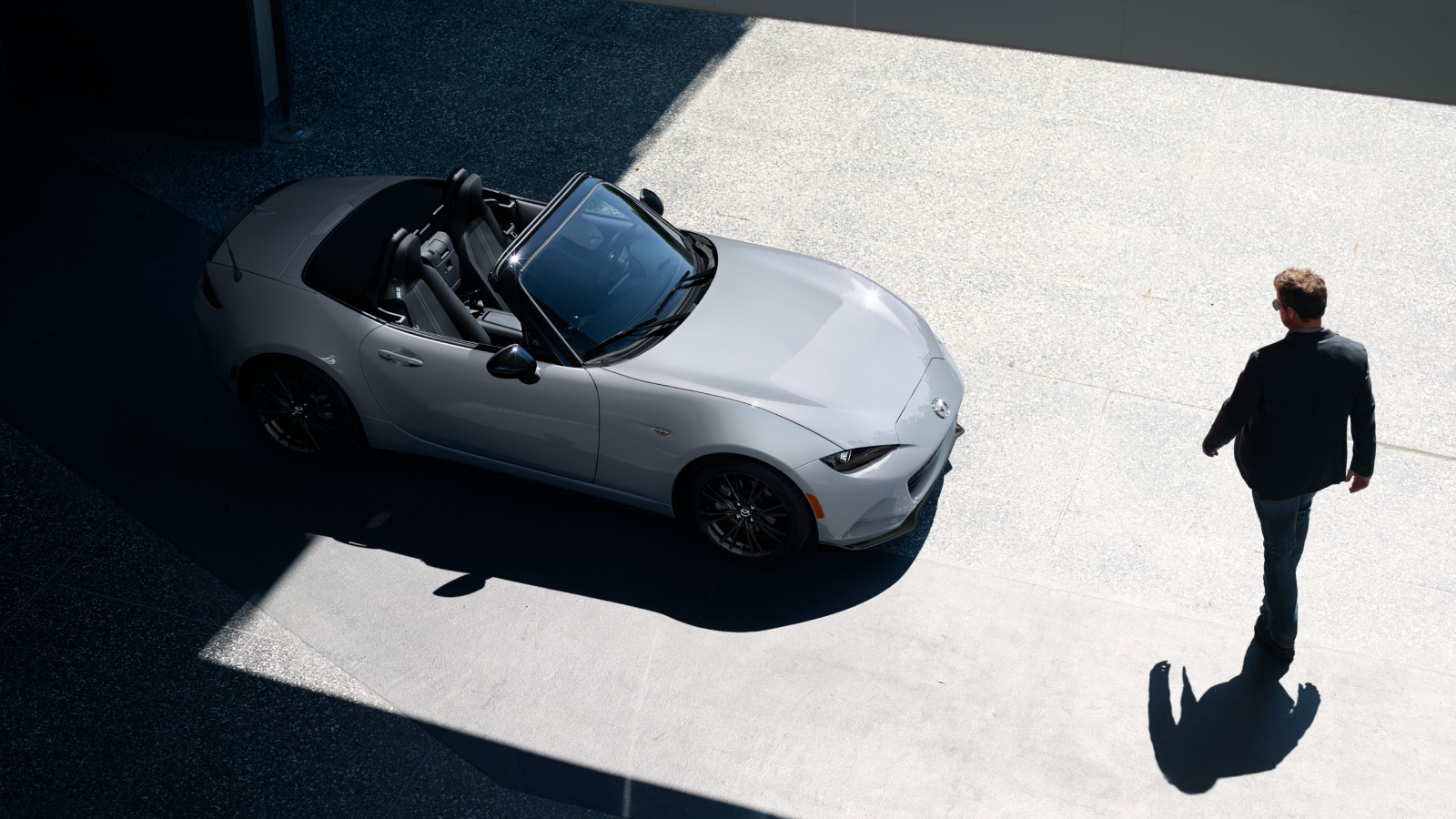
Alongside the standard soft-top convertible, Mazda offers the MX-5 Miata RF (Retractable Fastback), which the company describes as inspired by classic 1960s roadster coupe silhouettes. Mazda's materials state the RF's power hardtop retracts in about 13 seconds, letting the same car function as an enclosed coupe or an open roadster depending on the driver's preference on a given day, without the fabric top and manual latching of the standard convertible.
Interior and design: driver-centric, deliberately simple
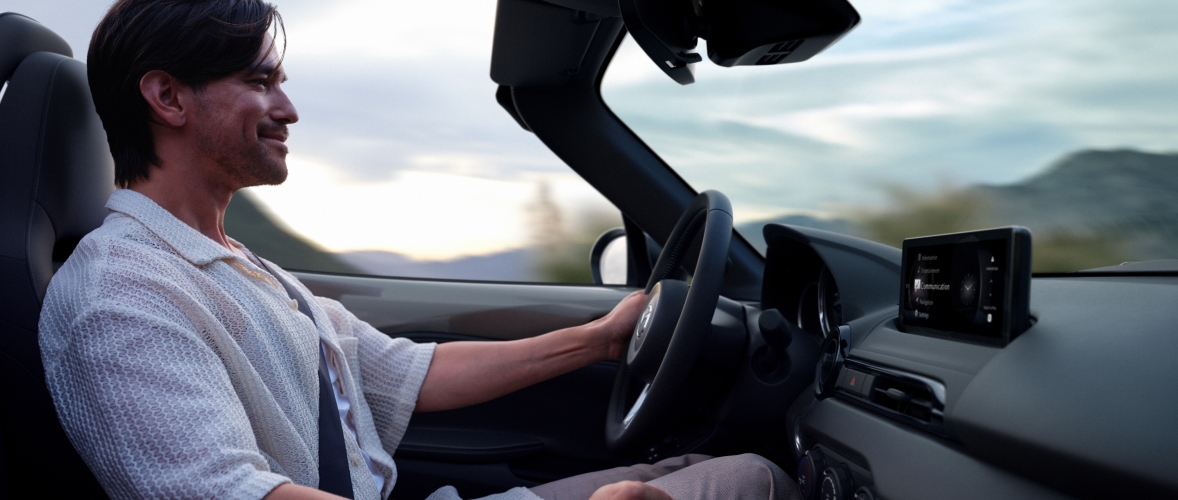
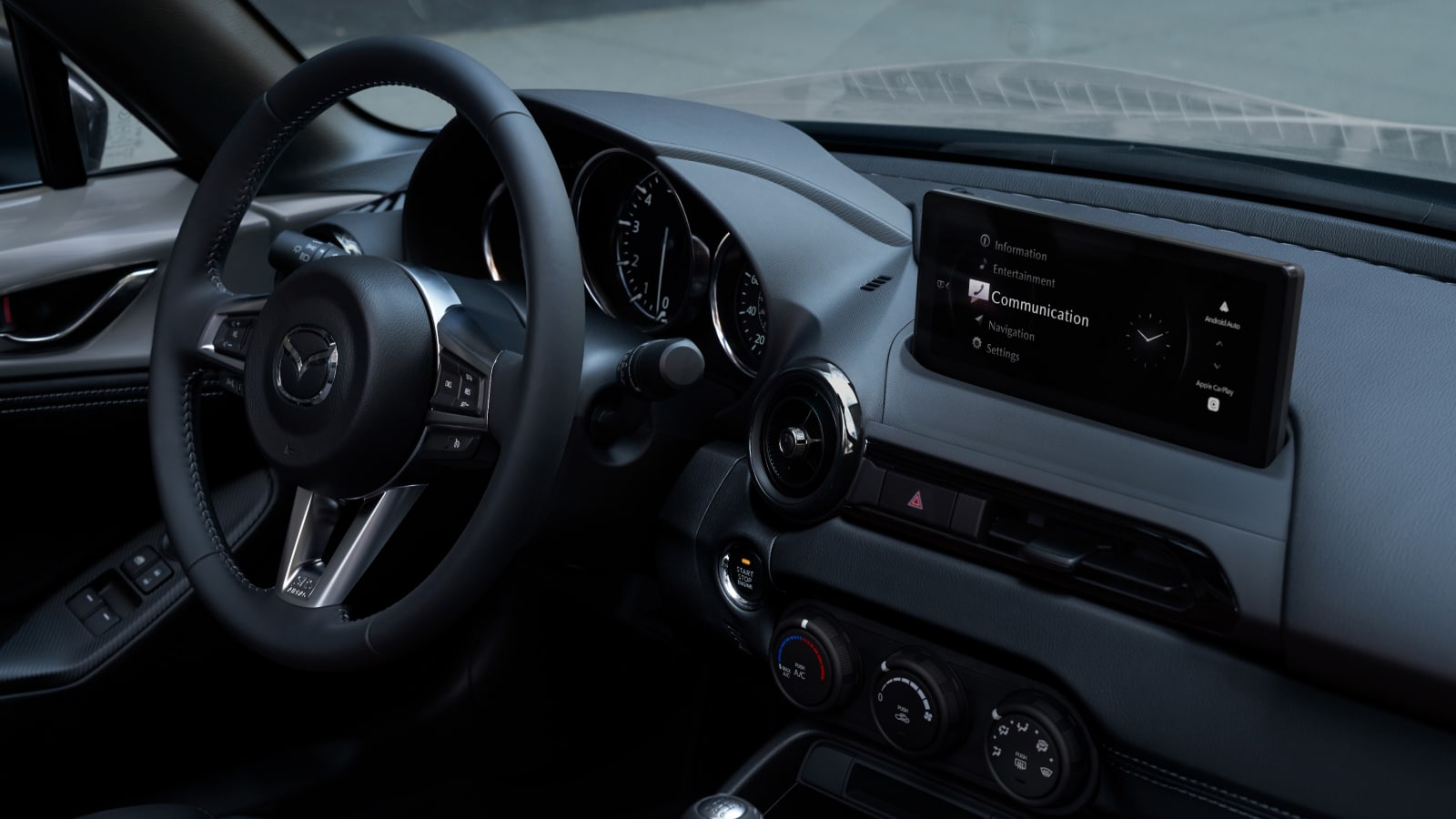
Mazda describes the MX-5's cabin as a "driver-centric cockpit," designed to put the driver in a natural posture to react to the car's movements — language consistent with the car's broader handling-first positioning. The exterior design draws on Mazda's Kodo design philosophy, and the cabin includes an 8.8-inch display screen with Apple CarPlay integration alongside more traditional physical controls.
What a manufacturer's own site cannot tell you
Everything above is Mazda describing its own car, and the honest caveat is direct: 181 hp is a real, modest number, and how that translates to a satisfying driving experience is a subjective question a spec sheet and a product page genuinely can't answer — it's precisely the kind of car whose appeal depends heavily on how it feels from behind the wheel, not just what it measures on paper. Nobody here has driven the 2026-specific car, and Mazda's own "smooth, connected driving" language describes an engineering intent, not an independently measured result.
| Specification | Mazda's figure |
|---|---|
| Model | Mazda MX-5 Miata / MX-5 Miata RF |
| Engine | Skyactiv-G 2.0-liter 4-cylinder |
| Power | 181 hp |
| Torque | 151 lb-ft |
| Drivetrain | Rear-wheel drive |
| Weight distribution | Near 50:50 front/rear |
| RF hardtop retract time | ~13 seconds |
| Starting price | $30,430 MSRP |
| As-shown example price | $36,325 |
Common questions
Why does the MX-5 Miata have less horsepower than most sports cars?
It's a deliberate design philosophy — Mazda prioritizes low weight and chassis balance over raw power, with 181 hp paired to a lightweight, near-50:50-balanced car rather than chasing a bigger horsepower figure.
What's the difference between the standard MX-5 Miata and the RF?
The RF (Retractable Fastback) uses a power hardtop that retracts in about 13 seconds, giving a coupe-like look with open-air capability, versus the standard model's fabric soft-top convertible.
Is the limited-slip differential standard?
No — per Mazda's materials, the asymmetric limited-slip differential is available as part of the BBS/Brembo/Recaro package on Club models, not standard across the lineup.
What does Kinematic Posture Control do?
Mazda describes it as a system that works with the suspension and brakes to help suppress body roll through corners, aimed at cornering precision and confidence.
Has DopamineKart driven this car?
No. Everything in this article reflects Mazda's own published product materials, not a first-hand drive.
On paper, Mazda's pitch for the 2026 MX-5 Miata hasn't changed from what's made the car the world's best-selling roadster for decades: modest power, low weight, near-perfect balance, and a starting price that's genuinely accessible for a rear-wheel-drive sports car. Whether that translates to the "connected" feeling Mazda describes is inherently a subjective, behind-the-wheel question that a spec sheet can gesture toward but can't settle.
We'll revisit this once independent testing exists.
Sources. Mazda USA — MX-5 Miata. Technical figures and pricing reflect Mazda's own published data. Photography is Mazda press material, used for editorial reporting and credited per image. No affiliate links appear on this page. This article contains no affiliate links and no buy buttons — DopamineKart does not monetise vehicle coverage. DopamineKart has not conducted a hands-on test drive of this vehicle; this article is a research-based breakdown, not a road test.
Corrections: email us