Home & Nostalgia
8 Things From Grandma's House You'll Wish You'd Never Let Go
Before the estate sale, before the donation bin — the everyday objects that turn out to matter more than anyone expects once they're gone.
No affiliate links on this page. This is an editorial piece with no product links or "buy" buttons — every illustration below is AI-generated for this article, clearly captioned as such.
Every family seems to clean out a grandmother's house the same way: fast, a little overwhelmed, and mostly focused on the big furniture and the obviously valuable stuff. The things that get set aside without much thought are usually the small, ordinary objects — the ones that were just always there. And those are almost always the things people call us later wishing they'd kept.
This isn't a price guide and it isn't about rare collectibles worth a fortune at auction. It's about the ordinary household items that turn out to carry more weight than anyone expects once the house is empty — because they were used, every day, for decades, by someone who is gone now. Here are eight of the most common ones, and why they're worth a second look before they go in a box for Goodwill.
The Mismatched Set of Vintage Mixing Bowls
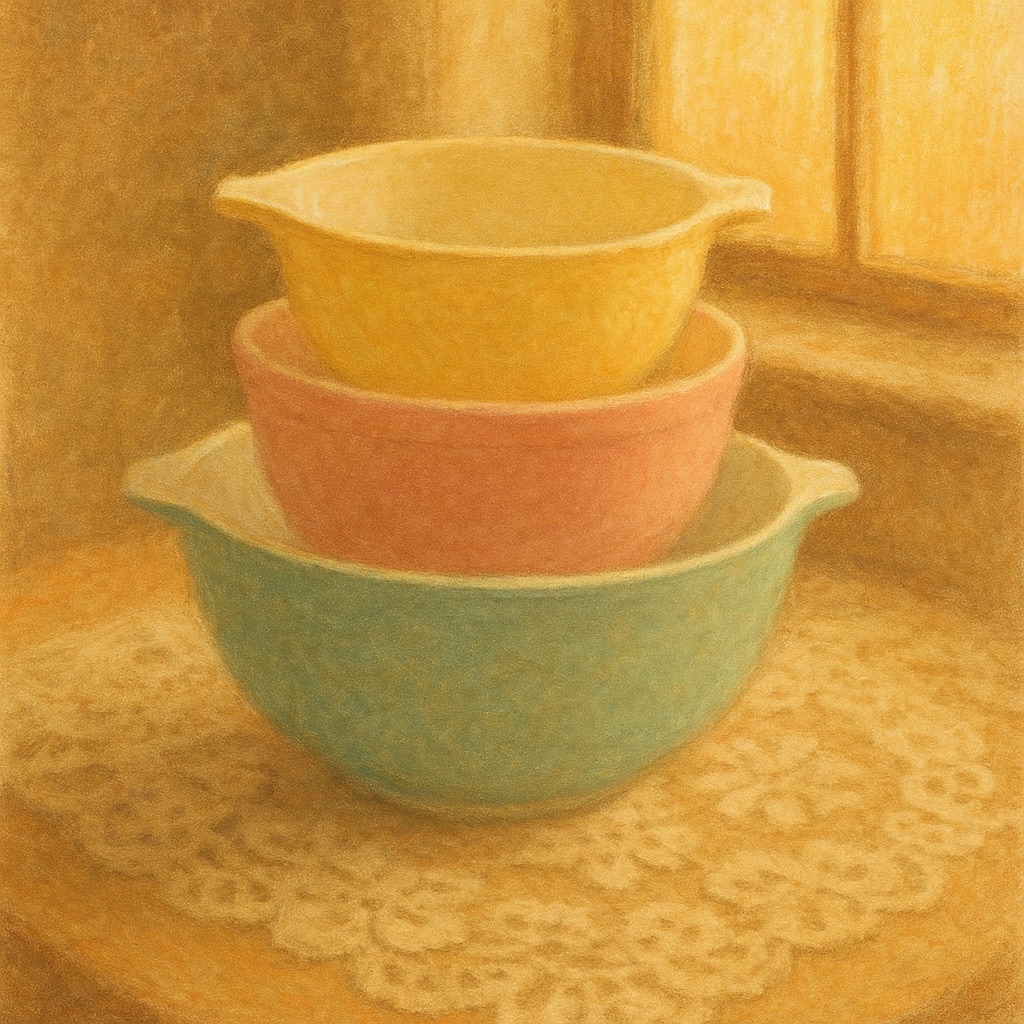
Almost every kitchen from that generation has a nesting set of mixing bowls in a handful of faded colors — pastel yellow, turquoise, a dusty pink — usually a little chipped, usually missing a lid, and usually still in daily rotation right up until the end. They don't match anything else in the cabinet, and that's sort of the point: they were bought once, decades ago, and simply never wore out.
What gets missed in a fast cleanout is that these sets are rarely complete by the time anyone thinks to ask, and once a bowl or two goes to a donation bin, the set can't really be put back together. People who kept theirs describe using them constantly — not as a display piece, but as the actual bowl they reach for when something needs mixing.
The Handmade Quilt Nobody Was Supposed to Actually Use
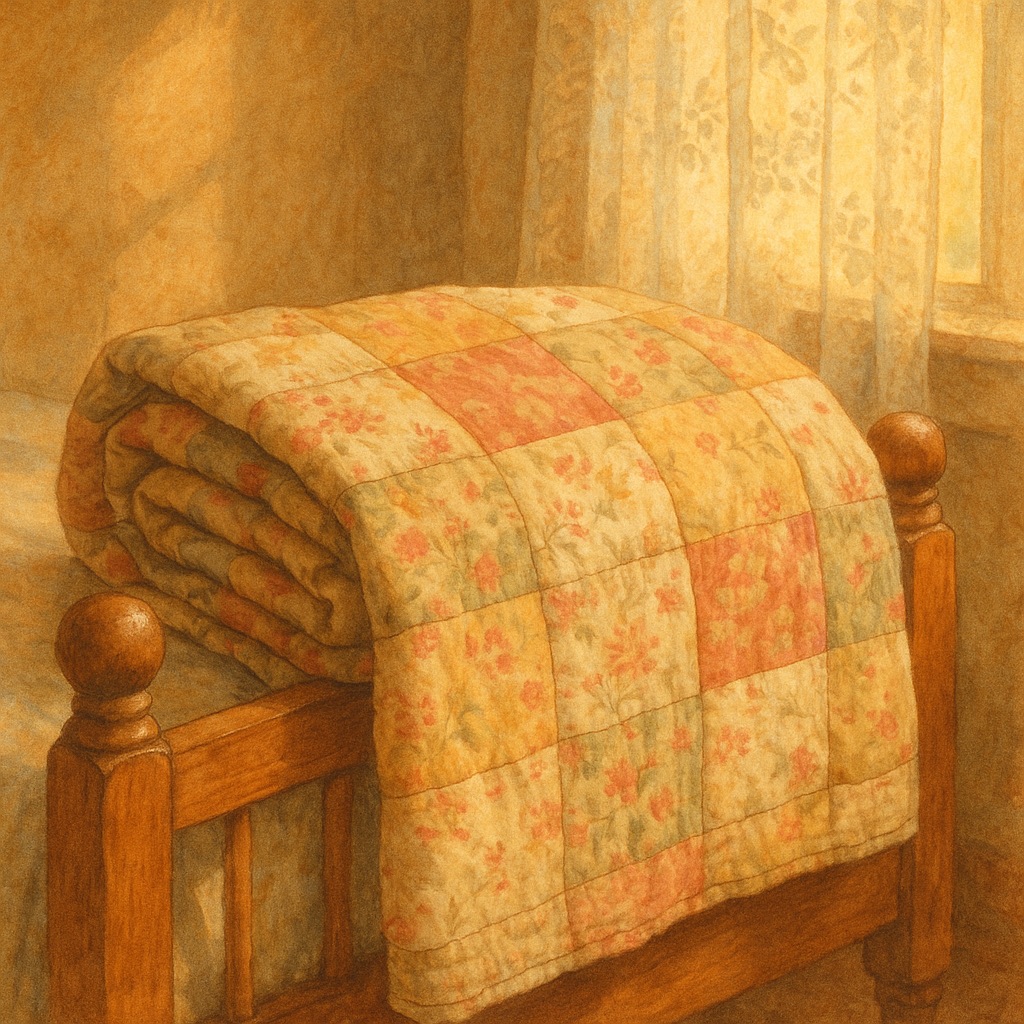
Somewhere in the linen closet is usually a hand-stitched quilt that was too nice to actually use — folded up, maybe with a note about who made it and when, brought out for guests or special occasions and then folded right back away. Because it was treated as precious rather than functional, it often survives in genuinely good condition, which is part of why it's easy to underestimate.
The hours of hand-stitching in a quilt like this simply aren't something anyone makes anymore, at scale, for a normal household — it was a slow, deliberate project, usually made specifically for the family it ended up in. Once separated from that context, in a bag headed to donation, that history doesn't travel with it.
The Cast-Iron Skillet That Outlasted Every Nonstick Pan
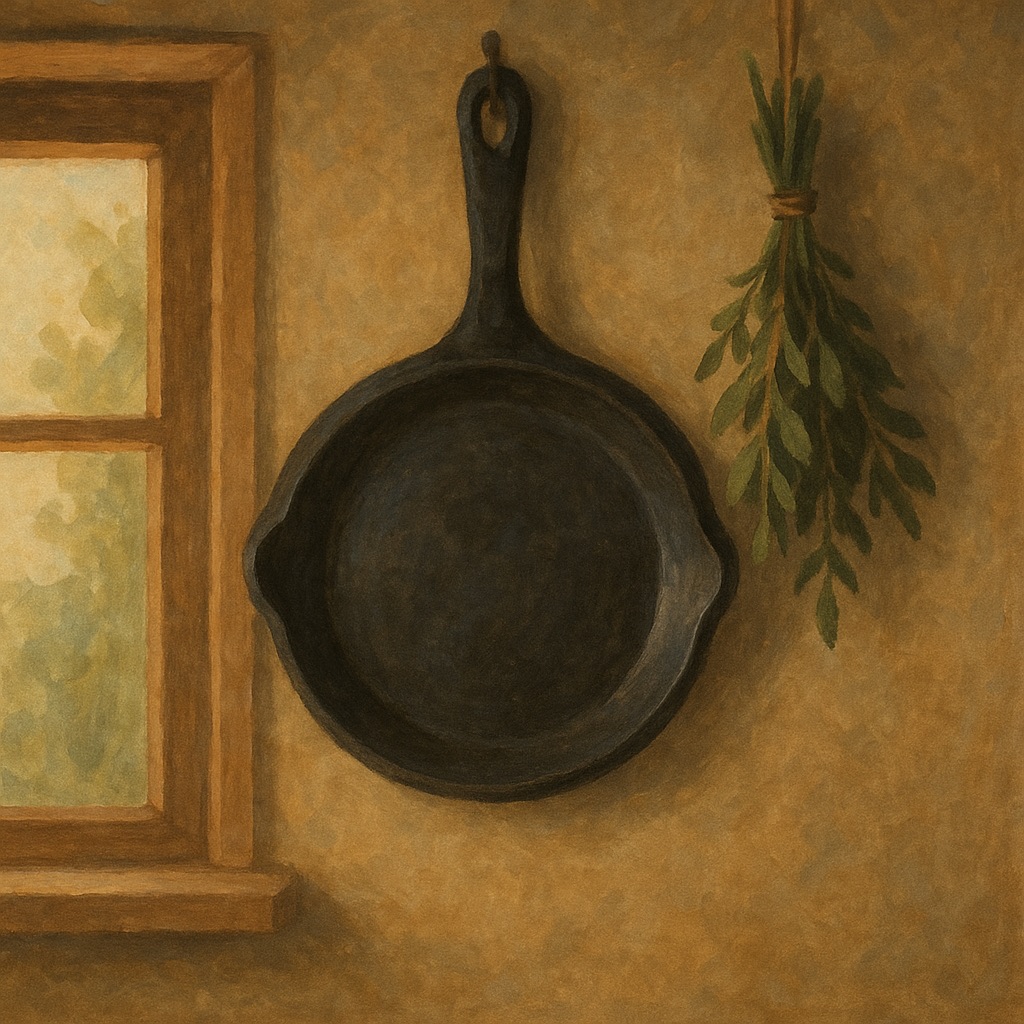
A cast-iron skillet that's been cooked in weekly for thirty or forty years develops a seasoning — a smooth, dark, naturally nonstick surface — that a brand-new one simply doesn't have and can't fake. It's the byproduct of a long, consistent routine of cooking and light maintenance, not something you can buy or shortcut.
These pans are often overlooked specifically because they look plain and a little rough — no matching set, no retail packaging, sometimes not even a visible brand stamp anymore. But that worn, dark surface is functional value that took decades to build, and starting over with a new pan means starting that seasoning process from zero.
The Recipe Box Full of Handwritten Cards
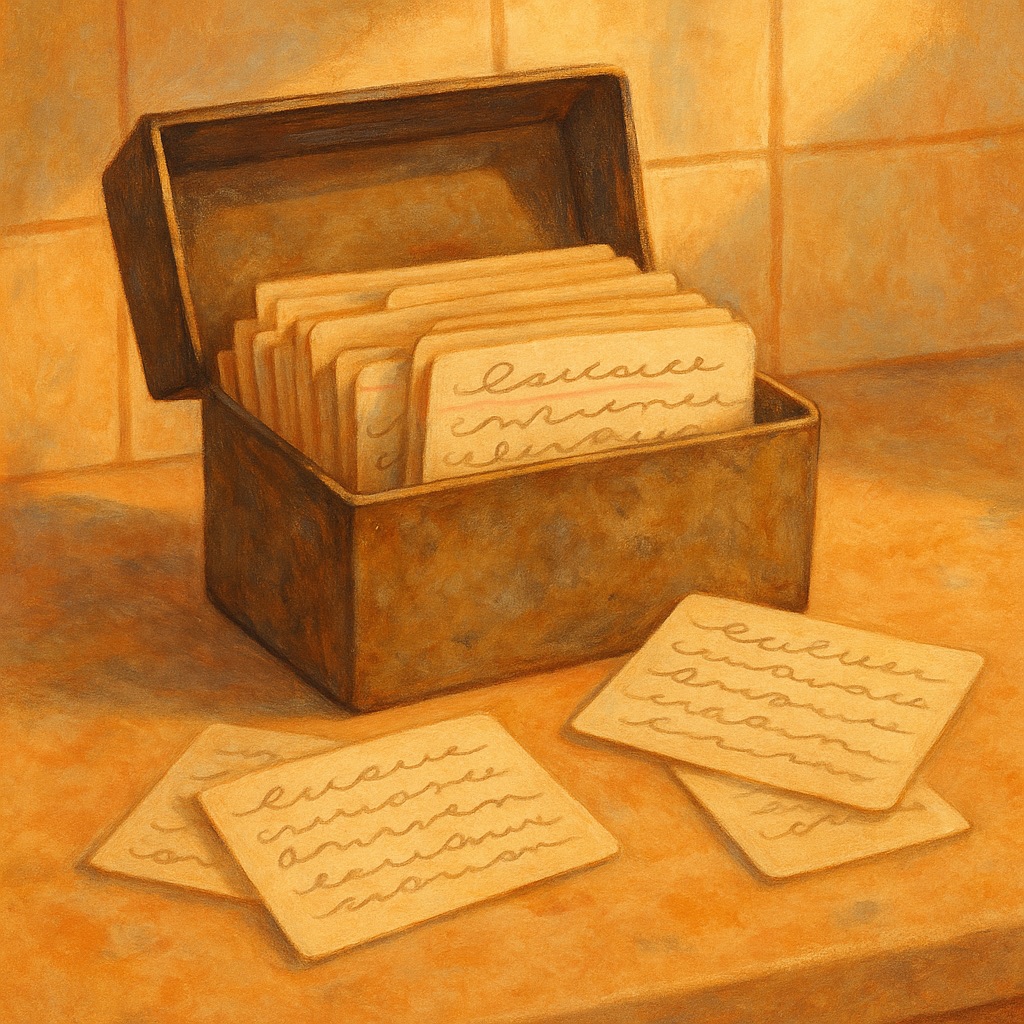
A metal or wooden recipe box, filled with index cards in handwriting that's unmistakably someone specific's, tends to sit in a kitchen drawer for decades without much fanfare — until it's the only place a family's actual recipes exist. Measurements are often approximate, ingredients sometimes assume knowledge that was never written down, and that's exactly what makes the cards themselves irreplaceable: nobody else can recreate the handwriting, the little notes in the margins, or the exact version of a dish that only existed in that box.
Unlike a recipe that's been typed up and shared, a card box like this is a single physical original. Once it's gone, so is the last handwritten copy of whatever was in it.
The "Good" China Nobody Was Allowed to Touch
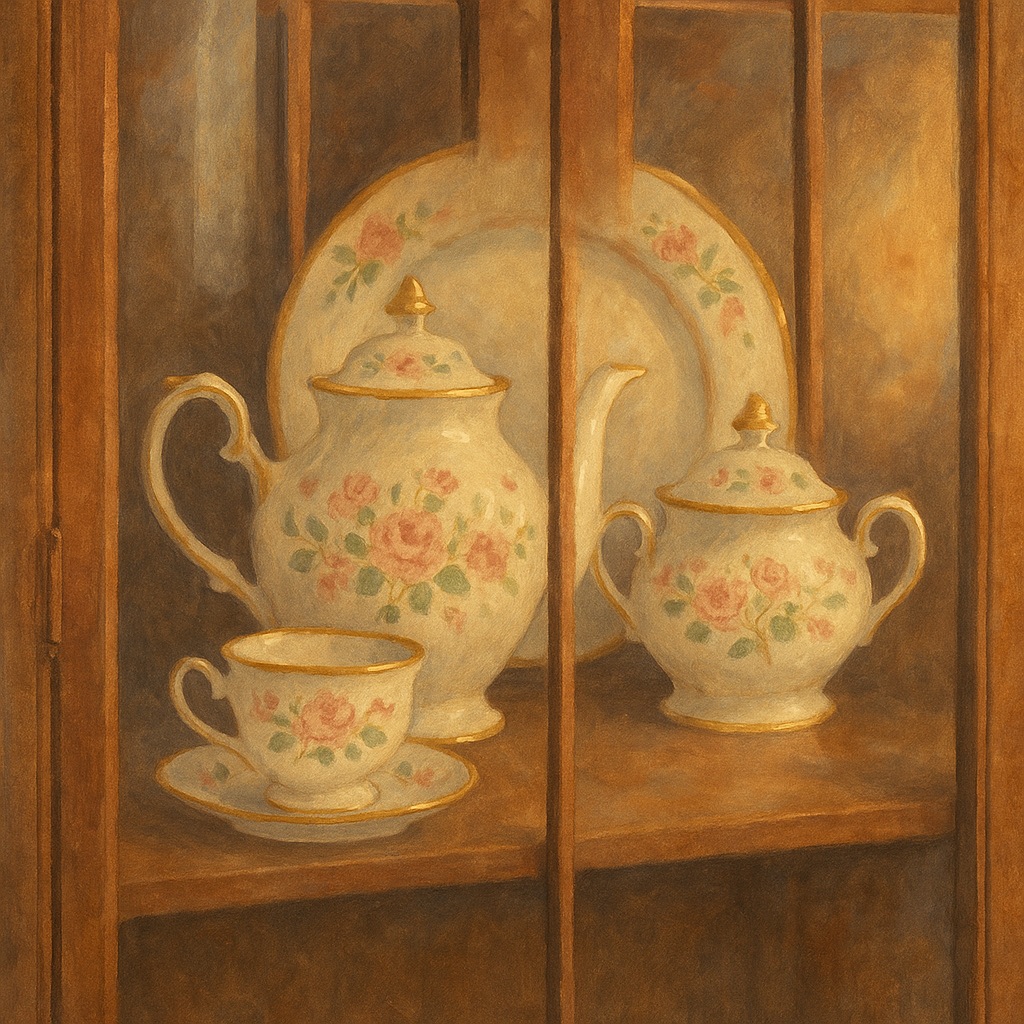
Almost every household of that generation had a set of "good" dishes — kept behind glass in a hutch, brought out for holidays, and treated with a level of care that meant the set is often in close-to-original condition decades later. Because it wasn't used daily, it usually survives far better than everyday dishware, which is part of what makes it worth a second look rather than an automatic donation.
These sets get undervalued in a fast cleanout for the opposite reason quilts do: they can look formal, dated, and impractical for how most people eat today. But a complete or near-complete set — particularly with serving pieces still present — is genuinely harder to come by than people assume once it's broken up piece by piece.
The Wooden Rolling Pin Worn Smooth in the Middle
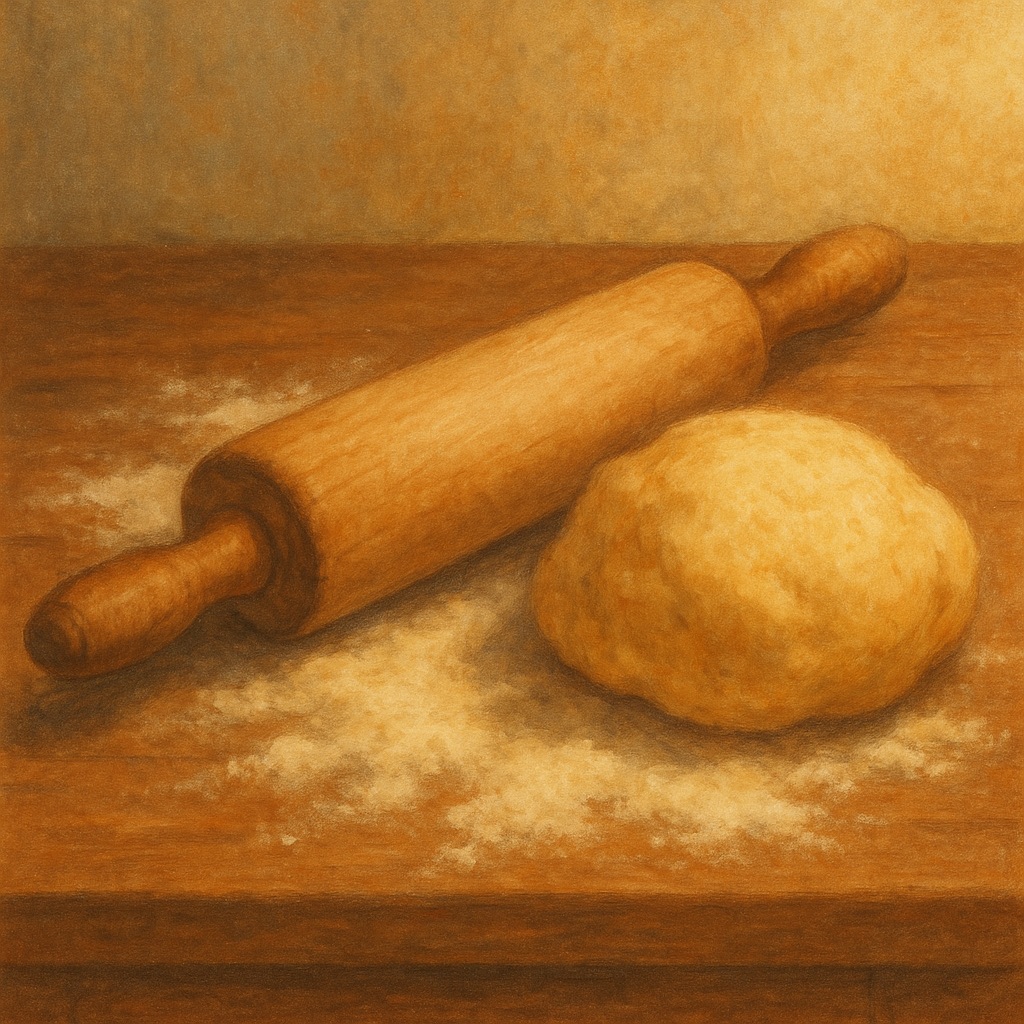
A rolling pin used weekly for pie crust, biscuits, or bread for forty-plus years develops a specific kind of wear — the center worn paler and smoother than the ends, sometimes slightly bowed from the pressure of thousands of passes over dough. It's a small, easy-to-overlook object, usually kept in a drawer rather than on display, which is exactly why it tends to get swept into a donation box without a second thought.
Unlike most kitchen tools, a rolling pin doesn't really break or wear out in a way that requires replacement — the ones still in circulation from decades ago are often better balanced and more solid than newer, lighter versions sold today.
The Sewing Tin Full of Buttons and Odd Notions
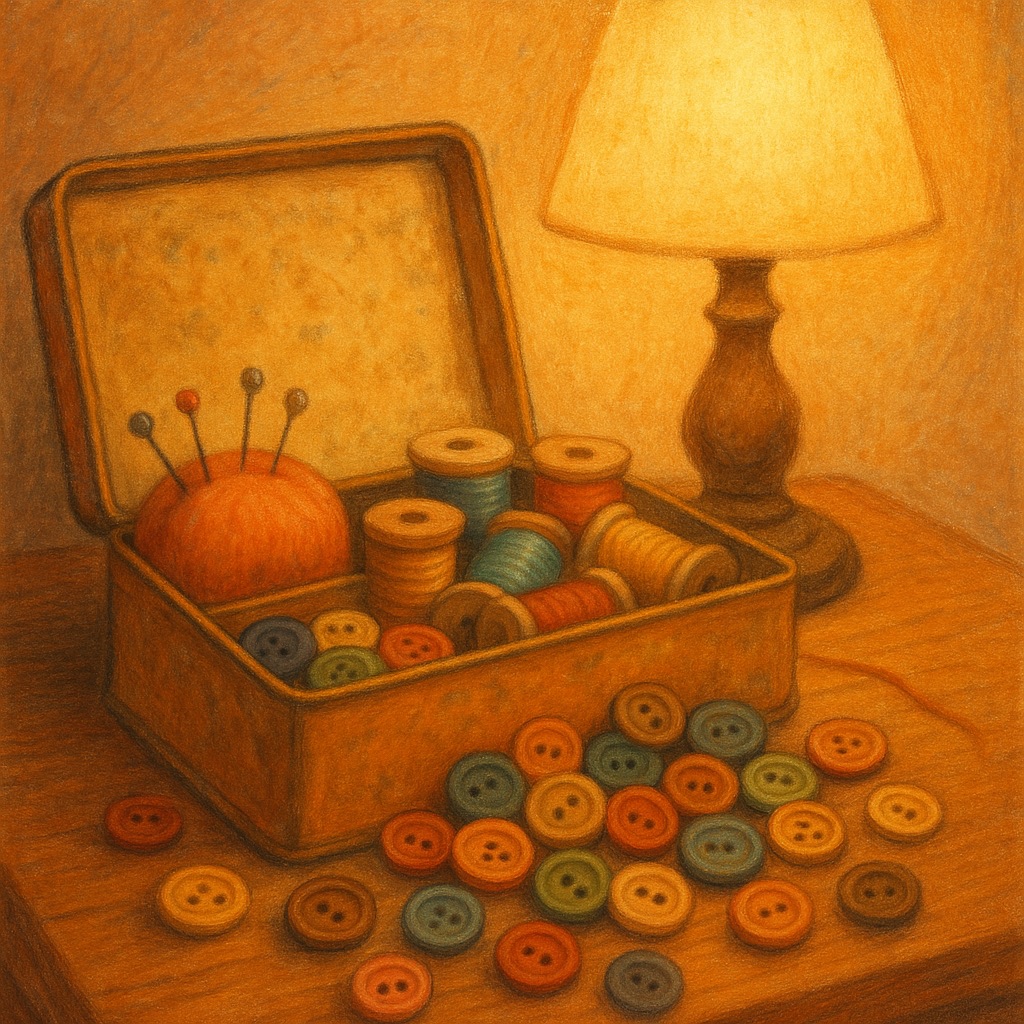
A sewing box or tin — full of loose buttons, half-used spools of thread, a pincushion, maybe a few safety pins and snaps — doesn't look like much on its own. But it's usually a decades-deep accumulation: buttons saved from worn-out clothes going back generations, thread colors no longer made in quite the same way, a genuinely useful stash for anyone who still mends or sews by hand.
Because none of the individual items are valuable, the whole tin often gets treated as clutter rather than what it actually is — a working archive of the household's clothing history, assembled one saved button at a time.
The Stovetop Percolator That Made Coffee Taste Different
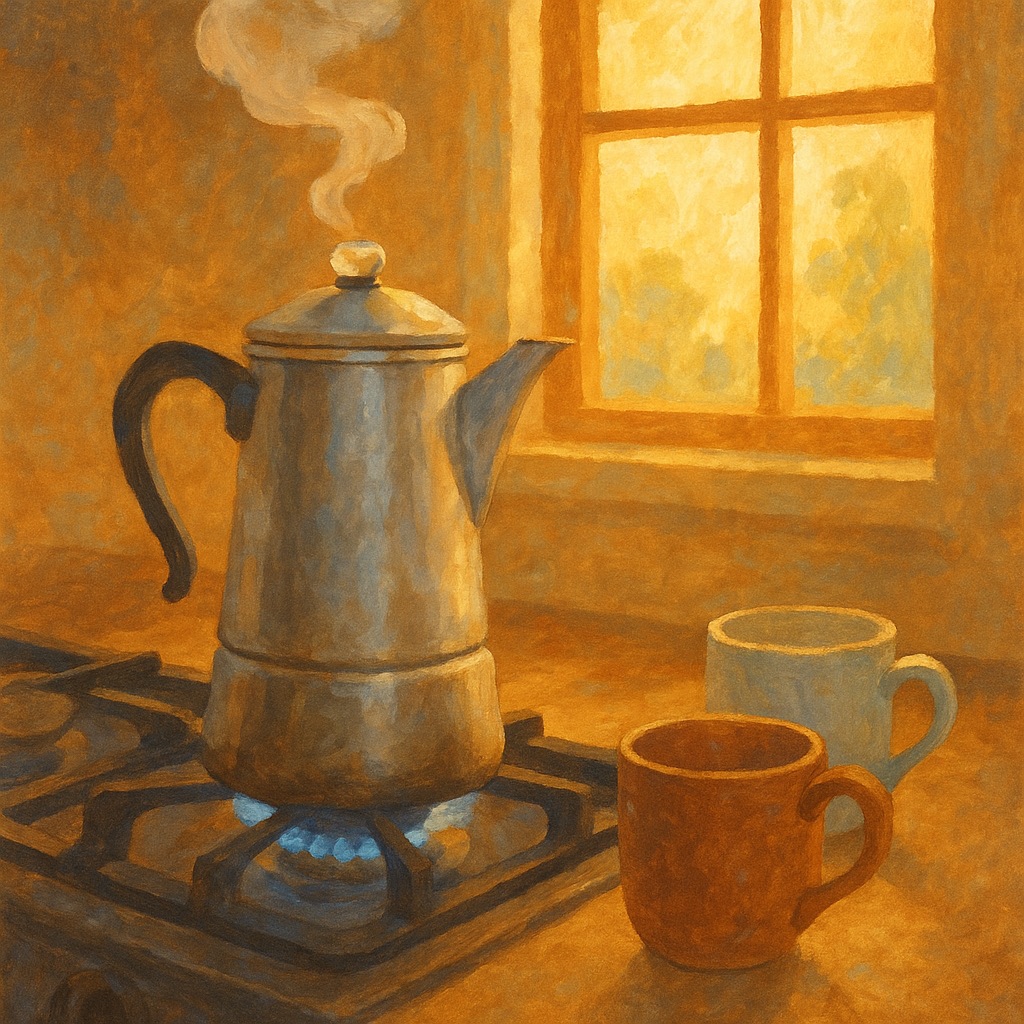
A stovetop percolator — usually aluminum or enamel, with a glass knob on top — was, for a lot of households, the only way coffee was ever made. It produces a genuinely different result than a drip machine or a pod: stronger, a little more bitter, distinct enough that people who grew up with it can usually identify "percolator coffee" from a single sip decades later.
These get set aside quickly in a cleanout because they look old-fashioned and impractical next to a modern coffee maker. But for anyone who actually associates a specific taste and sound — that bubbling percolation, morning after morning — with a particular kitchen, replacing it with a drip machine doesn't really replace what it did.
The pattern, if there is one
None of these eight things are rare or expensive. What they have in common is that they were used constantly, for a long time, by one specific person — and that kind of use leaves a mark that a replacement, no matter how similar, doesn't have. The easiest mistake in a fast cleanout is sorting by resale value instead of by what was actually part of someone's daily life. Worth a second pass through the "donate" pile before it leaves the house.