Quick take
- Humane's AI Pin shipped in April 2024 to some of the worst tech reviews of the decade, then HP acquired most of Humane's assets in February 2025 and shut the Pin's servers off for good — the device business itself was not continued.
- The "AI wearable" idea didn't die with it. Three of the category's most talked-about devices — Limitless, Bee, and (soon) Plaud-adjacent players — have already been bought by Meta, Amazon, and other larger companies within the last year.
- What actually shipped and stuck: the Limitless Pendant, the Plaud NotePin, the Bee Pioneer, the open-source Omi, and the companion-focused Friend necklace — five different bets on what a body-worn AI device is actually for.
- None of the survivors tried to replace your phone the way the AI Pin did. Every one of them narrowed the pitch to something much smaller: recording conversations, taking notes, or just having something to talk to.
In November 2023, two former Apple designers stood on a stage and pitched a wearable that would replace your smartphone. No screen to speak of, no app icons, just a laser-projected display on your palm and an AI that handled everything by voice. Fifteen months later, that device — Humane's AI Pin — was dead. Not discontinued quietly, not sunset with a grace period, but switched off on a specific date, at a specific time, for everyone who'd bought one. The company that made it sold what was left to HP for a fraction of what investors had poured in. It's one of the cleanest failure stories in recent consumer tech. But the idea underneath it — a small AI device you wear instead of carry — didn't die with Humane. It just got picked up by companies with a lot more money, and pointed at a much smaller, more specific problem.
What the AI Pin was actually supposed to do
Humane was founded in 2018 by Imran Chaudhri and Bethany Bongiorno, a married couple who had both spent years at Apple — Chaudhri as a longtime interface designer who helped shape the original iPhone's software, Bongiorno on iPad software engineering. Their pitch to investors was ambitious: a screen-free wearable, clipped magnetically to your shirt, that used a camera, microphones, and a laser projector to handle calls, messages, and AI queries without you ever pulling out a phone. It raised more than $230 million from a genuinely heavyweight investor list, including Microsoft, Sam Altman, Salesforce CEO Marc Benioff, and Tiger Global.
The AI Pin was unveiled in November 2023 and began shipping to customers in April 2024, positioned as a premium standalone device with its own data subscription. The ambition was the whole pitch: not a companion to your phone, but a replacement for it.
How it actually fell apart
The review embargo lifted on April 10, 2024, and the verdicts were brutal almost in unison. Marques Brownlee — a reviewer with one of the largest tech audiences on the internet — titled his video "The Worst Product I've Ever Reviewed... For Now." Outlet after outlet documented the same core problems: battery life that rarely stretched past four hours, a device that visibly overheated during basic setup, a laser-projected palm display that was nearly unreadable outdoors, and core AI features that were slow or simply wrong.
The commercial fallout matched the reviews. Reporting from Humane's internal numbers showed more AI Pins were returned than sold between May and August 2024 — a genuinely rare outcome for a shipped consumer product. In June 2024, Humane emailed owners telling them to immediately stop using the Pin's charging case over a fire risk. The company had reportedly aimed for 100,000 units sold; it came nowhere close.
By May 2024, barely a month after launch, Humane was already reported to be quietly shopping itself to potential buyers, including HP.
The AI Pin wasn't 2024's only rough AI-hardware launch
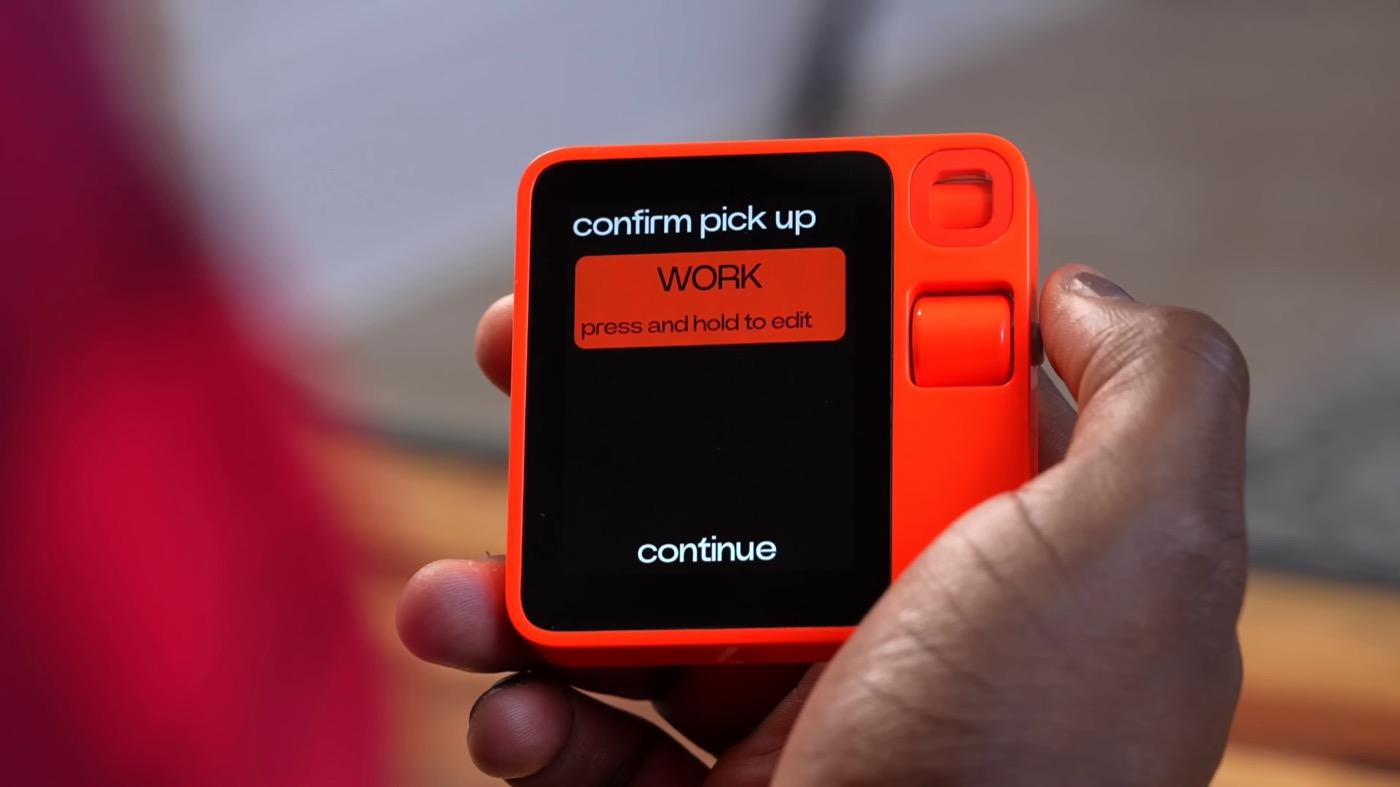
Worth a brief detour, because the two get lumped together constantly: the orange, pocket-sized Rabbit R1 launched at CES 2024 and shipped that April too, and it was also widely panned at launch for shipping half-finished software. The key difference is that the R1 was never meant to be worn — it's a standalone pocket device, not a pin or pendant — and Rabbit kept iterating on it instead of shutting it down. By late 2025 the company reported more than 100,000 units sold, and a September 2025 software update (rabbitOS 2) added a redesigned interface and an agent called Rabbit Intern. The R1's survival is a useful contrast to the AI Pin's collapse: same brutal 2024 review cycle, very different second act, because Rabbit kept shipping software fixes instead of looking for a buyer.
What HP actually bought — and what it didn't
In February 2025, HP announced it would acquire the majority of Humane's assets for $116 million — its roughly 300 patents, its software platform, and most of its engineering staff, including Chaudhri and Bongiorno. That figure is a steep drop from valuations reportedly discussed as high as $1 billion earlier in Humane's life. Critically, HP did not buy the AI Pin hardware business. The device itself was discontinued outright, folded instead into a new HP division called HP IQ, aimed at bringing Humane's AI software into HP's laptops, printers, and conference-room hardware — not at continuing to sell a wearable.
The AI Pin's servers went dark on February 28, 2025, at 3 p.m. ET. Every feature that depended on Humane's cloud — calling, messaging, AI queries — stopped working the moment the clock hit that mark. Owners within 90 days of their original shipment date could request a refund before the cutoff; everyone else was left holding hardware with no functioning software behind it. Humane also warned that all user data stored on its servers would be permanently deleted after the shutdown.
The pendant category didn't die. It got bought.
What's happened in the eighteen months since is less a comeback story and more a full changing of the guard. None of the devices below tried to replace a smartphone the way the AI Pin did. Each one picked one job — recording meetings, capturing notes, or just being something to talk to — and built narrowly around it. And in a pattern that says a lot about where this category is actually headed, most of the notable names have already been swallowed by a much bigger company.
Limitless Pendant
Started life in 2022 as Rewind AI, a desktop meeting-recorder app, before founder Dan Siroker rebranded it to Limitless and launched a coin-sized aluminum pendant that clips magnetically to clothing. Meta acquired the company in December 2025; the standalone Pendant is no longer sold to new customers, and the team joined Meta's Reality Labs to work on wearables including Ray-Ban Meta smart glasses. Existing Pendant owners keep service through 2026.
Plaud NotePin
Founded in 2021 by Nathan Xu, Plaud built its name on a flagship pocket voice recorder before launching the NotePin — wearable on a lanyard, clip, or wristband — aimed squarely at meetings and conferences. It transcribes in 59 languages and turns recordings into AI summaries and action items. The upgraded NotePin S launched at CES 2026.
Bee Pioneer
A wristband (or clip) that listens to ambient audio unless muted, turning it into daily summaries, to-do lists, and reminders — with optional access to your email, contacts, and calendar for extra context. Amazon acquired Bee's maker, Bluush Inc., in July 2025 and has since folded it into its Alexa and Echo roadmap, showing it at CES 2026.
Omi
Made by San Francisco-based Based Hardware, Omi can clip to clothing, wear as a pendant, or attach directly to the temple. It's the category's open-source pick — a documented hardware and app platform with an app marketplace that plugs into tools like Notion and Google Calendar, aimed at developers as much as end users.
Friend
A different pitch entirely — a circular necklace pendant built by Harvard dropout Avi Schiffmann as a screenless AI companion, not a productivity tool. It listens constantly and lights up when it replies. A New York City subway ad campaign for it was widely defaced with protest graffiti in 2025, making Friend as much a lightning rod for AI-wearable backlash as a product.
Rabbit R1
Not a pendant and not meant to be worn — included here because it's the device most often confused with the AI Pin. Launched the same CES, panned by the same reviewers, and still shipping software updates a year and a half later while Humane's hardware business no longer exists.
How the acquisitions stacked up
Lay the last eighteen months end to end and a pattern is hard to miss: this entire category has been consolidating into a handful of much larger companies, one acquisition at a time.
- April 2024Humane's AI Pin ships to owners and is reviewed almost unanimously badly within days.
- February 2025HP acquires the bulk of Humane's assets — patents, software, and staff — for $116 million. The AI Pin hardware business is discontinued and its servers are shut off on February 28.
- July 2025Amazon acquires Bee (Bluush Inc.), maker of the Bee Pioneer wristband, folding it into its Alexa and Echo device strategy.
- December 2025Meta acquires Limitless, ending new sales of the Pendant and moving the team into Meta's Reality Labs wearables group.
- Early 2026Plaud, Omi, and Friend remain independent, with Plaud showing an upgraded NotePin S at CES 2026 and continuing to scale as a standalone company.
| Device | Status |
|---|---|
| Humane AI Pin | Discontinued, servers off since Feb. 2025 |
| Limitless Pendant | Owned by Meta; no longer sold new |
| Bee Pioneer | Owned by Amazon; active, tied to Alexa |
| Plaud NotePin | Independent; actively shipping and updating |
| Omi | Independent; open-source hardware |
| Friend | Independent; companion device, not productivity |
What actually separates the survivors
The devices still standing succeeded largely by not repeating the AI Pin's core mistake: trying to be everything at once. Limitless and Plaud both narrowed hard toward professional note-capture — meetings, interviews, conferences — and built companion apps that turn raw audio into transcripts and summaries rather than trying to field open-ended voice commands the way the Pin did. Limitless in particular built in a physical "Consent Mode" chime, a feature the AI Pin never had, that audibly signals to people nearby when it's recording — a direct answer to one of the loudest criticisms of always-listening wearables. Bee went the opposite direction on positioning: instead of a premium standalone gadget, it leaned into being the accessible, mass-market option, which is likely part of why Amazon wanted it for the Alexa ecosystem. Omi bet on openness instead of polish. And Friend didn't try to be useful in the productivity sense at all — it's explicitly a companion, which is exactly why it draws the most public backlash of the group.
Common questions
Can I still buy or use a Humane AI Pin?
No. The AI Pin's servers were shut off on February 28, 2025, and every cloud-dependent feature — calls, messages, AI queries — stopped working at that point. HP acquired Humane's patents, software, and staff, not the device business.
Is the Limitless Pendant still available?
Not to new customers. Meta acquired Limitless in December 2025 and stopped selling the standalone Pendant, though existing owners keep service through 2026 while Meta reportedly develops its own AI pendant internally.
Who owns Bee, the AI wristband?
Amazon, since a July 2025 acquisition of Bee's parent company, Bluush Inc. Bee has since been folded into Amazon's Alexa and Echo device roadmap.
Is the Plaud NotePin the same company as the original Plaud recorder?
Yes. Plaud, founded in 2021, built its name on a pocket voice recorder before launching the wearable NotePin, and later the upgraded NotePin S shown at CES 2026.
Is the Rabbit R1 an AI wearable?
Not technically — it's a handheld pocket device, not something clipped to your body. It's grouped into this conversation constantly because it launched the same year as the AI Pin to similarly harsh reviews, but unlike Humane, Rabbit kept shipping software updates instead of shutting down.
The AI Pin didn't fail because the idea of a small AI device you wear was inherently broken — it failed because it tried to replace your phone with hardware and software that weren't ready to do it, and it charged straight at that ambition instead of narrowing down. Every device that's actually stuck around since — Limitless, Plaud, Bee, Omi, Friend — picked one specific job instead. And notably, the two with the most name recognition, Limitless and Bee, didn't survive as independent companies either; they survived by getting bought by Meta and Amazon, companies with the balance sheets to keep a hardware category alive through a bad review cycle or two. That's arguably the real lesson of the AI Pin's collapse: this category isn't dead, but as a standalone startup bet, it's an extremely hard one to win alone.
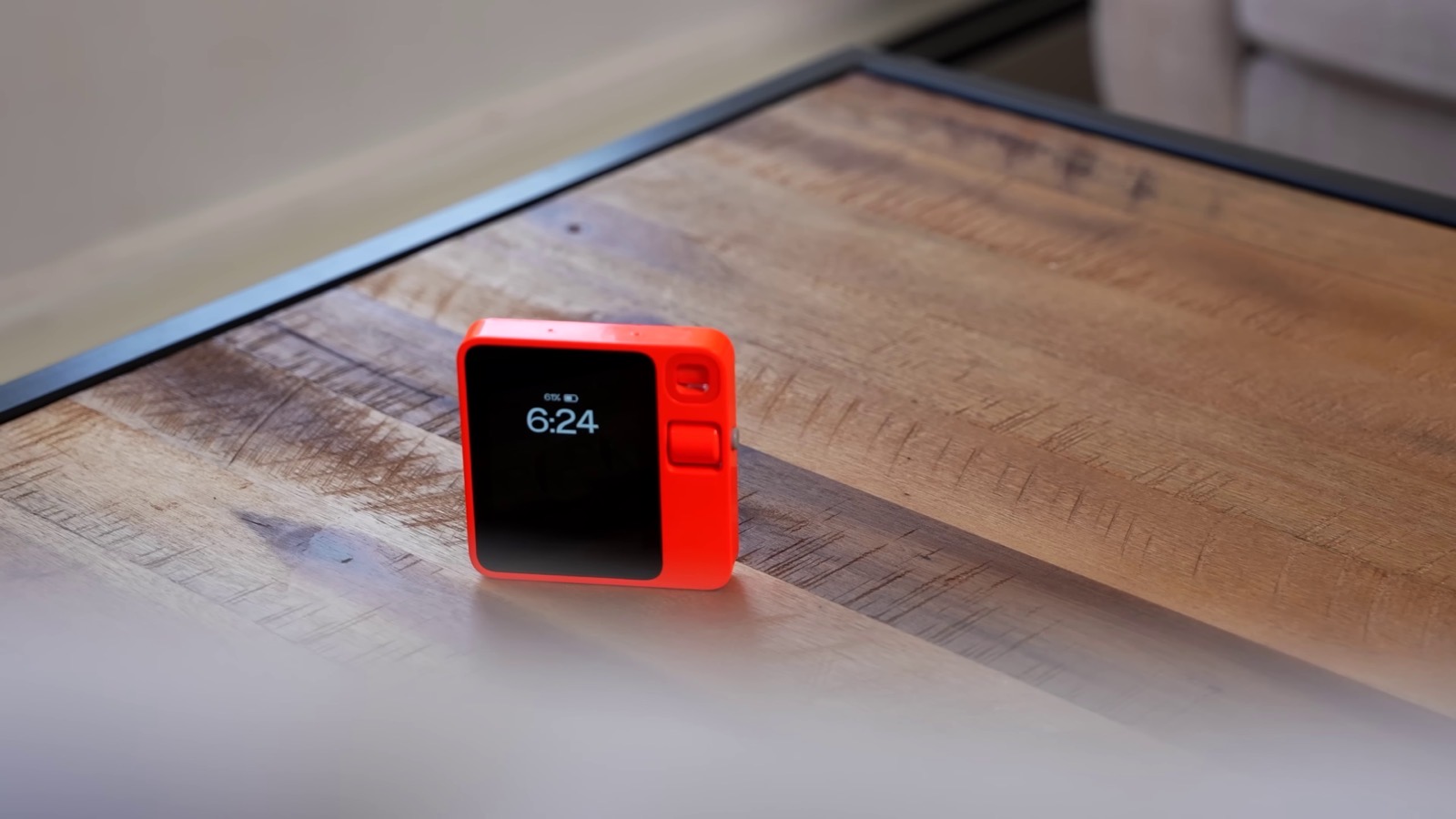
Disclosure. DopamineKart has no business relationship with Humane, HP, Meta, Amazon, Plaud, Based Hardware, or Friend. Nothing in this piece is sponsored, and no affiliate links appear above. Photography is Wikimedia Commons (CC BY 3.0, credit Booredatwork.com) — no free-use photograph of the Humane AI Pin itself exists on Commons, so the Rabbit r1, a related but distinct pocket AI device from the same 2024 hardware wave, is used and clearly captioned as such throughout.
Corrections: email us