Tech Explained
Air Purifiers: HEPA vs Ionizer vs UV, Explained
These three technologies get marketed almost interchangeably, but they physically remove or neutralize contaminants in genuinely different ways — and one of them has meaningfully weaker independent evidence behind it than the other two.
Walk into any air purifier's product listing and you'll usually find some combination of "HEPA filtration," "ionizer technology," and "UV-C sterilization" listed as though they're all doing the same basic job, just with different branding. They're not. Each one targets a different category of airborne contaminant, through a physically different mechanism, and the strength of independent evidence behind each varies a lot more than the marketing copy suggests.
- HEPA filtration physically traps particles as air passes through a dense filter — the most well-established and independently verified of the three technologies.
- Ionizers charge airborne particles so they clump together and fall out of the air (or stick to surfaces) — effective for particles, but some designs produce ozone as a byproduct, which is itself a lung irritant.
- UV-C light can damage the DNA of some airborne viruses and bacteria, but its real-world effectiveness in a home purifier depends heavily on exposure time and intensity, which most consumer units don't sustain for long.
- None of the three technologies address gases and odors on their own — that requires a separate activated carbon filter, which many combination units include alongside HEPA.
HEPA: physically trapping particles, not neutralizing them
A true HEPA (High-Efficiency Particulate Air) filter is a dense mesh of randomly arranged fibers that physically captures particles as air is forced through it. To meet the actual HEPA standard, a filter has to capture at least 99.97% of particles at 0.3 microns in size — a specific, independently testable threshold, not just a marketing label. This size is chosen because it's roughly the hardest particle size to capture (smaller and larger particles are both easier), so a true HEPA filter is effective across the broader range of common airborne particles: dust, pollen, pet dander, and many bacteria.
Because it's a physical filtration mechanism rather than a chemical or electrical process, HEPA has the most straightforward, well-established evidence behind it — the particle is simply removed from the air rather than altered or relocated. The tradeoff is that a HEPA filter needs periodic replacement as it accumulates trapped material, and a clogged filter reduces airflow.
Ionizers: charging particles so they clump and fall
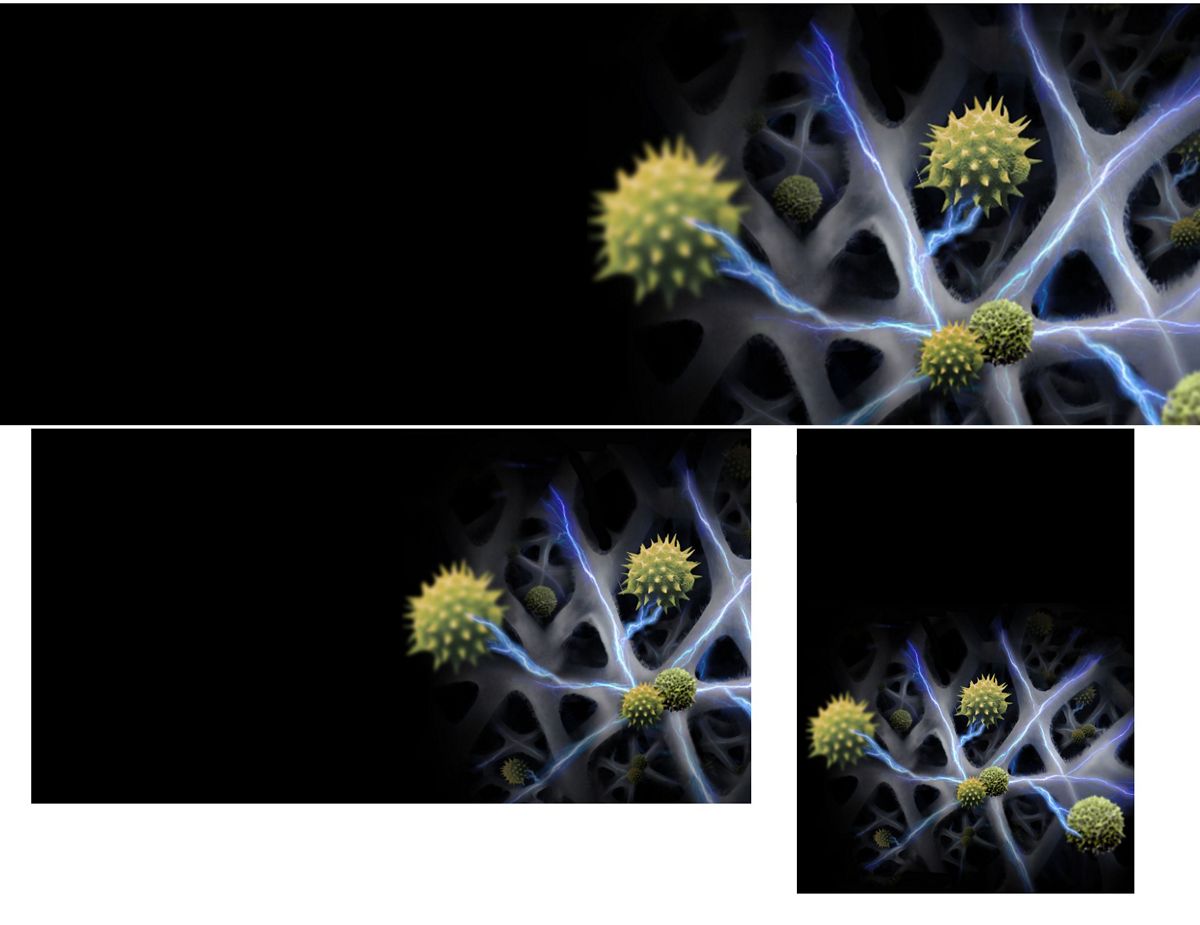
Ionizing air purifiers release negatively charged ions into the air, which attach to airborne particles and give them a charge. Similarly charged particles then repel each other and clump together, becoming heavy enough to fall out of the air or stick to nearby surfaces (walls, furniture) rather than staying suspended and breathable. This can measurably reduce particle counts in the air a purifier is tested in.
The particles an ionizer settles onto a wall or floor haven't been destroyed — they've been relocated out of the air you're breathing, which is a real benefit but a meaningfully different mechanism than HEPA's physical removal from circulation entirely.
UV-C: effective on paper, inconsistent in practice
Ultraviolet-C light, at the right wavelength and dose, can damage the genetic material of some viruses and bacteria, rendering them unable to reproduce — a real, independently documented effect used deliberately in hospital sterilization equipment and water treatment systems. The catch for consumer air purifiers is dose: hospital-grade UV-C sterilization typically uses high-intensity lamps and controlled, sustained exposure times to achieve a meaningful kill rate.
A UV-C light built into a small home air purifier, with air passing by it for a fraction of a second during normal fan operation, generally can't replicate that same dose — which is why UV-C in most consumer purifiers is best understood as a supplementary feature layered on top of HEPA filtration, not a standalone solution with the same level of proven real-world effectiveness.
What none of these three actually solve: gases and odors
HEPA, ionizers, and UV-C are all primarily built to address particles or organisms — none of them meaningfully capture gases, volatile organic compounds (VOCs), or general odors on their own. That's a separate job typically handled by an activated carbon filter, which works through adsorption (gas molecules binding to the carbon's porous surface). Many combination purifiers pair a HEPA filter with a carbon layer specifically because the two mechanisms cover genuinely different contaminant categories.
| Technology | Mechanism | Strongest at | Watch for |
|---|---|---|---|
| HEPA | Physical filtration through dense fiber mesh | Dust, pollen, dander, many bacteria | Needs periodic filter replacement |
| Ionizer | Charges particles so they clump and settle out of the air | Reducing airborne particle counts | Some designs produce ozone — look for CARB certification |
| UV-C | Damages DNA of some viruses/bacteria with UV light | Supplementing filtration, not replacing it | Consumer-unit dose/exposure time is usually much lower than hospital-grade equipment |
Common questions
Is HEPA better than an ionizer?
They work differently rather than one being strictly "better" — HEPA physically removes particles from circulation, while an ionizer causes particles to settle out. HEPA has the more straightforward, longest-established independent evidence behind it.
Are ionizing air purifiers dangerous?
Not inherently, but some models produce ozone as a byproduct, which is a lung irritant. Look for CARB (California Air Resources Board) certification confirming ozone emissions are within its safety limit.
Does UV-C in a home air purifier actually kill germs?
The mechanism is real, but most consumer units can't sustain the dose and exposure time hospital-grade UV-C sterilization uses, so its real-world effectiveness in a home purifier is generally weaker than a standalone claim might suggest.
Will an air purifier remove cooking or pet odors?
Only if it includes an activated carbon filter — HEPA, ionizers, and UV-C on their own don't meaningfully address gases or odors.