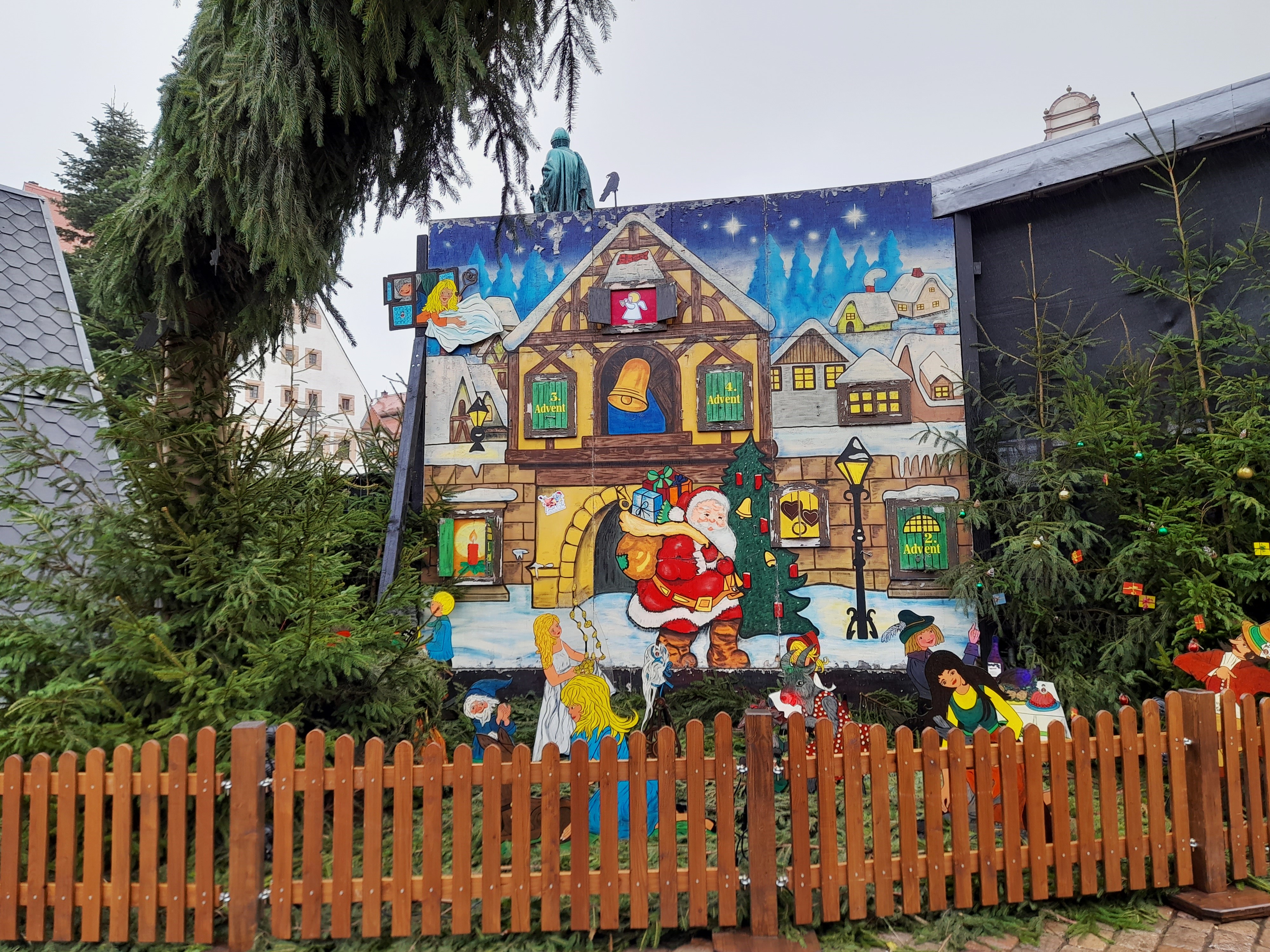
Quick take
- Advent calendars trace back to 19th-century German Lutheran households, long before any beauty brand touched the format.
- Liberty London's 2014 beauty advent calendar is the release most consistently credited with turning the format into a modern retail event — it sold out fast enough to draw lines outside its Soho store.
- Charlotte Tilbury, Diptyque, Space NK, Liberty London, and Sephora's Favorites calendar are now among the names shoppers associate most with the category.
- The countdown format has since spread well past beauty — into candles, pet treats, craft beer, whiskey, cheese, and more.
Every autumn, beauty counters and inboxes fill up with boxes of tiny numbered doors, and it can read like a marketing invention built for the unboxing-video era. It isn't. The advent calendar is a genuinely old countdown tradition, and the beauty industry is a comparatively recent — if now dominant — participant in it. Understanding where the format actually came from makes the current boom easier to read: not a trend that appeared from nowhere, but a century-old habit that beauty brands got unusually good at filling.
A 19th-century countdown, not a marketing invention
The advent calendar's roots are in 19th-century German Lutheran households, where families marked the days of Advent — the weeks leading up to Christmas — with simple daily rituals: chalk marks on a door or wall, a candle lit each evening, a piece of straw added to a nativity scene. The goal was practical as much as devotional: giving children a visible, countable way to track how many days remained before Christmas.
The format moved from homemade tradition to printed product in the early 20th century. Munich publisher Gerhard Lang is widely credited with producing the first printed advent calendar in 1908, through the lithographic firm Reichhold & Lang — small pictures behind numbered flaps, an evolution of a paper calendar his own mother had made him as a child. In the 1920s, doors that could actually be opened became standard. By 1926, Reichhold & Lang had paired with the chocolate maker Stollwerck to insert real chocolate pieces into a calendar called "The Christmas Rose" — an early hint at where the format was eventually headed. Chocolate-filled advent calendars didn't become a true mainstream staple until the 1970s, once manufacturers like Cadbury began mass-producing them.

How beauty turned the countdown into an annual flagship
Beauty brands didn't invent the advent calendar, but they did something distinct with it: they turned a children's countdown novelty into a prestige retail event built around discovery and exclusivity. British department store Liberty London is the release most consistently pointed to as the trigger. Its 2014 beauty advent calendar packed miniatures from names including Diptyque, Kiehl's, and Malin + Goetz behind two dozen numbered drawers, and demand was intense enough to draw queues outside its Soho store — reportedly selling out almost immediately. Around the same window, brands like Ciate and Benefit were also experimenting with beauty-specific calendars, but Liberty's version is the one trade coverage keeps citing as the moment the format tipped into a must-have annual release.
From there, the category widened quickly. Fragrance and skincare house L'Occitane brought its own advent calendar to market in 2016, initially as a UK-driven idea that later became a genuine holiday staple for its North American business as well — reporting that the calendar became one of its top-performing gift sets in the run-up to Black Friday. Department stores and specialty retailers followed with their own annual editions, and by the early 2020s "beauty advent calendar" had become a recognizable seasonal search term in its own right, distinct from the classic chocolate version.
The names that made "beauty advent calendar" a category
A handful of brands and retailers now anchor the category every year, each with a distinct reason shoppers look for their calendar specifically.
Liberty London
The London department store's 2014 beauty advent calendar — packed with miniatures from Diptyque, Kiehl's, and Malin + Goetz — is the release beauty trade press most often cites as the start of the modern boom.
libertylondon.com →Diptyque
The Paris fragrance house treats its holiday calendar as a flagship release, built around exclusive scents and candle-accessory pairings that beauty trade outlets have covered as a case study in holiday strategy.
diptyqueparis.com →Space NK
Space NK's annual calendar draws on its full roster of stocked skincare and makeup brands, and has a track record of selling out.
spacenk.com →Charlotte Tilbury
One of the most consistently searched-for single-brand calendars in the UK, typically built around bestsellers like the Magic Cream and signature lip shades.
charlottetilbury.com →Sephora Favorites
Sephora's own-brand "Favorites" calendar has sold out multiple years running in the UK market, and remains one of the widest-reaching entries in the category thanks to Sephora's scale.
sephora.com →Why retailers keep leaning on the format
Trade coverage of the category points to a few consistent reasons beauty retailers keep building out advent calendars every year rather than treating them as a one-off gimmick. The format is built for product discovery — a single calendar exposes a shopper to a wide range of items in trial sizes, lowering the commitment of trying something new. It photographs and films well, feeding the kind of daily unboxing content that performs strongly on social platforms every December. And for retailers carrying dozens of brands, a calendar is a compact way to showcase assortment breadth and introduce shoppers to names they might not otherwise pick up. For single-brand houses like Diptyque, it's also become a dedicated moment to debut limited holiday scents and packaging that reinforce brand identity going into the new year.
None of that has made the category immune to criticism. Sephora and other retailers have faced public pushback in past years over calendars whose contents didn't match what was advertised, and Chanel discontinued its own advent calendar after a 2021 backlash over perceived value relative to what was inside. The format's popularity hasn't erased the basic tension of any surprise-box product: it only works if what's behind the doors actually feels worth opening.
Beyond beauty: the countdown format goes everywhere
Once beauty proved the format could carry serious retail weight, other categories followed fast. Selfridges alone reportedly stocked well over a hundred distinct advent calendars in a single recent holiday season, spanning far more than chocolate or cosmetics. Pet brands now sell advent calendars filled with treats and small toys. Craft breweries and spirits makers build calendars around daily beer or whiskey pours. Specialty food retailers have launched cheese, tea, coffee, and hot sauce versions. Toy makers like Lego have leaned into the format for years. Even watchmakers and luxury houses have experimented with high-end countdown boxes. The common thread across all of it is the same mechanic beauty brands proved out first: a fixed, dramatic reveal every day, repeated for weeks, that keeps a shopper engaged with a brand well before the actual holiday arrives.
| Milestone | Year |
|---|---|
| Advent countdown tradition established in German Lutheran households | 19th century |
| First printed advent calendar (Gerhard Lang / Reichhold & Lang) | 1908 |
| First chocolate-filled calendar ("The Christmas Rose," with Stollwerck) | 1926 |
| Chocolate advent calendars become a mainstream staple | 1970s |
| Liberty London's beauty calendar credited as the modern trigger | 2014 |
| L'Occitane brings its beauty calendar to the North American market | 2016 |
Common questions
Are beauty advent calendars a new invention?
No. The advent calendar format is more than a century old and started as a German Christian household tradition. Beauty brands are a comparatively recent addition to a much older countdown habit.
Who is credited with starting the beauty advent calendar boom?
Liberty London's 2014 beauty advent calendar is the release beauty trade coverage most consistently points to as the moment the category tipped into a major annual retail event, though brands like Ciate and Benefit were experimenting with the format around the same period.
Has the format spread beyond beauty?
Yes. Advent calendars are now built around candles, pet treats, craft beer, whiskey, cheese, tea, coffee, toys, and more — using the same daily-reveal mechanic beauty brands proved out.
Do beauty advent calendars always sell out?
Several of the highest-profile calendars, including entries from Liberty London and Sephora, have sold out quickly in past years, but availability varies by brand, retailer, and year, and isn't guaranteed for every release.
Has the category faced any criticism?
Yes. Some retailers have faced pushback over calendar contents not matching what was advertised, and Chanel discontinued its calendar after a 2021 backlash over perceived value.
The beauty advent calendar isn't a trend that appeared out of nowhere — it's a beauty-industry adaptation of a countdown tradition that German households were already practicing more than a century earlier. What's genuinely new is the scale: a format built to help a child track the days until Christmas is now a coordinated annual release for department stores, fragrance houses, and mass retailers alike, engineered around discovery, exclusivity, and social unboxing moments. And the same mechanic that beauty brands proved out has since spread into nearly every retail category willing to build a box with two dozen doors. The tradition is old. The industry built around it is not.
Disclosure. DopamineKart has no business relationship with Liberty London, Diptyque, Space NK, Charlotte Tilbury, Sephora, L'Occitane, Chanel, or any other brand named in this piece. This is a trend report, not a buying guide — no affiliate links appear above. Historical facts are sourced from Wikipedia (capped at three citations) and beauty/retail trade coverage, including WWD, Glossy, and BeautyMatter. Real photography is Wikimedia Commons, credited per image.
Corrections: email us