The Earthquake Emergency Kit: 18 Things That Earn Their Space
An earthquake kit is not a magic backpack you buy once and forget. It is a small system: water you can actually store, food your household will eat, light that works with injured hands, and supplies matched to the people and animals who live there.
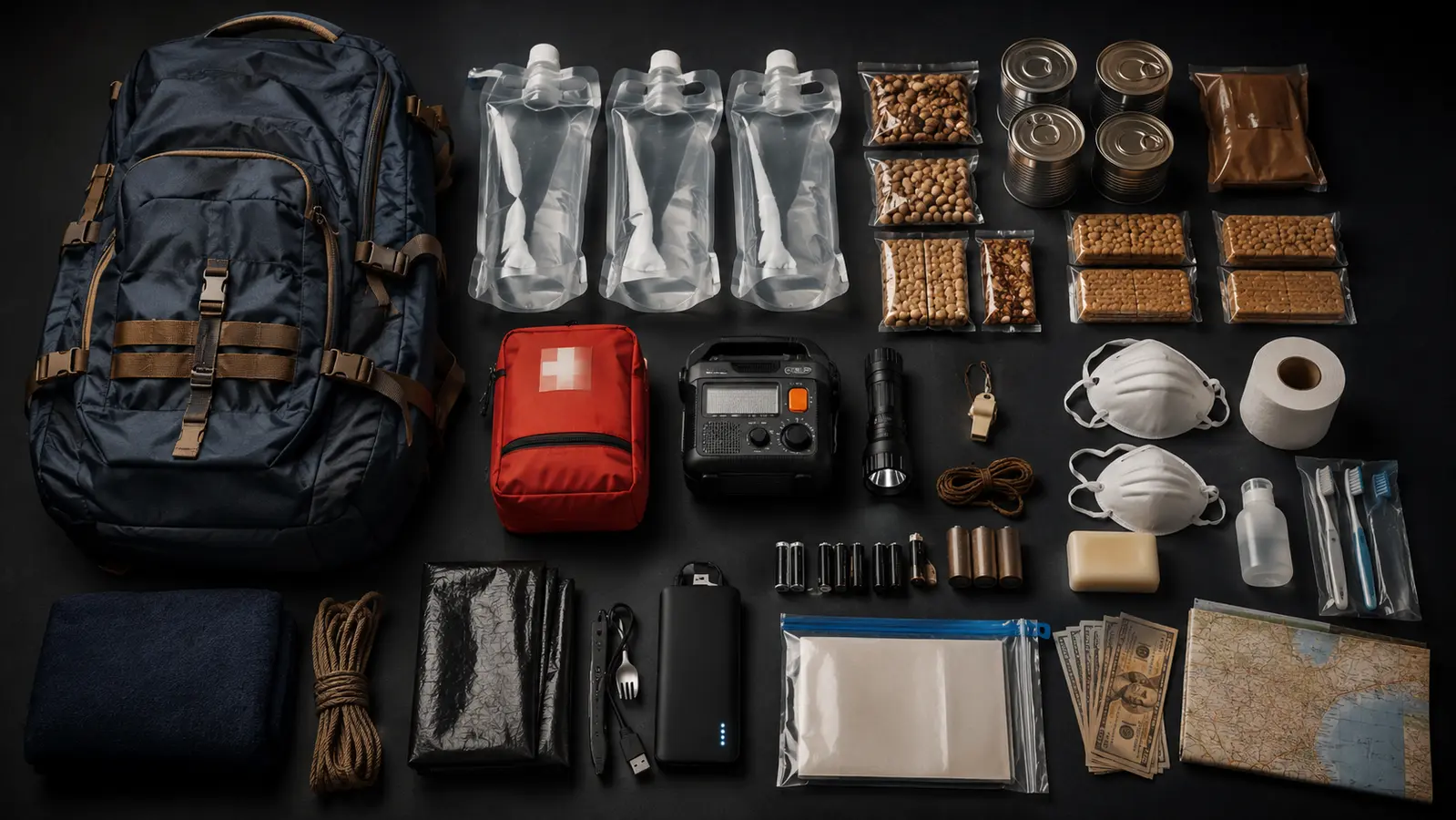
Quick answer. Build the home supply first, then pull a lighter three-day evacuation kit out of it. The Red Cross recommends three days of portable supplies and two weeks at home where possible. Start with water and medication — not gadgets.
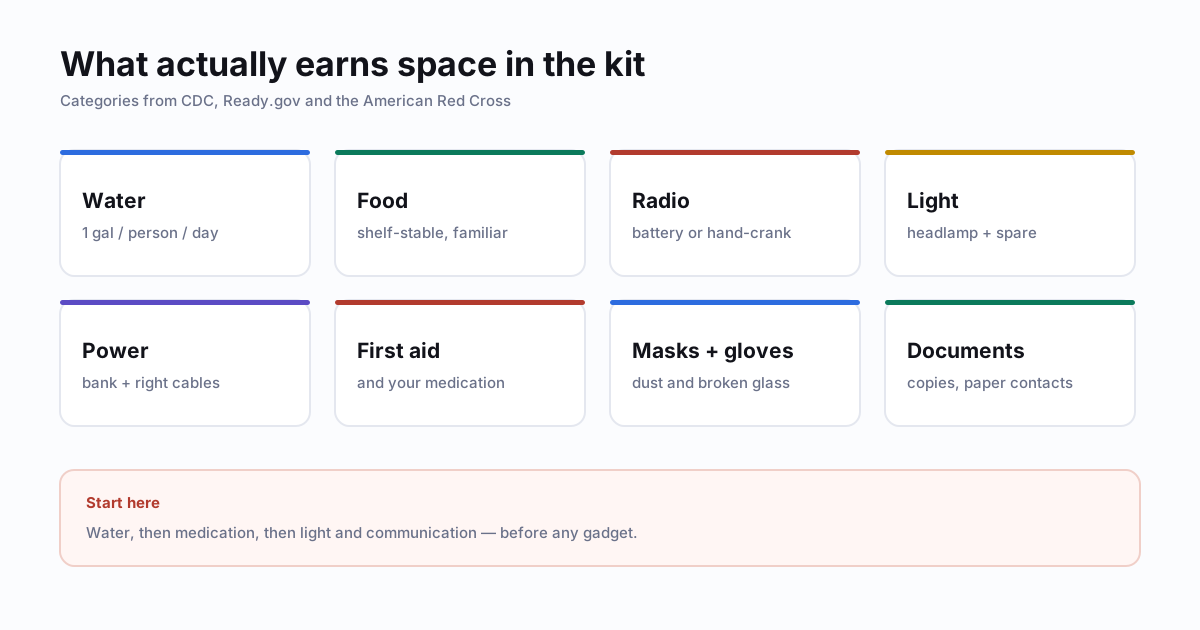
This guide does not pretend we shook every product in a laboratory. We have not tested these items. What follows translates CDC, Ready.gov and American Red Cross categories into a shopping specification you can take to any shop — what the item is for, what to look for, and the thing it cannot do for you.
That last part matters most. Almost every failure in a home kit is someone assuming a product covers a risk it does not cover.
1. Stored water
Why it earns space. Water systems can lose pressure or become contaminated. CDC recommends at least one gallon per person per day for three days, and suggests two weeks where you have the space.
What to look for. Unopened commercial bottles, or durable food-grade containers with tight lids. Use sizes a person in your household can actually lift — one enormous drum is worse than several manageable ones.
What it cannot do. A filter is not a substitute for stored water, and ordinary filters may not remove chemicals or salt.
2. A water-treatment backup
Why it earns space. Stored water runs out. A treatment method gives you options if officials say the supply is biologically contaminated.
What to look for. Clear contaminant-reduction claims against a named test standard, replaceable components, and instructions you can follow with no internet. Match the device to the water you would actually be treating.
What it cannot do. Boiling and most filters do not make chemically contaminated or salt water safe. Follow health-authority instructions.
3. Nonperishable food you already tolerate
Why it earns space. Power and refrigeration may fail, and an emergency is the worst moment to discover nobody will eat the food.
What to look for. Shelf-stable items needing little water, no refrigeration and minimal preparation. Include familiar foods, allergy and infant needs, and a manual can opener.
What it cannot do. Ultra-dry “survival food” that needs a lot of water competes directly with your drinking supply.
4. A battery or hand-crank radio
Why it earns space. Cell networks and internet can fail or congest. The Red Cross recommends a battery-powered or hand-crank radio, with NOAA Weather Radio where available in the United States.
What to look for. Simple controls, a clear speaker, a replaceable-battery option, local alert-band compatibility, and the manual stored with it.
What it cannot do. A tiny solar panel charges slowly and should never be your only plan.
5. A headlamp and a flashlight
Why it earns space. A headlamp leaves both hands free for climbing, carrying or first aid; a flashlight is the one you hand to somebody else.
What to look for. Simple modes, common batteries or dependable rechargeable cells, a low setting for long runtime, and impact and water resistance suited to your use.
What it cannot do. One light is no light the moment it breaks. Keep a second source and spare power.
6. Power banks and the correct cables
Why it earns space. Your phone carries alerts, maps, contacts and the photographs your insurer will ask for.
What to look for. A reputable, safety-certified bank sized for several phone charges, plus short labelled cables for every household device. Store away from heat and inspect for swelling or damage.
What it cannot do. Capacity degrades. A bank you last charged two years ago is a brick — recharge and test on a schedule.
7. A first-aid kit you can actually understand
Why it earns space. Cuts, punctures, burns and minor injuries are common where there is debris and broken glass.
What to look for. Organised modules, gloves, dressings, gauze, tape, antiseptic supplies and instructions. Add your own personal items, and take first-aid and CPR training.
What it cannot do. A large kit does not replace training or emergency care. The kit is not the skill.
8. Medication and medical-device power
Why it earns space. Pharmacies, transport and clinics can all be disrupted at once.
What to prepare. Work with your prescriber or pharmacist on an appropriate reserve, keep a written medication list, and plan batteries or backup power for critical devices. Include glasses, hearing-aid batteries, mobility supplies and anything needing refrigeration.
What it cannot do. This is the one category with no shopping link, deliberately: do not stockpile or alter prescriptions without professional guidance.
9. N95s or well-fitting particulate masks
Why it earns space. Dust from damaged interiors and from cleanup irritates lungs and can carry hazardous particles.
What to look for. Genuine approved respirators from a reliable seller, in the correct size, individually packaged where possible.
What it cannot do. An N95 does not protect against gases or oxygen-poor spaces. Owning one is not a reason to enter a damaged structure.
10. Work gloves and sturdy shoes
Why it earns space. Glass, nails, sharp metal and unstable debris injure hands and feet first.
What to look for. Durable gloves that still allow grip, and closed-toe shoes with puncture-resistant soles that fit the wearer. Keep a pair beside every bed.
What it cannot do. Protective gear does not make unstable debris safe to climb.
11. A whistle
Why it earns space. A trapped person can signal with a whistle far longer than they can shout, and at less cost in air and energy.
What to look for. A pealess design, loud output, bright colour, attached to the go-bag or the bedside kit.
What it cannot do. Nothing, if it is at the bottom of a packed bag. Accessibility is the whole feature.
12. A multipurpose dry-chemical fire extinguisher
Why it earns space. Small fires follow damaged electrical and gas systems. CDC includes a multipurpose dry-chemical extinguisher in earthquake home supplies.
What to look for. The appropriate local certification and rating, a readable gauge, a size you can handle, a wall mount, and professional guidance on placement. Learn PASS — Pull, Aim, Squeeze, Sweep.
What it cannot do. It is for a small, contained fire with a clear escape route behind you. When in doubt, leave and call emergency services.
13. Basic hand tools
Why it earns space. A wrench, pliers, screwdriver, pry tool, broom or shovel covers minor emergency tasks and the cleanup that follows.
What to look for. Tools matched to your home and its utilities, plus instruction from your local utility about when and how shutoffs should be handled.
What it cannot do. Do not shut off gas as a reflex, and never turn it back on yourself where a professional is required.
14. A sanitation kit
Why it earns space. Water and sewer service may be interrupted for far longer than the power.
What to look for. Soap, hand sanitiser, toilet paper, heavy trash bags and ties, menstrual products, nappies, wipes, and an emergency toilet plan appropriate to where you live.
What it cannot do. Do not mix cleaning chemicals or improvise bleach concentrations. Follow public-health instructions.
15. Emergency blanket, rain layer and climate clothing
Why it earns space. Evacuation can leave you outside at night, or in weather you did not dress for.
What to look for. Layering matched to local heat, cold, rain and mobility needs. A reflective blanket is compact; a real blanket or sleeping bag is far better for sheltering at home.
What it cannot do. Thin reflective blankets tear easily and do not replace climate-appropriate insulation.
16. A waterproof document pouch with paper contacts
Why it earns space. Identification, insurance, medical information and contacts speed both evacuation and recovery.
What to look for. A compact water-resistant organiser holding copies — not every original — and no exposed password list. Keep encrypted backups off-site.
What it cannot do. “Fireproof” and “waterproof” are ratings with time and exposure limits. Read the test standard rather than the adjective.
17. Furniture anchors and cabinet latches
Why it earns space. The best emergency product is often the one that stops a heavy object from falling in the first place.
What to look for. Hardware compatible with the furniture, the wall construction, the load and local code. Anchor to framing or use an approved method.
What it cannot do. Package promises do not install themselves — quality of installation matters more than the brand. Renters need permission before altering anything.
18. A dedicated pet module
Why it earns space. Pets need water, food, medication, identification, transport and sanitation exactly as people do.
What to look for. Carrier, leash or harness, food, water, bowls, medication, litter and waste bags, a recent photo, microchip details, vaccination record and one comfort item.
What it cannot do. A carrier in a remote closet is very hard to reach during an aftershock. Keep it accessible, and train the animal to tolerate it beforehand.
Buy in this order
If you only do five things
- Store three days of water.
- Sort medication and medical-device continuity.
- Add light, a radio, and phone power.
- Put shoes, gloves, masks and first aid somewhere you can reach in the dark.
- Secure whichever piece of furniture is most likely to fall onto a bed or across an exit.
Then complete the system
Add food, fire safety, sanitation, documents, tools, climate protection and pet supplies. Expand the home reserve toward two weeks as space and circumstances allow.
What we would skip
- Giant prepacked kits with no component list and no expiry dates.
- “Tactical” tools that add weight and solve no household problem.
- One oversized water container nobody in the home can lift.
- A solar-only charging plan.
- Filters with vague claims and no named test standard.
- Gas shutoff tools bought without utility-specific instruction.
- Counterfeit N95s or medical supplies from unknown sellers.
Maintenance, every six months
- Test lights, radio and power banks.
- Inspect batteries for leakage or swelling.
- Rotate food and home-filled water according to guidance.
- Check medication and first-aid dates.
- Update children’s clothing sizes and the seasonal layer.
- Check documents, contacts, pet records and cash.
- Confirm anchors and latches are still tight.
- Practise finding and carrying the kit.
Final verdict
The best earthquake kit is boring, reachable, maintained, and matched to the people who will use it. Start with water and medical continuity. Add communication and injury prevention. Buy fewer gimmicks and secure more furniture.
| Do | Avoid |
|---|---|
| Store water first, in liftable containers | One drum nobody can move |
| Keep shoes and a light beside each bed | A single torch in a kitchen drawer |
| Buy respirators from a reliable seller | Unknown-seller N95s |
| Follow utility instruction on shutoffs | Shutting off gas as a reflex |
| Test and rotate every six months | Buying a kit once and forgetting it |
| Match supplies to real medical needs | Stockpiling prescriptions unsupervised |
Sources
- American Red Cross — Survival kit supplies
- CDC — Earthquake safety
- CDC — Creating and storing an emergency water supply
- Ready.gov — Build a kit
This guide restates official preparedness guidance. It is not medical, structural, or emergency advice for your specific situation — follow the instructions of local authorities during an actual event.