
TSA doesn't ban power banks. It caps them at 100 watt-hours (Wh) and requires they travel in your carry-on, never in checked luggage — a rule that trips people up not because it's strict, but because most power banks don't print "Wh" anywhere obvious on the box. Here's how to actually read the spec, and five real, currently-listed chargers that land safely under the limit.
The rule, in plain terms
One number matters. It's usually not the one printed biggest on the box.
The FAA and TSA allow spare (uninstalled) lithium-ion batteries — which is what a power bank is — in carry-on baggage only, up to 100 watt-hours per battery without needing airline approval. Between 100 and 160 Wh, most airlines allow it but only with advance approval, typically capped at two spares. Above 160 Wh, it's not allowed on passenger aircraft at all. The reasoning is straightforward: a battery fire in the cabin can be spotted and handled by crew and passengers; the same fire in the cargo hold, unsupervised, is a much harder problem — which is exactly why checked luggage is off the table regardless of size.
The catch is that watt-hours aren't the spec manufacturers lead with. Power banks are almost always marketed by mAh (milliamp-hours) — "10000mAh," "20000mAh," "25000mAh" — because it's the bigger, more marketable number. Converting is simple arithmetic once you know it needs doing: Wh = (mAh ÷ 1000) × voltage, and most power banks run on a nominal 3.7V lithium-ion cell. So a 20000mAh bank is roughly 20 × 3.7 ≈ 74Wh — comfortably under the 100Wh line. A 27000mAh bank lands right around 99.9Wh — technically fine, but close enough to the edge that a cautious label-checking gate agent could give you a harder time.
Reputable brands now print the Wh figure directly on the unit for exactly this reason — it's the number a gate agent or TSA officer is trained to look for, not the mAh headline.
Quick facts
Check the printed Wh rating
Most compliant power banks now print the watt-hour figure directly on the unit's casing, near the mAh spec — that's the number to photograph or screenshot before a trip, in case a gate agent asks.
"Laptop power bank" capacities
Chargers marketed for laptops often push 25,000–27,000mAh to hit higher wattage output — right at the edge of the 100Wh line. Worth double-checking the label rather than assuming.
Pack a power bank in checked luggage
This is the actual hard rule, regardless of capacity. Spare lithium-ion batteries travel in the cabin only — carry-on or on your person, never in the bag that goes in the hold.
5 real picks, all comfortably under 100Wh
A mix of capacities and price points — every photo below is pulled directly from each product's real, live Amazon listing.
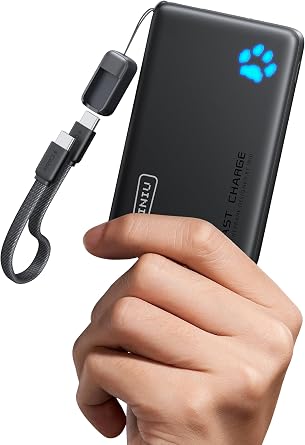
INIU 10000mAh 45W, Attached USB-C Cable
~37Wh — well under the limit. INIU markets this one explicitly as flight-safe, with the watt-hour math already done for you in the listing. An attached USB-C cable means one less cord to remember, at the cost of being stuck with that one connector type.
Shop it on Amazon →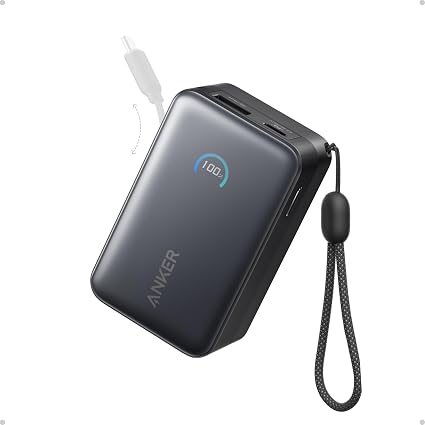
Anker Nano Power Bank, 10000mAh 45W
~37Wh. Anker's compact Nano line trades a little bulk for a retractable built-in cable, aimed at travelers who want one less loose cable in the bag. Similar capacity class to the INIU above — a straightforward brand-preference choice between the two.
Shop it on Amazon →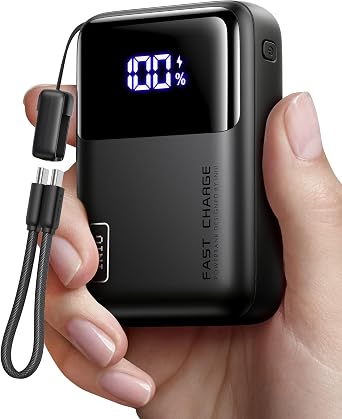
INIU 20000mAh 65W, Ultra-Compact
~74Wh — still clearly under 100Wh, but worth checking your specific unit's printed rating since capacity variants exist under similar names. Enough capacity for multiple full phone charges or a partial laptop top-up via the 65W USB-C output.
Shop it on Amazon →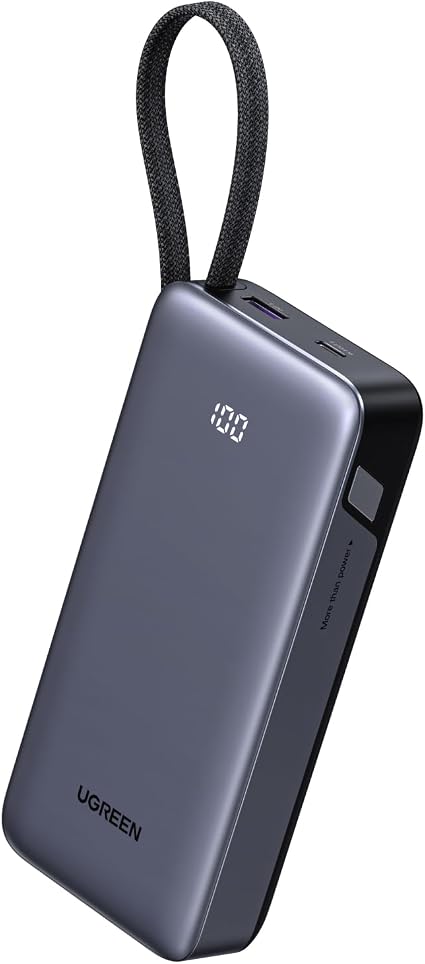
UGREEN Nexode 20000mAh 45W
~74Wh. A digital percentage display is the standout feature here over the plain LED dots most competitors use — useful for knowing exactly how much charge is left before a flight, rather than guessing between four LED bars.
Shop it on Amazon →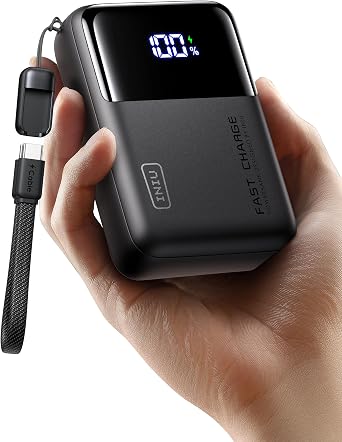
INIU 25000mAh 100W Mini
~92.5Wh — the closest to the 100Wh ceiling on this list, and the one where checking the exact printed rating on your specific unit matters most. The tradeoff for that higher capacity is real laptop-charging output, not just phone and tablet top-ups.
Shop it on Amazon →Common questions
Will TSA actually check my power bank's watt-hour rating?
Not routinely at the checkpoint — but a screener who spots something unusual, or a gate agent doing a device check on a smaller aircraft, might ask. Knowing the number (or having it visible on the unit) avoids a conversation you don't want to have while boarding.
Can I bring more than one power bank?
Yes, as long as each individual unit stays under the relevant threshold — there's no stated cap on the number of sub-100Wh power banks in carry-on, though airlines can apply their own judgment for anything that looks excessive.
What if my power bank doesn't list a Wh rating anywhere?
Do the mAh-to-Wh conversion yourself: divide the mAh figure by 1000, then multiply by 3.7 (the standard nominal voltage for lithium-ion cells). If a listing only shows mAh, treat anything above roughly 27,000mAh as worth a closer look before flying.
Does this rule apply to the battery inside my laptop or phone, too?
Installed batteries in devices you're actively carrying (phones, laptops, cameras) aren't treated the same as spare/uninstalled power banks — those travel with the device itself under separate, generally more permissive guidance. This rule is specifically about standalone battery packs.
Disclosure. Product names, brands, capacities, and photos are pulled directly from each item's real, live Amazon listing at the time of publishing — inventory, exact capacity variants, and availability can change, so always confirm the printed Wh rating on your specific unit before a flight. DopamineKart did not receive free products or payment from any brand featured here. The watt-hour carry-on/checked-baggage rule described above reflects FAA/TSA spare lithium-battery guidance as commonly published; always check current official TSA and your airline's guidance before traveling, as rules can change. Corrections: email us.