
A smart plug is the lowest-risk way into home automation: it doesn't touch your home's wiring, doesn't require an electrician, and if you hate it, you unplug it and you're done. The real decision isn't which brand looks nicest — it's whether you want a hub-free WiFi plug or a newer Matter-certified one, because that choice affects what happens if the brand disappears in five years. Five real, currently-listed picks below.
WiFi-direct vs. Matter — the one spec that actually matters
Both work fine today. They differ in what happens later.
Most smart plugs on the market are "WiFi-direct": the plug connects straight to your home WiFi and talks to a cloud server run by that specific brand, with no separate hub required. This is why a $15 plug can control itself with a phone app and Alexa/Google Assistant — it's not talking to your voice assistant directly, it's talking to the brand's cloud, which talks to Alexa's cloud, which talks to your speaker. It works well, but it means the plug's smarts live on a server you don't control.
Matter is a newer, cross-brand standard (backed jointly by Amazon, Apple, Google, and the Zigbee Alliance) built specifically to break that dependency. A Matter-certified device can be controlled locally by any Matter-compatible app or hub — Apple Home, Google Home, Amazon Alexa, Samsung SmartThings — without needing that specific brand's own cloud server to stay online. The practical difference shows up years later: if a WiFi-direct brand shuts down its servers, older plugs can stop working with voice assistants entirely, even though the hardware is fine. A Matter device is much less exposed to that risk, because the standard itself, not one company's server, is what your ecosystem talks to.
Neither approach is "wrong" for a first purchase — WiFi-direct plugs from established brands (Kasa, Govee) have years of track record and tend to be cheaper. Matter is the safer long-term bet if you're planning to build out a bigger smart-home setup and don't want to be locked into one brand's ecosystem.
Quick facts
Established WiFi-direct brands
Kasa (TP-Link) and Govee both have years of reliable operation and large installed bases — a reasonable bet even without Matter, especially for a first plug or two.
Matter-certified plugs
Worth the (usually small) premium if you're planning to mix brands over time, or you specifically want Apple Home/HomeKit support, which older WiFi-direct plugs often lack entirely.
2.4GHz-only WiFi
Almost every smart plug — regardless of brand — only connects to 2.4GHz WiFi networks, not 5GHz. If your router broadcasts a combined network name, you may need to temporarily split it during setup.
5 real picks, WiFi-direct and Matter both covered
Every photo below is pulled directly from each product's real, live Amazon listing.
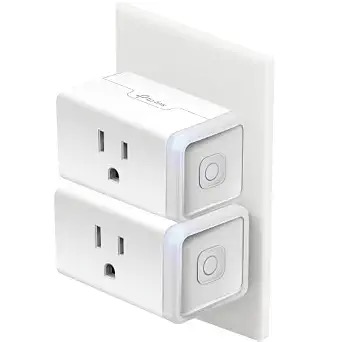
Kasa Smart Plug HS103P2, 2-Pack
The default recommendation for a reason: TP-Link's Kasa line has one of the longest track records in this category, no hub required, and a 2-pack format that's the natural starting point — one for a lamp, one for a coffee maker or fan.
Shop it on Amazon →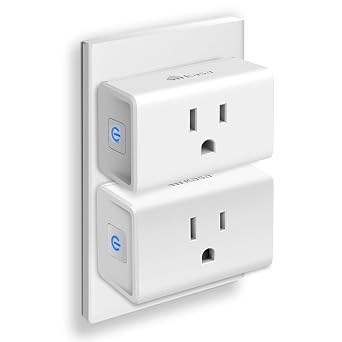
Kasa Ultra Mini Plug EP10P2, 2-Pack
Same brand, smaller footprint — this "ultra mini" version doesn't block the second outlet on a two-outlet wall plate the way bulkier smart plugs often do, which matters more than it sounds like once you own more than one.
Shop it on Amazon →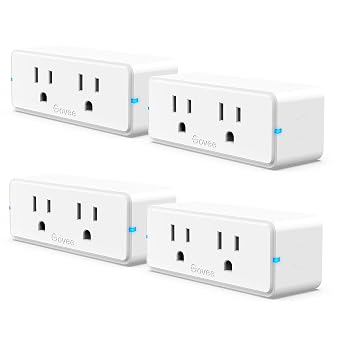
Govee Dual Smart Plug, 4-Pack
Each unit has two independently controllable outlets, and the 4-pack format is built for someone furnishing an entire first smart-home setup at once rather than testing the waters with a single plug.
Shop it on Amazon →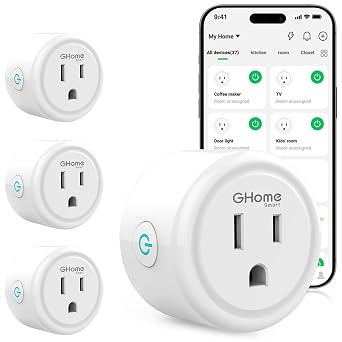
GHome Smart WiFi Plug
A lower-cost single-outlet option with app-based scheduling — a reasonable pick for someone who wants to try exactly one automation (a porch light on a timer, say) before committing further.
Shop it on Amazon →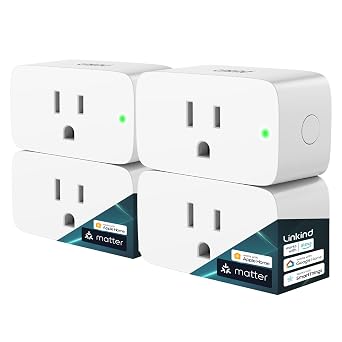
Linkind Matter Smart Plug
The Matter-certified pick on this list — explicitly compatible with Apple Home/Siri in addition to Alexa, Google, and SmartThings, which is the exact cross-ecosystem flexibility the Matter standard exists to guarantee.
Shop it on Amazon →Common questions
Do I need a smart-home hub to use a smart plug?
No, for any of the plugs above. WiFi-direct plugs connect straight to your router; Matter plugs can work with a hub-based ecosystem (like a HomePod mini acting as an Apple Home hub) but don't strictly require one for basic on/off control.
Will a smart plug work with a lamp, but not a ceiling light?
Correct distinction — a smart plug only controls whatever's plugged into it, so it works for lamps, coffee makers, fans, and anything else with a standard plug. A hardwired ceiling fixture needs a smart bulb or a smart wall switch instead, which is a separate, more involved category.
Is Matter actually necessary right now?
Not for a single plug or two. It becomes more valuable as your setup grows — mixing brands, wanting Apple Home support specifically, or simply wanting insurance against any one company's cloud servers going away.
Can a smart plug control something that draws a lot of power, like a space heater?
Check the amperage rating first — most of these plugs are rated for 15A, which covers the vast majority of small appliances, but always confirm against the specific device's power draw before relying on a smart plug for anything heat-generating.
Disclosure. Product names, brands, and photos are pulled directly from each item's real, live Amazon listing at the time of publishing — inventory and availability can change. DopamineKart did not receive free products or payment from any brand featured here. The Matter standard and its backing organizations are described based on publicly available information from the Connectivity Standards Alliance; brand-specific compatibility claims are drawn from each product's own listing. Corrections: email us.