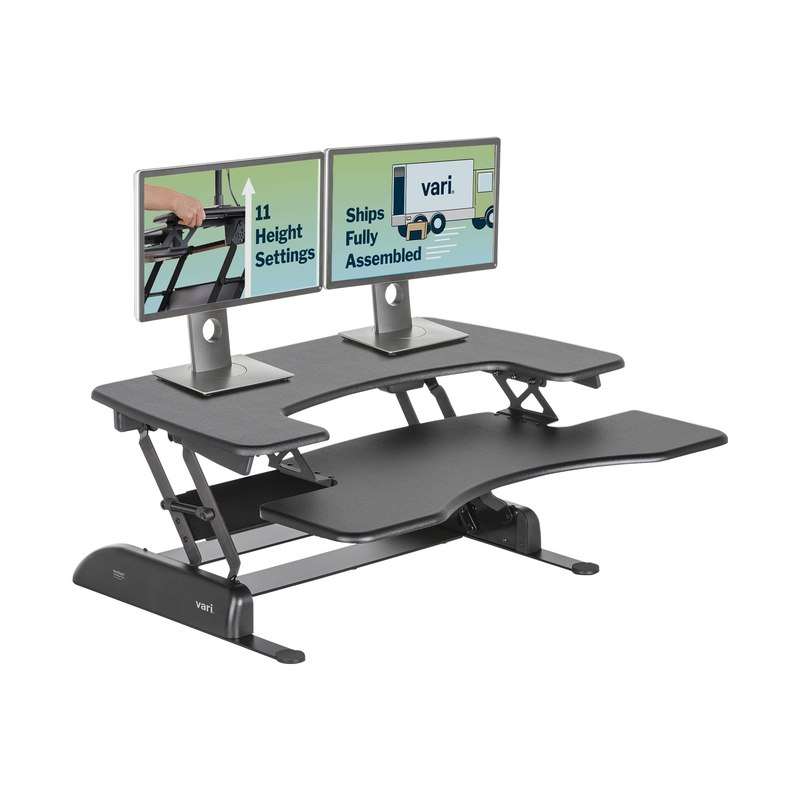
Vari VariDesk Pro Plus 36 - Adjustable Desk Converter with 11
The only listing that states an exact number of height settings (eleven) rather than describing adjustment generically.
Desk Setup Guide
Eleven converters, compared on the details that actually decide fit — width, stated monitor capacity, lift mechanism, and tray inclusion — pulled straight from their listings.
The only listing that states an exact number of height settings (eleven) rather than describing adjustment generically.
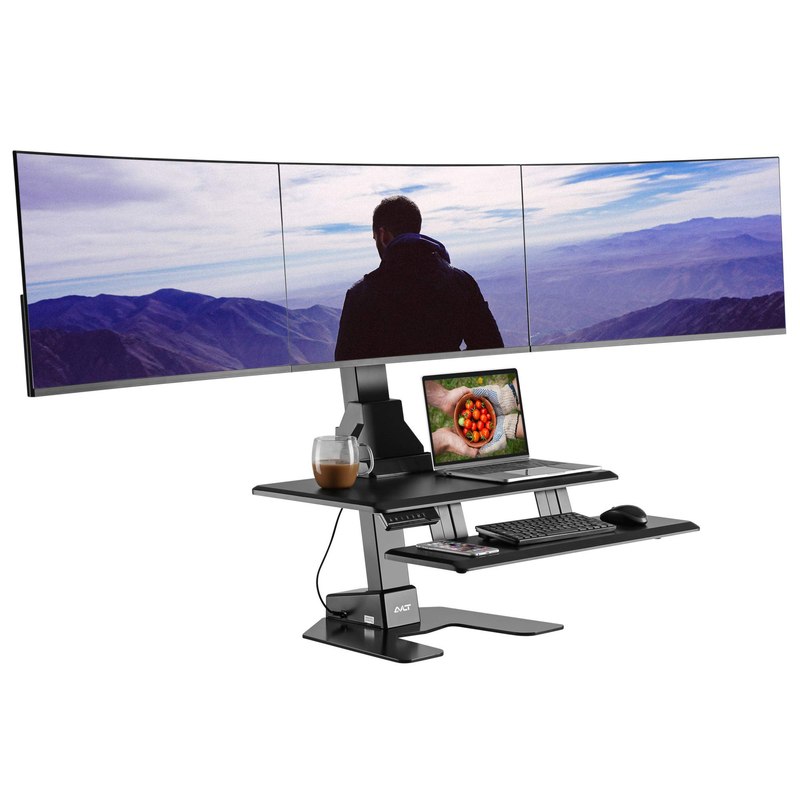
The sole electric, motorized converter in the set; every other listing describes a manual gas-spring, spring-loaded, or pneumatic lift.
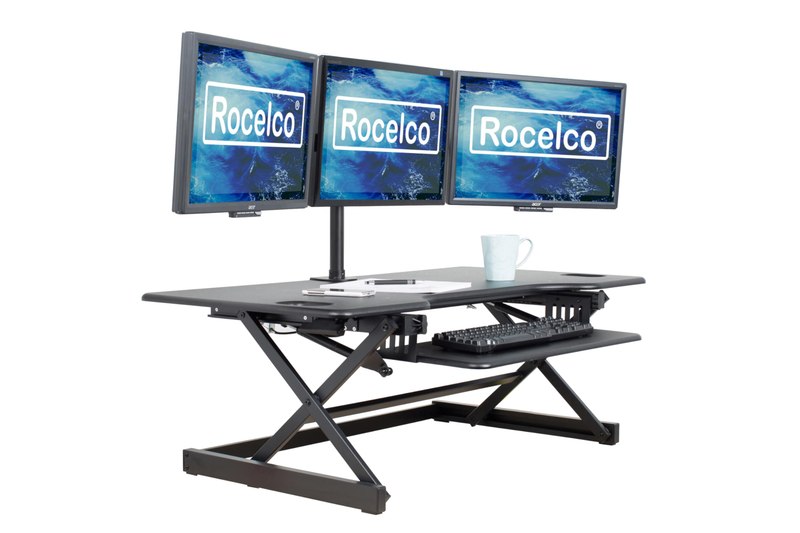
At 46 inches, this is the widest platform explicitly stated, and it's built specifically around triple-monitor support.
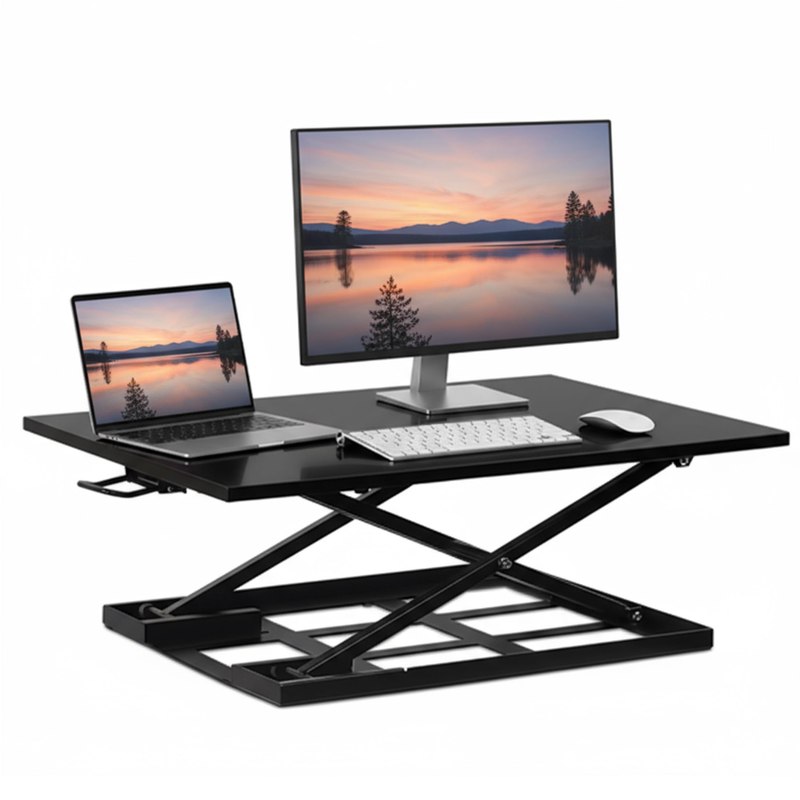
The only listing to quantify a low resting height (2.5 inches), a genuine consideration for keyboard clearance on shallow desks.
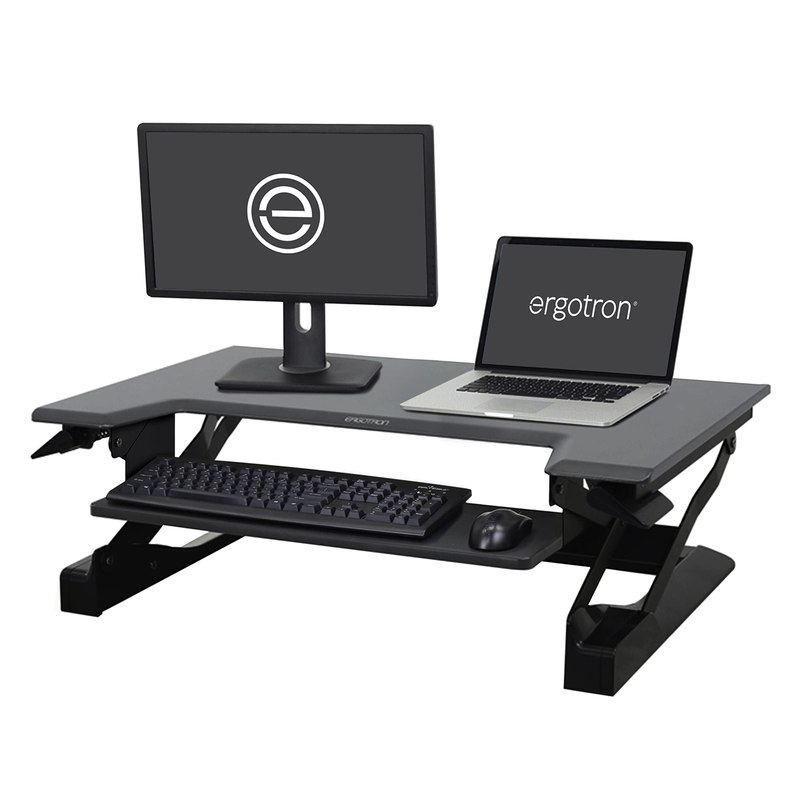
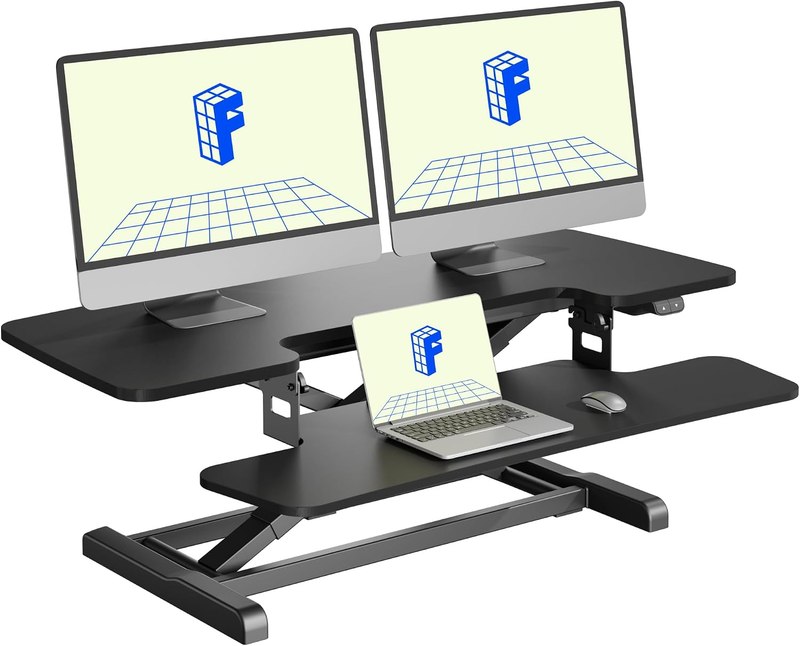
Dual-monitor support is the core descriptor in the title itself, not a secondary feature mentioned in passing.
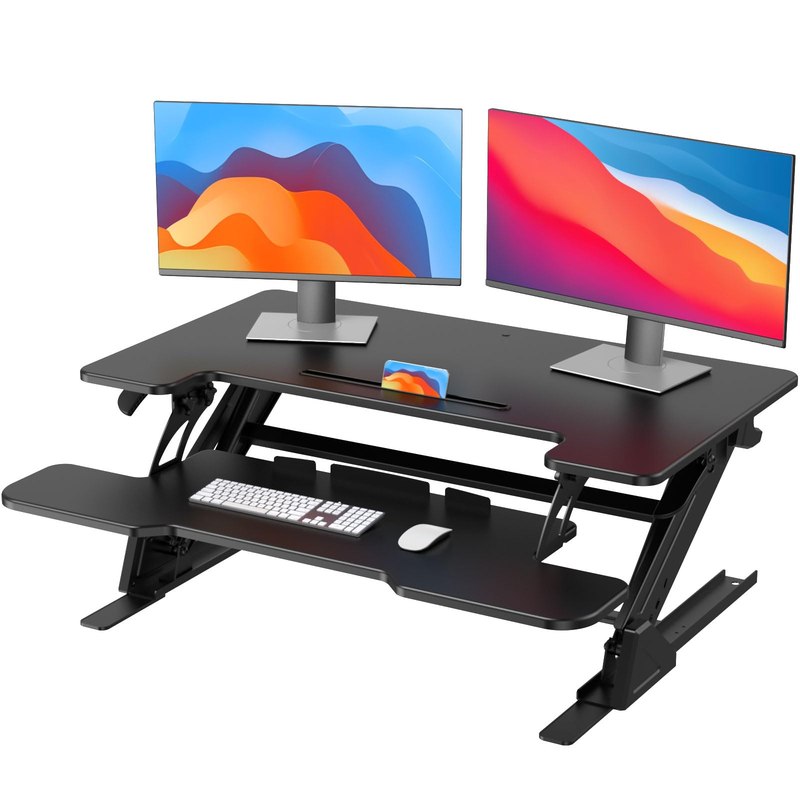
The only listing describing a Z-shaped frame paired with a wide keyboard tray, a structurally different approach from the flat risers elsewhere.
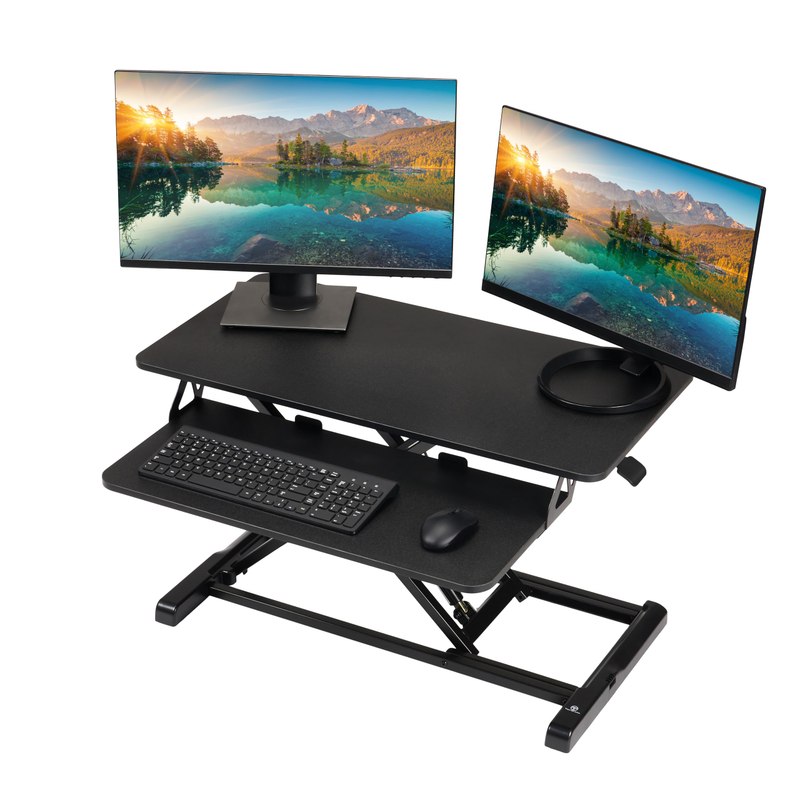
Scores 4.4 while sitting at the value pick end — the most this lineup gives back for what it asks.
“Legit” is our own 1–5 value score, computed the same way for every product from what its live listing showed — how we calculate it. A dash means one of the four inputs could not be read, so we do not score it. Everything else is qualitative. No prices — they move too fast for an article to stay true.
One winner per job, assigned only where this lineup genuinely supports a call.
Each links to a live Amazon listing that was opened and read before it went in.
Compact 32-inch riser
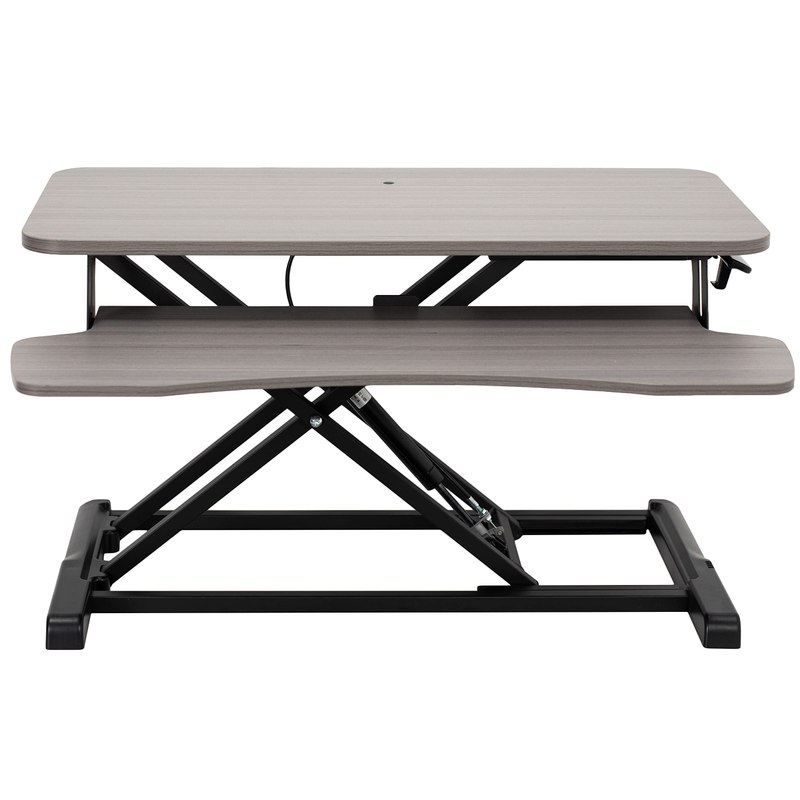
A straightforward 32-inch converter in a dark gray finish, identified by its own model number. The listing keeps things simple: no monitor count, lift type, or keyboard tray is called out in the title, so this reads as a basic single-platform riser rather than a multi-monitor or specialty build. It suits a buyer who wants a plain adjustable surface for a laptop or single monitor on a genuinely small desk. The trade-off is that anyone needing confirmed dual-monitor support or a stated lift mechanism will need to check the product page for detail the title doesn't provide.
Most quantified height adjustment
This 36-inch converter is the only listing in the set that states an exact number of height settings — eleven — alongside a spring-loaded lift and a fully assembled claim. That combination suits someone who wants predictable, repeatable stops rather than a stepless gas-spring feel, and who doesn't want to deal with setup. It's framed as a laptop sit-stand riser rather than a multi-monitor platform, so the title doesn't confirm how it handles two or three screens. Good fit for a laptop-centric small office where known adjustment increments matter more than raw monitor capacity.
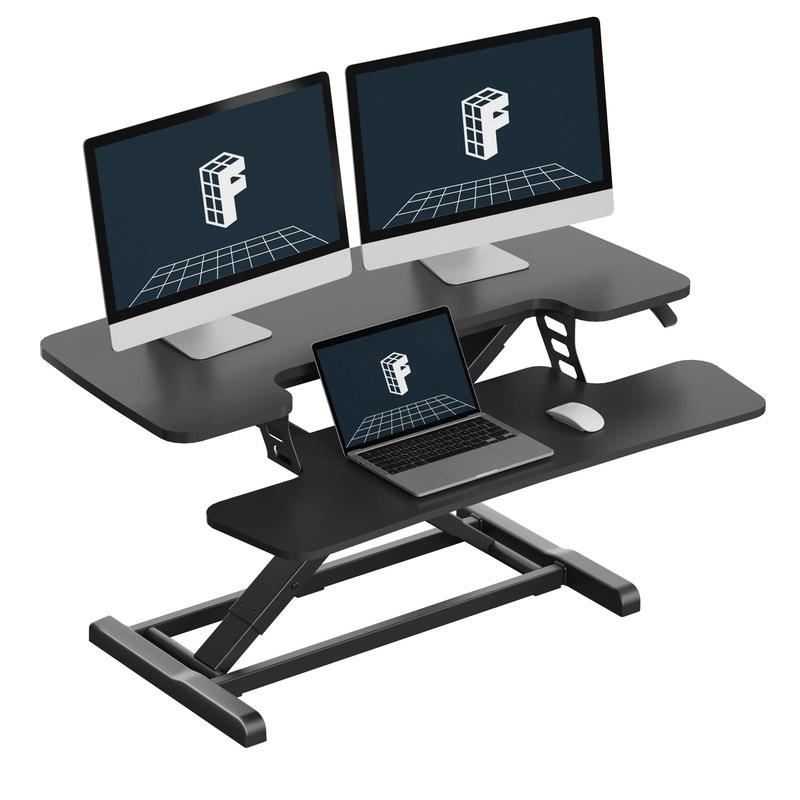
Spacious general-purpose riser
A 36-inch height-adjustable riser marketed as spacious enough for a laptop, keyboard, and monitor together, which positions it as a general middle-ground option rather than a specialist build. It doesn't state a monitor count or lift mechanism, so it reads as suited to a single-monitor-plus-laptop workflow rather than a confirmed dual or triple setup. Reasonable pick for someone who wants working room without committing to a large multi-monitor frame. The trade-off is the missing mechanism detail — buyers who care about gas spring versus spring-loaded feel won't find that answered in the title.
Dual-monitor specialist
The title leads with dual monitor support at a 35-inch width, making this one of only a couple of listings here explicitly built around two screens rather than a laptop or single display. That's a meaningful distinction for a small office running two monitors without wanting a full triple-monitor footprint. What's missing from the title is any mention of lift mechanism or keyboard tray, so the tactile adjustment experience and typing surface aren't specified. Best suited to a two-screen setup where confirmed monitor capacity matters more than tray extras.
Largest surface, triple-monitor build
At 46 inches, this is the widest platform in the set, and it's explicitly built as a triple-monitor riser with tall gas spring assist and a retractable keyboard tray. That combination suits someone who genuinely needs to fit three displays and wants a dedicated typing surface underneath. The honest trade-off is size: a 46-inch platform needs real desk width and depth to sit safely, so despite fitting a 'small office' roundup by category, it's the least compact option here and worth measuring against your desk before choosing it.
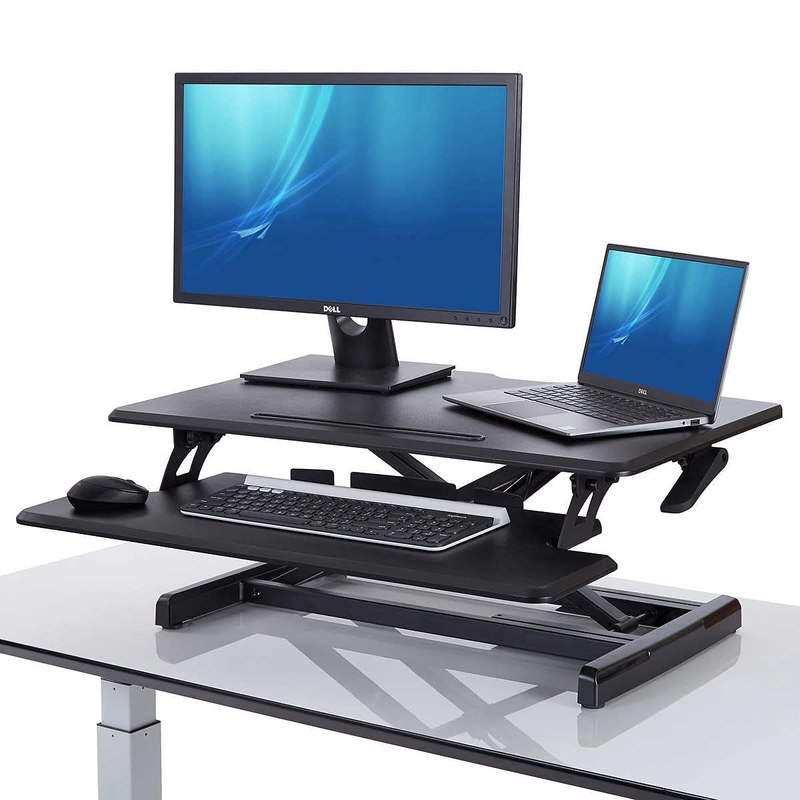
Pneumatic lift option
This riser is built around a pneumatic lift, which is a genuinely different mechanism from the gas-spring and spring-loaded designs used elsewhere in this list, and worth considering if you've had a specific preference or complaint about those before. Beyond the pneumatic detail, the listing doesn't state a width, monitor capacity, or keyboard tray, which makes it harder to judge fit sight unseen. Suited to a buyer specifically curious about pneumatic lift feel who's willing to confirm the remaining dimensions directly on the product page.
Slimmest stated profile
At a stated 2.5-inch low profile with a 32 by 22 inch footprint, this is the only listing here to quantify how slim the unit sits, which matters on a small desk where a bulky base eats into keyboard clearance when seated. It uses a gas spring lift and arrives preassembled. The title doesn't mention monitor capacity or a keyboard tray, so treat it as a compact monitor-and-keyboard platform of unconfirmed multi-monitor support rather than a dual or triple-screen build.
Dual-monitor riser with tray
A 32-inch converter built around dual-monitor support with an integrated keyboard tray, made from particle board per the listing itself. That combination suits a buyer who wants two screens and a dedicated typing shelf in a compact footprint without needing to source a tray separately. The material callout is worth noting for anyone weighing long-term rigidity under two monitors' worth of weight, since particle board is named specifically rather than a metal or composite frame.
Simplest 32-inch listing
This is the plainest title in the set — a 32-inch wide, height-adjustable sit-to-stand converter with no stated monitor capacity, lift mechanism, or keyboard tray. That makes it hard to differentiate from the title alone beyond its width, and it's the one most worth double-checking on the actual product page before buying if you have specific clearance or monitor-count needs. It suits a buyer who wants a basic adjustable platform and is comfortable verifying the remaining specs themselves.
Z-frame with wide tray
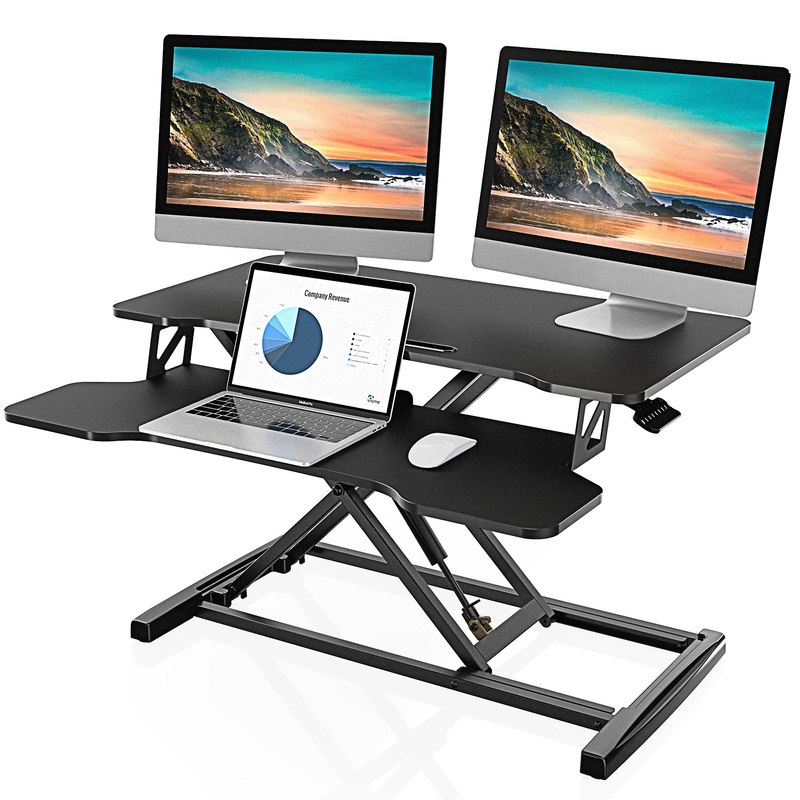
A 36-inch converter distinguished by a Z-shaped frame and a keyboard tray described as wide, which is a structurally different approach from the flat-riser designs elsewhere in this list. That's useful for someone who types a lot and wants generous keyboard-and-mouse room built in rather than a narrow shelf. The title doesn't specify monitor capacity or lift mechanism, so multi-monitor buyers should confirm those details before assuming it matches a dual or triple-screen setup.
Only motorized converter
This is the sole electric, motorized lift in the entire list, and it's built specifically around triple 32-inch monitor support. That combination suits a buyer who wants push-button height changes instead of manual gas-spring or spring-loaded lifting, paired with genuine three-screen capacity. The listing doesn't give a width or keyboard tray detail, and a motorized triple-monitor riser is inherently one of the larger, heavier builds in this category, so it's worth confirming footprint and weight against your desk before committing.
Compare the converter's stated width and depth against your desk's usable surface, not just its overall size. A 46-inch platform needs a proportionally deep desk to sit flush and stable; a 32-inch unit is the safer bet for genuinely small or narrow desks. When a listing doesn't state depth, that's worth confirming before ordering rather than assuming it will fit.
Only a few listings here explicitly state dual or triple monitor support; the rest are silent on it, which usually means they're designed around a laptop or single display. If you run two or three screens, choose a listing that says so directly rather than assuming any adjustable platform can hold that weight and width safely.
Gas spring and spring-loaded mechanisms use resistance and a lever or handle to raise and lower the platform, pneumatic lifts use compressed air for a similar manual motion, and motorized lifts use a powered mechanism for push-button adjustment. Motorized is the only option here without manual effort at each height change, which matters if you switch positions often through the day.
A separate keyboard tray keeps the keyboard lower than the monitor shelf, which is closer to correct ergonomic positioning than typing on the same raised surface as your screen. A few listings here include one explicitly; where it's not mentioned, the platform likely holds keyboard and monitor at the same level.
Both terms suggest less setup than a flat-pack product, but they aren't guaranteed to be identical in practice — one may still need a base attached or a lift mechanism engaged. If a listing uses either term, it's worth reading the product page's setup notes rather than assuming zero assembly.
Treat the missing spec as unconfirmed rather than assuming it's covered. Titles that lead with dual or triple monitor support, or name a specific lift mechanism, are telling you that's a design priority; titles that stay generic usually mean you should check the full product page before assuming it meets a specific need.
There's no single best converter here — there's a best converter for your desk depth and monitor count. If you run one screen or a laptop, the simpler 32-to-36-inch platforms cover it without paying for capacity you won't use. If you run two or three monitors, look specifically for a listing that says so, since several titles are silent on monitor capacity and shouldn't be assumed to handle more than one. Lift mechanism is a genuine day-to-day difference — pneumatic, gas spring, spring-loaded, and motorized all raise and lower differently — so match that to how often you actually plan to switch positions. Where a listing doesn't state a spec, treat that as a gap to check on the product page, not a feature to assume.
Affiliate disclosure. DopamineKart is a participant in the Amazon Services LLC Associates Program. As an Amazon Associate, DopamineKart earns from qualifying purchases — at no extra cost to you, and it never changes a pick. Sources. Every listing was verified live; nothing here was tested by hand. Colours, sizes and availability change — read the listing before buying.
How we review · Corrections: email us