Home Explained
Cool Mist vs Warm Mist Humidifiers, Explained
Both technologies raise the humidity in a room, but the mechanism behind each one comes with real, different tradeoffs — including one safety consideration that matters a lot more with kids and pets around.
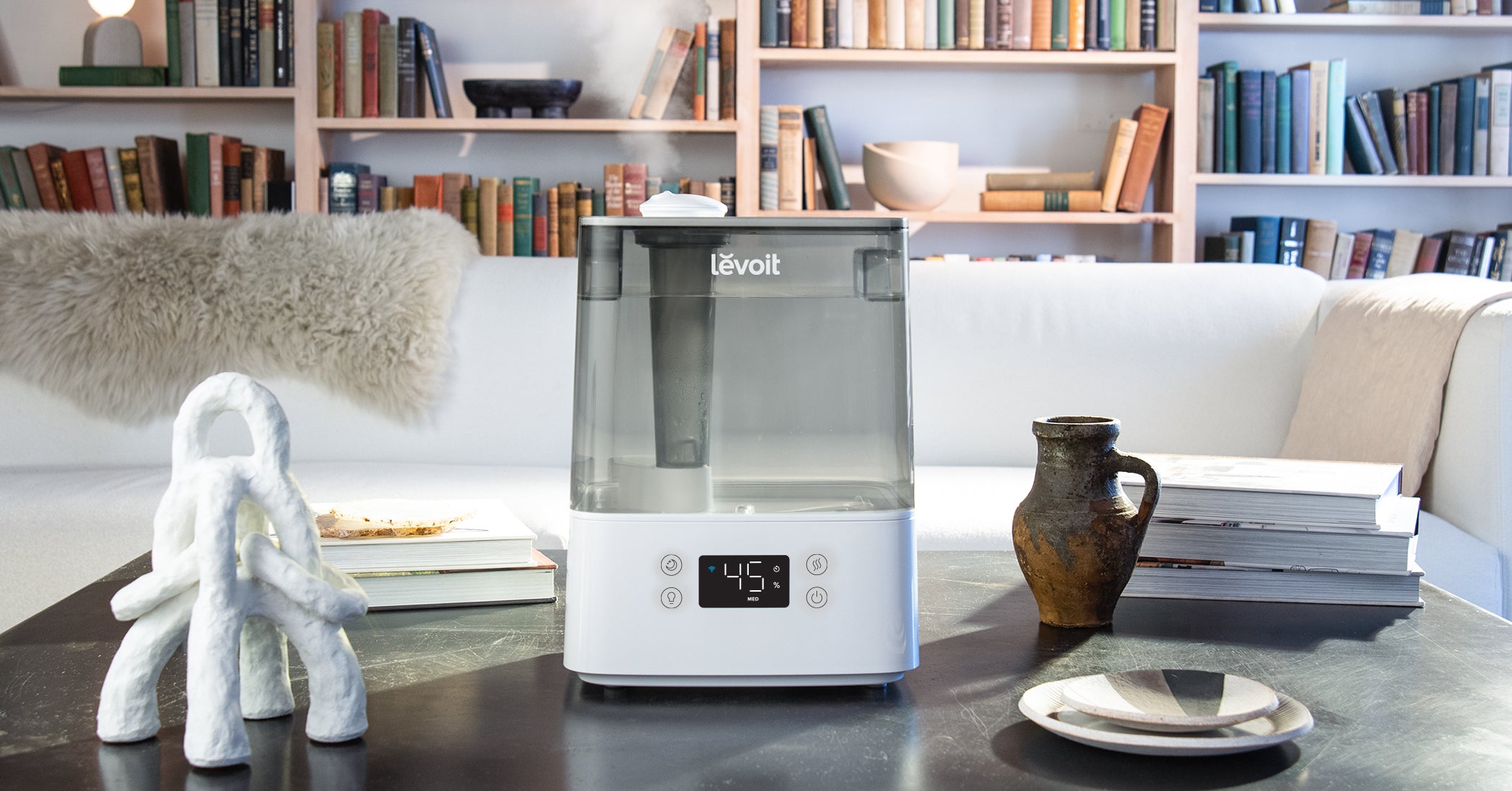
Every humidifier does the same basic job — adding moisture to dry indoor air — but "cool mist" and "warm mist" units get there through genuinely different processes, not just a temperature dial on the same machine. The right choice depends less on personal preference than on the specific room, who's using it, and how much maintenance you're realistically going to keep up with.
- Cool mist humidifiers use ultrasonic vibration or evaporation to release room-temperature moisture — generally safer around kids and pets since there's no hot water involved.
- Warm mist humidifiers boil water into steam before releasing it, which can also mean a small amount of natural disinfection during the boiling process.
- Warm mist units use meaningfully more electricity than cool mist units, since they're actively heating water rather than just vibrating or evaporating it.
- Neither type meaningfully changes how a cold or flu progresses, though added humidity is commonly reported to ease congestion and throat discomfort as a comfort measure.
Cool mist: ultrasonic vibration or evaporation, no heating element
Most cool mist humidifiers use one of two mechanisms. Ultrasonic models vibrate a small metal diaphragm at high frequency underwater, breaking the water into an extremely fine mist that's released into the room at roughly room temperature — this is the quiet, often near-silent type common in bedrooms. Evaporative cool mist models instead use a fan to pull room air through a wet wick or filter, and the natural evaporation process adds moisture to the air passing through.
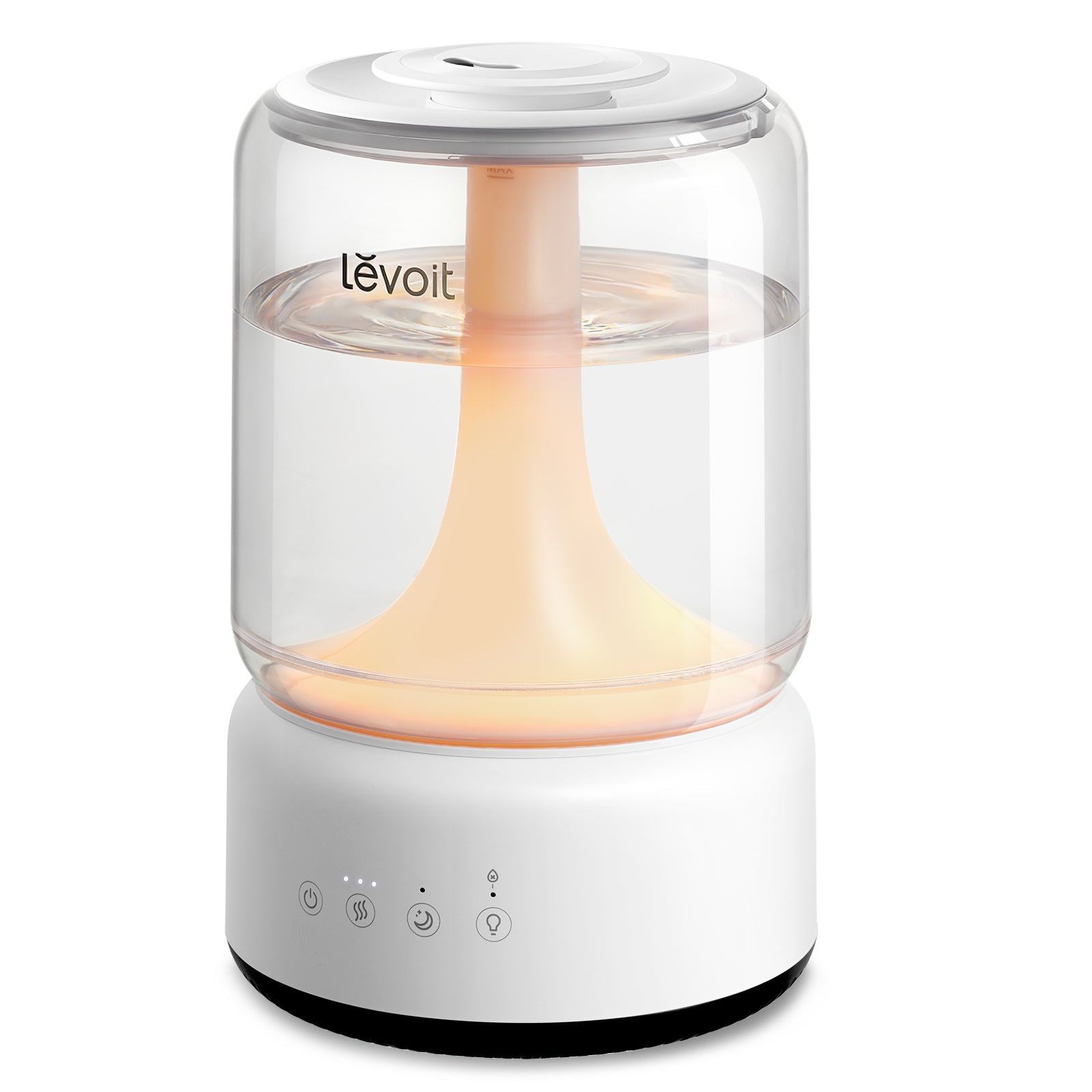
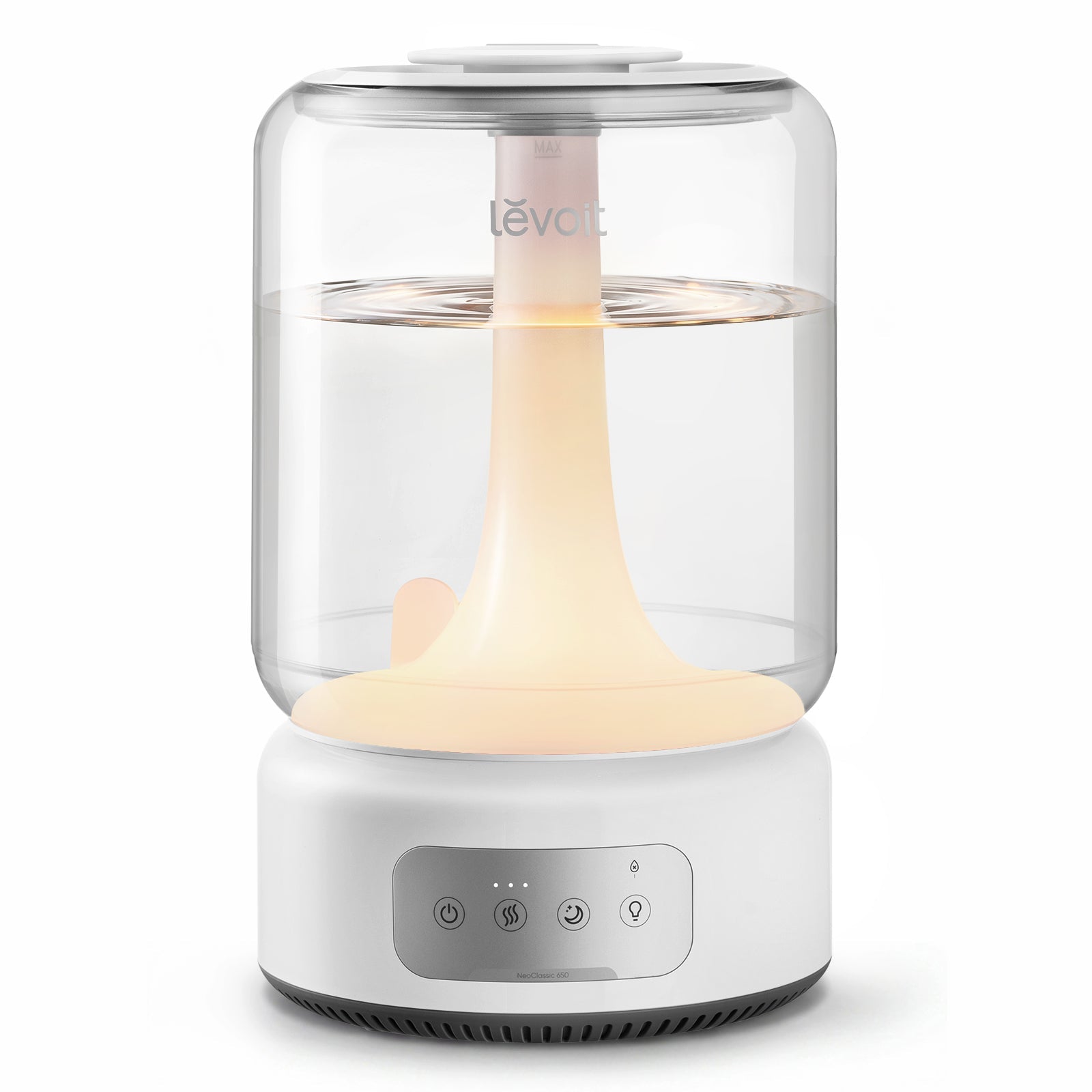
Because there's no heating element, cool mist units are generally considered the safer default around young children and pets — there's no hot water or steam that could cause a burn if the unit is knocked over. The tradeoff is maintenance: because the water isn't heated, cool mist units (especially ultrasonic ones) can be more prone to mineral buildup and require more diligent, regular cleaning to avoid dispersing bacteria or mold along with the mist.
Warm mist: boiling water into steam
Warm mist humidifiers (sometimes called steam vaporizers) use an internal heating element to boil water, then release the resulting steam, typically cooled slightly before it exits the unit so it isn't scalding by the time it reaches room air. Because the water reaches boiling temperature during the process, warm mist units get a real, incidental benefit: many airborne minerals, bacteria, and mold spores in the water are killed off by the heat before release, which cool mist methods don't replicate.
Warm mist units also use noticeably more electricity than cool mist models, since actively boiling water requires sustained heating rather than simple vibration or passive evaporation — worth factoring in for a unit that might run for many hours overnight.
Does either type actually help with a cold?
Added humidity from either type is widely reported to ease the discomfort of congestion, dry throat, and irritated sinuses that often accompany a cold or the flu — moist air can help loosen mucus and reduce irritation in nasal passages. Neither humidifier type has been shown to shorten the duration of a cold or flu itself; the benefit is comfort-focused symptom relief, not a treatment for the underlying illness. This applies equally to cool and warm mist, so the "cold" versus "flu" framing sometimes used in marketing for one type over the other doesn't reflect a real functional difference.
| Type | Mechanism | Best for | Watch for |
|---|---|---|---|
| Cool mist | Ultrasonic vibration or fan-driven evaporation | Nurseries, households with kids/pets, quiet operation | Needs more diligent cleaning to avoid mineral/bacteria buildup |
| Warm mist | Boils water into steam, cooled before release | Some incidental disinfection during boiling | Real burn risk if tipped; uses more electricity |
Common questions
Which type is better for a baby's nursery?
Cool mist is generally the more commonly recommended default for nurseries, specifically because there's no heating element or hot steam involved, reducing burn risk.
Does warm mist kill more germs than cool mist?
The boiling process in warm mist units does kill some bacteria and mold spores in the water before release, which cool mist mechanisms don't replicate — though this isn't the same as sterilizing the air in the room.
Does either type use less electricity?
Cool mist units, especially ultrasonic ones, generally use meaningfully less electricity than warm mist units, since they don't need to actively heat and boil water.
Do I need to clean a humidifier regularly regardless of type?
Yes — both types can grow mold or bacteria in standing water if not cleaned regularly, though cool mist units are generally considered to need more frequent attention since there's no heat cycle providing incidental disinfection.