Quick take
- Amazon Prime Air is scaling toward nearly 500 US cities and towns by the end of 2026 — a sixfold jump from roughly 11 at the start of the year.
- Walmart runs two rival drone fleets at once, Wing and Zipline, after severing ties with its original partner DroneUp in early 2025.
- The FAA's Part 108 rule, phasing in since July 2026, replaced case-by-case waivers with a standardized framework — the real unlock behind this year's simultaneous city launches.
- Community noise and privacy complaints, not the hardware, are the genuine open risk every operator is still managing.
Drone delivery has been "two years away" for most of the last decade — a string of pilot programs in suburban test markets that made headlines and then quietly plateaued. That pattern broke this year. Amazon says Prime Air will reach nearly 500 U.S. cities and towns by the end of 2026, a sixfold jump from the roughly 11 locations it served coming into the year, with a stated goal of covering 30 million customers. Walmart, which spent 2024 and 2025 burning through one drone partner, is now running two rival fleets — Wing and Zipline — simultaneously across close to 20 U.S. markets. And in August, Uber didn't just sign a delivery partnership with a drone company, it took an equity stake in one, betting that Zipline can scale from its current footprint to a million drone deliveries a day by 2029.
Why 2026 is the year this stopped being a novelty
The bigger structural shift is regulatory. Every drone delivery program before this year has operated under individual FAA waivers and exemptions — a patchwork that capped how fast any single company could scale, because each new city, each new route, effectively needed its own paperwork. The FAA's long-awaited Part 108 rule, the first standardized framework built specifically for routine beyond-visual-line-of-sight (BVLOS) drone operations, began phasing in starting in July 2026. It replaces the waiver-by-waiver approach with three defined operational tiers, the most important being Category 2, which covers exactly the kind of at-scale commercial package delivery Amazon, Wing, and Zipline are all now running.
The practical effect: for the first time, a drone delivery company can plan a multi-city rollout around a published rulebook instead of negotiating bespoke permission for every metro area — which is a large part of why five different companies expanded into new U.S. cities in the same six-month stretch. That's the setup for what follows: a genuine multi-company race, with real hardware, real retail partnerships, and real regulatory tailwind — but also real casualties, real community backlash, and a cost structure that has already ended at least one major partnership.
The fleets actually flying in 2026
Ordered roughly by delivery volume to date, not by hype. Every program listed is operating real commercial routes, not a demo.
Amazon — Prime Air (MK30)
The scale leader by a wide margin. The MK30 carries packages up to 5 lb — Amazon says that covers more than 60% of frequently ordered items — with roughly double the range and half the noise of its previous drone. Amazon runs its own fulfillment sites, owning both the control and the community-relations exposure; Texas and Michigan neighborhoods have organized formal noise complaints in 2026. Targeting ~500 cities/towns by end of 2026.
Alphabet — Wing (with Walmart)
The quieter operator, leaning into grocery and pharmacy staples. Its Walmart partnership has crossed one million commercial deliveries — mostly eggs, ground beef, produce, and snacks. Plans call for 270+ sites by 2027, reaching ~40 million Americans across ~20 US markets, including 2026 launches in Memphis, New Orleans, Philadelphia, Phoenix, San Diego, the Bay Area, and Salt Lake City.
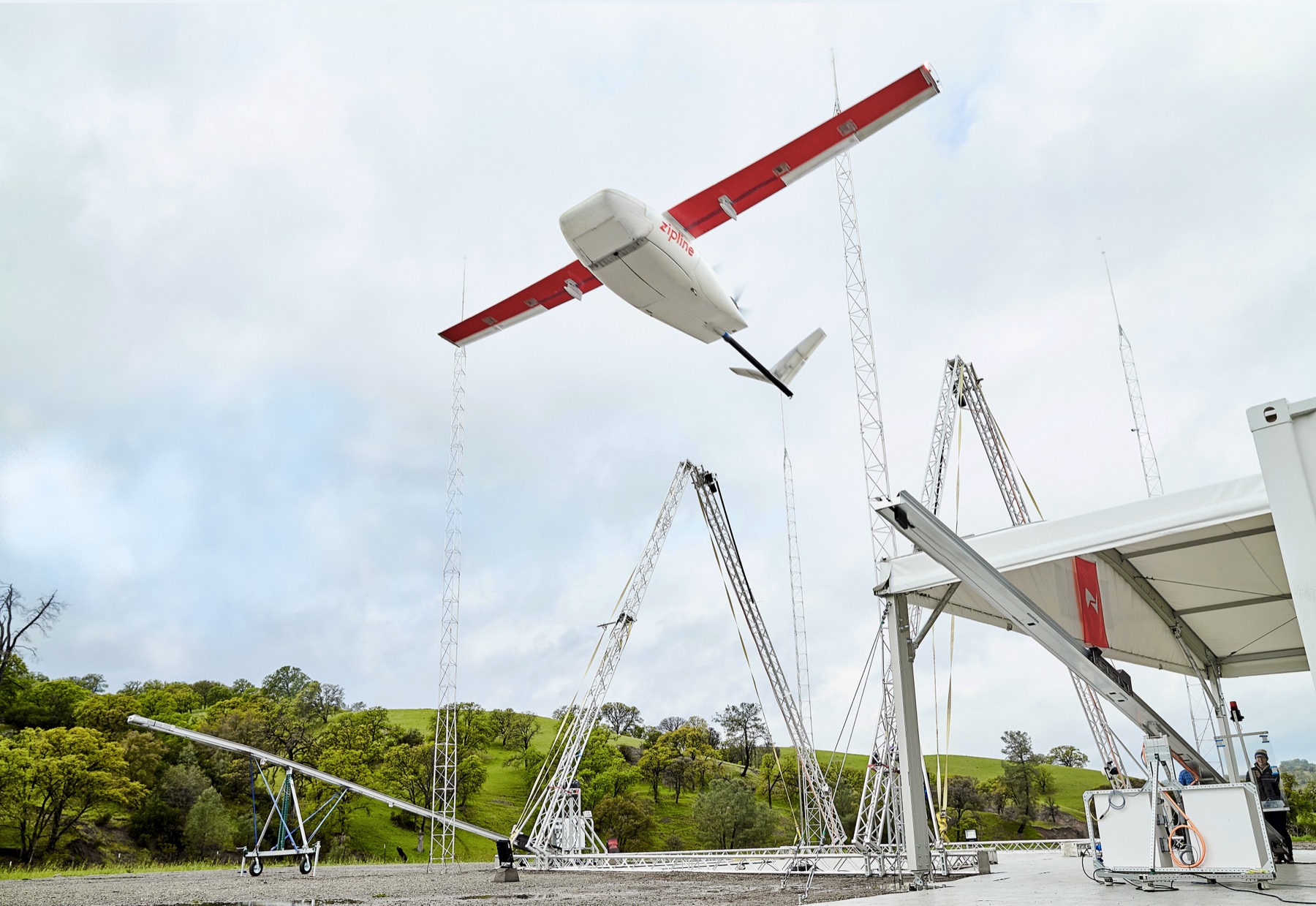
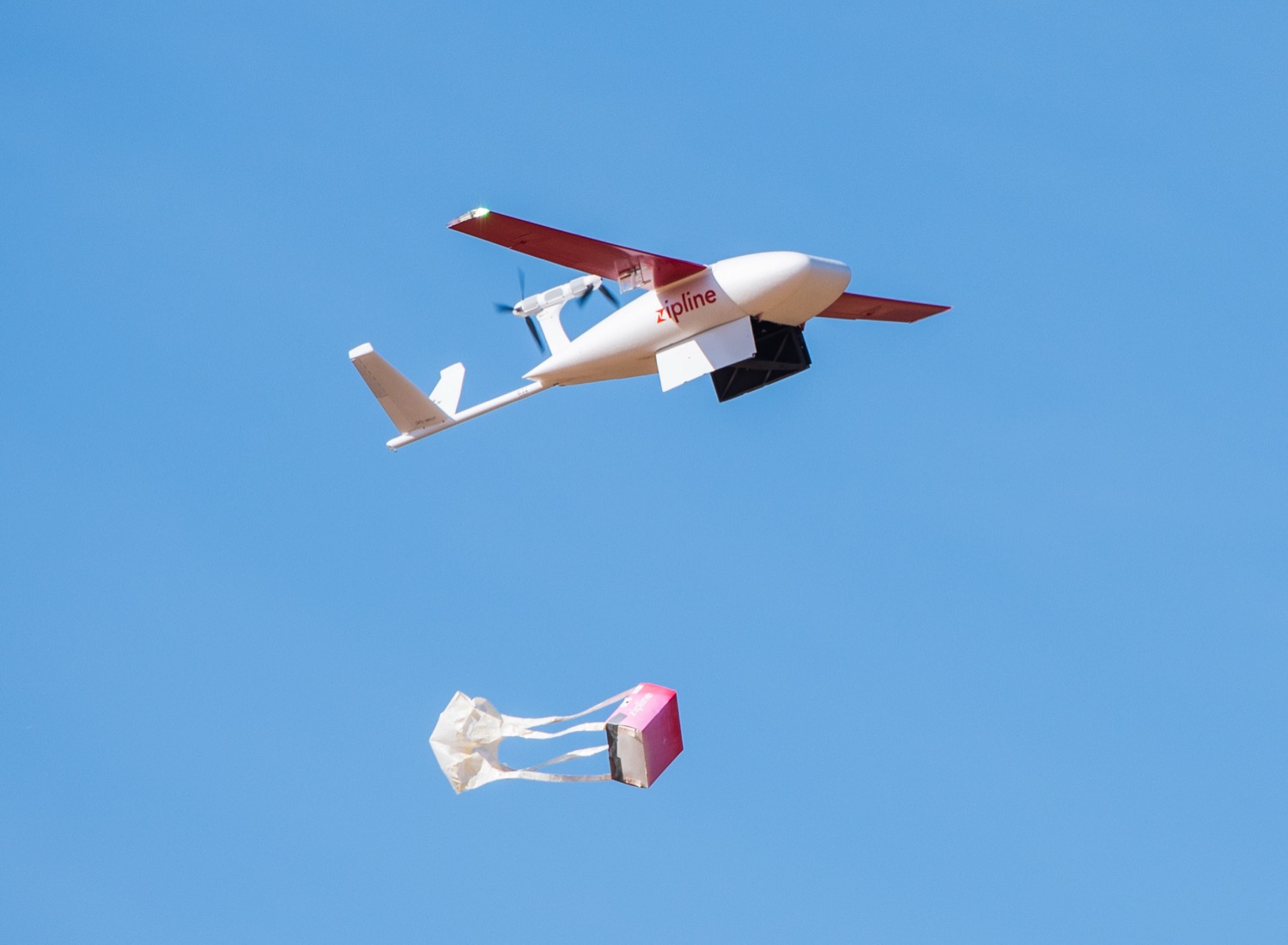
Zipline — Platform 2 (P2)
A decade of life-or-death credibility: Zipline started in 2014 delivering blood and vaccines by drone in Rwanda and Ghana. Its P2 platform carries 8 lb over a 10-mile radius at 70 mph, flying through rain, heat, and 45 mph gusts. Closed $800M+ in 2026 funding at a $7.6B valuation; Uber took an equity stake in August, aiming for Uber Eats orders by year's end with 5–10 minute windows.
DoorDash Air
Earned FAA Part 135 air carrier certification on July 29, 2026 — the eighth company ever to hold one for drone operations. Built out of DoorDash Labs; commercial deliveries targeted for fall 2026. Certification alone doesn't guarantee liftoff — city-by-city airspace authorization still applies.
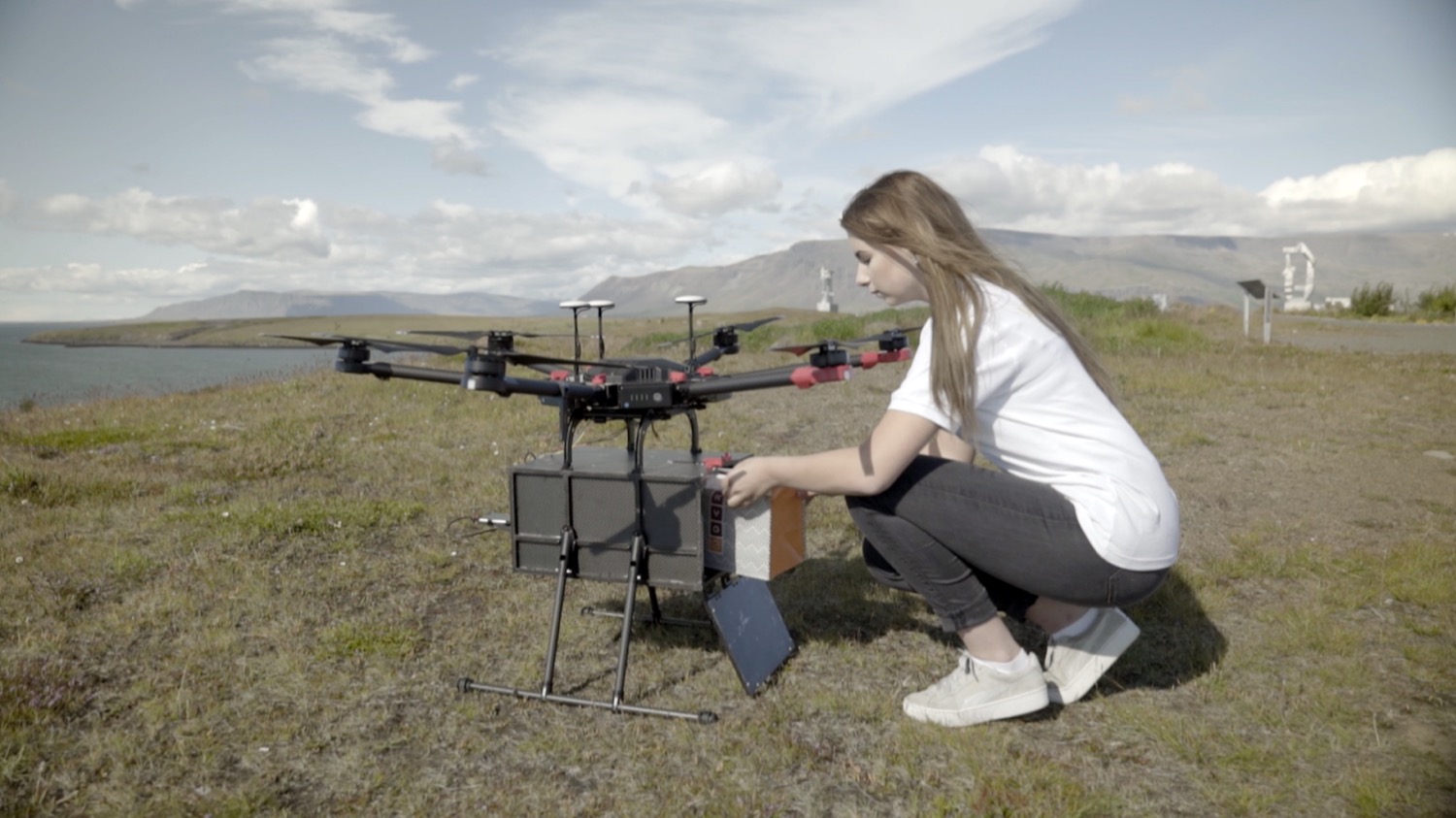
Manna
Grew Irish deliveries by 100%+ year over year through 2025 and raised $50M in April 2026. Then paused all Irish operations in June 2026 — not for lack of demand, but because Ireland has no national regulatory framework for drone delivery. Now refocusing growth on the US and UK.
Quick-reference: how the hardware actually compares
| Operator | Aircraft | Max payload | Typical delivery time |
|---|---|---|---|
| Amazon Prime Air | MK30 | 5 lb | ~30 minutes |
| Wing (Alphabet) | Wing aircraft | ~2.6 lb (varies) | Minutes, on-demand |
| Zipline | Platform 2 (P2) | 8 lb | ~30 minutes or less |
| DoorDash Air | Not yet public | Not yet public | Targeted fall 2026 |
| Manna | Manna aircraft | ~4.4 lb | Minutes, on-demand |
Figures reflect publicly announced specifications as of mid-to-late 2026. DoorDash Air had not disclosed aircraft specifications at the time of writing. Coverage areas and delivery windows vary by individual hub and local airspace approval.
Three things worth understanding before you take this seriously
The regulatory floor just moved, and that's the real story
It's tempting to read this as a hardware race — whose drone flies farthest or carries the most — but the more consequential shift is procedural. Part 108's Category 2 tier is specifically designed to let an operator scale a proven route structure across many cities without re-litigating safety case-by-case, the way waivers required. That's why the second half of 2026 produced more simultaneous city launches across more companies than the previous three years combined.
Retailers are hedging by running multiple drone partners at once
Walmart's decision to run Wing and Zipline in parallel, rather than picking one horse, is a tell. After the DroneUp failure, no major retailer wants single-vendor dependency in a still-maturing category where unit economics can break a partnership with little warning.
Community friction is the genuine open risk, not the technology
Every company above has working aircraft. What none of them has fully solved is the neighborhood-level reaction to hundreds of low-altitude flights a day. Residents in Richardson, Texas have documented as many as 122 individual drone overflights logged over a single house in one day, while Michigan communities near Amazon's Hazel Park and Pontiac sites have raised similar noise and privacy concerns. Local governments have limited legal authority here — airspace is federally regulated — which means the FAA's Part 108 framework, not city councils, will end up being the actual venue where noise and frequency limits get decided.
Common questions
Which company has the most drone deliveries completed?
Wing's Walmart partnership has crossed one million completed deliveries, the most of any single retail tie-up covered here.
What is FAA Part 108?
The first standardized federal framework for routine beyond-visual-line-of-sight drone operations, phasing in since July 2026, replacing the previous waiver-by-waiver approach.
Why did Walmart drop DroneUp?
Unit economics, not technology. DroneUp closed 18 hubs across Arizona, Utah, and Florida in early 2025 because they were "too small to be sustainable."
What's the biggest unresolved risk in this category?
Neighborhood-level noise and privacy friction — not the aircraft itself, which every major operator already has working.
Drone delivery in 2026 has crossed from pilot-program novelty into genuine, if still uneven, infrastructure — real routes, real regulatory framework, real volume in the millions of completed deliveries. But "who wins" is still an open question, and it won't be settled by whose drone has the best specs. It will be settled by unit economics at scale (the exact thing that killed DroneUp), by how much low-altitude drone traffic residential neighborhoods are actually willing to tolerate, and by how Part 108 gets enforced once the tier-2 rules are fully in effect rather than still phasing in. Amazon has the scale lead today. Zipline has the fastest growth curve and the deepest operational track record. Wing has the quietest rollout and the deepest retail integration. Nobody has yet proven this works as a durable, profitable business rather than a well-funded land grab — that's the chapter still being written.
Disclosure. Figures and specifications in this report come from company announcements, FAA filings, and named news reporting current as of publication (August 2026). No company covered here paid for or previewed this coverage. DopamineKart may earn a commission if you buy through a real link on this site — that relationship never determines coverage.
Corrections: email us