The Earthquake Survival Manual: Before, During, and After the Shaking
Earthquake survival is less about owning a dramatic “survival” gadget than doing ordinary things in the right order. Secure what can fall. Practise one protective action. Store water. Know where you will reunite.
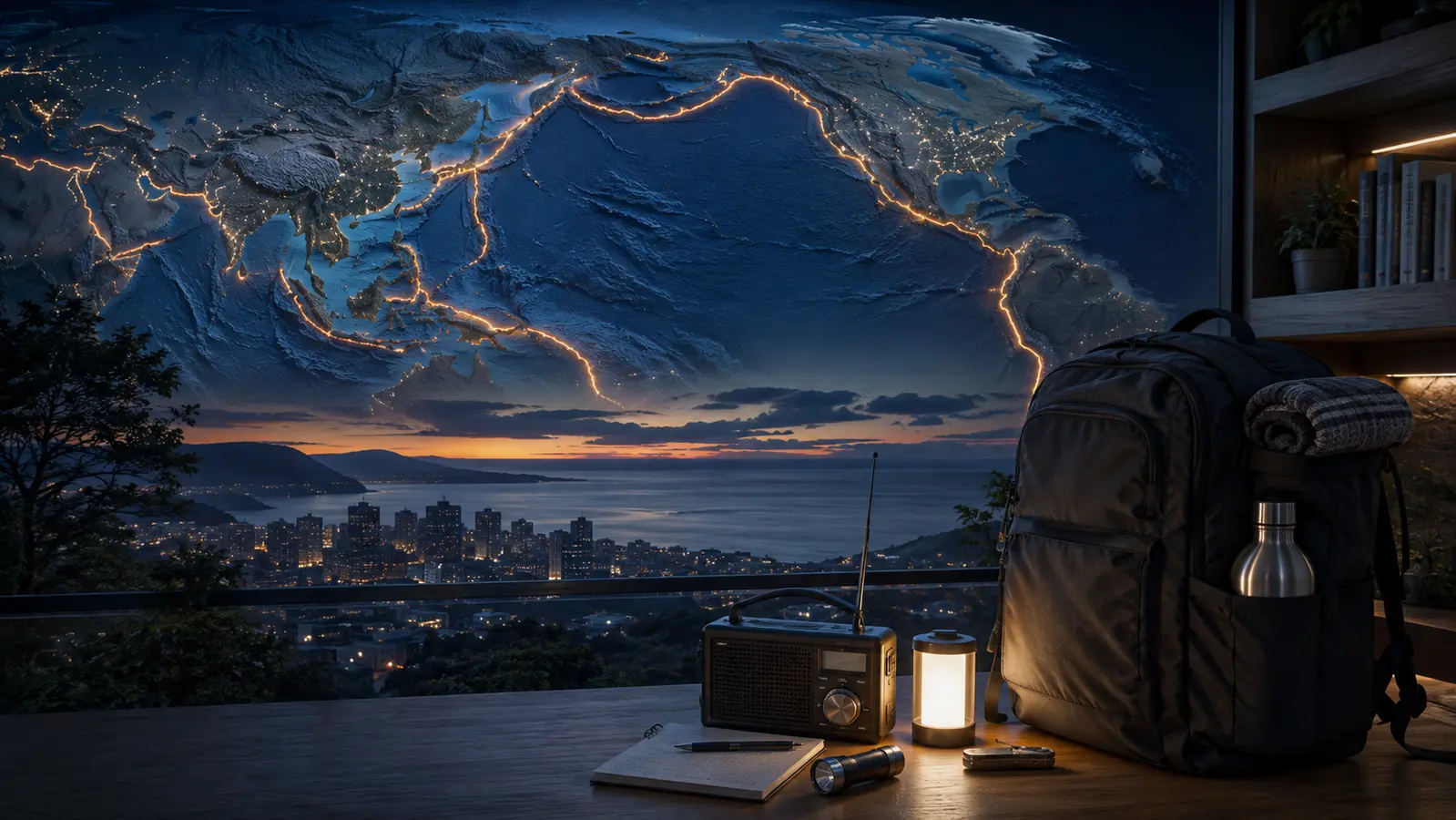
Quick answer. During most earthquakes, Drop, Cover, and Hold On. If you are indoors, stay indoors. When shaking stops, check injuries and immediate hazards, expect aftershocks, and follow official instructions. If you are near the coast and the shaking was strong or long, move inland or to higher ground immediately.
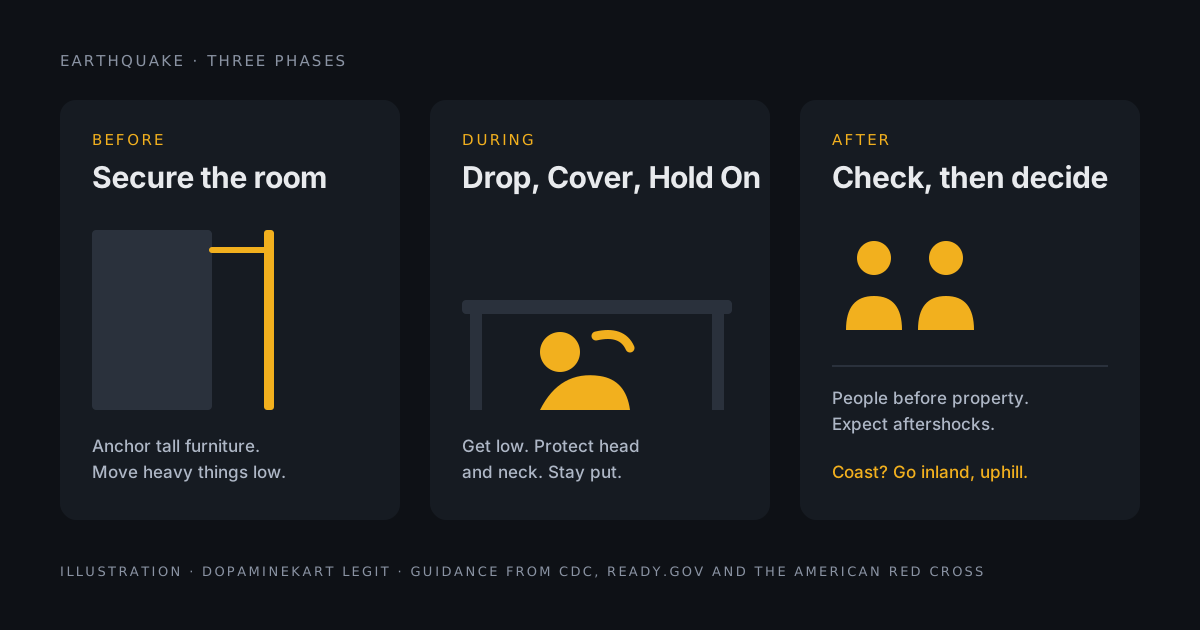
Part 1 — Before: make the room safer than the earthquake finds it
Identify the safe spot in every room
Choose a place under a sturdy table or desk, away from windows, tall furniture, exterior walls, and heavy objects that can fall. If no sturdy cover is nearby, identify an interior wall beside low furniture where you can get down and protect your head and neck.
Do not plan to run to a doorway. Modern doorways are not stronger than the rest of the structure, and moving during violent shaking exposes you to glass and falling objects.
For each bedroom, keep sturdy shoes and a flashlight within reach. Broken glass becomes a major hazard after the lights go out.
Secure the things most likely to injure you
Walk room by room and look above beds, sofas, desks, and children’s play areas.
- Anchor bookcases and tall furniture to wall framing with hardware suitable for the wall type.
- Move heavy objects to lower shelves.
- Install cabinet latches where dishes, glass, or chemicals could spill out.
- Secure televisions and other heavy electronics.
- Move heavy mirrors, frames, and shelves away from beds and seating — or anchor them properly.
- Have a qualified person secure a water heater and major appliances as local code requires.
- Keep toxic chemicals in a latched, ventilated location away from stored water, children, and pets.
Renters should obtain permission before drilling, altering utilities, or strapping an appliance. A landlord or qualified contractor should handle building systems.
Plan two kits, not one fantasy bag
You need a stay-at-home supply and a portable go-bag. The home supply supports you through outages and disrupted services. The go-bag holds what you can carry if the building is unsafe or authorities order evacuation. Coastal households should keep the portable bag light enough to move uphill quickly.
At minimum, plan for water, nonperishable food, medication, first aid, lighting, radio, phone power, sanitation, documents, cash, sturdy shoes, work gloves, masks, and pet or disability-specific needs.
CDC recommends at least one gallon of water per person per day for three days, and suggests storing a two-week supply where possible. Store more for pets, pregnancy, illness, or hot climates.
Make a reunion and communication plan
Write the plan on paper. After a quake, text rather than call when networks are overloaded, and keep messages short: “Safe at west parking lot. Going to Aunt Kim’s.”
- A meeting place immediately outside the home.
- A second meeting place outside the neighbourhood.
- One out-of-area contact who can receive status messages from everyone.
- School, work, childcare, and pet pickup arrangements.
Learn alerts and evacuation zones
Enable official emergency alerts for your location. If you live, work, or holiday near the coast, find the local tsunami evacuation map and walk the route once.
An earthquake early-warning alert may provide seconds, but it is not a prediction. Do not depend on receiving one. Your protective response must work when the first warning is the ground moving.
Part 2 — During: protect your head, neck, and balance
If you are indoors
Stay where you are. Do not run outside or through other rooms. Move only the short distance needed to get away from glass or a heavy object that may fall.
- DROP to your hands and knees before the shaking knocks you down.
- COVER your head and neck. If a sturdy table is within reach, crawl beneath it.
- HOLD ON to the table leg and move with the shelter if it shifts.
If no table is nearby
Get low beside an interior wall or low furniture that will not fall. Cover your head and neck with your arms and hands. Avoid windows, exterior walls, hanging objects, cabinets, and tall furniture.
If you are in bed
Stay in bed and cover your head and neck with a pillow. Leaving the bed in darkness may put bare feet into broken glass.
If you use a wheelchair or walker
Lock the wheels if possible, remain seated, and cover your head and neck with your arms, a pillow, or a book. Ready.gov describes this as Lock, Cover, and Hold On. Plan adaptations for your specific mobility needs before an emergency.
If you are in a high-rise
Stay in the building. Move away from windows and outside walls, then Drop, Cover, and Hold On. Do not use lifts. Expect alarms, sprinklers, and power loss.
If you are outdoors
Stay outside and move to an open area away from buildings, exterior walls, trees, poles, signs, and power lines. Drop low and remain there until the shaking stops.
If you are driving
Pull over safely away from bridges, overpasses, power lines, trees, signs, and buildings. Set the parking brake and stay inside the vehicle until shaking stops. Afterwards, avoid damaged roads and follow official traffic instructions.
If you are near the coast
First protect yourself during the shaking. When it stops, treat strong or long shaking as a possible natural tsunami warning. Move inland or to higher ground using the local route. Do not wait for a siren if natural warning signs are present.
Part 3 — The first 10 minutes after shaking
Expect another shake
Aftershocks can follow minutes, days, weeks, or months later. If shaking resumes, Drop, Cover, and Hold On again.
Check people before property
Check yourself, then people nearby. Call emergency services for life-threatening injuries when service is available. Do not move a seriously injured person unless there is an immediate danger such as fire, collapse, or tsunami.
Look and listen for immediate hazards
Leave if you see structural damage, fire, falling debris, downed lines, or signs of a gas leak. Use stairs, not lifts.
If you smell gas or hear hissing, do not use flames, electrical switches, appliances, or anything that could spark. Leave the building, move away, and contact emergency services or the utility from a safe location. Do not turn gas back on yourself; a qualified professional may be required.
Do not shut off every utility automatically. Learn the local utility’s instructions beforehand and act when there is damage, a leak, or an official direction.
If trapped
Cover your nose and mouth. Avoid unnecessary movement that raises dust. Use text if it works. Tap on a pipe or wall, or use a whistle, to help rescuers locate you. Shout only as a last resort, to conserve air and avoid inhaling dust.
Make the coastal decision immediately
If you are in a tsunami zone and experienced strong or long shaking — or see a sudden ocean rise or fall, or hear a roar — go to higher ground or inland. Do not return until local officials give the all-clear; later waves may be larger.
Part 4 — The first 24 hours
Confirm the building is safe
Do not re-enter a visibly damaged structure until authorities or a qualified inspector says it is safe. Leave if you hear shifting or unusual structural noises.
Use light without creating fire
Use flashlights instead of candles. Do not use grills, charcoal, camp stoves, or generators inside a home, garage, basement, or near openings. Carbon monoxide cannot be seen or smelled.
Treat water as a safety decision
Follow local boil-water or contamination notices. If tap water may be unsafe, use bottled, boiled, or properly treated water for drinking, cooking, brushing teeth, preparing baby formula, and hygiene.
Boiling kills germs; it does not remove fuel, toxic chemicals, or radioactive contamination. If chemicals are suspected, use a different water source and follow health-department instructions.
Communicate briefly
Text your out-of-area contact. Save phone battery by lowering brightness, using low-power mode, and avoiding nonessential video uploads. Monitor an official radio or alert source.
Document damage safely
Photograph damage before temporary repairs when it is safe. Save receipts. Do not let documentation delay evacuation or put you back inside an unsafe building.
Part 5 — Days 2 through 14
- Continue monitoring aftershock and shelter information.
- Rotate and ration supplies according to official guidance, not panic.
- Discard food that authorities say is unsafe, or that lost temperature control beyond safe limits.
- Use licensed professionals for structural, gas, electrical, and water repairs.
- Check on neighbours only when it is safe, especially older adults or people who may need assistance.
- Watch for relief scams, unlicensed contractors, and urgent payment demands.
- Replace anything used from the kit and update the plan based on what failed.
The one-page household drill
Run this every six months.
- Everyone practises Drop, Cover, and Hold On for one minute.
- Each person points to the safe spot in the room.
- Everyone finds shoes, flashlight, go-bag, extinguisher, and water.
- The household walks to the outdoor meeting point.
- Coastal households walk or review the tsunami route.
- Send a test text to the out-of-area contact.
- Check medication, batteries, food, water dates, pet supplies, and documents.
Do and avoid
| Do | Avoid |
|---|---|
| Drop, Cover, and Hold On | Running outside during shaking |
| Stay away from glass and tall furniture | Standing in a doorway |
| Expect and respond to aftershocks | Treating the first shake as the only one |
| Move inland or uphill after coastal natural warnings | Going to the beach to watch |
| Use flashlights | Lighting matches when gas may be leaking |
| Follow local utility instructions | Automatically shutting every valve without cause or training |
| Use official alerts and sources | Viral predictions and “Ring of Fire countdowns” |
Sources
- CDC — Earthquake safety
- CDC — Stay safe during an earthquake
- Ready.gov — Earthquakes
- Ready.gov — Tsunamis
- CDC — Creating and storing an emergency water supply
- American Red Cross — Earthquake safety
This guide restates official preparedness guidance. It is not medical, structural, or emergency advice for your specific situation — follow the instructions of local authorities during an actual event.