A red leather (or, in one case, red nylon) jacket has shown up at four genuinely load-bearing moments in film and music history — not as a costume footnote, but as the thing people still remember when they can't remember anything else about the scene. Here are four real, documented instances, what's actually known about each jacket, and why it stuck.
- James Dean's red windbreaker in Rebel Without a Cause (1955) is widely considered one of the most recognizable pieces of clothing in film history.
- Michael Jackson's Thriller jacket (1983) is arguably the single most recognizable red leather jacket in pop culture — the original sold at auction in 2011 for close to two million dollars.
- Brad Pitt's Tyler Durden jacket in Fight Club (1999) was dyed a specific shade — "the color of dried blood" — as a deliberate visual choice by the costume designer.
- Halle Berry's red leather look in Die Another Day (2002) is a jacket-and-pants ensemble worn through the film's Iceland climax, separate from the black leather jacket she also wears earlier.
The Four, at a Glance
Same color story, four completely different decades, genres, and reasons the jacket mattered.
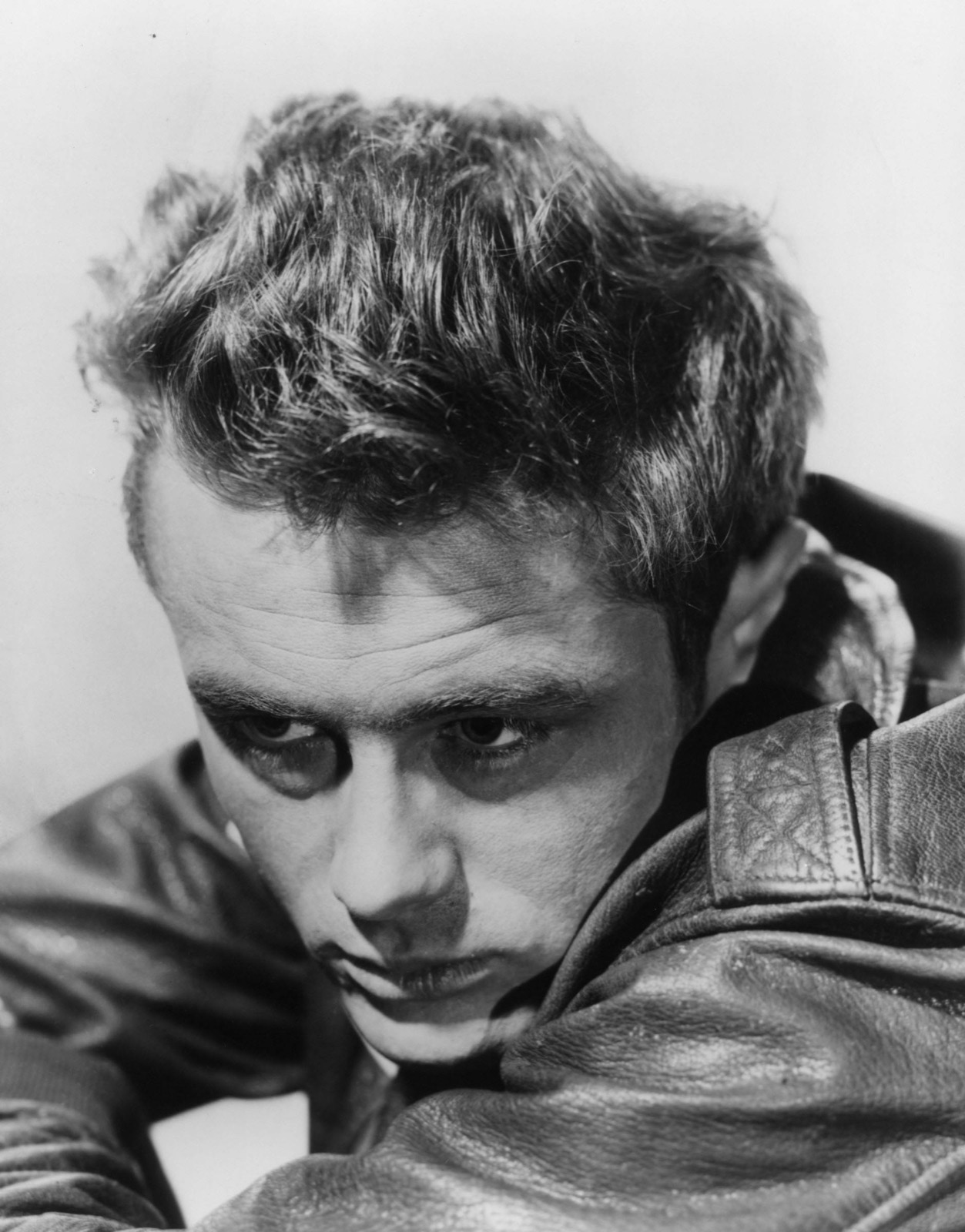
James Dean
A red nylon windbreaker that became shorthand for teenage rebellion the moment the film hit theaters, and still is.
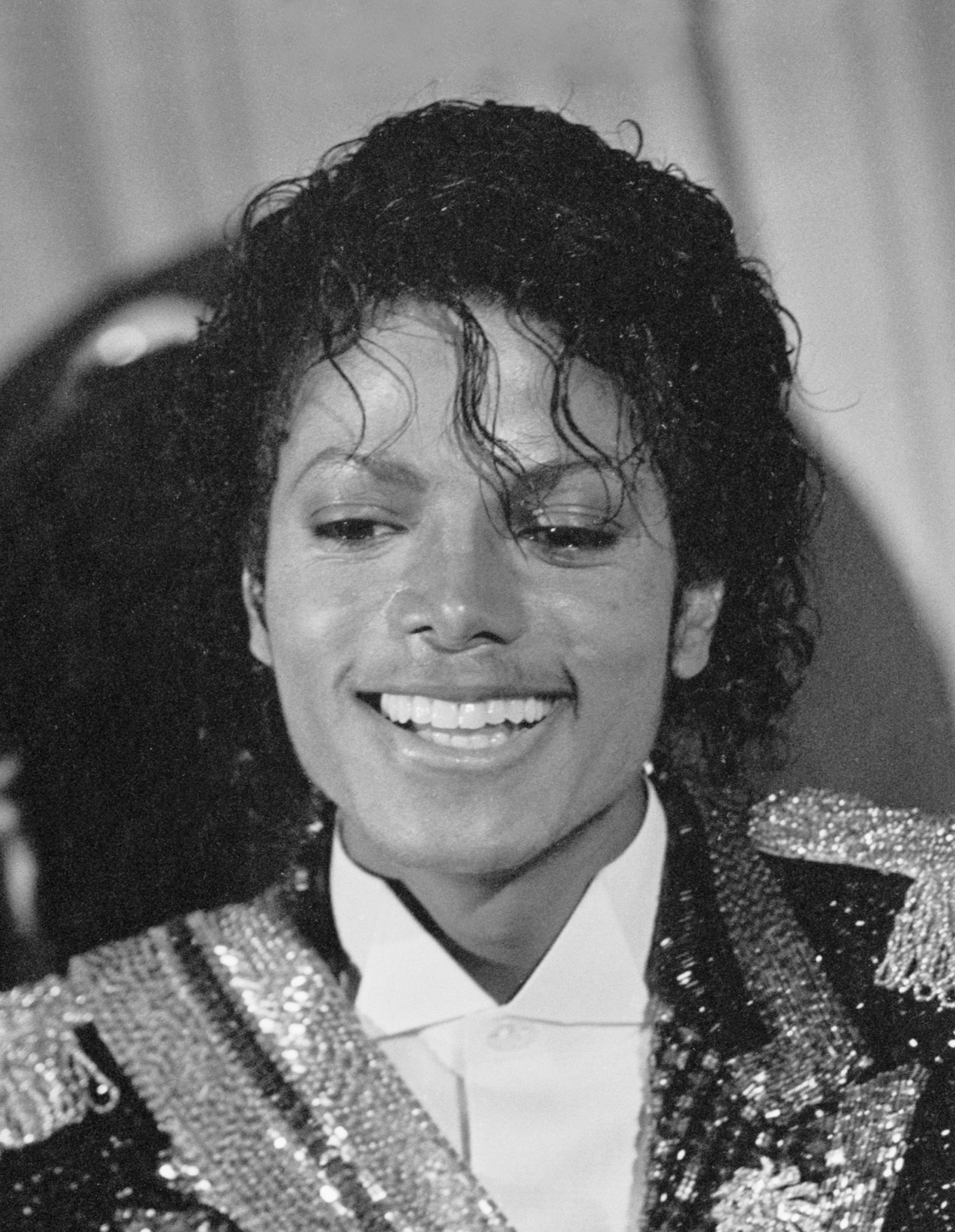
Michael Jackson
A candy-apple-red leather jacket with angular black-striped shoulders, built to make a 25-year-old, 99-pound performer read as larger than life on camera.
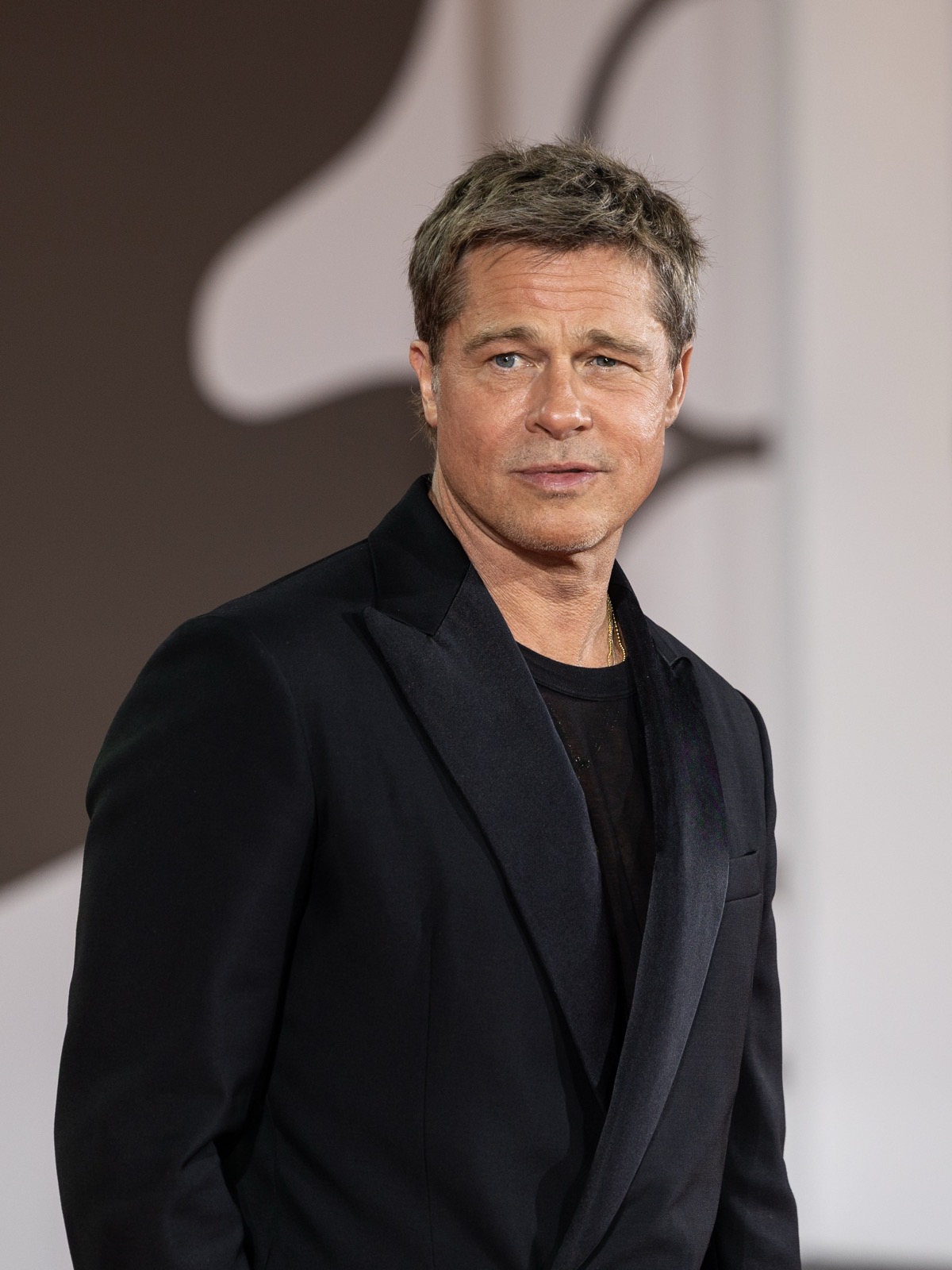
Brad Pitt
A rust-red leather jacket, custom-dyed and deliberately distressed, that became the visual grammar of the whole character.

Halle Berry
A fitted red leather jacket-and-pants set worn through the film's third act — one of two distinct leather looks Jinx wears in the movie.
James Dean, 1955 — The Jacket That Started It
Rebel Without a CauseThe first, and arguably the reason the other three are even a recognizable trope.
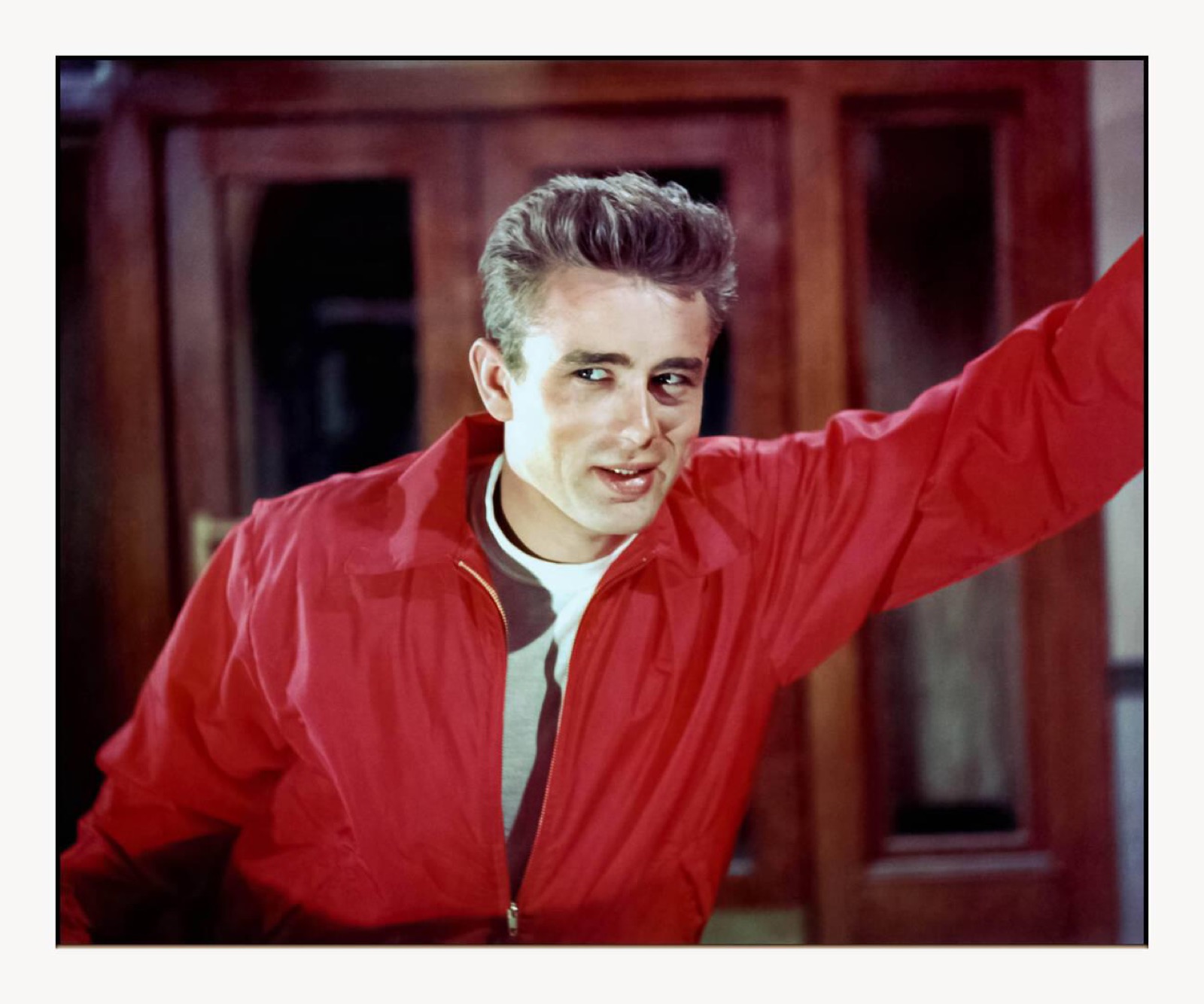
In Rebel Without a Cause (1955), James Dean plays Jim Stark, a troubled teenager in a red windbreaker, white T-shirt, and blue jeans — an outfit that became, almost immediately, the visual template for postwar American teenage rebellion. The jacket itself was designed by veteran Warner Bros. costume designer Moss Mabry, who considered it one of his most iconic pieces of work across a career that also earned him four Academy Award nominations, including for Giant the following year. Exactly where the specific jacket came from has been told a few different ways over the decades — director Nicholas Ray reportedly claimed at one point that it came from a Red Cross worker — but it's not a claim that's been definitively nailed down, so it's worth reading as studio lore rather than settled fact.
The jacket is also part of the film's plot, not just its poster: in the movie's climax at the Griffith Observatory, Jim persuades a frightened Plato to trade a gun for the jacket, quietly removing the ammunition as he takes it back — a small, character-defining gesture built around the one object the whole film had already made iconic. Nearly seventy years later, the red-jacket-white-tee-blue-jeans combination is still one of the most referenced and imitated outfits in film history, and Dean, who died in a car crash weeks before the film's release, never lived to see it become one.
Michael Jackson, 1983 — The One Everyone Pictures First
"Thriller" music videoIf one image defines "red leather jacket" in the collective memory, it's this one — and these are real photographs of the actual garment, not stills from the video.
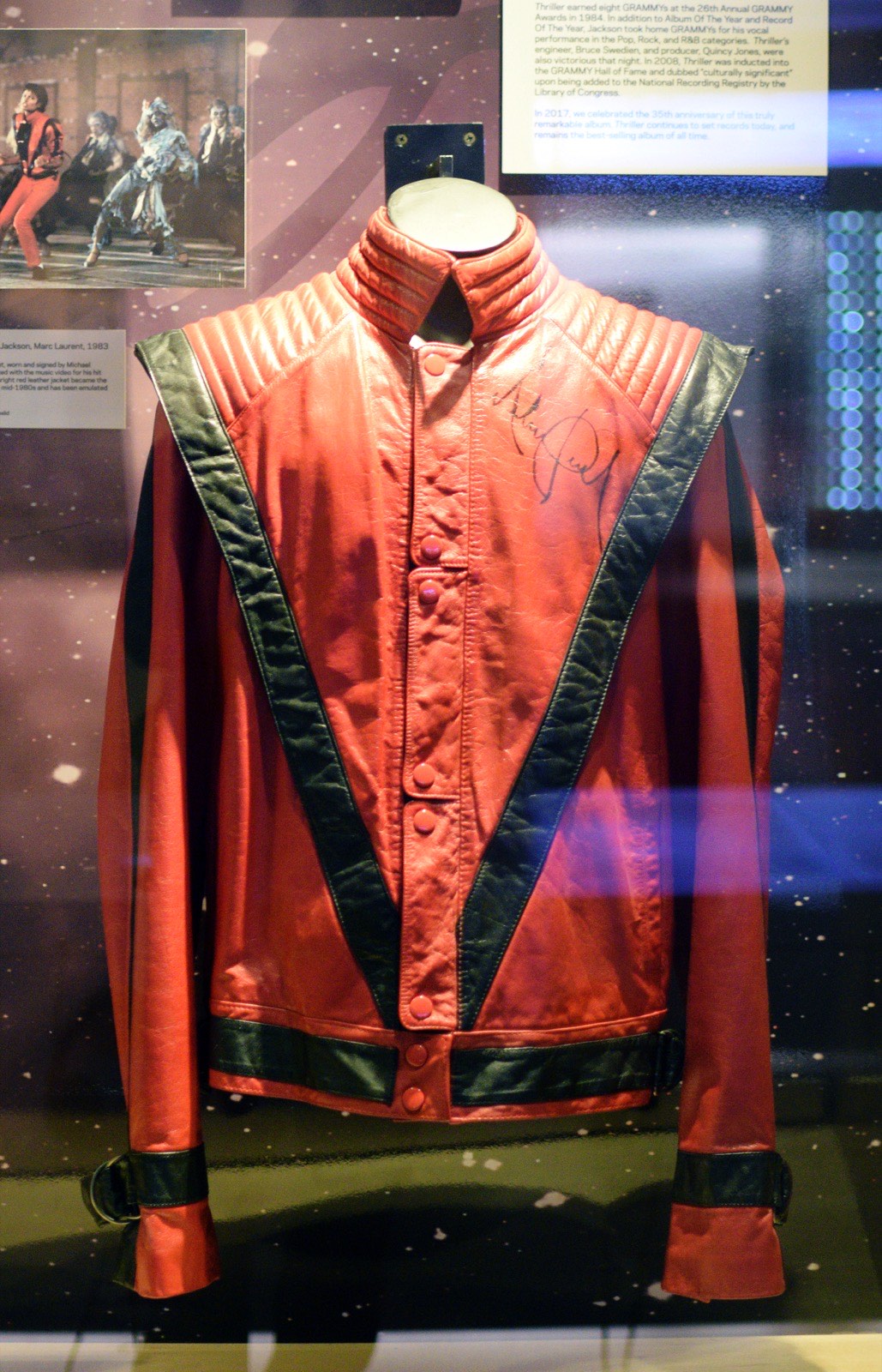
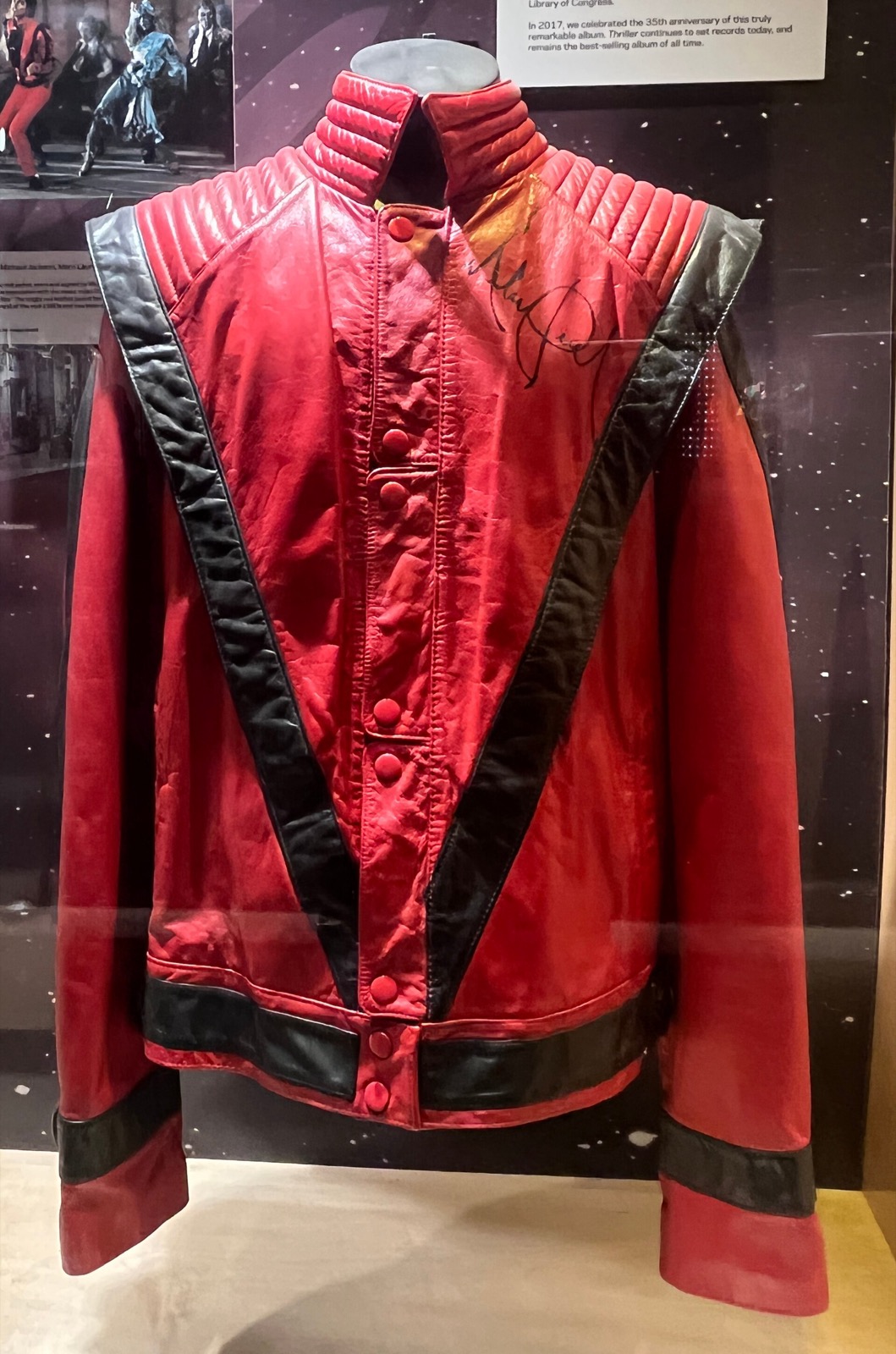
The red leather jacket Michael Jackson wears in the 1983 "Thriller" video was designed by Deborah Nadoolman Landis, the costume designer behind Indiana Jones' jacket in Raiders of the Lost Ark. It was manufactured at a tannery in Solofra, Italy, and built with a specific silhouette in mind: a candy-apple red leather shell with sharp, angular black-striped shoulders, designed in part to make the then-25-year-old, roughly 99-pound Jackson read as more physically imposing on camera.
It worked better than anyone could have planned for. The jacket became, by most accounts, the single most recognizable red leather jacket in pop culture history, and the "hottest outerwear fad of the mid-1980s" — copied so widely and sold as counterfeit merchandise so aggressively that Jackson filed a lawsuit in New York in 1984 to stop unauthorized reproductions. The original jacket itself has since become a legitimate collector's artifact: it sold at Julien's Auctions on June 27, 2011, for close to two million dollars, to collector Milton Verret, who called it the greatest piece of rock-and-roll memorabilia in history. It was later put on public display at the Rock and Roll Hall of Fame in Cleveland in 2022.
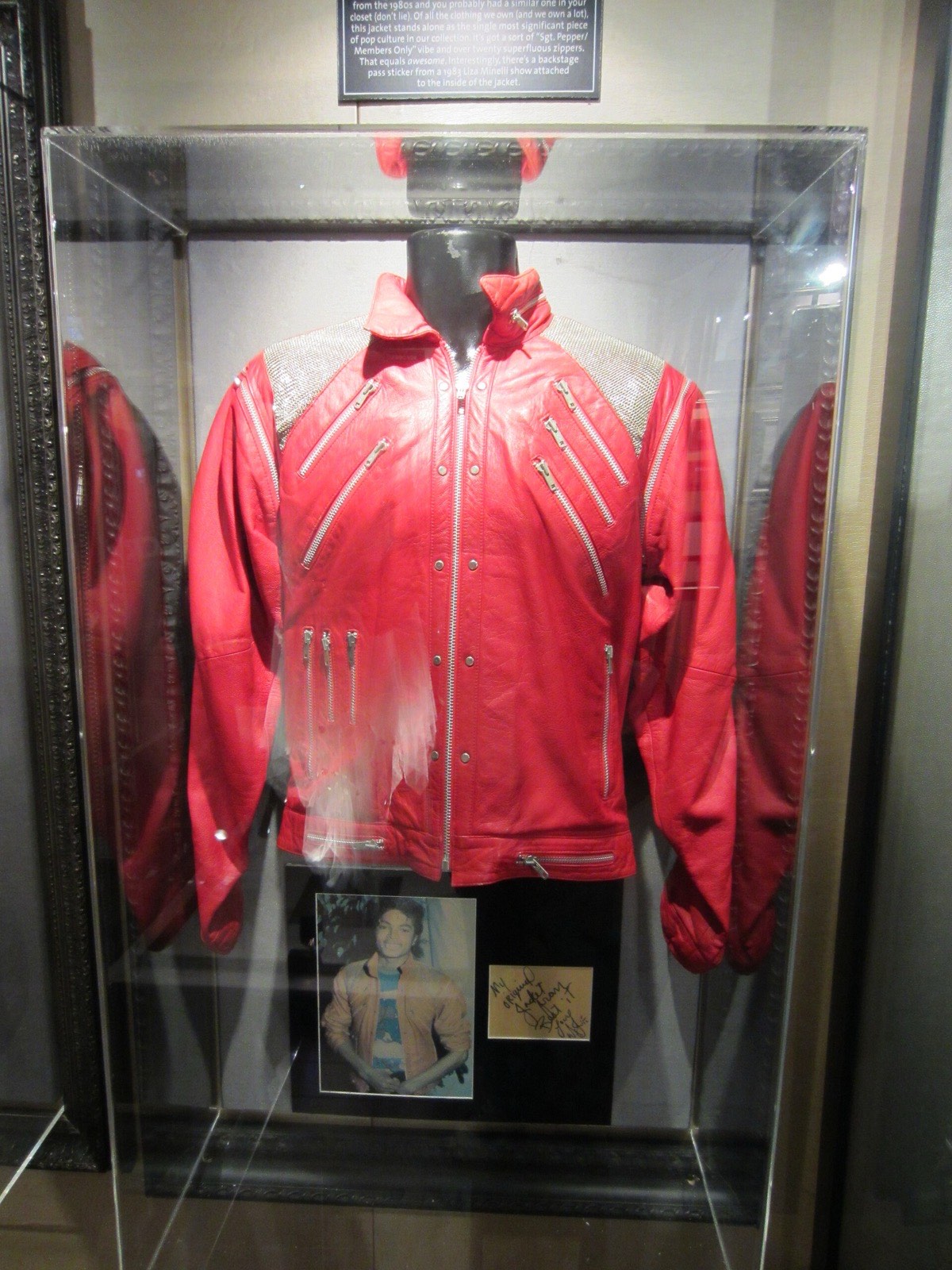
It's worth being precise here too: Jackson had more than one red leather jacket in circulation. This one, worn for "Beat It" rather than "Thriller," turns up separately in memorabilia exhibits — evidence of how thoroughly the red-leather-jacket look became part of his stage identity beyond the single video everyone remembers.
Brad Pitt, 1999 — The Jacket as a Warning
Fight ClubThe only one of the four where the red was chosen specifically to unsettle you.
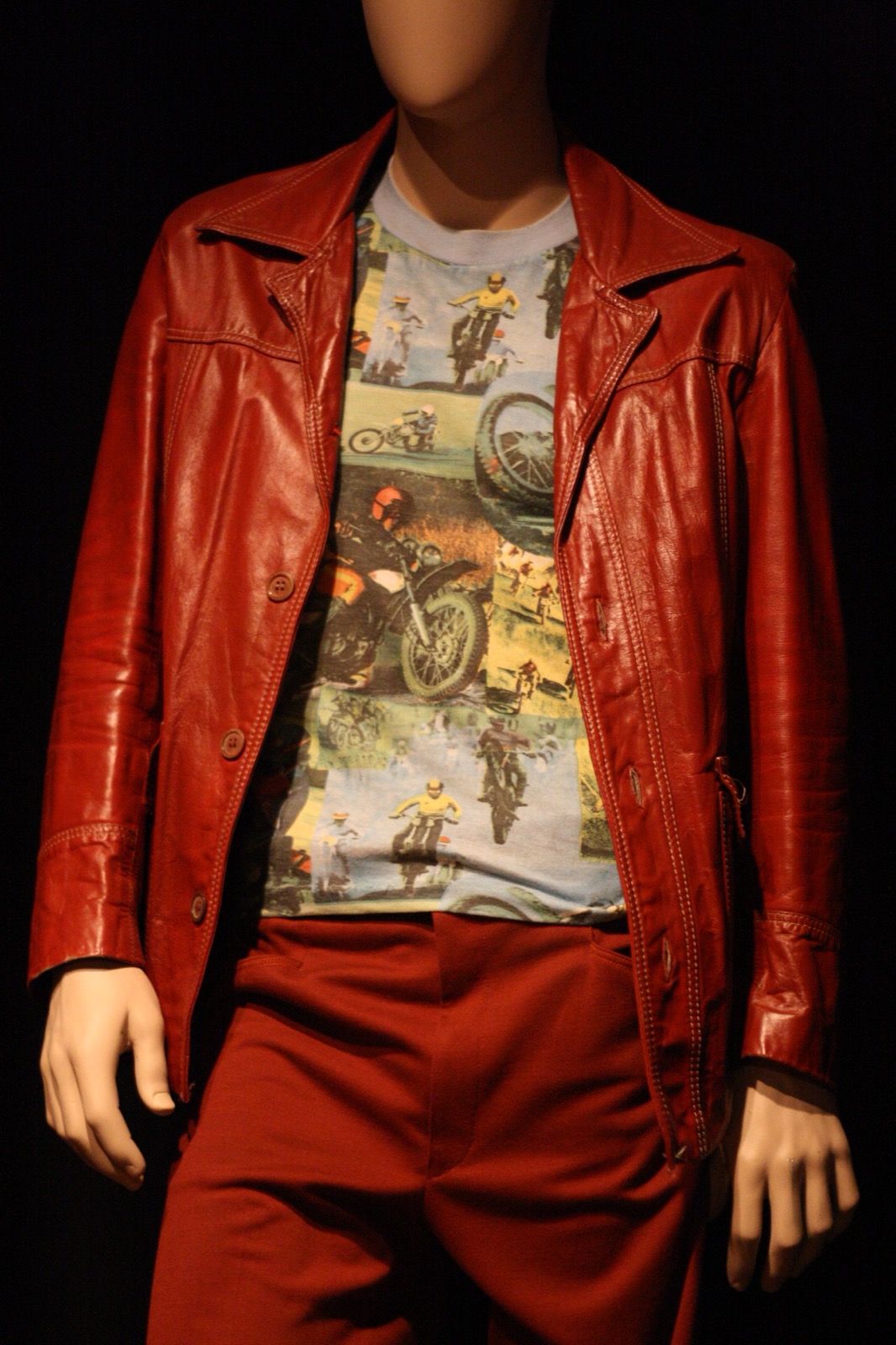
In David Fincher's Fight Club, released October 15, 1999, Brad Pitt plays Tyler Durden, and his red leather jacket does a lot of quiet narrative work. Costume designer Michael Kaplan chose the leather and the specific dye — described as the exact shade of dried blood — and had roughly five jackets made and then deliberately distressed so the leather looked worn, cracked, and lived-in rather than showroom-new. The color choice has been widely read by costume writers as a piece of visual foreshadowing: a warning about the violence the character brings into the story, worn in plain sight from his first scene.
There's some genuine ambiguity in the jacket's exact backstory — some accounts describe an early thrift-store find by Pitt and Kaplan as a starting reference point, while the jacket actually used on screen is generally understood to have been custom-made and reproduced multiple times for stunt work. Either way, it's stayed one of the most referenced pieces of costume design from a film that's spent twenty-five years accumulating a cult following well beyond its modest theatrical run.
Halle Berry, 2002 — The Bond Girl's Second Leather Look
Die Another DayWorth being precise about, because there are actually two different leather jackets in this film.
Halle Berry played Jinx opposite Pierce Brosnan's Bond in 2002's Die Another Day, costumed by Lindy Hemming. Jinx actually wears two separate leather jackets over the course of the film. The one most catalogued by costume archivists is a black Gianni Versace fringed leather jacket, worn when Jinx arrives at Gustav Graves' Ice Palace. Separately, during the film's Iceland-set climax, Jinx wears a distinct red leather look: a fitted, long-sleeve, Nehru-collared jacket-style top with no buttons or pockets, paired with matching red leather pants and knee-high boots — commonly described in costume retrospectives as her "red leather jacket," even though it's technically styled as a jumpsuit-and-jacket combination rather than a single garment worn over other clothes.
That distinction matters for accuracy, but it doesn't change the outcome: the red leather look is the one most associated with Jinx's action-hero image from the film's back half, and it's held up over more than two decades as one of the more referenced action-heroine costumes of the early-2000s Bond era — alongside the orange bikini that gets most of the film's other retrospective coverage.
Honorable Mention (That Doesn't Actually Qualify)
The Warriors, 1979Worth addressing directly, since it comes up in almost every "iconic leather in film" conversation.
Walter Hill's 1979 cult classic The Warriors is one of the most visually distinctive gang films ever made, and its title gang's leather vest — the one with the flaming-skull-and-fist emblem on the back, worn by Michael Beck's Swan and James Remar's Ajax — is a genuinely iconic piece of costume design. It just isn't a red leather jacket. It's a sleeveless vest, and it's brown, not red. Different garment, different color, different film era than the four moments above. We're naming it here specifically so nobody mistakes its absence for an oversight — it was considered and ruled out on the facts, not missed.
More Real, Documented Red Leather Jacket Moments
The four above are the load-bearing ones — the costume decisions that turned this into a recognizable trope in the first place. But red leather jackets keep showing up as a deliberate stage and red-carpet choice for musicians and other performers, well outside film costuming. These are real, dated, sourced public appearances, not costume-department pieces — added here, honestly, because four portrait photos weren't enough to actually show the color and material this page is about.
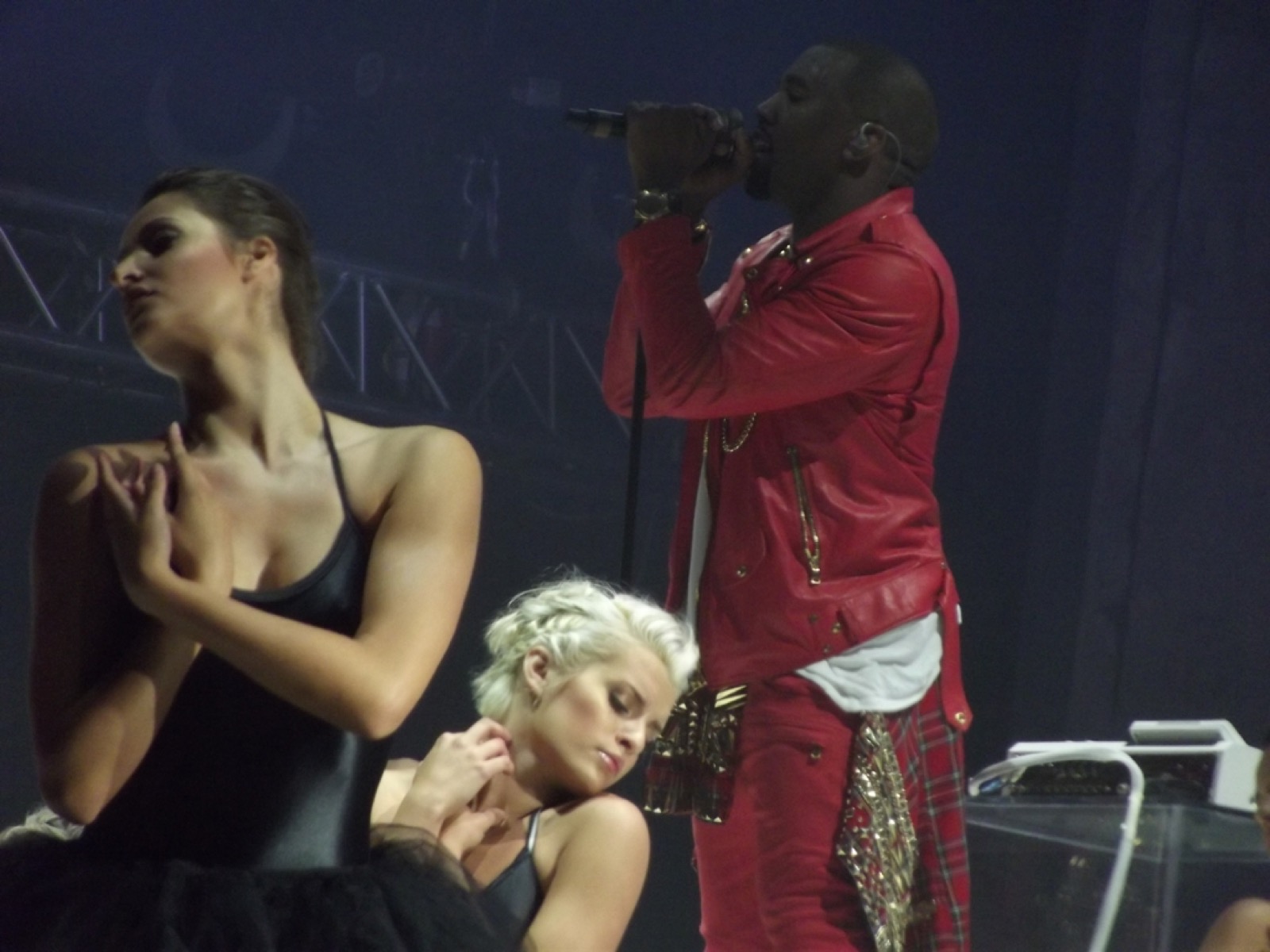
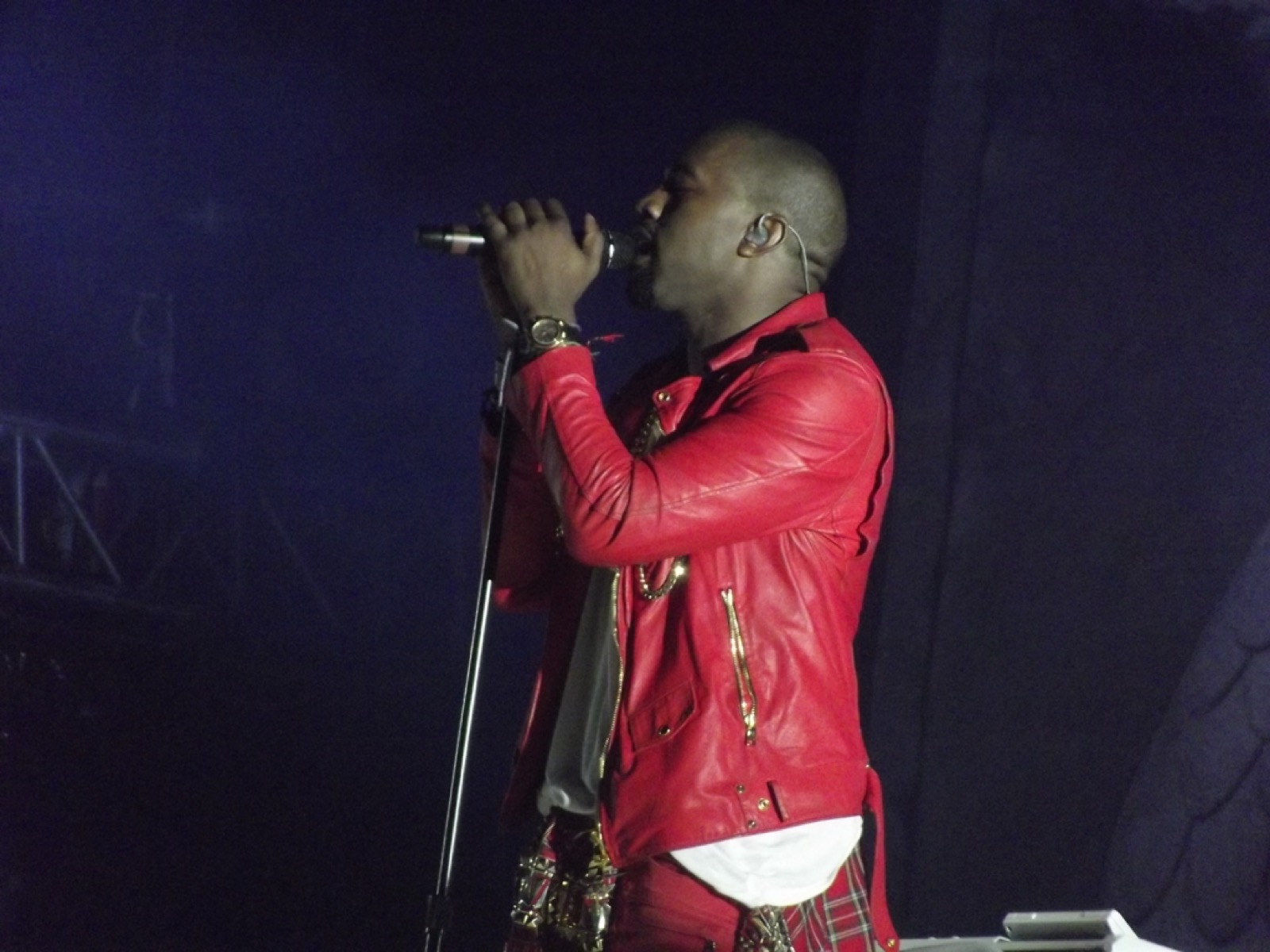
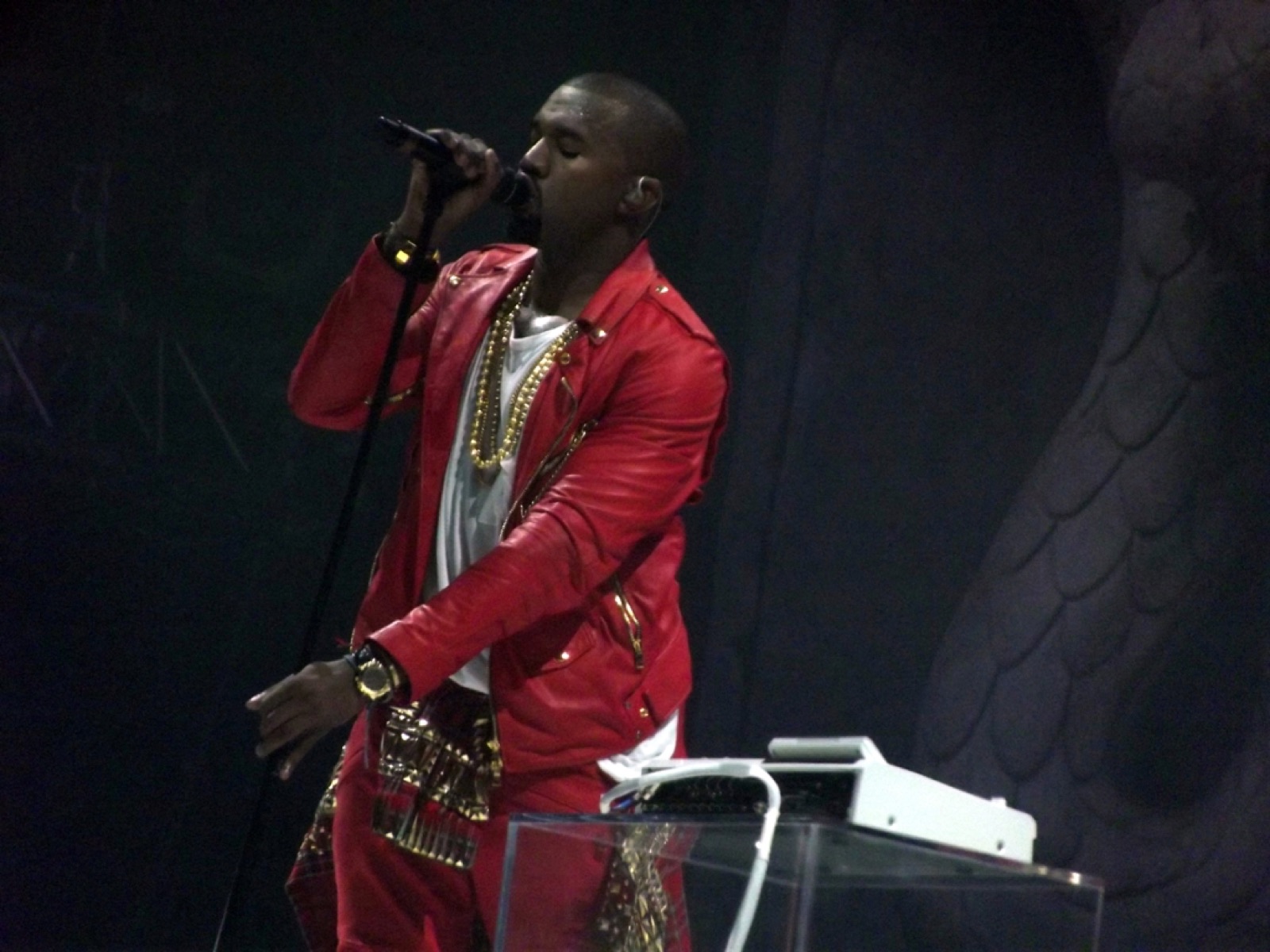
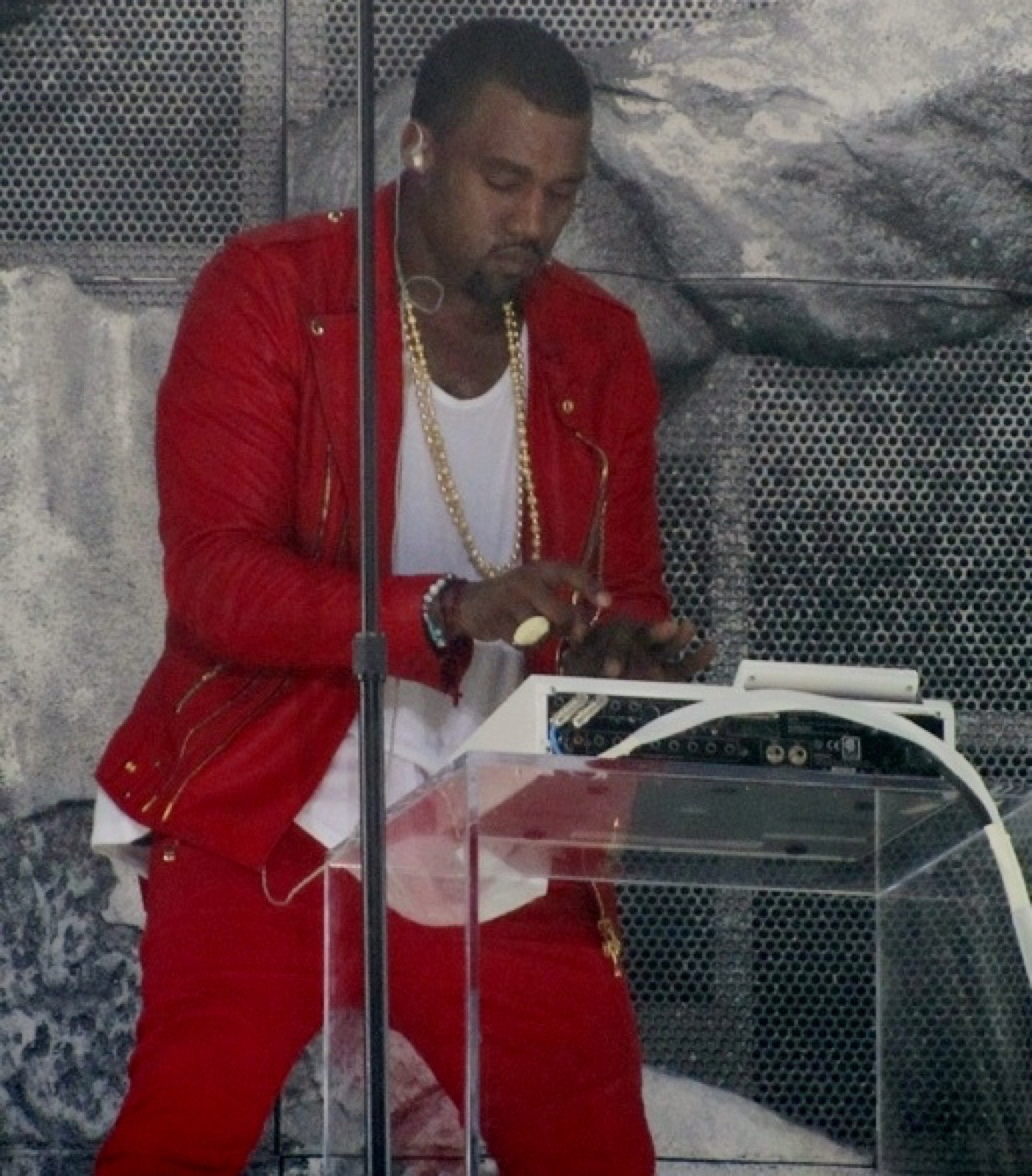
Kanye West
Performed "Runaway" in a red leather jacket with gold hardware at multiple 2011 festival dates — a recurring stage look that year, not a one-off.

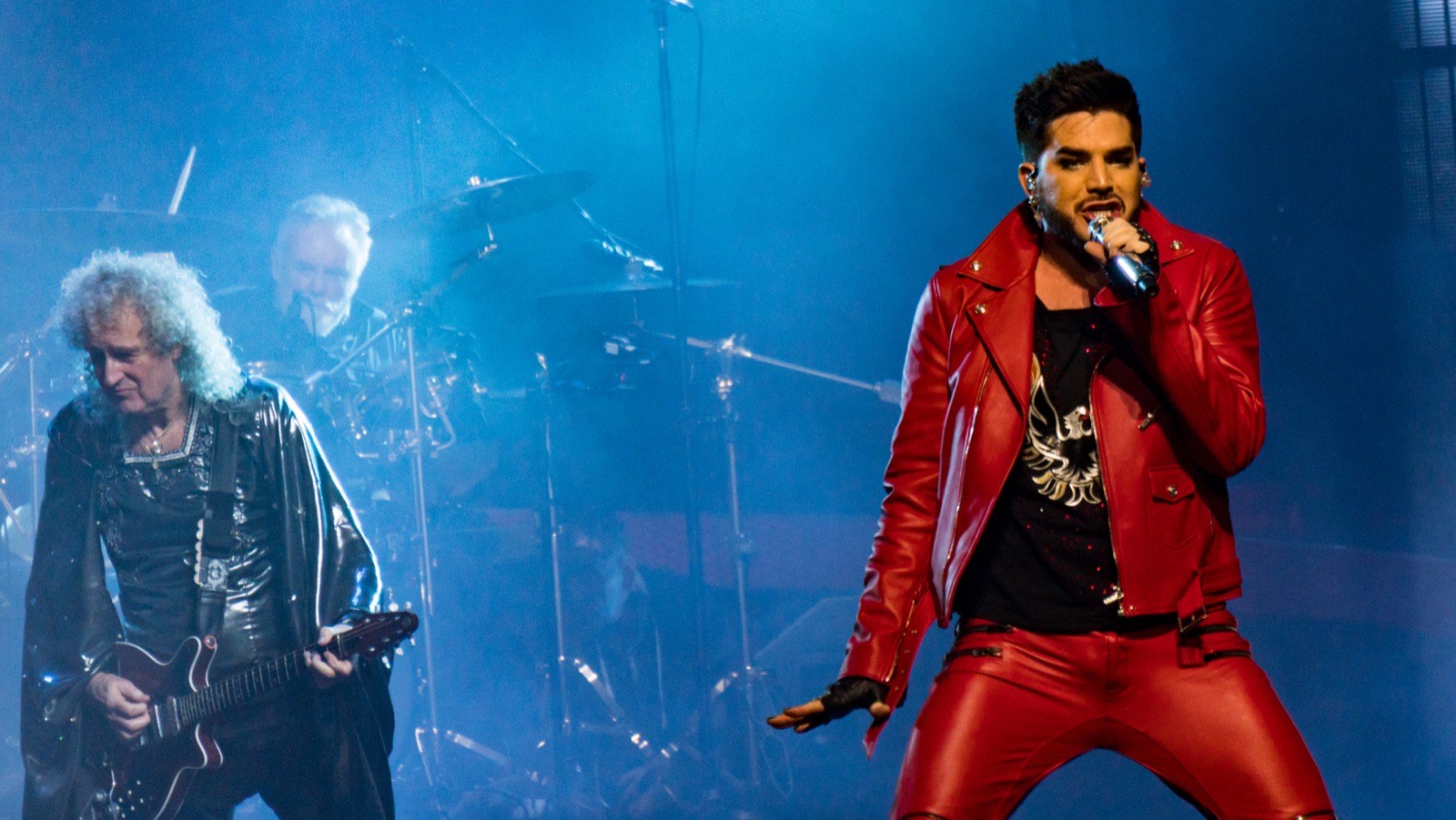
Adam Lambert with Queen
Fronting Queen on their December 2017 O2 dates in a red leather biker jacket and matching leathers — one of his standard looks for the Queen + Adam Lambert stage show.
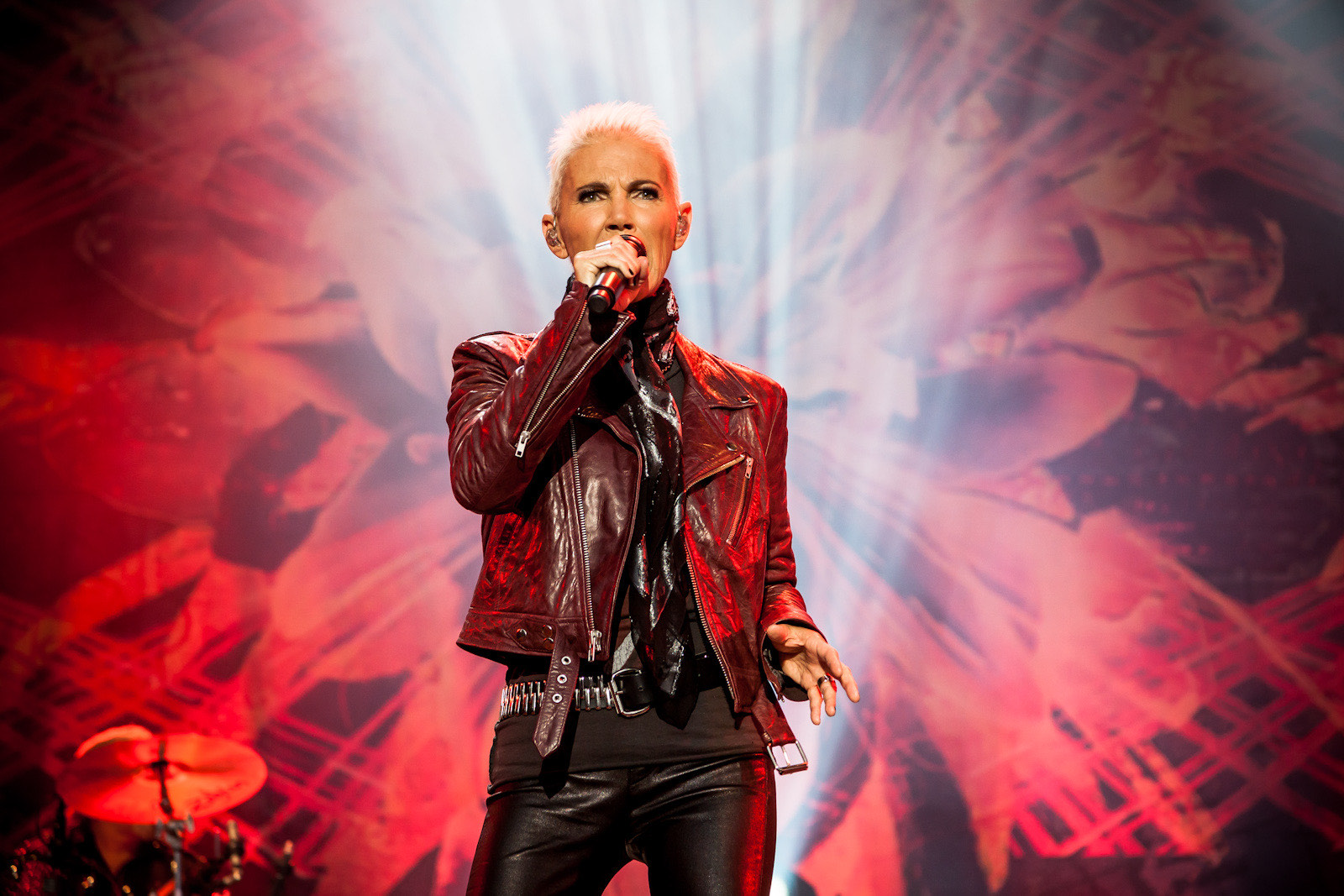
Marie Fredriksson, Roxette
The Roxette co-frontwoman performing in a fitted red leather biker jacket, during the Swedish pop duo's decades-long international touring run.

Aisha Tyler
The actress and "Archer" star wore a red leather biker jacket to a 2019 WonderCon panel — a real, photographed public appearance, not a costume.


The Real Timeline
| Year | Wearer | Film / Project | Jacket |
|---|---|---|---|
| 1955 | James Dean | Rebel Without a Cause | Red nylon windbreaker, designed by Moss Mabry |
| 1983 | Michael Jackson | "Thriller" music video | Red leather jacket, designed by Deborah Nadoolman Landis |
| 1999 | Brad Pitt | Fight Club | Rust-red leather jacket, designed by Michael Kaplan |
| 2002 | Halle Berry | Die Another Day | Red leather jacket-and-pants set, costumes by Lindy Hemming |
FAQ
Is James Dean's red jacket actually leather?
No — it's a red nylon windbreaker, sometimes called a blouson jacket. It gets grouped in with "red leather jacket" pop-culture moments informally because of how visually similar the silhouette and color read on screen, but the material itself is nylon, not leather.
Did Michael Jackson's Thriller jacket really sell for close to two million dollars?
Yes. The original jacket sold at a Julien's Auctions sale on June 27, 2011, to collector Milton Verret, with proceeds benefiting the Shambala animal sanctuary. It's since been displayed publicly, including at the Rock and Roll Hall of Fame.
Was Brad Pitt's Fight Club jacket a real thrift-store find?
Accounts differ. Some retrospectives describe an early thrift-store piece as a reference point for costume designer Michael Kaplan, but the jacket used on screen is generally described as custom-dyed and remade multiple times for stunt work, so it's not accurate to call it a single unaltered vintage find.
Did Halle Berry wear one red leather jacket in Die Another Day, or two different jackets?
She wears two separate leather jackets total in the film — a black fringed Versace jacket earlier on, and a distinct red leather jacket-and-pants look during the Iceland climax. The "red leather jacket" most people remember is the second one.
Why does this page include people besides Dean, Jackson, Pitt, and Berry?
Because limiting the photography to only those four meant relying on portraits that didn't actually show a red leather jacket, which defeated the point of the page. Rather than pad it with unrelated images, we added other real, dated, sourced public appearances — Kanye West, Adam Lambert, Marie Fredriksson of Roxette, and Aisha Tyler — where a red leather jacket is genuinely the subject of the photo. They're not film-costume history the way the original four are; they're documented real-life examples of the same look, each cited to its actual photographer and license.
None of these four jackets started as a trend — they were costume decisions, made for very specific dramatic reasons, that happened to outlive the scenes they were built for. Dean's became shorthand for teenage rebellion before the actor who wore it was even gone. Jackson's became a two-million-dollar artifact. Pitt's became a piece of intentional foreshadowing that fans still talk about. Berry's became one half of a genuinely more complicated wardrobe than most retrospectives give it credit for. Different decades, different genres, same color — and each one earned its place the hard way, on screen.
Disclosure. This is an editorial history piece with no affiliate links, no sponsorship, and nothing for sale. All 20 photographs on this page are real, licensed images — sourced from Wikimedia Commons under public-domain, CC0, or Creative Commons Attribution licensing, each credited to its photographer and license in its caption — and are portrait, press, concert, or museum/exhibit photography, not stills from the films or video referenced. None are AI-generated or illustrated. Facts are sourced to Wikipedia and contemporaneous press/costume-design coverage; disputed or unconfirmed details are flagged as such in the text rather than presented as settled fact. Corrections: email us.