The whole story in 30 seconds
- The 1980s sold access: put a trainer on tape and the living room became a studio.
- The 1990s sold objects: one memorable machine or movement was supposed to target the problem.
- The 2000s sold systems: calendars, DVDs, nutrition binders and measurable progress replaced the single gadget.
- The durable ingredient was never the format. It was consistent movement someone would repeat.
Before a watch counted our steps and a phone congratulated us for closing a ring, weight loss arrived in the mail. It came in a clamshell VHS case, on a spring-loaded contraption demonstrated after midnight, in a cardboard box of color-coded DVDs, or balanced beneath our feet while a cartoon instructor watched from the television.
Each era promised something new, but the underlying pitch barely moved: this time exercise would be convenient, private, structured and interesting enough to continue. Sometimes that was true. Sometimes the machine became an expensive clothes rack. Usually, the difference was not the secret technology. It was whether anyone wanted to do it again tomorrow.
Celebrity instructors, aerobics studios, VHS tapes, leg warmers, early StairMasters.
Step classes, Tae Bo, ThighMaster, ab gadgets, Bowflex and infomercial theater.
P90X, Pilates DVDs, reality-TV transformations, pedometers, Wii Fit and online forums.
The 1980s: The Instructor Entered the Living Room
Jane Fonda’s first workout video was released in 1982, and its importance was bigger than one routine. A VCR turned instruction into an object you could own, rewind and repeat without joining a gym. The Smithsonian’s collection preserves the wider moment: aerobics records, celebrity-led workouts and dance exercise were becoming domestic media.
Jazzercise had already joined dance and exercise in franchised classes. Richard Simmons made participation theatrical and welcoming. Aerobics shoes became a category because repeated side-to-side movement asked different things of feet than running did. Meanwhile, the StairMaster company launched in 1983, converting an endless staircase into a machine that stayed in one place.
The decade’s contribution was not leg warmers. It was follow-along fitness: music, personality, cues and a start-to-finish session anyone could attempt at home.
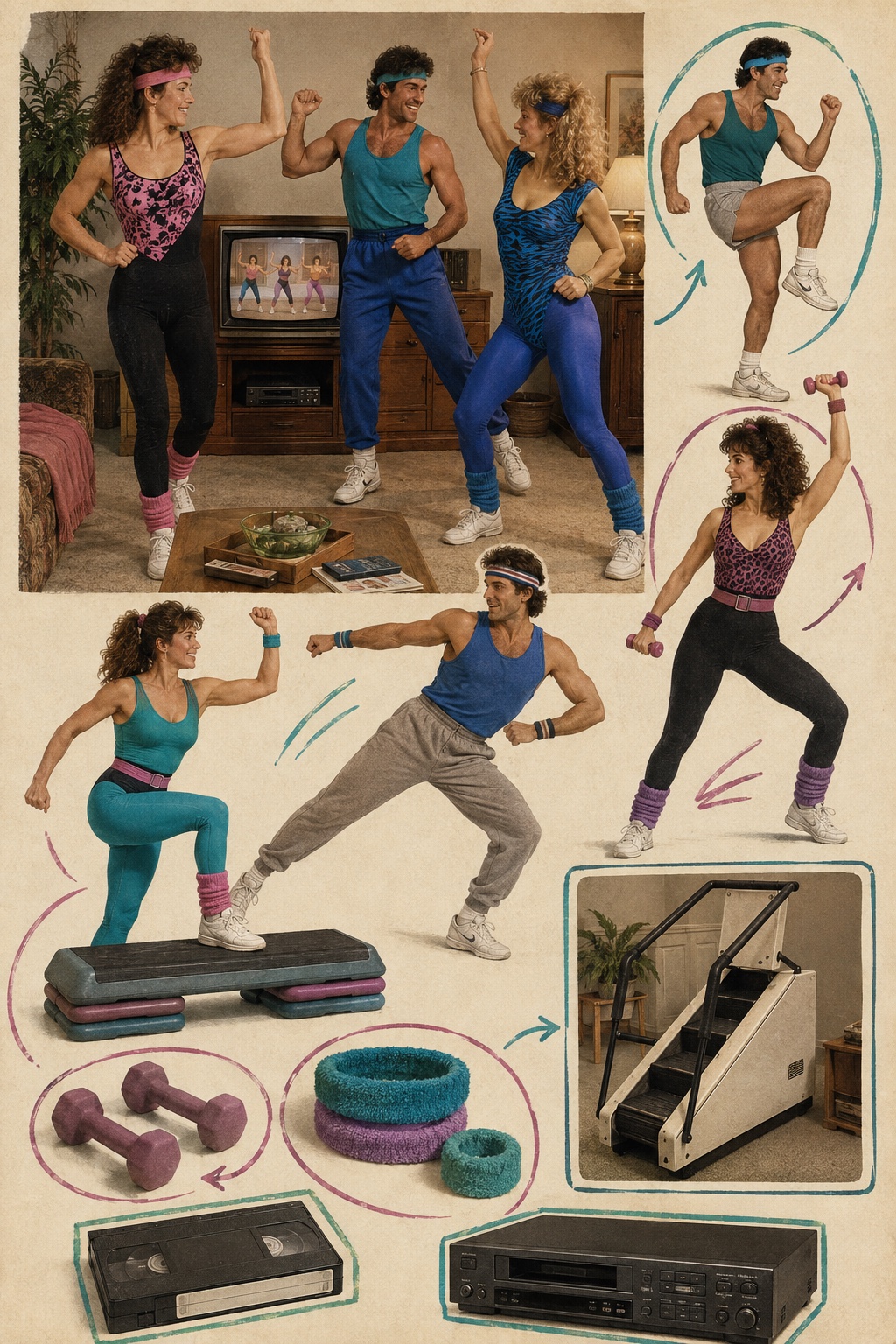
The ’80s gear, unpacked
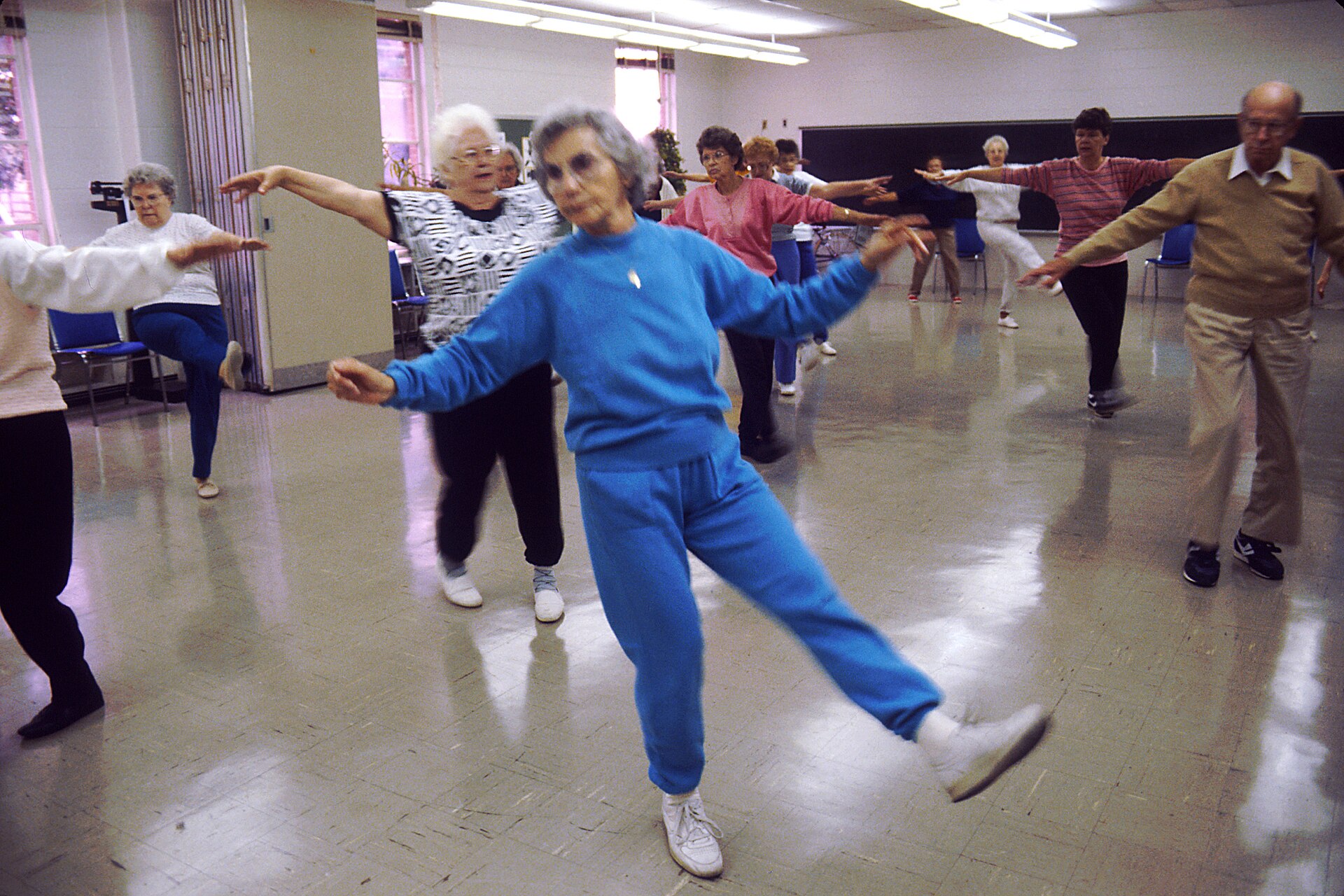
Aerobics class
What it was: Choreographed cardio built around music, repeated combinations and an instructor at the front of the room.
Why people stayed: It supplied a schedule, a crowd and enough performance to make exertion feel like an event. The VHS version preserved those cues at home.
October 1988 · National Cancer Institute · public domain via Wikimedia Commons.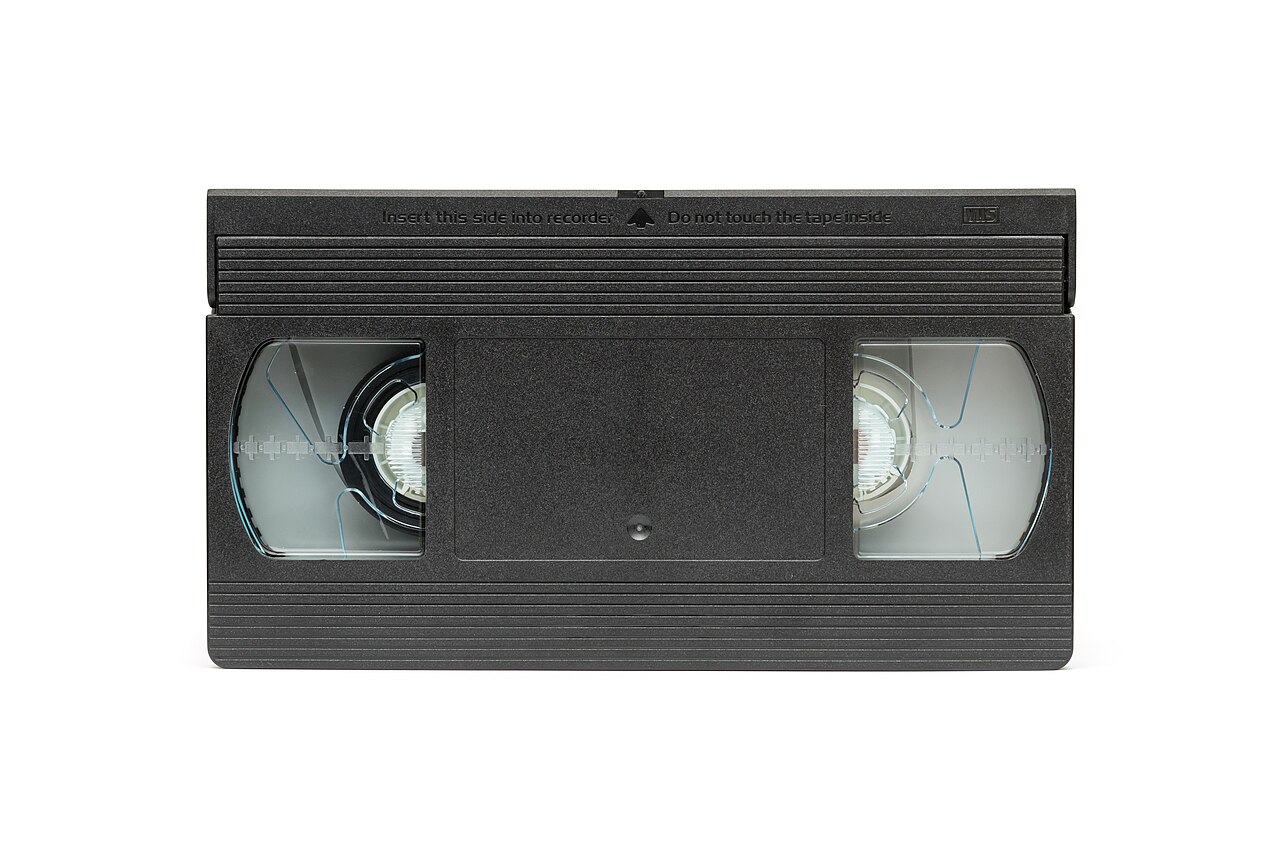
Workout VHS
What changed: A class stopped being tied to a time and place. Owners could pause, rewind and repeat the same routine until the choreography felt familiar.
The catch: The tape could provide instruction, but not progression, personalized form correction or accountability after the novelty wore off.
Photo: LoMit · CC BY-SA 4.0 · cropped for layout · Wikimedia Commons.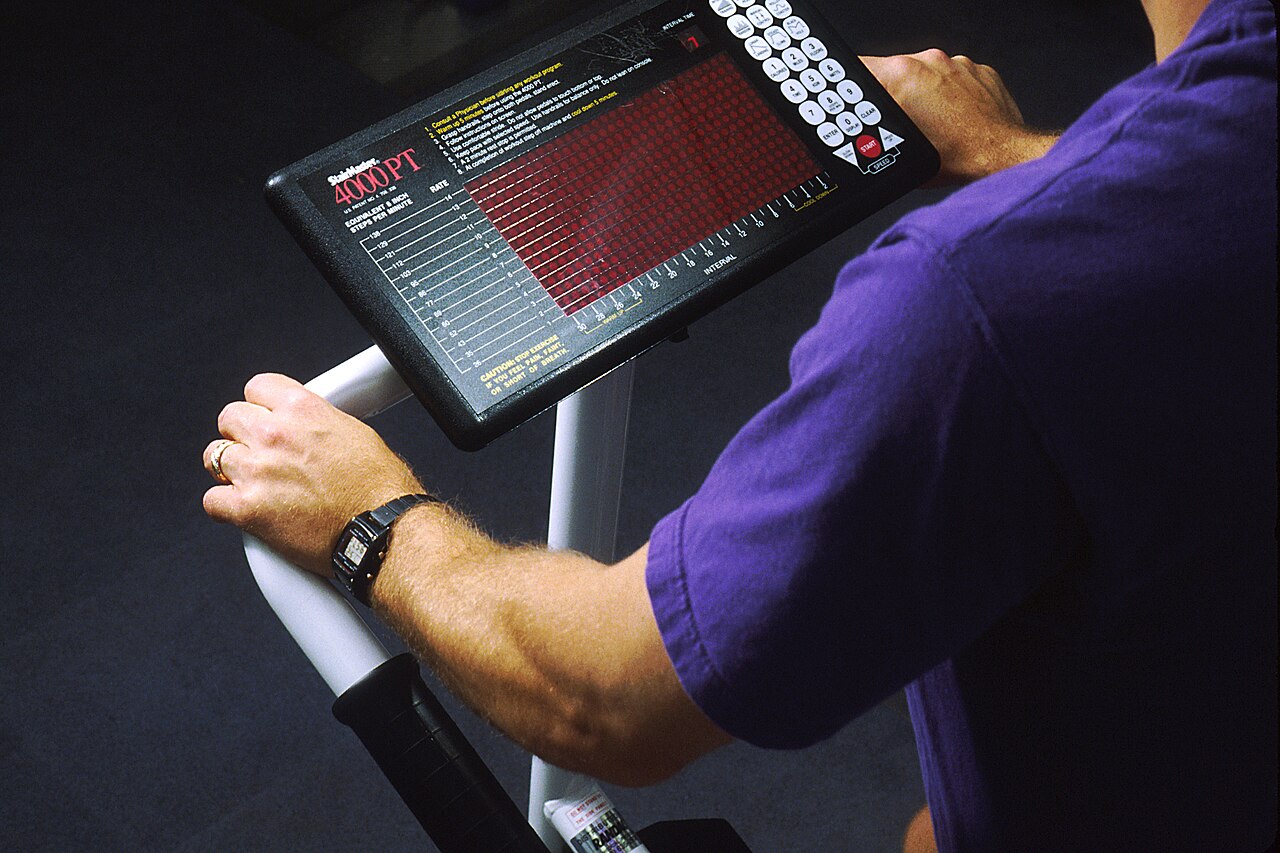
Stair climbing, indoors
What it did: Continuous stepping raised heart rate quickly without requiring a track or good weather. Resistance and pace made the work adjustable.
What survived: The moving staircase became a permanent gym category because the motion was simple, measurable and genuinely demanding.
1992 photo by Ernie Branson, National Cancer Institute · public domain via Wikimedia Commons.Leg warmers were not the workout
The bright clothes, headbands and television personalities are what memory kept. The useful machinery underneath was ordinary: sustained movement, repeated sessions and a teacher who removed the need to invent a routine.
Original DopamineKart AI editorial illustration using fictional adults.The 1990s: If You Could Demonstrate It, You Could Sell It
The 1990s perfected the late-night fitness demonstration. The best products had an instantly understandable movement: squeeze this spring, roll this frame, pull these resistance rods, kick and punch along with this tape. They were made for television because the pitch could be understood with the sound off.
Bowflex of America was founded in 1986, but company records place its direct-response television push in 1993—the perfect bridge between home-gym engineering and infomercial culture. The ThighMaster became shorthand for the era’s belief in “spot reduction”: work one area and expect fat to disappear from that exact area, a promise exercise physiology does not support.
Tae Bo was the more interesting case. Its 1998 video release joined dance, martial-arts-inspired movement and relentless cardio. It was not a passive gadget; it made people move. The marketing was enormous, but so was the effort required.
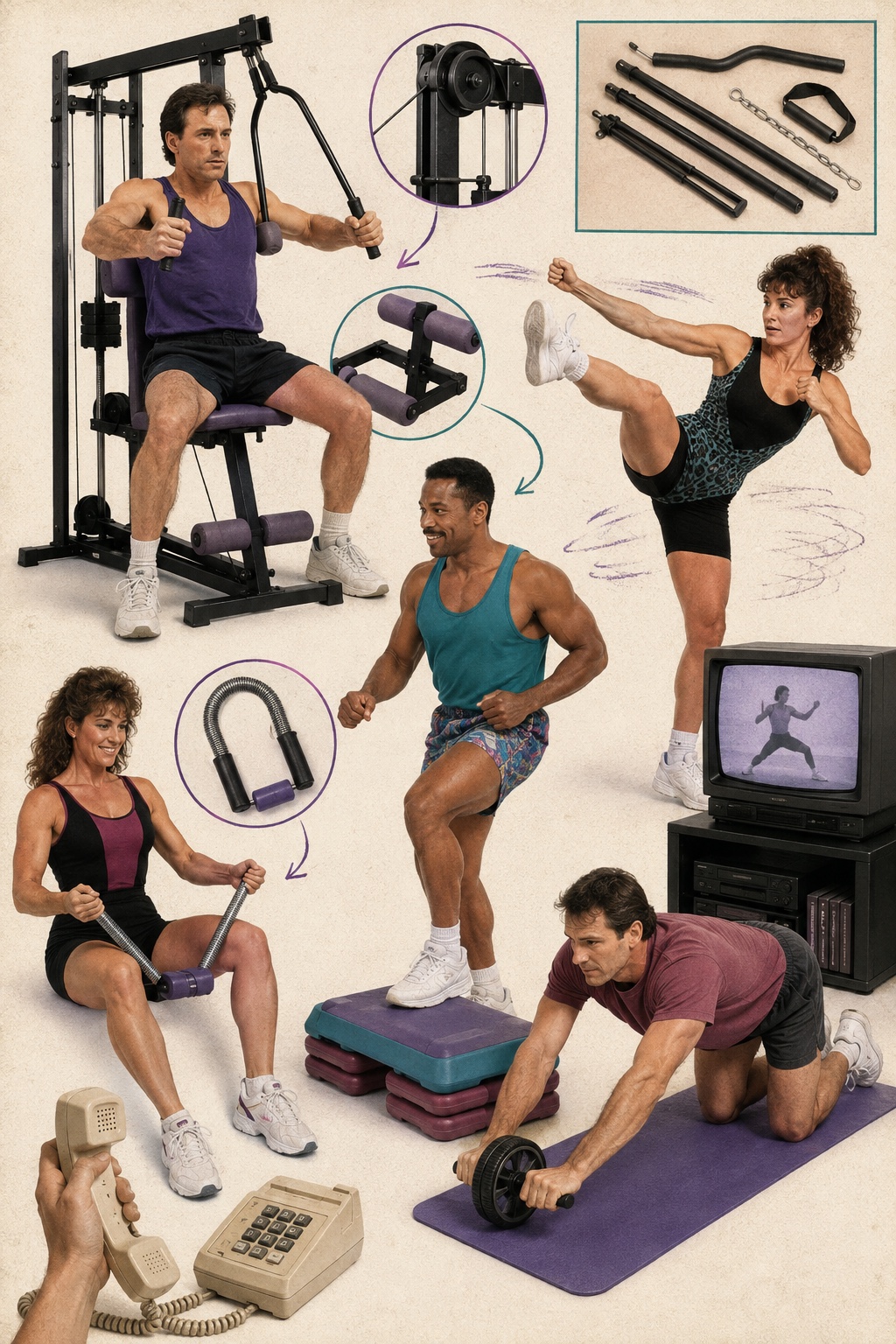
The ’90s infomercial cabinet
Tae Bo
The pitch: martial-arts excitement with dance-workout accessibility. The reality: vigorous follow-along cardio, provided the viewer could control the kicks and tolerate the pace. It sold a feeling as much as a routine: explosive, fast and nothing like the office.
ThighMaster
The pitch: squeeze one compact spring device and transform a specific area. The reality: it could create muscular resistance, but it could not command the body to remove fat from the thighs. Its genius was a movement anyone understood instantly on television.
Bowflex
The pitch: replace a room of iron with flexible resistance rods and one home station. The reality: resistance training at home was useful; buying the machine did not create the habit. It endured because it offered more exercise variety than a single-purpose gadget.
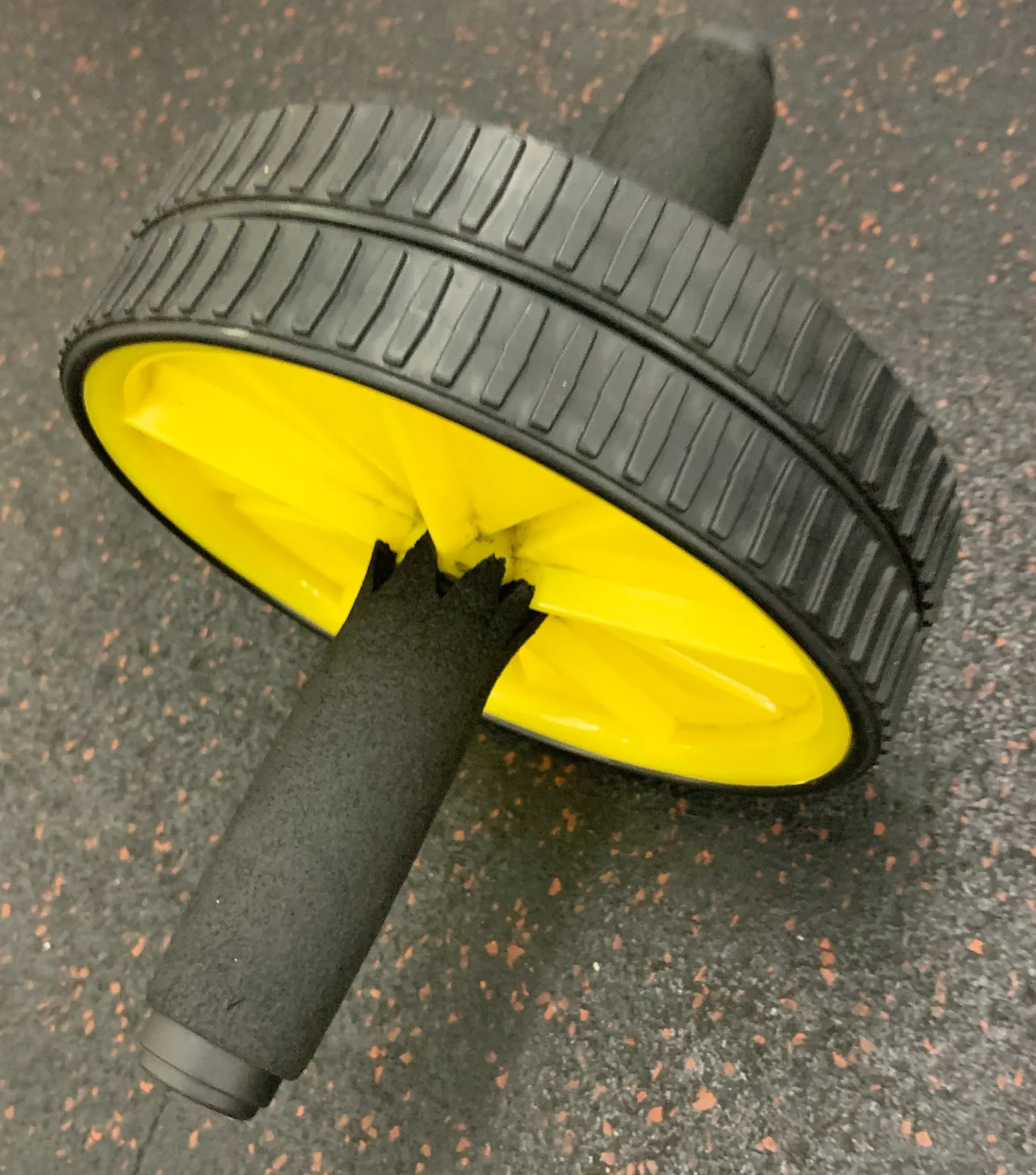
Ab rollers and wheels
Why they sold: one small object turned “work your core” into a visible movement and a concrete purchase.
What was real: rollout variations can challenge the trunk. What was not: stronger abdominal muscles do not selectively erase the fat above them.
Photo: Wikideas1 · CC0 public-domain dedication · Wikimedia Commons.The two-second demonstration
A memorable machine did not need a long explanation. The viewer saw a body, a repeated motion and an implied result. That compression made spring devices, rollers and resistance machines perfect direct-response television—even when the claim was larger than the exercise.
Original DopamineKart AI editorial illustration using fictional adults and generic equipment.The 2000s: Stop Buying a Gadget—Buy the System
P90X’s documented first commercial use dates to July 2003. Its real innovation was packaging. Instead of one workout, the buyer received a schedule, multiple disciplines, a progression story and a finish line 90 days away. “Muscle confusion” supplied the headline, but adherence came from the calendar and the sense that missing Tuesday meant something.
DVD shelves filled with Pilates, dance, yoga, boot-camp and celebrity programs. Weight-loss reality television turned private change into weekly spectacle, often using conditions and time commitments ordinary viewers could not safely reproduce. Online message boards made the experience social even when the workout happened alone.
Then Wii Fit moved the screen from instructor to participant. It launched in Japan in December 2007 and reached major international markets in 2008. The balance board measured shifts in weight while the software turned activity into games, scores and daily check-ins—the ancestor of today’s streaks, rings and app dashboards.
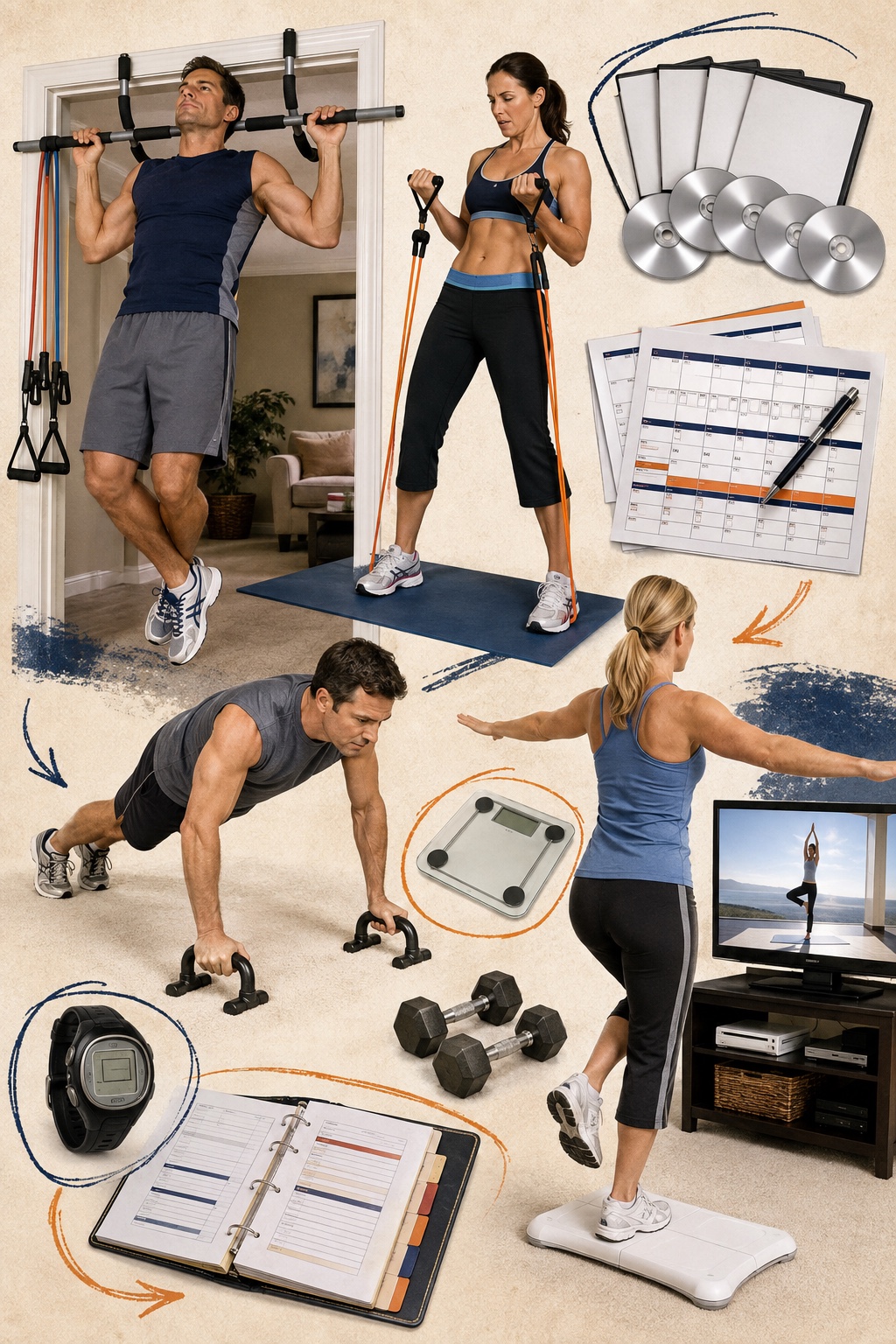
The 2000s system, unpacked
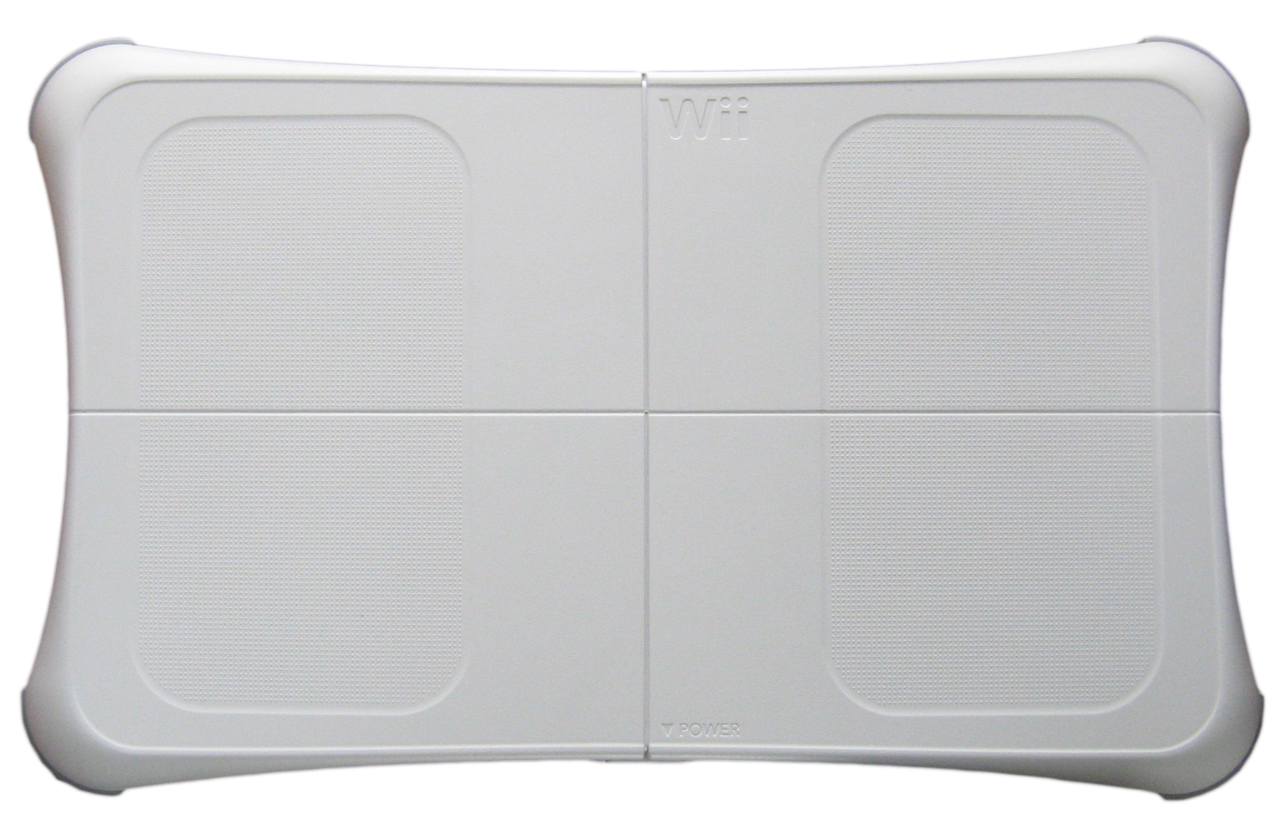
Wii Fit and the Balance Board
What changed: the television could now measure input, award a score and remember yesterday. Exercise became an interaction instead of a one-way broadcast.
What survived: approachable games, streaks and immediate feedback are now standard features of fitness apps and connected equipment.
Photo: Dddeco; transparent derivative by Pro2 · CC BY-SA 3.0 · Wikimedia Commons.P90X
What was in the idea: multiple workouts, a calendar, progression, recovery days and a defined endpoint. It asked buyers to join a program, not merely own a disc.
Why it felt different: variety and a visible schedule turned consistency into a challenge. Its weakness was intensity: a dramatic program was not automatically an appropriate starting point for every beginner.
Original DopamineKart AI editorial illustration; no trainer or brand likeness.What Worked—and What Was Mostly Theater
| Trend | The useful part | The oversell |
|---|---|---|
| VHS aerobics | Repeatable guided cardio at home | One routine or body type as the universal answer |
| Step aerobics | Simple scalable cardiovascular work | More height and speed always being better |
| Tae Bo | Energetic whole-body cardio | Technique and joint tolerance treated as automatic |
| Thigh/ab gadgets | A reason to contract a muscle | Spot-reducing fat from one body part |
| Bowflex/home gyms | Resistance training without a gym trip | Owning equipment creating consistency by itself |
| P90X | Variety, progression and a calendar | Extreme intensity fitting every beginner |
| Wii Fit | Low-friction movement and feedback | A game’s scores fully measuring health |
The CDC says most weight loss comes from reducing calories, while regular physical activity is especially important for health and maintaining weight loss. Adults are generally advised to get at least 150 minutes of moderate aerobic activity weekly plus muscle-strengthening work on two days. The exact amount and safe intensity vary by person.
What Survived All Three Decades
Follow-along instruction
The VHS tape became the DVD, the DVD became streaming, and streaming became the fitness app. The basic product—someone telling you what to do next—never disappeared.
Progress you can see
A paper calendar, a weigh-in, a completed disc and a game score all answered the same question: did I do it? Modern wearables simply made the record automatic.
Community
Jazzercise classes, Tae Bo tapes shared with family, P90X forums and Wii Fit living rooms made effort feel less solitary. The social layer often mattered more than the equipment.
The clothes rack problem
Convenience removes travel, not reluctance. Every decade produced equipment marketed as effortless and then stored under a bed or covered in laundry. The most effective tool was usually the one a person could tolerate, access and repeat.
The ’80s democratized the instructor. The ’90s made fitness a demonstration. The 2000s turned it into a system and a score. Beneath the changing media, the winning formula stayed embarrassingly ordinary: move regularly, strengthen the body, eat in a sustainable way, sleep, and choose a format you will still use after the commercial stops being exciting.
Common Questions
Did those old tapes actually work?
They could provide real aerobic or strength activity. Whether they changed weight depended on consistency, intensity, food intake and the individual—not the tape format or celebrity.
Can exercise remove fat from one body part?
Exercises can strengthen a specific muscle, but they do not let you choose where the body loses fat. That distinction undermined a large share of 1990s gadget advertising.
Was P90X the first home workout program?
No. Home instruction existed for decades. P90X stood out by selling a demanding, highly structured multi-workout system with a fixed calendar and transformation narrative.
- Smithsonian National Museum of American History: Jane Fonda’s Workout record
- Smithsonian: history of the StairMaster
- Nautilus investor history: Bowflex and direct-response TV
- USPTO record: P90X first-use date
- Nintendo: original Wii Fit release information
- CDC: physical activity, weight and health
- Wikimedia Commons: 1988 aerobics class (public domain)
- Wikimedia Commons: VHS cassette by LoMit (CC BY-SA 4.0)
- Wikimedia Commons: 1992 stair-machine photograph by Ernie Branson/NCI (public domain)
- Wikimedia Commons: ab roller by Wikideas1 (CC0)
- Wikimedia Commons: Wii Balance Board by Dddeco/Pro2 (CC BY-SA 3.0)


The three editorial plates are original AI-generated illustrations using fictional adults. They intentionally avoid real trainers, celebrity likenesses, trademarks and copied product designs. This article is cultural history and general health context, not individualized medical advice. Corrections: email us.