Flying With Pets: The Airline-by-Airline How-To
It comes down to one question before anything else: does your pet fit under the seat in front of you? If yes, it rides in the cabin with you, which is cheaper, simpler and safer. If no, you are into cargo, and cargo has become considerably harder to book.
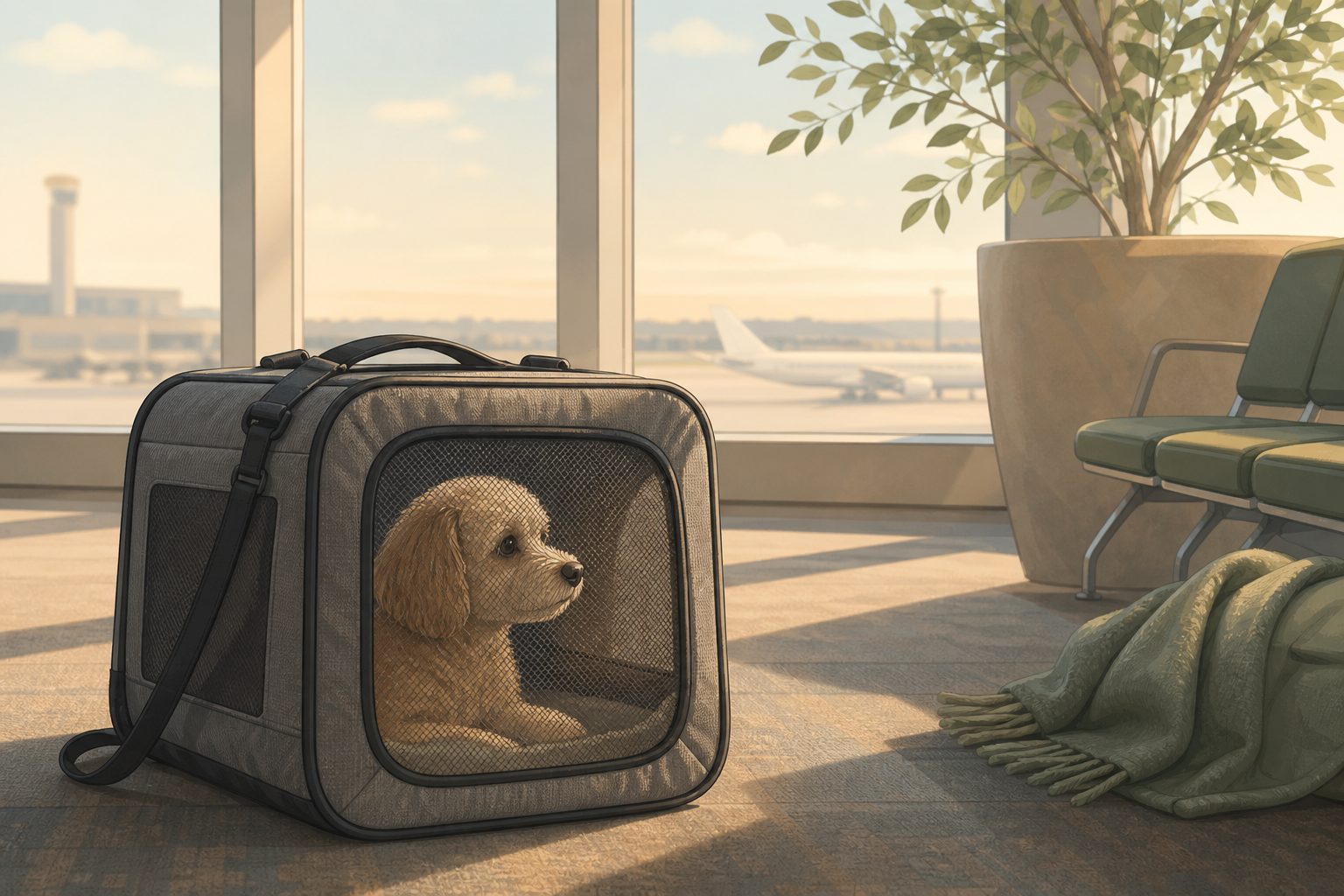
The short version. A small dog or cat flies in the cabin if the animal plus carrier fits under the seat — commonly around 20 lb combined, though the limit that actually binds is the carrier size, not the weight. Every airline charges per pet, per direction, per segment. Southwest, Alaska and Frontier sit at the low end of the range; American sits at the high end. Cabin pet slots are capped per flight, so the booking is the scarce thing, not the fee.
Cabin or cargo? Start here
Does the pet fit under the seat?
Animal plus carrier, in a soft carrier that compresses slightly.
Yes → in-cabin
Rides with you. Cheapest, simplest, and the animal stays in your control the whole way.
No → cargo
Rigid IATA-standard crate in a climate-controlled hold. Fewer airlines, temperature embargoes, more paperwork.
Several major US carriers have narrowed or ended general-public cargo pet booking in recent years, with some limiting it to military and government relocations. Because this is exactly the kind of policy that changes, confirm current cargo availability directly with the airline rather than from any summary, including this one.
The airlines, side by side
| Airline | Relative cost | Pets accepted | Carrier | Routes |
|---|---|---|---|---|
| Southwest | Low | Dogs, cats | Small soft carrier, under the seat | Domestic only |
| Alaska | Low | Dogs, cats, rabbits, household birds | Small soft carrier | Widest small-pet acceptance; still flies some pets as cargo |
| Frontier | Low | Dogs, cats | Must fit under the seat | Domestic plus limited international |
| Delta | Medium | Dogs, cats, household birds | Small soft carrier | Domestic, Canada, Puerto Rico, USVI |
| JetBlue | Medium | Dogs, cats | Small soft carrier; combined weight enforced | Most routes, limited pets per flight |
| United | Medium–High | Dogs, cats | Must fit under the seat | Some routes require an extra seat |
| American | High | Dogs, cats | Soft or hard, under the seat | Shorter routes; not all international |
Cost is shown as a relative tier rather than a figure. Fees change yearly and vary by route; the tier tells you which airlines are consistently cheaper, which is the part that stays true long enough to be useful. Southwest’s pet fee has historically been refundable, which no other major carrier matches — worth confirming when you book.
What the table is actually telling you
The fee is the least durable thing on it. Carrier limits, which animals an airline accepts, and which routes allow pets change far more slowly, and those are what decide whether the trip is possible at all. Alaska is the most permissive on animal type and one of the few majors still flying pets in the hold. American sits highest on cost. Southwest is domestic only. And because the charge repeats per segment, a connecting round trip can cost several times what the one-way number suggests — which is an argument for a nonstop even when it is otherwise less convenient.
How to book and prepare
Reserve the pet spot when you book the flight
Cabins cap how many animals fly per flight, and that cap is often low single digits. Add the pet at booking or call immediately — there is no standby for this.
Confirm the fee and the rules for your exact route
Fees and rules vary by route, aircraft and season, and they are charged per pet, per direction, per segment — so a connecting round trip multiplies. Check the airline’s own page for your specific flights.
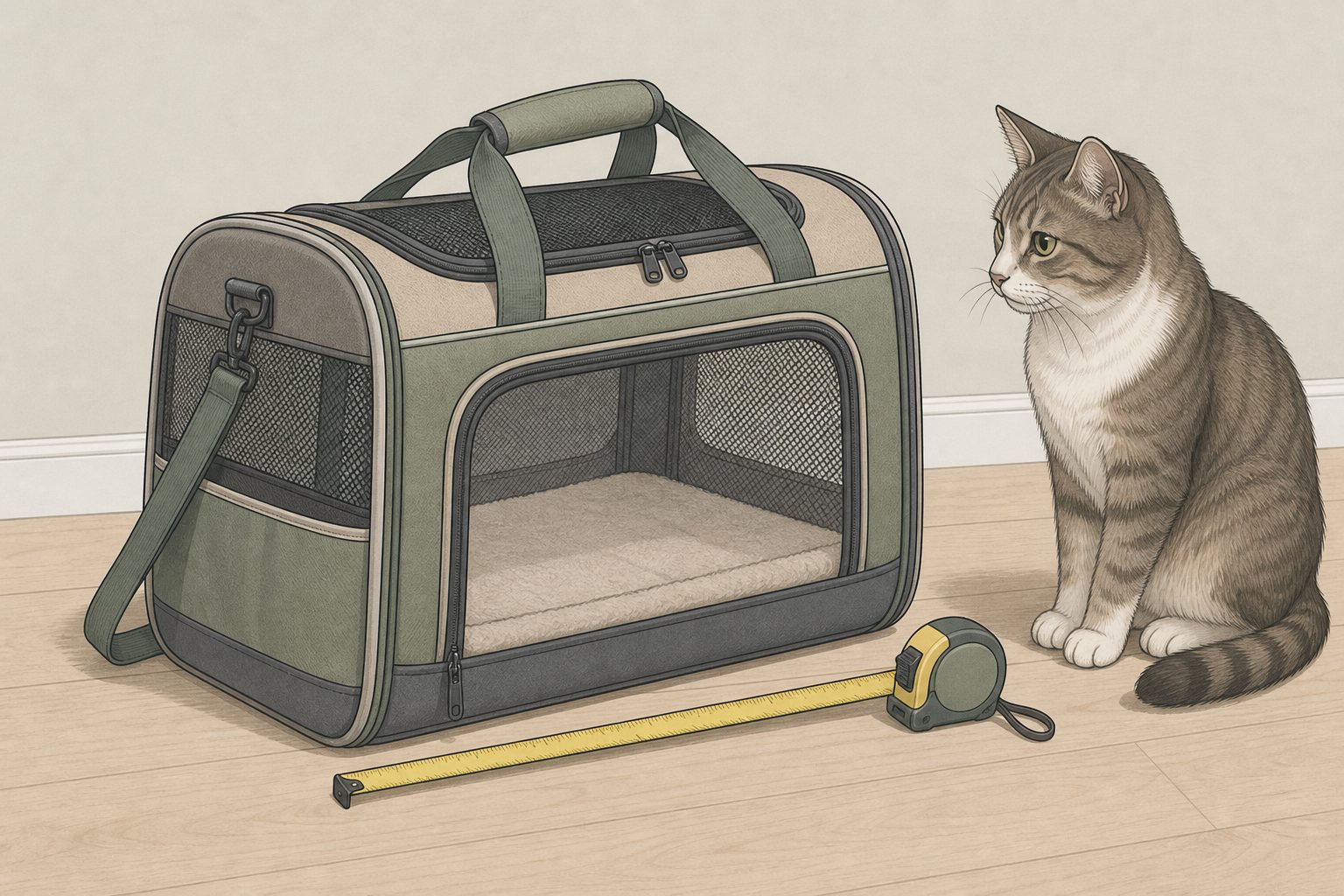
Buy the carrier, then measure it yourself
“Airline approved” is a marketing phrase, not a certification. Measure against your airline’s published limit and leave margin. Your pet must be able to stand up and turn around inside it.
Sort health paperwork early for Hawaii and international
These need health certificates and sometimes import permits, and some require a vet visit inside a fixed window before departure. Started late, this is the thing that cancels the trip.
Do a carrier trial run at home
Let the pet nap and ride in it for a week beforehand. The gate should not be the first time they meet the carrier.
How to measure a carrier
About "maximum flight duration"
Most US airlines do not publish a firm hours cap for in-cabin pets. They limit routes instead, which amounts to the same thing by a different mechanism — long-haul international is where in-cabin travel usually stops being offered, and where a pet-shipping service starts being the realistic option rather than flying with the animal yourself. If a long-haul trip is the plan, that is the question to ask the airline first, before anything else is booked.
Do and avoid
| Do | Avoid |
|---|---|
| Book the pet spot at the same time as the seat | Assuming there will be room on the day |
| Confirm the fee for your exact route and date | Trusting a single figure quoted anywhere online, including here |
| Measure the carrier yourself, with margin | Buying on an “airline approved” label alone |
| Check temperature embargoes before cargo travel | Assuming cargo runs year-round on every route |
| Start Hawaii and international paperwork weeks out | Booking long-haul before checking import rules |
| Introduce the carrier at home, over days | Introducing the carrier at the airport |
If you remember three things
- The carrier size is the real limit, not the weight.
- The fee repeats per segment — a nonstop can be much cheaper than it looks.
- Book the pet slot when you book the seat. The slot is the scarce thing.
Sources
Airline policy pages are the authority for anything on this page, because they are the only source that is current by definition: Delta · Southwest · Alaska · American · United · JetBlue · Frontier
No products are named or linked on this page and there are no affiliate links on it. Nothing here is monetised.
This is a researched guide. Nobody here flew with a pet to write it, no airline was contacted, and no policy below was independently verified with a carrier — which is exactly why every airline-specific claim points you at the airline’s own page.
The two photographs are AI-generated illustrations, credited as such in their captions. No real airport, airline, carrier product or animal is depicted. The carrier diagram is hand-drawn SVG, so its proportions are readable in the page source rather than being an image you have to trust.
Relative cost tiers replace fee figures deliberately. A printed fee goes stale within a year; which airlines are consistently cheaper does not.