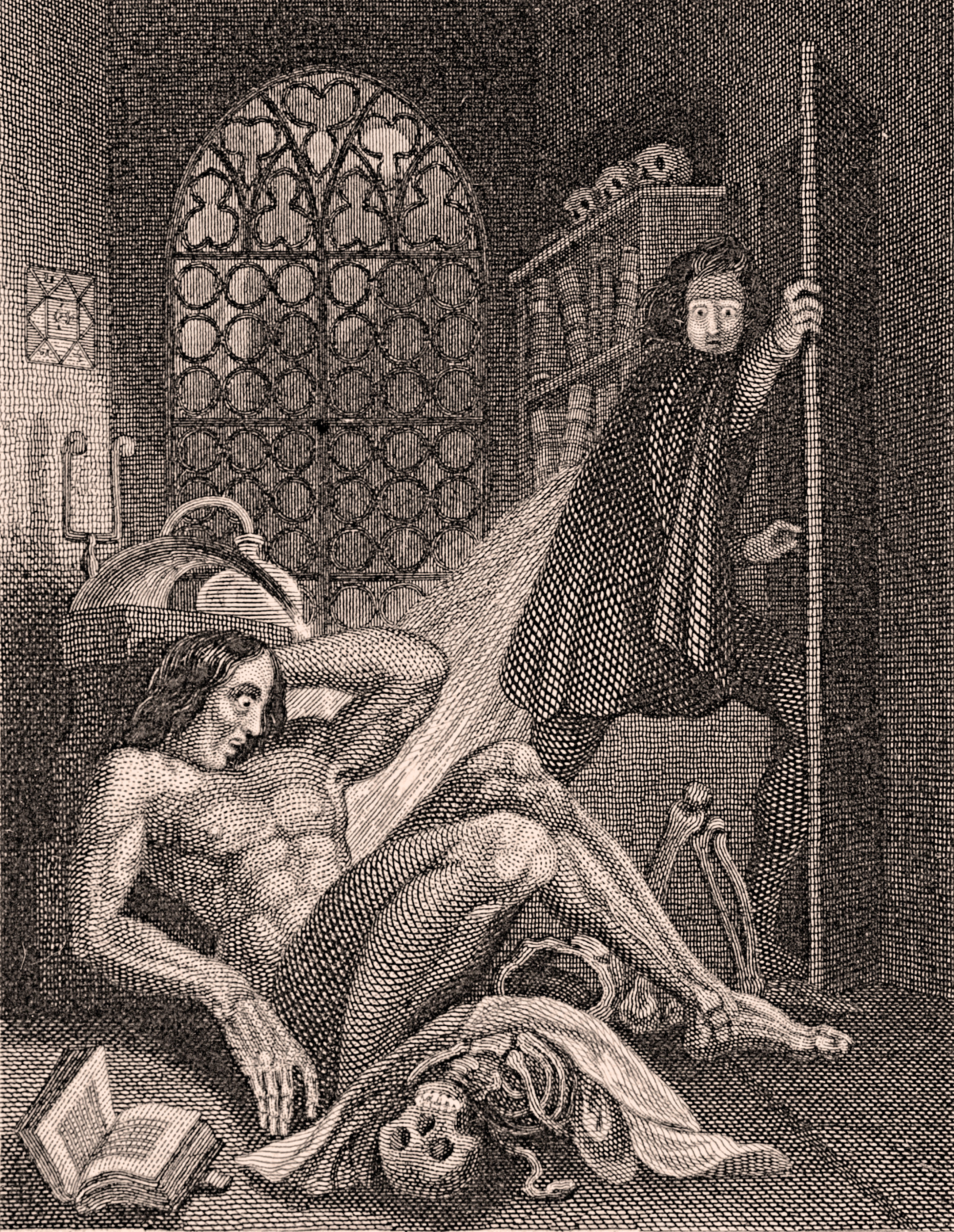
Guillermo del Toro has spent thirty years loving monsters more than the people who make them. He finally got the one he was born to direct. I went in braced for reverence. I found something closer to grief.
 By Ignatius Vale, Critic-in-Residence · Anno MMXXV · 7 min
I have sat through a great many monsters that were merely large. Del Toro's is the first in years that arrived already knowing it was unwanted, and the difference sat with me in the dark like a second guest I hadn't invited but couldn't ask to leave. This is a filmmaker who has never once, in a long career of amphibian men and clockwork ghosts, sided with the villagers. Here, at last, he was handed the villagers' oldest scapegoat, and the whole enterprise, and did precisely what I expected: he took the monster's side entirely, and made Victor Frankenstein the horror instead.
I arrived suspicious of the scale of it — a lavish, two-hour-plus Gothic epic, Netflix money spent like studio money used to be spent, a festival premiere with the kind of standing ovation that makes a critic reach instinctively for his coat. I have seen ovations manufactured. I have seen them earned. This one, I am told by colleagues who were in the room in Venice, ran a genuinely absurd length — the kind that embarrasses everyone involved a little, which is usually the tell that it's real.
Isaac's vanity, Elordi's silence
Oscar Isaac plays Victor as a man in love with his own genius long before he's in love with anything he creates — brittle, seductive, allergic to the idea that ambition might have a cost he'd actually have to pay. It is not a sympathetic performance and it is not meant to be; Isaac plays the doctor as the disease. Every scene he shares with his creation is a small autopsy of his own cowardice, and Isaac, to his considerable credit, never once asks you to forgive him for it.
Against him, Jacob Elordi gives the Creature something I did not expect from a role built, for two centuries now, on grunting and bolts: a genuine, unhurried interior life. Under del Toro's prosthetics he is asked to communicate almost everything through posture and breath before the character earns language, and he does — the performance is patient in a way the film around it is not always patient, and it is the reason the last act lands as hard as it does. Around them, Mia Goth and Christoph Waltz do exactly the sturdy, unshowy work the story needs and no more, which in a film this operatic is its own kind of discipline.
Fidelity as an act of love, not obligation
What struck me most is how little del Toro seems interested in "updating" Shelley. This is not a Frankenstein apologizing for its source material or smuggling in a metaphor it's embarrassed to say aloud. It is built, unmistakably, from the actual bones of the 1818 novel — the framing device, the Creature's self-education, the long accounting of who abandoned whom first — rendered in del Toro's usual candlelit, rot-and-velvet production design, all practical builds and painted backdrops that make the CGI, when it does show up, feel almost like an intrusion. It is a film made by someone who has read the book more carefully than the century of adaptations that came after it, and who trusts that fidelity, staged with enough craft, is its own kind of spectacle.
Del Toro didn't update Frankenstein. He forgave it — and left Victor to answer for everything the century of adaptations let him off the hook for.
Where the epic runs long
I will not pretend the film is lean; it is not, and I do not believe del Toro wanted it to be. There are stretches, particularly early, where the doctor's ego gets more screen time than the story strictly needs to make its point, and a viewer less patient than I am might feel the runtime before the Creature ever does. But the back half earns the indulgence of the front — the reckoning between creator and creation is staged with a tenderness I did not think this material had left in it, two hundred and some years and countless bolt-necked parodies later.
A monster movie that finally blames the doctor.
I do not award numbers — a film is not a toaster, and I am not a scale. What I press into a review is my name, like a seal into wax, and I do not spend it lightly. Take the crest above as my whole verdict; take this as the reason for it.
Del Toro has made the Frankenstein his entire career was arguing toward: a Gothic epic that is unfashionably, unapologetically on the side of the thing everyone else made a punchline. It overreaches in its first hour and more than earns that overreach by its last. Isaac plays vanity as horror; Elordi plays the horror as grief. See it for the Creature — you will leave, as I did, no longer certain which of the two men in the title deserved that name.