Home Charging vs Public Fast Charging: Which Costs You Less
Charging at home is cheaper than charging at a public fast charger — that part is not close, and it is true for structural reasons rather than local ones. What is worth your attention is how much cheaper for you, which no article can tell you, and which your own electricity bill can.
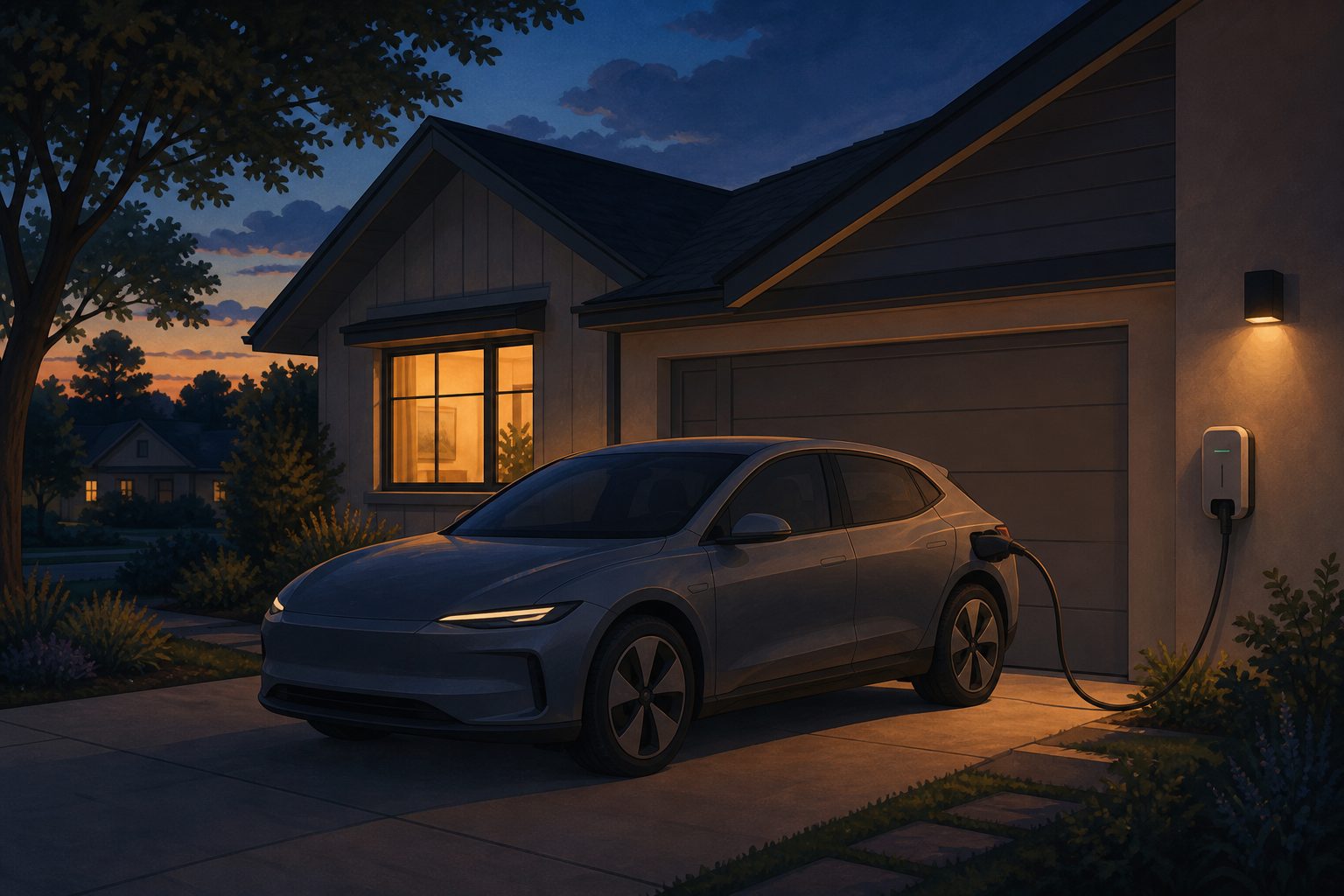
The short version. Home charging wins on cost in essentially every market, because you pay a residential energy rate while a fast-charging network is a commercial business with expensive hardware, grid demand charges and a margin on top. Public fast charging buys you time, not value — which makes it the right choice on a road trip and the wrong one as a routine. The single biggest lever at home is not the charger you buy, it is when you charge.
Why home is cheaper — the structure, not the number
A home charger draws from the same residential supply as your kettle, at the rate printed on your bill. A public fast charger is a different product entirely: high-power hardware, a grid connection sized for it, real estate, maintenance, payment systems, and demand charges from the utility for drawing very large amounts of power in short bursts. All of that sits on top of the energy itself, and it has to be recovered from the people who plug in.
That gap is structural, so it survives changes in energy prices. It is why the direction of this comparison is safe to state plainly while the size of it is not.
Work out your own number in four steps
- Find your rate per kilowatt-hour on your electricity bill. It is usually printed as a rate per kWh, and if you are on a time-of-use tariff there will be more than one — take the overnight one.
- Find your car's usable battery capacity in kWh, from the manual or the manufacturer's spec page. A full charge costs roughly that many kWh times your rate, plus a little for charging losses.
- Work out your cost per mile or per kilometre: divide that full-charge cost by the real range you actually get, not the advertised figure. Your own trip computer is the honest source here.
- Compare against a fast charger's posted rate per kWh at a station you actually use. Multiply by the same battery capacity and you have the two numbers side by side, in your currency, for your car.
Do this once and it stays useful for years. The ratio between the two moves far more slowly than either individual price.
The single biggest lever: when you charge
Many utilities offer a time-of-use tariff where overnight energy costs materially less than late-afternoon energy. Since a car sits on a driveway all night and needs no supervision, an EV is close to the ideal appliance for exploiting that — you set a departure time in the car or the charger app and it does the rest. Switching tariff and scheduling charges is usually a larger saving than any difference between one home charger and another, and it costs nothing to set up.
Check whether your utility offers one, and read the windows carefully: the expensive window is often shorter than people assume, and avoiding it is the whole trick.
Why fast charging slows down when the battery is fuller
A fast charger does not deliver its headline speed for the whole session. Charging is quick while the battery is relatively empty and then tapers as it fills, because pushing high power into a nearly full battery generates heat and accelerates wear. The practical consequence on a road trip is that the last stretch to a full battery takes a disproportionate share of your time.
Which is why experienced drivers stop earlier and more often rather than charging to full: two short stops in the fast part of the curve usually beat one long one that runs into the taper. If the station also charges by the minute rather than by the kWh, the taper costs you money as well as time.
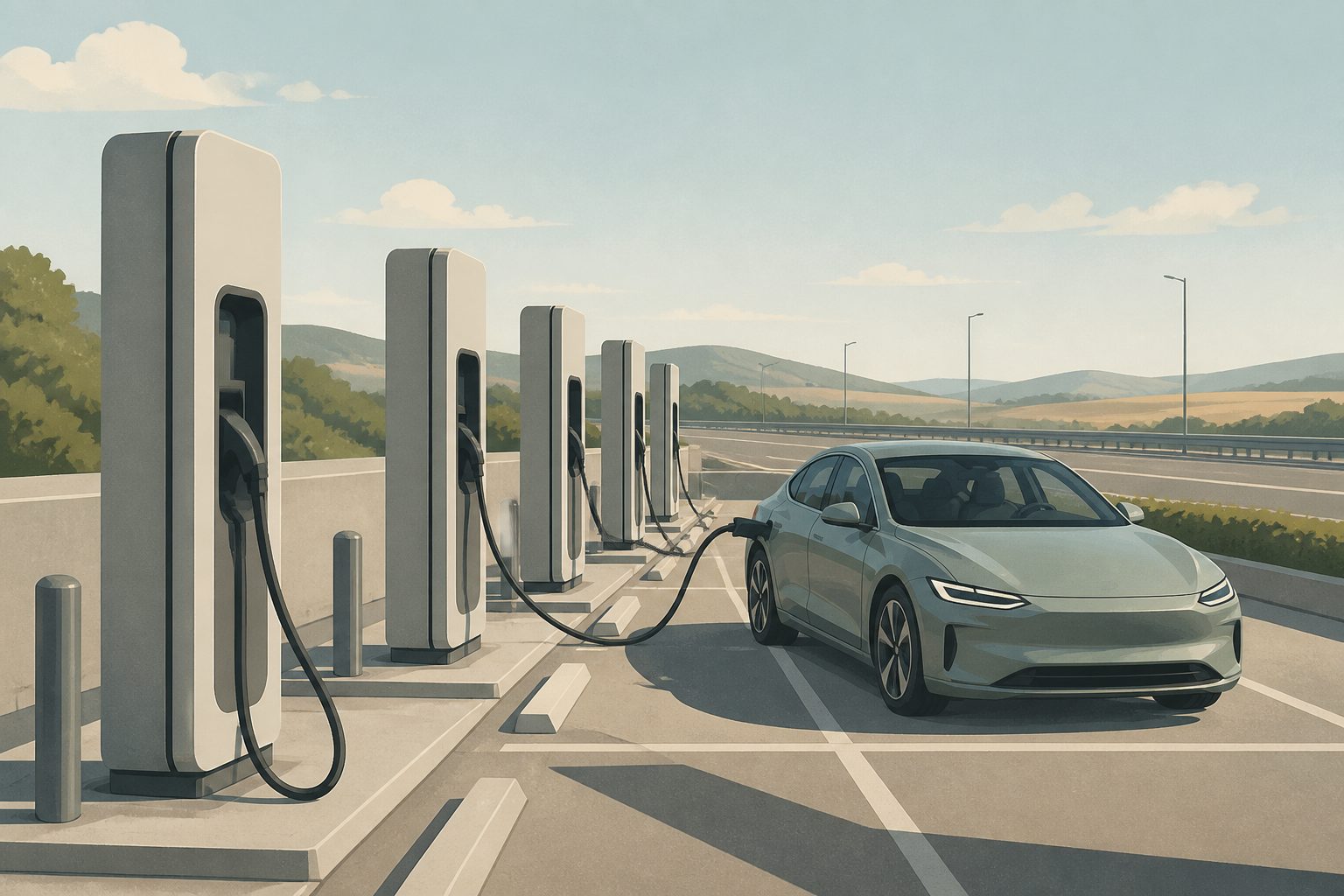
When paying more is the right call
| Situation | What actually makes sense |
|---|---|
| Daily commuting, car parked overnight | Home, scheduled into the cheap window. This is the case the whole cost argument is about. |
| Road trip, hundreds of miles in a day | Fast charging, without guilt. You are buying time, and time is the thing worth buying that day. |
| Flat or street parking, no home charger | Public charging is your baseline. Slower destination chargers at work or a supermarket usually cost less than highway fast chargers. |
| Occasional long trip, otherwise home | Both. The mix is what most owners actually do, and it is fine. |
| Free charging offered at work or a hotel | Take it, but do not plan around it — these perks are marketing and they expire. |
The battery-health question
Routine reliance on DC fast charging is generally considered harder on a battery than slower AC charging at home, because of the heat involved — though modern packs manage this actively and occasional fast charging on trips is not something to worry about. Manufacturers' own guidance is the authority here, and it varies by pack chemistry, so read yours rather than a forum. The everyday-versus-occasional distinction is the part that matters, and it happens to align with the cost argument.
What this does not cover
Installing a home charger is its own project with its own costs, and it is where the real money is: a Level 2 charger runs on a 240V circuit, and a new circuit or a hardwired unit needs a licensed electrician and usually a permit. Our guide to Level 2 home chargers covers what to look for in the hardware and what the electrical work actually involves.
If you remember three things
- Home is cheaper for structural reasons — hardware, grid demand charges and margin, not just energy.
- When you charge beats which charger you bought. Check for a time-of-use tariff.
- On a trip, two short stops beat one long one — the taper makes the last stretch expensive in time.
No products are named or linked on this page and there are no affiliate links on it. Nothing here is monetised.
This is a researched guide. We did not meter a vehicle, time a charging session or test a network.
No rates or prices appear anywhere on this page, deliberately. Electricity and charging prices vary by utility, state, season, time of day and network, so any figure we printed would be wrong for most readers and would go stale besides. The four-step method uses your own bill instead, which is both more accurate for you and durable. Where a direction is structurally robust — home costs less per unit than public fast charging — it is stated as a direction and the structure behind it is explained.
The two diagrams are hand-drawn SVG and carry no axis values, because the shapes are the point and plotted numbers would imply a precision we do not have. The two photographs are AI-generated illustrations, credited in their captions; no specific vehicle, charger, network or brand is depicted.
Battery-health guidance varies by manufacturer and pack chemistry — treat your own manual as the authority over any general statement here.