
Quick take
- An air fryer is a small convection oven: a heating element (usually a coil near the top) and a high-speed fan that circulates hot air around the food at high speed.
- Crisping comes from the Maillard reaction — the same browning chemistry that happens on a seared steak or a baked cookie — triggered by rapid, even, high-heat convection rather than oil submersion.
- The compact basket and powerful fan are what make it faster than a regular oven: less air volume to heat, and constant forced airflow instead of relying on natural convection.
- It genuinely reduces added oil for foods that already carry surface fat or a starch coating, but it can't replicate the texture of true deep frying for wet-battered foods, which need oil submersion to set the batter.
Convection, just a lot more of it
A conventional oven heats mostly through radiant heat and slow, natural convection — hot air rises and circulates on its own, which is why oven temperatures can be uneven and why preheating takes a while. An air fryer is fundamentally a convection oven, meaning it adds a fan to actively force hot air movement rather than waiting for it to circulate naturally, but the air fryer format takes this to an extreme: a small enclosed chamber, a powerful fan, and food held in a perforated basket that lets hot air reach nearly the entire surface at once.
That combination — small volume of air to heat, aggressive forced circulation, and a basket geometry that exposes most of the food's surface — is what makes an air fryer noticeably faster and more even than baking the same food in a full-size oven, even though both appliances are technically doing the same basic thing: cooking with hot moving air.
Why it gets crispy without a vat of oil
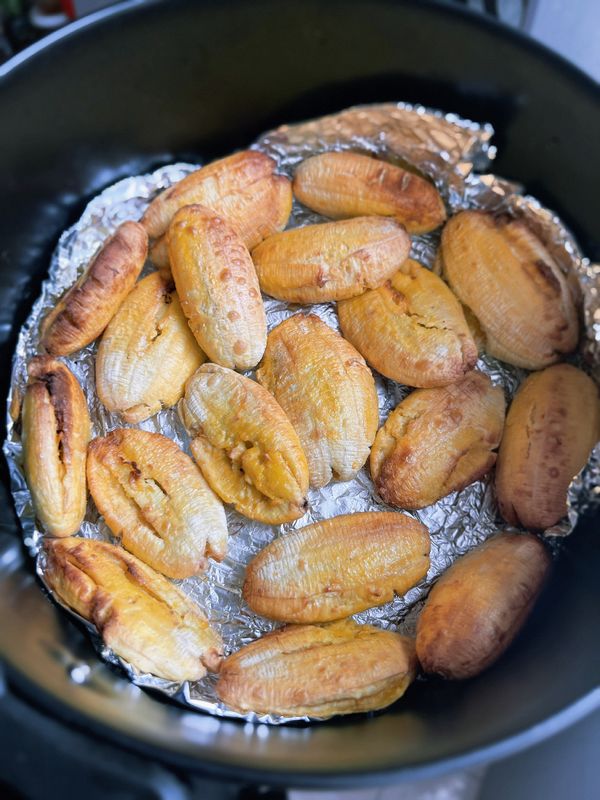
The crisp, browned exterior people associate with frying comes from the Maillard reaction, a chemical reaction between amino acids and sugars that happens when a food's surface reaches roughly 280°F (140°C) and above. Deep frying achieves that temperature quickly because oil is an efficient heat conductor that fully surrounds the food. An air fryer reaches similar surface temperatures through a different route — very hot, fast-moving air hitting the food's surface from all directions, evaporating surface moisture quickly and letting the exposed surface climb to browning temperature.
This is also why oil still matters in an air fryer, just in a much smaller quantity: a thin coating of oil (or fat already present in the food, like chicken skin) helps conduct heat to the surface and carries flavor compounds that contribute to browning, but it doesn't need to submerge the food the way deep frying does — a light spray or toss is generally enough to noticeably improve crisping compared to cooking with none at all.
Where it genuinely can't replace deep frying
The method has a real limitation, and it's worth being direct about it: wet batters — tempura, beer-battered fish, classic funnel cake style coatings — rely on being submerged in hot oil to set their structure quickly and uniformly. In an air fryer, that same wet batter tends to drip, cook unevenly, or fail to form the light, structured crust that oil submersion produces, because there's no surrounding liquid to instantly set the batter's exterior on contact.
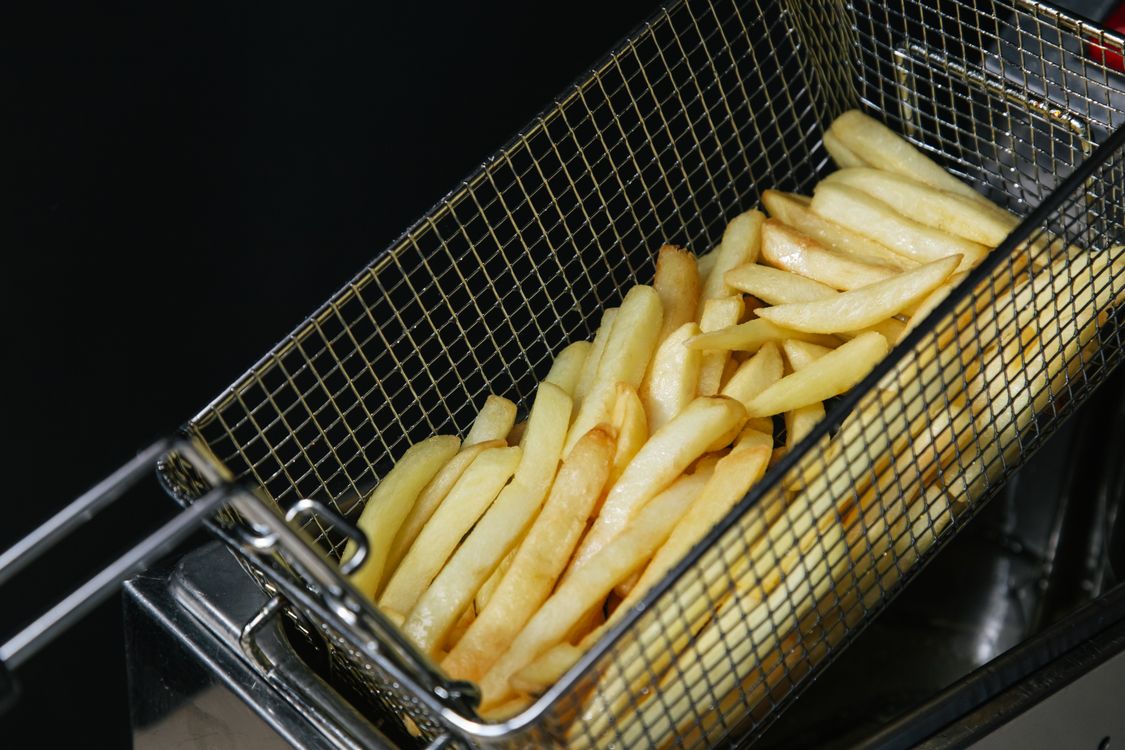
Foods that are already solid, breaded, or pre-coated with a thin layer of fat — frozen fries, breaded chicken tenders, roasted vegetables tossed in a little oil — are where an air fryer's approach works closest to a deep-fried result, because those foods don't depend on a liquid batter setting instantly on contact with heat.
| Element | What it actually does |
|---|---|
| Heating element | Electric coil, typically mounted above the food, radiates heat into the chamber |
| Fan | Forces hot air to circulate at high speed around the food's exposed surfaces |
| Perforated basket | Lets hot air reach most of the food's surface area at once, instead of only the top |
| Browning mechanism | Maillard reaction, triggered by rapid surface heating — same chemistry as searing or baking |
| Oil's role | Improves heat conduction and flavor at the surface; not required in the volume deep frying needs |
| Where it falls short | Wet-battered foods that need oil submersion to set their structure on contact |
Common questions
Is air-fried food actually healthier than deep-fried food?
Generally yes in terms of added fat, since air frying typically uses a small fraction of the oil deep frying requires — but the food itself (breading, sugar content, portion size) still determines most of its nutritional profile.
Why does food need to be spaced out in the basket?
Because the mechanism depends on hot air reaching the food's surface from multiple directions. Overcrowding blocks airflow between pieces, which produces uneven cooking and less crisping — the same reason overcrowding a sheet pan produces soggier results in a regular oven.
Can you air-fry battered food at all?
Wet, drippy batters generally don't work well. Dry-breaded coatings (flour, breadcrumbs, panko) work considerably better, because they don't depend on instant contact-setting the way a liquid batter does.
Why does air-fried food cook faster than oven-baked food?
The smaller enclosed chamber heats up faster than a full oven cavity, and the forced-air fan moves heat to the food's surface more aggressively than an oven's natural convection, which is the main reason air fryer recipes typically run shorter and slightly hotter than equivalent oven instructions.
Does more wattage mean a better air fryer?
Higher wattage generally means faster preheating and potentially more consistent high-heat cooking, but fan design and basket airflow geometry matter as much as raw heating power for even results.
"Air fryer" is a marketing name for a genuinely useful appliance category — a compact, fast, forced-air convection oven — that borrows frying's most recognizable result (a crisp, browned exterior) through a completely different mechanism than actual frying. Understanding that difference predicts exactly what it will and won't do well.
For foods that are solid, breaded, or lightly oiled going in, it's a legitimately close approximation of deep frying with a fraction of the oil and cleanup. For foods that depend on a wet batter setting in hot oil, no amount of air fryer technique fully closes that gap — that's a different cooking method solving a different problem.
About this explainer. This article describes the general cooking mechanism shared by air fryer appliances, not the specifications of any single product. It contains no affiliate links and no product recommendations — DopamineKart Legit publishes this category of explainer for reference, independent of any specific model's marketing claims. Photography is licensed stock photography, credited per image.
Corrections: email us