
Quick take
- Crema is an emulsion — tiny bubbles of carbon dioxide gas trapped in a mix of water, coffee oils, and dissolved solids — not simple foam sitting on top of the liquid.
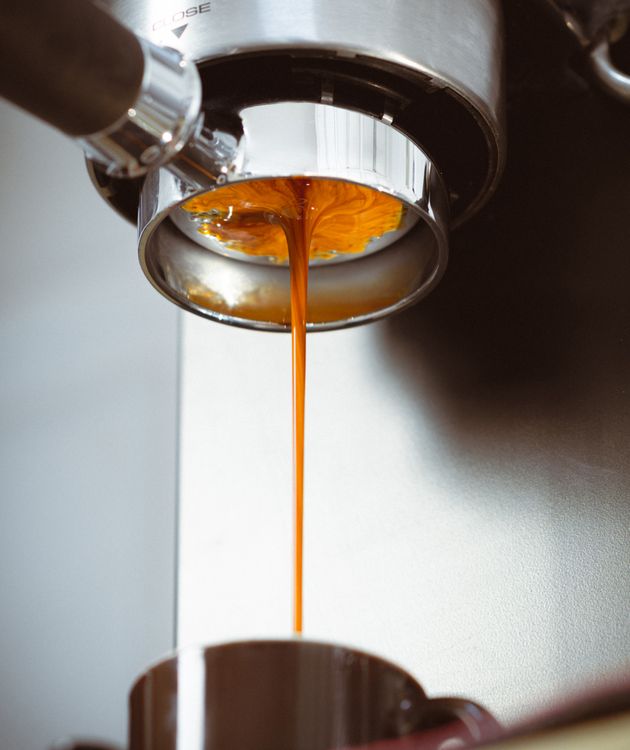
- It forms because espresso brewing forces near-boiling water through finely ground coffee at roughly 9 bars of pressure, nine times atmospheric pressure, which is enough to emulsify oils and trap gas that a drip coffee maker's brewing method never generates.
- Most of that trapped gas is carbon dioxide released by the coffee itself — a byproduct of roasting that off-gasses for weeks afterward, which is why fresh-roasted beans produce noticeably more crema than beans roasted a month ago.
- Crema's color and texture are a genuine diagnostic: thin, pale, or quickly-vanishing crema usually points to stale beans, too coarse a grind, or under-extraction, not necessarily a fault in the machine.
Pressure is the whole trick
A drip coffee maker relies on gravity: hot water sits briefly on grounds and drains through by its own weight. Espresso brewing does something mechanically different — a pump forces water through a tightly packed, finely ground puck of coffee at around 9 bars of pressure, roughly nine times normal atmospheric pressure. That combination of fine resistance and forced pressure is what makes espresso extraction fundamentally different chemistry from any gravity-fed brewing method, and it's the direct cause of crema, which simply doesn't form in a drip brewer regardless of bean freshness or grind.
The fine grind matters because it creates the resistance the pressure needs to work against — water forced through coarse grounds finds easy paths through and never builds the pressure differential required, which is part of why an espresso grind is noticeably finer than what's used for drip coffee or a French press.
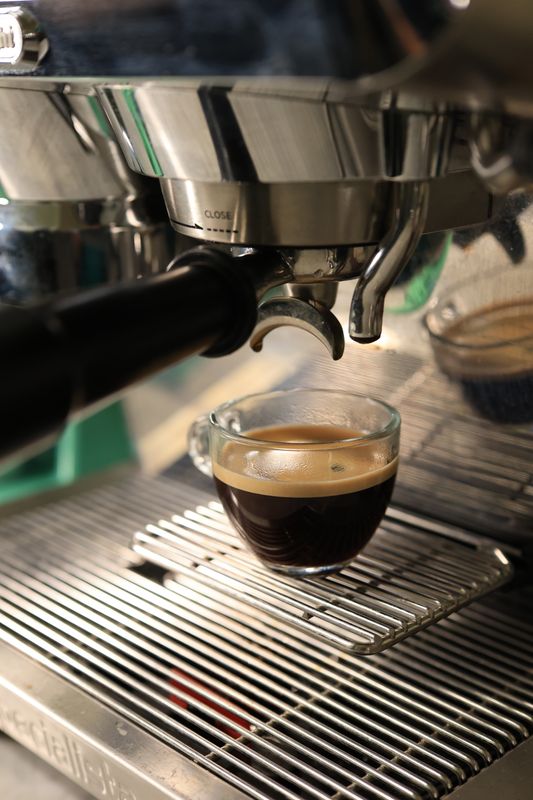
Where the bubbles actually come from
Roasting coffee beans triggers chemical reactions that produce carbon dioxide as a byproduct, and that gas stays trapped inside the bean's cellular structure after roasting, slowly releasing over the following days and weeks — a process called degassing. When hot, pressurized water hits finely ground, still-gassy coffee, that trapped CO2 gets forced out and whipped into tiny bubbles, stabilized by coffee oils and dissolved compounds pulled out during extraction. Those stabilized bubbles are crema.
This is exactly why bean freshness has such an outsized effect on crema: beans that were roasted recently still hold plenty of CO2 to release, while beans roasted a month or more ago have already degassed most of it sitting in the bag, leaving comparatively little gas left to whip into crema no matter how well the shot is pulled. A thin, quickly-disappearing crema on an otherwise well-dialed-in shot is one of the more reliable visual signs that the beans themselves are past their useful freshness window.
Why crema color and texture actually mean something
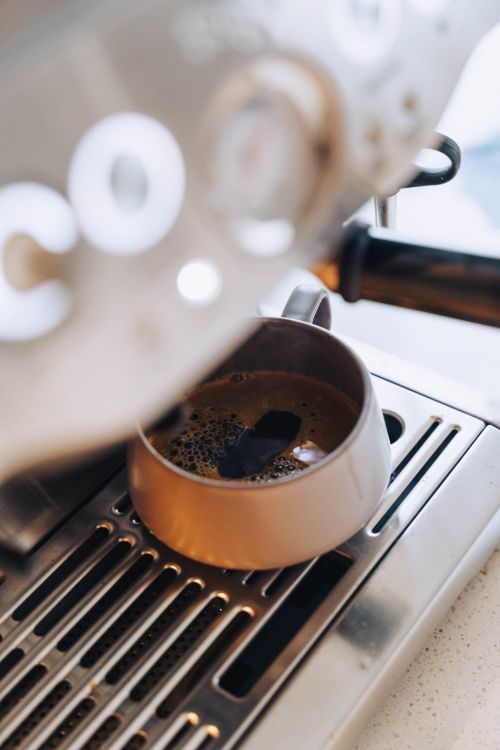
Baristas read crema as a rough diagnostic, not just an aesthetic feature, because its color and behavior track fairly directly with what happened during extraction. A rich, reddish-brown crema that holds its structure for a minute or more generally indicates fresh beans, an appropriate grind size, and even extraction. Pale, thin, or quickly-collapsing crema points toward one or more likely culprits: stale beans with little CO2 left to release, a grind that's too coarse to build proper resistance, water that ran through too fast (under-extraction), or, less commonly, a machine that can't sustain consistent pressure through the full shot.
It's worth being precise about what crema does and doesn't indicate: it correlates with several inputs to a good shot, but it isn't a direct measure of flavor by itself — a shot can have attractive crema and still taste sour or bitter from an unrelated extraction problem, like an incorrect ratio of coffee to water.
| Element | What it actually does |
|---|---|
| Pump pressure | Forces near-boiling water through the coffee puck at roughly 9 bars, emulsifying oils and releasing trapped gas |
| Fine grind | Creates the resistance the pressure needs to work against, extracting oils and slowing water flow |
| Trapped CO2 | Released from freshly roasted beans during extraction, whipped into the bubbles that form crema |
| Bean freshness | The single biggest factor in crema volume — degassed (older) beans have little CO2 left to release |
| Crema color | Rich reddish-brown generally signals fresh beans and even extraction; pale or thin signals stale beans or under-extraction |
| What it doesn't guarantee | Good crema correlates with, but doesn't independently prove, good flavor |
Common questions
Does more crema always mean a better espresso?
Not necessarily. Crema volume correlates with bean freshness and extraction quality, but it's a rough visual indicator, not a direct measurement of flavor — a shot can look great and still be poorly extracted for unrelated reasons like an incorrect dose.
Why doesn't drip coffee have crema?
Drip brewing uses gravity, not forced pressure, and typically a coarser grind — neither the pressure nor the resistance needed to emulsify oils and trap CO2 into stable bubbles is present in that brewing method.
How long after roasting do beans stop producing good crema?
There's no universal cutoff, since it depends on the roast and storage conditions, but beans generally produce noticeably less crema within a few weeks of roasting as CO2 degasses, which is part of why fresh roast dates matter more for espresso than for drip coffee.
Can a cheap espresso machine still produce crema?
Yes, as long as it can generate roughly the right pressure range and the beans and grind are appropriate — crema depends more on bean freshness and grind than on machine price, though pressure consistency across the full shot does tend to improve with better-engineered machines.
Is crema the same thing as milk foam on a cappuccino?
No — crema is an emulsion formed during espresso extraction itself, from coffee oils and CO2. Milk foam is a separate process, air whipped into steamed milk, added on top of the espresso afterward.
Crema is real chemistry, not a cosmetic flourish — it's a direct physical consequence of forcing pressurized water through fresh, finely ground coffee, and its presence, color, and texture genuinely reflect what happened during the shot. That makes it a useful, if imperfect, diagnostic tool rather than just a pretty layer on top.
The practical takeaway: if crema on an otherwise well-dialed-in machine looks thin or disappears fast, check the roast date before troubleshooting the equipment. Stale beans are a far more common culprit than a broken pump.
About this explainer. This article describes the general physical and chemical mechanism behind crema formation, not the specifications of any single product. It contains no affiliate links and no product recommendations — DopamineKart Legit publishes this category of explainer for reference, independent of any specific machine's marketing claims. Photography is licensed stock photography, credited per image.
Corrections: email us