Electric performance is difficult to read. Motor output arrives without combustion’s familiar cadence, battery temperature is invisible, and software can alter a car’s behavior without leaving any physical evidence. The Hyundai IONIQ 6 N approaches that communication problem as seriously as it approaches the published numbers. Its prominent aero identifies a high-speed purpose; named battery modes expose thermal preparation; virtual shifts, sound and light divide acceleration into events; track software records what happened afterward. This analysis is based exclusively on Hyundai’s July 10, 2025 launch release and the editorial-use media package identified in its November 12, 2025 advisory. It reflects neither a drive nor an independent inspection, and it does not establish whether the systems deliver the benefits Hyundai claims.
Quick take. The IONIQ 6 N’s central idea is translated electricity: hardware, interfaces and sensory cues give hidden performance processes a form the driver can select, anticipate and review.
Wing as Diagram
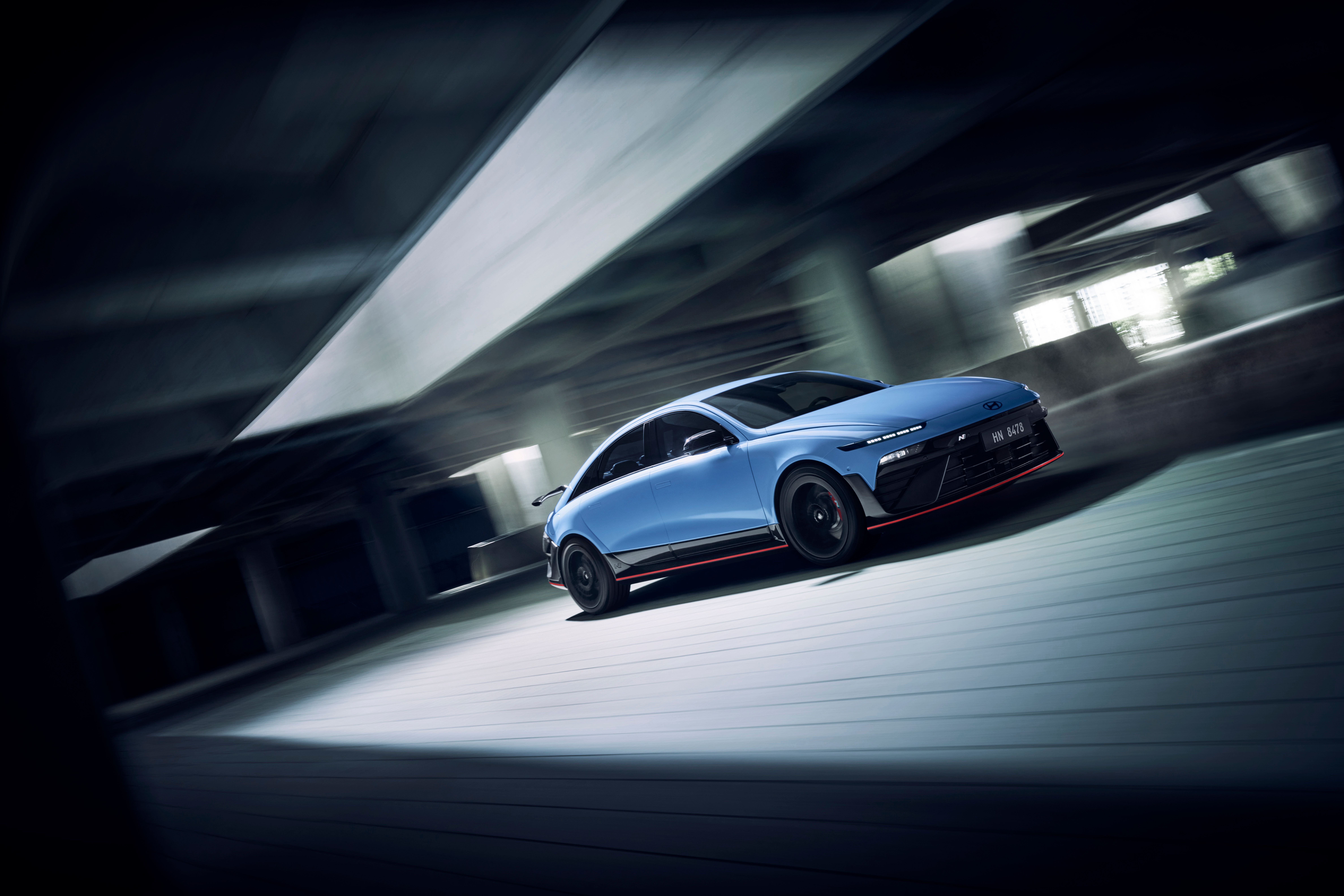
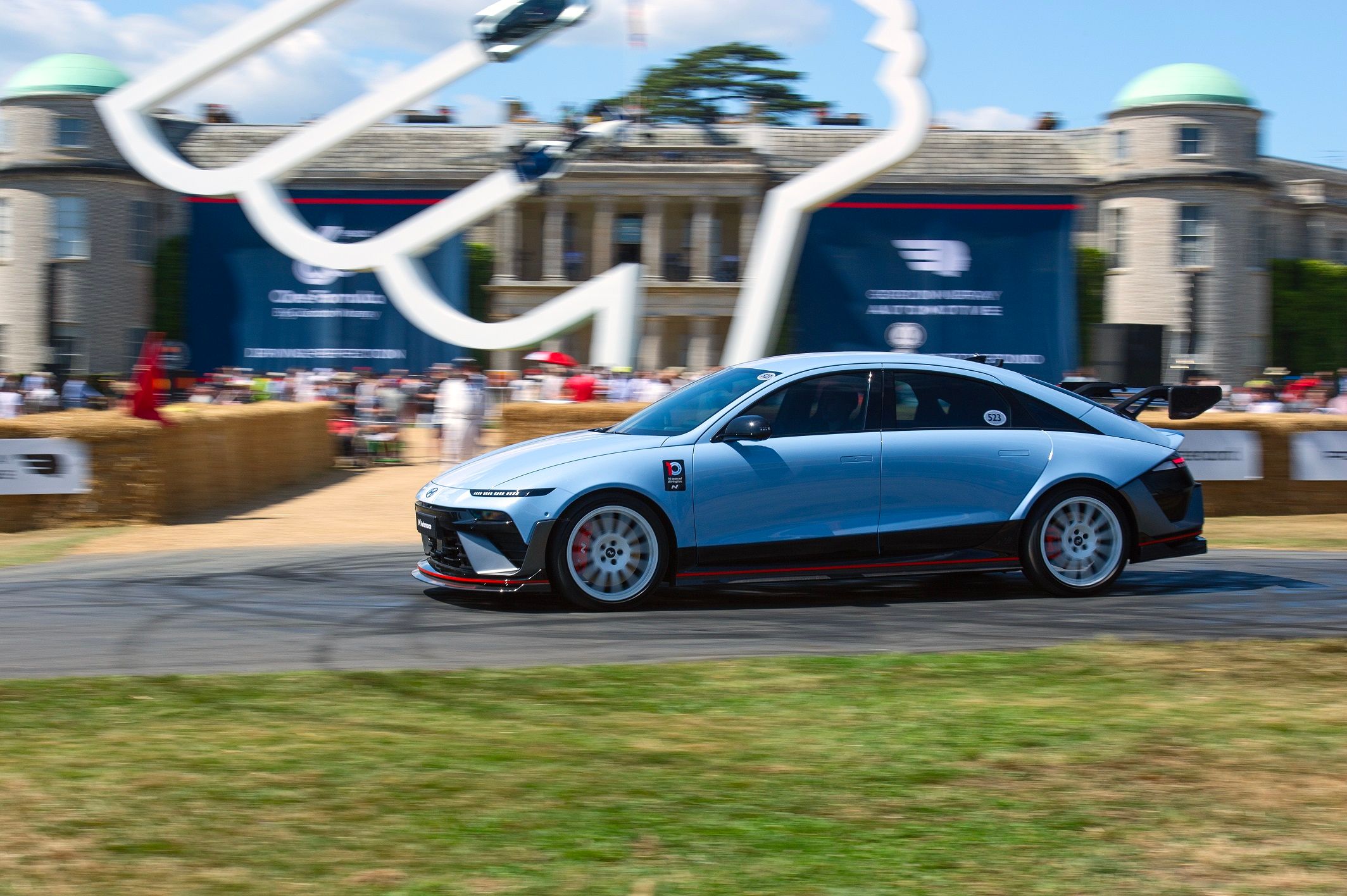
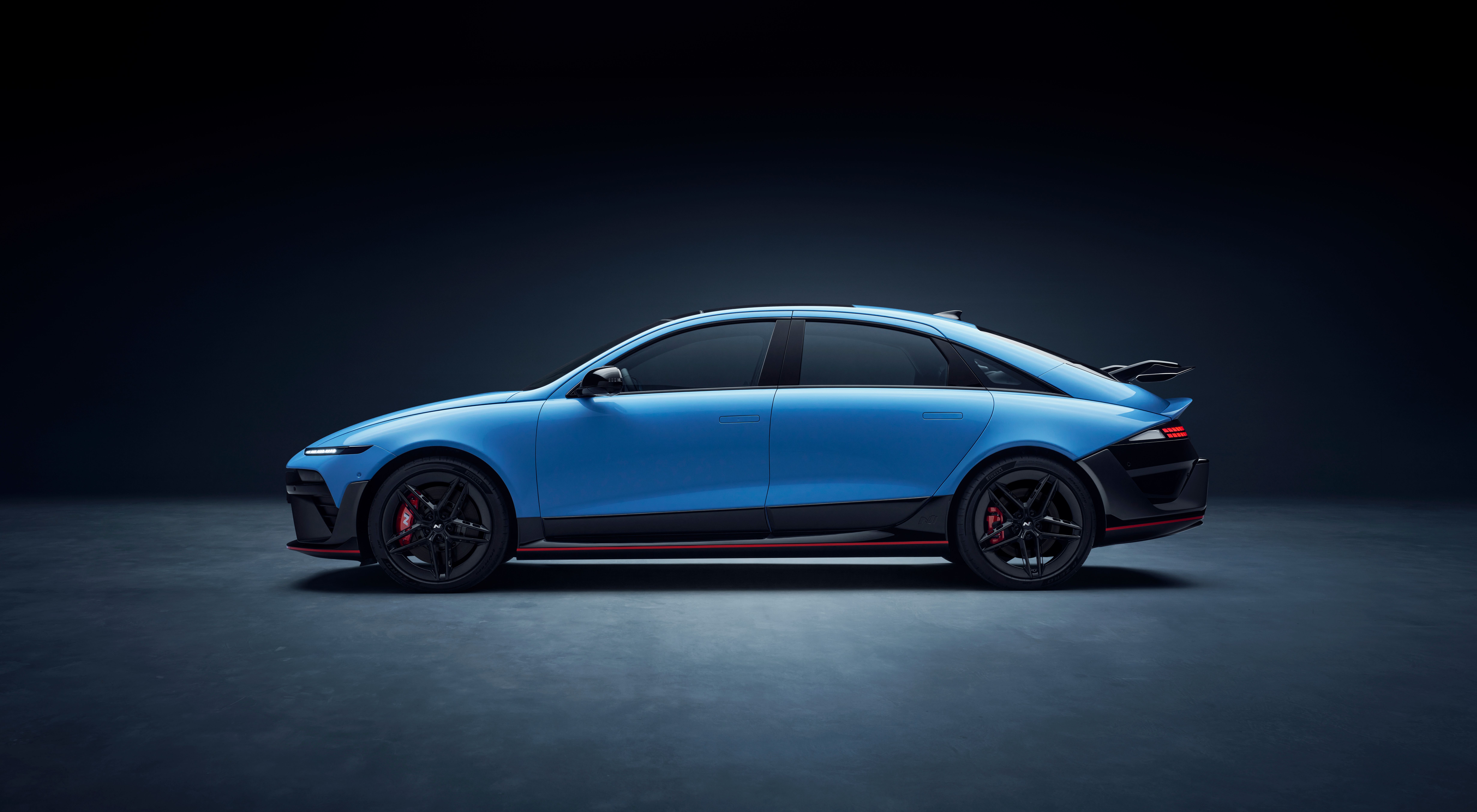
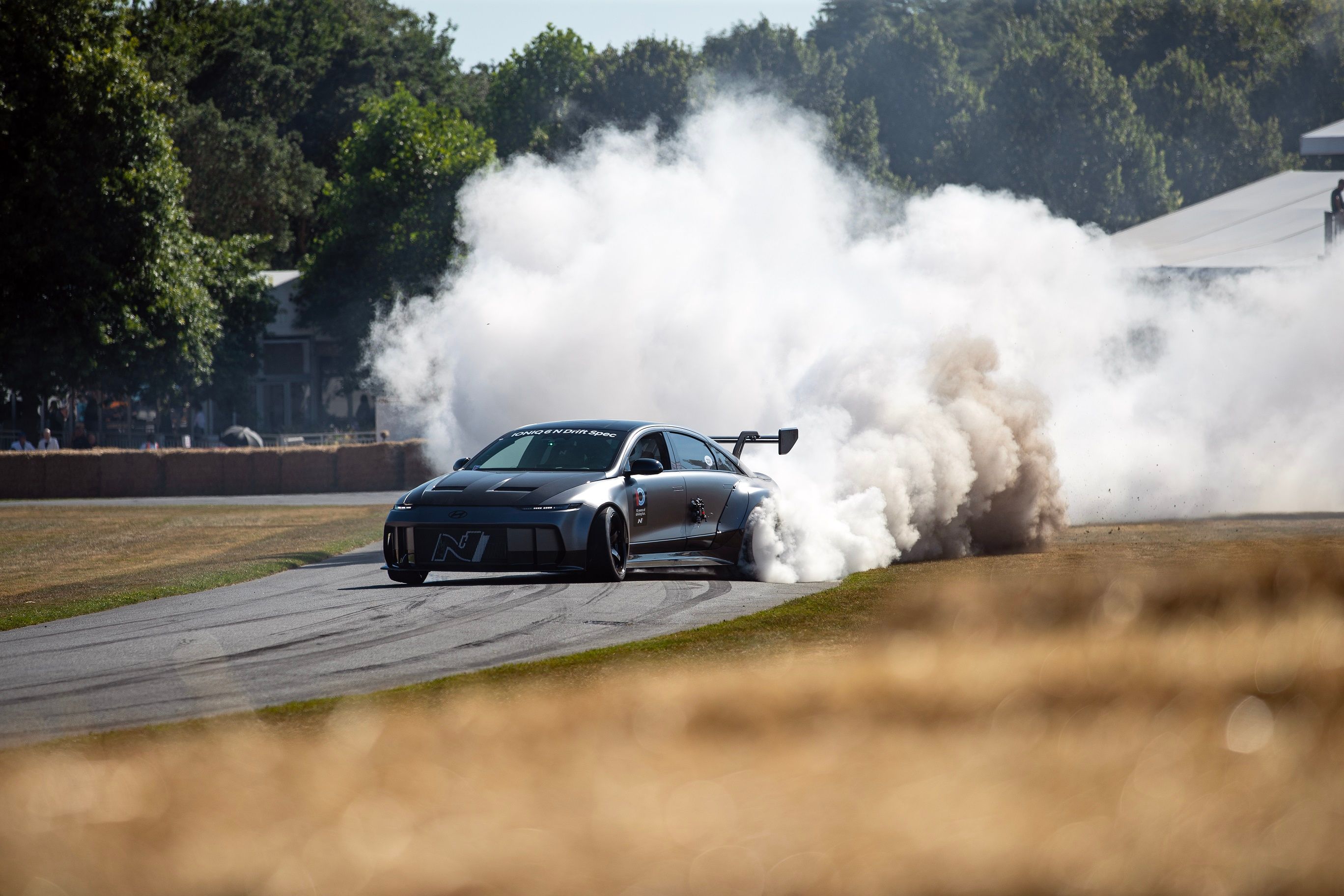
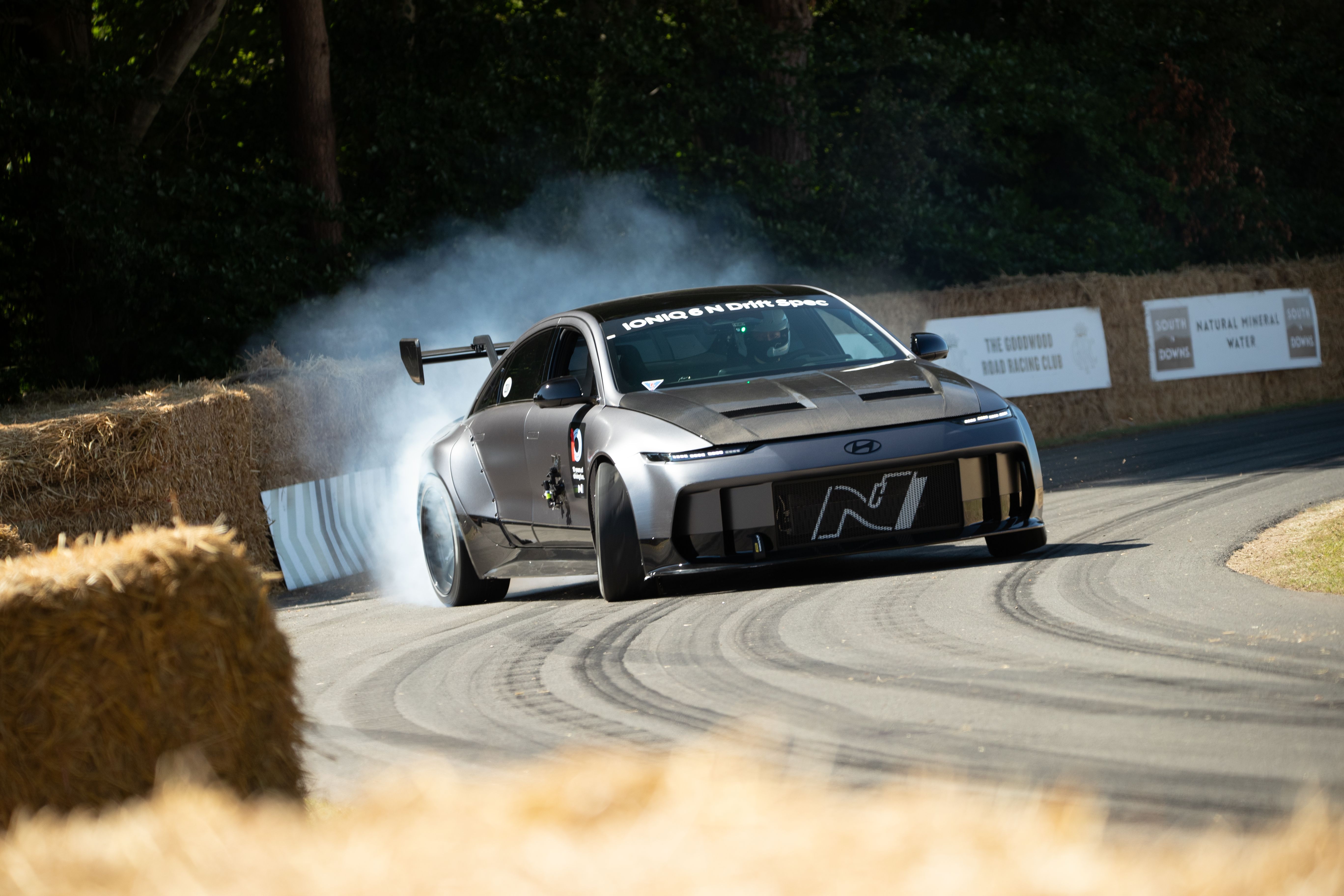
The exterior makes the first translation. Hyundai says its aero program balances downforce with drag reduction and identifies the swan-neck rear wing and widened fenders as contributors to stability in high-speed cornering. The company publishes a 0.27 drag coefficient, but no downforce figure or front-to-rear balance, so the wing cannot be treated as proof of aerodynamic effectiveness. Its editorial function is nevertheless clear: it interrupts the IONIQ 6’s smooth outline and makes the N model’s priorities visible. Rather than allowing airflow management to remain an abstract engineering claim, Hyundai gives it a conspicuous physical marker. Performance Blue Pearl reinforces that identity without adding a technical claim; Hyundai describes it as a pearl-finish development of the N division’s signature color.
Cooling Before Speed
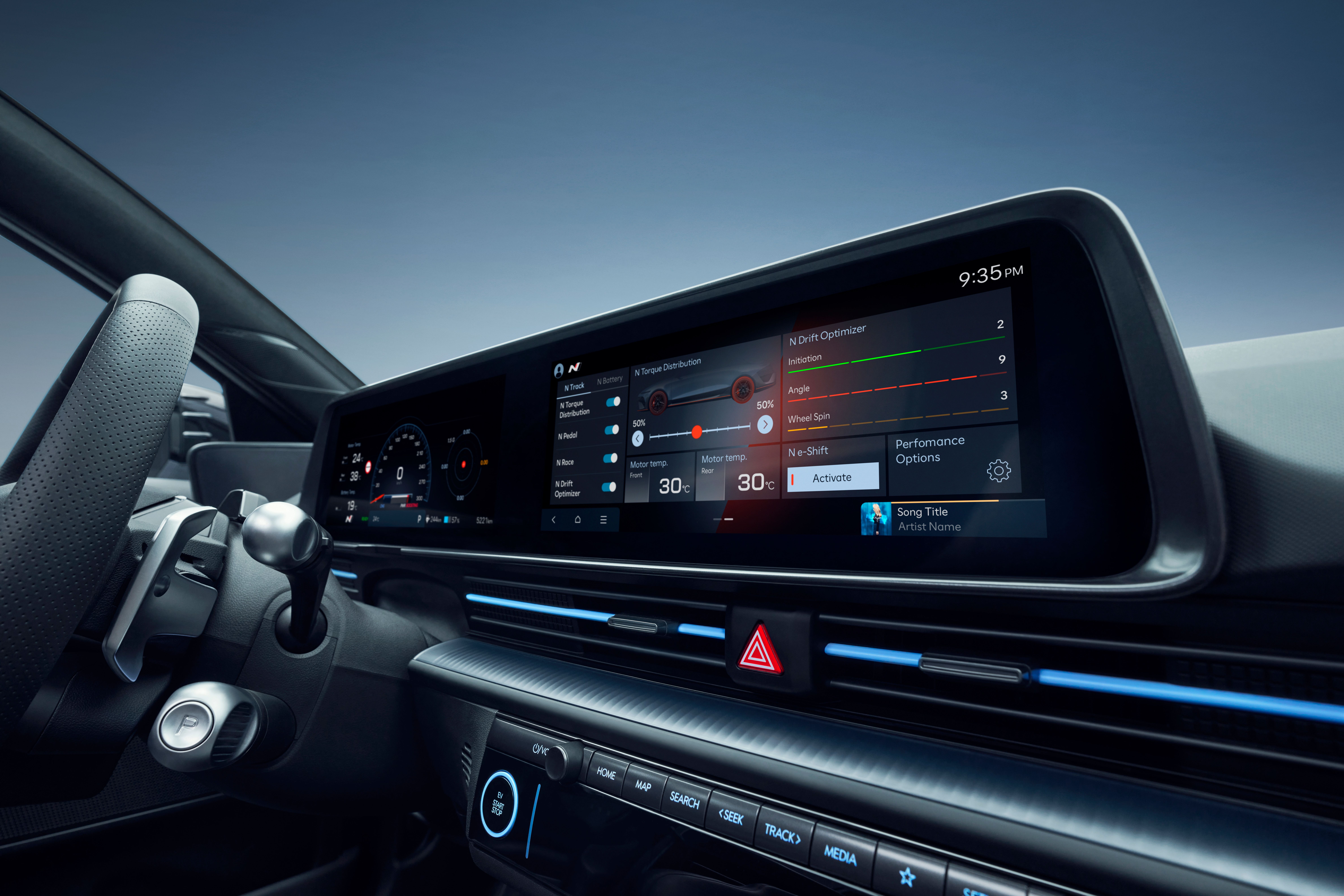
Thermal management has no obvious visual language, so Hyundai gives it a vocabulary of use cases. N Battery provides Drag, Sprint and Endurance settings, allowing the driver to name the intended track task instead of interpreting coolant temperatures or control maps directly. Hyundai says revised thermal controls and a higher-capacity battery-coolant heater shorten preconditioning time and help sustain performance. Those outcomes require testing, but the interface concept is already legible: preparation becomes an explicit decision made before the timed activity. The labels also acknowledge that a brief acceleration run and a longer session place different demands on the battery. Cooling is therefore presented not as background automation but as one component of the driver’s plan.
Loads Made Physical
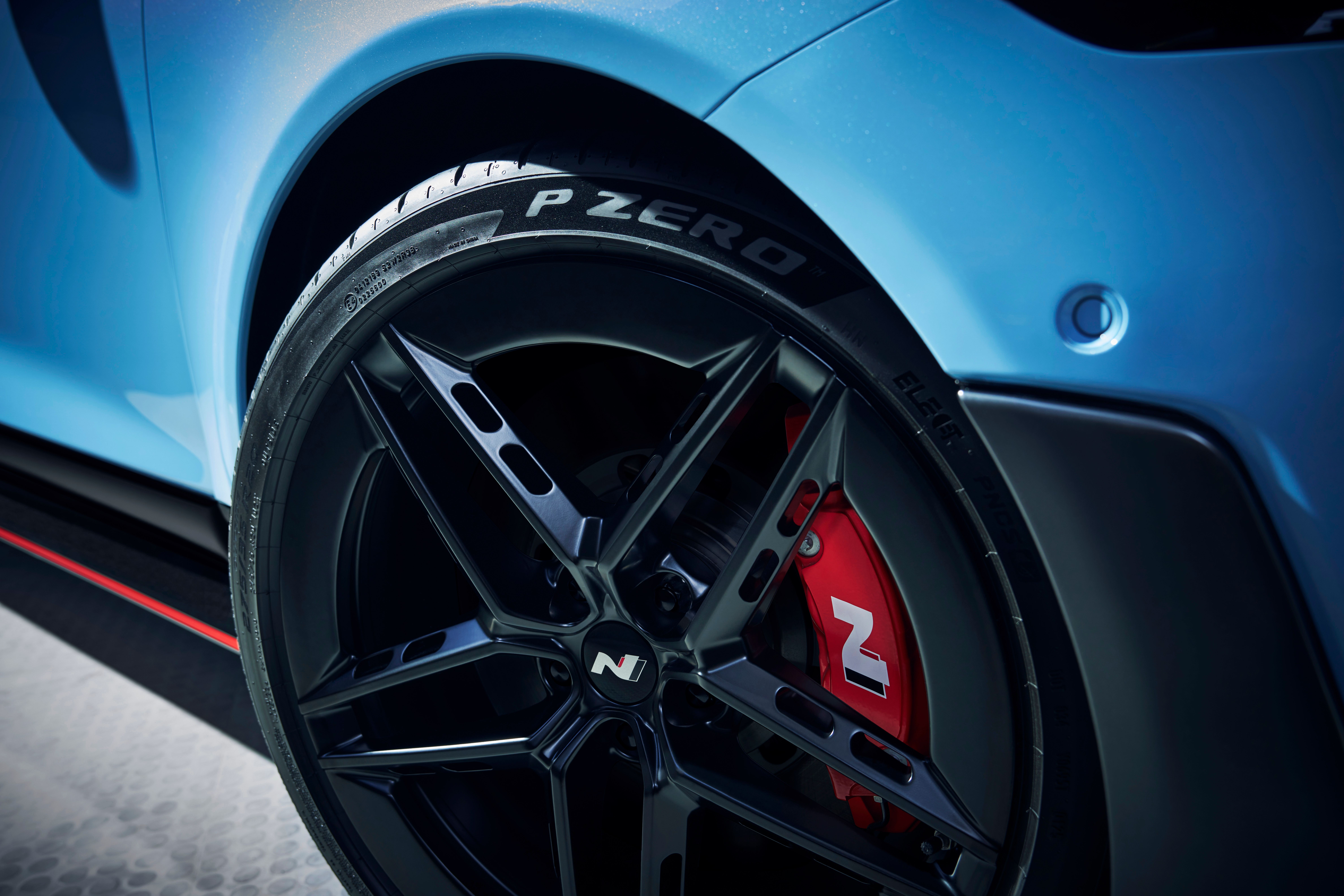
Where the thermal strategy is mostly hidden, the chassis specification gives performance a physical scale. Hyundai lists four-piston front brakes with 400-mm discs and single-piston rear brakes with 360-mm discs. Regenerative deceleration is rated at up to 0.6 g, or 0.35 g during ABS activation. The 20-inch wheels carry 275/35R20 HN-marked Pirelli P Zero 5 tires, which Hyundai says were tuned for this model. Underneath, the company identifies redesigned suspension geometry, a lowered roll center and electronically controlled dampers with stroke sensors. Hyundai attributes improved stability, grip, ride quality and predictability to that package. Without instrumented evaluation, the defensible conclusion is not that those outcomes have been achieved, but that software coordination is backed by substantial, specified hardware.
A Fiction With a Job
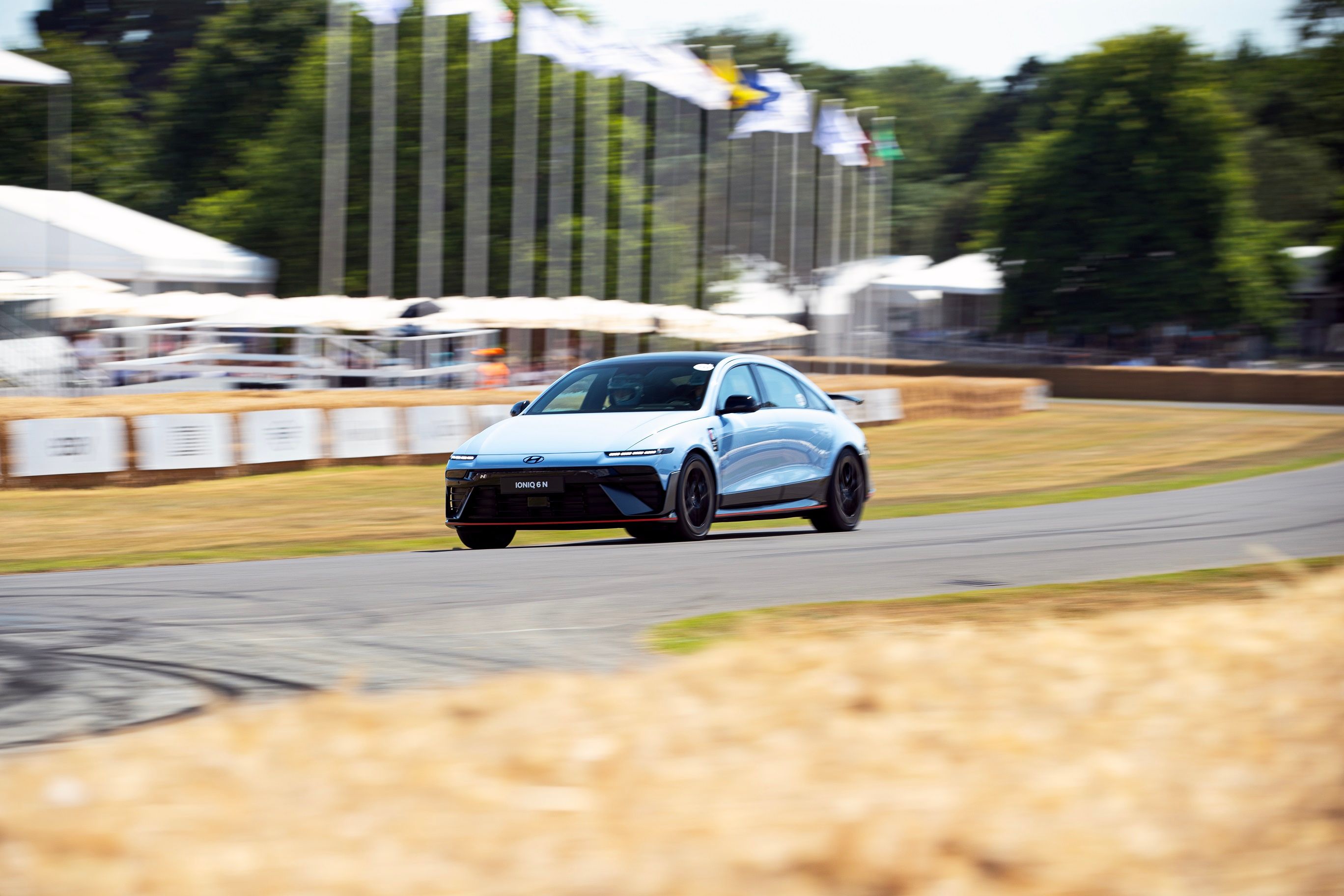
N e-Shift is deliberately artificial, but that does not make it purposeless. Continuous electric acceleration removes the rising revs and ratio changes that traditionally tell a driver where an engine sits within an event. Hyundai’s system simulates close motorsport-inspired ratios, creating discrete stages where none mechanically exist. The company says this revised version minimizes performance loss and now works with Launch Control, Drift Optimizer, Grin Boost and Torque Distribution. N Active Sound + adds three selectable themes—Ignition, Evolution and Lightspeed—through a stereo source and Acoustic Design Processor. N Ambient Shift Light supplies a visual cue for shift points. Together, sound, light and virtual ratios act as punctuation: they divide output into moments that can be anticipated and acted upon, rather than merely decorating acceleration.
Variables, Exposed
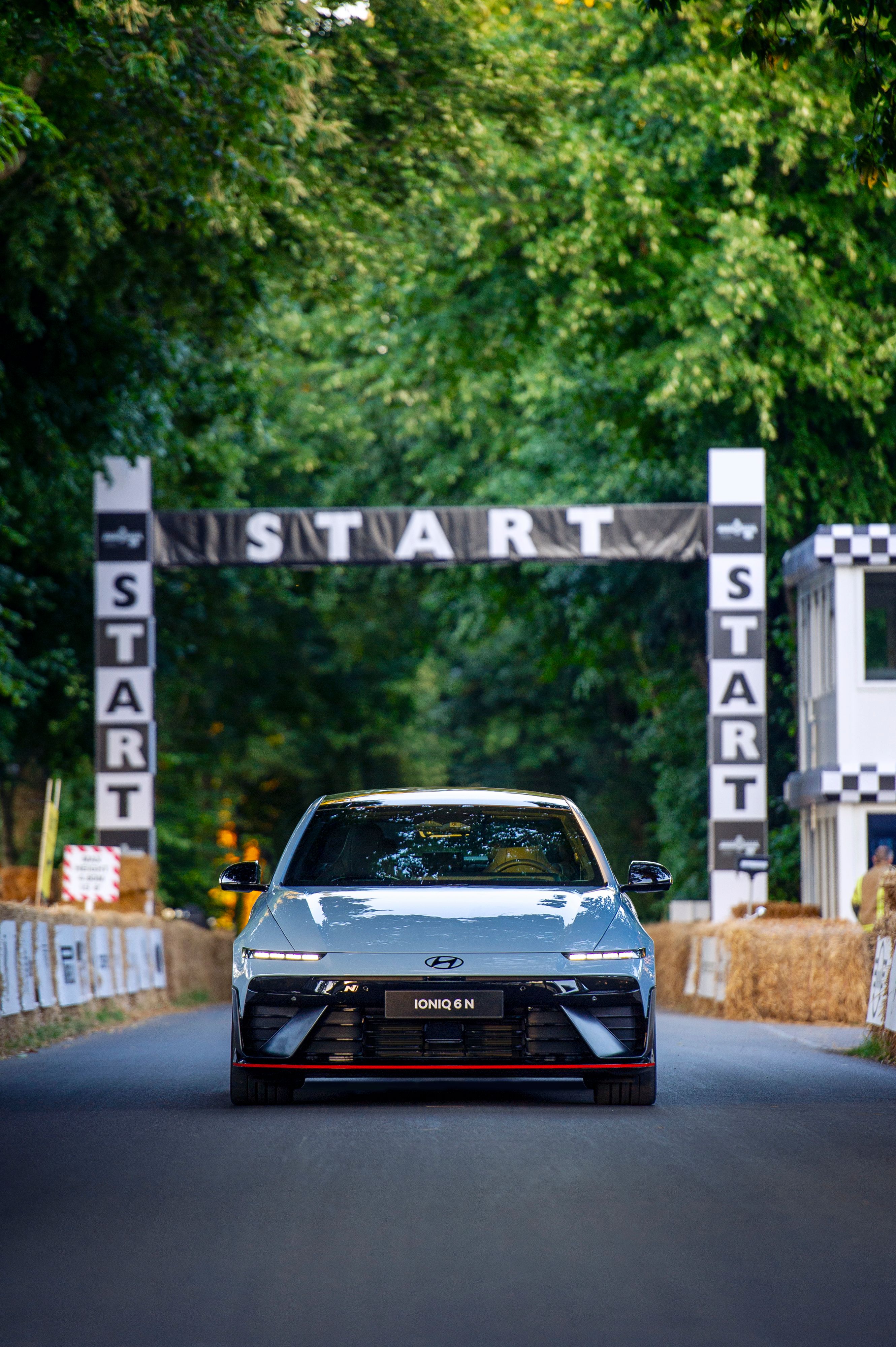
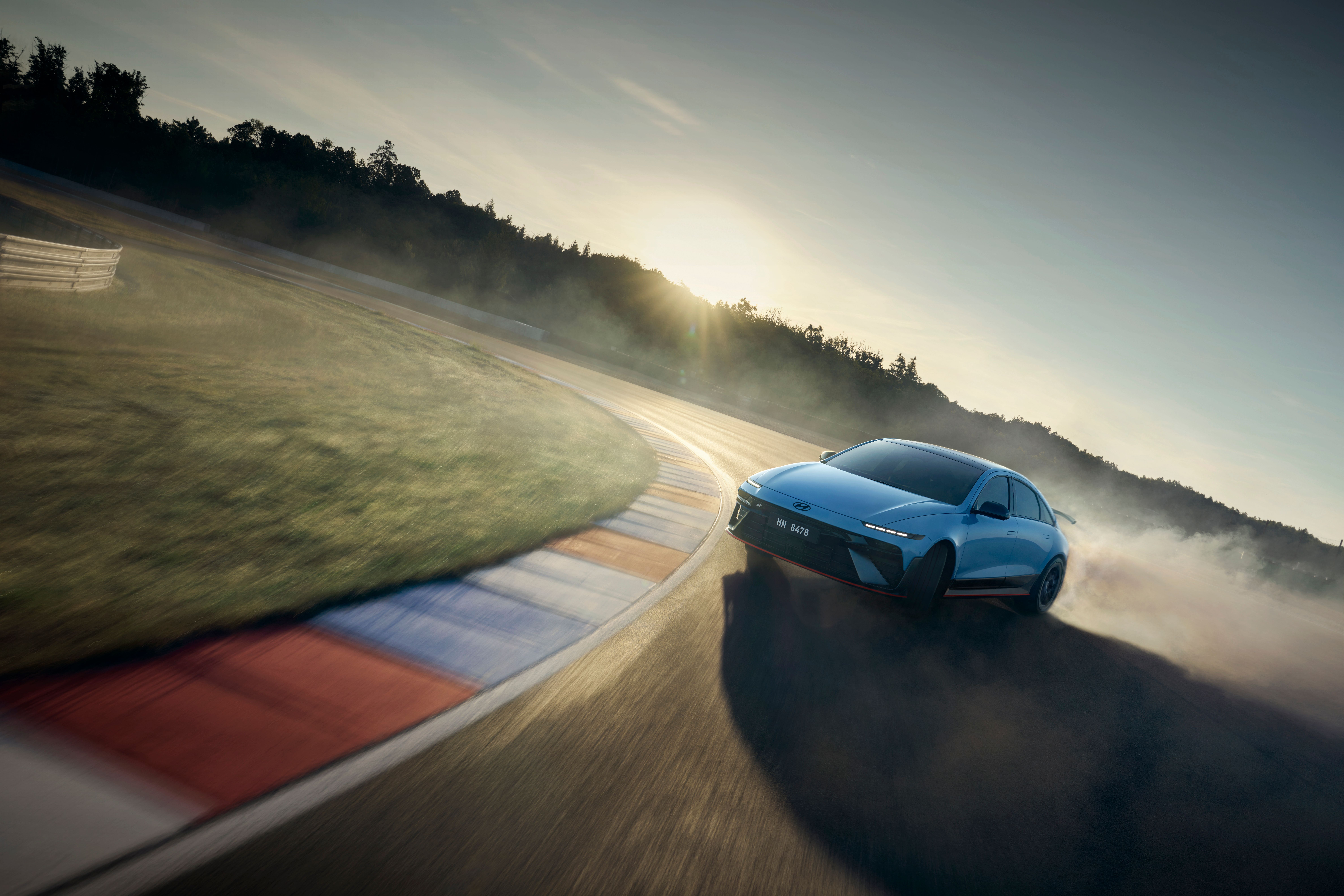
The next layer is not simulation but adjustability. Hyundai says N Torque Distribution offers 11 levels of front-to-rear torque allocation. N Drift Optimizer separates initiation, angle and wheel spin into individual parameters, while N Launch Control modulates motor torque to manage wheel slip. N Grin Boost raises maximum power and motor responsiveness for 10 seconds. These names convert broad dynamic outcomes into a control syntax: select a distribution, define a drift behavior or call up a temporary power state. That organization may help a driver form clearer expectations, although the evidence does not show how quickly settings can be reached, how intuitively they operate under pressure or how faithfully the car follows them. Configuration is confirmed; usability and effect are not.
The Lap Becomes Evidence
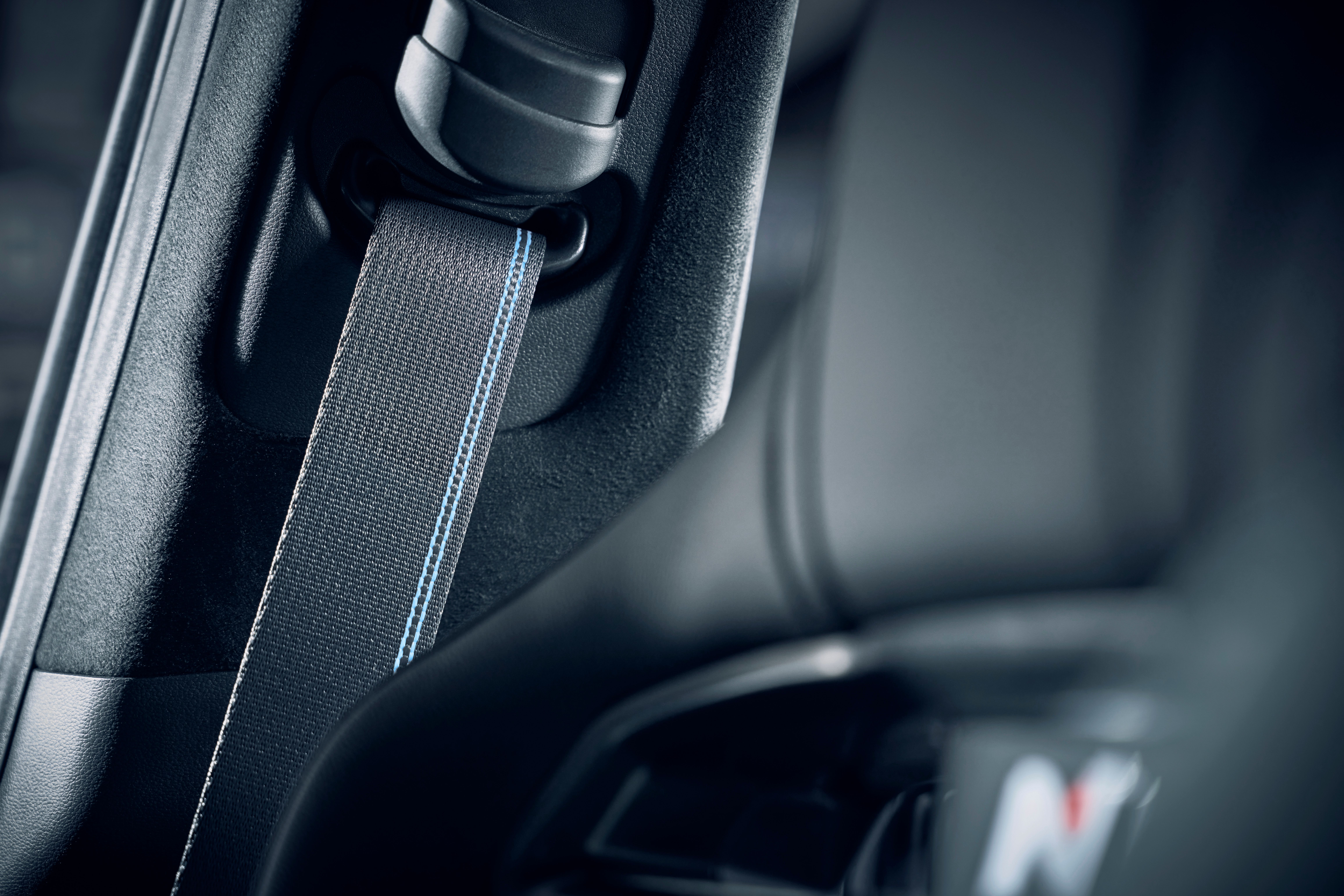
N Track Manager completes the chain by translating activity into something reviewable. Hyundai says the system can create custom tracks, monitor speed, display a real-time ghost car and provide lap-time analysis. It cannot validate Hyundai’s performance claims by itself, but it proposes a disciplined loop: configure the car, complete a lap, compare the result and adjust. The surrounding cabin follows the same communication brief. Hyundai specifies black with Performance Blue accents, visually connecting the operating environment to the Performance Blue Pearl exterior. Beyond that, restraint is essential: the supplied evidence does not establish equipment grades, seating or the standard status of every photographed component. What can be said is that the published cabin systems prioritize prompts, settings and recorded outcomes over an elaborate material narrative.
VISUAL DOSSIER · 17 INLINE IMAGES + 1 HERO
The verified views
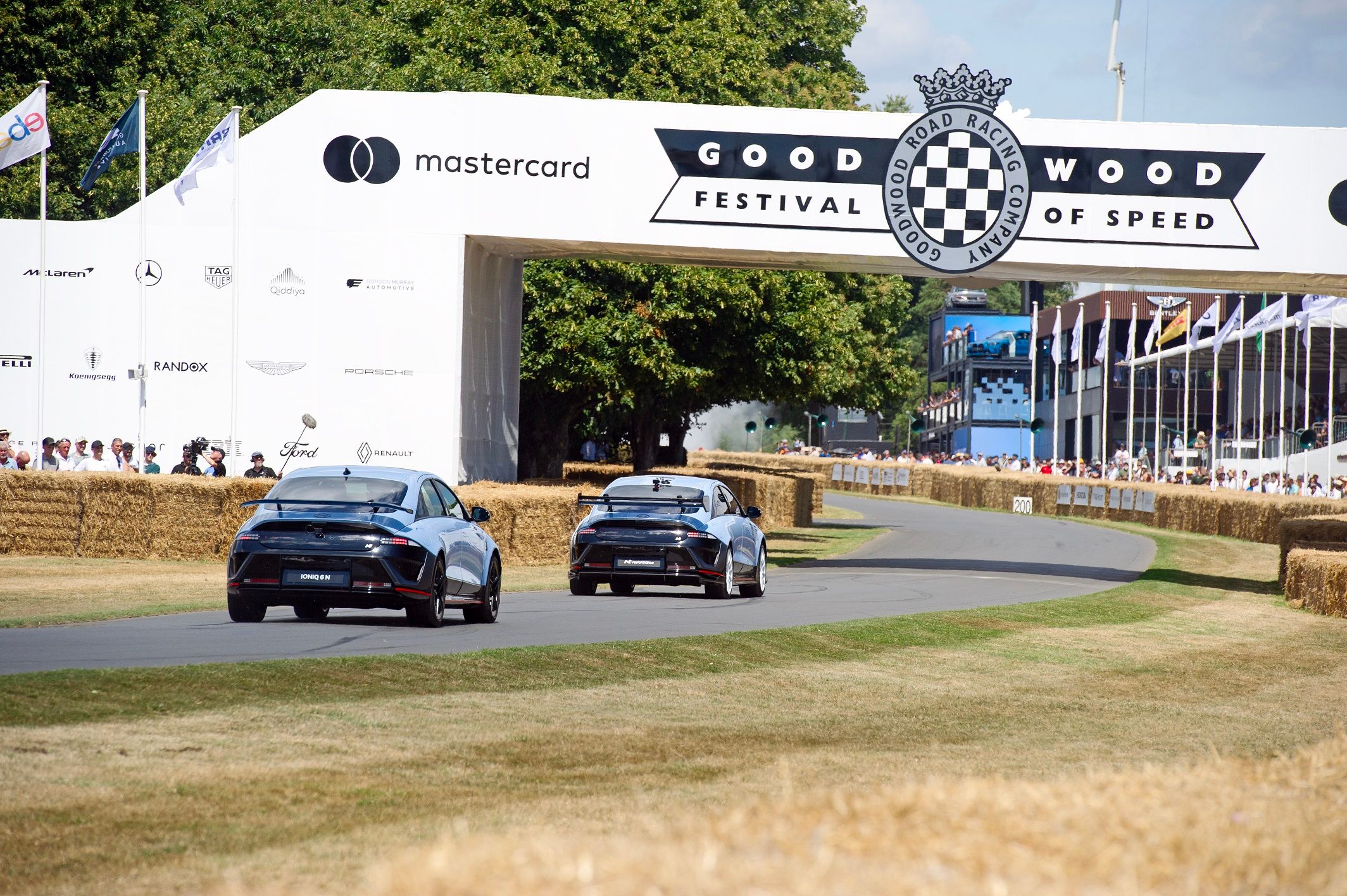
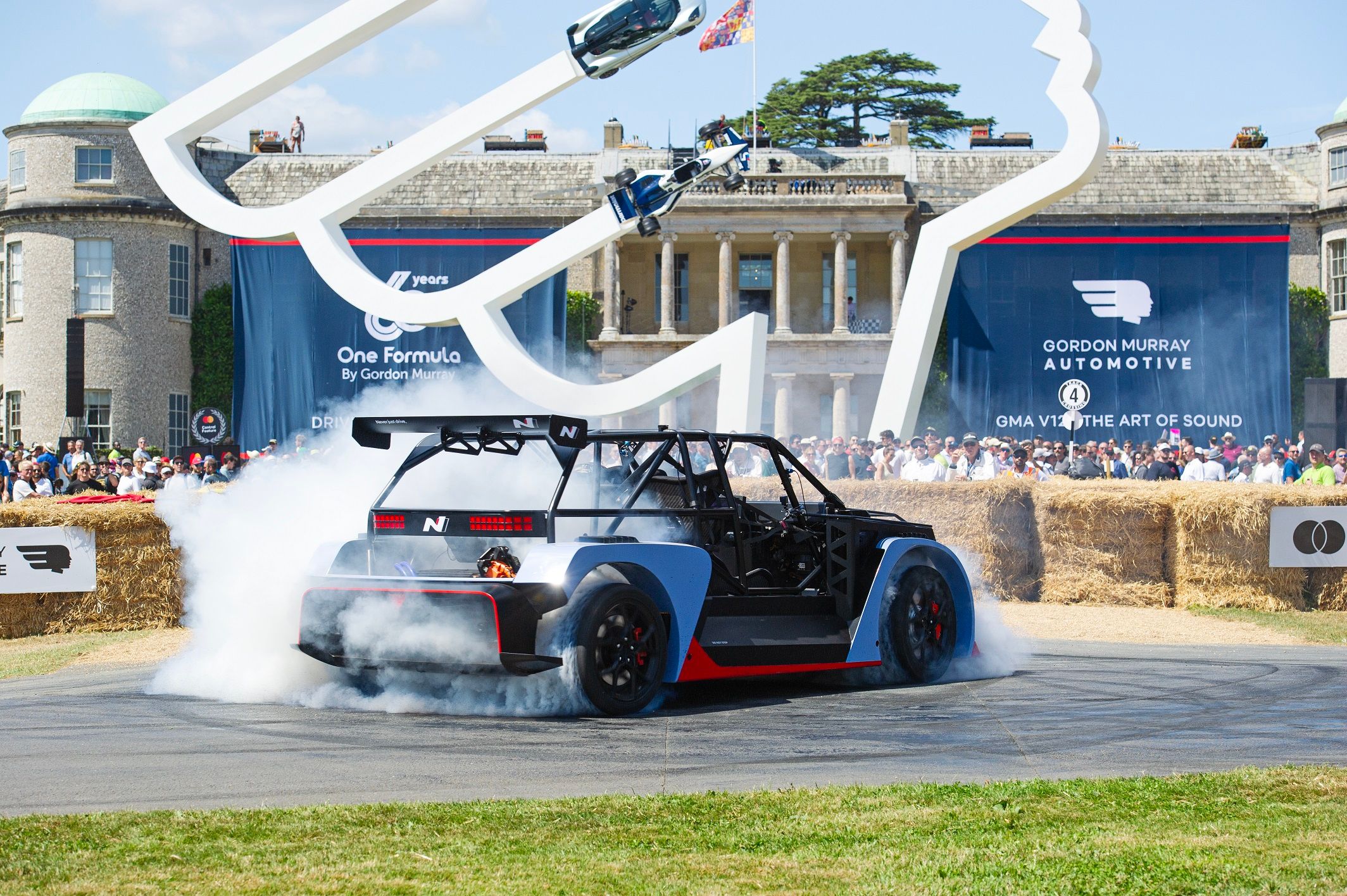
The manufacturer gallery preserves distinct exterior, cabin, control, and detail views so the design can be examined beyond a single hero photograph.
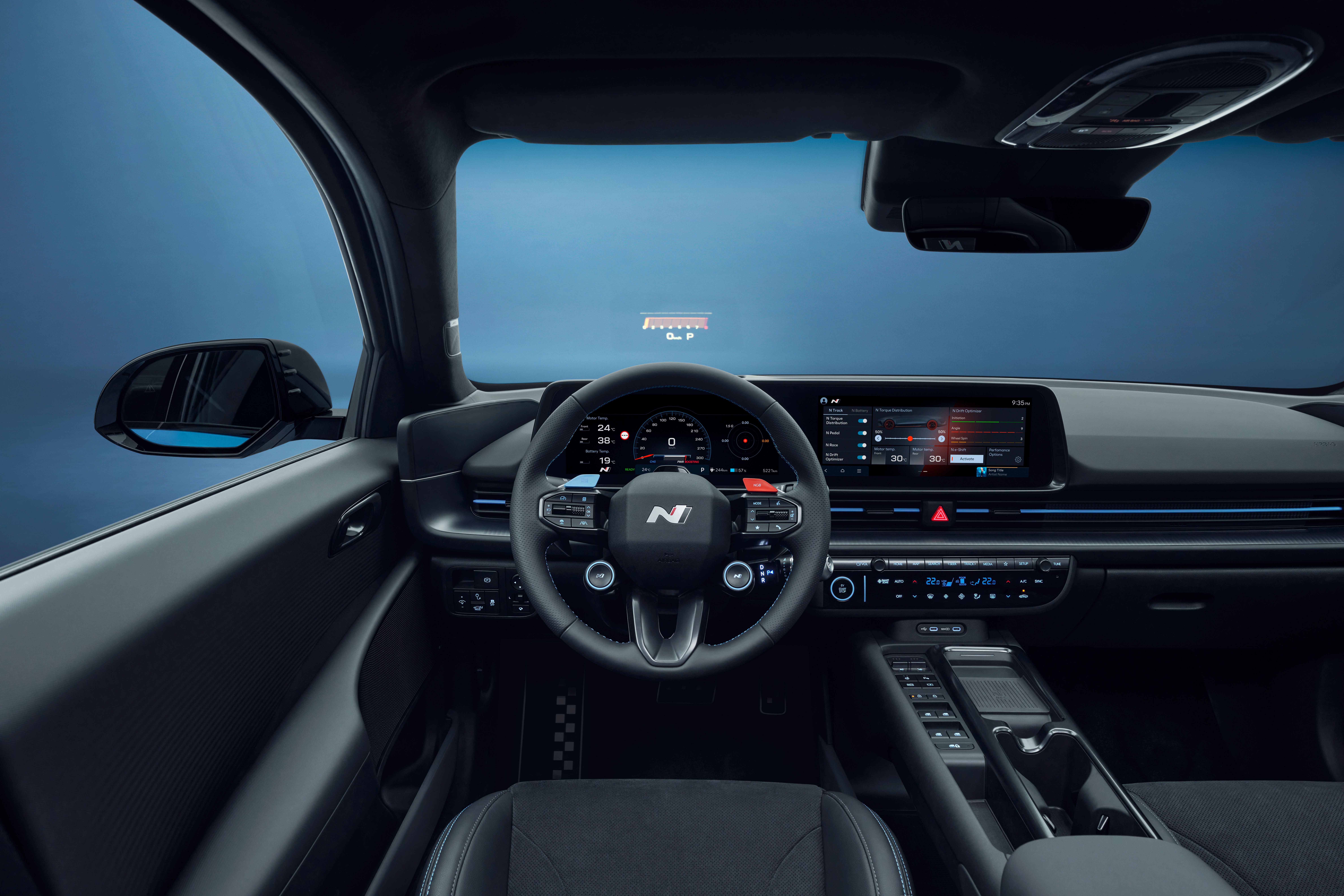
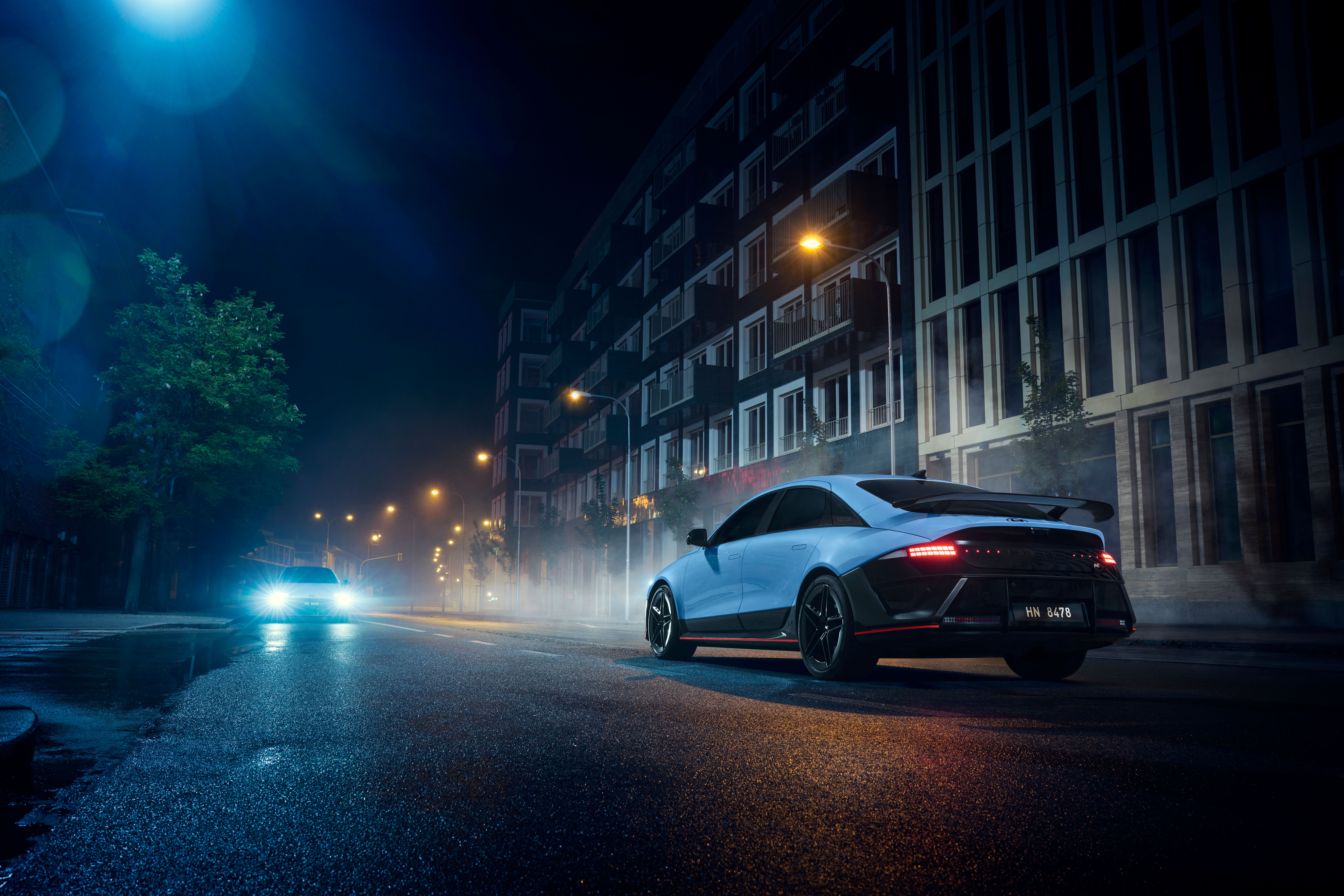
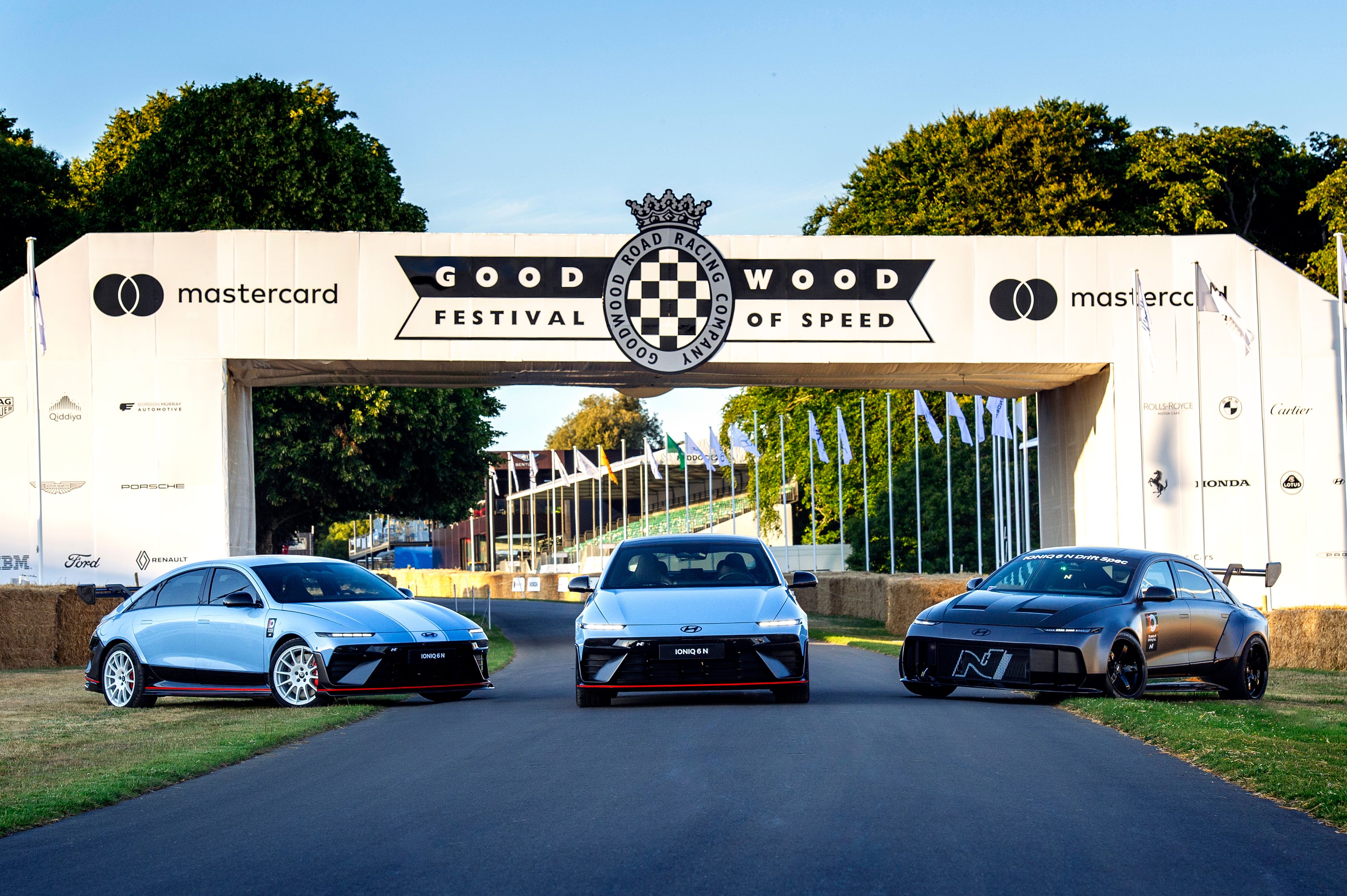
The IONIQ 6 N’s visual argument works because its layers have separate jobs. The wing declares an aerodynamic priority; the brake and suspension specifications locate physical load; N Battery turns temperature into a decision; N e-Shift, sound and light impose a rhythm; adjustable systems expose dynamic variables; and Track Manager converts a lap into a record. None of that proves speed, stamina or driver involvement, and an untested car warrants neither a performance score nor a recommendation. What the official evidence supports is narrower but still meaningful: Hyundai has designed this EV to communicate what its performance systems are being asked to do.