Most frugal advice fails one of two ways: it is a list of sacrifices nobody keeps past the second week, or it is arithmetic about someone else’s household. These eight change a recurring cost, which is the only kind where a small change compounds.
The short version. Batch-cook a base so the 7pm decision is already made. Buy dry staples — and only dry staples — in bulk. Cancel whatever renews without you noticing. Those three do most of the work. The other five are smaller, easier to keep, and worth adding one at a time rather than all at once.
One exception runs through all of this: anything plumbed, gas or wired is not a frugal project. Paying a professional is the cheap option there, because the failure mode is not a wasted afternoon.
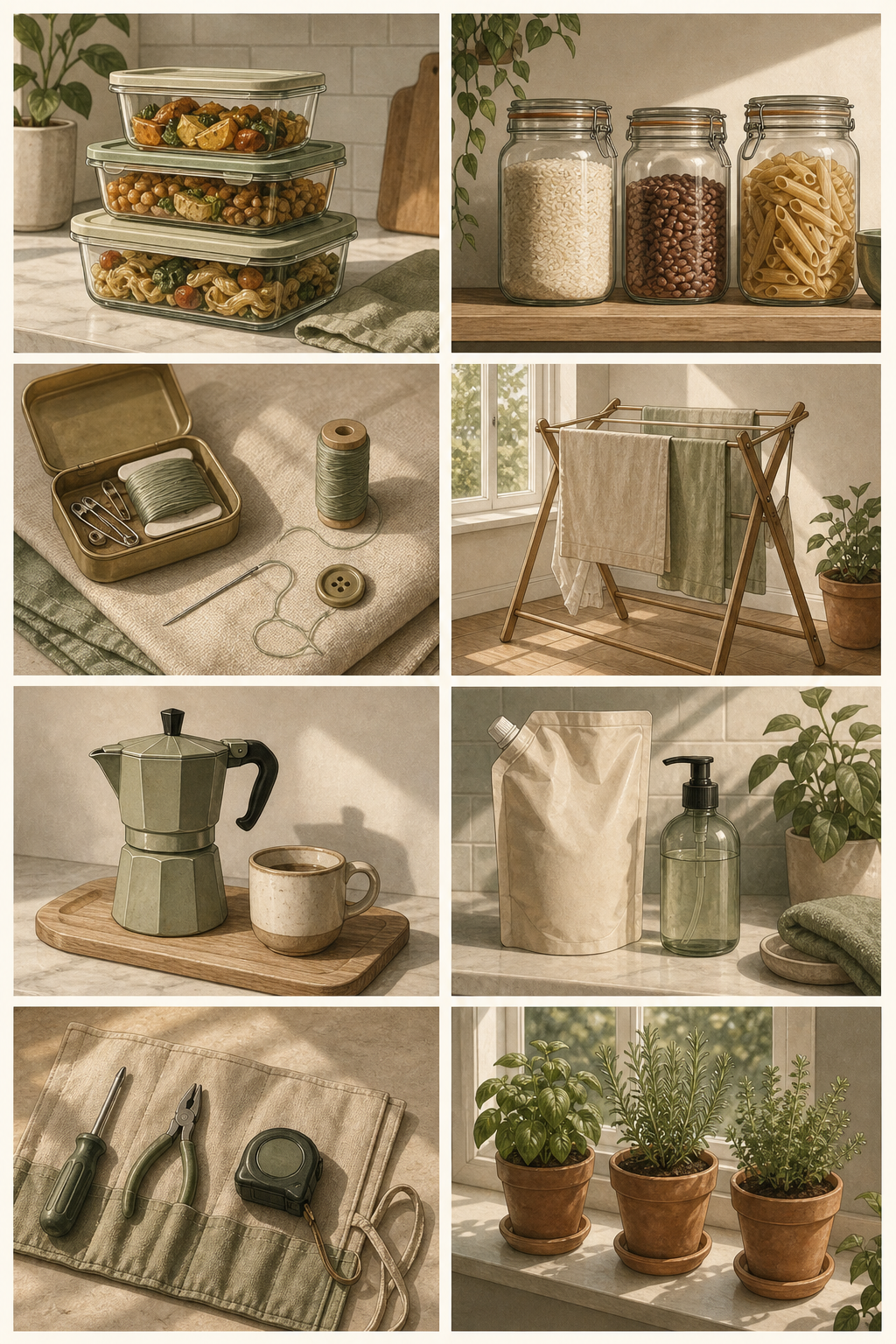
All 8 on one board
The whole set in a single image — this is the one to save or pin. Each panel is broken out
underneath with what it is actually for.
Eight Frugal HabitsRecurring costs · start with three
01Cook in batches02Bulk dry staples03Mend it04Air-dry05Coffee at home06Refill07Fix it first08Grow herbs
AI-generated illustration. All eight habits on one sheet — the panels below are cut from this. The title and labels are live text, not part of the image, so they translate with the page.
The eight
Each one says what it is good for and where it stops working, because a habit adopted in the wrong house is just a chore.
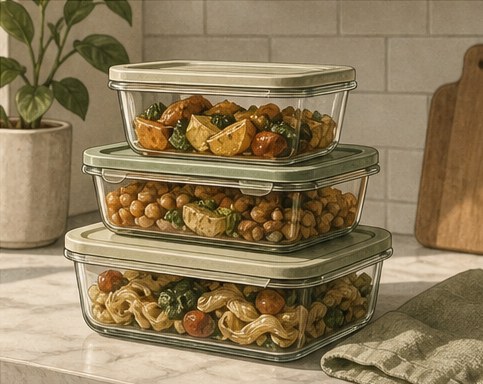
01Cook once, eat three times
The saving is not in the ingredients, it is in the 7pm decision. Takeaway happens when there is nothing ready and you are already hungry — a container that is already cooked removes that decision instead of asking you to win it. Cook a base rather than eight finished meals: rice, beans, a pot of sauce, something you can point in three directions across the week.
Works for: anything that reheats. Fails for: anything fried, crisp or dressed. If you need containers: food storage compared.
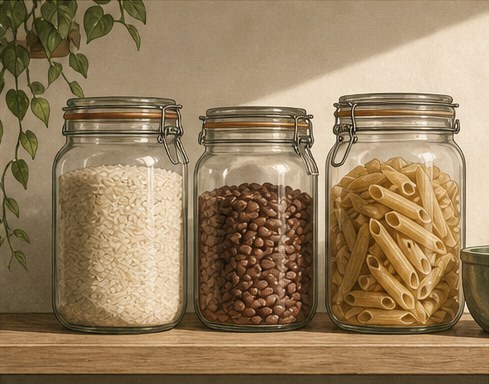
02Buy staples in bulk — dry ones only
Unit cost falls on food that does not spoil: rice, dried beans, pasta, oats. That is the entire rule, and ignoring the second half is why bulk buying so often backfires — bought in quantity, perishables are just a slower way of throwing food out. Decant into jars you can see through, because the opaque bag at the back of a cupboard is the thing that gets bought twice.
Applies to: dry goods. Check your storage space before you check the unit cost. If you need jars: canisters for dry staples.
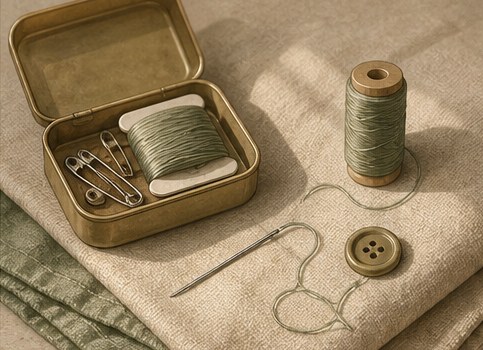
03Mend it instead of replacing it
A button, a hem, a seam that has let go. This is the one where effort and result are most lopsided in your favour: ten minutes with a needle against replacing a garment that is otherwise fine. You need thread near enough the right colour and, for the first two, no skill whatsoever.
Learn in this order: button, then hem, then seam. Leave knits and anything stretchy for later. If you need a kit: mending kits compared.
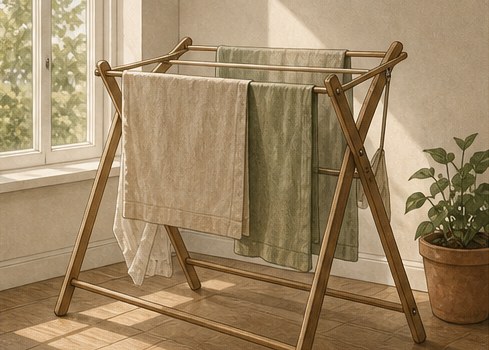
04Dry it on a rack
A tumble dryer is one of the hungriest appliances in a home and a rack runs on nothing. It is slower, and that is the real cost — you pay in planning, starting the wash earlier, not in effort. Clothes also last longer, because most of what wears them out in a dryer is the heat and the tumbling rather than the wearing.
Needs airflow. Watch: drying indoors in a room with no ventilation moves the damp into the room. If you need one: racks that hold a full load.
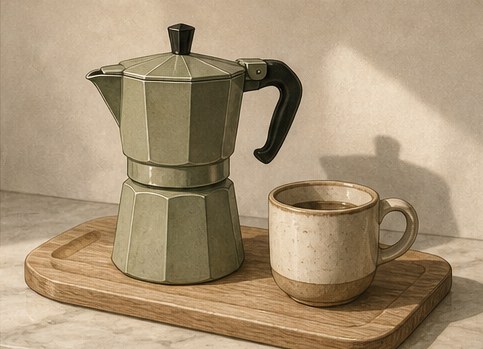
05Make the coffee at home
A cliché because it is true, and true because it is daily — recurring costs are the only place a small change compounds into something you can notice. A moka pot or a press has no consumable beyond the coffee. The trap is well known and still catches people: buying an expensive machine in order to save money on coffee.
Worth it if you already drink it every day. Pointless if you do not.
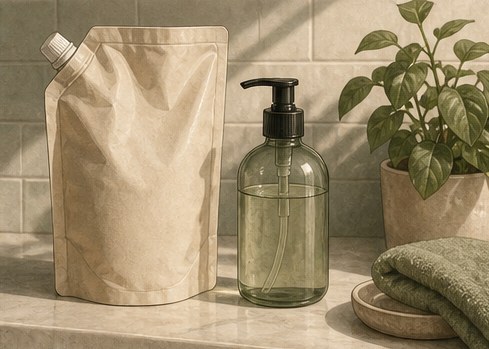
06Refill rather than rebuy
Soap, detergent, cleaner — usually sold both as a bottle and as a refill pouch, and the pouch costs less per use because you are not paying for a new pump every time. Keep one dispenser you actually like and refill it.
Only pays off if you keep the original bottle. Throwing it out resets the whole thing.
07Fix it before you replace it
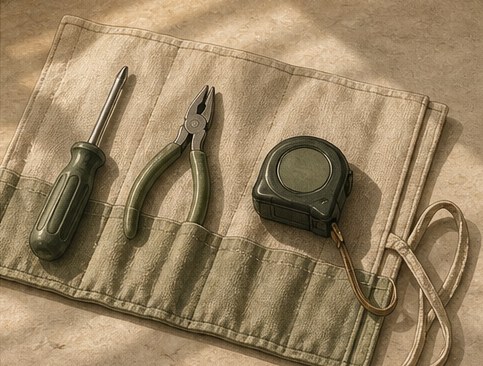
A screwdriver, pliers and a tape measure cover a surprising share of what actually fails at home — a loose hinge, a chair, a drawer runner, a handle. Knowing which failures are worth attempting is most of the skill. If you want the tools themselves compared, we have a roundup of the ones that earn a place in a small kit.
In scope: mechanical and cosmetic. Out of scope: anything electrical, gas or structural.
08Grow the herbs, not the vegetables
Herbs are the one crop where a windowsill genuinely beats buying, and the reason is packaging rather than farming: they are sold in quantities larger than any recipe needs, so most of a bunch is thrown away. A pot you cut from wastes nothing. Vegetables are a hobby — a good one, but they will not undercut a shop.
Easiest: mint, basil, chives. Needs roughly six hours of light.
AI-generated illustration. Not a photograph. Every panel above is cut from a single generated sheet, which is how the
style stays consistent across all 8.
If you only do three
Batch-cook a base, so 7pm is already decided.
Cancel whatever renews without you noticing.
Buy dry staples in bulk — dry ones only.
Everything else on this page is smaller than these three. Add them one at a time.
Three with no picture
Every panel above is a physical object, because the board at the top carries its labels as real text so they translate — which means the illustration itself contains no lettering at all. Three of the most useful moves cannot be drawn under that rule, so they are here instead.
Audit what renews. Probably the highest-value single action in this whole guide, because it is money leaving with no decision attached to it. Open the subscriptions list on your phone and your card statement — they disagree more often than you would expect — and cancel anything you cannot remember using. Nothing else here is this fast.
Write down what leaves. Not a budget, just a record, for two weeks. You cannot cut a cost you cannot see, and almost nobody guesses their own categories correctly. The point is finding out which of these eight habits is even relevant to you.
Try one no-spend day a week. Treat it as a diagnostic rather than a saving: it shows you which purchases were decisions and which were reflexes. The reflexes are where the money is.
What this guide will not tell you
It will not tell you what any of this saves. Not because we have not worked it out, but because the answer depends on your local prices, your household size and what you already do — and a figure invented here would read as a finding while being a guess about someone else’s kitchen. We would rather be useful than specific.
It also has a floor, and pretending otherwise would be dishonest: these habits address leakage, not income. If the gap is what you earn rather than what escapes, none of the eight closes it, and no amount of jar-decanting will. Frugality is a real lever with a real limit, and a guide that implies the limit is your discipline is just blaming you for arithmetic.
If you want the same idea applied to habits rather than money, the low-effort glow-up is built the same way — small enough to keep, honest about what is evidence and what is just tidy.
Notes
No products are named or linked on this page and there are no affiliate links on it. Nothing here is monetised.
No amounts anywhere, deliberately. What these habits save depends on your household and your local prices, and a number invented here would be worse than no number.
The eight panels are cut from one generated illustration sheet, which is why the palette is identical across all of them. Nothing depicted is a real product — every jar, pouch and tool in them is deliberately unbranded.
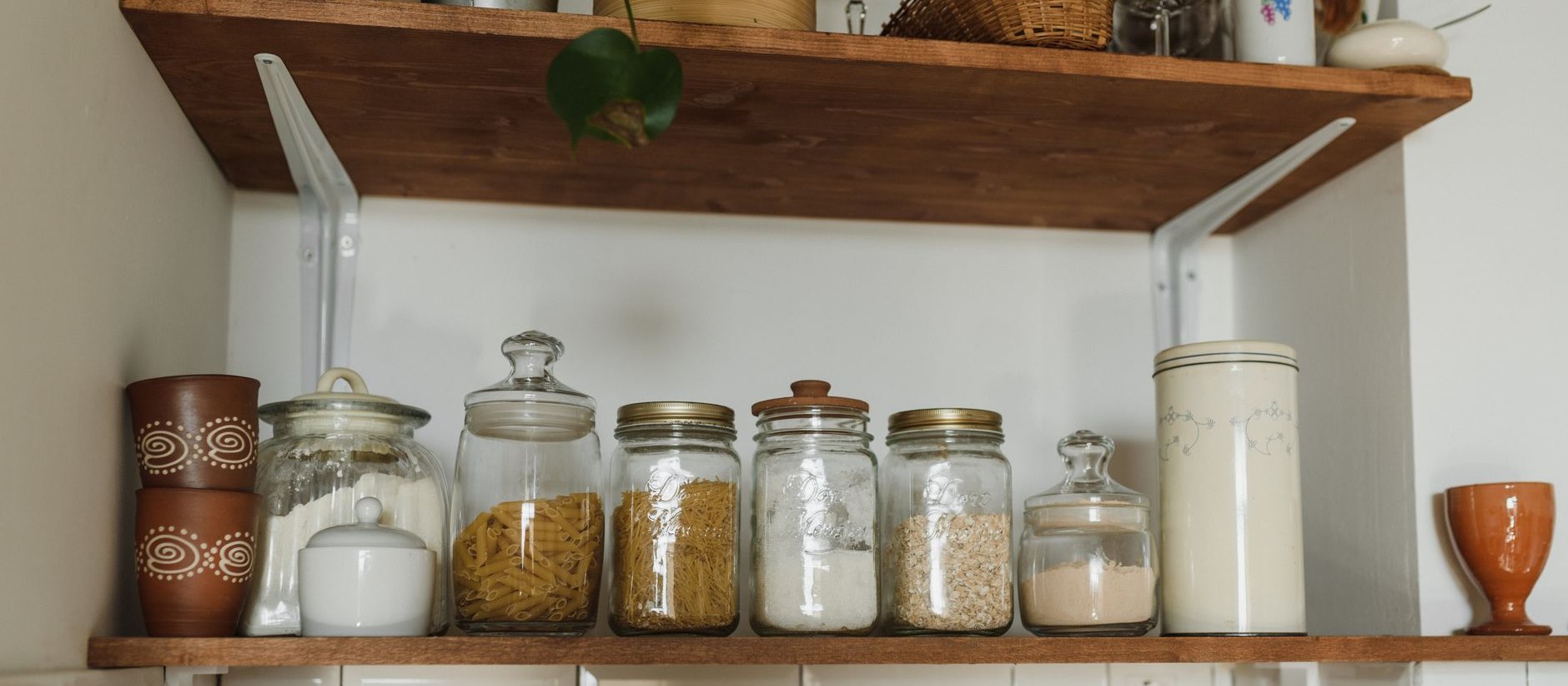
The hero is a licensed photograph, credited above.
No affiliate links on this page. Nothing here is monetised.
No prices anywhere on this site — they move faster than an article can stay honest about them.