1
Find a Safe, Flat Spot
Pull over as far from traffic as possible, ideally onto flat, level ground. Turn on your hazard lights immediately so other drivers can see you.
A flat tire doesn't have to ruin your day. Here's how to safely swap it for a spare, from parking to torque.

Pull over as far from traffic as possible, ideally onto flat, level ground. Turn on your hazard lights immediately so other drivers can see you.
Engage the parking brake fully. If you have wheel wedges or chocks, place them against the tire diagonal from the one you're changing to keep the car from rolling.
Locate the spare tire, jack, and lug wrench, usually stored in the trunk or underneath the vehicle. Check your owner's manual if you're unsure where they're kept.
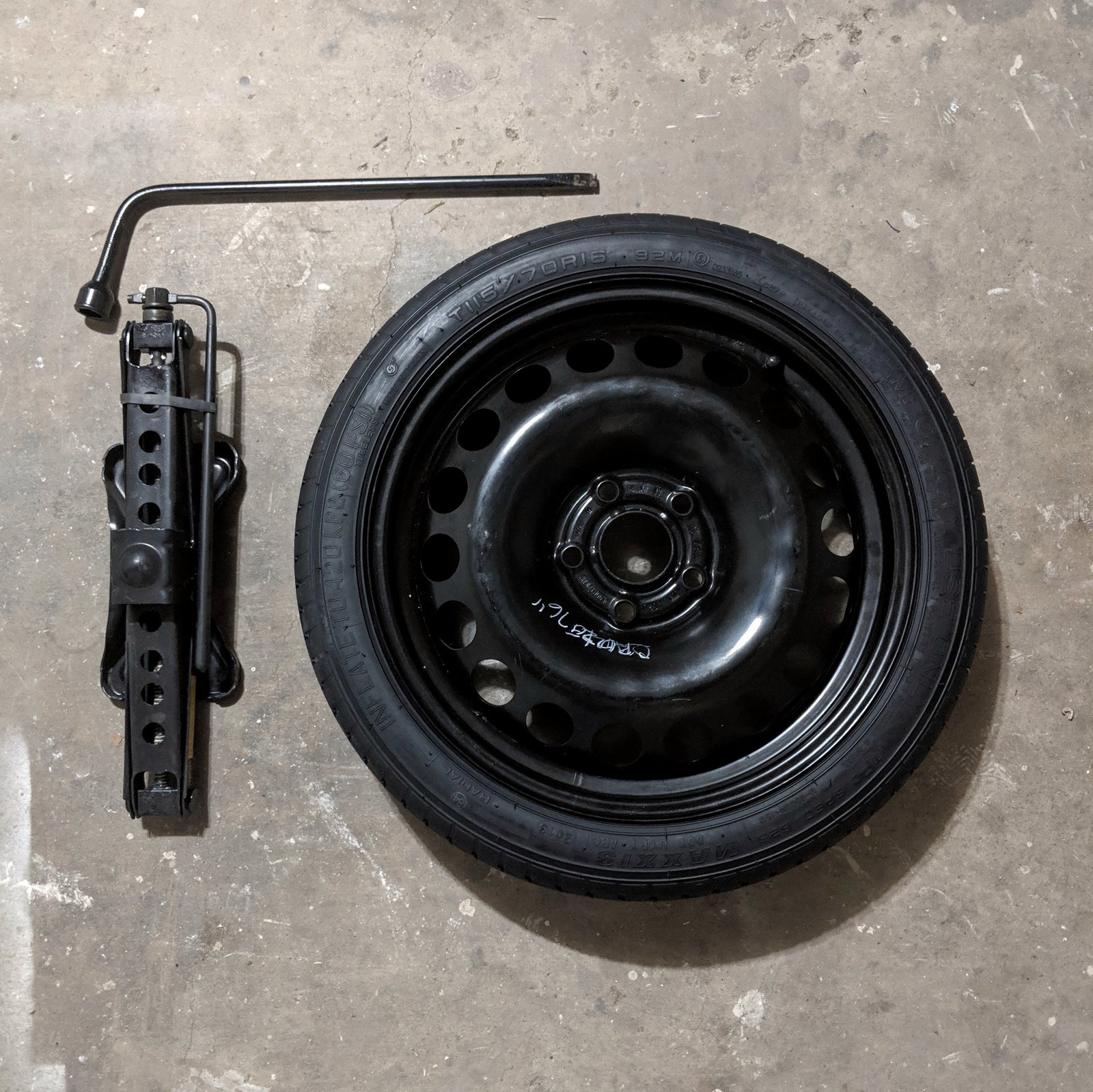
Before jacking up the car, use the lug wrench to loosen each lug nut about a quarter turn. Don't remove them yet — this is much easier while the tire is still on the ground.
Position the jack under the vehicle's designated jack point near the flat tire, then raise the car until the flat tire is a few inches off the ground.
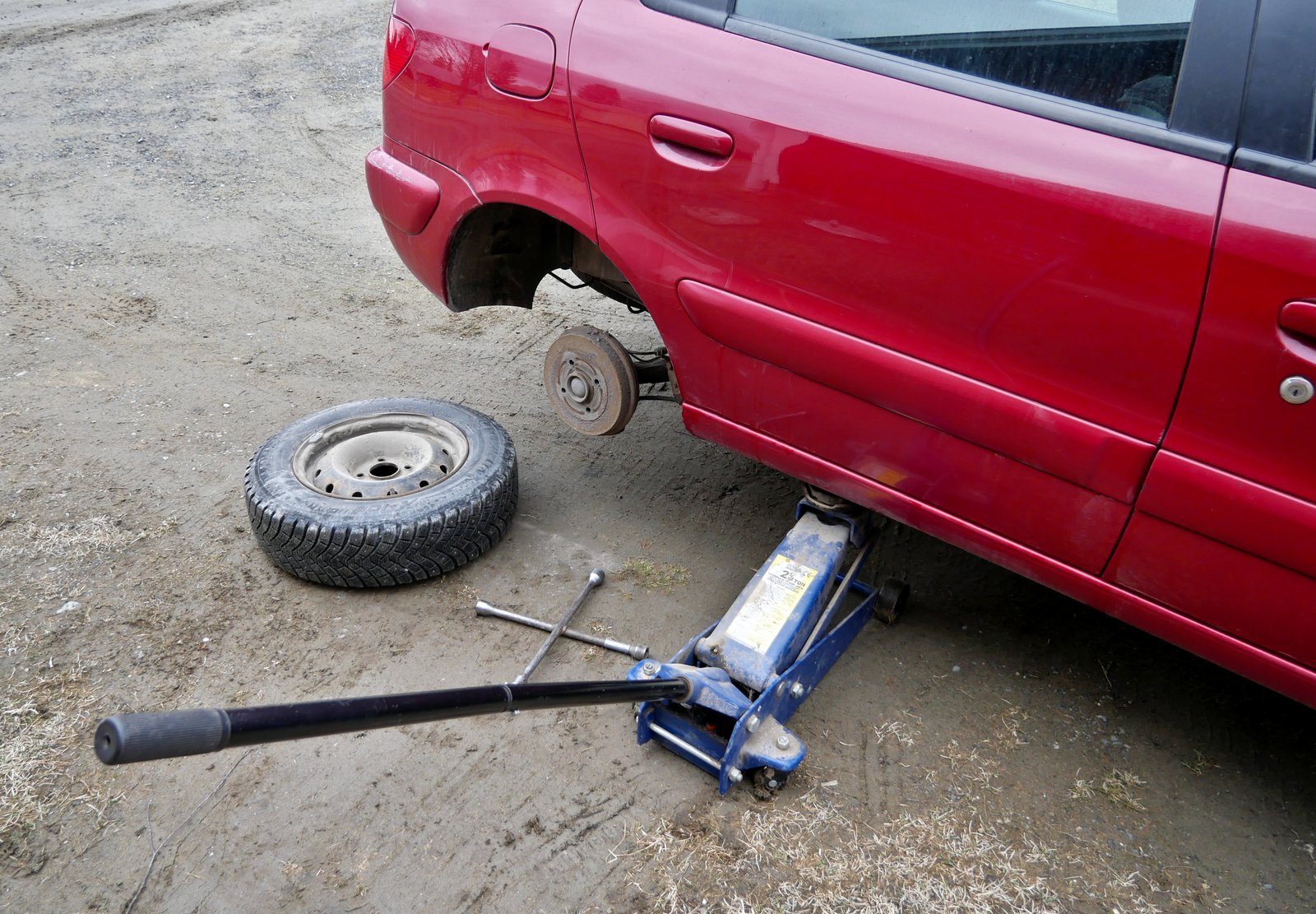
Finish unscrewing the lug nuts by hand and set them aside somewhere you won't lose them. Pull the flat tire straight off the wheel hub.
Line up the spare with the wheel bolts and push it onto the hub. Hand-tighten the lug nuts in a star pattern to seat the wheel evenly.
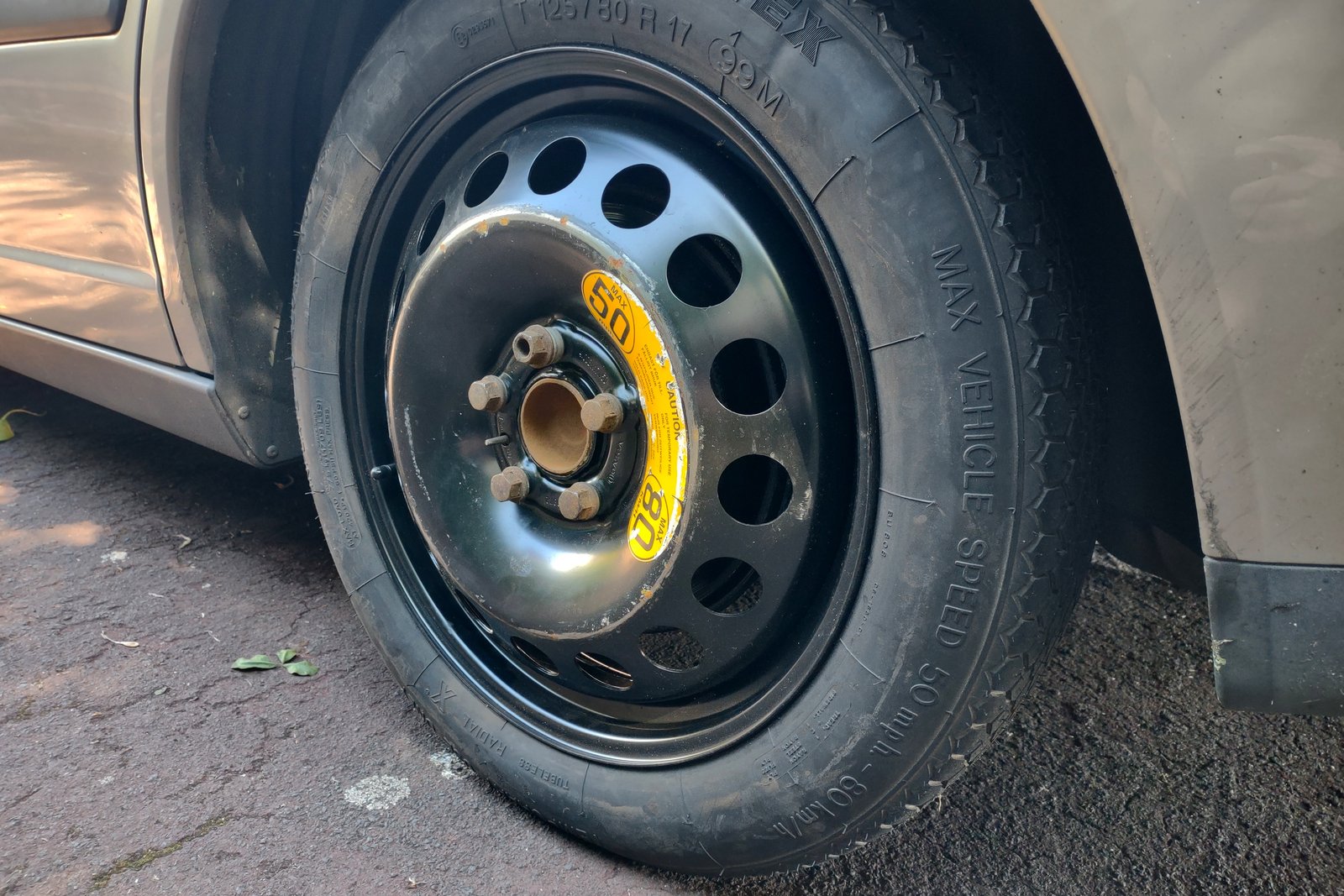
Lower the vehicle back to the ground using the jack, then use the lug wrench to tighten the lug nuts firmly in a star pattern for even pressure.
Confirm the spare looks properly seated and isn't visibly low on air. Pack up the jack, wrench, and flat tire, and head to a repair shop soon since most spares aren't meant for long-term driving.
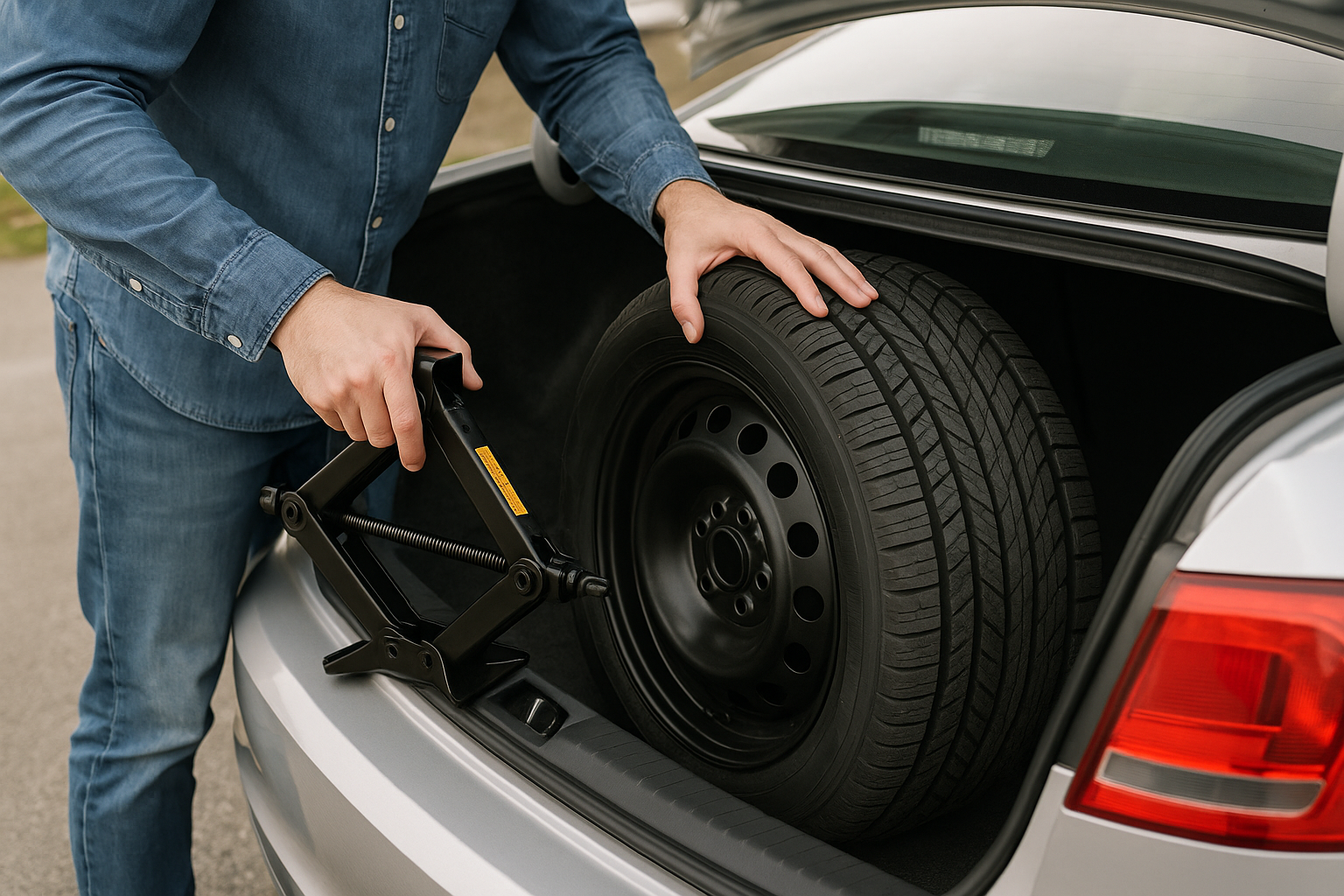
Changing a tire is a manageable task once you understand the sequence: secure the car, loosen before lifting, swap the wheel, then tighten fully once it's back on the ground. Practicing the steps once in a safe driveway setting can make a roadside emergency far less stressful.
Try using your body weight by stepping on the wrench, or use a breaker bar for extra leverage. Loosening them before jacking up the car, while the tire still has resistance against the ground, makes this much easier.
Most compact spares are designed for short-term use only, typically up to around 50 miles at reduced speeds. Check your owner's manual for your specific spare's limitations.
Some vehicles come with a tire repair kit or run-flat tires instead. Check your owner's manual to understand what your car provides and how to use it.
Affiliate disclosure. DopamineKart is a participant in the Amazon Services LLC Associates Program. As an Amazon Associate, DopamineKart earns from qualifying purchases — at no extra cost to you, and it never changes a verdict. Sources. Recommendations are our editorial opinion; verify current specs and availability before buying.
Corrections: email us