How to Earthquake-Proof an Apartment in One Afternoon
You cannot earthquake-proof an apartment with a box of adhesive straps — the building’s structure, soil and code history are not yours to change. What you can change is nearly everything that falls, shatters, or blocks the door.
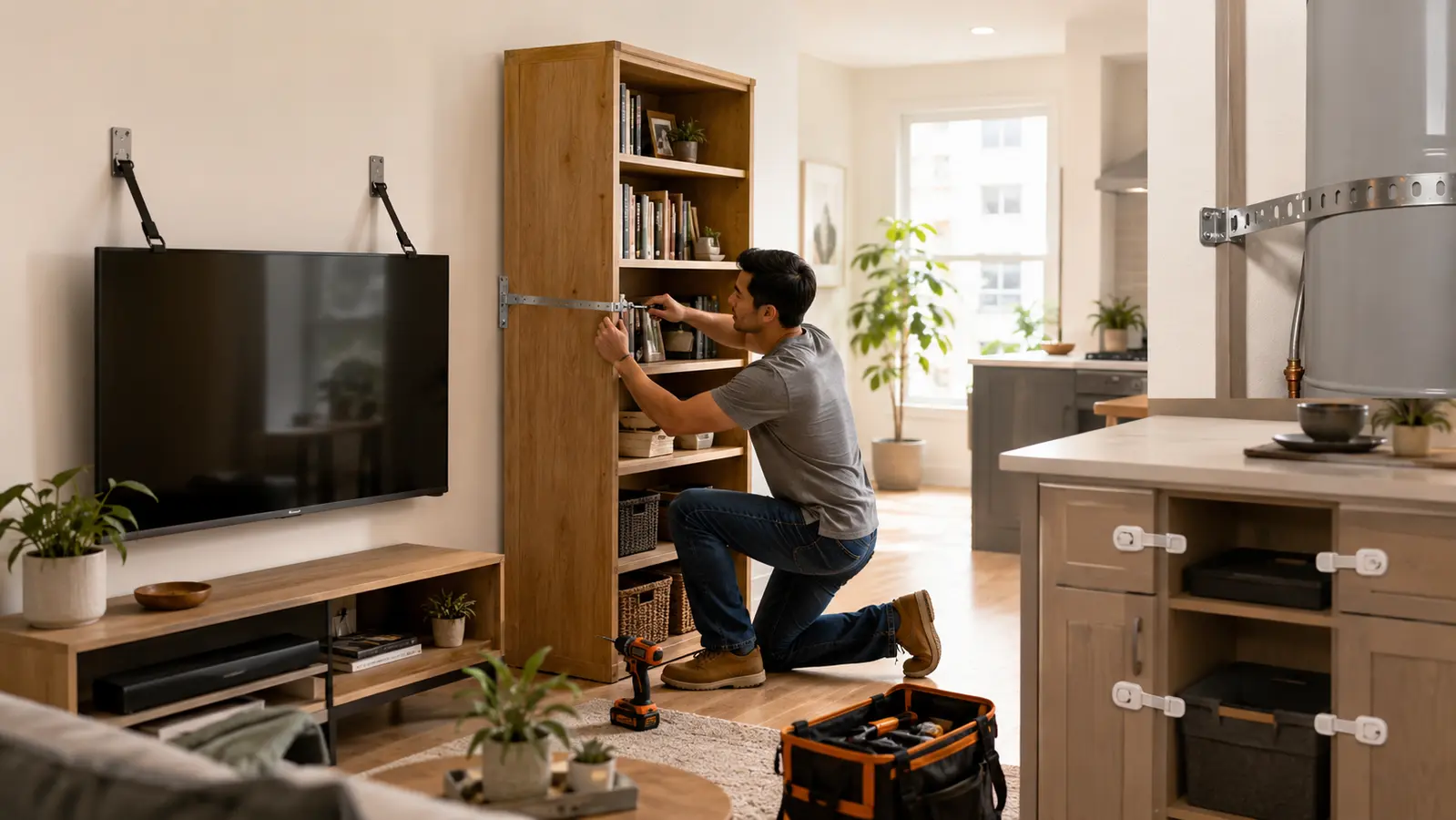
Quick answer. Start with placement, not products. Moving one heavy mirror away from a bed and one bookcase away from an exit does more than most premade kits. Then anchor tall furniture, latch cabinets holding glass and chemicals, and build a small bedside kit.
Before buying anything: four questions for the landlord
- What anchoring methods are permitted, and must holes be patched at move-out?
- Who is responsible for securing the water heater and major appliances?
- Where are the building’s gas, electrical and water shutoffs — and what is the emergency policy?
- What are the evacuation, fire, and post-earthquake inspection procedures?
Do not alter gas lines, water heaters, electrical panels or structural components yourself. That is not caution for its own sake — it is the line between a repair and a liability.
Hour 1 — remove the worst hazards for free
Clear the exits
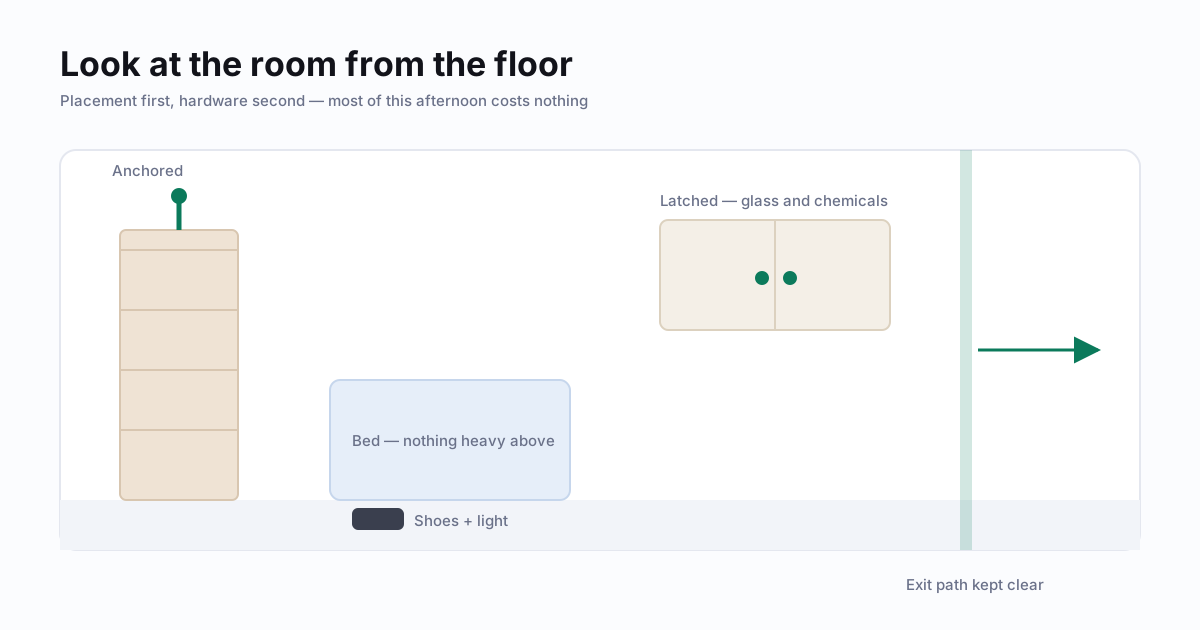
Walk from every sleeping area to the main exit. Move shoes, stools, plants, shelves and décor that could fall into the path. Keep keys, shoes, a flashlight and the go-bag reachable.
Protect beds and seating
Move heavy mirrors, frames, shelves and hanging objects away from beds, desks, sofas and children’s areas. Do not store heavy boxes on high shelves above where people sit or sleep.
Put the weight low
Move books, cookware, appliances and dense objects to lower shelves. A lower centre of gravity reduces both the chance of toppling and the consequence of a fall.
Separate glass and chemicals from people and water
Put breakable glass and toxic cleaners in low, latched storage, away from stored drinking water, food, children and pets.
Hour 2 — anchor the top-heavy furniture
In priority order:
- Bookcases.
- Tall cabinets.
- Freestanding wardrobes.
- Dressers near beds or children.
- Televisions and heavy monitors.
Use hardware rated for the furniture and the wall construction. The connection is only ever as strong as its attachment point — for drywall, masonry, metal studs or unusual construction, follow manufacturer and building guidance, or hire a qualified installer.
Do not assume adhesive-only straps can restrain a heavy, top-loaded cabinet during violent shaking.
Hour 3 — stop things opening or sliding
Install cabinet latches
Positive-closing latches on cabinets holding dishes, glass, cookware or chemicals. Choose a type every member of the household can operate normally, or it will be defeated within a week.
Restrain small objects thoughtfully
Museum putty, gel or hook-and-loop fasteners help keep small, non-hazardous décor in place. They are not structural anchors and must not be the only restraint on a television, tall furniture or a heavy appliance.
Secure electronics
Mount or strap televisions and monitors with hardware appropriate to their weight and stand. Leave enough cable slack that you have not created a new pull hazard.
Hour 4 — build the small accessible kits
The main kit may be across the apartment when the shaking stops. Create smaller access points where people actually are.
Beside each bed
- Sturdy closed-toe shoes.
- A flashlight or headlamp.
- Glasses and any necessary mobility aid.
- A whistle.
- A particulate mask.
Near the main exit
- The portable go-bag.
- Keys.
- Paper contacts and the meeting plan.
- Pet carrier or leash.
- A weather layer.
In the kitchen or utility area
- A properly mounted extinguisher.
- An accessible flashlight.
- Utility instructions from the landlord or local provider.
Do not place the extinguisher directly beside the most likely fire source. Keep it where you can reach it while still having an exit behind you.
The final shake-path inspection
- What can hit the bed, sofa, desk or doorway?
- What can shatter?
- What can block the exit?
- What can start a fire or spill chemicals?
- What will the pet hide behind or under?
- Can every person reach shoes, light and protective cover?
Then get on your hands and knees and look again from the height you will actually occupy during Drop, Cover, and Hold On. Hazards look different from the floor, which is the entire reason for doing it.
Final verdict
Start with placement, not products. Then use the right anchors, install them properly, and build the small bedside access points that let you move safely once the shaking stops.
| Do | Avoid |
|---|---|
| Ask permission and match hardware to the wall | Treating any generic screw as an anchor |
| Anchor tall furniture to a sound attachment point | Relying on adhesive for heavy furniture |
| Move heavy items low | Storing dense boxes above beds or exits |
| Latch glass and chemical cabinets | Leaving breakables in overhead cabinets |
| Keep paths and doors clear | Packing the exit area with décor or storage |
| Use qualified help for utilities and appliances | DIY gas, water-heater or electrical work |
Sources
This guide restates official preparedness guidance. It is not medical, structural, or emergency advice for your specific situation — follow the instructions of local authorities during an actual event.