How to Organise a Fridge So Food Stops Getting Lost
Most food thrown away at home was not eaten because nobody saw it. Organising a fridge is really about visibility — and about knowing which shelf is doing what.
Updated 18 August 2026 · 7 min read read
The short version. Cold air falls, so the bottom is coldest and the door is warmest. Raw meat goes on the bottom shelf so nothing drips onto anything below it. Milk belongs on a shelf, not in the door. Keep one shelf as the eat-me-first zone and put leftovers there, at eye level, in something you can see through.
The door is the warmest part of the fridge and its temperature swings every time you open it. That makes it the wrong home for milk, eggs and anything raw — use it for condiments, which are acidic or salty enough not to care.
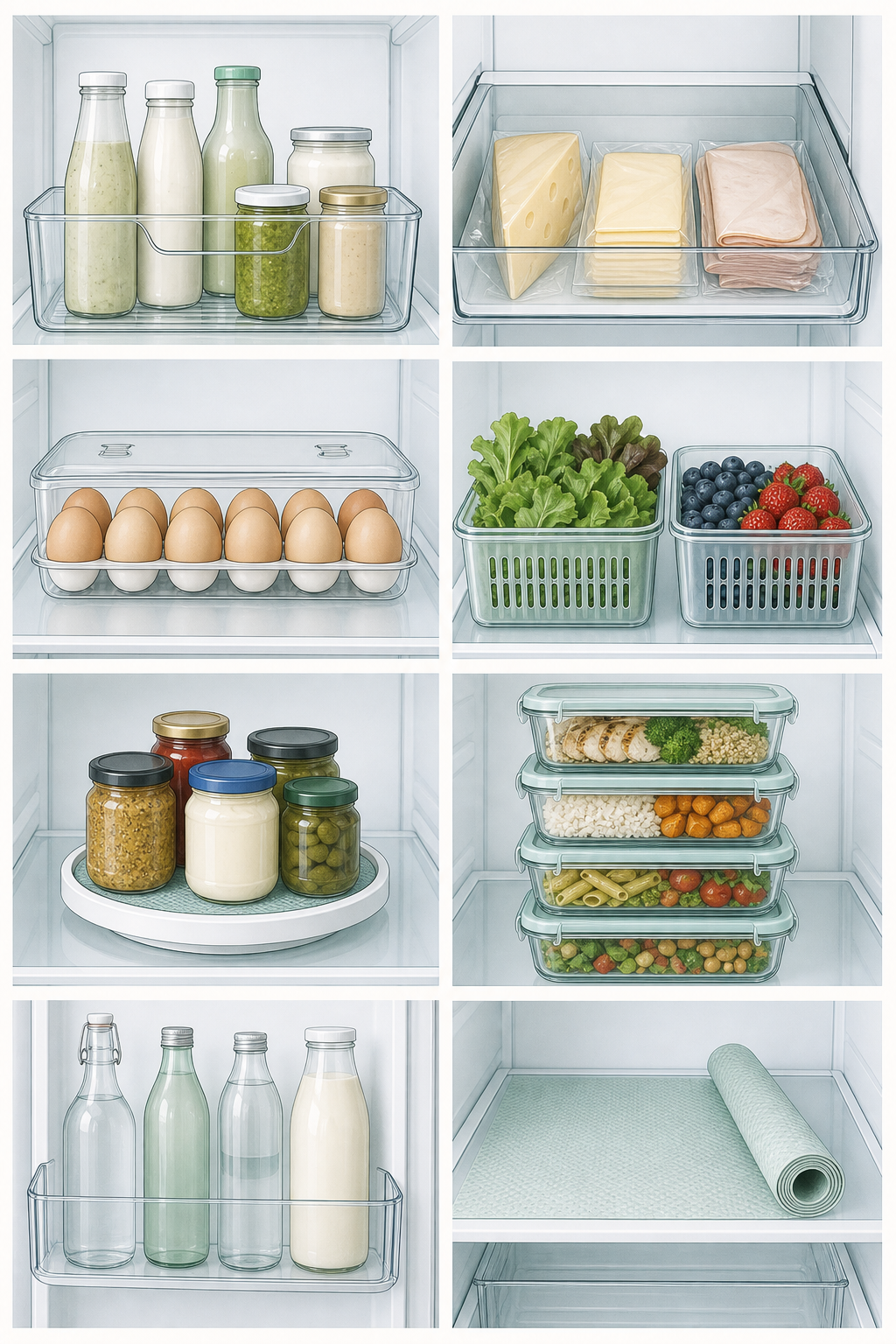
All 8 on one board
The whole set in a single image — this is the one to save or pin. Each panel is broken out
underneath with what it is actually for.
Where Everything GoesEight zones · coldest at the bottom
AI-generated illustration, and the lead image for this guide. All eight zones on one sheet — the panels below are cut from it. The title and labels are live text, not part of the image, so they translate with the page.
The eight zones
Each one says what belongs there and why — the why is what makes it stick after the containers get rearranged.
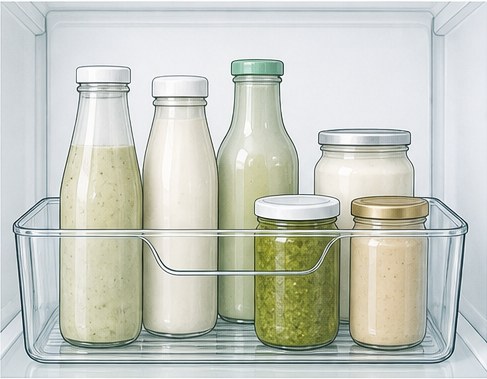
01Clear bins, so nothing hides
The single biggest cause of wasted food is a jar behind a jar. Bins do not create space — they create sightlines, and they let you pull a whole group out to reach the back rather than excavating.
Works for: deep shelves. Skip if your fridge is shallow — bins cost usable volume.
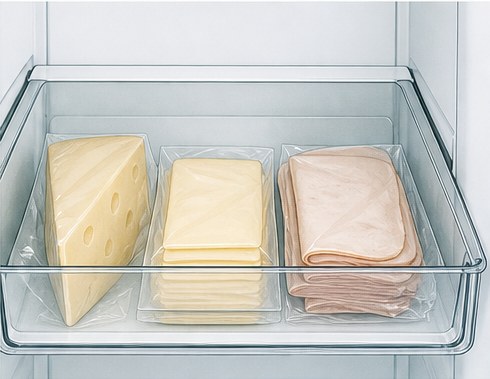
02A drawer for deli and cheese
Cheese and cured meat want the steadier, slightly warmer middle of the fridge rather than the coldest shelf. A shallow pull-out keeps them together so they get eaten instead of migrating behind a lasagne.
Watch: sealed plastic makes soft cheese sweat. Paper then a loose bag is kinder.
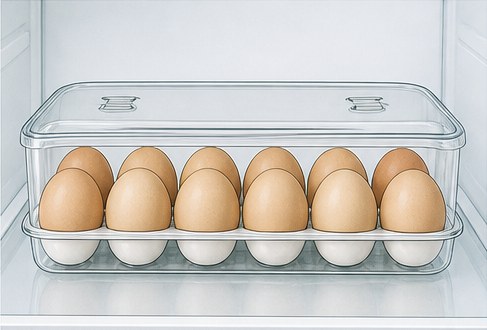
03Eggs on a shelf, not the door
The door swings through the biggest temperature range in the fridge every time it opens, and eggs dislike that more than most things. A covered tray on a middle shelf is steadier — and you can see how many are left without opening a carton.
Keep them pointed end down. The air cell sits at the blunt end and stays drier that way.
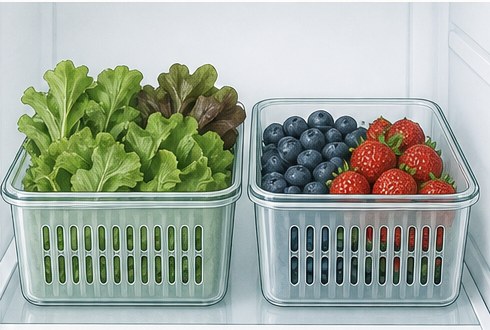
04Produce: vented, and separated
Leaves rot from trapped moisture; berries rot from being wet at all. Vented containers let both breathe. Keep fruit and vegetables apart where you can — a lot of fruit gives off ethylene, which ripens whatever is next to it.
Do not wash berries until you eat them. Washing early is the fastest route to mould.
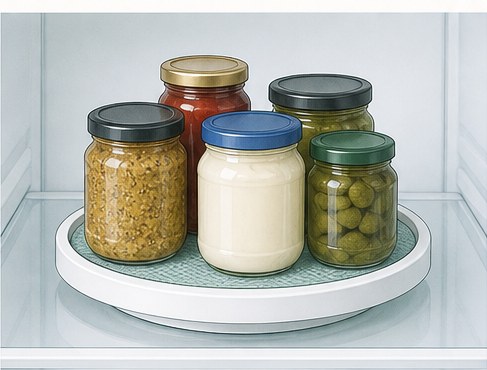
05A turntable for the jar graveyard
Condiments are the things most often bought twice, because the tall ones hide the short ones. A turntable turns a back row into a front row, which is the entire trick.
Best on a deep shelf or in a corner. Pointless on a shallow one.
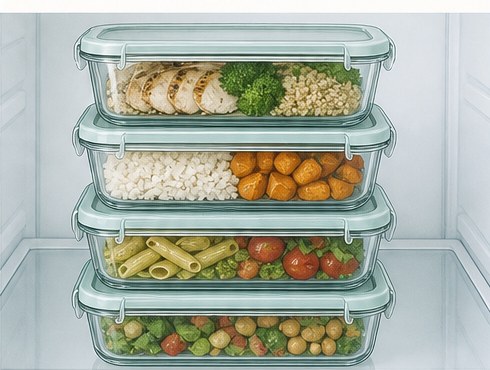
06Leftovers you can see through
Opaque tubs are where leftovers go to be forgotten. Matching clear containers stack squarely, waste less air than round ones, and let you identify last night's dinner without opening it.
Glass over plastic if you reheat. It does not stain, warp or hold onto smells.
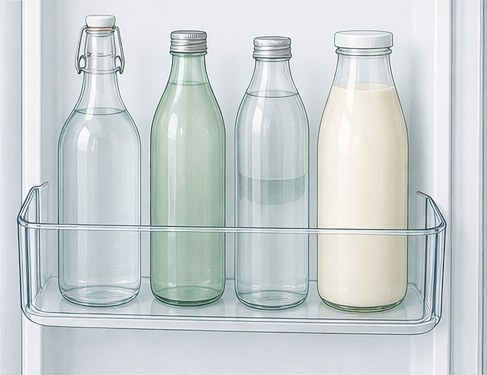
07The door is for what tolerates it
Warmest shelf, biggest swings — so it is the right place for the things that do not mind: ketchup, mustard, pickles, dressings. Their acid or salt is doing preservation work that milk and eggs cannot rely on.
The one exception people resist: milk on the door spoils faster. Move it to a shelf.
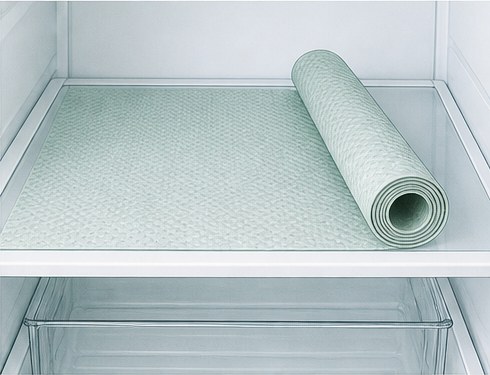
08Liners, and the wipe that makes them worth it
A washable liner turns a spill into a lift-and-rinse rather than emptying a whole shelf. It is a small thing, and it is the difference between cleaning the fridge monthly and cleaning it when something has gone wrong.
Watch: a liner over a wire shelf blocks airflow. Fine on glass, less so on racks.
AI-generated illustration. Not a photograph. Every panel above is cut from a single generated sheet, which is how the
style stays consistent across all 8.
If you remember three things
Cold air falls — bottom is coldest, door is warmest.
Raw meat on the bottom shelf, with nothing under it.
Keep an eat-me-first shelf at eye level.
The containers are optional. The sightlines are not.
The one habit that beats any container
Keep a single shelf — at eye level, where you look first — as the eat-me-first zone, and put anything opened, cooked or near its date there. It costs nothing and it does more than a cupboard of bins, because the problem was never storage. It was that the food was invisible.
The second habit worth having: check that zone before you shop, not after. Almost everything that gets thrown away was bought again while the first one was still in the fridge.
Why the bottom shelf is not negotiable
Raw meat and fish go on the bottom shelf, in something that will hold a leak, and nothing goes underneath them. This is the one rule here that is about safety rather than tidiness — a drip onto ready-to-eat food below is a genuine cross-contamination route, and it is invisible until it matters.
The bottom is also the coldest part of the fridge, because cold air falls. That works in your favour for exactly the things that need it most.
Notes
No products are named or linked on this page and there are no affiliate links on it. Nothing here is monetised.
The eight panels are cut from one generated illustration sheet, which is why the palette is identical across them. Nothing depicted is a real product — every bin, tray and container is deliberately unbranded.
The food-safety points — raw meat on the bottom shelf, the door being the warmest zone — are standard food-hygiene guidance rather than our opinion. Your fridge's own manual is the authority on its temperature zones, which vary by model.
No affiliate links on this page. Nothing here is monetised.
No prices anywhere on this site — they move faster than an article can stay honest about them.