How to Set Up a Home Gym in a Small Space
You don't need a garage. You need a plan for the corner, closet wall, or spare 40 square feet you're actually working with — and a clear idea of what goes on the floor, what goes on the ceiling, and what gets put away between sets.
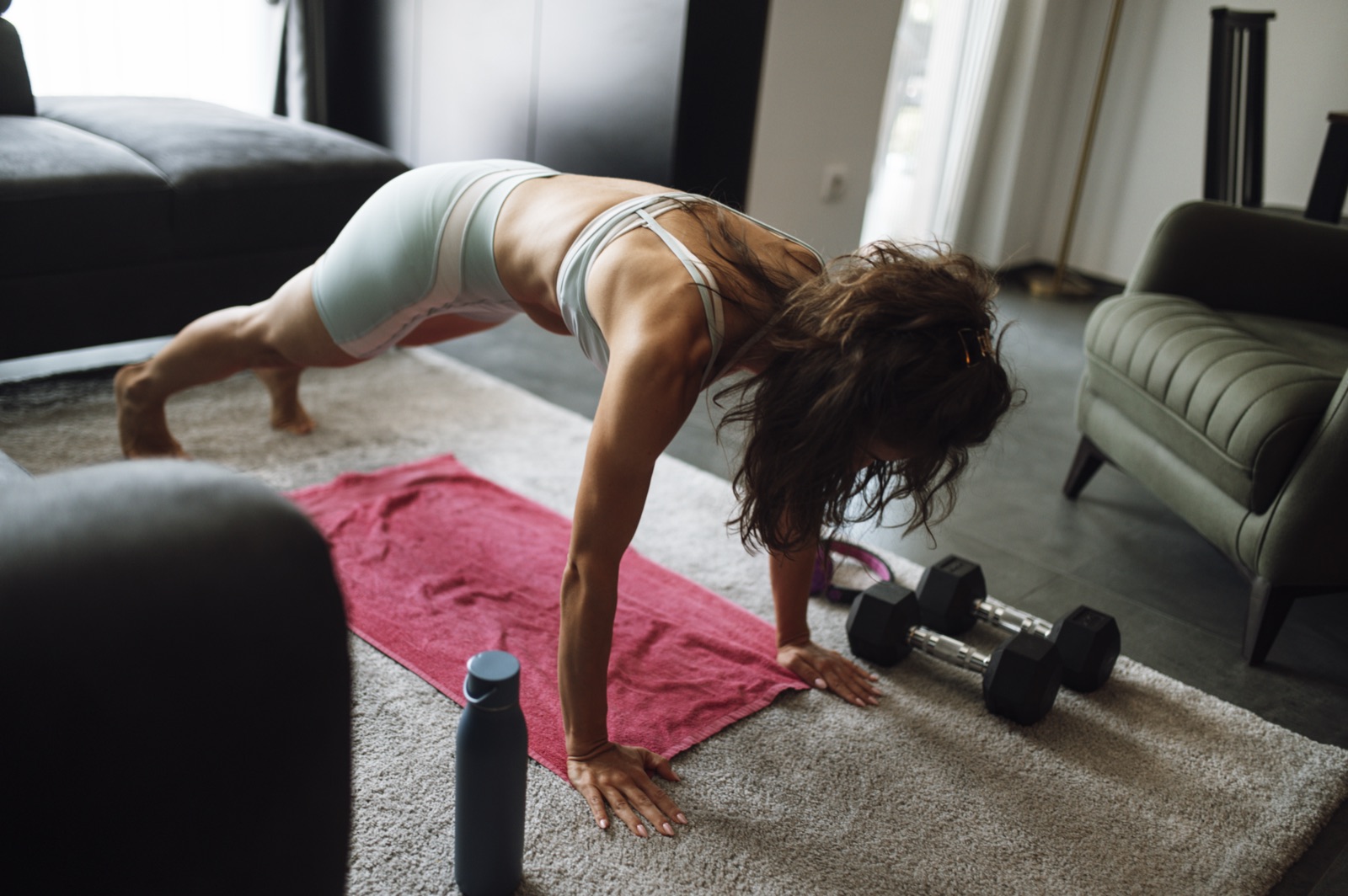
Quick answer. Pick a fixed zone instead of "wherever there's room," use the ceiling for pull-ups and rings so the floor stays clear, buy equipment that folds or replaces multiple items instead of a rack of single-purpose gear, put down real rubber flooring before you put down any weight, and plan your loudest movements around your neighbors' schedule, not just your own. Most small-space home gym failures aren't a space problem — they're a storage and noise problem that never got solved.
What You'll Need
Core Setup
- A defined floor zone — taped off or rug-marked, roughly 6×6 ft minimum
- Interlocking rubber tiles or a rolled rubber mat sized to that zone
- A set of adjustable dumbbells instead of a full rack
- A ceiling- or joist-mounted pull-up bar, or a doorway bar if drilling isn't an option
- Resistance bands on wall hooks or an over-door anchor
- A foldable bench or a storage ottoman that can take a seated load
Optional
- A folding treadmill or under-desk cardio machine that stores vertically
- A foldable squat rack that mounts flat to a wall stud when not in use
- Furniture sliders or wheeled equipment for one-space, multi-station setups
Skip For Now
- A full barbell and squat rack — it needs real clearance on all sides, not a small-space workaround
1 · Measure the footprint you actually have
Before buying anything, tape off or otherwise mark the actual zone you're working with. A compact setup built around adjustable dumbbells, resistance bands, and a mat realistically needs as little as 25 to 50 square feet — roughly a 5×5 or 6×8 area. Cardio equipment or a full station with a bench pushes that closer to 100 square feet. A squat rack and bench press is a different category entirely: it needs its own 150 to 200 square feet once you account for the clearance a loaded barbell actually requires.
That clearance isn't optional. A squat rack needs roughly 4 feet of open floor in front for loading and unracking, and about 3 feet behind for a safe bail-out on a failed lift, plus 2 feet on each side. If your space can't give a rack that room, that's the signal to build around dumbbells, bands, and bodyweight work instead of forcing a rack into a corner it doesn't fit.
What this guide can't tell you. Whether your specific floor can safely take the point-load of heavy free weights or a loaded rack, or whether your ceiling has accessible joists in the right spot for a pull-up bar. Older buildings, slab construction, and finished basements all vary — when in doubt, that's a question for a contractor or your building's maintenance staff, not a guess.
2 · Use the ceiling, not just the floor
A pull-up bar or a set of gymnastic rings anchored overhead does upper-body and suspension work without taking a single square foot of floor space — which matters more in a small room than almost any other single choice. The tradeoff is that it has real height requirements: most guidance puts the minimum usable ceiling height for pull-ups and overhead work at around 92 inches (about 7 feet 8 inches), with at least 18 to 20 inches of clearance above the bar itself for a full hang.
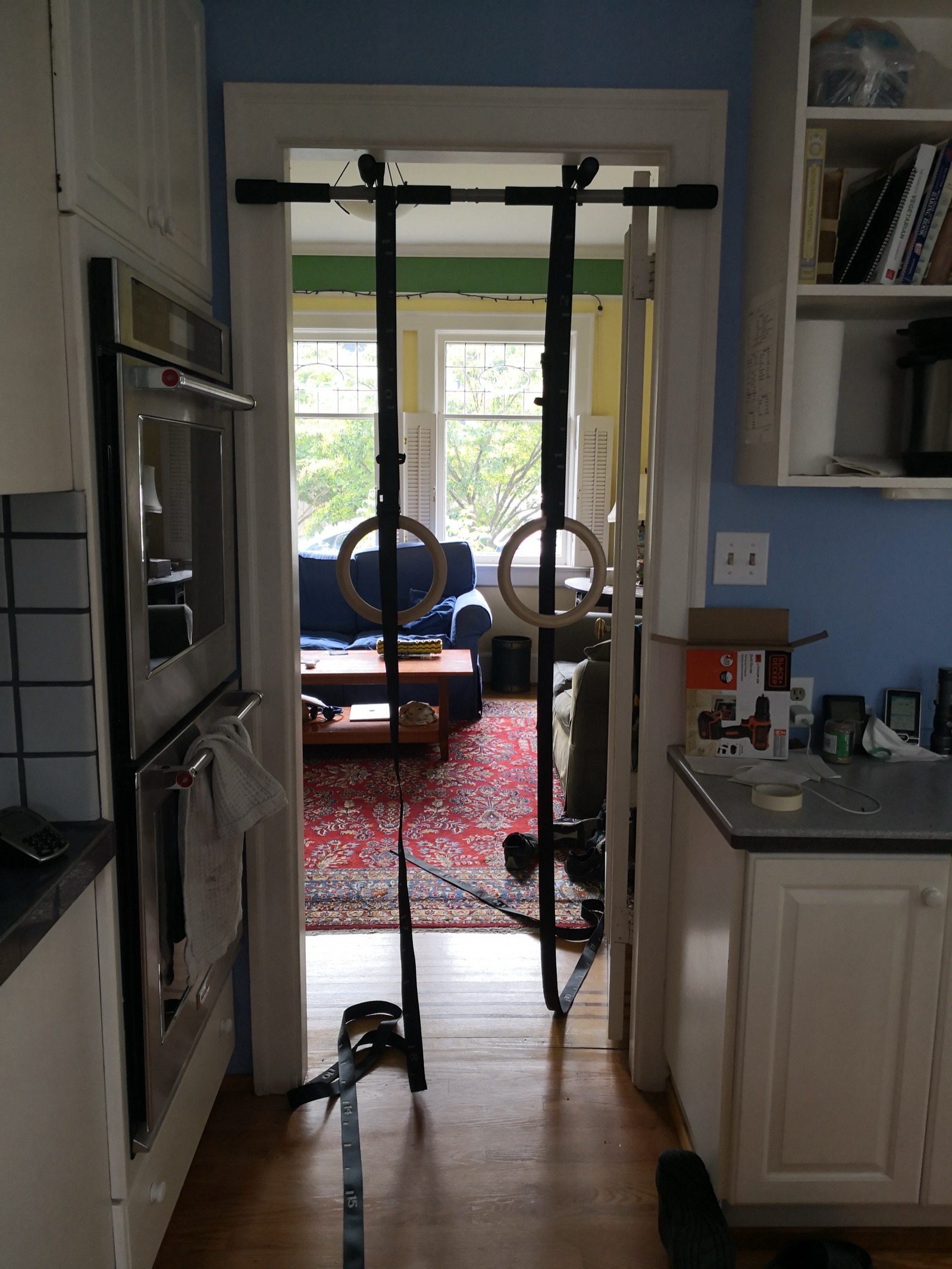
A doorway-mounted bar is the lower-commitment option: it needs no drilling, and it's sized by your door frame rather than your ceiling. Most interior doors run 6.5 to just under 7 feet tall, which means a doorway bar won't give a tall user a fully extended hang — but for pull-ups, chin-ups, and hanging core work, that's rarely the limiting factor. If you do anchor a bar or rings directly into the ceiling, confirm it's mounted into a structural joist, not just drywall — the failure mode for a joist-less mount is a bar coming down mid-set, not a slow wobble you'll notice in advance.
3 · Choose equipment that folds, stacks, or replaces multiple pieces
The single biggest space-saver in a small home gym is buying one adjustable item instead of a shelf of fixed ones. A single pair of adjustable dumbbells covers the weight range that would otherwise take a full rack of fixed pairs — see our full comparison of adjustable dumbbells for a home gym if you're choosing between dial and pin-select mechanisms. The same logic applies to benches, racks, and cardio equipment: look specifically for gear designed to fold flat or store vertically, not just gear that happens to be small.
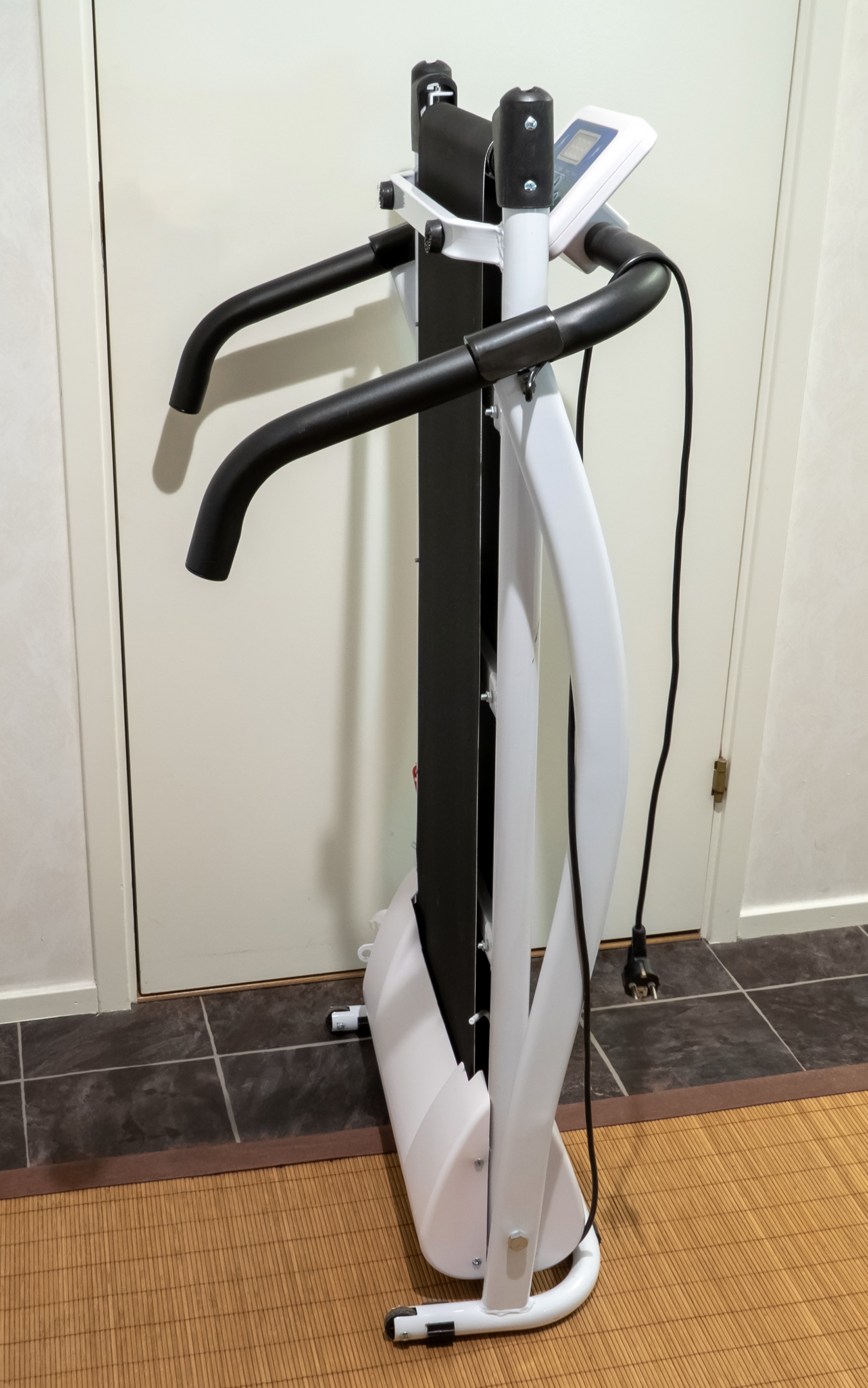
Wall-mounted folding squat racks exist specifically for this problem — they fold flat against the wall between sessions instead of sitting mid-room permanently. If a rack isn't in the plan, resistance bands and a suspension trainer anchored to a door or ceiling point cover a surprising amount of the same strength-training ground for a fraction of the stored footprint. Wall hooks, a slim vertical basket for a rolled mat, and an over-door hanger for bands keep the floor itself clear for movement, which matters more than any single piece of gear.
4 · Put down flooring before you put down any weight
Rubber flooring does two separate jobs: it protects the subfloor from dropped weight and moving equipment, and it meaningfully cuts the noise and vibration that travels to whoever's below or beside you. Those are two different problems with two different thickness answers, so it's worth matching the mat to what you're actually doing on it.
| Flooring | Good for | What it actually does |
|---|---|---|
| 6–8mm interlocking tiles | Bodyweight work, yoga, light dumbbells | Basic floor protection; limited noise reduction on its own |
| 10–15mm rolled rubber | Adjustable dumbbells, kettlebells, general strength work | Solid vibration dampening for typical apartment training |
| 20–25mm+ dense tiles, with underlayment | Dropped weights, barbell work | The strongest noise reduction — testing on comparable rubber tile has shown reductions in the 20–28 decibel range for impact noise |
Rubber works by absorbing impact energy and decoupling your equipment from the structural slab or subfloor beneath it — it's not the same as soundproofing, and no rubber mat alone will fully silence a dropped barbell. But it's the difference between a dull thud and a bang that travels through a shared wall.
5 · Plan around shared walls and floors
The mat handles vibration; it doesn't handle timing. If you're in an apartment or a shared house, the workouts most likely to generate a noise complaint are the ones with dropped weight and repeated impact — box jumps, deadlift sets taken to failure, slammed dumbbells at the end of a set. None of those need to disappear from your routine, but they're worth scheduling for hours when noise is less likely to be an issue, and worth controlling rather than letting momentum decide for you: lowering a weight under control instead of dropping it costs almost nothing in workout quality and removes most of the impact noise at the source.
Before you drill or bolt anything in. Check your lease or HOA rules on wall and ceiling anchors before mounting a pull-up bar, rack, or shelving into a joist or stud. A doorway bar and freestanding equipment sidestep this question entirely if permanent mounting isn't allowed where you live.
6 · Let furniture do double duty
A dedicated gym room is a luxury most small-space setups don't have, so the furniture in the room needs to earn its keep in both roles. A storage ottoman with a lift-off lid can hold dumbbells, bands, and a rolled mat while still functioning as a footrest or extra seating when the space reverts to a living room. Adjustable benches with a built-in rack or storage drawer do the same job for anything that would otherwise sit exposed against a wall.
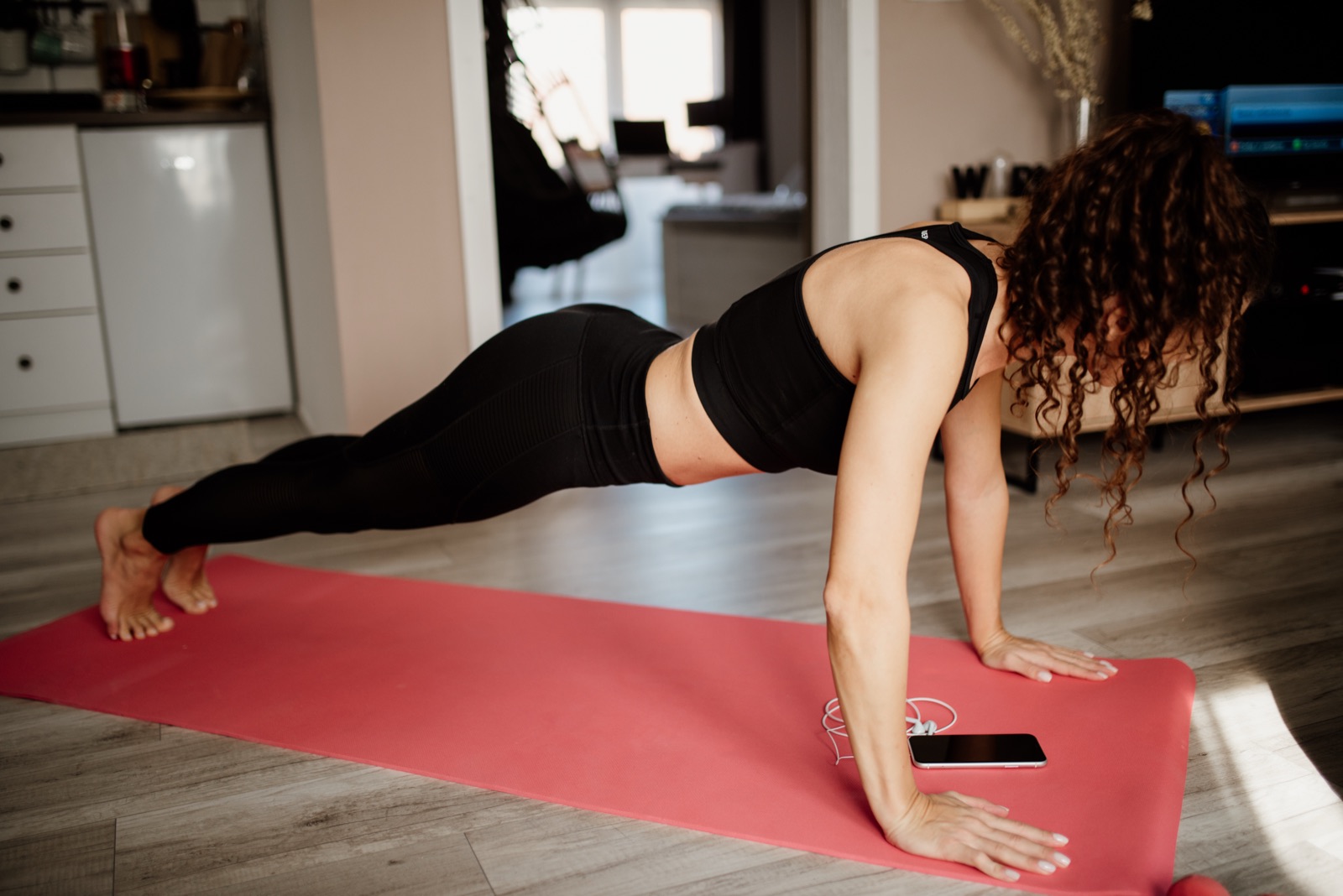
The equipment that disappears fastest between uses is the equipment that actually gets used consistently — a rolled mat that lives in a corner, a folded bench that tucks under a bed frame, a set of bands hanging on a single over-door hook. None of that requires a dedicated room. It requires deciding, once, where each piece goes when it's not in use, and sticking to it.
On the space and noise numbers
- Minimum ceiling height for pull-ups and overhead work (around 92 inches, plus 18–20 inches of hang clearance) and squat rack clearance figures reflect commonly cited home-gym planning guidance, not this guide's own measurement.
- Rubber flooring's noise-reduction figures vary by product thickness and density and by what's underneath the mat (concrete slab vs. wood subfloor) — the ranges cited here are representative, not a guarantee for any specific product or building.
- Square footage ranges are planning estimates for typical equipment, not a substitute for measuring your own room and equipment dimensions before buying.
All photographs on this page are real photography, not AI-generated. This guide has no affiliate links; the linked adjustable-dumbbell comparison does.
No affiliate links on this page. Nothing here is monetised.
No prices anywhere on this site — they move faster than an article can stay honest about them.
How we review · Corrections: email us · All Legit reviews