
Quick take
- Grand Touring's 450-mile EPA range and 6,000 lb tow rating are genuinely competitive numbers for a seven-seat electric SUV, not marketing rounding.
- 900-volt architecture adds roughly 200 miles of range in under 11 minutes on a 400 kW charger.
- The third row is comfortable to sit in but folds manually into a deep well — reviewers call the mechanism stiff, unlike the power-fold rows on rival gas SUVs.
- Named 2026 World Luxury Car of the Year and made Car and Driver's 2026 10Best Trucks & SUVs list in its first year of eligibility.
Lucid spent its first four years as a one-model company, building the Air sedan into a genuinely credible Tesla alternative before it tried anything bigger. The Gravity, which began customer deliveries in December 2024, was the test of whether that engineering could scale into something families actually cross-shop against a Kia EV9 or a Rivian R1S. Two full years and one new base trim later, the answer looks like yes — with one real asterisk around the third row.
The 2026 lineup runs three trims: Touring, Grand Touring, and the limited-run Dream Edition. Lucid added the Touring trim after the Grand Touring had already been shipping to customers for a year, which is the reverse of how most EV startups sequence a launch — sell the flagship first while demand is fresh, backfill the cheaper version once production is stable. It's the same trick Rivian used with the R1S and R1T.
What actually separates the three trims
The spread between Touring and Grand Touring isn't just a battery upgrade — it's a genuinely different car underneath. Touring runs a single rear motor design with a smaller pack; Grand Touring adds a second motor up front and roughly 35% more battery capacity. The jump in power is dramatic: Grand Touring's dual-motor setup is rated at 828 combined horsepower against Touring's more modest single-motor output, and it drops the 0-60 time from a still-quick mid-4-second range down to 3.4 seconds.
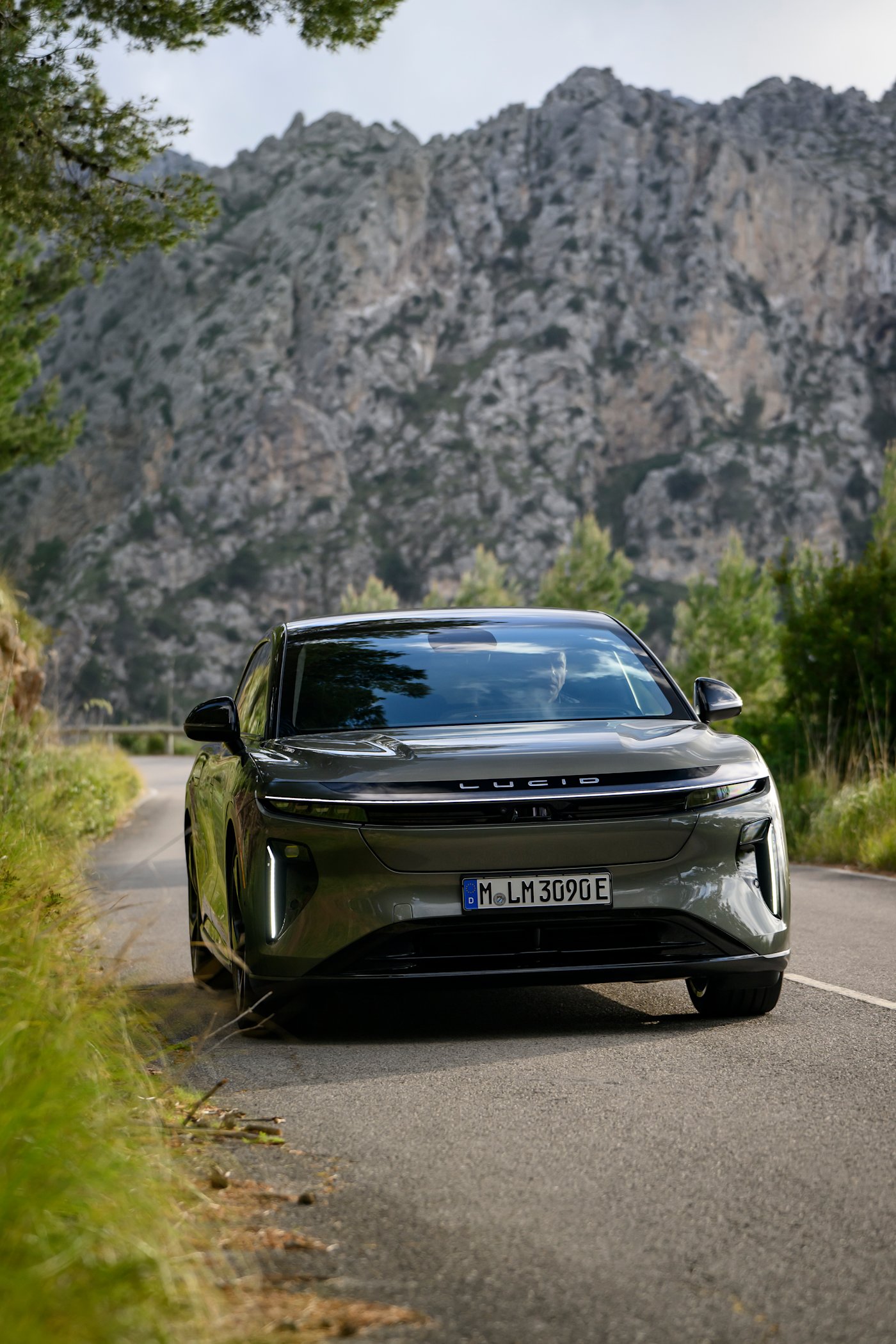
Touring is EPA-rated at 337 miles of range, a 3,500 lb tow rating, and DC fast charging up to 350 kW. Grand Touring steps up to 450 miles EPA range, 828 hp combined output, a 6,000 lb tow rating, and 0-60 mph in 3.4 seconds. Dream Edition tops the range at 1,070+ hp, independently tested at roughly 3.1 seconds to 60 mph, with EPA range holding around 440 miles despite the extra motor hardware.
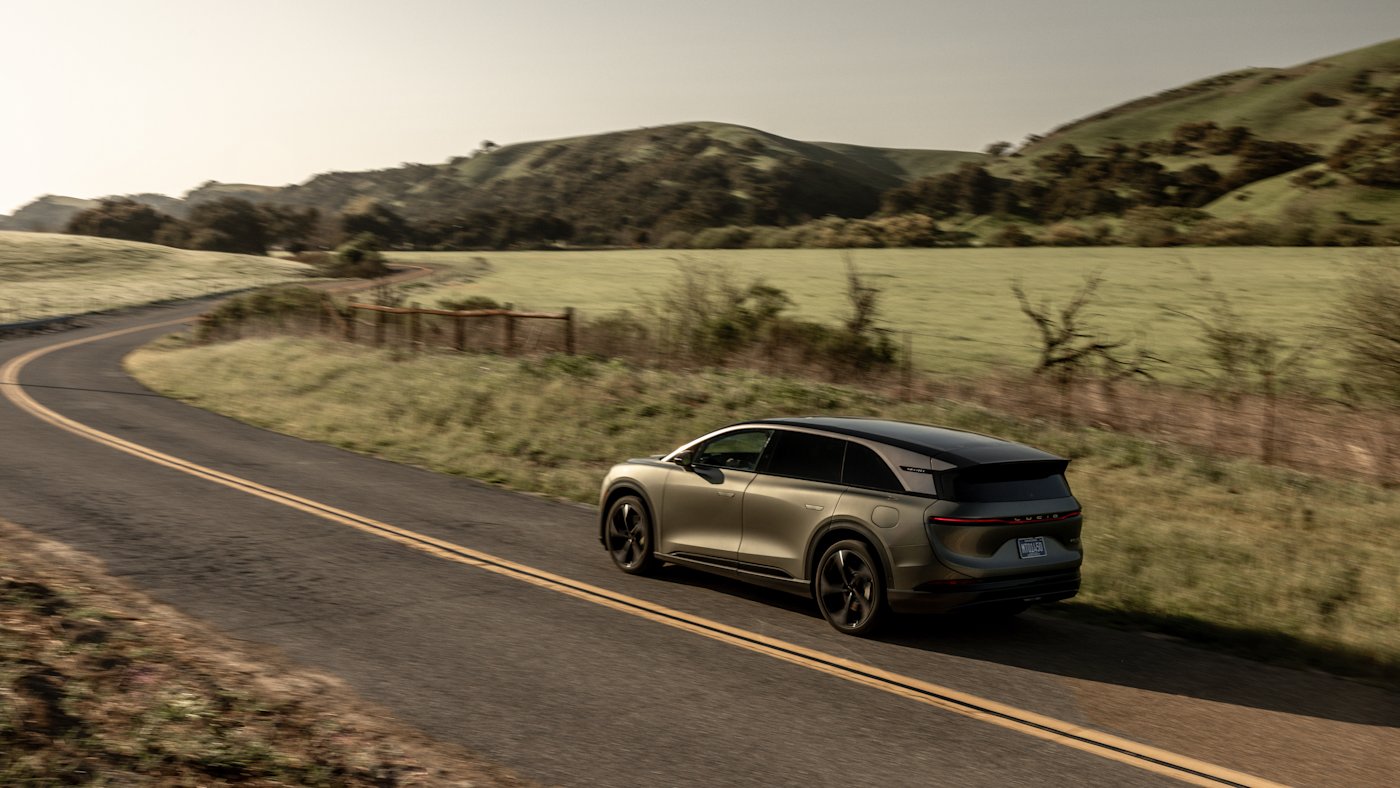
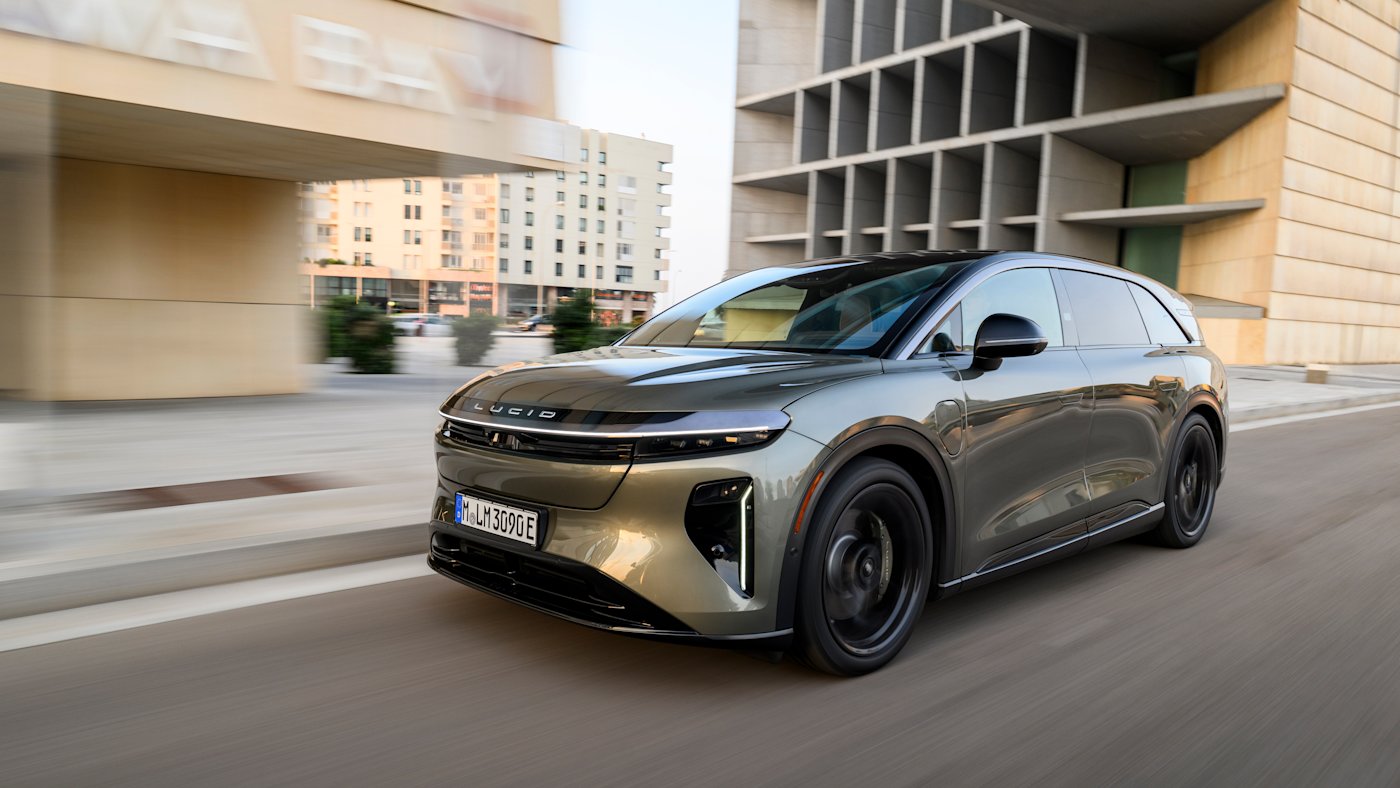
That 450-mile Grand Touring figure is worth sitting with. It's one of the longer EPA ranges of any three-row electric SUV on the market, delivered from a vehicle that also seats seven and can tow a mid-size boat. Lucid gets there partly through motor efficiency carried over from the Air program and partly through aerodynamics — Gravity posts a 0.24 drag coefficient, unusually low for a vehicle this tall.
Charging: fast in the numbers that matter
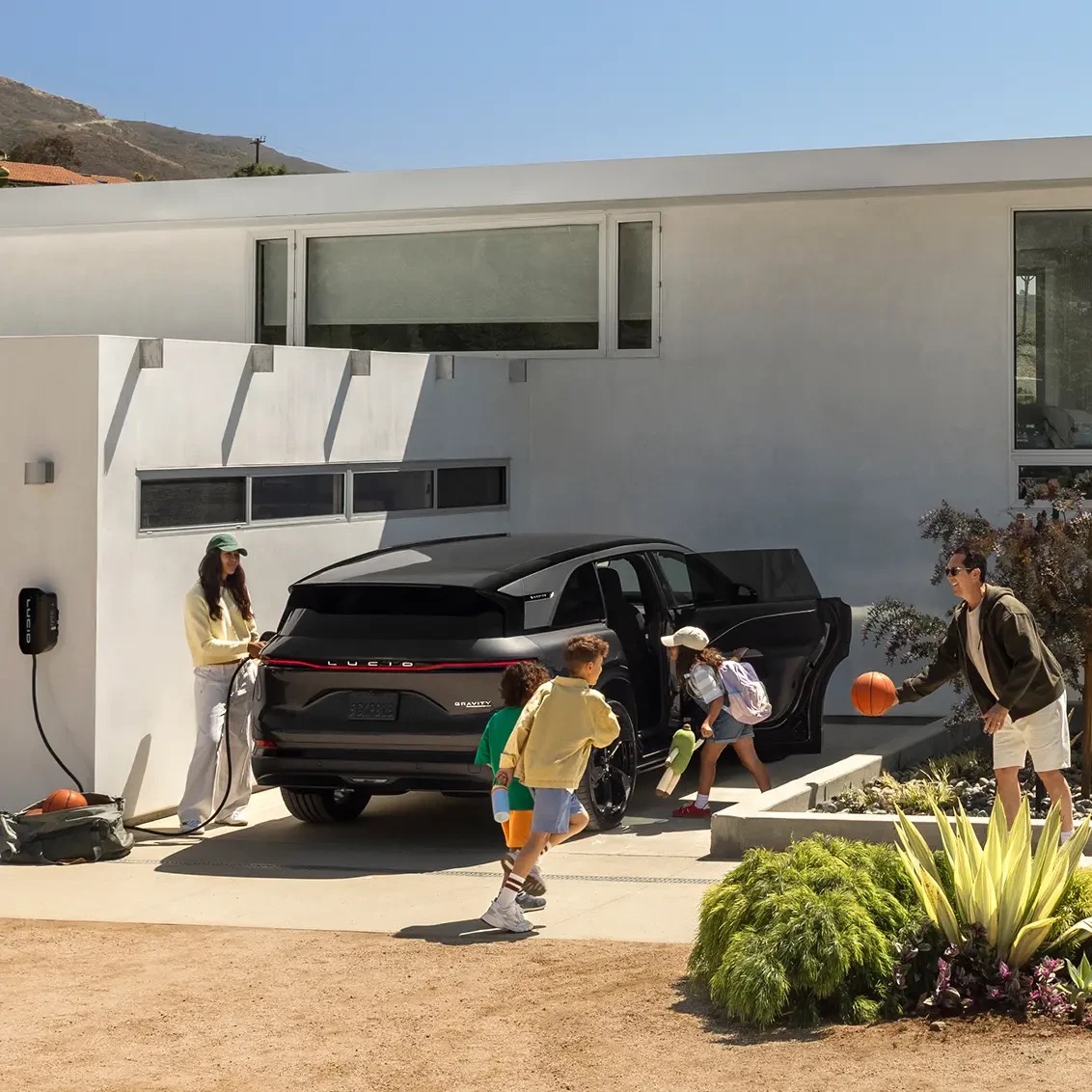
Gravity's 900-volt-capable architecture is built to exploit the fastest public DC chargers rather than merely tolerate them. Lucid's own figures put a 20-80% style top-up at roughly 200 miles of range added in under 11 minutes on a 400 kW charger for Grand Touring, with Touring adding a comparable 200 miles in about 15 minutes off a 350 kW unit. In practice that means most road-trip stops land closer to a coffee-and-restroom break than a meal.
Inside: a genuinely different layout, not just a bigger screen
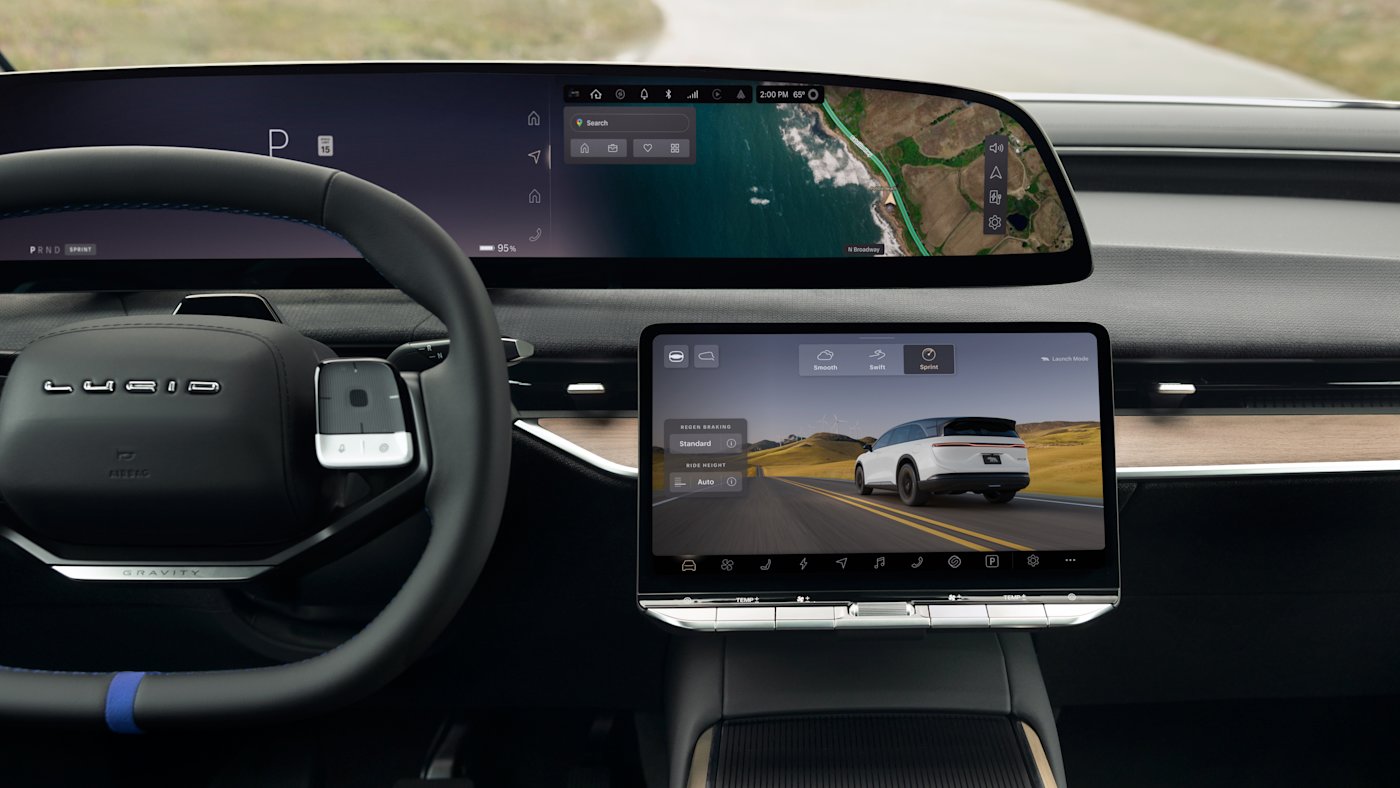
The cabin architecture is where Gravity stops looking like a scaled-up Air. The dash carries a 34-inch, 6K curved OLED glass display arcing across the driver's sightline, paired with a separate 12.6-inch horizontal touchscreen lower on the center stack for climate and vehicle functions — a deliberate split between "glanceable driving information" and "things you reach over and tap." A glass canopy roof runs from the top of the windshield back over all three rows, which Lucid frames as a sunroom effect rather than a simple panoramic sunroof.
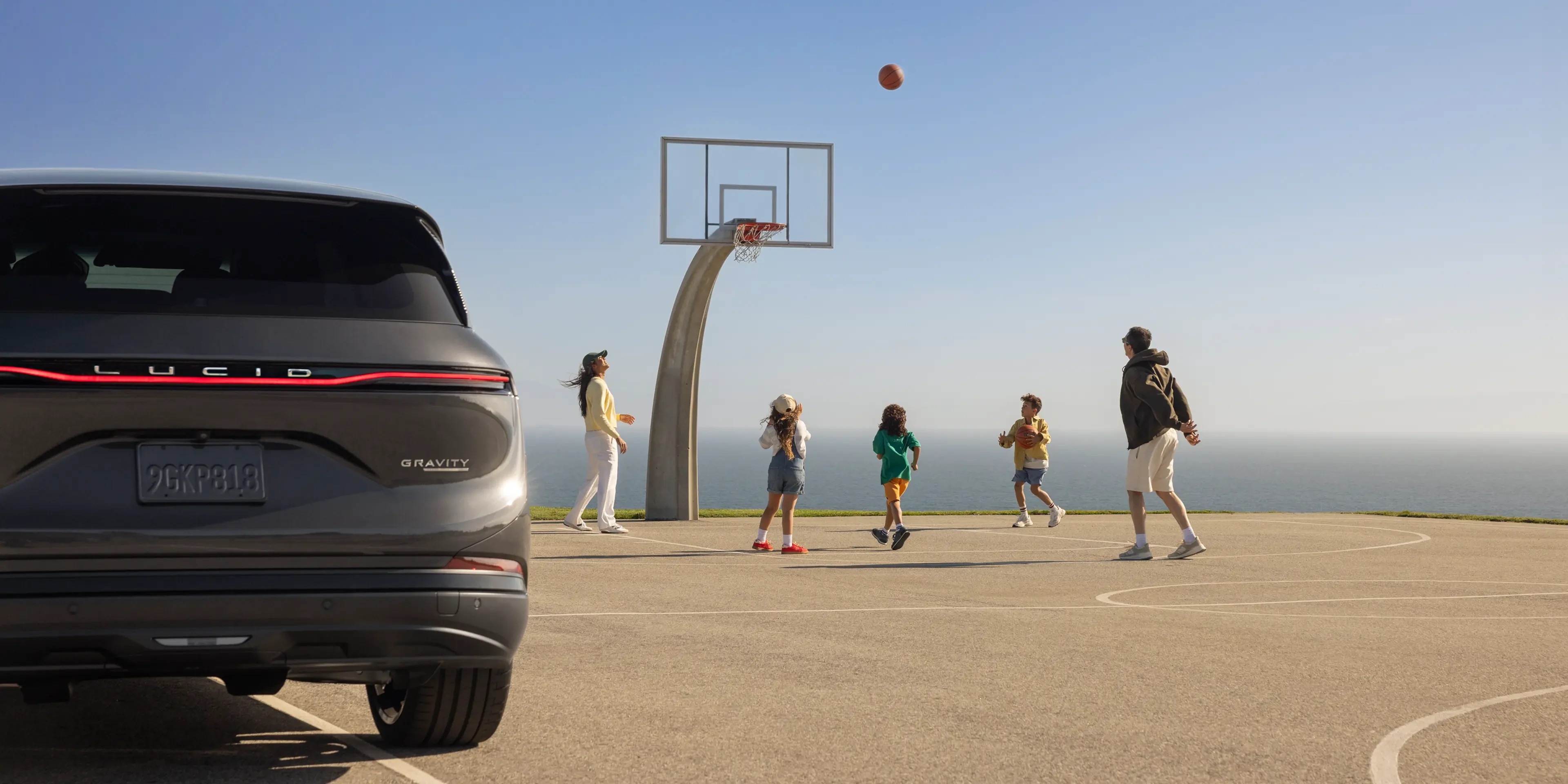
The frunk is unusually functional for the segment: 8.1 cubic feet, with a fold-down cushioned panel that turns the open trunk lid into a bench when the space isn't being used for cargo. Total cargo volume runs 48 cubic feet with the third row folded flat and up to 112 cubic feet with both rear rows down — genuinely van-adjacent numbers in a vehicle that doesn't look like a van from the outside.
The third row: comfortable to sit in, clumsy to configure
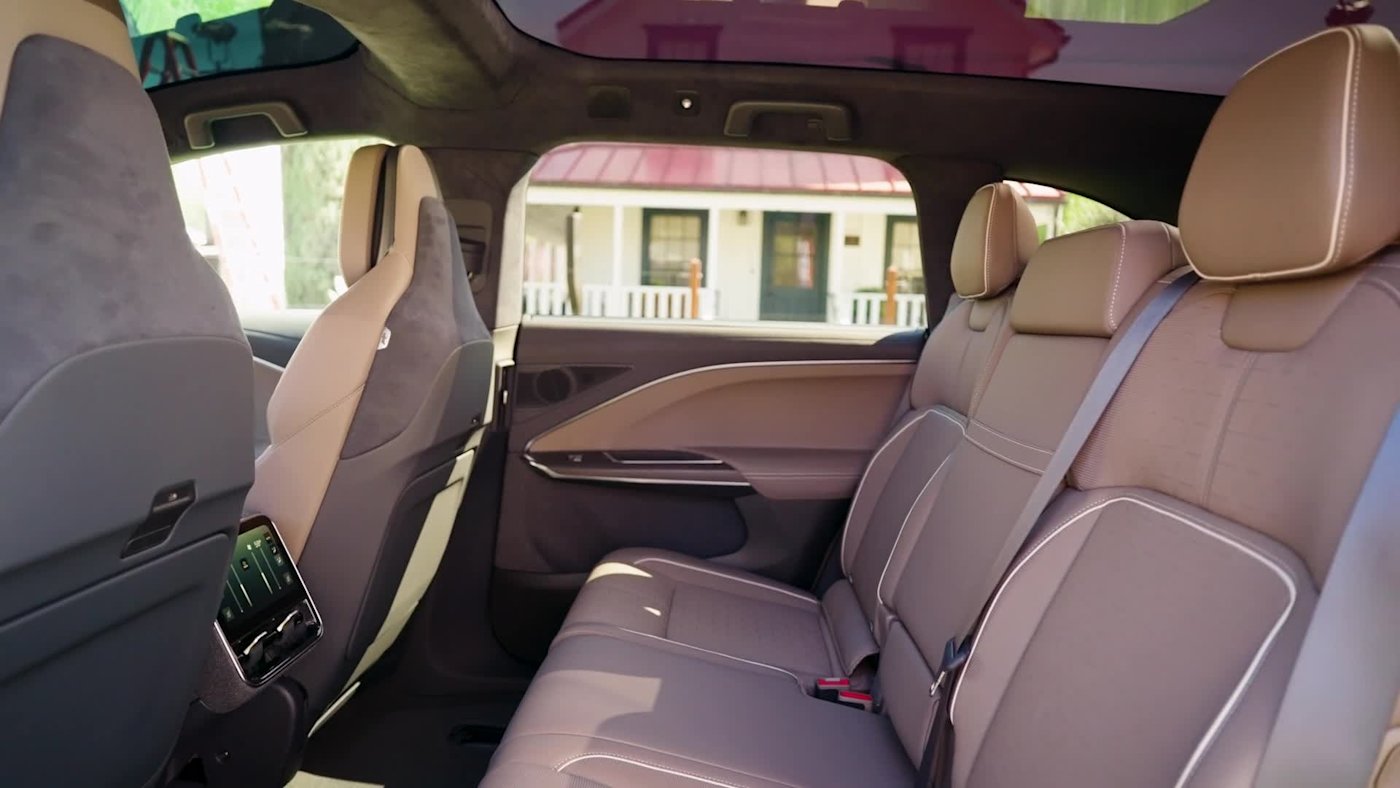
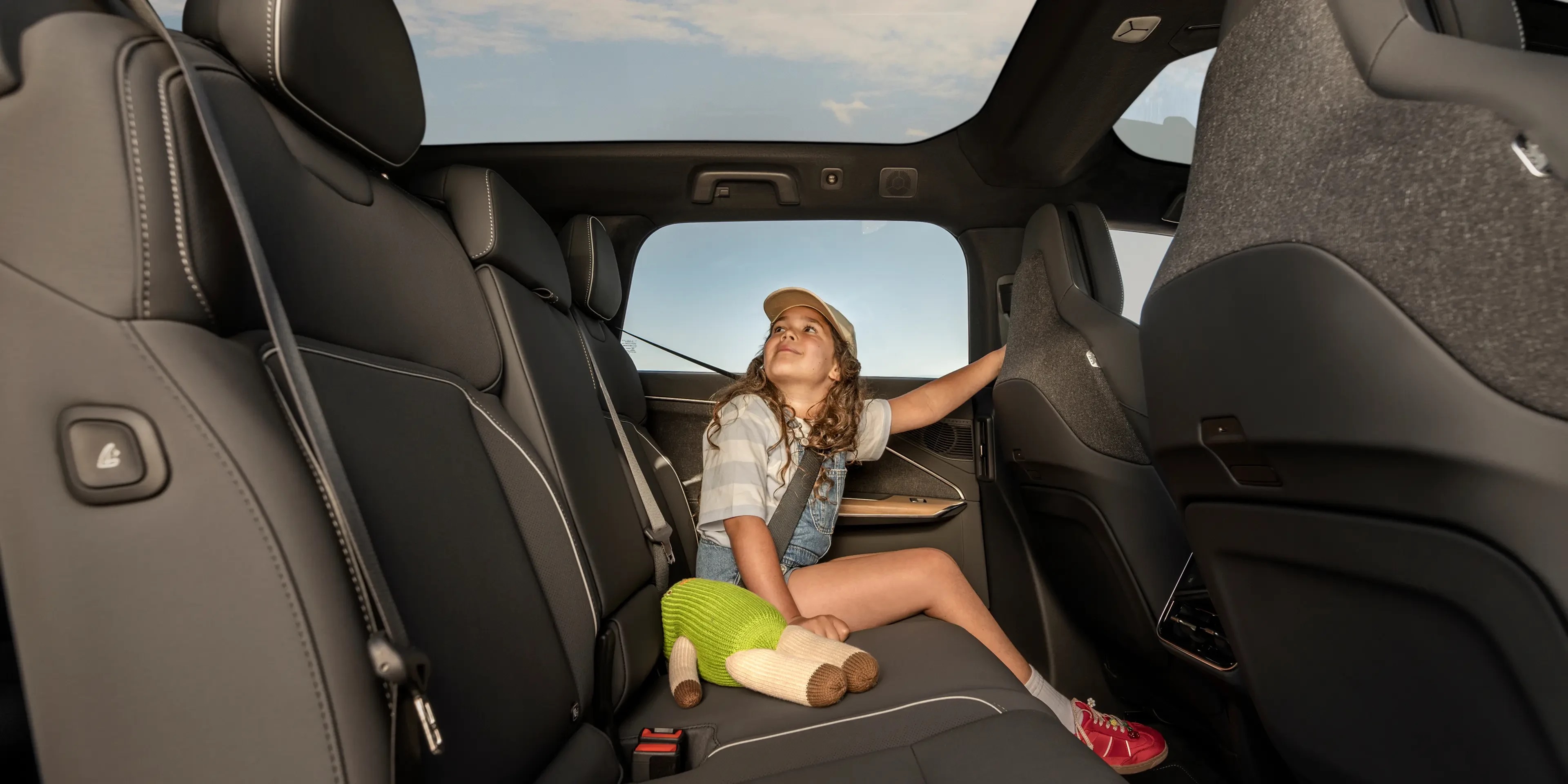
This is the honest caveat in an otherwise strong package. Reviewers who've spent time in the back seat report real headroom and legroom for adults, as long as the second row isn't slid all the way back — a genuine achievement for a vehicle this length. But the seats themselves fold manually into a deep rear well, and multiple road tests describe the mechanism as stiff and a little awkward compared to the one-touch power-fold rows increasingly common on gas-powered three-row SUVs in this range. It's a first-generation rough edge, not a dealbreaker, but it's the kind of thing you feel every time you load cargo rather than passengers.
Driver assistance: LiDAR on the top trim
Every Gravity ships with Lucid's standard DreamDrive suite — adaptive cruise with stop-and-go, active curve-speed control, blind-spot intervention, and automatic emergency braking with intersection assist among the standard list. Grand Touring and Dream Edition step up to DreamDrive Pro, which adds LiDAR-based hardware for more advanced hands-on driving assistance. Lucid has been deliberately conservative about what that hardware unlocks at launch, which is arguably the right instinct given how many competitors have overpromised on driver-assist timelines.
| Trim | Drive | Power | 0–60 mph | EPA-est. range | Max tow |
|---|---|---|---|---|---|
| Touring | Single rear motor | Not published | Mid-4 sec | 337 mi | 3,500 lb |
| Grand Touring | Dual motor, 123 kWh pack | 828 hp | 3.4 sec | 450 mi | 6,000 lb |
| Dream Edition | Dual motor, limited run | 1,070+ hp | ~3.1 sec | 440 mi | Not published |
Touring is the trim that makes the Gravity a realistic cross-shop against the Kia EV9 and Rivian R1S rather than only the priciest EVs on the road, with standard DreamDrive driver assistance but no LiDAR. Grand Touring is the volume trim and adds DreamDrive Pro with LiDAR standard. Dream Edition exists mainly to prove the platform's ceiling — Lucid quotes a roughly 155 mph top speed, a genuinely unusual number for a seven-seat SUV — but most buyers will find Grand Touring the more sensible daily choice.
Common questions
What's the longest-range Gravity trim?
Grand Touring, at 450 miles EPA-estimated — among the longest of any three-row electric SUV sold today.
How fast does it charge?
On a 400 kW charger, Grand Touring adds roughly 200 miles of range in under 11 minutes thanks to its 900-volt architecture.
Does every trim get LiDAR driver assistance?
No. Standard DreamDrive (no LiDAR) comes on every Gravity; DreamDrive Pro with LiDAR is standard only on Grand Touring and Dream Edition.
Is the third row good?
Headroom and legroom are genuinely good for adults, but the seats fold manually rather than with a power mechanism — reviewers consistently flag this as stiff and awkward versus rival gas SUVs.
Has DopamineKart driven the Gravity?
No. This review is built from Lucid's published specifications, EPA and Euro NCAP filings, and on-the-record third-party road tests, all cited in Sources.
The Gravity is the rare second vehicle from an EV startup that actually justifies the wait. The range and charging numbers on Grand Touring aren't marketing rounding — they're genuinely competitive with, and in some cases ahead of, established three-row EVs, and the low-slung driving dynamics reviewers describe are unusual for a vehicle this size. The real question isn't whether Lucid can build a good three-row EV. It's whether the third row itself — comfortable once you're in it, clumsy to fold when you're not — gets a proper power-fold mechanism before the next refresh. Everything else about this platform suggests Lucid sweats the details; this is the one place that still reads like a first-generation compromise.
Sources. Lucid Motors — official Gravity specifications and DreamDrive documentation (lucidmotors.com); Wikipedia — Lucid Gravity, production timeline, drag coefficient, and Euro NCAP rating; Cars.com and U.S. News & World Report road tests on third-row usability and cargo figures; The Drive's 2026 Lucid Gravity review on driving dynamics; Jalopnik's Dream Edition performance testing (0-60 and top-speed figures); Car and Driver's 2026 10Best Trucks & SUVs selection and the World Car Awards' 2026 World Luxury Car of the Year recognition. DopamineKart was not loaned a Gravity for this piece and received no compensation from Lucid Group. Photography is Lucid press material, used for editorial reporting.
This article contains no affiliate links and no buy buttons — DopamineKart does not monetise vehicle coverage. DopamineKart has not conducted a hands-on test drive of this vehicle; this article is a research-based breakdown, not a road test.
Corrections: email us