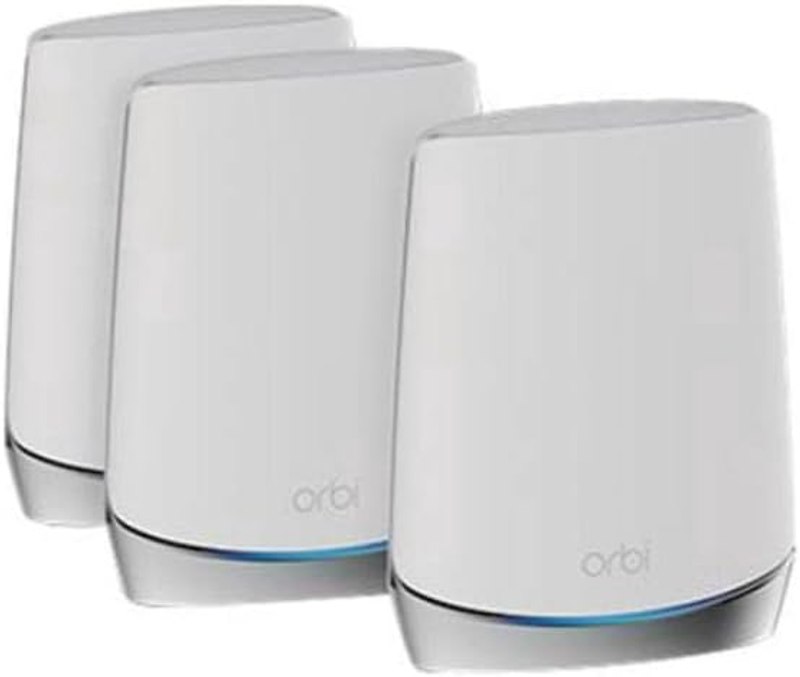
NETGEAR Orbi Whole Home Tri-Band Mesh WiFi 6 System (RBK753) –
The listing claims up to 7,500 square feet across a router and two satellites, the largest coverage figure among these seven listings.
Home Networking
Seven mesh systems, compared on what their own listings actually promise — square footage, bands, and device counts, not marketing gloss.
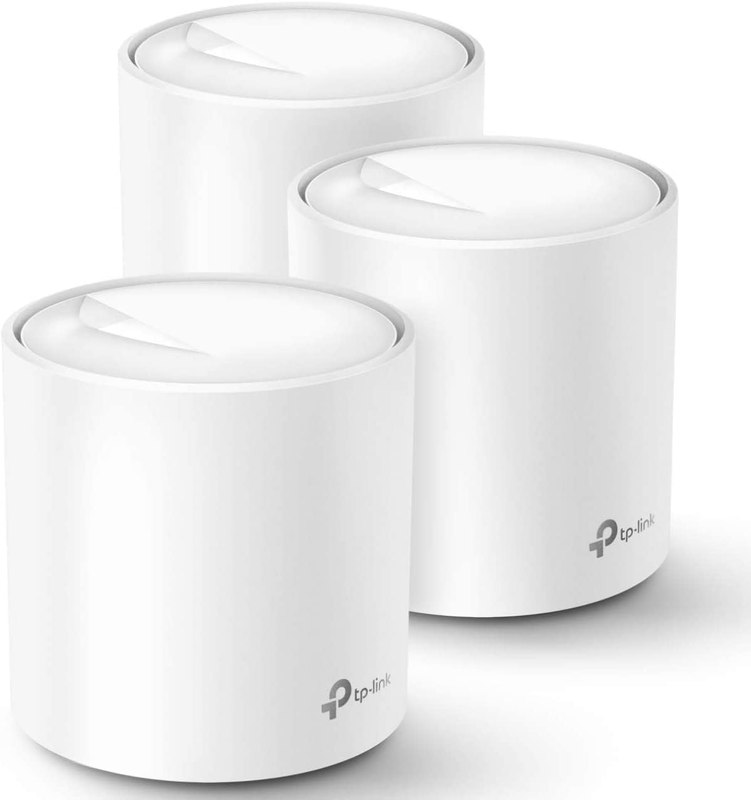
The listing claims up to 7,500 square feet across a router and two satellites, the largest coverage figure among these seven listings.
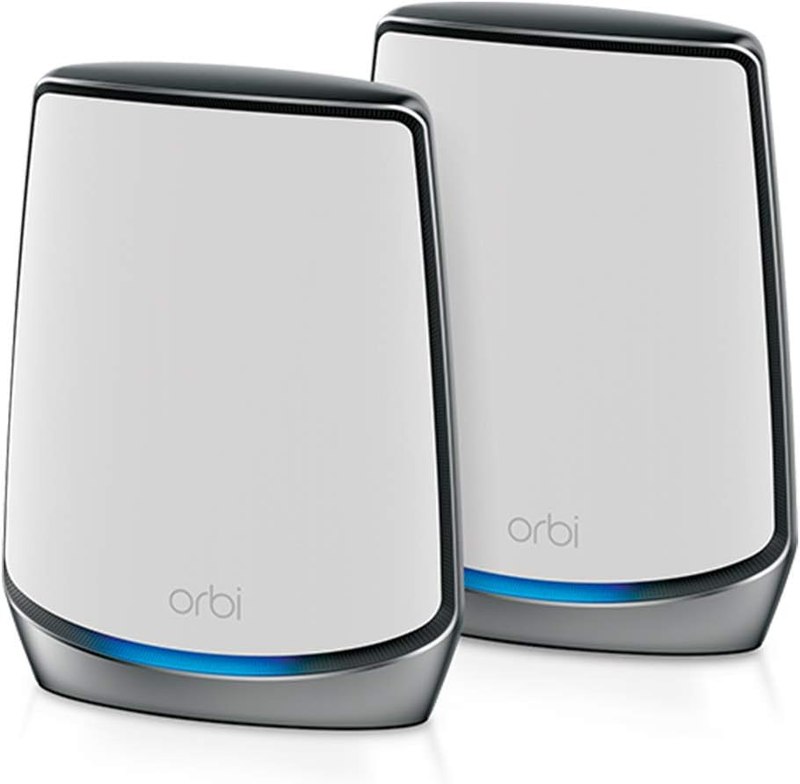
This system is listed as supporting up to 100 devices with AX6000 throughput, the highest device count stated in this group.
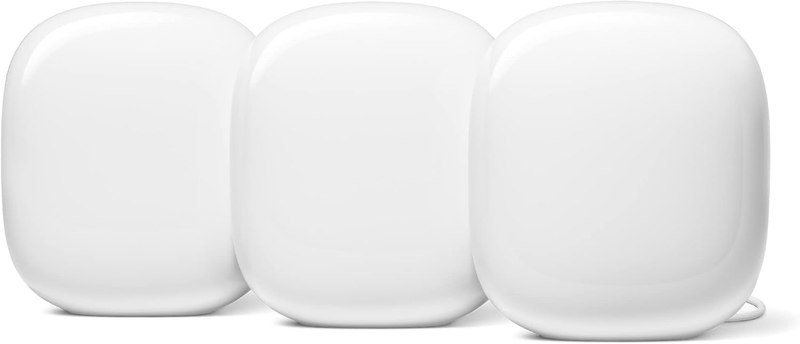
This is the sole listing here built on Wi-Fi 6E, adding the 6GHz band unavailable on the other six systems.
Scores 4.4 while sitting at the value pick end — the most this lineup gives back for what it asks.
“Legit” is our own 1–5 value score, computed the same way for every product from what its live listing showed — how we calculate it. A dash means one of the four inputs could not be read, so we do not score it. Everything else is qualitative. No prices — they move too fast for an article to stay true.
One winner per job, assigned only where this lineup genuinely supports a call.
Each links to a live Amazon listing that was opened and read before it went in.
Dual-band mesh with wired backhaul option
This three-pack is a dual-band WiFi 6 system rated for up to 5,800 square feet, with six Ethernet ports total across the units and explicit support for wired backhaul — useful if you can run cable between nodes for a more stable mesh link. The listing positions it as a straightforward router-and-extender replacement rather than a tri-band powerhouse. It suits buyers who want WiFi 6 basics and flexible backhaul without paying for a third radio band they may not need.
Tri-band mesh with the largest stated coverage
This router-and-two-satellite kit claims up to 7,500 square feet of coverage and support for 40+ devices, backed by tri-band AX4200 WiFi 6. The three-unit spread and dedicated backhaul band are aimed squarely at larger homes where a single dual-band system might struggle to keep every room connected. The trade-off is a bigger physical footprint of hardware to place and manage, which won't suit smaller apartments where the extra satellite is unnecessary.
Tri-band mesh with the highest stated throughput and device count
This router-plus-one-satellite system lists AX6000 speeds, tri-band WiFi 6, and support for up to 100 devices across roughly 5,000 square feet, along with built-in security features called out in the title. It's built for households with heavy simultaneous device load — smart home gear, streaming boxes, multiple phones and laptops — more than for sheer square footage, since its coverage claim is smaller than the RBK753's. Buyers chasing maximum device capacity in a compact two-unit kit should start here.
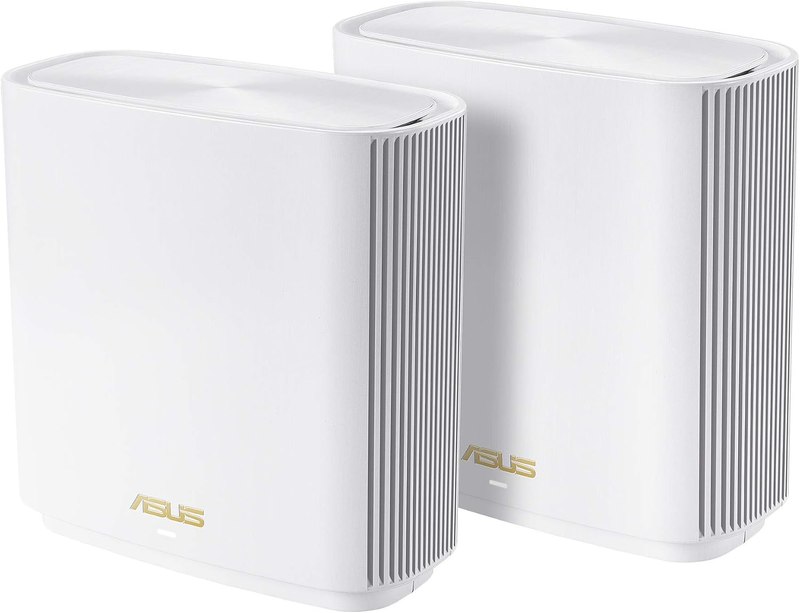
Tri-band mesh with AiMesh flexibility and bundled security
The two-pack XT8 offers tri-band AX6600 WiFi 6 across a claimed 5,500 square feet and 6+ rooms, with AiMesh compatibility that lets it combine with other ASUS routers, three separate SSIDs, parental controls, and lifetime internet security software included per the listing. It's positioned as a flexible tri-band option for buyers already in or open to the ASUS ecosystem, though the two-node pack means less out-of-box coverage than three-unit competitors unless expanded via AiMesh.
The only Wi-Fi 6E system in this roundup
This three-pack is built around Wi-Fi 6E, adding the 6GHz band on top of the usual dual bands, and is marketed for fast speeds and whole-home coverage without a specific square-footage figure in the title. It's the pick for households already running 6E-capable phones, laptops, or streaming devices that can actually use the extra band; without such clients, the 6E advantage goes unused and it functions more like a standard dual-band mesh.
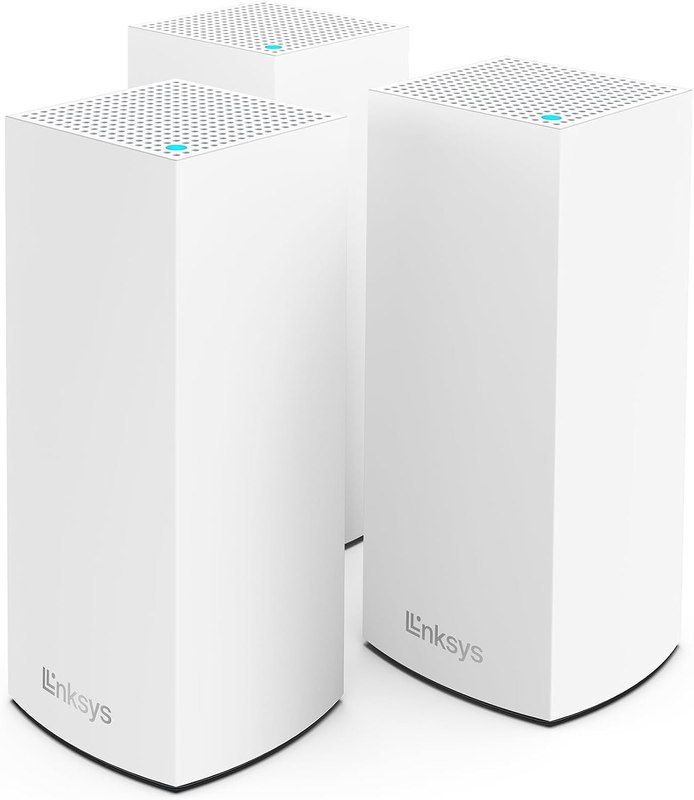
Dual-band mesh with 75+ device support
This three-pack dual-band WiFi 6 system claims 6,000 square feet of coverage and support for 75+ devices at AX3000 speeds. It sits between the entry-level Deco and the tri-band systems here — more device headroom than a basic dual-band kit implies, but without a dedicated backhaul band. It suits mid-sized homes wanting broad coverage from three access points without stepping up to tri-band pricing or complexity.
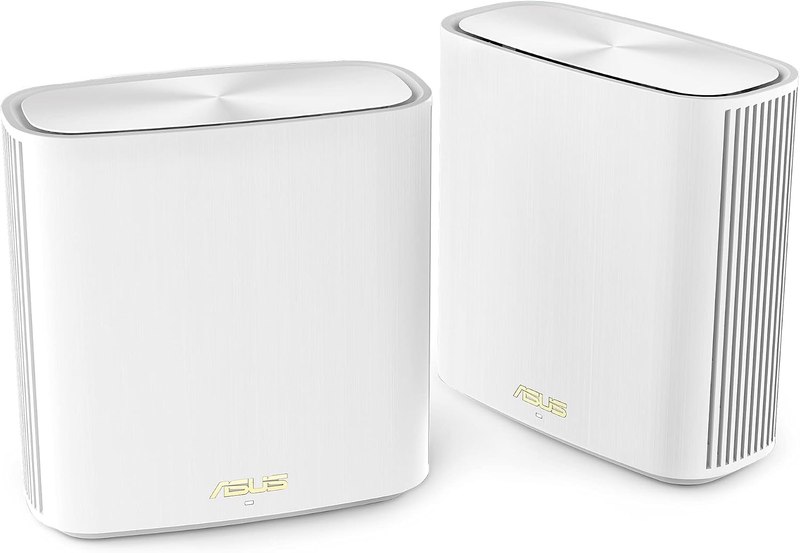
Dual-band mesh with bundled security and parental controls
The XD6 two-pack lists dual-band WiFi 6 rated at 5400Mbps, covering up to 5,400 square feet and 4+ rooms, with AiMesh support, lifetime internet security, and parental controls — essentially the dual-band sibling to the XT8 without the third radio band. It's a fit for buyers who want ASUS's software extras and AiMesh expandability but don't need tri-band backhaul, at the cost of the dedicated wireless link between nodes that tri-band systems offer.
Tri-band systems dedicate a separate radio band to communication between mesh nodes, which can keep speeds more consistent as you add satellites. Dual-band systems share one band for both client devices and node-to-node traffic. If your home is large or has many connected devices, tri-band listings like the Orbi or ASUS ZenWiFi XT8 give more headroom; smaller homes may not notice the difference.
Not necessarily. Square footage claims on listings assume open layouts without interference from walls, floors, or dense construction. A system rated for 7,500 square feet may underperform that figure in a home with thick walls or multiple stories, so treat these numbers as upper-bound estimates rather than guarantees.
Wi-Fi 6E adds the 6GHz band, which can reduce congestion and improve speeds, but only for devices that support 6E. If your phones, laptops, and streaming devices are Wi-Fi 6 or older, the Google Nest WiFi Pro's 6E capability won't be used, and a standard Wi-Fi 6 system will perform comparably for you.
Wired backhaul lets mesh nodes communicate over Ethernet instead of Wi-Fi, freeing up wireless bandwidth for your devices. The TP-Link Deco X20 explicitly lists this support. Systems that don't mention it may still allow wired connections at each node for local devices, but won't necessarily use Ethernet for inter-node mesh traffic.
That depends on your home's size and layout, not just the pack count. A three-pack like the Deco X20, Nest WiFi Pro, or Linksys Atlas spreads coverage across more access points out of the box, while two-pack systems like the Orbi RBK852 or ASUS ZenWiFi kits may need an added satellite for equivalent spread in larger homes.
For most homes, the tri-band Orbi systems offer the clearest headroom — the RBK753 for sheer stated square footage, the RBK852 for device count and top-end AX6000 throughput. The ASUS ZenWiFi XT8 is the tri-band alternative with AiMesh flexibility and bundled security software. Buyers who don't need tri-band backhaul, or want a simpler three-pack, can look at the TP-Link Deco X20 for wired-backhaul support or the Linksys Atlas for straightforward dual-band coverage. The Google Nest WiFi Pro stands apart as the only 6E system listed, worth considering only if other devices in the home already support that band. The ASUS XD6 rounds out the dual-band tier with similar bundled extras to its tri-band sibling.
Affiliate disclosure. DopamineKart is a participant in the Amazon Services LLC Associates Program. As an Amazon Associate, DopamineKart earns from qualifying purchases — at no extra cost to you, and it never changes a pick. Sources. Every listing was verified live; nothing here was tested by hand. Colours, sizes and availability change — read the listing before buying.
How we review · Corrections: email us