Poses for Photos With Two People (and Small Groups)
One person posing is a solved problem. Two is harder, because now there is a gap between them, and the gap is what the eye reads first.
Updated 18 August 2026 · 7 min read read
The short version. Close the gap — touching shoulders reads as together, a hand’s width apart reads as strangers. Stagger the heights so the heads are not level. For three or more, never form a straight line: use depth, put some people at a different level, and let the group make a shape rather than a row.
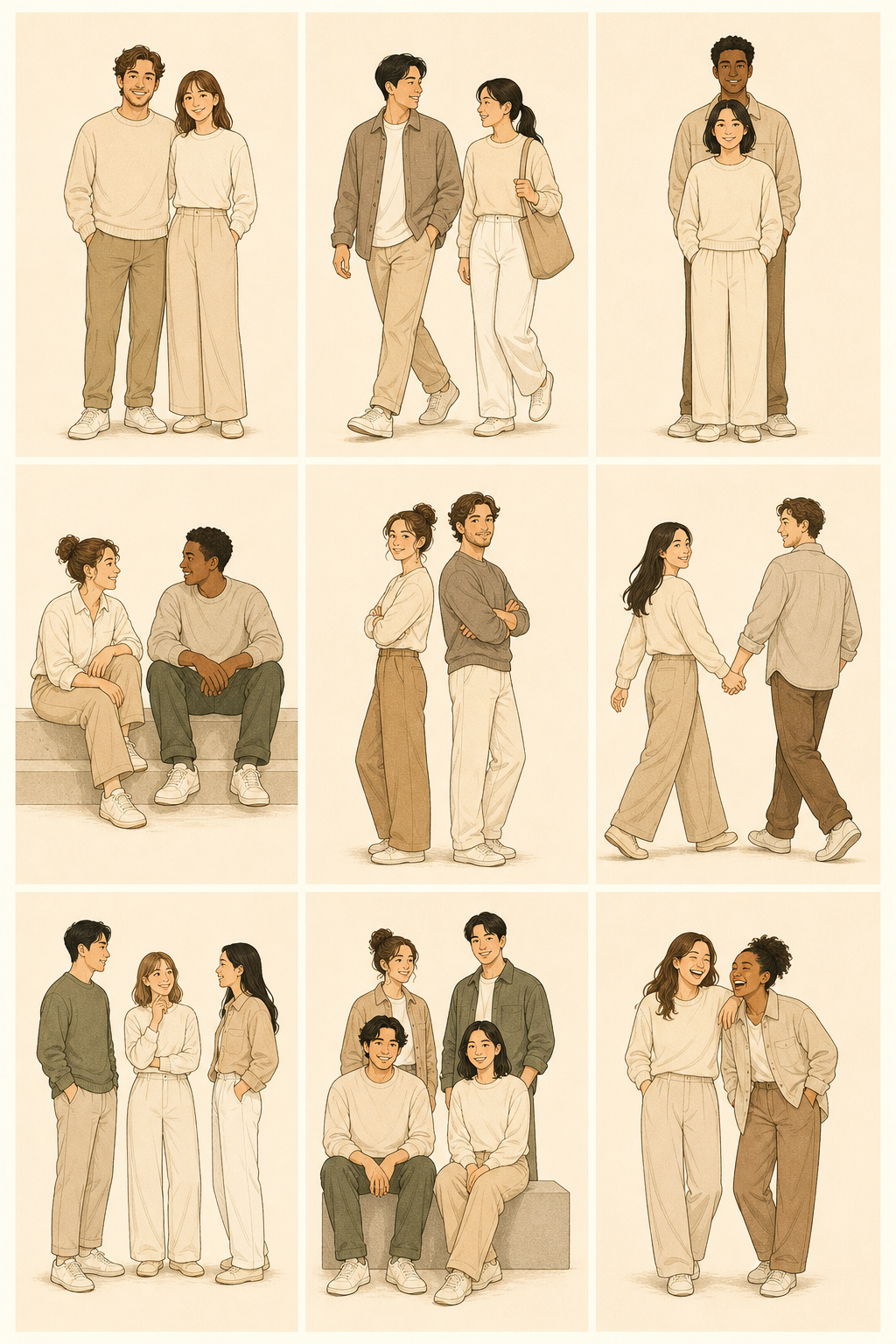
All 9 on one board
The whole set in a single image — this is the one to save or pin. Each panel is broken out
underneath with what it is actually for.
Poses for TwoNine · plus small groups
01Side by side02Walking03One behind04Seated05Back to back06Hand held07Three: triangle08Four: levels09After the pose
AI-generated illustration, and the lead image for this guide. All nine poses on one sheet — the panels below are cut from it. The title and labels are live text, not part of the image, so they translate with the page.
The nine
The first six are for two people, the last three for small groups. Each says what it is for and where it fails.
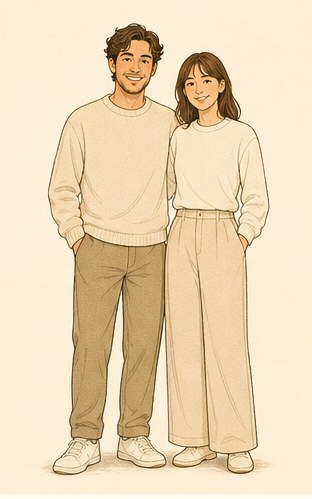
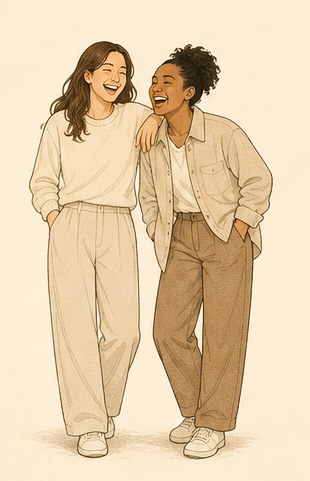
01Side by side, actually touching
The default, and the one most often got wrong by a few centimetres. Shoulders in contact reads as together; a small gap reads as two people who happened to stand near each other. Close it deliberately.
Works for: everything. The safest of the nine and the easiest to fix on the spot.
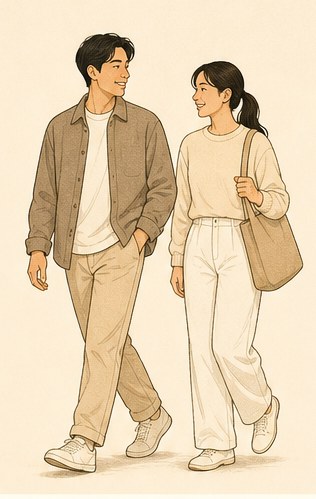
02Walking, mid-stride
Motion solves the arms problem for both people at once and stops the stiffness that comes from standing still being photographed. Walk toward the camera at a normal pace and take several frames.
Watch: matching strides look staged. Let them be out of step.
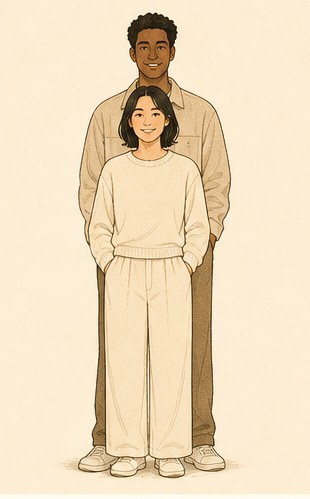
03One behind the other
Stacking rather than lining up. It creates depth, works well when one person is much taller, and it reads warm because it puts the two of them in each other’s space.
Works for: a big height difference. The taller one goes behind, obviously.
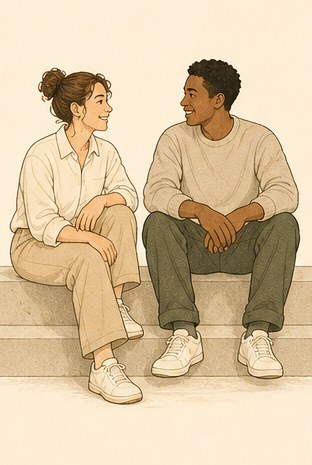
04Seated, angled in
Sitting changes the whole frame and lowers the energy in a good way. Angle the knees toward each other rather than both facing out — that is the difference between a conversation and a bus stop.
Needs: a step, a wall, a kerb. Anything to sit on at the same height.
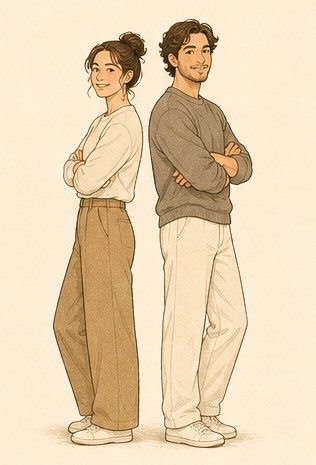
05Back to back
Deliberately posed and it knows it, which is why it suits a joke more than a portrait. Both bodies stay long and neither has to work out what to do with their hands.
Watch: it reads as a film poster. That is either the point or the problem.
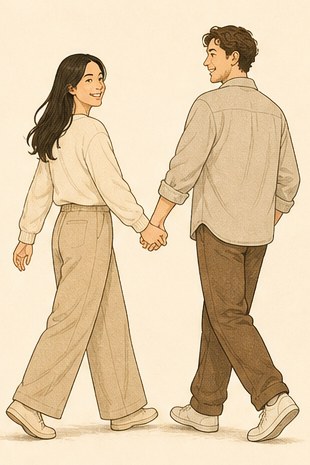
06Hand held, one turning back
One leads, one turns to the camera. It gives movement and a face at the same time, and the held hands do the work of saying these two are connected without anyone having to smile harder.
Works for: anywhere you can take five steps. Fails standing still.
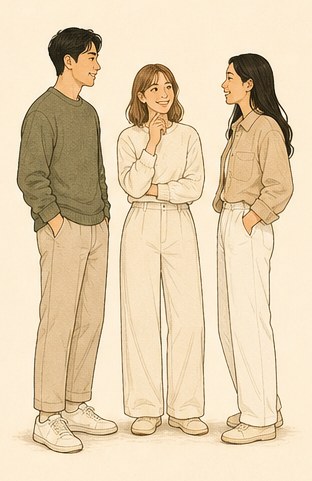
07Three: a triangle, not a row
The single most useful rule for groups. Three people in a line is a line-up; three in a loose triangle — one slightly forward, two slightly back — is a photograph. Depth is what stops it looking official.
Works for: any three. Costs nothing but half a step from one person.
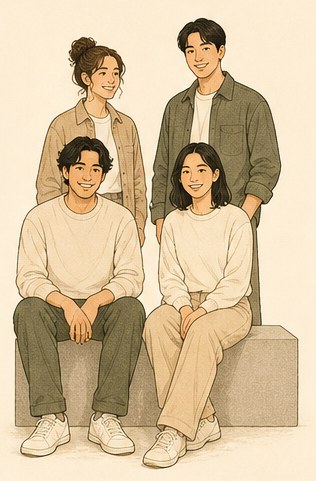
08Four: split the levels
Once there are four, put some of them at a different height — two seated, two standing behind. Heads at different levels is what makes a group look composed rather than herded.
Watch: leave no gap between the seated pair and the standing pair.
09The one that is not a pose
Say something funny and shoot through it. Every posed frame above is a setup for this one — the photograph people actually keep is almost always the one taken half a second after the pose collapsed.
Keep shooting after everyone thinks you have stopped. That is where it lives.
AI-generated illustration. Not a photograph. Every panel above is cut from a single generated sheet, which is how the
style stays consistent across all 9.
If you remember two things
Stand closer than feels natural — the camera exaggerates the gap.
Three or more: never a straight line. Make a shape.
And keep shooting after the pose collapses.
The gap, and why it decides everything
With one person the frame is about the body. With two it is about the space between them, and a camera exaggerates that space — a gap that feels normal standing there looks like distance in the photograph.
So the single correction that improves most two-person photos is simply: stand closer than feels natural. Touching shoulders, overlapping slightly, heads tilted a few degrees toward each other. It feels exaggerated and it looks normal, which is the opposite of what people expect.
If you want the solo version of this, our nine poses that work in photos covers one person, and the same rule about the camera exaggerating things applies there too.
Notes
No products are named or linked on this page and there are no affiliate links on it. Nothing here is monetised.
The nine panels are cut from one generated illustration sheet, which is why the style is identical across them. The figures are drawn, not photographed, and are not real people.
No affiliate links on this page. Nothing here is monetised.
No prices anywhere on this site — they move faster than an article can stay honest about them.