A family SUV is rearranged from wherever the next problem appears. A driver may need to clear the third row before pickup; a passenger must open a path from the second row; a parent standing at the liftgate wants seats folded before lifting a stroller. Hyundai’s published material presents the 2026 Palisade around that reality. Its available seat controls appear at the seats, near the driver and in the cargo area, while charging reaches all three rows. The important idea is not automation by itself. It is the transfer of authority away from one front-seat command post and toward the places where recurring cabin tasks begin.
Quick take. The Palisade’s added length creates packaging opportunity, but its defining family-cabin strategy is distributed control: local commands for access, posture, power and conversion.
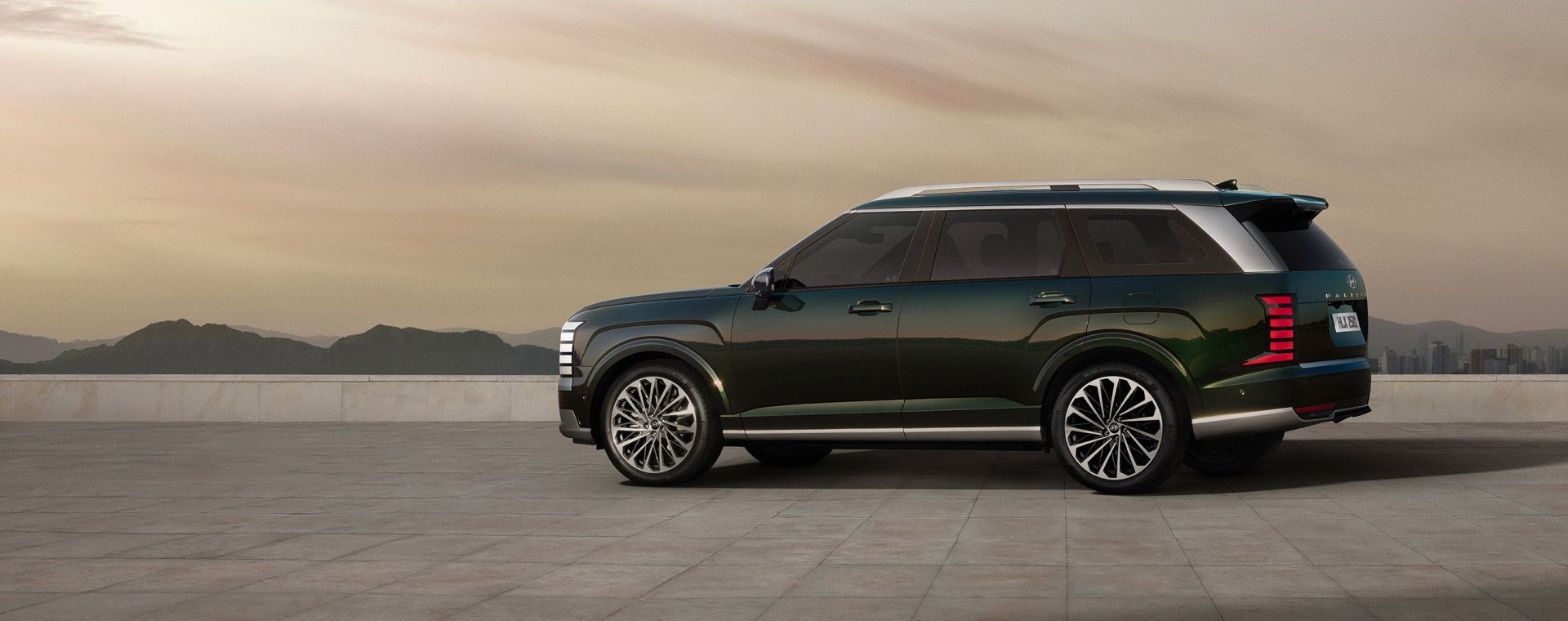
Length Without a Floor Plan
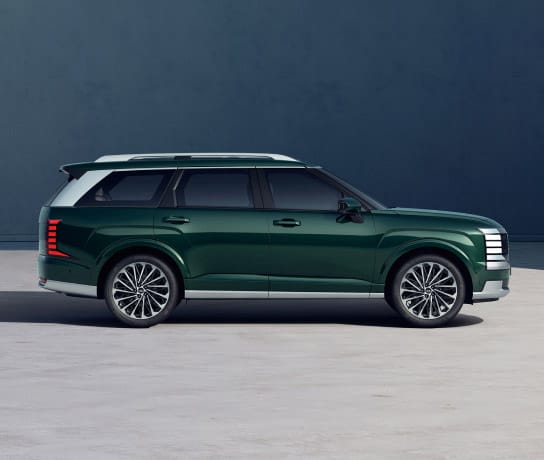
The packaging case begins with three relative measurements. Hyundai says the new body is 2.5 inches longer, its wheelbase is 2.7 inches longer and its front overhang is 1.6 inches shorter. The company attributes easier entry and exit to the wheelbase stretch and says a lengthened rear cabin, more upright greenhouse and larger side glass improve third-row space, light and visibility. Those are packaging intentions, not a floor plan: no absolute length, wheelbase, width or height is supplied, and Hyundai only calls the body wider. Other published exterior figures complete the available ledger without resolving cabin room: a 0.31 drag coefficient, wheels up to 21 inches, and, for XRT Pro, 8.4 inches of clearance—one inch above non-XRT Pro models—20.5-degree approach, 22.4-degree departure and 18.3-degree breakover angles, plus 255/60R18 tires.
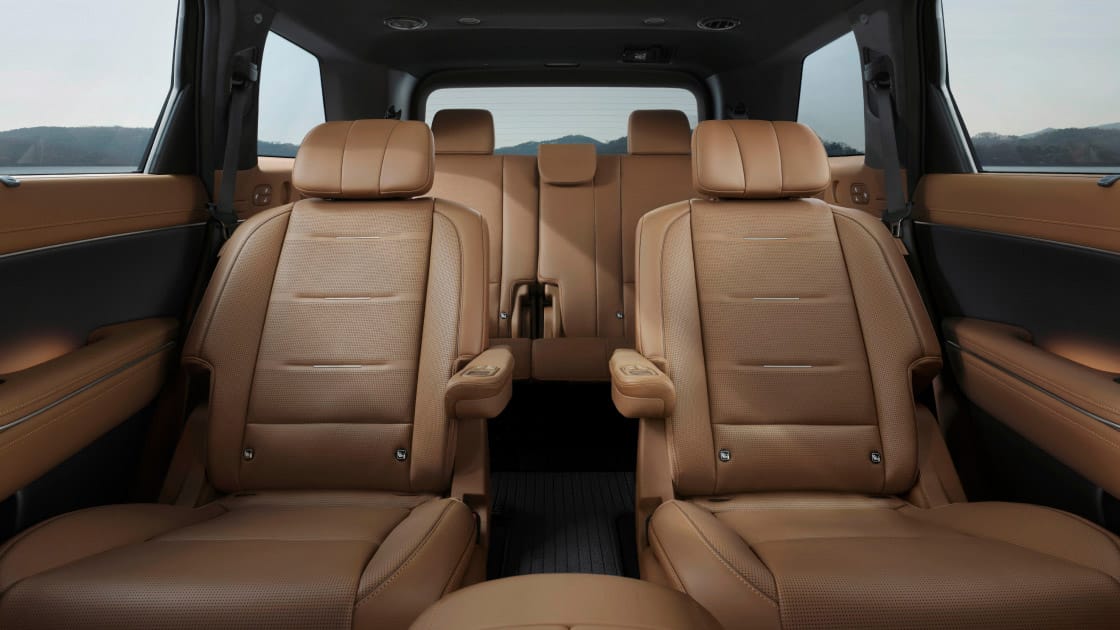
Access Starts at Row Two
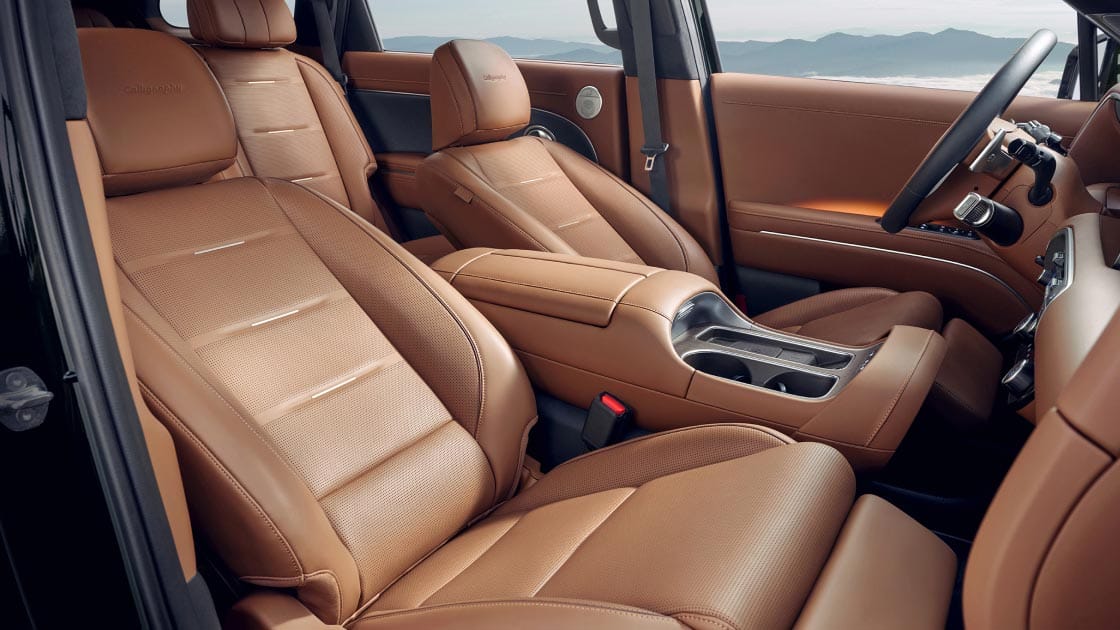
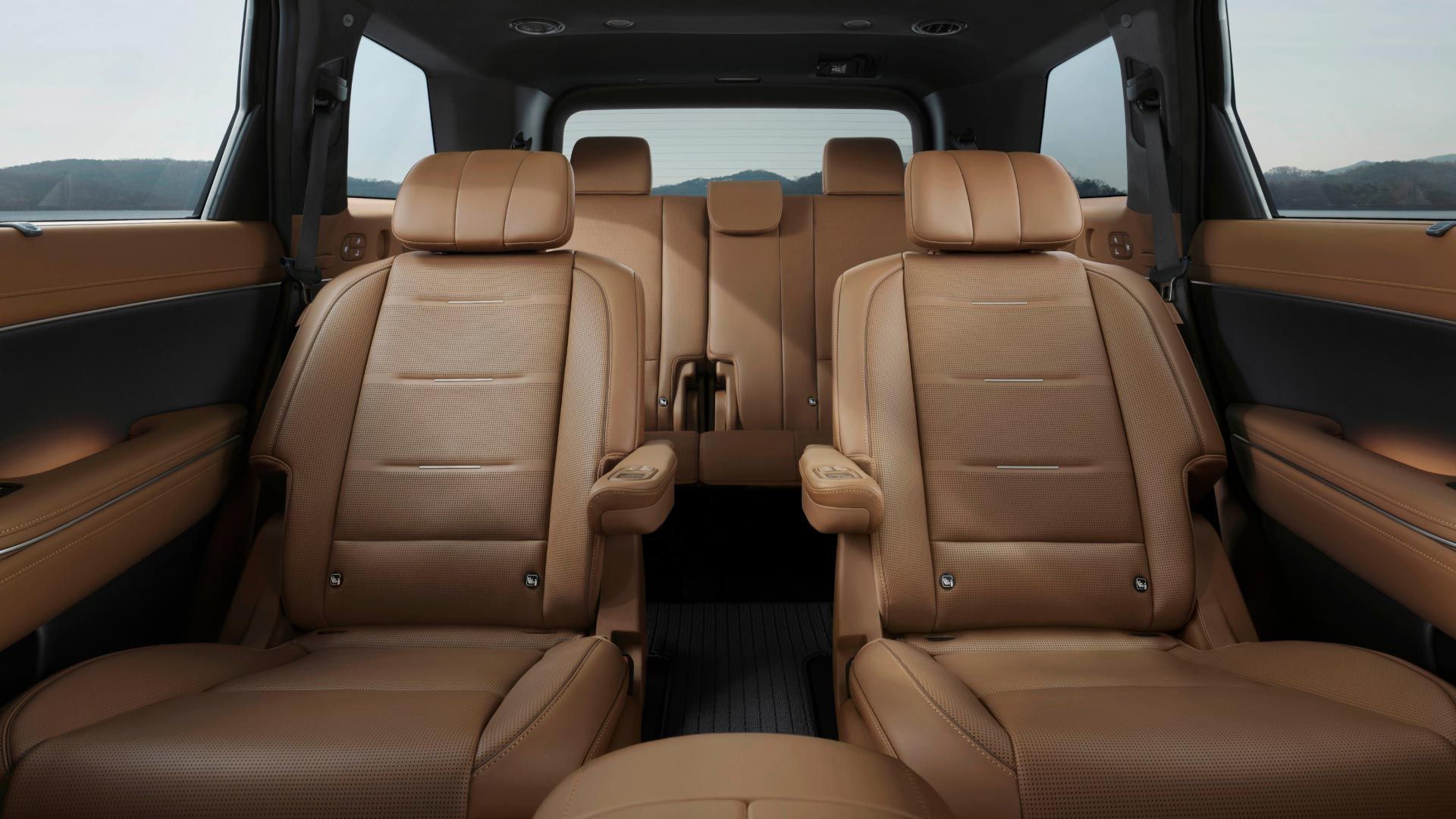
Eight-passenger seating is standard, making a second-row bench the baseline configuration. Available captain’s chairs change both capacity and the access sequence: Hyundai says their one-touch tilt-and-slide function facilitates entry to the third row. That local command is the first clear example of distributed control. The person opening the passage can initiate the seat movement where the obstruction exists rather than relying on the driver or wrestling through multiple manual steps. What remains unknown is equally important. Hyundai does not specify the opening’s width, the step-in height, how far the chair travels or whether a child seat can remain installed during operation. The mechanism is confirmed; the ease of passing through the resulting gap is not.
Articulation Is Not Accommodation
Once aboard, Hyundai offers more ways to change posture. Available Relaxation seats in the first two rows provide additional recline and deployable upper-leg supports, which the manufacturer says can help reduce fatigue during extended sitting. Available power-adjustable second-row seats can also be heated and ventilated. The available third row adds power sliding and reclining, along with heating. This hardware may let occupants negotiate space rather than accept a fixed seating position, but every gain can affect another zone: reclining row two may reduce row-three knee clearance, while sliding row three can alter cargo depth. With no published legroom, headroom, cushion height or travel ranges, the material proves articulation—not adult comfort or simultaneous comfort across all three rows.
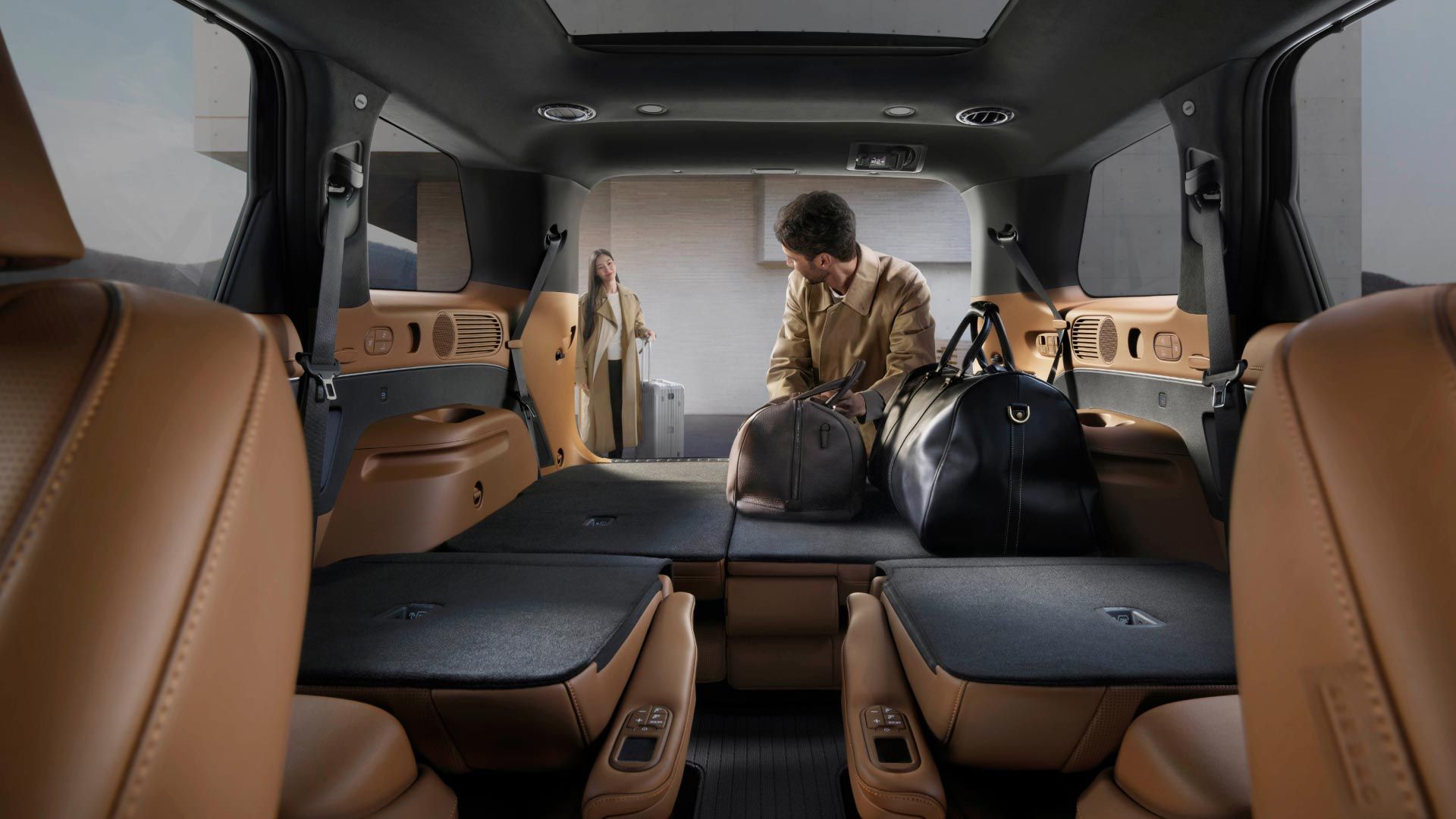
Conversion From Either End
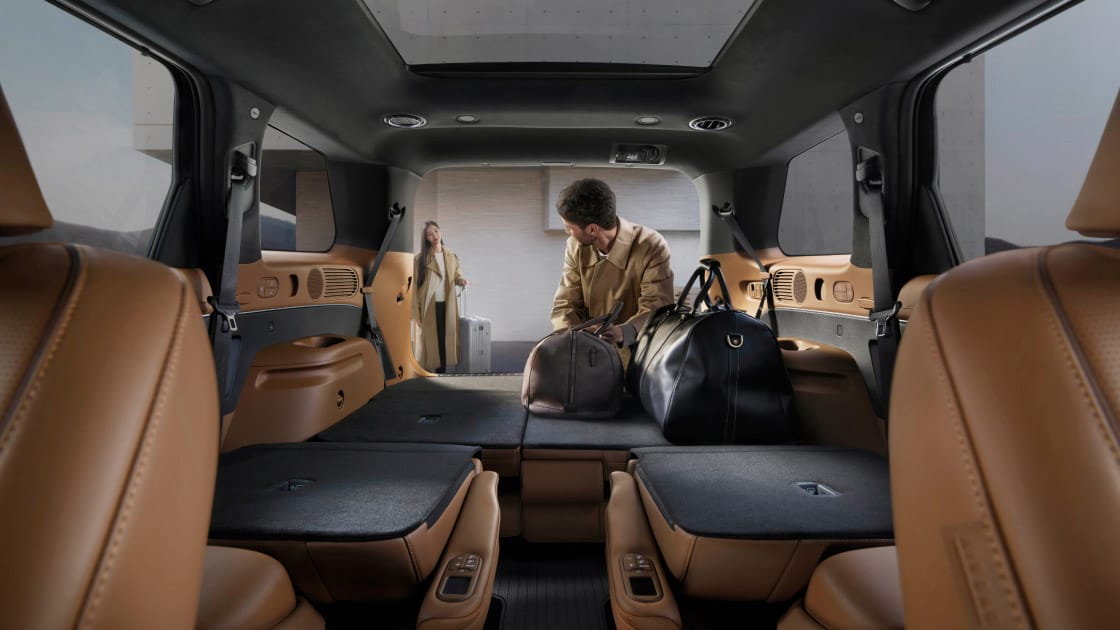
The cabin’s strongest idea appears when passengers and cargo trade places. Hyundai says available second- and third-row articulation can be controlled from the driver’s seat or the cargo area. The two locations serve different jobs. A driver can prepare rear seating before passengers board; someone at the open liftgate can create load space without walking to a side door or reaching across the seatbacks. An available camera-based digital rearview mirror addresses a related consequence by providing a rearward image when people or cargo obstruct the back window. Hyundai does not disclose operation times, interruption safeguards or which adjustments are available from each panel, so convenience should not be overstated. Still, the layout clearly recognizes that cabin conversion begins at both ends.
Buttons Forward, Power Everywhere
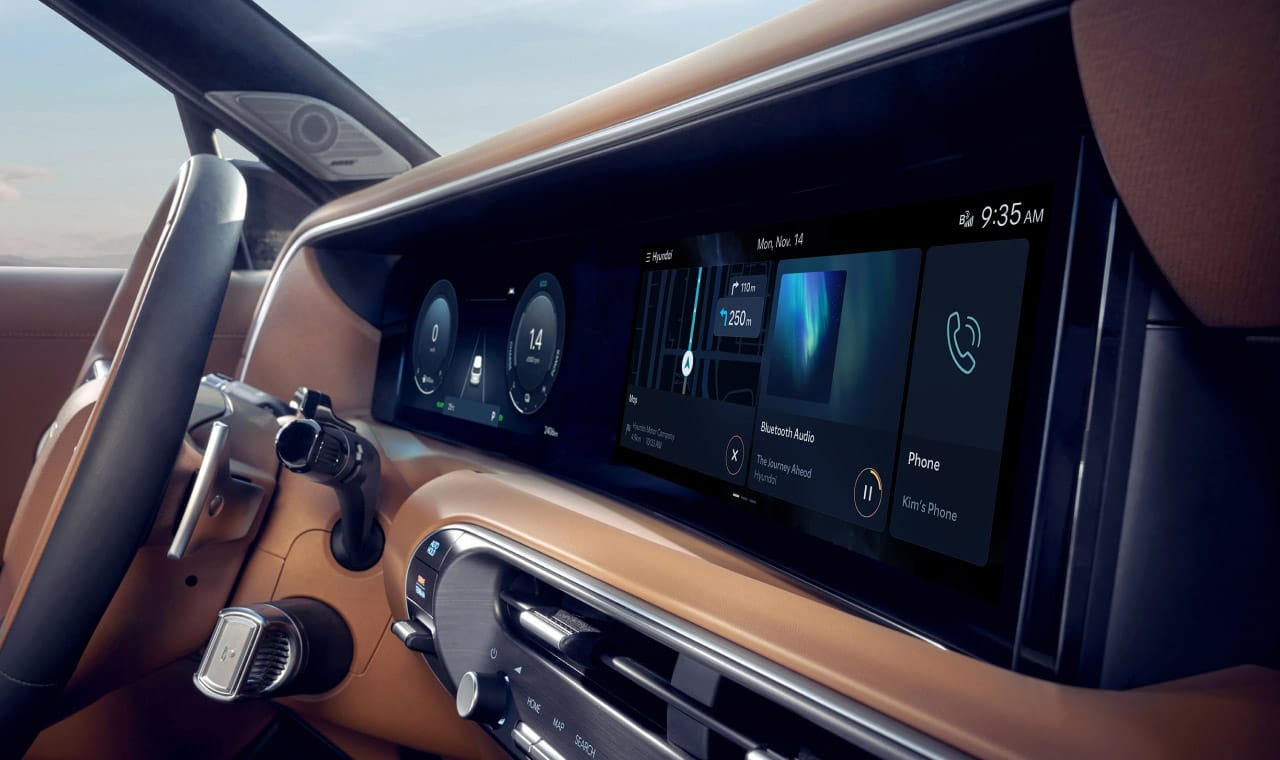
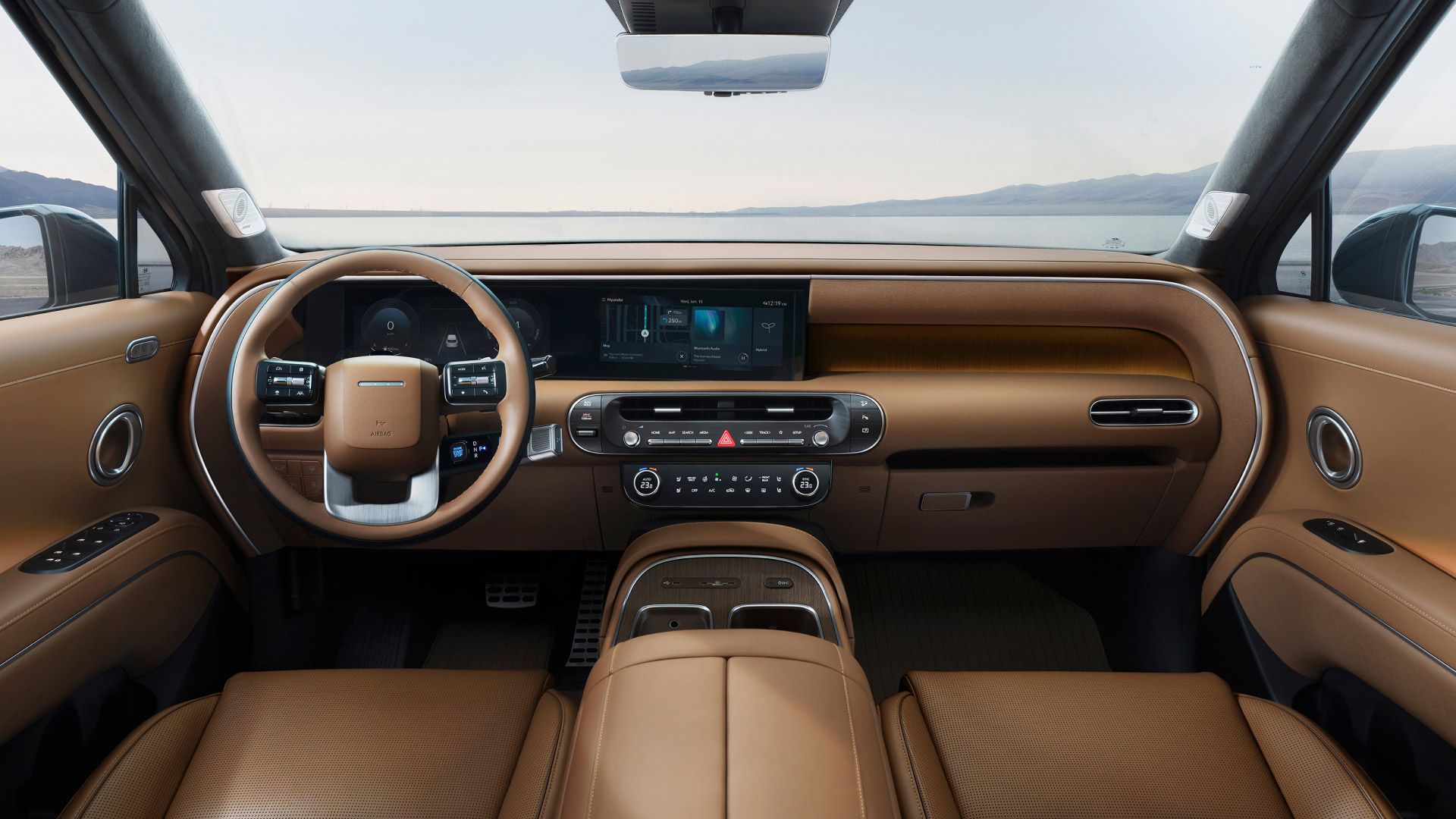
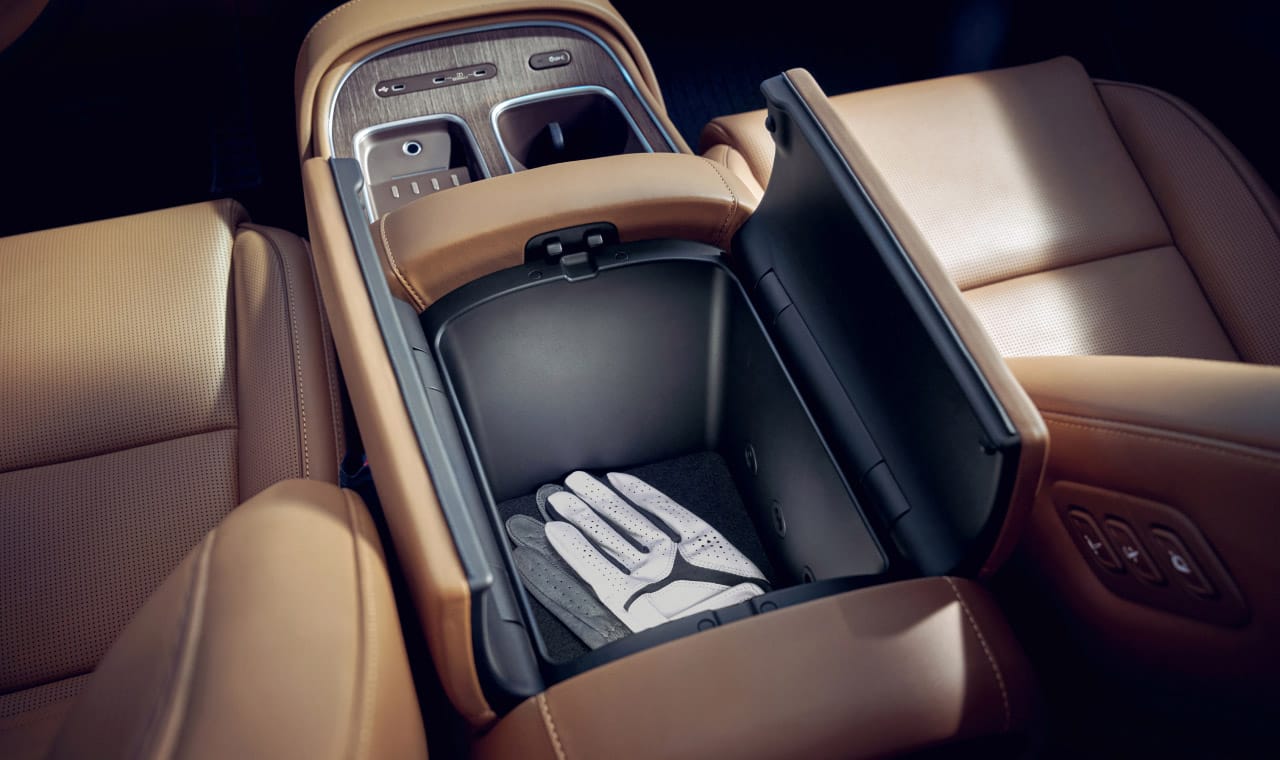
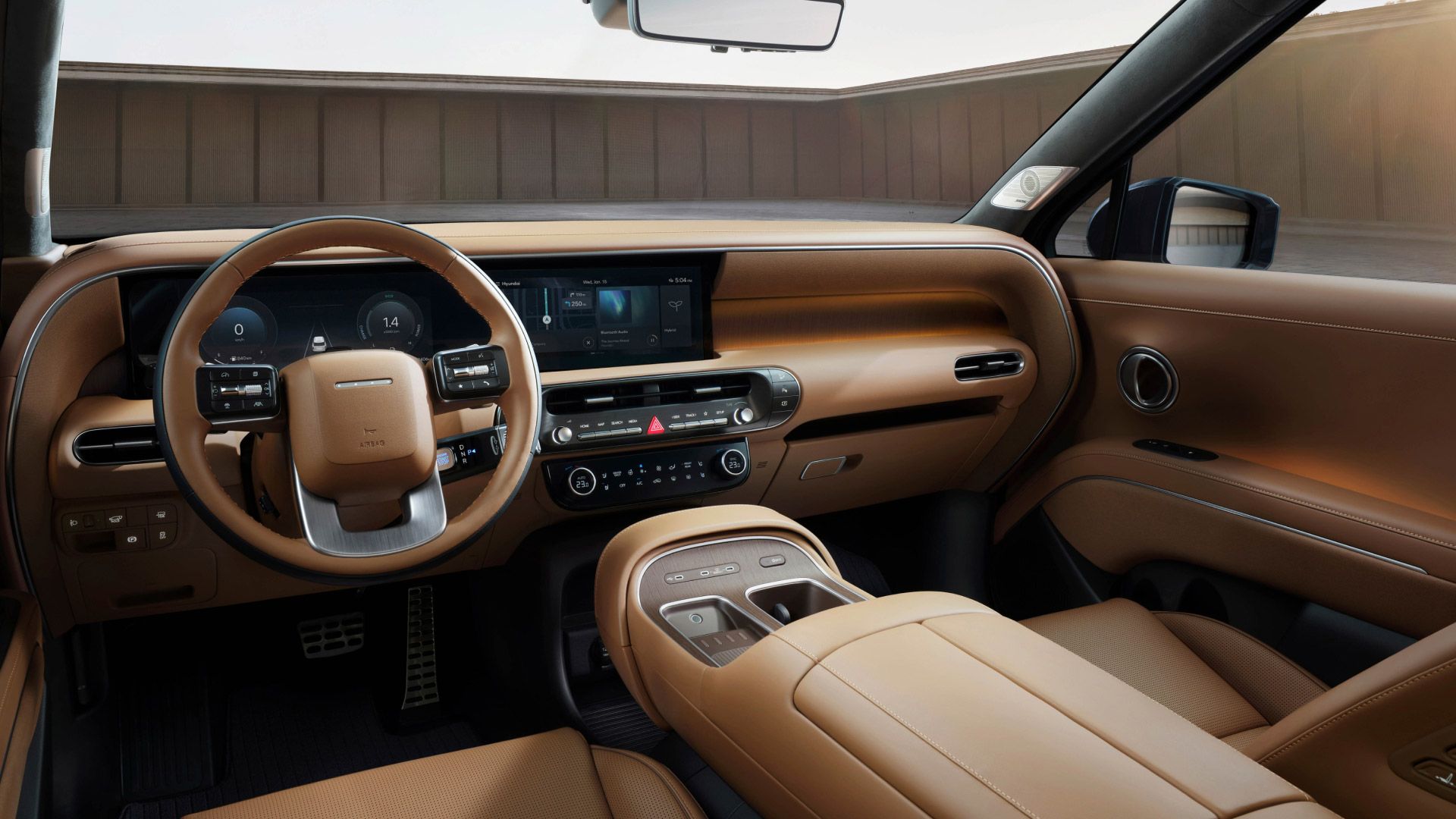
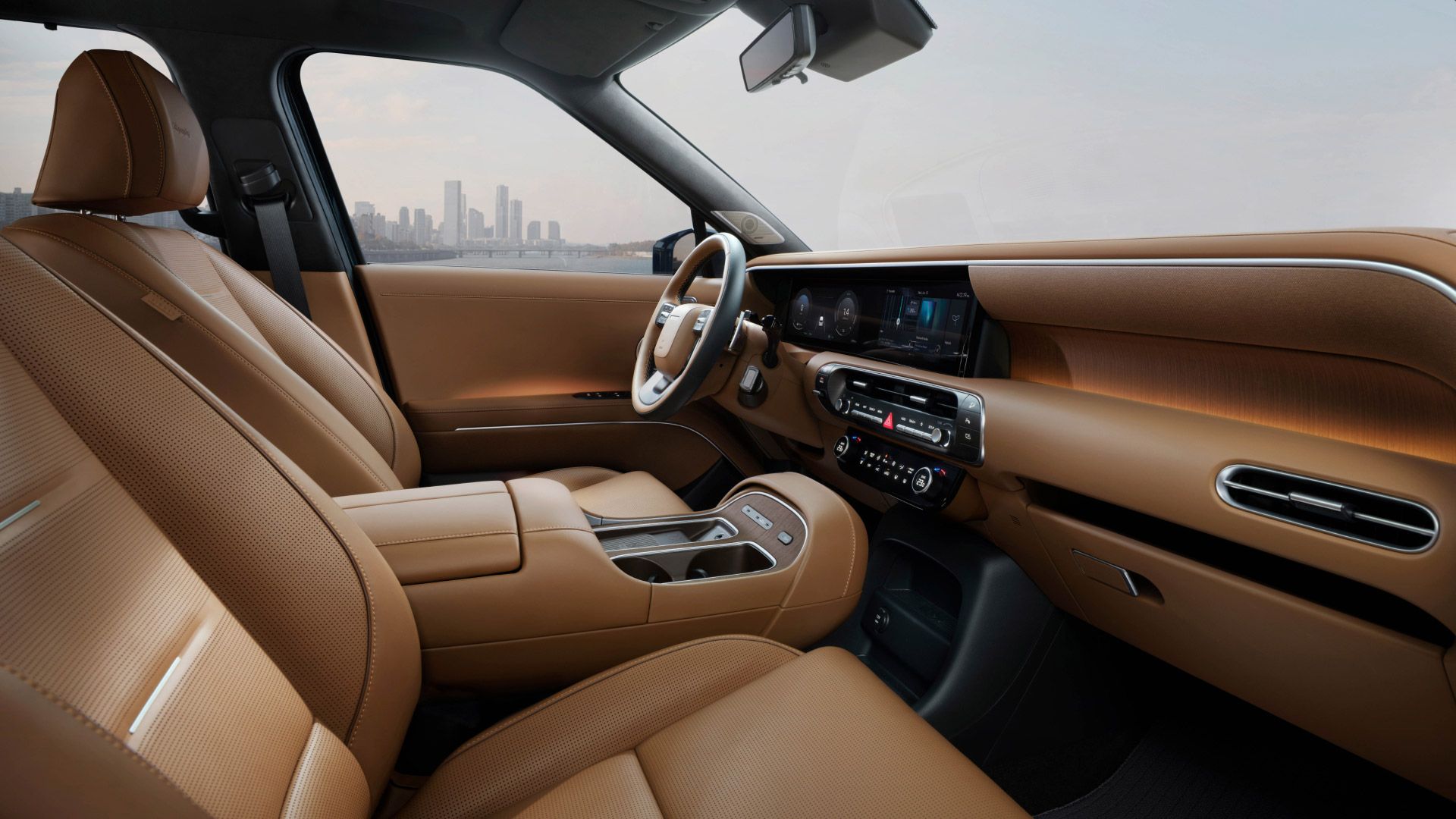
Distributed control does not mean sending every function into a screen. Hyundai specifies physical switchgear near the front occupants, an open lower console tray and a double-door center-stack arrangement. The company says the console and armrest are shaped to provide stability when reaching for controls. Information remains concentrated in a curved assembly containing two 12.3-inch displays, while a 15-watt wireless charging pad adds an integrated cooling fan. Electrical access then spreads rearward: Hyundai says cupholders and USB-C ports capable of up to 100 watts are accessible in every row. Port counts and exact locations are not provided, and “capable” does not guarantee every connected device will accept 100 watts. The defensible point is organizational: primary vehicle inputs stay forward, while everyday device power follows passengers.
A Button Cannot Fit a Stroller
At the liftgate, powered seats and cargo geometry become easy to confuse. Hyundai confirms that the available third row can power-fold, slide and recline, and that seat functions can be commanded from the cargo area. Those features can reduce the physical work and walking involved in converting the cabin. They do not reveal what will fit afterward. Stroller compatibility depends on the liftgate opening, width between the wheelhouses, floor depth behind the raised third row, load height, seatback angle and the folded dimensions of the stroller itself. None of those cargo measurements appears in the supplied material. A powered slide may help trade passenger room for cargo depth, but the size of that trade is unknown. The control strategy can therefore be credited; stroller fit and usable cargo capacity cannot.
VISUAL DOSSIER · 17 INLINE IMAGES + 1 HERO
Exterior, cabin, controls, and cargo
The verified manufacturer gallery preserves distinct views of the vehicle so design, seating, interfaces, details, and utility can be examined separately.
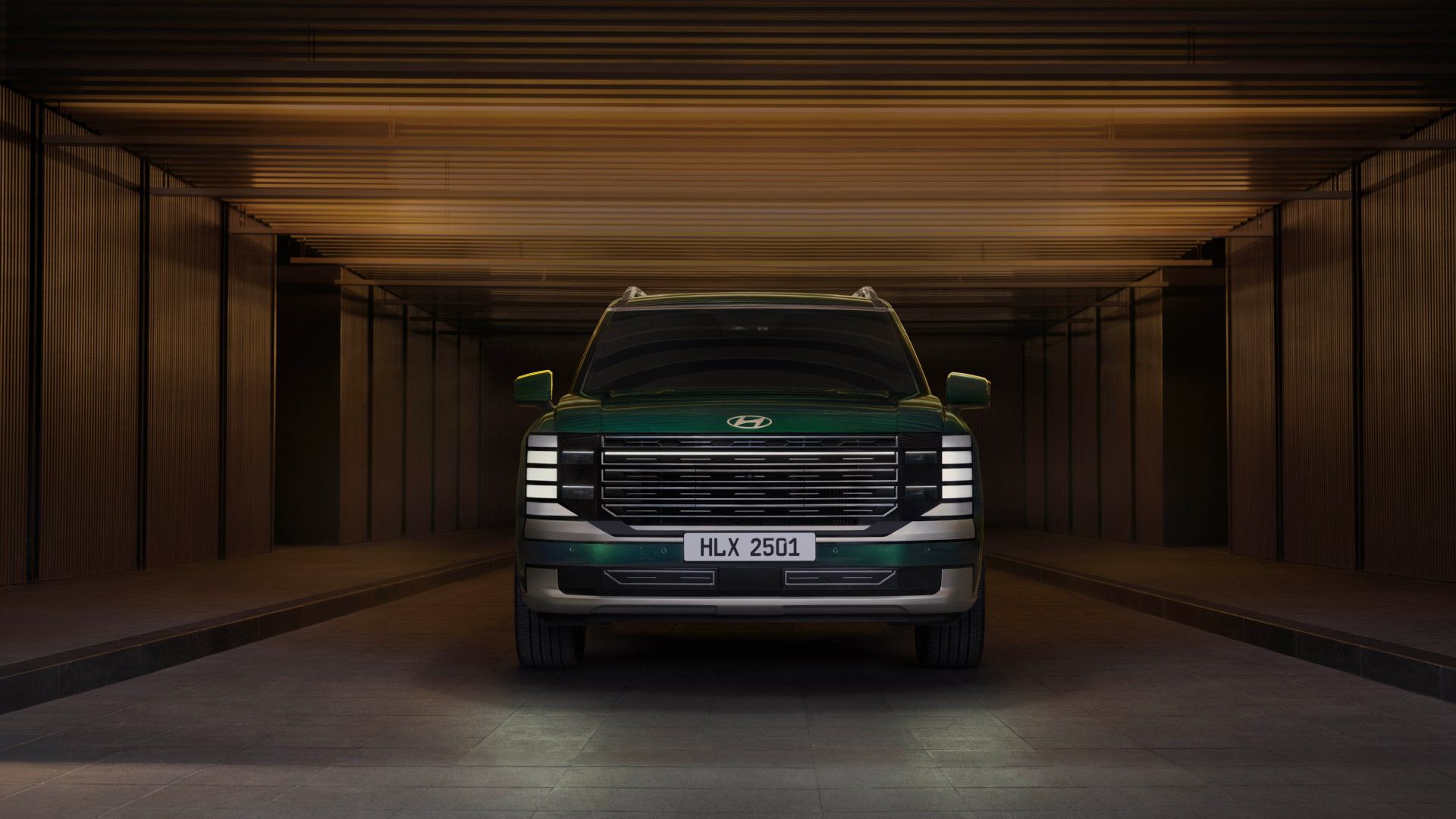
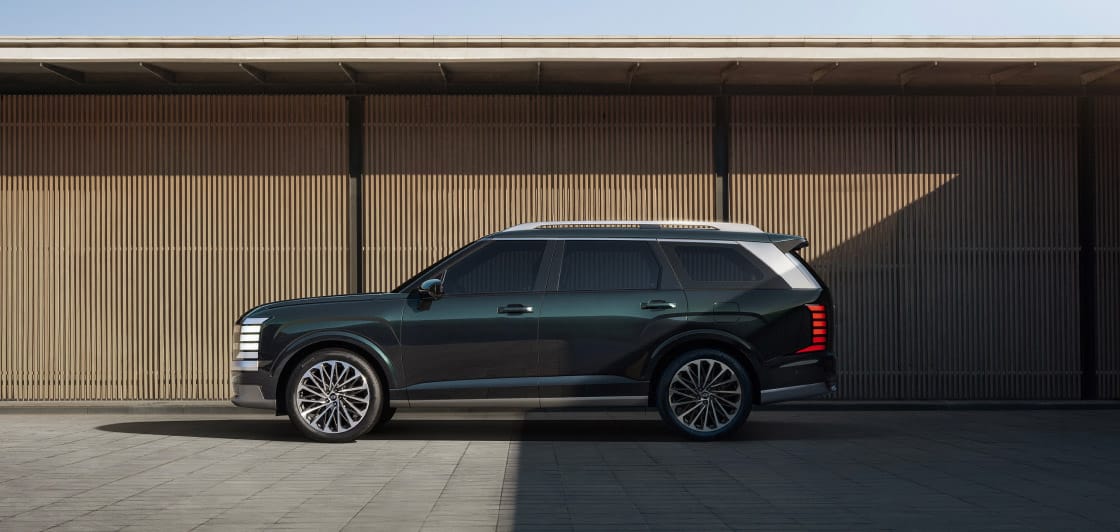
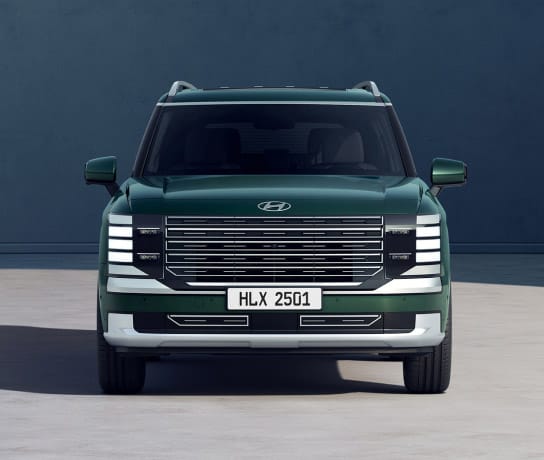
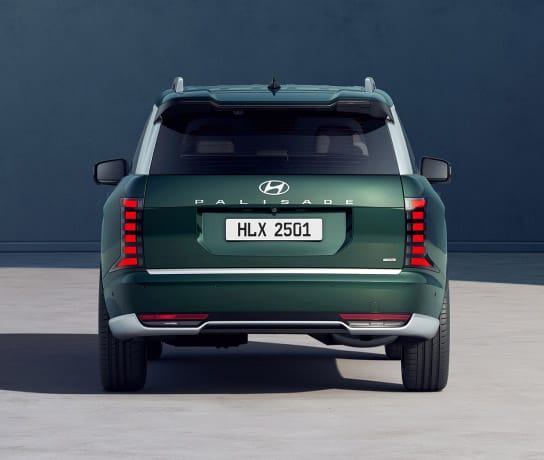
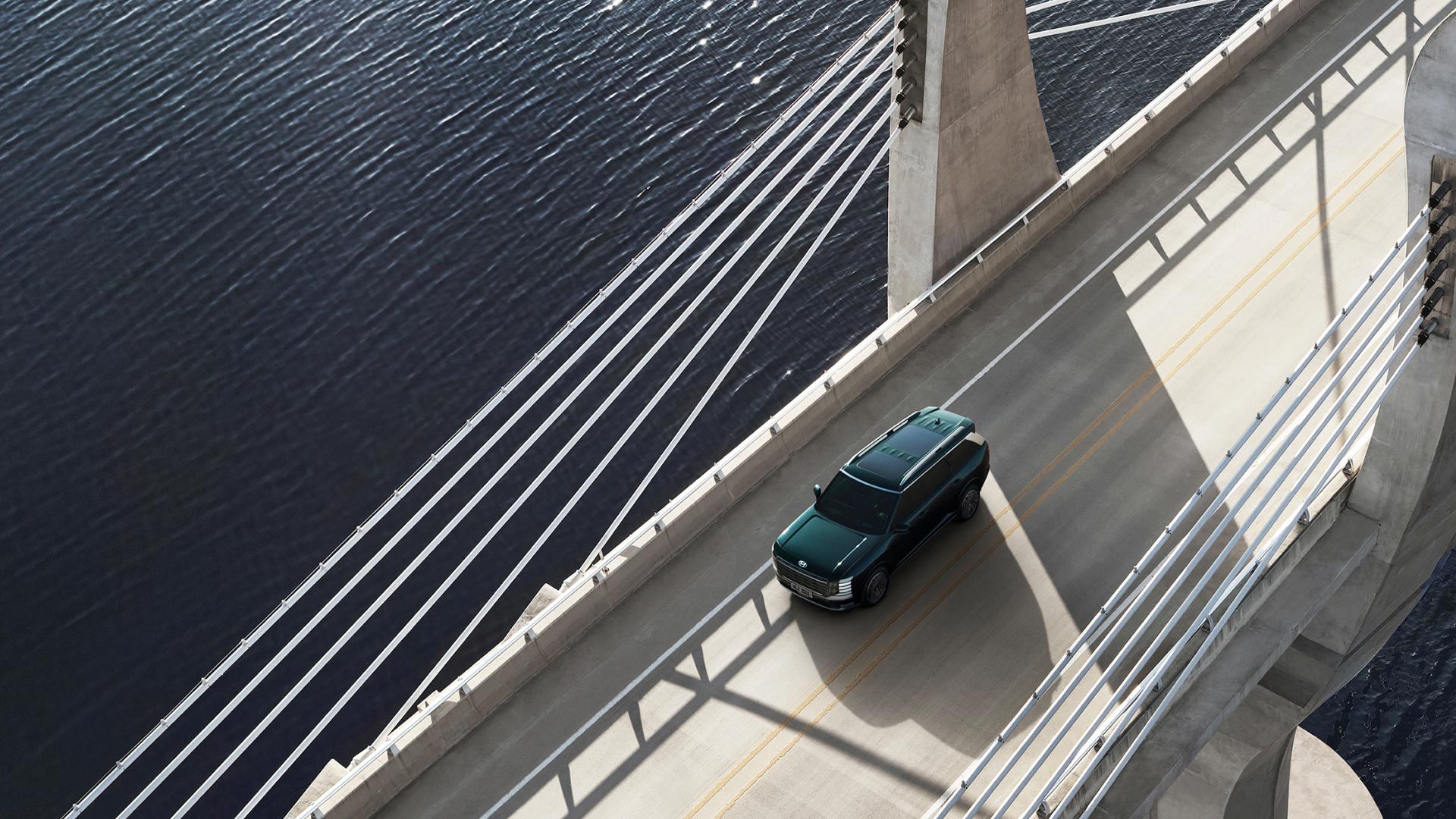

Hyundai’s evidence supports a precise conclusion, not a verdict. The 2026 Palisade distributes cabin authority unusually widely: access begins at the second-row seat, reconfiguration can begin at either end, and device power is assigned to every row. That architecture could reduce the number of family tasks routed through the driver or through repeated trips around the vehicle. But controls govern movement, not usable space. Until absolute passenger and cargo measurements—and direct testing with adults, luggage and specific strollers—are available, the Palisade’s cabin can be analyzed as a thoughtful control system, not scored for comfort, capacity or performance and not recommended.