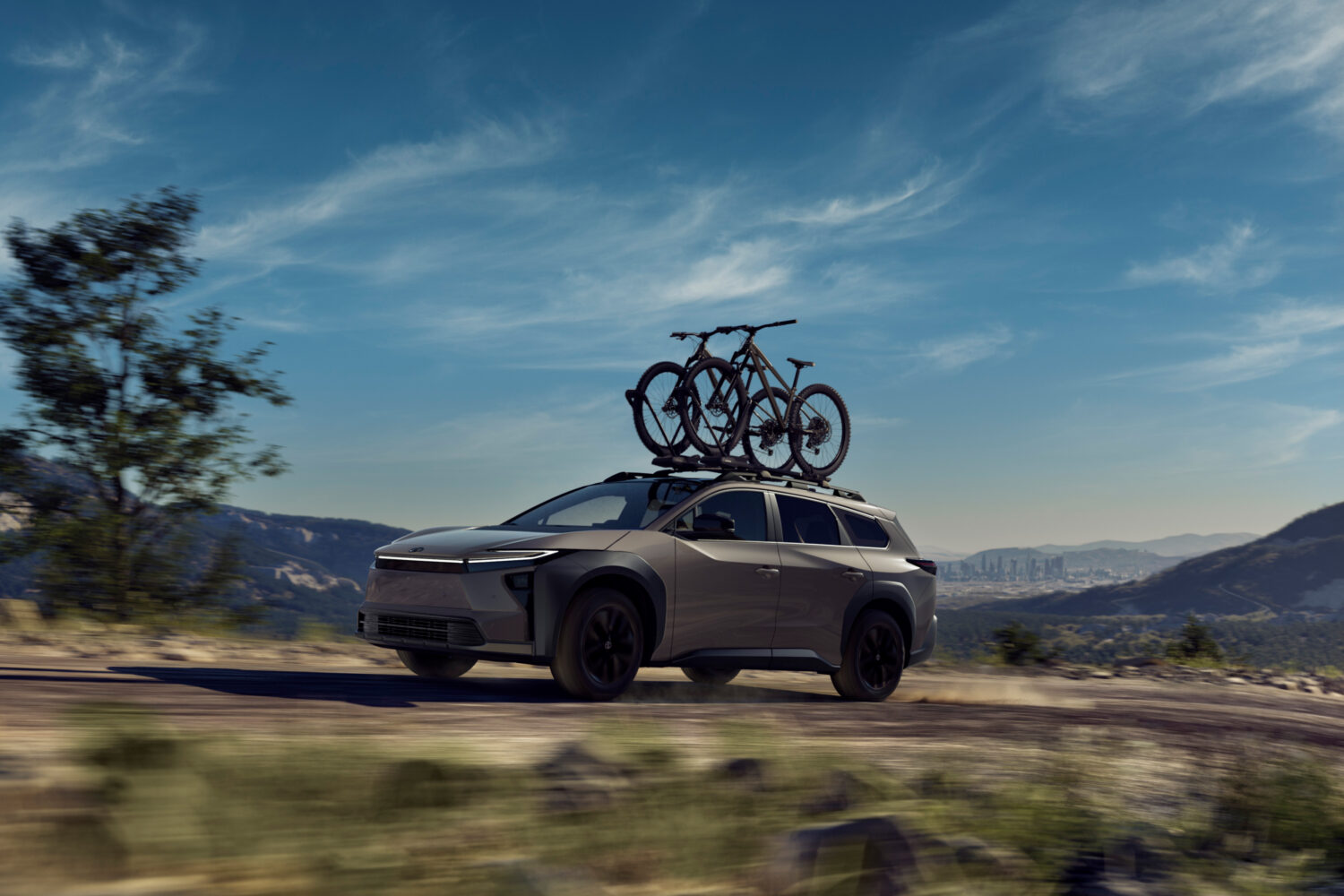
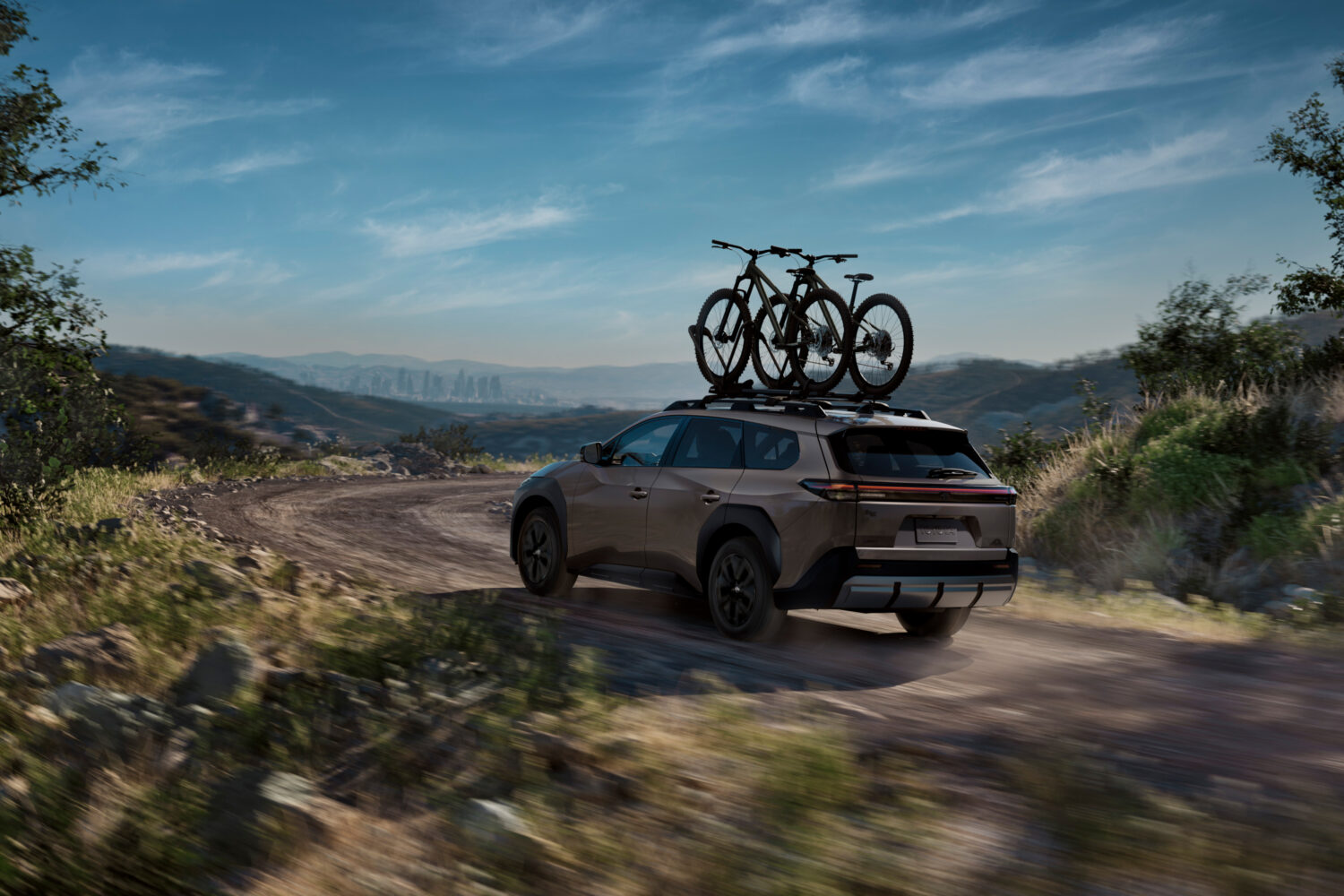
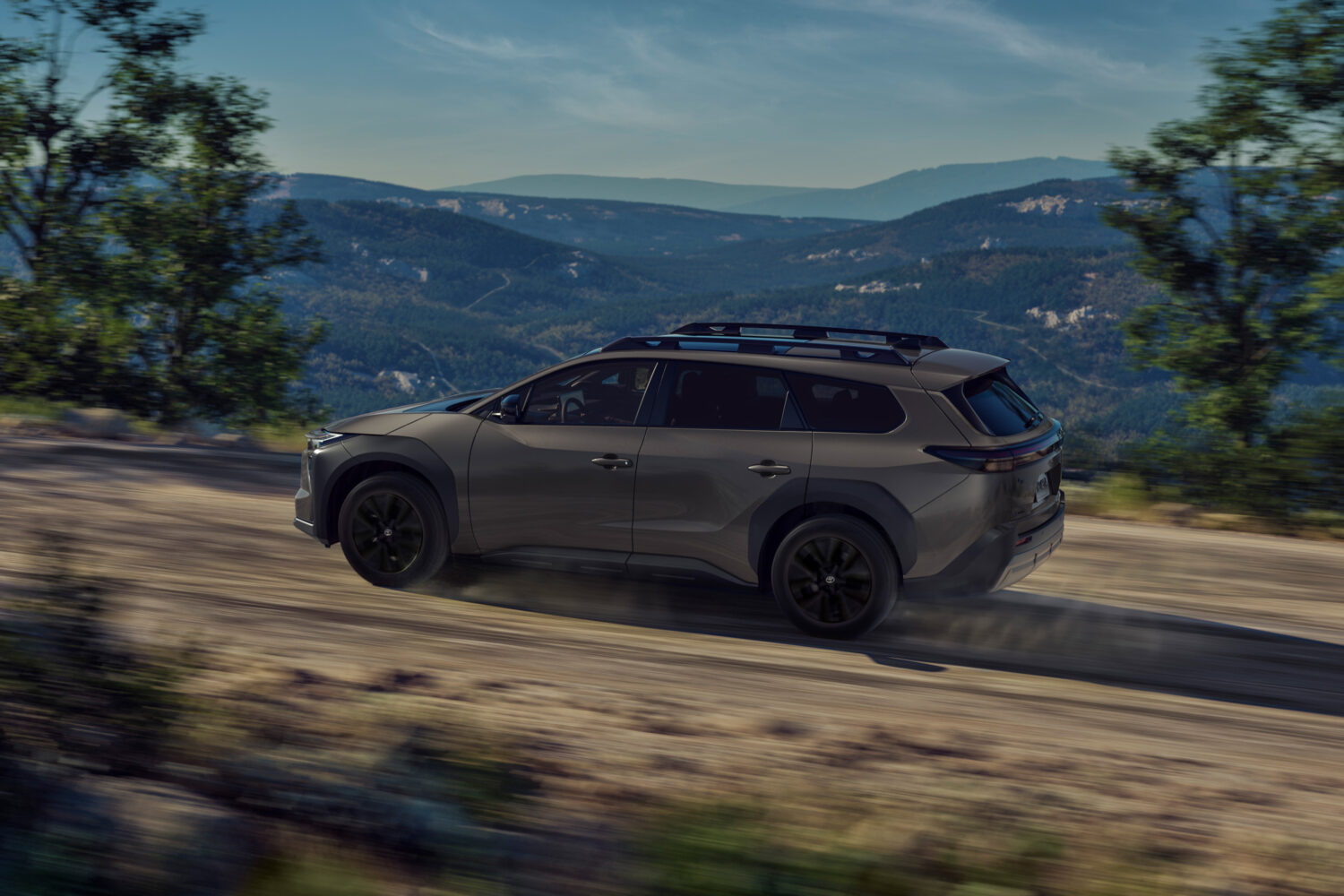
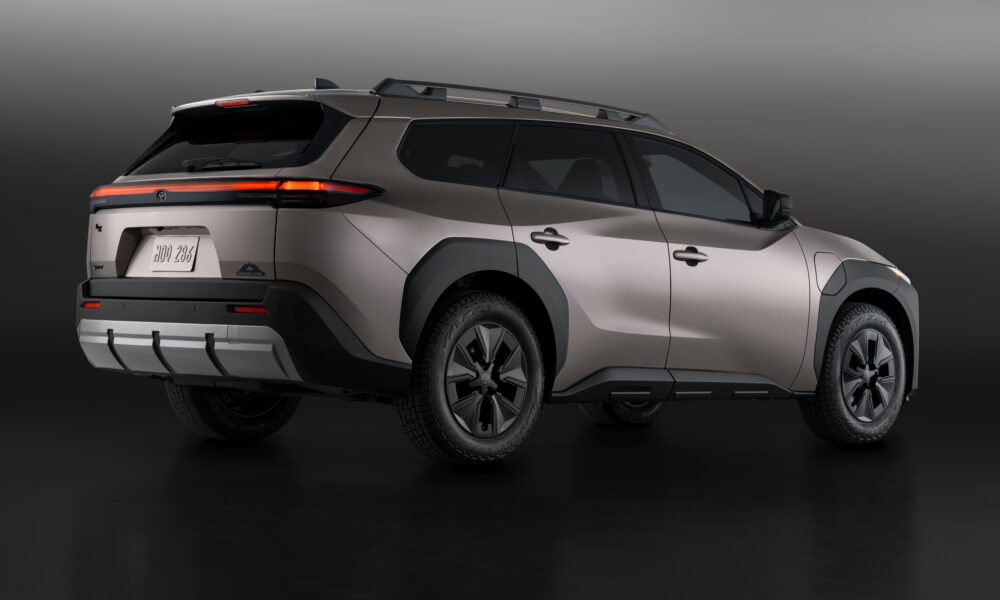
Toyota’s official gallery casts the 2027 bZ Woodland in bronze tones bordered by charcoal cladding, a palette that does most of the emotional work before the specifications arrive. The dark wheel arches, roof rails and outdoor setting place the vehicle in the familiar visual language of trail-oriented SUVs. Toyota’s August 5 release, however, makes a narrower case. This is a second-year model whose features and specifications are unchanged from 2026. Its meaningful distinctions are measurable: standard all-wheel drive, 8.4 inches of clearance, a longer cargo area and an optional tire that reduces Toyota’s range estimate by 21 miles. The photographs sell escape. The numbers describe a roomy electric crossover engineered to carry more equipment beyond the pavement’s edge.
Quick take. The bZ Woodland is most convincing when Toyota itemizes its utility; it is least complete where adventure would impose the largest real-world energy costs.
Bronze Does the Persuading
The gallery’s featured treatment gives the Woodland an identity that the underlying silhouette cannot establish alone. Bronze supplies warmth and rarity; charcoal cladding visually thickens the lower body and separates painted surfaces from the terrain implied by Toyota’s presentation. Roof rails and black wheel treatments add recognizable utility signals without proving utility themselves. That distinction matters because a manufacturer gallery is staging, not observation. It can show proportions, trim and design intent, but it cannot establish clearance under load, resistance to damage or competence on a difficult surface. Even the color requires caution: Toyota’s filenames identify Premium Bronze images, yet its release lists Raven, Stepping Stone, Halo, Pavement, Steel and Trueno Blue as exterior choices—not Bronze.
The Tire Writes the Range
The optional all-terrain tire produces the release’s most useful comparison. Toyota estimates 281 miles with all-season tires and 260 with the all-terrain option, a decline of 21 miles, or about 7.5 percent. That is not an observed test result, and actual range will also vary with speed, weather, accessories and driving conditions. It nevertheless exposes a real engineering exchange that “adventure-ready” language often conceals. Toyota says standard X-MODE can optimize braking and motor delivery for traction, while low-speed Grip Control can regulate output and maintain a set pace in adverse conditions. The release offers no comparative traction data. Buyers can quantify the estimated range cost of the tire, but not the capability gained in return.
Acceleration Outruns the Evidence
Toyota quotes 375 total system horsepower and an estimated 4.5-second run to 60 mph from the front and rear eAxle motors. Those figures give the Woodland sports-car-adjacent headline speed, but they do not answer the questions raised by its mission: repeatability, thermal management, low-speed calibration, ride quality or motor control on loose surfaces. The flat underfloor battery and cross-framing structure are said by Toyota to support a low center of gravity and vehicle rigidity. That is an engineering description, not a handling verdict. Without instrumented acceleration or driving access, the responsible conclusion stops at the specification sheet: the output claim is substantial, while the quality and usefulness of its delivery remain unverified.
The Missing Charging Curve
For travel beyond a local trailhead, charging matters more than the sprint figure. Toyota says the 74.7-kWh battery can move from 10 to 80 percent in around 30 minutes under ideal conditions, but it publishes neither peak DC power nor a charging curve. The NACS port should broaden physical access to compatible fast chargers, while supplied J1772 and CCS1 adapters cover other equipment. Battery pre-conditioning and Plug & Charge on compatible networks address cold-weather preparation and payment friction; the latter requires qualifying connected service. At home, the Woodland includes an 11-kW onboard charger and dual-voltage cable. This is a credible equipment list, but it cannot predict charging speed across temperature, battery state or repeated stops.
Cargo Is the Stronger Story
The Woodland name is better defended by packaging than by scenery. Toyota reports nearly six inches more cargo length and almost one inch more rear cargo height than the standard bZ SUV, with up to 74.3 cubic feet available when the second row is folded. Roof rails and a 120V/1500W cargo-area outlet extend that utility beyond simple luggage capacity. Toyota also lists towing capacity of up to 3,500 pounds. Yet the release omits payload capacity and provides no range estimate for towing, a loaded roof or a fully occupied cabin. The physical provision for gear is confirmed; the energy required to exploit it is not. That boundary is central to evaluating any electric vehicle presented as a long-distance equipment carrier.
The Price Has Blank Spaces
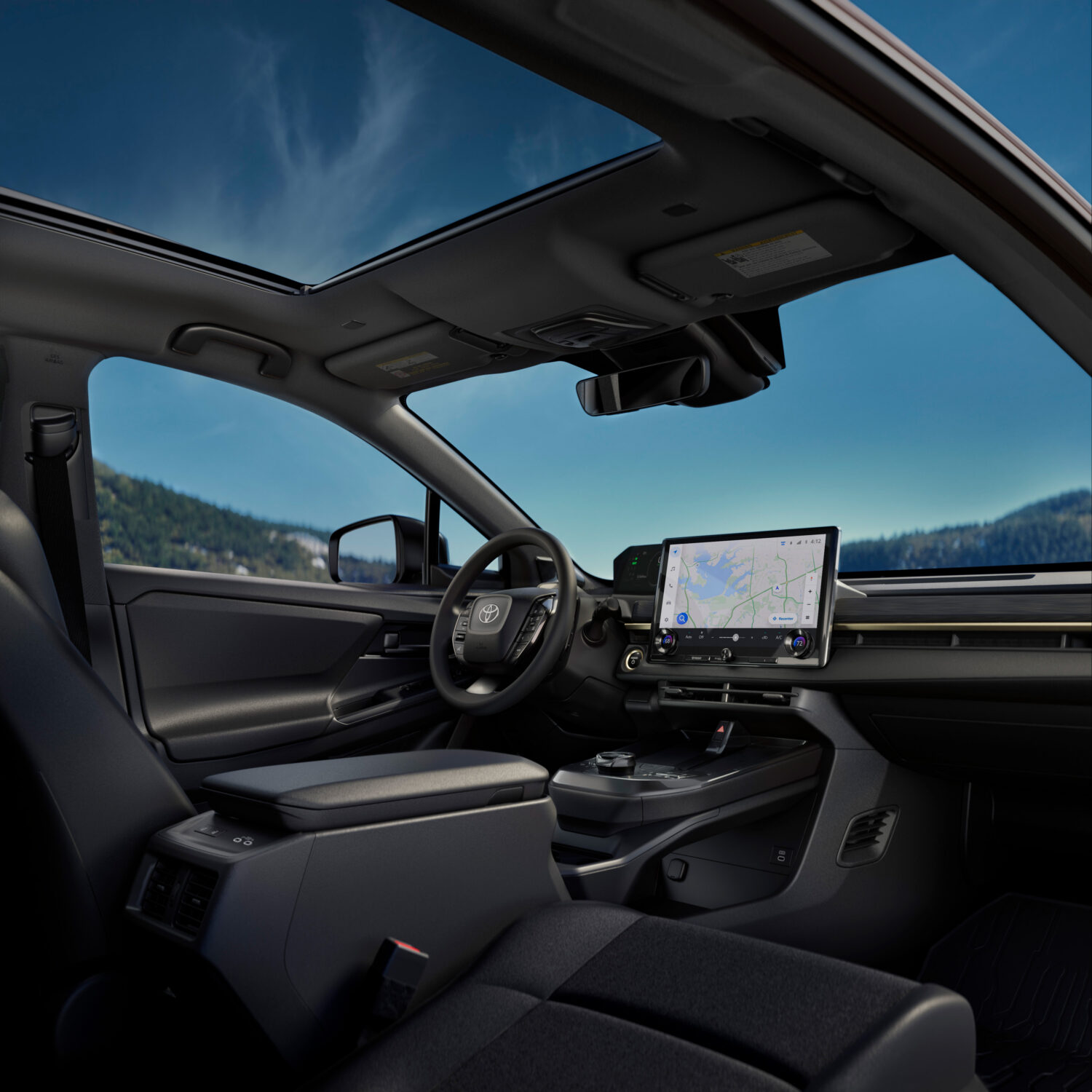
Toyota publishes a base Woodland MSRP before its processing and handling fee, but the release does not state the Premium price, all-terrain tire charge or total for the gallery’s featured specification. Standard equipment is extensive: heated SofTex-trimmed front and outboard rear seats, a heated steering wheel, dual wireless chargers and a 14-inch multimedia screen. Premium adds ventilated front seats, radiant foot-and-leg heaters, a fixed panoramic roof, driver memory, a digital mirror and nine-speaker JBL audio. Those additions position the Woodland as a comfortable daily crossover rather than a stripped trail tool. They also complicate the value calculation, because Toyota supplies the aspirational specification visually while withholding its complete transaction price.
VISUAL DOSSIER · 10 VERIFIED PRESS PHOTOGRAPHS
The vehicle, not a generic mood board
the verified official image set is kept in the review so exterior, cabin, controls, details, and utility can be judged separately.
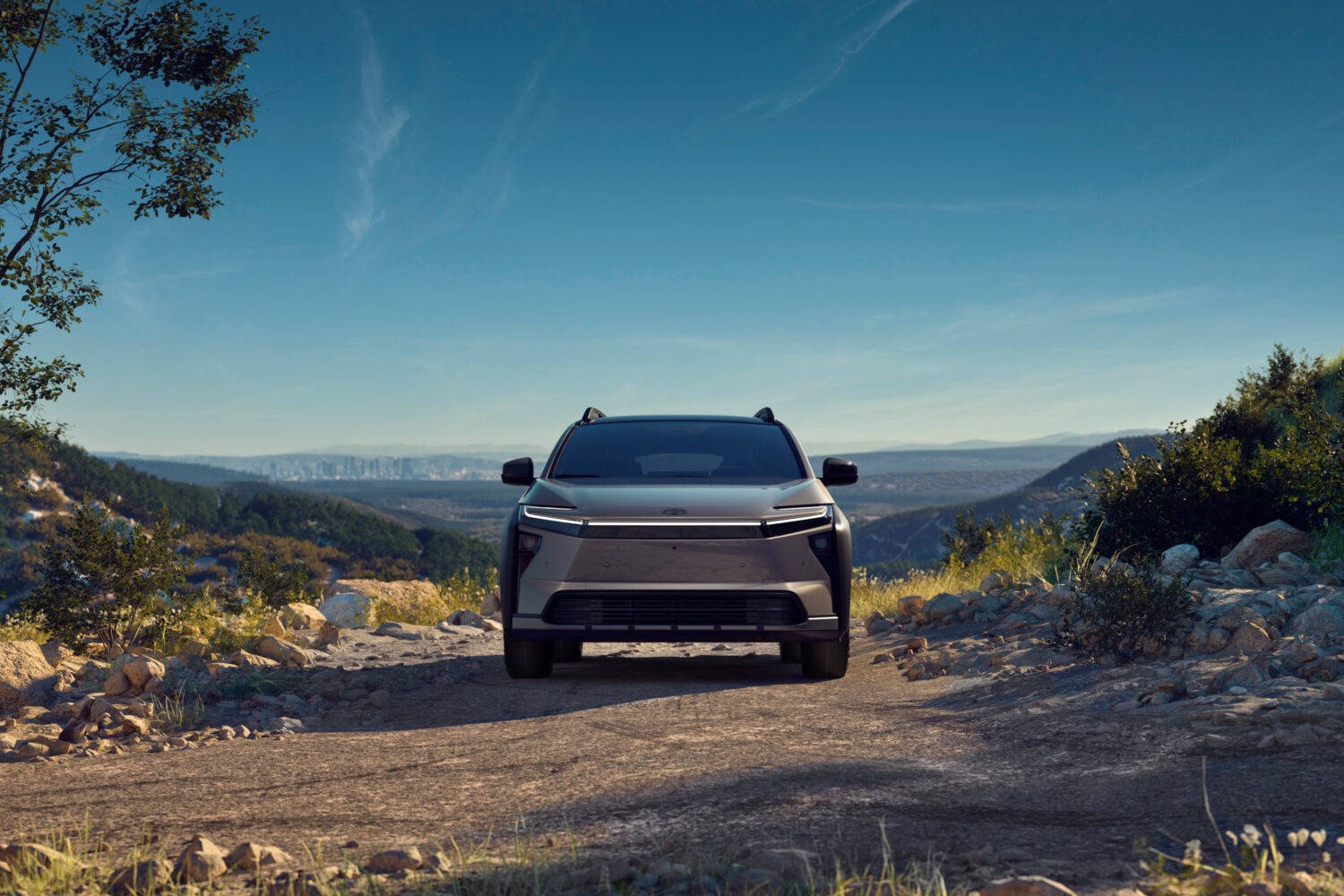
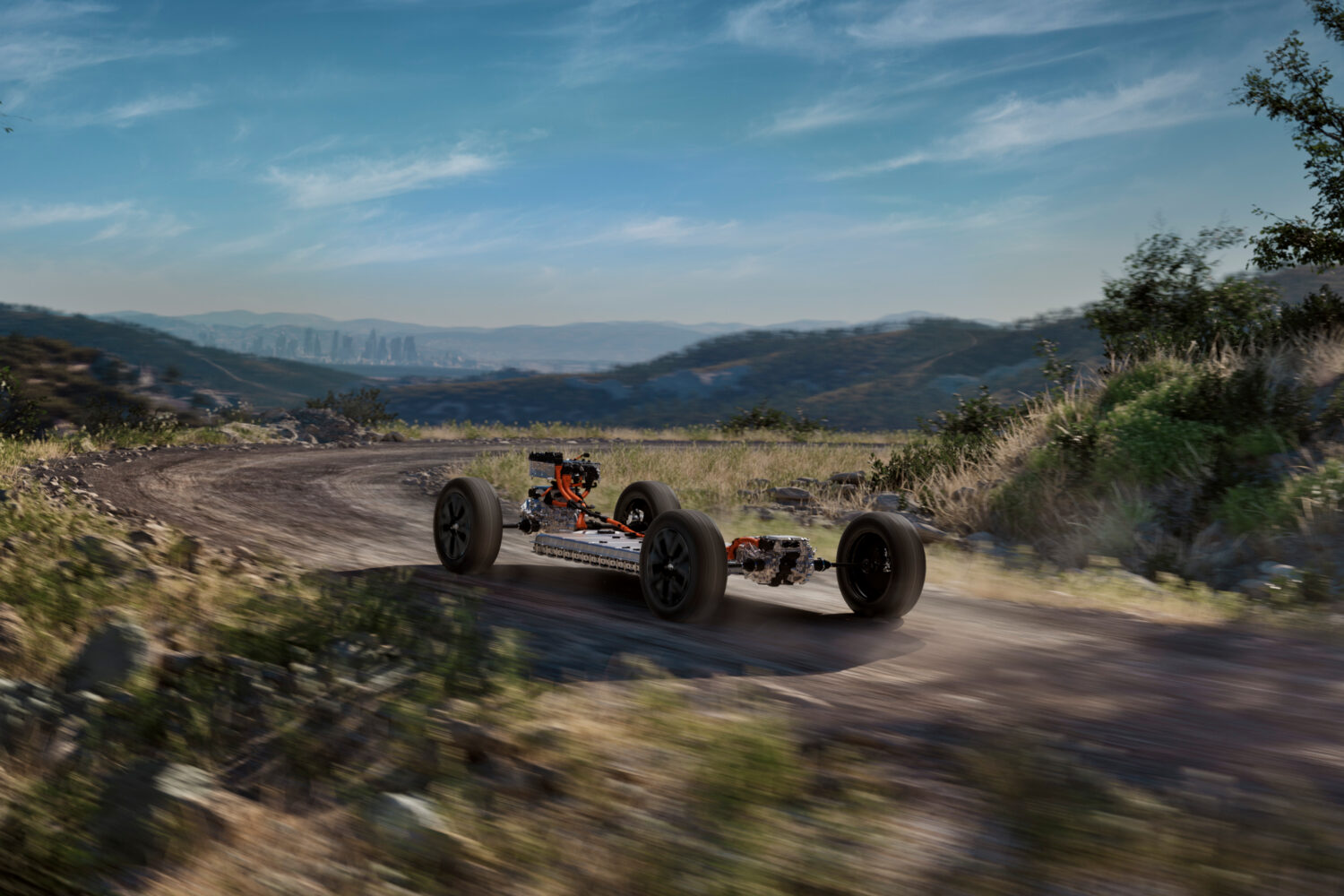
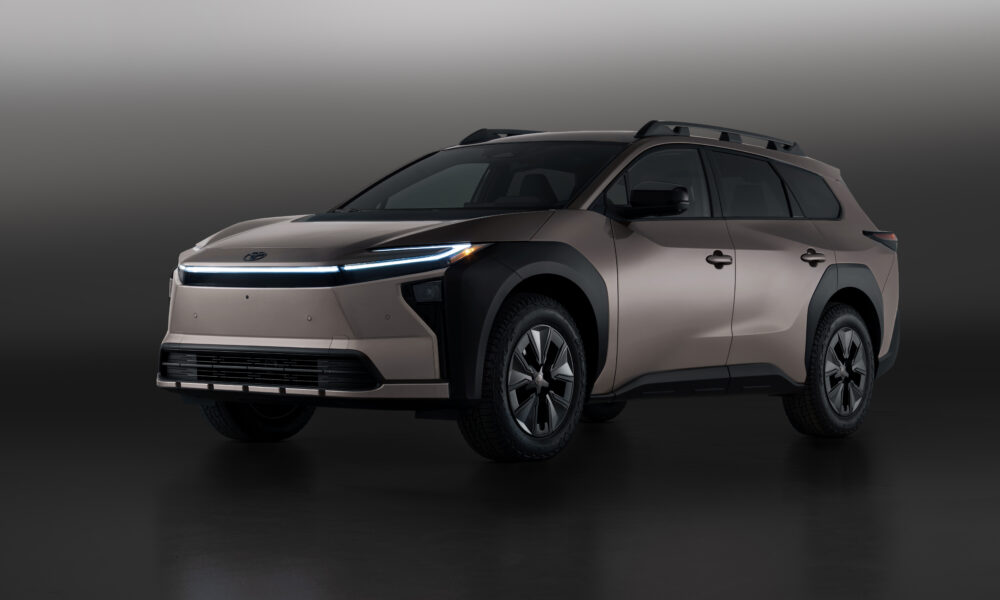
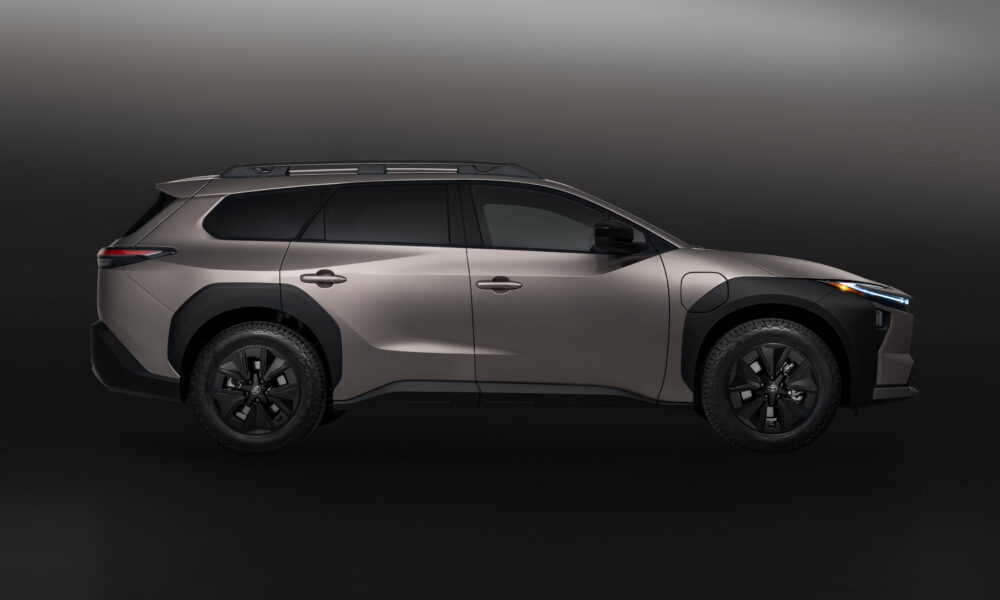
Toyota has supplied enough evidence to identify the Woodland’s priorities, but not enough to judge how well it executes them. The cargo capacity, clearance, charging equipment and tire-related range difference are established specifications. Acceleration, rough-surface control, towing behavior, charging consistency and comfort remain manufacturer claims or unanswered questions. No performance score or buying recommendation is warranted without an independent drive and charging test. For now, the clearest reading is visual and numerical: bronze and charcoal create the invitation, while the 21-mile tire penalty reveals the first cost of accepting it.