Skincare Layering: What Order, and What You Can Skip
The rule is thin before thick, and sunscreen last. Everything else is a question of how much you want to do — so each step below says plainly how good the evidence for it is, rather than describing all eight in the same confident voice.
Updated 18 August 2026 · 8 min read read
The short version. Order: cleanser, then anything watery, then anything creamy, then sunscreen in the morning. Thin before thick, because a heavy cream forms a barrier the watery layers cannot get through. If you only ever do two of these, do the first and the last: cleanse at night, sunscreen in the day. The six in between are optional, and the guide says so for each one.
If you use prescription actives — retinoids, or acids from a dermatologist — follow the instructions that came with them rather than an order chart on a shopping site. Layering those is a medical question, not a sequencing one, and it is outside what this guide will tell you.
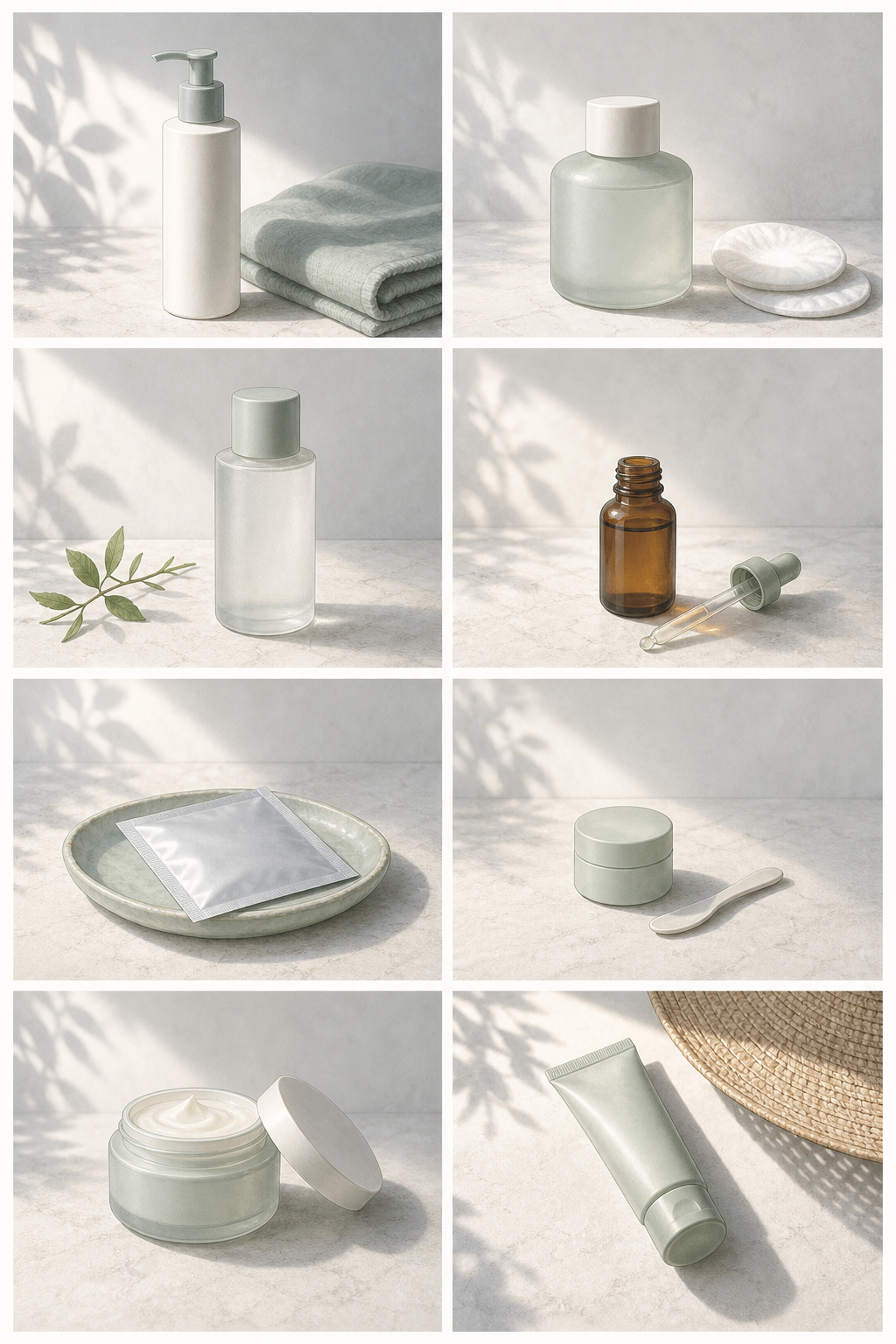
All 8 on one board
The whole set in a single image — this is the one to save or pin. Each panel is broken out
underneath with what it is actually for.
AI-generated illustration, and the lead image for this guide rather than a photograph. All eight steps on one sheet — the panels below are cut from it. The title and labels are live text, not part of the image, so they translate with the page.
The eight, in order
Each panel says where it sits, what it actually does, and how strong the evidence is. Four of the eight are honestly optional.
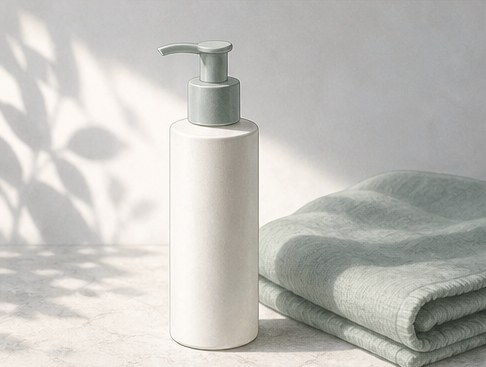
01Cleanser
First, and at night the one that matters most — it takes off sunscreen, sebum and the day. A gentle one is enough; if your skin feels tight and squeaky afterwards, that is the cleanser being too harsh rather than working well.
Evidence: solid and unglamorous. Skip only the morning one if your skin is dry — never the night one.
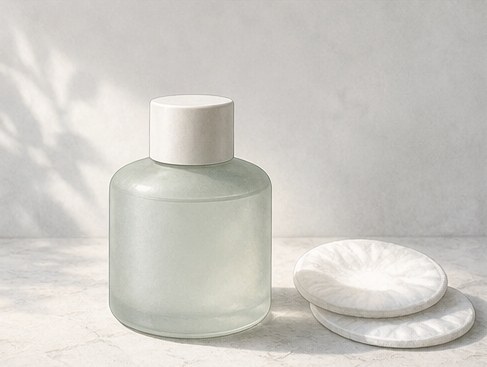
02Toner
Second, and no longer what the word implies. Toners were once astringents to strip what a harsh cleanser left behind; most sold now are light hydrating liquids, which is a different product wearing an old name. That makes it pleasant and largely optional.
Evidence: thin. It adds water and a moment of routine. Genuinely skippable.
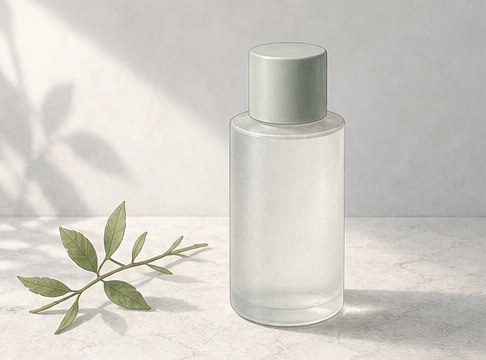
03Essence
Third. Sits between a toner and a serum in thickness and does much the same job as the toner — hydration, and a base that helps what follows spread. The K-beauty routine popularised it, and it is a comfort step rather than a corrective one.
Evidence: thin. If you already use a hydrating toner, this is the same idea twice.
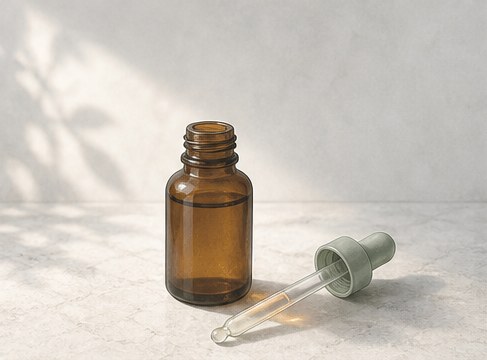
04Serum
Fourth, and the one step where what is inside genuinely decides whether it does anything. Serums are the delivery vehicle for specific ingredients at meaningful concentrations, which is why one serum tells you almost nothing about another. Pick it for the ingredient, not for the step.
Evidence: depends entirely on the ingredient — strong for some, absent for others.
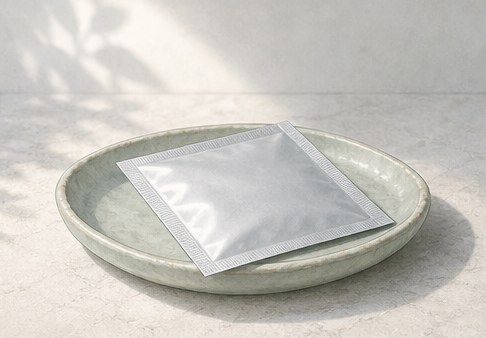
05Sheet mask
Fifth, when you use one at all. A mask is a saturated hydration hit that shows on the surface for a while afterwards — which is exactly why it feels more effective than it is. Lovely before an event, pointless as a nightly obligation.
Evidence: real but short-lived, and cosmetic. An occasion, not a step.
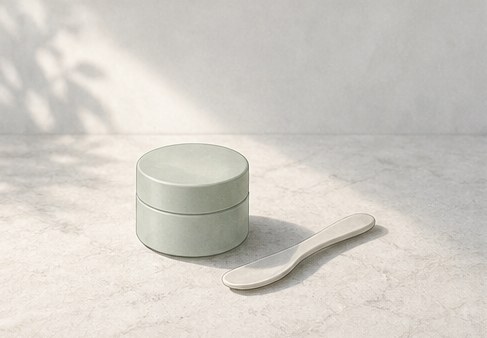
06Eye cream
Sixth, and the most skippable of the eight. Eye creams are usually moisturisers in smaller jars, formulated to be a little gentler for thinner skin. If your moisturiser does not irritate your eyes, it can do this job.
Evidence: weakest of the eight. Worth it only if regular moisturiser stings there.
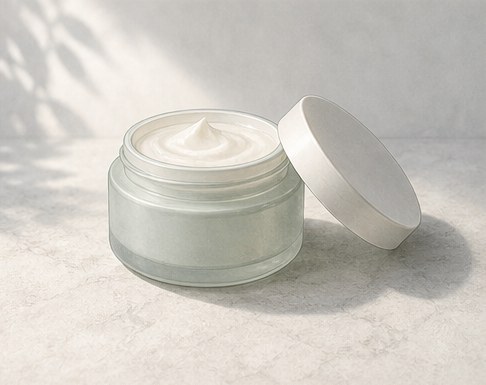
07Moisturiser
Seventh, and the reason the whole order runs thin to thick — a cream is partly an occlusive, so it seals in the watery layers underneath. Put it on first and everything after it is sitting on top of a barrier rather than getting through one.
Evidence: solid. This is the step the layering rule exists to protect.
08Sunscreen
Last in the morning, always, and the only step here with a real dermatological consensus behind it — daily sunscreen preventing cumulative sun damage is not a marketing claim. It goes over the moisturiser, not under it, and the amount most people use is well short of the amount it is tested at.
Evidence: strongest of the eight by a wide margin. If you do one thing on this page, this is it.
AI-generated illustration. Not a photograph. Every panel above is cut from a single generated sheet, which is how the
style stays consistent across all 8.
If you only do two
Cleanse at night — it takes the sunscreen off.
Sunscreen in the morning — over the moisturiser.
Everything between those two is optional, and this page says which parts are weakest.
Why the order matters at all
Thin before thick, and the reason is mechanical rather than mystical. The watery steps are mostly water and small dissolved ingredients; the creamy ones contain oils and waxes whose job is partly to sit on the surface and slow water leaving. Apply the sealing layer first and the watery ones have to get through it, which largely defeats them.
The waiting times you see quoted between steps are mostly unnecessary. Long enough that the previous layer is not still wet and slipping is genuinely all the rule amounts to for ordinary hydrating products.
And the honest summary of the whole chart: the order only matters once you are using several of these. If your routine is a cleanser and a sunscreen, there is no sequencing problem to solve, and adding steps to have a sequence is the wrong way round.
What this guide is not claiming
It grades its own steps because skincare writing usually does not. Sunscreen has a genuine consensus behind it. Cleanser and moisturiser are basic and well supported. Toner, essence, sheet mask and eye cream are described here by what they do — add water, change how skin feels — and never by a result they promise, because for those the evidence does not carry a promise. A serum is whatever its active ingredient is, which is why it cannot be graded as a step.
No product is named, linked or recommended anywhere on this page, and nothing here is monetised. That is also why there is no hero photograph: every candidate either showed price tags or legible brand names, and on a page that recommends an order rather than a purchase, branded jars in the lead image quietly say "buy these". The board is our own drawing and every container in it is deliberately blank.
If you want the fuller version of this routine, the K-beauty essentials guide goes deeper on the same steps. For the habit side rather than the products, the low-effort glow-up is built on the same principle: small enough to keep, honest about what is evidence.
Notes
No products are named or linked on this page and there are no affiliate links on it. Nothing here is monetised.
No hero photograph, on purpose. Four licensed candidates were rejected — two showed price tags, one showed legible brand names, and one was a food photograph of whipped cream described as "cream texture". The guide leads with its own illustration instead.
The eight panels are cut from one generated illustration sheet, which is why the light and palette are identical across them. Every container is deliberately unlabelled: nothing depicted is a real product, and no real skin is shown, because a skincare image with skin in it invites a before-and-after reading we have no basis for.
Sunscreen preventing cumulative sun damage is a dermatological consensus. The relative-evidence notes on the other steps are our reading of how well supported each one is, stated so you can disagree with it.
No affiliate links on this page. Nothing here is monetised.
No prices anywhere on this site — they move faster than an article can stay honest about them.