Quick take
- Oura Ring 4 has the most mature app and health-scoring layer, but it's the only ring here that requires an ongoing membership to unlock most insights.
- Samsung Galaxy Ring needs no subscription at all — but it only pairs with Android phones, and some of its smartest features (Energy Score, Galaxy AI tips) are Samsung-phone-only.
- Ultrahuman Ring Air and RingConn Gen 2 both sell every core feature as a one-time purchase, no recurring fee, and both work on iOS and Android.
- RingConn Gen 2 has the longest battery life by a wide margin — 10 to 12 days per charge, and its charging case can stretch that to roughly 150 days between wall outlets.
A smart ring is a small, battery-powered wearable — usually titanium, usually a few grams — that packs photoplethysmography (PPG) sensors, a motion sensor, and sometimes a skin-temperature sensor into a band you wear around a finger instead of a wrist. It talks to a phone app over Bluetooth to turn raw signals into sleep stages, resting heart rate, heart rate variability, and blood oxygen estimates. Oura didn't invent the category, but its ring is the one most people picture when they hear the term, and for years it had the space mostly to itself. That's changed. Samsung, Ultrahuman, and RingConn all now ship real, widely reviewed rings, and the four together make for a genuinely useful comparison — not just on what each ring measures, but on what it costs you to keep using it after the ring itself is on your finger.
What a smart ring actually tracks
Every ring in this comparison is built around the same core idea: continuous PPG sensing (green, red, and infrared LEDs measuring blood flow through the finger) paired with an accelerometer or gyroscope for movement, and in most cases a skin-temperature sensor for cycle tracking and illness detection. According to Wikipedia's overview of the category, smart rings typically track "steps, heart rate, temperature, sleep... and blood flow" — which is a fair one-line summary of what all four of these do at a baseline level. Where they diverge is in sensor count, battery life, platform support, and — the part that matters most once you own one — whether the software behind those sensors keeps costing money.
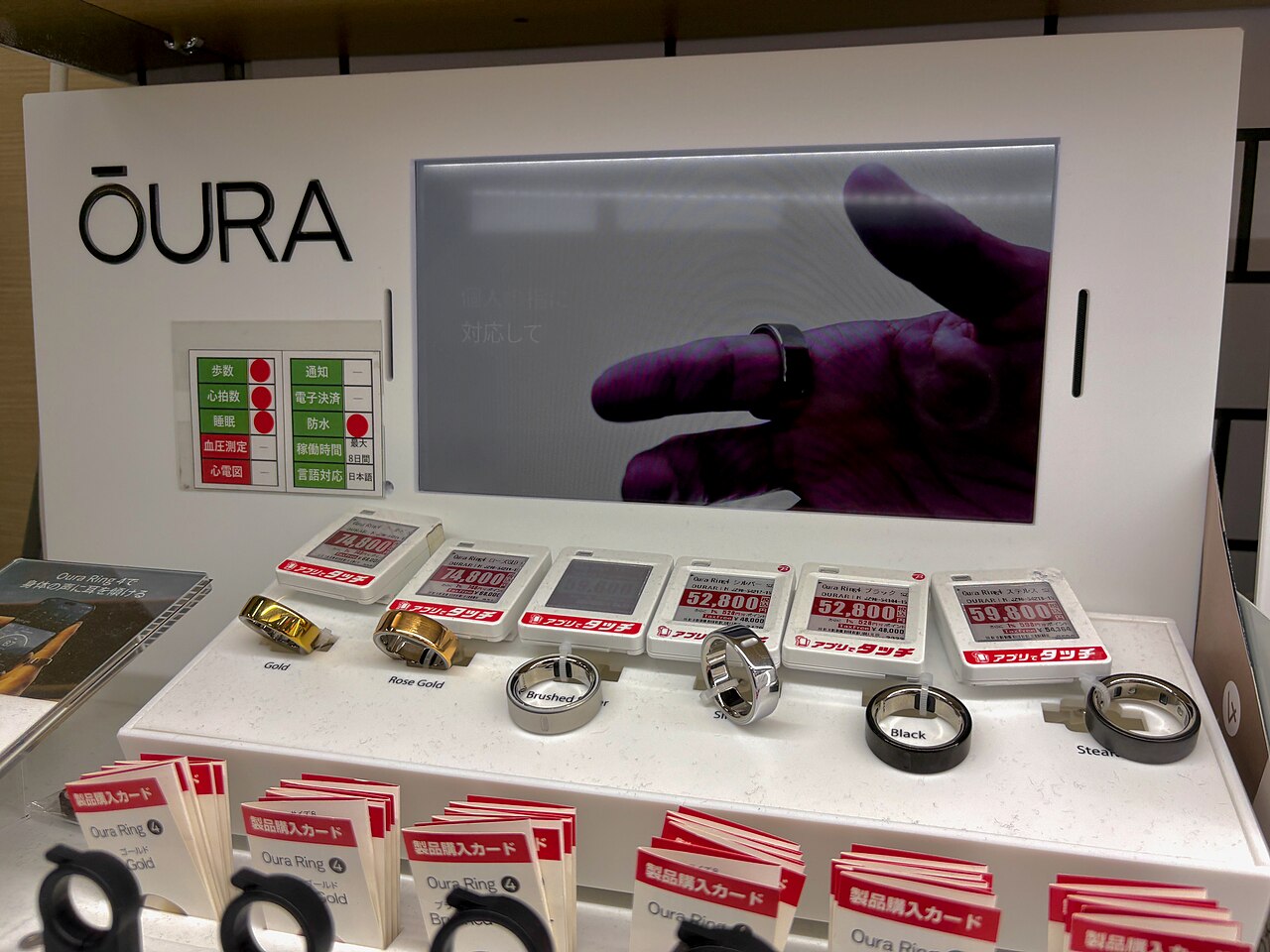
Oura Ring 4 — the category's default, now asking for a monthly fee
Oura Ring 4 is built around what the company calls Smart Sensing: an 18-signal-pathway PPG array, more than double the 8 pathways in the previous generation, meant to adapt to a wider range of finger shapes and skin tones. The ring is titanium inside and out, ships in sizes 4 through 15 — the widest range of any ring in this comparison — and is rated for up to 8 days of battery life per charge, with a full recharge taking up to 120 minutes. It's water resistant to 100 meters (IP68), which covers swimming and showering but not scuba diving.
The catch is the software side. Oura includes one free month of membership with a new ring, and after that, most of the app's insights — Readiness score, Sleep score, Stress and Resilience tracking — sit behind a recurring paid membership. Basic step and heart-rate data is visible without a membership, but the scoring and trend layer that most people buy an Oura ring for is gated. None of the other three rings in this comparison work that way.
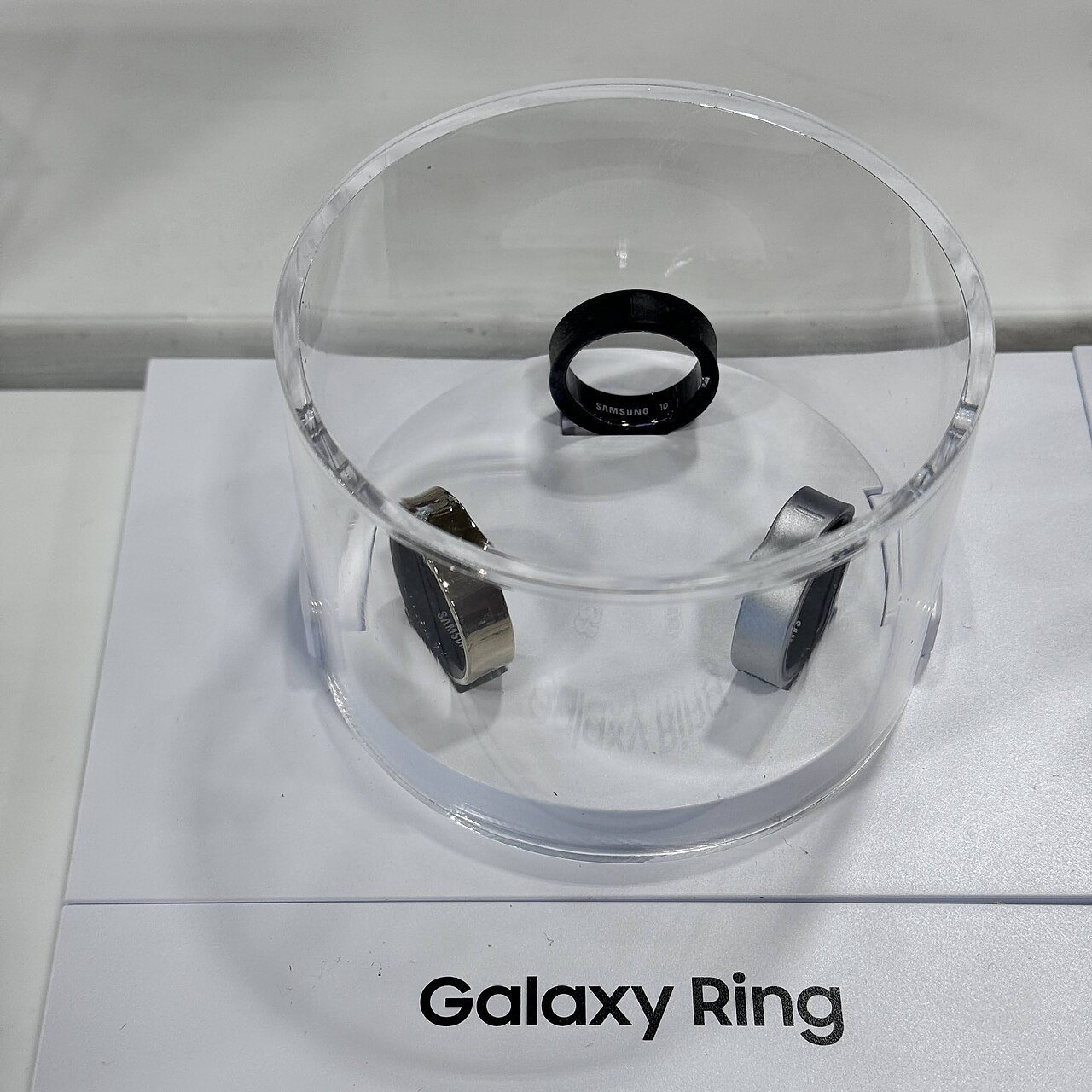
Samsung Galaxy Ring — no subscription, but Android-only
Samsung's answer skips the membership model entirely: every Galaxy Ring feature is unlocked with the hardware purchase, no recurring fee. The ring is titanium, sized 5 through 15, rated 10ATM/IP68 for water resistance, and weighs between 2.3 and 3.2 grams depending on size. Battery life tops out around 7 days on the larger sizes, and the included charging case recharges the ring in about 80 minutes.
The real limitation is platform. The Galaxy Ring does not support iOS at all — it's built exclusively for Android, and works best on Samsung's own Galaxy phones. Samsung has confirmed it works with any Android 11+ phone with at least 1.5GB of RAM, but several headline features — Energy Score, Galaxy AI health recommendations, Find My Ring, and camera-control gestures — only work when it's paired with a Samsung Galaxy device specifically.
Ultrahuman Ring Air and RingConn Gen 2 — the subscription-free alternatives
Ultrahuman Ring Air is forged from titanium reinforced with a tungsten carbide coating, sold in 10 sizes (5–14), and rated for water resistance up to 100 meters. Its sensor set is a PPG array, a skin-temperature sensor, and — its most distinct hardware choice — a 6-axis motion IMU, which Ultrahuman uses to detect micro-arousals, the brief subconscious wake-ups that fragment sleep without a person noticing. Battery life runs 4 to 6 days depending on use, and like the Galaxy Ring, every standard tracking feature — sleep, recovery, HRV, temperature, women's health — is included with the ring itself, no ongoing subscription required.
RingConn Gen 2 goes further on battery: 10 to 12 days per charge on the ring itself, and because it ships with its own charging case (rather than requiring a wall outlet every few days), RingConn advertises up to roughly 150 days of use between full wall charges if you keep dropping it in the case. It's built from a titanium alloy with a medical-grade epoxy resin coating, IP68-rated to 100 meters, available in sizes 6 through 14, and — notably — it's the only ring of the four with a dedicated sleep apnea monitoring mode, which RingConn states is roughly 90.7% accurate against clinical polysomnography in its own published testing. Like Ultrahuman and Samsung, RingConn charges no ongoing app fee.
Head-to-head: the numbers that actually matter
Marketing copy tends to bury the numbers that decide whether a ring fits your life — how many days you actually get before it needs a charger, and whether the software you're relying on requires a card on file. Here's all four side by side.
| Ring | Battery life | Sizes | Water resistance | Platform | Subscription |
|---|---|---|---|---|---|
| Oura Ring 4 | Up to 8 days | 4–15 | 100m / IP68 | iOS & Android | Required for most insights, after a free intro month |
| Samsung Galaxy Ring | Up to 7 days | 5–15 | 10ATM / IP68 | Android only | None |
| Ultrahuman Ring Air | 4–6 days | 5–14 | 100m | iOS & Android | None |
| RingConn Gen 2 | 10–12 days (ring); ~150 days with case | 6–14 | 100m / IP68 | iOS 17+ & Android 10+ | None |
Where each ring actually fits
None of these four is objectively "the best" — each one trades something for something else. Here's the honest fit for each.
Oura Ring 4
The deepest scoring layer and the widest size range of the four (4–15). Best if you want the most polished app and don't mind a recurring membership after the first free month.
Samsung Galaxy Ring
Every feature unlocked at purchase, titanium build, 10ATM water resistance. Makes the most sense if you're already living inside the Samsung Galaxy ecosystem — it doesn't support iPhone at all.
Ultrahuman Ring Air
A 6-axis motion sensor built specifically to catch micro-arousals in sleep, no ongoing fee, and works on both iOS and Android.
RingConn Gen 2
10–12 days per charge on the ring alone, no subscription, and the only ring here with a dedicated sleep apnea monitoring mode — useful if that's specifically what you're shopping for.
Common questions
Which of these smart rings requires a subscription?
Only Oura Ring 4, of the four covered here. Basic step and heart-rate data is visible without membership, but most of Oura's scoring and trend features sit behind a recurring paid plan after the included first month. Samsung Galaxy Ring, Ultrahuman Ring Air, and RingConn Gen 2 all unlock their core tracking with the hardware purchase, no ongoing fee.
Does the Samsung Galaxy Ring work with an iPhone?
No. The Galaxy Ring only supports Android, and several of its best features — Energy Score, Galaxy AI recommendations, Find My Ring — are limited to Samsung's own Galaxy phones specifically, not just any Android device.
Which ring has the longest battery life?
RingConn Gen 2, at 10 to 12 days per charge on the ring itself — and up to roughly 150 days between wall charges if you use its charging case regularly. Oura Ring 4 is next at up to 8 days, then Samsung Galaxy Ring at up to 7, then Ultrahuman Ring Air at 4 to 6.
Is any of these rings better for sleep apnea detection specifically?
RingConn Gen 2 is the only ring in this comparison with a dedicated sleep apnea monitoring mode, which the company states is roughly 90.7% accurate against clinical polysomnography in its own testing. None of these rings are FDA-cleared diagnostic medical devices — treat any apnea signal as a prompt to talk to a doctor, not a diagnosis.
Are all four of these rings actually available to buy right now?
Yes — Oura Ring 4, Samsung Galaxy Ring, Ultrahuman Ring Air, and RingConn Gen 2 are all current-generation products sold directly by their manufacturers and through Amazon as of this writing.
Oura Ring 4 still has the most refined app experience in the category, and for people who want the deepest health-scoring layer, that's worth something real — but it's also the only ring of these four asking for a card on file after the ring is already paid for. If a subscription is the dealbreaker, Samsung Galaxy Ring, Ultrahuman Ring Air, and RingConn Gen 2 all sell every core feature once. Which of those three fits depends on narrower questions: Galaxy Ring if you're already on a Samsung phone and want the tightest integration, Ultrahuman if you want cross-platform support and its specific micro-arousal sleep sensing, and RingConn if battery life and a dedicated sleep-apnea mode matter more to you than brand polish. None of these is a universal right answer — the honest version of "best smart ring" is "best for what you're actually optimizing for."
Disclosure. This is a researched comparison, not a hands-on test — specs above come from each manufacturer's published data (ouraring.com, samsung.com, ultrahuman.com, ringconn.com) and independently reported tech-press testing, not from wearing all four rings ourselves. DopamineKart is a participant in the Amazon Services LLC Associates Program. As an Amazon Associate, DopamineKart earns from qualifying purchases through the links above, at no extra cost to you — this never changes which ring gets recommended for what. Real photography is Wikimedia Commons, credited per image.
Corrections: email us