Home Explained
Tankless vs Tank Water Heaters, Explained
One keeps a large volume of water hot and ready; the other heats water only as it's needed. The difference shows up directly in your utility closet's footprint, your upfront cost, and whether the shower runs out of hot water.
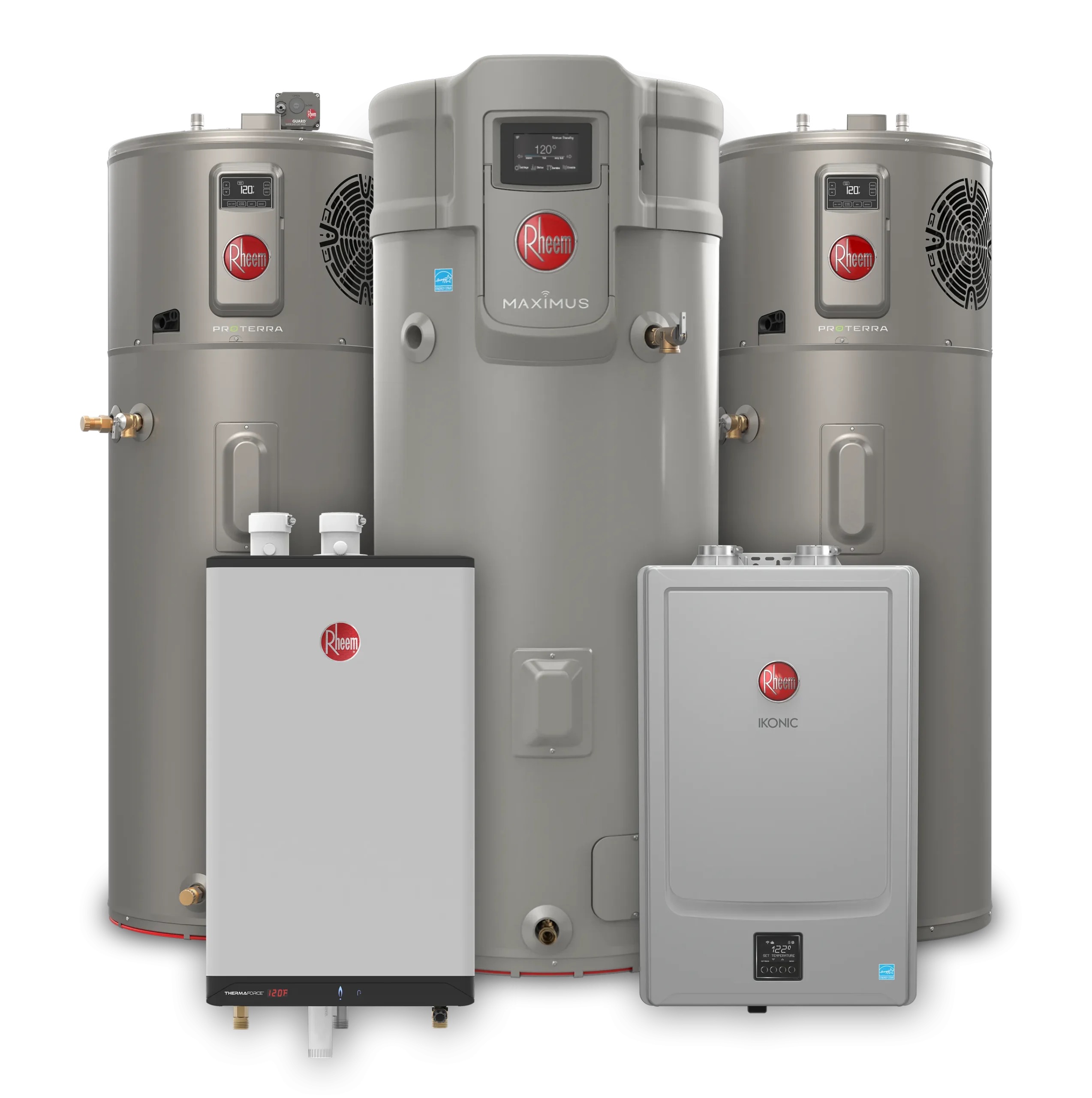
Both types of water heater exist to do the same job — deliver hot water to your taps — but they solve it with fundamentally different engineering. A traditional tank keeps a large reservoir of water heated and ready at all times; a tankless unit heats water only in the moment it's needed, with no standing reservoir at all. That single difference cascades into most of the real tradeoffs between the two.
- Tank water heaters store 30-80 gallons of pre-heated water, ready immediately, but that supply is finite and can run out during heavy simultaneous use.
- Tankless units heat water on demand as it flows through, providing theoretically unlimited hot water, but with a flow-rate limit on how much can be heated at once.
- Tankless units are significantly smaller and mounted on a wall, freeing up real floor space compared to a large standing tank.
- Tankless units typically cost more upfront (unit plus installation) but generally use less energy over time since they're not continuously reheating standing water.
Tank: a large, ready reservoir
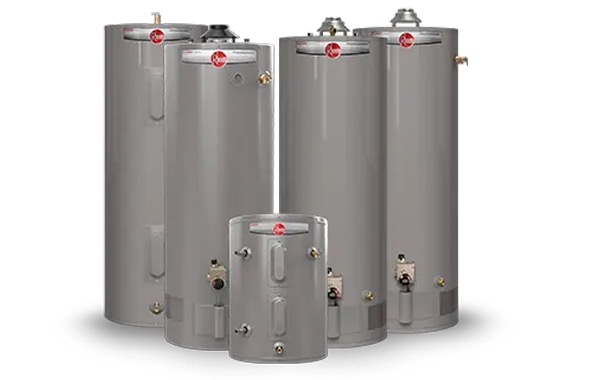
A traditional tank water heater continuously heats and stores a large volume of water — typically 30 to 80 gallons for a residential unit — so hot water is immediately available the moment a tap is opened. Because the reservoir is already hot, there's essentially no wait for hot water to start flowing (beyond however long it takes to travel through the pipes to the fixture).
The tradeoff is that the supply is finite. Running the dishwasher, a shower, and a washing machine at the same time can genuinely deplete the tank faster than it can reheat, leading to a cold-water surprise partway through a shower — a familiar experience in larger households with a single, undersized tank.
Tankless: heating water only as it flows
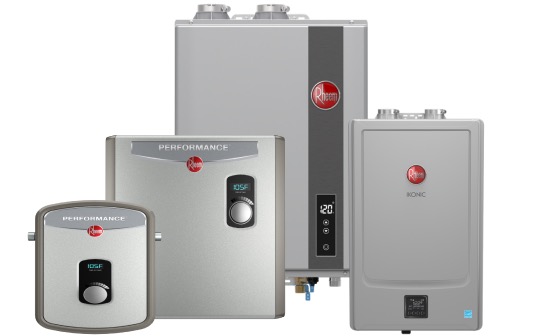
A tankless (or "on-demand") water heater has no storage reservoir at all. Instead, a high-powered heating element — gas burner or electric coil — rapidly heats water as it passes through the unit on its way to the tap, meaning hot water is theoretically available for as long as the tap stays open, without the finite-supply limitation of a tank.
Tankless units are also considerably more compact — typically wall-mounted rather than requiring the floor footprint of a 40-to-80-gallon tank — which matters in smaller homes or utility closets where space is at a premium.
Cost and efficiency: a longer payoff, not a cheaper purchase
Tankless units generally cost more upfront than a comparable tank system, both for the unit itself and for installation, which can require upgraded gas lines or electrical service depending on the model and household demand. The efficiency case for tankless comes from eliminating "standby loss" — a tank continuously reheats water that's slowly losing heat while sitting unused, while a tankless unit only uses energy at the moment hot water is actually being drawn. Over a long enough ownership period, this generally translates to lower energy costs, though the higher upfront cost means the breakeven point can take years to reach depending on household hot water usage and local energy prices.
| Type | How it works | Best for | Watch for |
|---|---|---|---|
| Tank | Continuously heats and stores 30-80 gallons | Lower upfront cost; instant availability | Finite supply can run out during heavy simultaneous use |
| Tankless | Heats water on demand as it flows, no storage | Compact footprint; theoretically unlimited duration | Higher upfront cost; flow-rate limit under heavy simultaneous demand |
Common questions
Can a tankless water heater really never run out of hot water?
In terms of duration, yes — it heats continuously as long as water flows. But it does have a maximum flow rate it can heat at once, so heavy simultaneous demand (multiple showers plus a dishwasher) can still reduce output temperature.
Is tankless always more energy efficient than a tank?
Generally yes, because it avoids continuously reheating standing water (standby loss), though actual savings depend on household usage patterns and local energy costs.
Do tankless water heaters need special installation?
Often, yes — depending on the model and household hot water demand, installation can require upgraded gas lines or electrical service, which is part of why upfront installation costs tend to be higher than a like-for-like tank replacement.
How much space does a tankless unit actually save?
Tankless units are wall-mounted and considerably smaller than a standing tank, which can hold 30-80 gallons and typically requires meaningful floor space in a utility closet or garage.