Quick take
- Labubu began in 2015 as a character in Hong Kong-born, Belgium-based artist Kasing Lung's picture-book series The Monsters, inspired by Nordic folklore.
- Pop Mart, a Beijing toy retailer founded by Wang Ning in 2010, signed an exclusive license with Lung in 2019 and turned Labubu into a blind-box product line.
- The character's global tipping point arrived in April 2024, when Blackpink's Lisa was seen with a Labubu bag charm — Rihanna, Dua Lipa, and other celebrities followed.
- The boom also fueled a large counterfeit market ("Lafufus") and turned Pop Mart's founder into one of China's richest people, almost entirely on the back of one IP.
Somewhere between a Nordic fairy tale and a designer handbag, a snaggle-toothed elf named Labubu became one of the most recognizable characters on the planet. It didn't start as a toy company mascot, and it definitely didn't start as a status symbol. It started as a picture-book character, drawn by an illustrator who spent his childhood between Hong Kong and the Netherlands. Everything that happened after — the blind boxes, the resale frenzy, the celebrity bag charms, the counterfeit crackdowns — is a case study in how a Chinese toy retailer took someone else's storybook art and built a global collectible economy around it in under a decade.
A Nordic monster drawn by an artist who grew up between two cultures
Kasing Lung was born in Hong Kong in 1972. His family had emigrated to Utrecht in the Netherlands, where his parents ran a Chinese restaurant, and he spent part of his childhood shuttling between Hong Kong and the Netherlands before settling back in the Netherlands with his family. After art school, he worked as an illustrator in Hong Kong through the early 2000s, then relocated to Belgium, where he shifted toward book illustration and toy design.
Around 2015, Lung introduced The Monsters, a picture-book series populated by "zoomorphic elves" drawn from the Nordic folklore and mythology he'd been fascinated with as a child. The breakout character was Labubu — sharp-toothed, big-eared, permanently mischievous, and drawn with a scruffy, unpolished charm that stood apart from the sleeker character design common in East Asian toy design at the time. Lung had already been making physical figures with the Hong Kong company How2Work since around 2010, so by the time Labubu appeared on the page, there was already a path toward turning the character into a collectible object rather than leaving it as book art.
The deal that turned a picture-book character into a product line
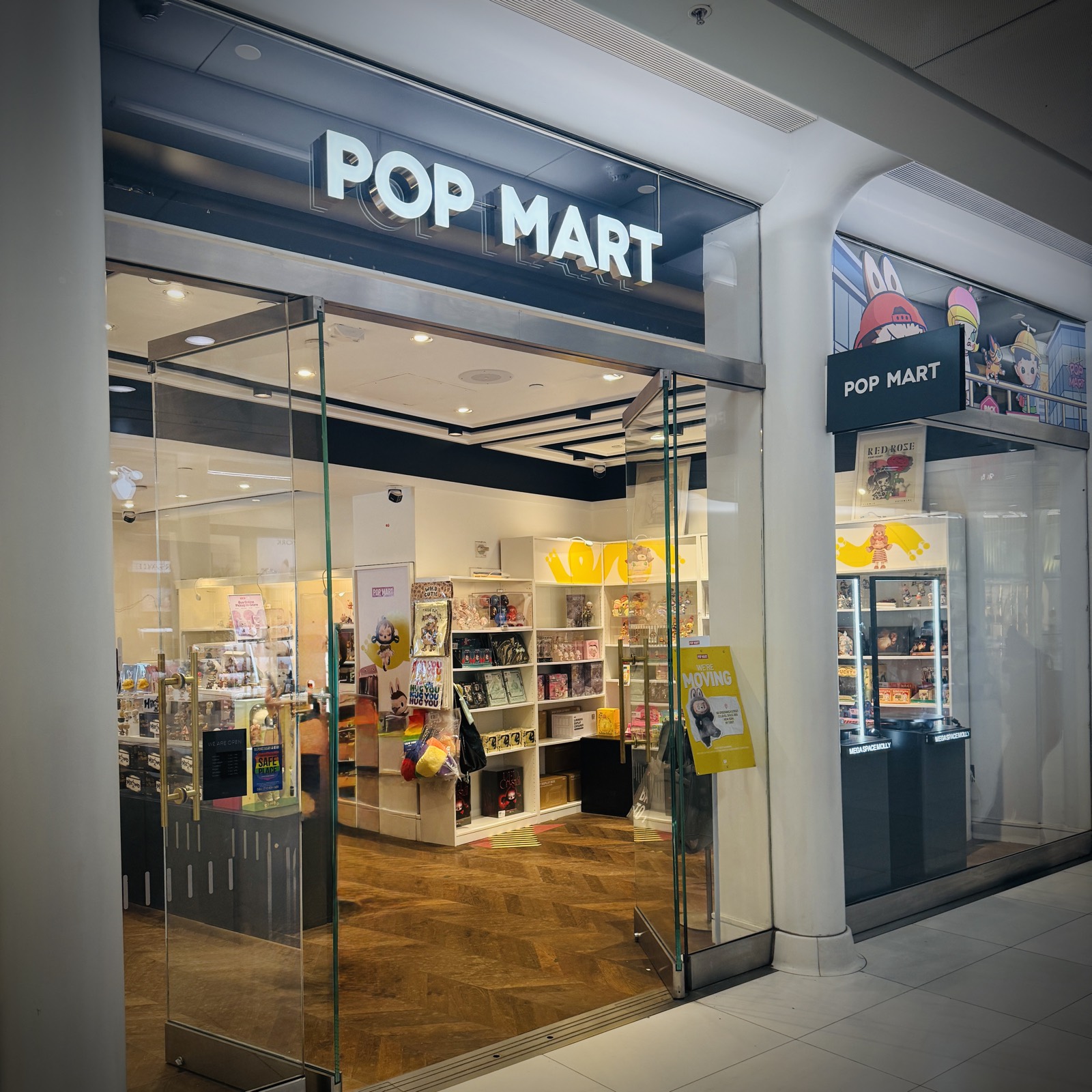
The turning point was a licensing agreement. In 2019, Lung signed an exclusive deal with Pop Mart — a Beijing-based toy retailer founded in 2010 by Wang Ning, who had built the company around a format it didn't invent but came to define: the blind box, a sealed package where the buyer doesn't know which figure from a themed series they're getting until they open it.
Pop Mart's core business, before Labubu, was already built around IP it licensed or developed in-house — Molly, Skullpanda, Dimoo, and Crybaby among them — sold almost entirely through the blind-box mechanic. The Labubu deal added an artist-owned character with an actual narrative world behind it, distributed through the same scarcity-driven system: numbered series, "secret" ultra-rare variants hidden at low odds inside otherwise identical boxes, and frequent limited drops timed to specific launches or collaborations.
April 2024: the moment it left the collector world
Labubu had already built a real following in China and parts of Southeast Asia before 2024, but the character's leap into global mainstream fashion traces to a specific moment: Blackpink member Lisa was photographed with a Labubu charm clipped to her handbag in April 2024. The sighting spread fast across social media, particularly in Thailand, and Lisa later described her Pop Mart habit as a "secret obsession" in a November 2024 interview with Vanity Fair.
What followed looked less like a single celebrity endorsement and more like a chain reaction. Rihanna, Dua Lipa, Cher, and members of Thai royalty were all photographed with Labubu charms over the following year, and the trend crossed from East and Southeast Asia into Europe and North America. Fashion trade press covered it as a genuine accessory-category shift rather than a passing meme: designers and stylists began treating the plush charm the way they'd treat a scarf or a keychain — a small, swappable signal clipped to an otherwise expensive bag.
The collector economy: scarcity, RoboShops, and a real resale market
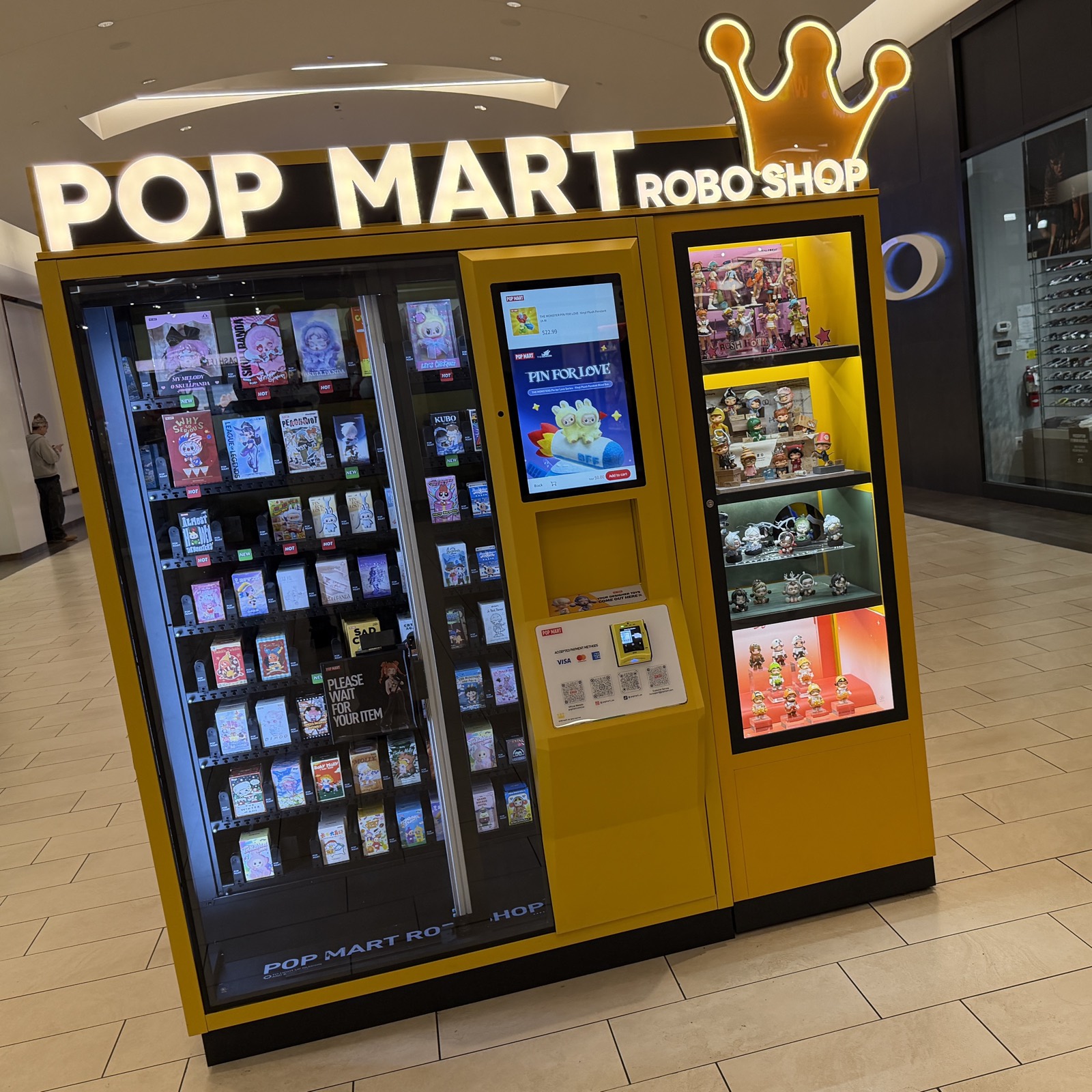
Pop Mart's blind-box model runs on manufactured scarcity, and Labubu became its most effective test case. Series are released in limited runs; specific figures are seeded at low, undisclosed odds; and demand routinely outstrips supply at launch, which is a large part of why lines sell out and why secondary marketplaces for individual figures exist at all. Pop Mart has also leaned on unstaffed "RoboShop" vending kiosks — placed in malls and airports — as a growing share of its retail footprint, letting the company multiply purchase points without staffing full stores in every location.
The rarity mechanic produced real-world friction. In May 2025, Pop Mart temporarily paused in-store Labubu sales across its UK locations after multiple reports of customers fighting over stock, and crowd-control issues around restocks were reported at pop-up locations and mall openings in multiple countries through 2024 and 2025. A collector and resale ecosystem — auction listings, dedicated resale marketplaces, price-tracking communities — grew up around specific rare variants, mirroring the secondary markets that already existed for limited sneakers and trading cards, though how any individual figure trades hands is a matter for those marketplaces, not something this piece tracks.
| Milestone | Year |
|---|---|
| Pop Mart founded (Wang Ning, Beijing) | 2010 |
| Kasing Lung introduces The Monsters and Labubu | 2015 |
| Pop Mart lists on the Hong Kong Stock Exchange | 2020 |
| Kasing Lung signs exclusive license with Pop Mart | 2019 |
| Lisa (Blackpink) sparks the global viral moment | 2024 |
| UK stores pause Labubu sales over crowd incidents | 2025 |
Where Labubu sits in the wider designer-toy landscape
Labubu is the breakout, but it isn't Pop Mart's only IP, and Pop Mart isn't the only company in this category. Seeing it next to its siblings — and a genuine outside competitor — makes clearer what actually made this character different: a real narrative world behind it, rather than pure character design.
Labubu / The Monsters
Created by Kasing Lung in 2015, licensed to Pop Mart in 2019. The only major Pop Mart line built on an artist's existing storybook world rather than developed as a toy-first character.
Molly
Pop Mart's original flagship character, a pouty-lipped young girl figure that predates Labubu's rise and helped establish the blind-box format the company is known for.
Skullpanda
A moodier, more fashion-forward line aimed at an older collector base, one of Pop Mart's other billion-yuan-revenue IPs alongside Molly and Crybaby.
Crybaby
A teary-eyed character line created by Thai artist Nisa Srikumdee (not to be confused with the Molly IP above) — the first Thai artist signed to Pop Mart — leaning into an emotionally exaggerated aesthetic distinct from Labubu's mischief.
Sonny Angel
The cherub-headgear figures that predate the modern blind-box boom by roughly two decades. Created by Toru Soeya's Dreams Inc. in Japan, Sonny Angel remains the closest thing Labubu has to an established rival in the category.
Zimomo, Mokoko & friends
Labubu's tribe within Kasing Lung's original series — including the larger, protective Zimomo and the pastel-furred Mokoko — gives the character an actual cast and setting most blind-box lines don't have.
The problem success created: "Lafufus"
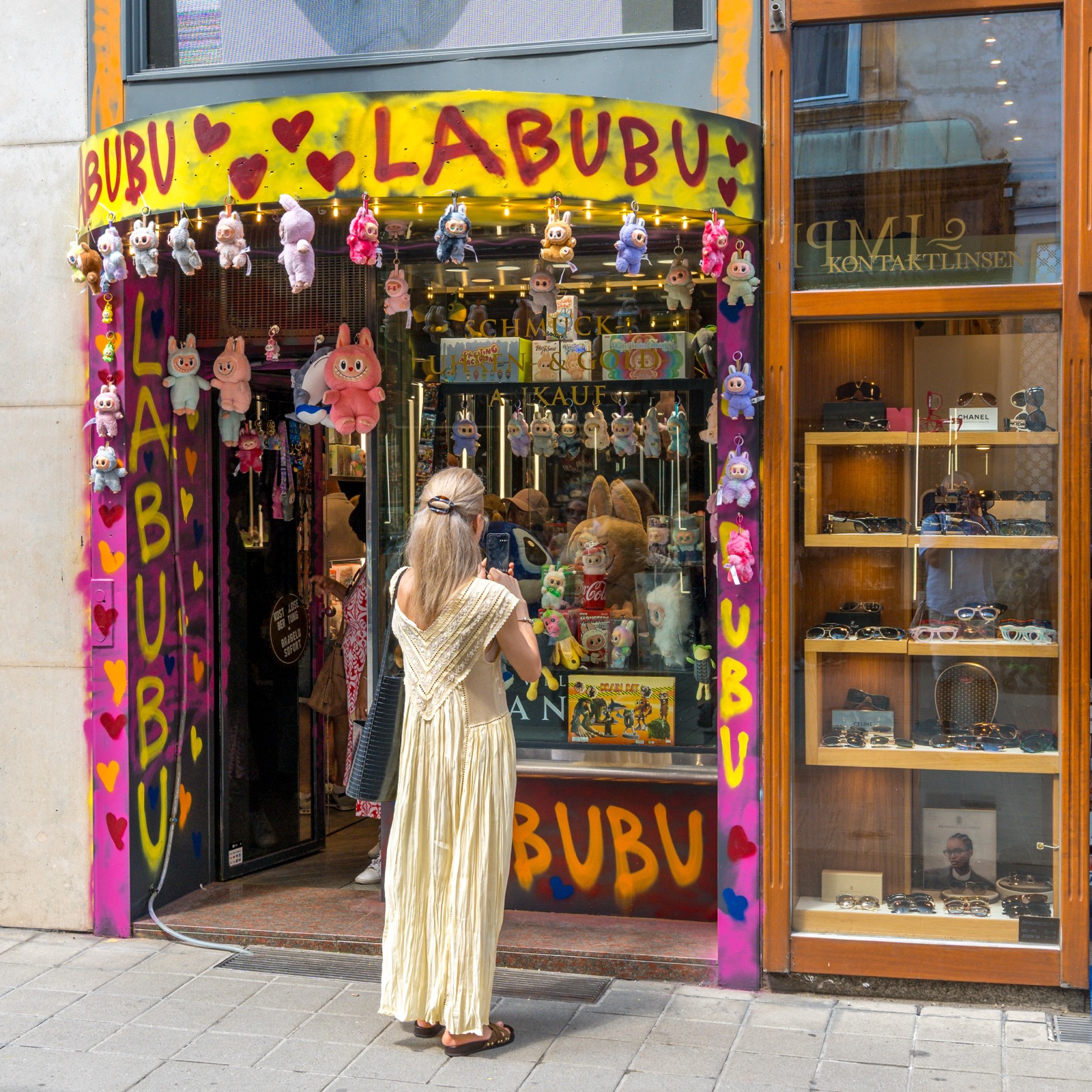
Any character this visible, sold through a scarcity mechanic this deliberate, was always going to attract counterfeits — and it has, at scale. Fakes nicknamed "Lafufus" spread through street vendors, marketplaces, and even some retail shelves, prompting Pop Mart to pursue legal action against sellers, including a lawsuit against a US convenience-store chain over counterfeit stock. Authentic figures carry specific, checkable details — a consistent nine-tooth mouth, a matte peachy face tone, a Pop Mart logo stamped on the foot, and packaging with a QR code, UV stamp, and holographic sticker — details that have become their own small genre of collector content dedicated to spotting fakes.
The counterfeit problem got serious enough to draw regulatory attention: in August 2025, the US Consumer Product Safety Commission issued a warning about lookalike Labubu dolls over choking-hazard and material-safety concerns, separate from the trademark and quality issues Pop Mart itself has pursued.
What the boom did for the company behind it
The business impact is real and well documented, without needing resale-market dollar figures to make the point: Pop Mart's revenue more than doubled in 2024, and the Monsters line — driven almost entirely by Labubu — became the company's single largest IP category, up sharply year-over-year. Overseas sales, negligible a few years earlier, grew into a major share of total revenue as international stores, RoboShops, and pop-ups expanded across Southeast Asia, Europe, and North America. Wang Ning's stake in the company made him one of China's wealthiest people through 2025, a fortune that has moved with Pop Mart's stock price and the durability of the Labubu trend, illustrating just how concentrated the company's fortunes became around a single character.
Common questions
Who actually created Labubu?
Hong Kong-born, Belgium-based artist Kasing Lung, who introduced the character in 2015 as part of his picture-book series The Monsters, inspired by Nordic folklore.
Is Pop Mart the same company as Labubu?
No. Pop Mart is a Chinese toy retailer that holds an exclusive license, signed in 2019, to produce and sell Labubu and the rest of The Monsters characters. Kasing Lung remains the character's original creator.
What kicked off the global viral moment?
Blackpink member Lisa was seen with a Labubu bag charm in April 2024, which spread rapidly across social media and was followed by other celebrities including Rihanna and Dua Lipa.
What is a "Lafufu"?
Collector slang for a counterfeit Labubu. Fakes have become common enough that Pop Mart publishes authentication guidance and has pursued legal action against sellers of counterfeit stock.
Is Labubu the only blind-box collectible like this?
No. Pop Mart's own portfolio includes Molly, Skullpanda, and Crybaby, and outside the company, Japan's Sonny Angel (by Dreams Inc.) predates the modern blind-box boom by roughly two decades.
Strip away the bag-charm photos and the resale chatter, and what's left is a fairly unusual origin story for a global toy trend: a single illustrator's picture-book world, licensed to a company that had already built an entire retail format around manufactured scarcity, hitting a celebrity moment it didn't fully engineer. The blind-box mechanics aren't new, and neither is celebrity-driven demand — what's real about the Labubu boom is how completely those two forces compounded, fast enough to spawn a large counterfeit market, real crowd-control problems at stores, and a fortune for the toy company that licensed the character, almost all of it inside two years.
Disclosure. DopamineKart has no business relationship with Pop Mart, Kasing Lung, How2Work, or Dreams Inc. Nothing in this piece is sponsored, it contains no affiliate links, and no resale or retail price figures are cited — collectibility and scarcity are described qualitatively. Photography is Wikimedia Commons, credited per image.
Corrections: email us