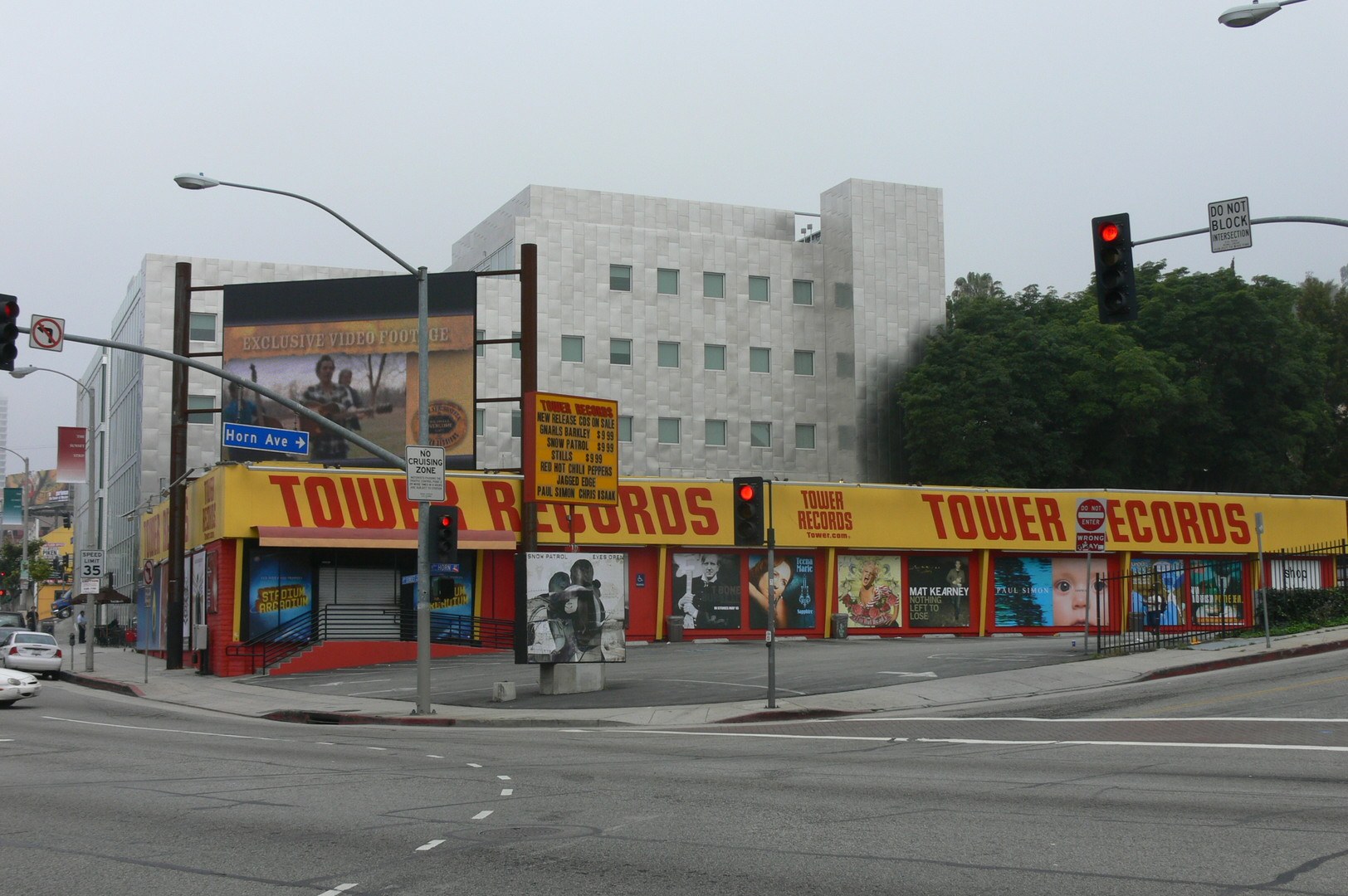
It was, on paper, a record store. In practice, for thirty-five years, it was the closest thing the music industry had to a public square — and the block still hasn't quite figured out what to do with the space since.
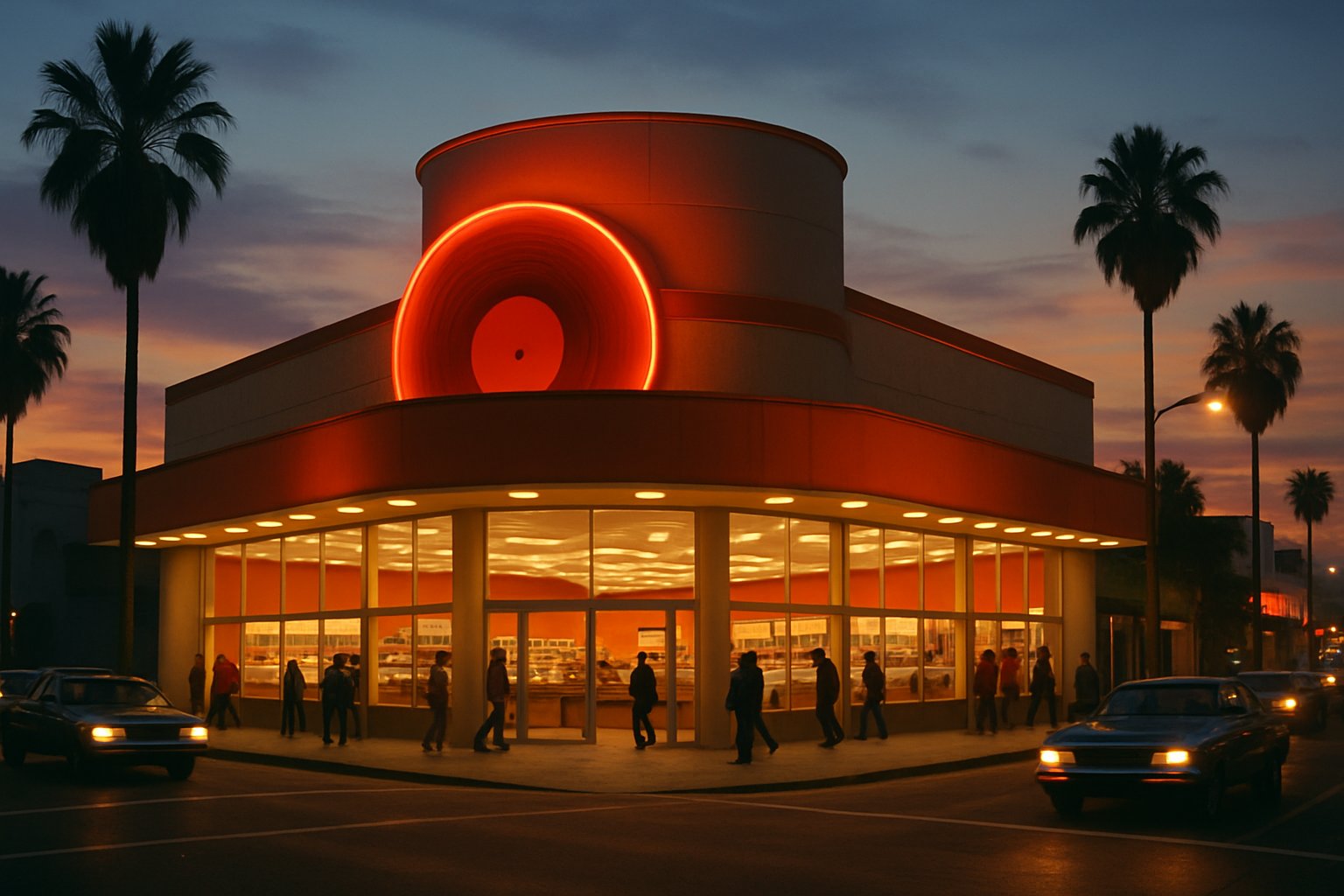
A Sacramento drugstore's idea, built biggest in West Hollywood
Tower Records traces back to 1960, when Russ Solomon opened the first store in Sacramento, inside the old Tower Theatre building — he'd already been selling records out of his father's drugstore since 1941. The chain expanded through the 1980s and '90s until it reached roughly 200 stores across 30 countries, with peak annual sales near $1 billion in 1999.
The Sunset Strip location, at 8801 W. Sunset Blvd. at the corner of Horn Avenue in West Hollywood, opened in 1971 — Tower's first Southern California store, purpose-built at nearly 8,700 square feet. The 1974 Guinness Book of World Records listed it as the largest record store on Earth. It stayed open until midnight on weeknights and 1 a.m. on weekends, with no dress code, in a neighborhood that otherwise ran on velvet ropes.
Where the industry actually hung out
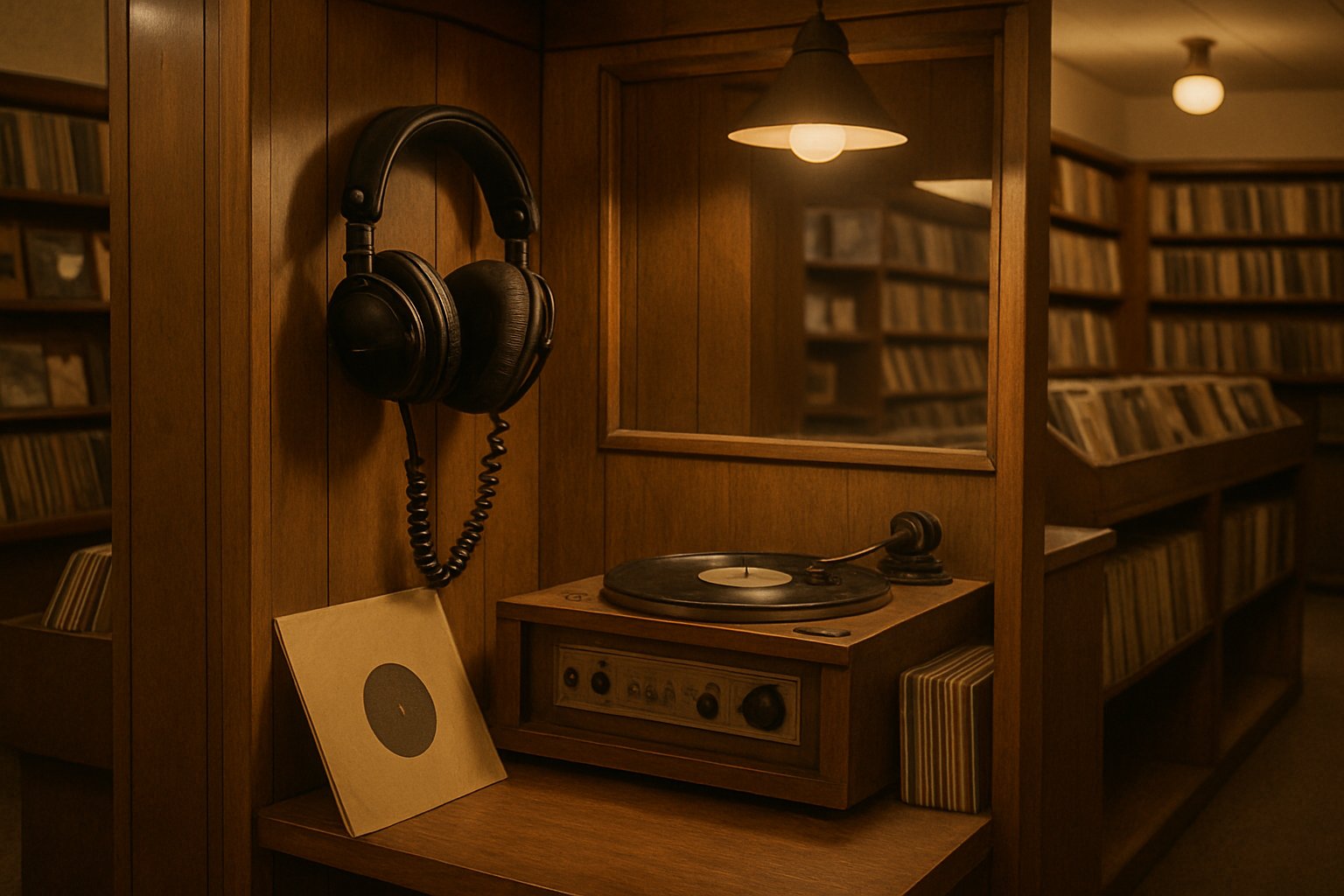
The Sunset store wasn't just large — it was where the music industry itself showed up. Label reps and touring musicians used it as a meeting point, and one listening station reportedly stocked only yet-to-be-released demos and CDs, a genuine industry-only perk unavailable anywhere else on the Strip.
The in-store history reads like an incomplete guest list for the era: Prince, Rod Stewart, Aerosmith, James Brown, Dolly Parton, Mariah Carey, and KISS all performed or held signings there; Duran Duran held a parking-lot reunion event in 1993. In 1988, David Lee Roth rappelled down a fake mountain built specifically on the store's roof. Regular celebrity shoppers included Robert Plant, Stevie Wonder, Ella Fitzgerald, Ringo Starr, Elton John, and John Lennon.
One employee is now more famous than almost anyone who shopped there: Dave Grohl worked the Sunset store for about two months in 1990, shortly before joining Nirvana.
Two real bankruptcies, one slow ending
Tower's decline came in two distinct stages, not one. The first Chapter 11 filing came in February 2004, after the company couldn't make a $5.2 million bond payment against roughly $100 million in debt — bondholders took an 85% equity stake, leaving the Solomon family with about 15%. The company emerged from that filing weaker, not fixed.
The second, final bankruptcy came August 20, 2006. Great American Group won the liquidation auction that October, and the last U.S. stores — including Sunset — closed for good by December 22, 2006.
The 2015 documentary "All Things Must Pass," directed by Colin Hanks, argues the ending wasn't purely a Napster story: 1990s overexpansion debt and big-box price competition mattered just as much as the internet did. The title comes from a real banner — "All Things Must Pass," a nod to the George Harrison song — hung outside the original Sacramento store during its final days.
What the building actually became
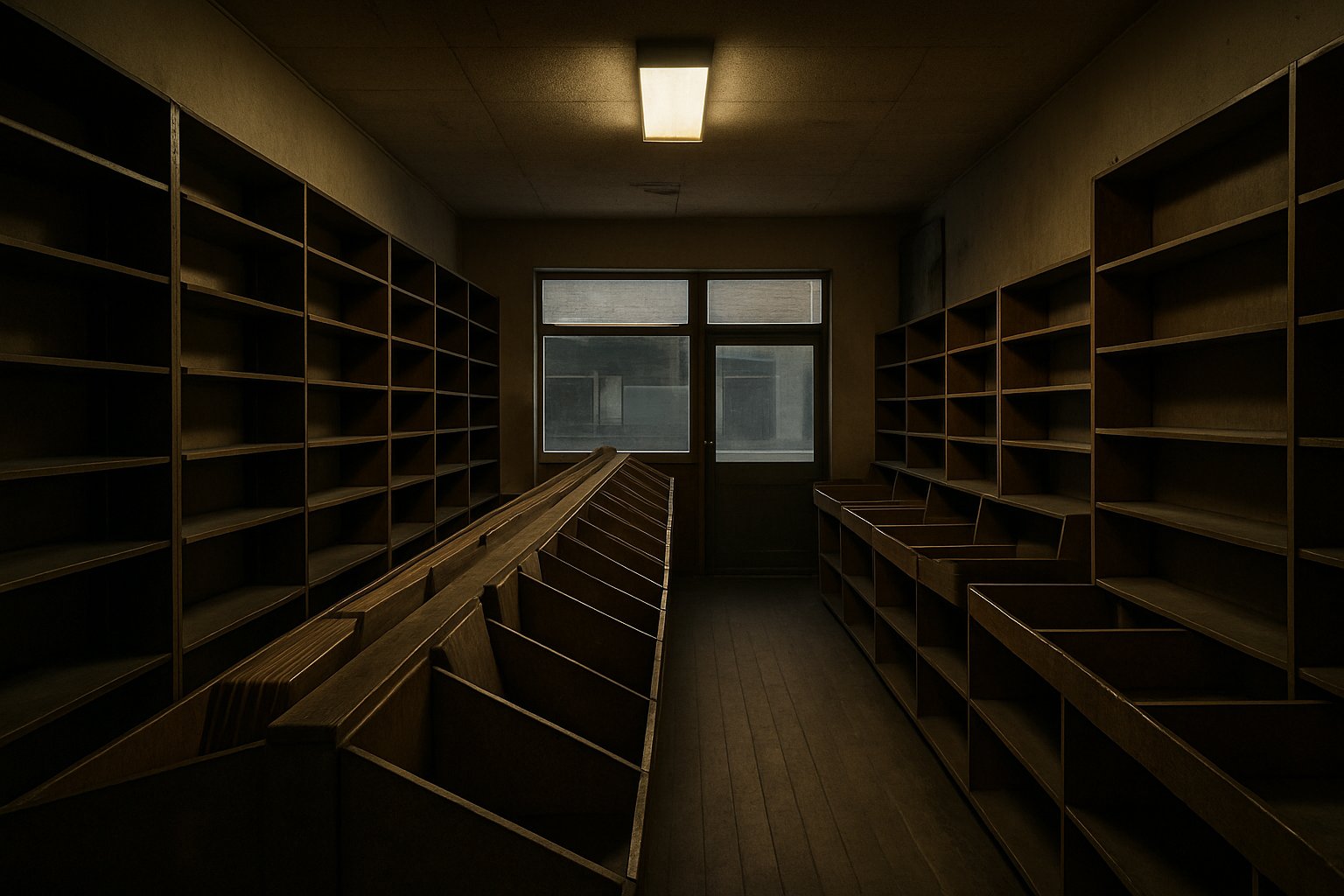
The 8801 Sunset building sat mostly dormant for years afterward, with occasional promotional pop-ups (The White Stripes used the space in 2007) and two failed preservation pushes — a 2008 demolition proposal and a 2013 cultural-landmark campaign, neither of which fully resolved the building's fate.
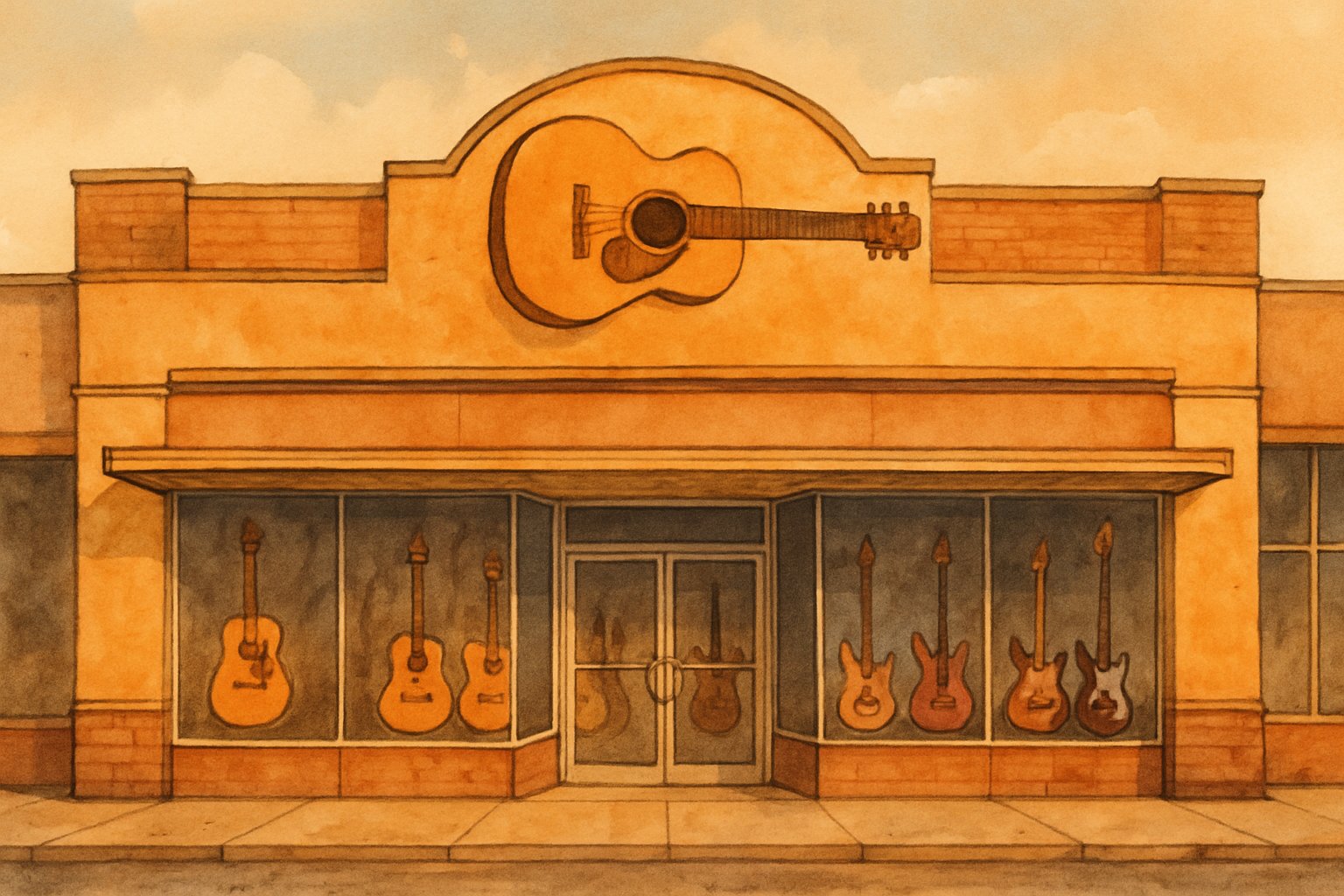
Gibson Guitar signed a 15-year lease in late 2014 and ran it as a showroom and gathering space. More recently, streetwear brand Supreme took over the building, completing a renovation around 2023 — putting a very different kind of cultural landmark in the same footprint.
Worth keeping straight for anyone piecing together Sunset Strip music-retail history: Virgin Megastore, a separate chain, opened its own Sunset flagship a few blocks away in December 1992 and closed in 2007 — a few months after Tower folded, briefly making it the last major music retailer standing on that stretch. Wherehouse Music, a separate California chain, went down in the same wave of digital-era pressure.
What's left of it now
The cover photo above is real. These two round out the real photographs — the actual Sunset store during a real event, and what's left of the brand today.
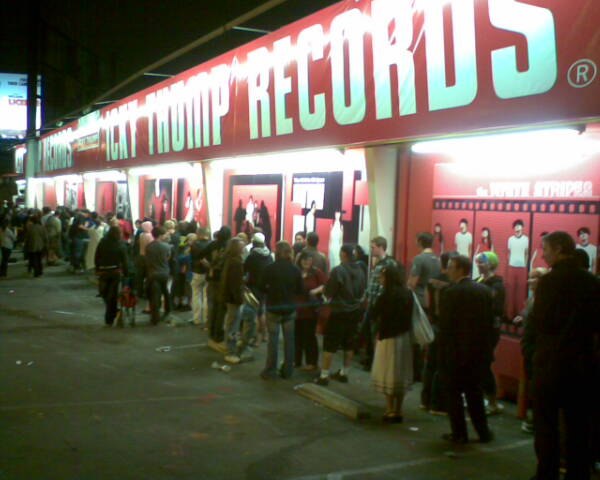
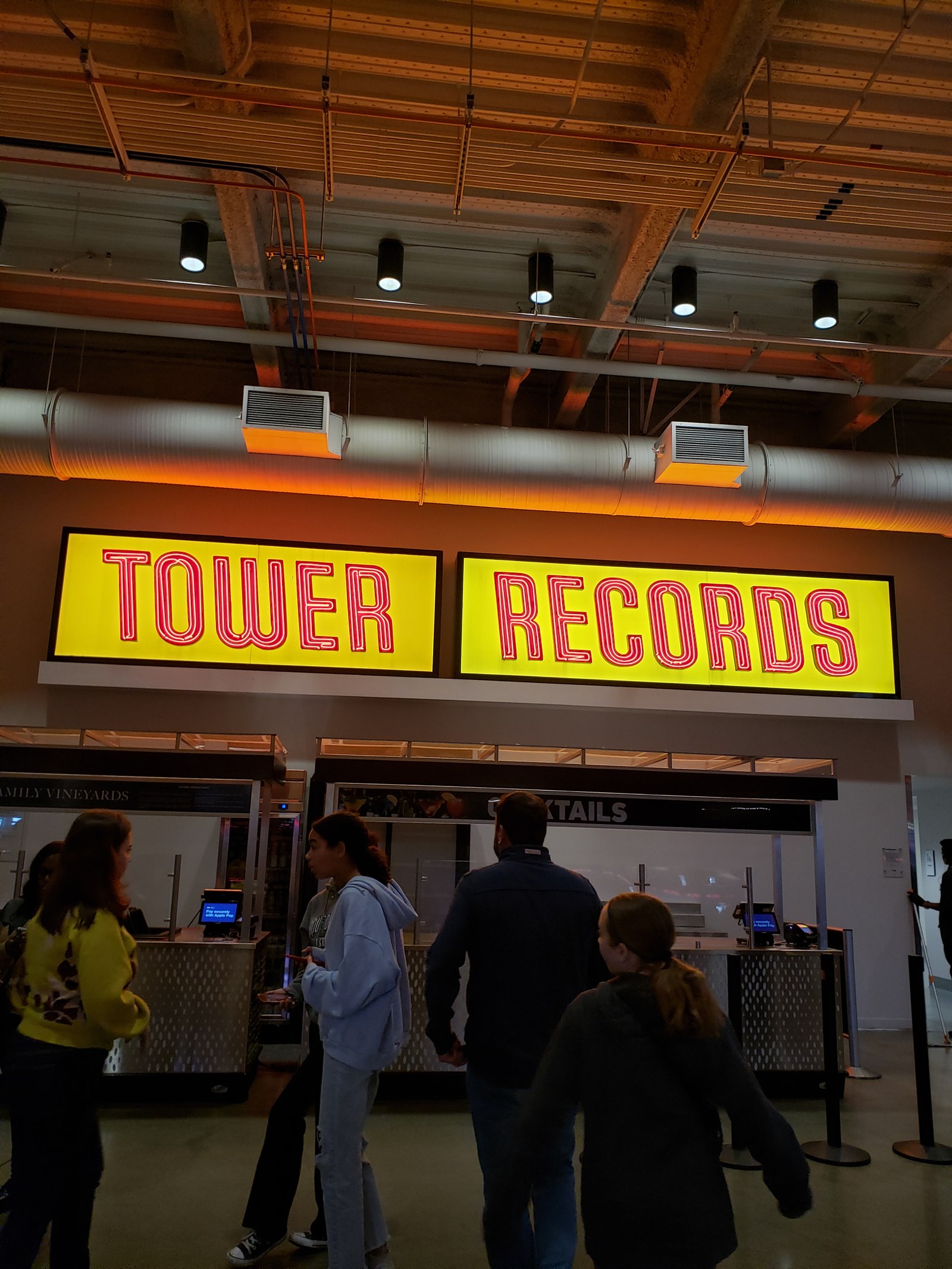
Photo credits: fans at the Sunset Strip Tower Records, June 2007, by Timothy Tolle, CC BY 2.0, via Wikimedia Commons. Tower Records neon sign at Golden 1 Center, Sacramento, via Wikimedia Commons, CC BY-SA 4.0.
Common questions
Was the Sunset Strip Tower Records really the largest record store in the world?
At least by the 1974 Guinness Book of World Records, yes — it held that title at roughly 8,700 square feet.
What's there now?
Streetwear brand Supreme completed a renovation of the building around 2023, after a run as a Gibson Guitar showroom starting in 2014.
Is the "magazine annex" detail real?
Not verified — the documented adjacent operations were a Tower Video store and a Tower Classical Music annex, not a magazine annex, so that detail is intentionally left out here.
Disclosure. Store history, dates, and ownership details referenced here were independently researched and verified against multiple sources before publication. The cover photo and the two photos in the "What's left of it now" section are real; every other image on this page is AI-generated and clearly labeled as such. DopamineKart did not receive free products or payment related to this piece. Corrections: email us.