
Quick take
- Moviefone launched in 1989, dial 777-FILM, punch in your ZIP, get showtimes read back to you by a very specific voice. It solved a real problem: not knowing what was playing without a newspaper or a busy box office line.
- That voice belongs to Russ Leatherman, one of the co-founders — he did the read himself because, by his own account, the alternative was one partner who could barely talk and another who "sounded like Donald Duck."
- AOL bought the company in 1999 for roughly $388 million. The phone lines ran another 15 years after that before AOL finally shut 777-FILM down in 2014.
- It didn't die there. It got passed to MoviePass's parent company, went through that whole company's bankruptcy, got auctioned off for just over a million dollars, and today it's a website and a streaming channel — 777-FILM itself, though, is gone for good.
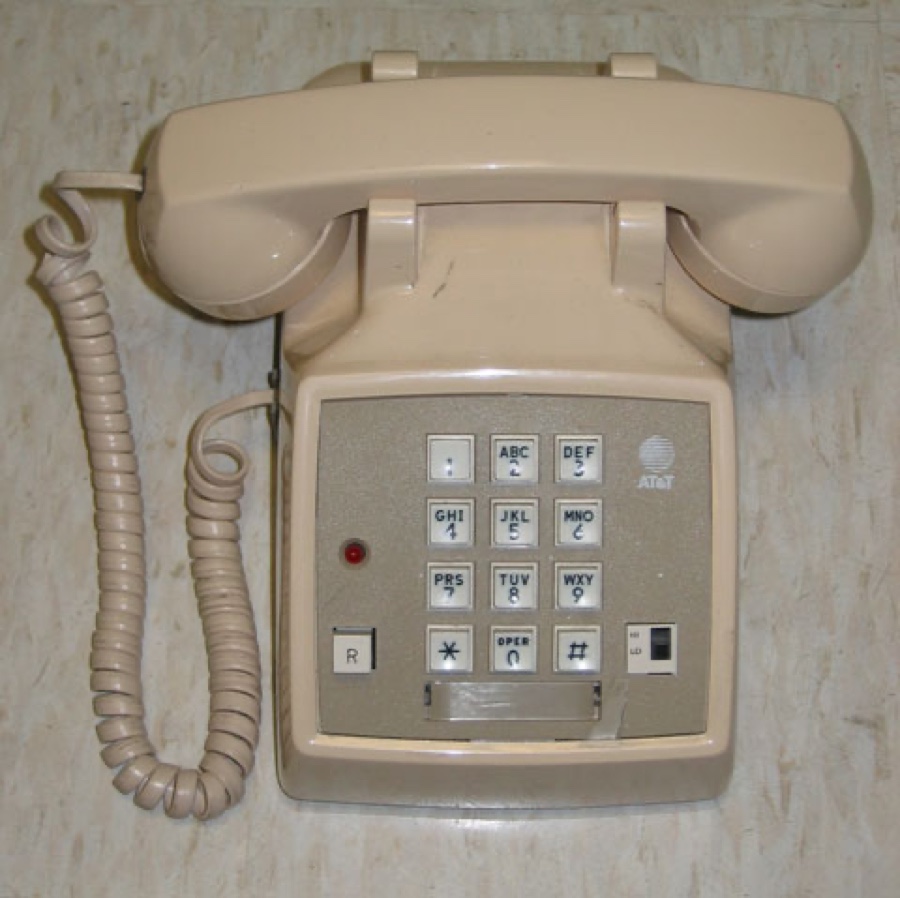
I'll tell you where I was. I was standing in the kitchen, cord stretched as far as it would go, one finger on the ZIP code buttons, because my mother needed to know what time the movie — any movie, whichever one we were fighting about — was showing at the Cinemark. You dialed 777-FILM. You did not dial anything else. And then a man who sounded like he'd had exactly one cup of coffee too many told you everything you needed to know, and you loved him for it, and you didn't even know his name.
Still don't, probably. Most people don't. So let's fix that, because the real story is better than the bit.
It Started With a Guy Who Couldn't Get a Straight Answer
Contemporaneous reporting shows Moviefone launched in 1989, founded by Russ Leatherman along with Doug Hoitenga, Rob Gukeisen, Andrew Jarecki, Pat Cardamone, and Adam Slutsky. The pitch was almost insultingly simple for how much it changed a Friday night: dial 777-FILM from anywhere in the country, punch in your ZIP code, and the system would read back what was playing near you and when — no newspaper, no busy signal at the box office, no guessing. It went live in New York and LA in the fall of 1990. As I remember it, that's exactly why it worked in my house — there was no other way to get that information without either already owning today's paper or standing in a theater lobby hoping the marquee was accurate.


The Voice. You Know the Voice.
Here's the part that actually surprised me doing this: contemporaneous reporting confirms Russ Leatherman is Mr. Moviefone. Not an actor, not a hired voice — a co-founder of the company, born February 14, 1962, who ended up in the recording booth because the alternative options were worse. "Hellooo, and welcome to Moviefone!" is his voice, has always been his voice, and he's told the story of landing on that particular energy more than once — going for something between a game-show host and a man who's had way too much coffee.
The record backs up just how big it got: it stopped being an ad and became a cultural fact. In 1995, Seinfeld built a plot around it — "The Pool Guy" has Kramer doing the Moviefone voice, badly, which only lands if the real one is already burned into your brain. Time, People, Entertainment Weekly, Life, Vanity Fair, the New York Times — Leatherman got profiled in all of them, purely off a greeting. The bit got referenced on The Simpsons, on SNL, on Conan, on VH1's I Love the 90s, and it turned up at the Oscars in 2005. I don't know how you get more famous for a phone greeting than that. I don't think it's possible.

What We Get Wrong About It
My memory — possibly improved by time — insists that voice was some kind of hired mascot, an actor cast specifically to sound like that. It wasn't, and that's the detail most people, myself included until recently, get backwards. Leatherman wasn't reading a script written for a character; he was one of the six people who built the company and just didn't have a better option in the room. I also would have sworn 777-FILM was a nationwide 1-800 number you dialed the same way everywhere. Contemporaneous reporting shows Moviefone actually ran as local 777-FILM numbers in dozens of area codes around the country (plus a toll-free version) — the "same number everywhere" feeling was really just how uniform the ad campaign made it feel, not one single line the whole country dialed. And the popular shorthand that Moviefone simply "shut down" in the 2010s isn't quite right either — the 777-FILM phone line was retired in 2014, but the company itself kept going for years afterward under two more owners before landing where it is today.

What Actually Happened to It
This is the part everybody gets fuzzy on, myself included until I sat down and traced it properly. Moviefone didn't just fade out — it went through four distinct corporate lives.
Founded by Russ Leatherman and partners; 777-FILM goes live in New York and LA.
AOL acquires Moviefone for roughly $388 million in stock — a genuinely huge deal for the dot-com era.
AOL shuts down the 777-FILM phone lines after 25 years, pushing everyone to the Moviefone app and site instead.
MoviePass's parent company, Helios and Matheson, buys Moviefone from AOL/Verizon in a deal worth up to $23 million.
Helios and Matheson — and MoviePass with it — goes bankrupt. Moviefone becomes an asset in a bankruptcy auction.
Moviefone is sold for $1.075 million to Born in Cleveland LLC, the company behind producer Cleveland O'Neal III.
Moviefone.com runs as a movies/TV listings and news site, now paired with a 24/7 streaming channel — "Made in Hollywood powered by Moviefone" — on Roku and Samsung TV Plus.


So the honest answer to "whatever happened to Moviefone" is: it got acquired, shut down its actual reason for existing, got acquired again by the company that also ran MoviePass into the ground, got sold off in that company's bankruptcy for a fraction of what AOL paid, and now lives on as a website and a streaming channel under a different owner entirely. The 777-FILM number itself — the thing everybody actually remembers — has been dead since 2014. No amount of app redesigns brings back the guy answering your call.

The Part Nobody Believes: I Still Miss the Phone
I'll be straight with you — I don't need it back. My phone does everything Moviefone did and does it faster. But there was a specific kind of ceremony to it that the app never replicated: the cord, the ZIP code, the wait, the voice. You weren't just getting information, you were calling someone, even if "someone" was a recording. It's the same reason I still think the newspaper listings page had a rhythm the internet never figured out — you could see the whole night's options laid out at once, theater by theater, without a single notification trying to sell you popcorn combos in the process.
I'm not going to pretend I don't know how this sounds. I live next to LAX; I hear planes over my house from about six in the morning until whenever the last redeye leaves. I watch everything — and I mean everything — on Pacific Time, because a rerun means more to me at the hour I actually watched it the first time. I still make the drive to Randy's for the giant donut on the roof, not because the donut is objectively the best one in LA, but because sitting under that sign is its own kind of channel-surfing through the city's memory. So yes — I miss the phone. I'm allowed to.


Common questions
Is the 777-FILM phone number still active?
No. AOL shut the phone lines down in 2014 after 25 years of service. The number is retired; Moviefone today exists only as a website and streaming channel.
Who is the voice of Moviefone?
Co-founder Russ Leatherman, who has voiced "Mr. Moviefone" since the company launched in 1989 — not a hired voice actor, one of the people who built the company.
Did AOL really pay that much for Moviefone?
Yes — AOL acquired it in 1999 for approximately $388 million in stock, a major deal at the height of the dot-com era.
Is Moviefone connected to MoviePass?
It was, for a stretch. MoviePass's parent company, Helios and Matheson Analytics, bought Moviefone from AOL/Verizon in 2018. When that company went bankrupt in 2020, Moviefone was sold off separately at auction.
Does Moviefone still exist today?
Yes, under new ownership — producer Cleveland O'Neal III's company bought it out of bankruptcy in 2020 for $1.075 million. It now runs as Moviefone.com and a "Made in Hollywood powered by Moviefone" streaming channel on Roku and Samsung TV Plus.
The voice was never a mascot — it was a guy who couldn't find anyone better and just did the read himself, and it worked so well it outlived three separate corporate owners and a bankruptcy. The phone line it made famous is gone and isn't coming back, whatever the app looks like these days. But every time someone does that "Hellooo, and welcome to Moviefone!" bit at a party — and someone always does — that's twenty-five years of dial tone still getting a laugh. I'd call that a pretty good run for a phone number. 9.4 out of 10, and I'm only holding back the last point-six because I've stopped expecting anyone under thirty to believe this was real life.
Legit disclosure. This is an independently researched nostalgia-history article. It contains no affiliate links, paid placement or sponsorship. Personal recollections are identified as such and should not be interpreted as documentary evidence. Facts (founding, the 1999 AOL acquisition, the 2014 phone-line shutdown, the 2018 MoviePass/Helios and Matheson acquisition, the 2020 bankruptcy and sale, and Moviefone's current ownership and streaming presence) are drawn from public reporting — Mental Floss, Wikipedia, CNN Money, Variety, NBC News, Forbes, The Hollywood Reporter, Adweek, and California State University, Fullerton.
Corrections: email us