Quick take
- COSRX is now roughly 93% owned by Amorepacific, the conglomerate behind Sulwhasoo, Innisfree, Laneige, and two dozen other beauty brands.
- The takeover happened in two documented stages: a 38.4% stake in September 2021, then the remaining shares in October 2023.
- COSRX is the only major brand in Amorepacific's portfolio it didn't build in-house — every sibling brand was created internally.
- The product formulas and packaging haven't visibly changed; what changed is supply chain, manufacturing scale, and international retail access.
If you've bought a snail mucin essence in the last five years, there's a good chance it was COSRX's. The brand turned an unglamorous idea — that a mollusk's slime filtrate could calm irritated skin — into one of the most recognizable names to come out of Korea's skincare boom. What a lot of shoppers don't know is that COSRX hasn't been an independent company for a while. It's now a subsidiary of Amorepacific, the same conglomerate behind Sulwhasoo, Innisfree, Laneige, and roughly two dozen other beauty brands. The takeover happened in stages, over several years, and it's a useful case study in how Korea's beauty giants actually grow: not by building everything in-house, but by buying the startups that get somewhere first.
The dermatology side-project that became COSRX
COSRX was formally established in December 2013 by Jun Sang-hun, whose background was in cosmetic product development rather than marketing. The name is a portmanteau — "cosmetics" plus "Rx," the prescription symbol — meant to signal a clinical, ingredient-first approach rather than a beauty-counter one. The brand built its identity around a short list of specific, unglamorous products instead of a sprawling catalog: the Advanced Snail 96 Mucin Power Essence, the low-pH BHA Blackhead Power Liquid, and a run of Centella Asiatica-based calming formulas aimed at reactive, acne-prone, or over-exfoliated skin.
That narrowness is part of why it traveled so well. COSRX skipped the whimsical branding a lot of K-beauty exports leaned on in the 2010s and marketed itself almost like an ingredient spec sheet — pH numbers on the label, minimal fragrance, active percentages spelled out. It found an audience with skincare forums first, then with a wider wave of shoppers discovering K-beauty through Amazon and, later, TikTok.
The family conglomerate on the other side of the deal
Amorepacific's story starts decades before skincare influencers existed. In the 1930s, a woman named Yun Dok-jeong sold homemade camellia oil in Kaesong, in what is now North Korea. Her son, Suh Sung-hwan, took over and formalized the business in 1945 under the name Taepyeongyang — Korean for "Pacific Ocean." In 1997 he handed control to his son, Suh Kyung-bae, who pushed the company toward multiple distinct sub-brands rather than one house label, and the corporate name changed to Amorepacific in 2002.
That multi-brand strategy is why Amorepacific's portfolio looks the way it does today: separate labels built around separate ingredient stories and separate market positioning, all reporting up to one parent. COSRX is the newest and, notably, the only major addition in the group that Amorepacific didn't create from scratch — it bought its way in.

How the takeover actually happened
Amorepacific didn't acquire COSRX outright in one move. It built its position gradually, and the public record of the deal is unusually well documented for a Korean beauty acquisition:
- September 2021Amorepacific purchased an initial 38.4% stake in COSRX, becoming its largest outside shareholder while founder Jun Sang-hun and related parties retained majority control. The deal reportedly included a future option for Amorepacific to buy the remaining shares.
- October 2023Amorepacific exercised that option, agreeing to buy the remaining shares held by COSRX's founder and related parties. The purchase pushed Amorepacific's total ownership to roughly 93% of the company, formally making COSRX a subsidiary rather than an affiliate.
- Since 2023COSRX has continued operating under its own name and product lines, distributed in dozens of countries, while reporting into Amorepacific's broader corporate structure.
The acquisition was covered by trade outlets including BeautyMatter, Cosmetics Business, and Retail Dive, and formally announced by Amorepacific itself via press release. None of that coverage suggests any deception toward shoppers — Amorepacific has been public about the deal at every stage — but it also wasn't loudly advertised on COSRX's own packaging or storefront, which is part of why so many buyers still think of it as an independent indie brand.

What actually changed after the deal
From a shopper's side, COSRX's product line and branding stayed recognizably itself — same packaging language, same ingredient-forward marketing, same hero products. What changed was distribution muscle and manufacturing scale: as an Amorepacific subsidiary, COSRX gained access to a much larger company's supply chain, regulatory teams, and international retail relationships, which likely explains its continued expansion into markets an independent Korean skincare startup would struggle to enter alone. Founder Jun Sang-hun's day-to-day role in the company following the 2023 ownership transfer hasn't been detailed in public reporting in the same depth as the deal terms themselves — that's a gap worth naming rather than guessing at.
| Milestone | Year |
|---|---|
| Amorepacific's founding, as Taepyeongyang | 1945 |
| COSRX formally established | 2013 |
| Amorepacific's first COSRX stake | 2021 |
| COSRX becomes an Amorepacific subsidiary | 2023 |
Where COSRX sits in Amorepacific's portfolio
Seeing COSRX next to its siblings makes the acquisition logic clearer — it fills a lane (dermatology-adjacent, ingredient-led, younger audience) that none of Amorepacific's older, in-house brands were originally built for.
COSRX
Founded independently in 2013. Built its name on snail mucin, low-pH BHA, and Centella-based calming lines. Now roughly 93% owned by Amorepacific.
Sulwhasoo
Amorepacific's flagship prestige line, built around ginseng and traditional Korean herbal medicine formulations dating back to 1960s-era research.
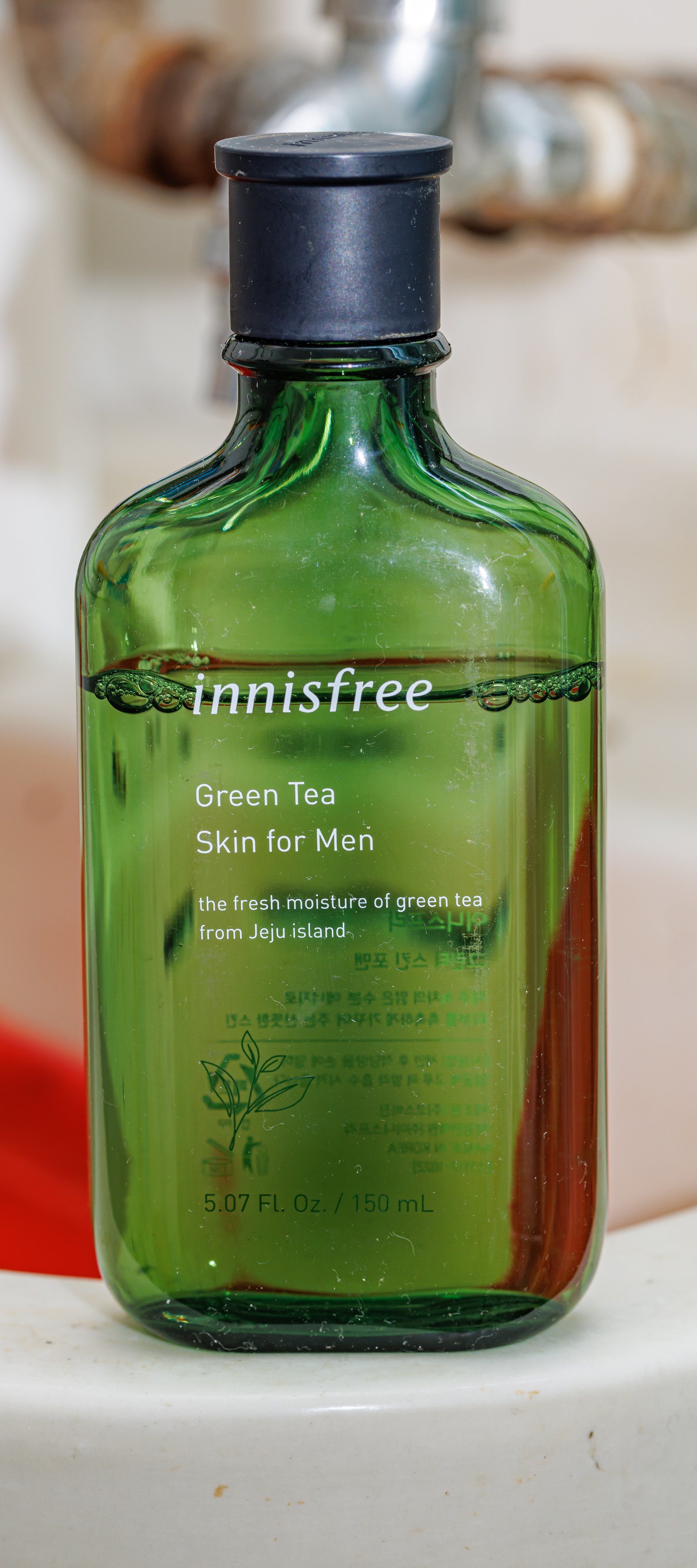
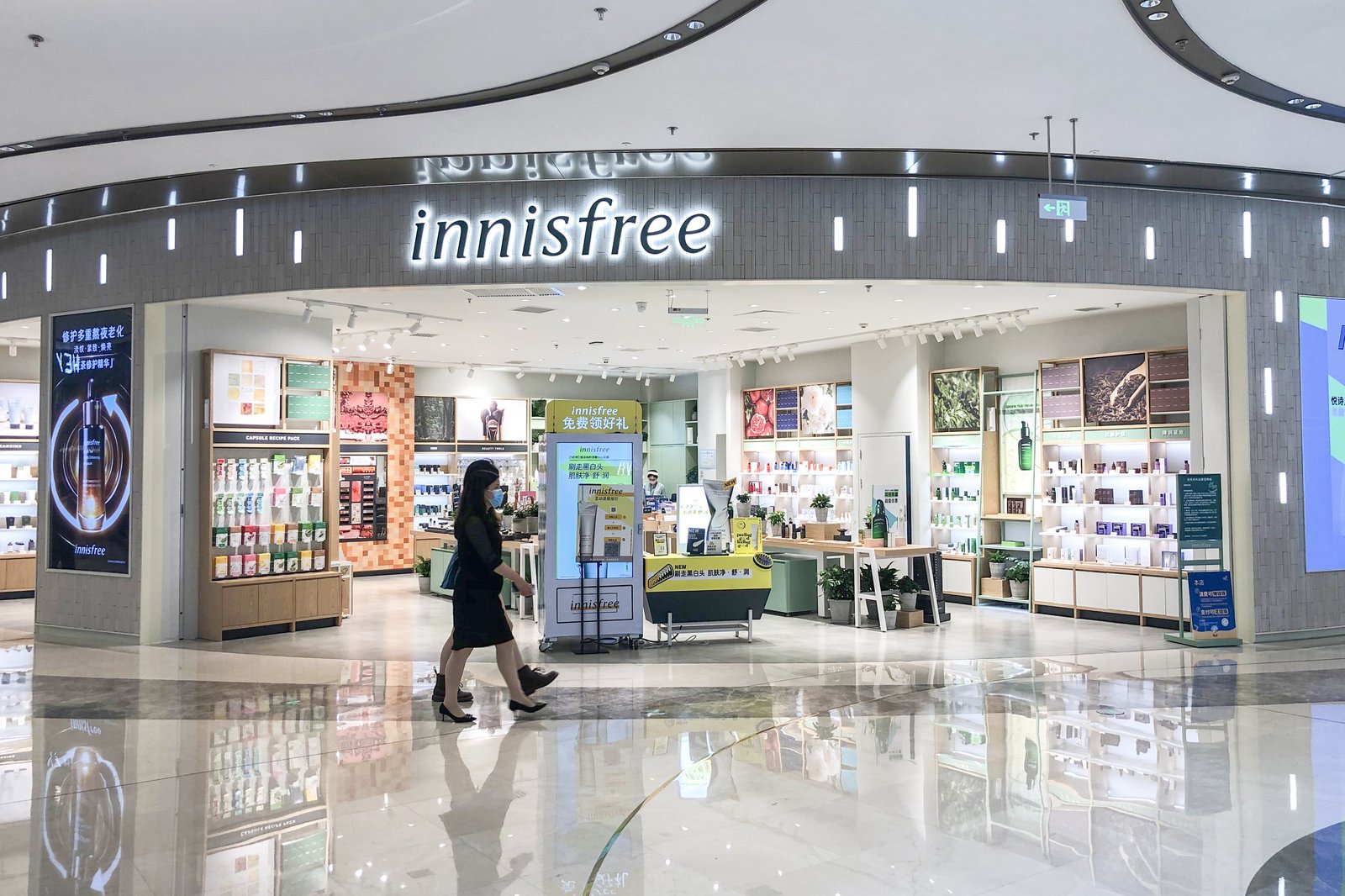
Innisfree
Positioned around Jeju Island-sourced ingredients — green tea, volcanic clay — and a simpler, younger identity than Sulwhasoo.
Mamonde
Flower-extract formulations — camellia, lotus, jasmine — one of Amorepacific's older mid-tier lines, still sold primarily across Asia.
Laneige
Water-science positioning, globally the most widely distributed Amorepacific brand outside Korea today, known for overnight lip and sleeping masks.
Etude House
Amorepacific's color-cosmetics and youth-market line, historically sold through its own standalone storefronts across Asia.
Common questions
Is COSRX still an independent company?
No. Amorepacific owns roughly 93% of COSRX as of October 2023, making it a subsidiary rather than an independent brand.
When did Amorepacific first buy into COSRX?
September 2021, an initial 38.4% stake, with the founder retaining majority control until the full buyout in October 2023.
Have COSRX's products changed since the acquisition?
Not visibly — the formulas, packaging, and ingredient-forward marketing have stayed recognizably the same.
What other brands does Amorepacific own?
Sulwhasoo, Innisfree, Laneige, Mamonde, Etude House, and roughly two dozen others — all built in-house except COSRX.
Why does ownership matter if the products are the same?
Conglomerate ownership changes how fast a brand scales, which markets it enters, and whose supply chain it leans on — even when the packaging looks identical.
None of this makes COSRX's products different or worse than they were as an independent brand — the formulas, the low-pH philosophy, and the dermatology-inspired approach haven't visibly shifted. But "who owns it" is a fair question to ask about any beauty brand you're loyal to, K-beauty included, because conglomerate ownership changes what a brand can do — how fast it scales, which markets it enters, whose supply chain it leans on — even when the packaging looks exactly the same. COSRX is now one node in a 30-plus-brand portfolio built by one Korean family over three generations. That's not a scandal. It's just worth knowing before you assume the tube in your bathroom came from a scrappy indie lab.
Disclosure. DopamineKart has no business relationship with Amorepacific or COSRX. Nothing in this piece is sponsored, and no affiliate links appear in the ownership history above. Real photography is Wikimedia Commons, credited per image. Illustrations are AI-generated (OpenAI gpt-image-1), used only for conceptual ownership-structure diagrams — never to depict a real product or brand mark.
Corrections: email us