Quick take
- Rhode is now a wholly owned subsidiary of e.l.f. Beauty, the publicly traded company behind e.l.f. Cosmetics, Naturium, and Well People.
- The deal was announced May 28, 2025 and closed August 5, 2025 — $800 million in cash and stock upfront, plus up to $200 million more if Rhode hits growth targets over the next three years.
- Hailey Bieber didn't exit. She stayed on as Rhode's chief creative officer, while co-founder Lauren Ratner became president and chief brand officer.
- The most visible post-deal change wasn't the product line — it was distribution. Rhode went from direct-to-consumer only to Sephora shelves within a month of the deal closing.
Rhode built its entire identity on restraint: three products at launch, a waitlist instead of a wide release, and a founder who turned down beauty-industry incubators specifically to keep control. That restraint is part of why, three years later, e.l.f. Beauty was willing to pay up to a billion dollars for it. Rhode isn't an independent brand anymore — as of August 2025, it's a subsidiary of a public cosmetics company that also owns e.l.f. Cosmetics, Naturium, and Well People. The acquisition is a useful case study in what a celebrity beauty brand is actually worth once it proves it isn't just a celebrity halo: real repeat sales, real margins, and a name that outgrew its DTC ceiling.
The brand that launched with three products on purpose
Rhode — stylized lowercase, legally registered as HRBeauty LLC — launched on June 15, 2022, founded by Hailey Bieber alongside Michael D. Ratner and Lauren Ratner. Bieber had wanted to build a skincare line for years; the name itself is a nod to her own middle name, chosen after an earlier "Bieber Beauty" trademark filing was blocked because Justin Bieber had already trademarked variations of the family name. She developed the formulas with cosmetic chemist Dr. Ron Robinson and dermatologist Dr. Dhaval Bhanusali, and deliberately passed on working with an established beauty incubator — the kind of partner that typically fronts manufacturing and retail relationships in exchange for equity — specifically so she could keep majority ownership of the company.
The debut lineup was just three items: Peptide Lip Treatment, Peptide Glazing Fluid, and Barrier Restore Cream. All three sold out within a day. Some of that demand was already primed — in 2021, Bieber had posted about wanting to look like a "glazed donut" before bed, and the phrase generated a wave of skincare-trend attention online well before Rhode existed as a company. By the time the brand actually launched, it had an audience waiting. Rhode reportedly hit $10 million in sales within its first 11 days, funded primarily by Bieber herself with investment firm One Luxury Group as a strategic partner.
The company that made the offer
e.l.f. Beauty's own origin is almost the inverse of Rhode's: it built its identity on volume and price accessibility rather than scarcity. Founded in 2004 as e.l.f. Cosmetics — the initials stand for "eyes lips face" — the company went public on the Nasdaq in 2016 and spent the following decade turning itself into a multi-brand portfolio rather than a single mass-market label. It acquired Naturium, a clinically-positioned skincare line, for roughly $355 million in 2023, and has also owned the clean-beauty brand Well People. By 2025, e.l.f. Beauty was a company that understood mass retail distribution, regulatory scale, and margin discipline — exactly the infrastructure a DTC-only celebrity brand doesn't have on its own.
That's the trade at the center of the deal: Rhode brought a fast-growing, culturally dominant prestige-adjacent brand with real earned-media reach; e.l.f. Beauty brought the retail shelf space, supply chain, and public-company balance sheet to scale it past what a founder-run DTC operation could do alone.
How the deal actually broke down
e.l.f. Beauty announced its agreement to acquire Rhode on May 28, 2025, and closed the transaction on August 5, 2025. The number attached to most headlines — "$1 billion" — is a structure, not a lump sum:
- At closing$800 million in cash and newly issued e.l.f. Beauty stock: $600 million in cash and roughly $200 million in stock, about 2.6 million shares.
- Earnout, over 3 yearsUp to an additional $200 million, contingent on Rhode hitting specific growth targets in the years following the deal — meaning the full $1 billion is not guaranteed, only the maximum possible payout.
- The multiplee.l.f. Beauty valued the $800 million upfront payment at roughly 3.8 times Rhode's trailing twelve-month net sales — Rhode reported $212 million in net sales for the year ending March 31, 2025, entirely through direct-to-consumer channels with a lineup of about ten products.
e.l.f. Beauty CEO Tarang Amin framed the acquisition around portfolio diversification, saying Rhode "further diversifies our portfolio with a fast-growing brand that makes the best of prestige accessible." Bieber, in the same announcement, described it as a way to "elevate and accelerate" the brand's reach rather than an exit — language that lined up with what actually happened next: she didn't leave.
What changed once the deal closed
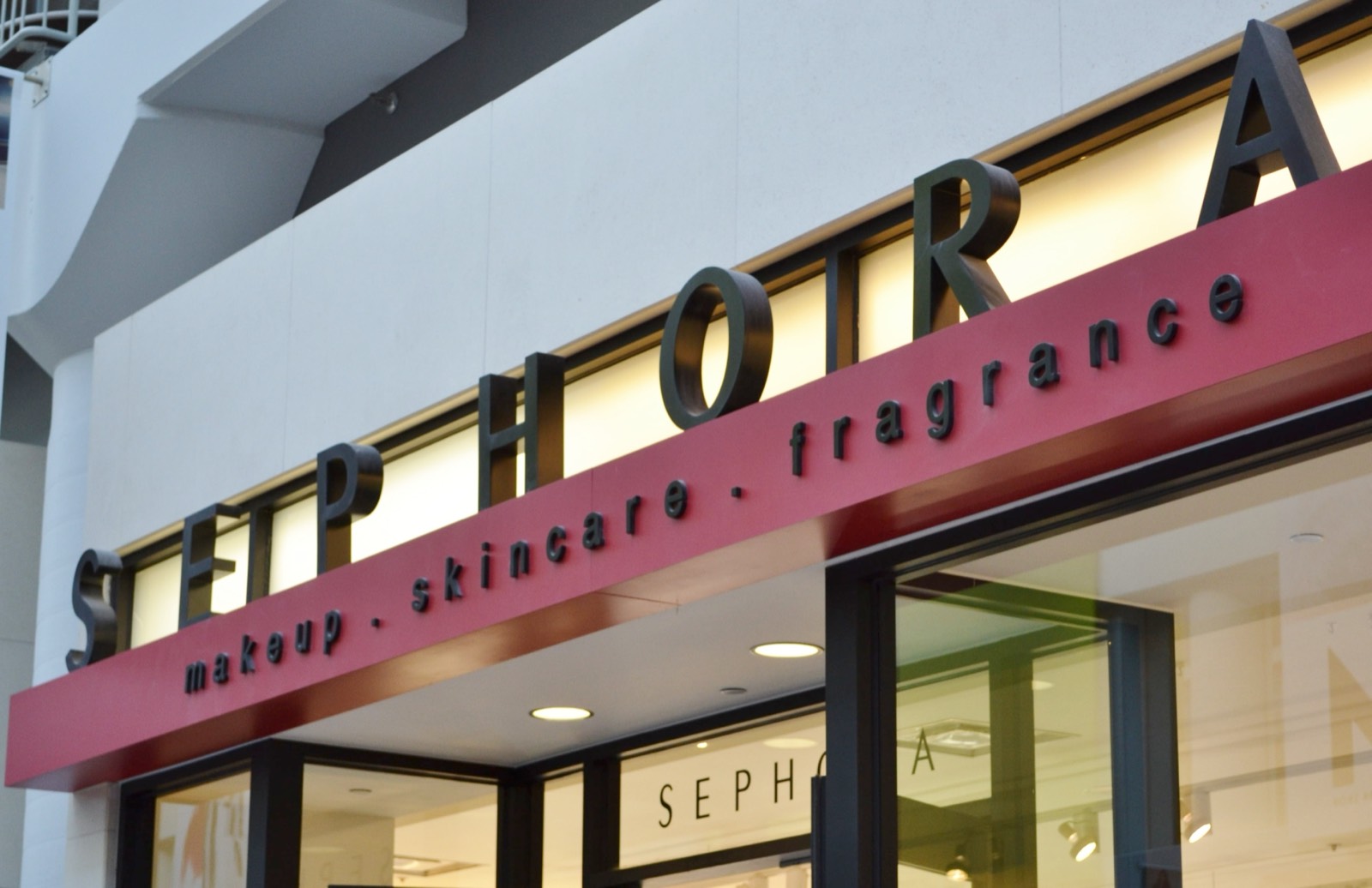
Leadership stayed mostly intact. Hailey Bieber remained Rhode's chief creative officer, overseeing product innovation and marketing, while co-founder Lauren Ratner moved into the role of president and chief brand officer. What changed was distribution. Rhode had been direct-to-consumer only for its entire independent existence — no wholesale, no third-party retail. Less than a month after the acquisition closed, that ended: Rhode launched at Sephora online and in all U.S. and Canada stores on September 4, 2025, described by Sephora as the largest brand launch in the retailer's North American history. On its first day, Rhode products reportedly accounted for more than 35% of Sephora North America's online sales, settling to roughly 5% about a week later. A U.K. Sephora rollout followed in late 2025, with European stores added in 2026.
That retail expansion is the clearest evidence of what the acquisition was actually for: e.l.f. Beauty's existing retail relationships and supply chain let Rhode do in weeks what would have taken an independent, founder-run brand years to negotiate on its own.
| Milestone | Date |
|---|---|
| e.l.f. Cosmetics founded | 2004 |
| Rhode launches direct-to-consumer | June 2022 |
| e.l.f. Beauty acquires Naturium | August 2023 |
| e.l.f.–rhode deal announced | May 28, 2025 |
| Deal closes; rhode becomes an e.l.f. Beauty subsidiary | August 5, 2025 |
| rhode launches at Sephora (U.S./Canada) | September 4, 2025 |
Where rhode sits in e.l.f. Beauty's portfolio
Seeing rhode next to its new siblings shows what it was bought to do: give e.l.f. Beauty a foothold in the "prestige-adjacent," culturally dominant skincare lane that its existing brands weren't built for.
rhode
Founded independently in 2022 by Hailey Bieber, Michael D. Ratner, and Lauren Ratner. Built its name on a short, curated skincare lineup and near-total DTC control. Now a wholly owned e.l.f. Beauty subsidiary.
e.l.f. Cosmetics
The company's original mass-market color cosmetics line — "eyes lips face" — built on affordability and fast trend response, and the brand that took e.l.f. Beauty public in 2016.
Naturium
A clinically-positioned, ingredient-forward skincare brand acquired by e.l.f. Beauty to build out its skincare category before rhode came along.
e.l.f. SKIN
e.l.f.'s own budget skincare line, positioned well below rhode and Naturium on price, aimed at the same shopper who buys e.l.f.'s color cosmetics.
Well People
A clean-beauty-focused cosmetics brand, one of e.l.f. Beauty's smaller and lower-profile portfolio additions, still positioned around ingredient transparency.
Keys Soulcare
e.l.f. Beauty's earlier lifestyle-beauty partnership with Alicia Keys — ownership was transferred back to Keys as e.l.f. narrowed its focus to its top-performing brands.
Common questions
Is rhode still an independent company?
No. e.l.f. Beauty owns rhode outright as of August 5, 2025, when the acquisition closed. It's a wholly owned subsidiary, not an independent brand or a minority-stake partnership.
Did Hailey Bieber sell her stake and leave?
No. She sold the company but stayed on as chief creative officer, overseeing product innovation and marketing. Co-founder Lauren Ratner became president and chief brand officer.
How much did e.l.f. Beauty actually pay?
$800 million in cash and stock at closing ($600 million cash, about $200 million in stock), plus up to $200 million more in a performance-based earnout over three years — a maximum possible total of $1 billion, not a guaranteed lump sum.
Has rhode's product line changed since the acquisition?
The formulas and packaging haven't visibly changed. What changed is distribution: rhode moved from DTC-only to Sephora shelves within a month of the deal closing.
What else does e.l.f. Beauty own?
e.l.f. Cosmetics, e.l.f. SKIN, Naturium, and Well People, in addition to rhode. It previously owned Keys Soulcare, a partnership with Alicia Keys, which it divested back to Keys in 2024.
None of this makes rhode's products different or worse than they were as an independent brand — the formulas, the minimalist packaging, and the peptide-forward approach haven't visibly shifted. But "who owns it" is a fair question to ask about any celebrity beauty brand, because conglomerate ownership changes what a brand can actually do — how fast it hits new retail shelves, whose supply chain it leans on, how a founder's creative control gets structured on paper — even when the tube in your bathroom looks exactly the same. rhode is now one node in a public cosmetics company's skincare portfolio, sitting alongside Naturium and e.l.f. SKIN. That's not a scandal, and Hailey Bieber didn't disappear from the brand. It's just worth knowing before you assume the lip tint on your desk came from a scrappy three-person startup that's still calling all its own shots.
Disclosure. DopamineKart has no business relationship with e.l.f. Beauty, rhode, or Hailey Bieber. Nothing in this piece is sponsored, and no affiliate links appear in the ownership history above. Real photography is Wikimedia Commons, credited per image. Deal terms and dates are sourced from e.l.f. Beauty's own investor announcements and beauty trade press coverage.
Corrections: email us