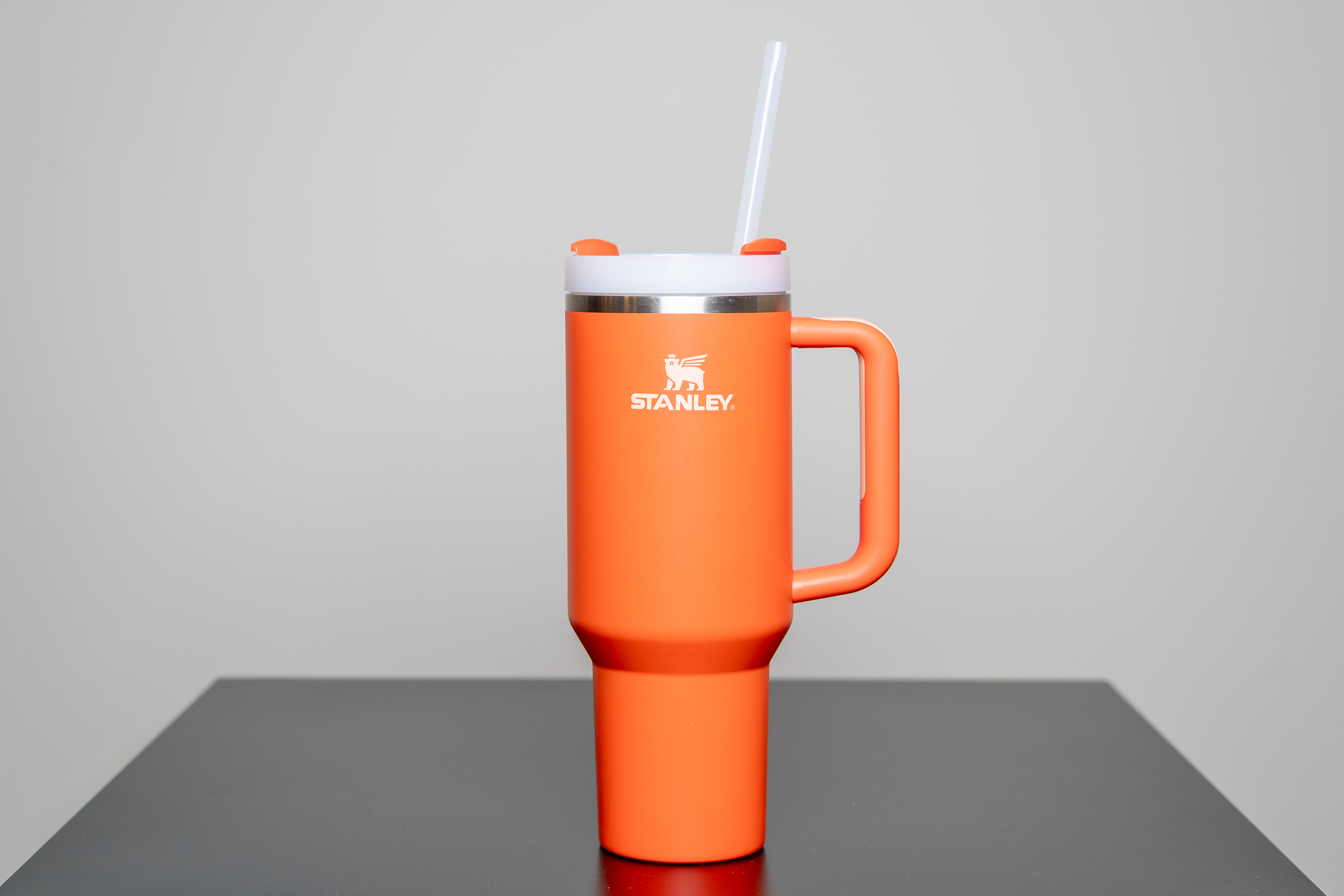
Quick take
- The Stanley tumbler everyone's carrying is made by Pacific Market International (PMI), a private Seattle company that bought the "Stanley" and "Aladdin" brand rights in 2002 — it didn't invent either brand.
- PMI itself has been owned by HAVI Group, a private logistics-and-marketing conglomerate best known as McDonald's lead supply-chain provider, since September 2021.
- Stanley drinkware and Stanley tools (Stanley Black & Decker) are, and have always been, two separate companies. They've coexisted under licensing agreements dating back to 1966 — until Stanley Black & Decker sued PMI over the name in February 2025.
- The viral 2019–2023 Quencher boom happened under president Terence Reilly, the former Crocs marketing chief, and reportedly took Stanley's annual revenue from roughly $73 million to more than $750 million.
Every few months, a new wave of shoppers discovers the pastel tumbler with the built-in straw and assumes it's a startup that came out of nowhere. It isn't. The company selling that tumbler is chasing a name that's been passed between owners since William Howard Taft was president, through a hardware manufacturer, a lamp company, and now a McDonald's logistics contractor — and it's currently defending that name in federal court against a company most people assume it already is.
The 1913 patent that started it
The Stanley name traces to a real inventor: William Stanley Jr., an electrical engineer who had already made his name developing transformer technology. While working with the welding processes used in that work, Stanley realized the same steel-fusing technique could be used to build a vacuum-insulated bottle out of steel instead of the fragile glass then used in thermoses. He patented the all-steel vacuum flask on September 2, 1913, and founded the Stanley Insulating Company in Great Barrington, Massachusetts, which began selling the bottle in 1915 under the Ferrostat and, later, Supervac labels.
Stanley didn't run the company for long. He died in 1916, and the business's first president, William H. Walker, died the following year. Without either founder, the company was sold in 1921 to Landers, Frary & Clark, a New Britain, Connecticut, hardware and houseware manufacturer — the first of several ownership changes the Stanley name would go through over the next century.
From a Connecticut hardware maker to a Nashville lamp company
Landers, Frary & Clark manufactured Stanley's insulated bottles for decades, at one point selling them under its own "Universal" trade name. The brand's next major move came in 1965, when Aladdin Industries — a Nashville, Tennessee, company that began in 1908 as the Mantle Lamp Company before pivoting into vacuum bottles and lunchboxes — acquired the Stanley bottle operation. For the next several decades, Stanley drinkware existed as a product line inside Aladdin's broader catalog rather than as a standalone brand with its own corporate identity.
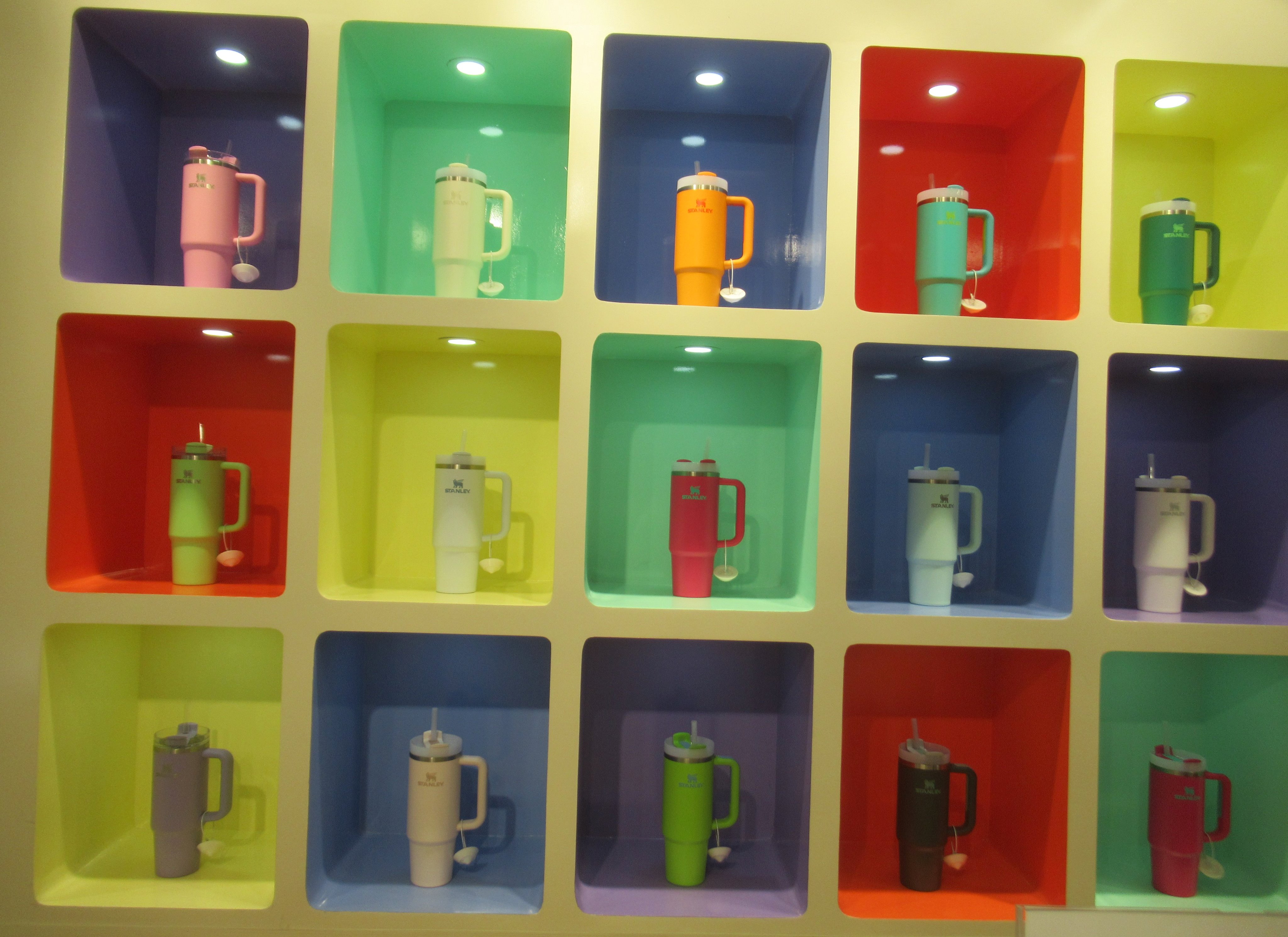
That changed in 2002, when Pacific Market International (PMI) — a Seattle company founded in 1983 to design and import food and beverage containers — acquired the retail and branding rights to both Stanley and Aladdin. PMI is the company that still makes the tumbler on shelves today. It expanded the Stanley line well beyond the original vacuum bottle, adding barware, flasks, and eventually the wide-mouth tumbler line that would make the brand famous two decades later.
Who owns Stanley right now: HAVI Group
PMI itself isn't independent. On September 1, 2021, PMI Worldwide was acquired by HAVI Group, a privately held, Chicago-founded conglomerate whose main business is running supply chains for large restaurant brands — HAVI is McDonald's lead logistics provider, handling sourcing, packaging, and distribution for the Happy Meal era onward. The deal, in which PMI was sold by its previous private-equity owner, Endeavour Capital, was announced jointly by both companies; the financial terms were not disclosed. Under HAVI, PMI Worldwide kept its existing leadership team and continued operating as its own business unit, reporting to HAVI's CEO.
In other words: the tumbler in your bag is made by a company (PMI) that is itself owned by a much larger, mostly invisible logistics-and-marketing conglomerate (HAVI) that most consumers have never heard of and that doesn't put its name on the product anywhere.
- 1913William Stanley Jr. patents the all-steel vacuum flask; the Stanley Insulating Company is founded in Great Barrington, Massachusetts, in 1915.
- 1921Landers, Frary & Clark, a Connecticut hardware manufacturer, acquires the company.
- 1965Aladdin Industries of Nashville acquires the Stanley bottle operation, folding it into its broader vacuum-bottle catalog.
- 2002Pacific Market International (PMI), a Seattle importer founded in 1983, acquires the Stanley and Aladdin retail and branding rights.
- Sept. 2021HAVI Group acquires PMI Worldwide from Endeavour Capital; PMI becomes a HAVI business unit.
- Feb. 2025Stanley Black & Decker files a federal trademark and breach-of-contract suit against PMI over use of the Stanley name.
Terence Reilly, the Quencher, and the TikTok boom
Stanley's wide-mouth Quencher tumbler had already existed since 2016 as a niche product for outdoorsy buyers, without much traction. The turning point was leadership, not product design. In May 2020, PMI hired Terence Reilly — previously chief marketing officer at Crocs, where he'd helped turn the foam clog into a runway and celebrity-collaboration fixture — as Stanley's global president. Reilly repositioned the Quencher around a younger, female-skewing audience through influencer seeding and social platforms rather than traditional retail marketing.
The strategy compounded gradually and then exploded. Quencher sales were already up sharply by 2021, but the real inflection point came in November 2023, when a TikTok user's video showing her Stanley Quencher intact — ice still inside — after her car burned in a fire went viral, racking up tens of millions of views. Reilly posted a response offering to replace her vehicle, and that video went nearly as viral. Business press outlets, including Retail Dive and Forbes, reported that the moment supercharged an already-growing brand into a genuine cultural phenomenon, with resale lines and limited-color drops driving sustained demand through early 2024.
The business results were dramatic by any account: Stanley's reported annual revenue grew from roughly $73 million in 2019 to more than $750 million by 2023, with some later reporting putting 2024 figures even higher. Reilly's tenure as president ended in April 2024, with Matt Navarro succeeding him, but the growth trajectory he set in motion is the reason a century-old vacuum-flask patent is now a cultural flashpoint instead of a footnote in industrial history.
Where Stanley sits inside HAVI Group
HAVI doesn't organize itself around consumer brands the way a company like Amorepacific does — it's fundamentally a supply-chain and marketing-services company that happens to also own a drinkware brand. Seeing Stanley next to HAVI's other business lines makes clear how unusual a fit it actually is.
Stanley (PMI Worldwide)
The only consumer-facing retail brand in HAVI's portfolio. Owns the Stanley and Aladdin drinkware lines, acquired in 2002 and now under HAVI since 2021.
HAVI Supply Chain
HAVI's founding business and by far its largest. Serves as McDonald's lead logistics provider worldwide, managing sourcing, packaging, and distribution.
tms (The Marketing Store Worldwide)
HAVI's promotions and marketing agency, formed from a merger of The Store Group and M-B Sales. Handles brand-defining campaigns and consumer promotions for major restaurant clients.
The lawsuit: two Stanleys, one name
Here's where the story gets genuinely tangled. Stanley Works — the 183-year-old tool manufacturer that merged with Black & Decker in 2010 to become Stanley Black & Decker — is a completely different company from PMI's Stanley drinkware. The two have coexisted under the same name for decades through licensing agreements: Stanley Black & Decker holds the broader "Stanley" trademark across many product categories, while PMI has operated under agreements, reportedly dating back to 1966 and reaffirmed in 2012, that authorized its use of the Stanley name specifically for insulated food and beverage containers.
On February 17, 2025, that arrangement broke down. Stanley Black & Decker filed a federal lawsuit against PMI, alleging trademark infringement, breach of contract, and unfair competition — arguing that PMI's explosive growth and expansion into new product categories under the Stanley name exceeded what the original agreements permitted, and that the resulting consumer confusion damages Stanley Black & Decker's own brand. The tool company's suit reportedly seeks damages, product recalls, and corrective advertising, along with tighter restrictions on how PMI can use the name going forward.
PMI has publicly and forcefully disputed the claims. In a statement responding to the suit, the company said it intends to defend its right to the Stanley name in the food and beverage container category, tracing its claim back to the original 1913 patent lineage rather than treating itself as a mere licensee. As of this writing the case remains active and unresolved — a rare instance of a household name effectively suing another company for being too successful under the same household name.
| Milestone | Year |
|---|---|
| William Stanley Jr. patents the vacuum flask | 1913 |
| Landers, Frary & Clark acquires the company | 1921 |
| Aladdin Industries acquires the Stanley line | 1965 |
| PMI acquires Stanley and Aladdin brand rights | 2002 |
| Quencher tumbler introduced | 2016 |
| Terence Reilly hired as president | 2020 |
| HAVI Group acquires PMI Worldwide | 2021 |
| Viral car-fire TikTok moment | 2023 |
| Stanley Black & Decker files trademark suit | 2025 |
Common questions
Is Stanley drinkware owned by Stanley Black & Decker, the tool company?
No. They are separate companies that have coexisted under licensing agreements for decades. Stanley drinkware is made by Pacific Market International (PMI), owned by HAVI Group; Stanley tools are made by Stanley Black & Decker. The two are currently in an active federal trademark dispute over the shared name.
Who owns the Stanley tumbler company today?
Pacific Market International (PMI Worldwide) makes the Stanley tumbler, and PMI itself has been owned by HAVI Group, a private logistics and marketing conglomerate, since September 2021.
When did the Quencher tumbler become popular?
It was introduced in 2016 but stayed a niche product until a marketing push under president Terence Reilly, starting in 2020, and a viral November 2023 TikTok moment turned it into a mainstream phenomenon.
What is the current lawsuit about?
Stanley Black & Decker filed suit against PMI in February 2025, alleging PMI's use of the Stanley name has exceeded the scope of decades-old licensing agreements between the two companies and caused consumer confusion. PMI disputes the claims and says it intends to defend its use of the name. The case is ongoing.
Does HAVI Group make anything else people would recognize?
Not under its own name. HAVI is best known within the industry as McDonald's lead supply-chain and logistics provider, alongside a marketing-services arm called tms — Stanley is its one direct-to-consumer retail brand.
The Stanley tumbler isn't a startup, and it isn't made by the same company that makes Stanley hammers — it's the modern face of a 113-year-old patent that has passed through a hardware manufacturer, a lamp company, a Seattle importer, and now a McDonald's logistics conglomerate, gaining a completely new business identity at every stop. None of that makes the product different from what's on the shelf. But the ownership chain explains a lot: why the brand had the manufacturing and marketing muscle to pull off a viral relaunch in 2023, and why, in 2025, it's now defending the very name that made that relaunch possible in federal court.
Disclosure. DopamineKart has no business relationship with Pacific Market International, HAVI Group, or Stanley Black & Decker. Nothing in this piece is sponsored, and no affiliate links appear in the ownership history above. All photography is real, sourced from Wikimedia Commons and credited per image. Company revenue figures cited above are business facts drawn from public reporting; this piece does not reference consumer pricing, discounts, or promotions.
Corrections: email us