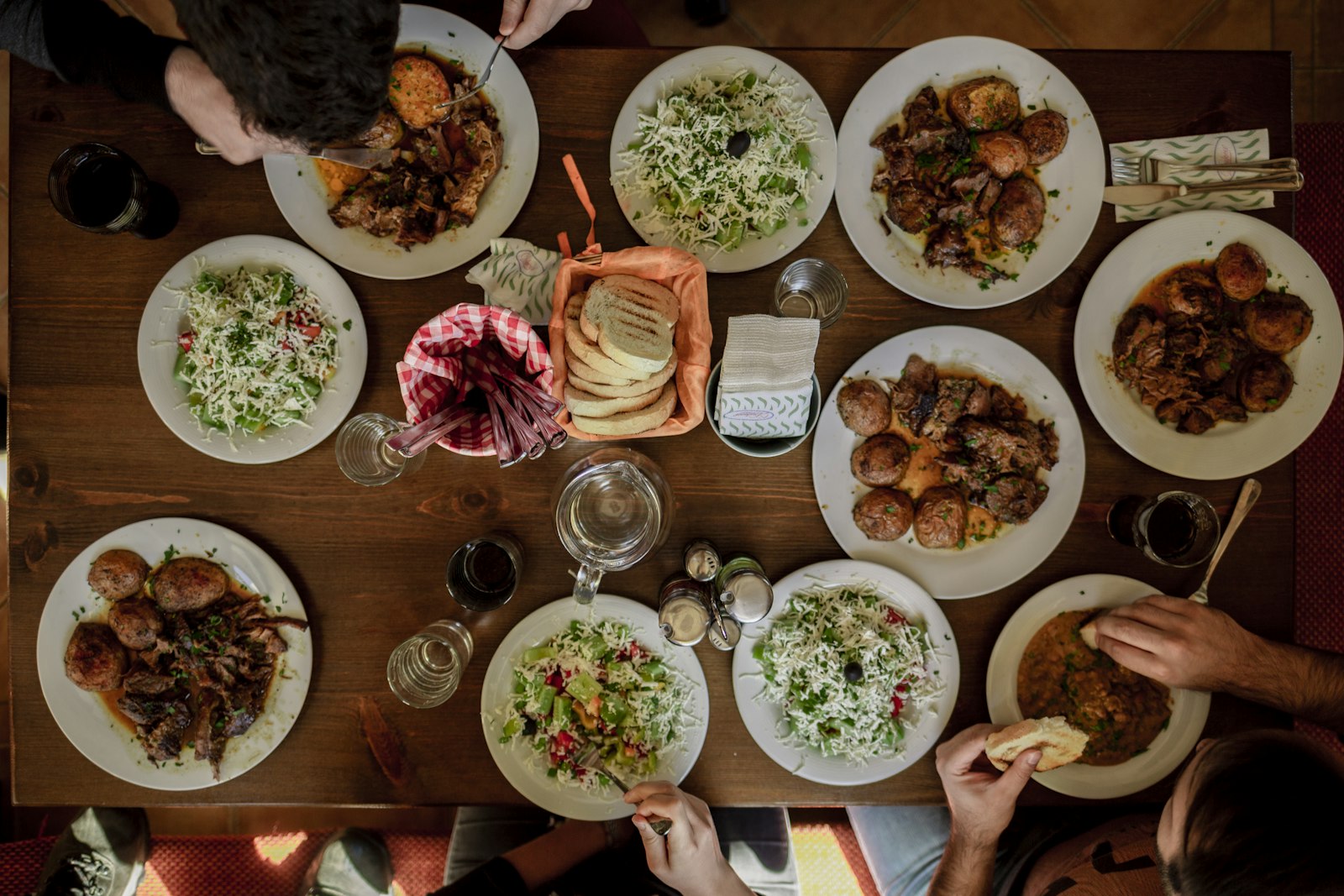
- Friendsgiving spending among younger adults has grown enough that survey data shows a meaningful share now spend more on it than on actual Thanksgiving.
- The potluck format hides the total cost — no single host sees the full bill, so nobody clocks how much the collective spend actually is.
- Friendsgiving skews more "curated" than family Thanksgiving, with specialty ingredients and presentation driving costs up per person.
- Browsing the Friendsgiving spread you'd host costs nothing — no potluck coordination required.
Thanksgiving dinner, hosted by a parent or grandparent, tends to run on inherited recipes and a pantry already stocked from years of doing this. Friendsgiving, by contrast, is assembled from scratch every year by people who are, per survey data on younger adult spending habits, increasingly willing to spend more on it than on the "official" holiday.
THE MATHWhy the Potluck Costs More Than It Looks Like
Friendsgiving's cost is distributed across every attendee bringing a dish, which makes the total spend easy to lose track of — nobody sees one grocery receipt for the whole meal, the way a single Thanksgiving host does. Survey data on younger consumers' holiday spending has found a meaningful share reporting higher personal spend on Friendsgiving than on Thanksgiving itself, once you add up what each attendee individually spends on their dish, drinks, and any hosting costs.
Part of the gap comes from format: Friendsgiving dishes skew more toward specialty or Instagram-ready options — a specific cheese board, a trending cocktail, a dish chosen to stand out among a dozen others — rather than the standardized, inherited-recipe approach of a family Thanksgiving meal.
THE WHYA Meal You Get to Design
Family Thanksgiving usually comes with fixed roles and fixed recipes — you're not choosing the menu, you're contributing to one already set. Friendsgiving is closer to a genuinely collaborative, self-selected menu, which invites more individual investment in making your specific dish memorable among friends who'll actually notice and comment on it.
That social visibility is a real driver: a dish at Friendsgiving is judged by peers in real time, in a way a contribution to a family Thanksgiving usually isn't. Higher social stakes tend to translate directly into higher spend.
Nobody sees one grocery receipt for the whole Friendsgiving meal — which is exactly why the total is so easy to lose track of.
THE BROWSEHosting the Spread You're Imagining, for Free
If you've ever mentally assembled the "perfect" Friendsgiving spread — the specific cheeses, the one show-stopping dish, the exact tablescape — that planning phase is genuinely satisfying on its own, independent of whether it ever gets cooked. It's the same imagining-a-full-table instinct that makes any holiday planning fun before the actual grocery bill arrives.
Build that imagined spread on a DopaKart wishlist — every specialty ingredient, every serving piece — and get the full satisfaction of hosting the "perfect" Friendsgiving without a single dollar or dish actually required.
Survey data shows a meaningful and growing share of younger adults reporting higher personal spend on Friendsgiving than on Thanksgiving itself.
Questions people actually ask
Is Friendsgiving actually more expensive than Thanksgiving overall?
For the group as a whole, not necessarily — but individual attendees increasingly report personally spending more on their Friendsgiving contribution than on their share of Thanksgiving, since the cost is distributed and harder to track collectively.
Why do people spend more on a dish for friends than for family?
Friendsgiving dishes are judged socially in real time by peers, which raises the incentive to make a dish stand out — family Thanksgiving contributions are usually more fixed and less individually scrutinized.
Is Friendsgiving replacing Thanksgiving, or happening alongside it?
Overwhelmingly alongside it — most people who celebrate Friendsgiving also attend a separate family Thanksgiving gathering; it's an addition to the holiday season, not a replacement.
The instinct to design the "perfect" spread is real, and it's the actual fun part regardless of the holiday. Build it on DopaKart, imagine the whole table, and skip the grocery bill that usually follows.
DopamineKart is a simulation built for entertainment — not financial or hosting advice.