- The average consumer maintains 12+ paid subscriptions but can only accurately name about half of them.
- $347/year is the estimated 'ghost tax' — money spent on subscriptions unused for 6+ months.
- Free trials convert to paid plans roughly 65% of the time because canceling requires more friction than forgetting.
- Browsing (not buying) is the only checkout flow with a 0% chance of a mystery charge next March.
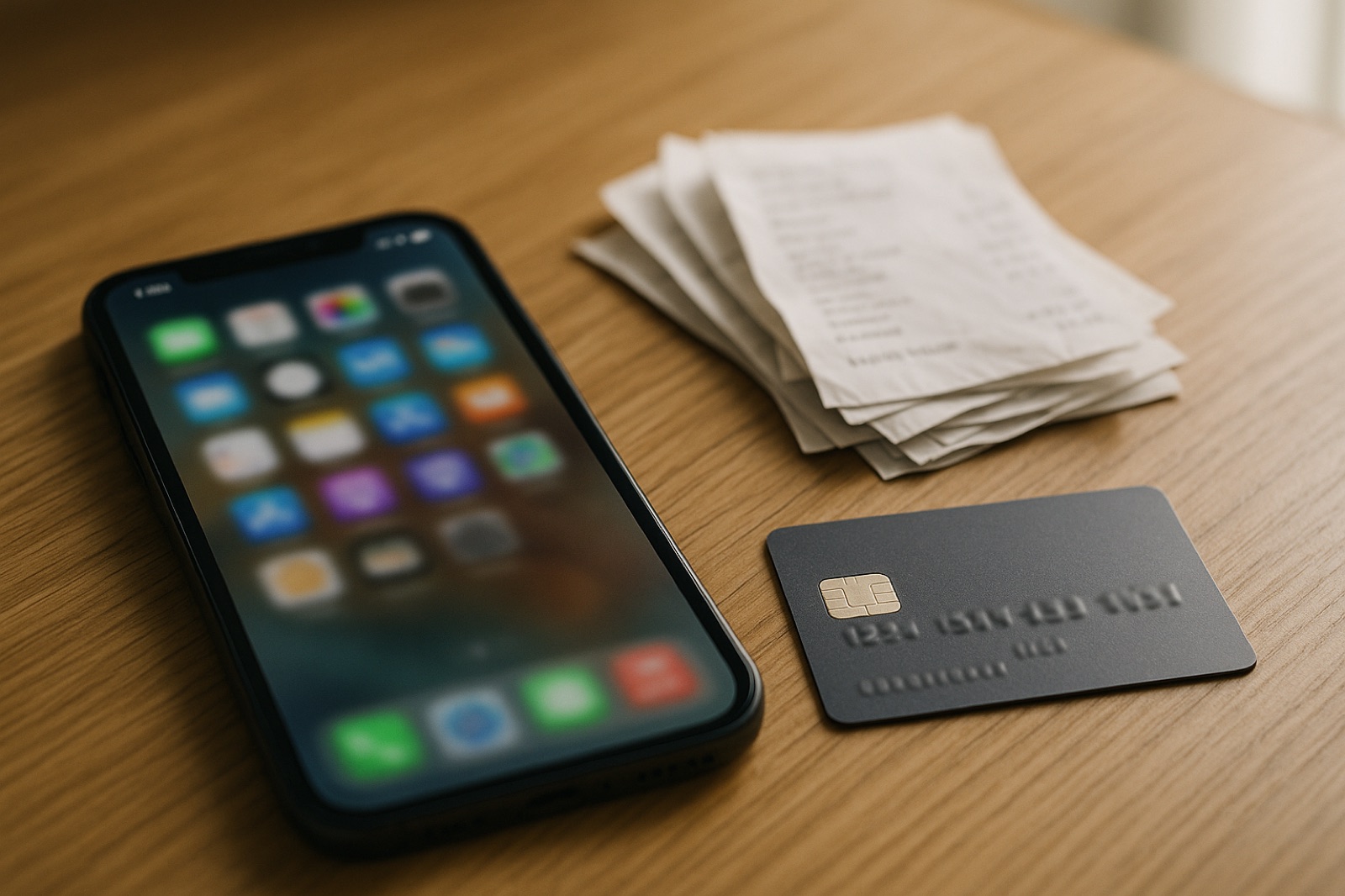
Somewhere on your bank statement, a meditation app is still charging you $9.99 a month to remind you to breathe — a reminder you clearly aren't reading. Multiply that by the fitness tracker, the cloud storage upgrade, the recipe app, and the astrology subscription your ex talked you into, and you land on a number that should feel illegal: $347 a year, gone, for apps you haven't opened since your last New Year's resolution.

THE MATHHow $9.99 a Month Becomes a $347 Problem
The subscription economy was built on a simple bet: that inertia is more profitable than persuasion. A 2025 C+R Research follow-up study found the average American now carries 12.7 active subscriptions, but when asked to list them from memory, most people stop at six or seven — and are wrong about at least one price. That gap between 'what I'm paying for' and 'what I remember paying for' is where the $347 lives.
It's rarely one big charge. It's a $4.99 cloud backup you upgraded during a full-phone panic, a $14.99 streaming tier you bumped up for one show, a $19.99 'premium' habit tracker you downloaded on January 2nd with genuine enthusiasm. Individually, each one is a rounding error. Stacked across a year, unaudited, they're a second phone bill you didn't agree to.
The apps know this. Annual plans are priced to look like a discount ('save 40%!') precisely because a once-a-year charge is easier to forget than a monthly one — you feel the sting for one confusing second in your statement, then move on before you can act on it.
THE PSYCHOLOGYWhy Canceling Feels Harder Than Paying
Behavioral economists call it the 'endowment effect meets friction cost': once you've had something, even something you don't use, giving it up feels like a loss — and losses are processed more painfully than equivalent gains. So the brain quietly rationalizes the $6.99 rather than doing the two-minute cancellation flow, which app designers have made intentionally two minutes longer than it needs to be.
Free trials make it worse. Industry data consistently shows roughly 65% of free trials convert to paid subscriptions, not because the user decided the product was worth it, but because canceling required a decision and doing nothing required none. Subscribe-and-forget isn't a personal failing — it's a UX outcome, engineered on purpose.
This is exactly the same reward-circuitry trick that makes 'add to cart' feel so good in the first place: a small, low-effort action (click 'start free trial') gets rewarded instantly (access!), while the cost (money, monthly, forever) is deferred and abstracted. The dopamine hit front-loads; the bill back-loads.
THE FIX (SORT OF)The Audit Nobody Wants to Do, and the Browsing That Costs Nothing
The real fix is unglamorous: an annual 20-minute statement audit, ideally done the same week every year, cross-referencing every recurring charge against 'have I opened this in 30 days.' Apps like Rocket Money and even a basic bank app filter can surface subscriptions automatically — the hard part isn't finding them, it's admitting you forgot you had them.
Here's the reframe we'd rather you leave with: the dopamine hit you were chasing with that forgotten app subscription — the little rush of 'I'm improving my life' — is the exact same hit DopamineKart is built to give you, minus the recurring charge. Add the Dopamine K Vitamin Glow Ampoule in Coral to your cart, admire the 4.9-star reviews, imagine the glow, and check out for exactly $0. No trial period converts. No March surprise on your statement.
That's the whole trick of a browse-it-buy-nothing platform: it front-loads the same reward chemistry as shopping, without ever quietly renewing on you. The $347 ghost tax only works on things you forget you're paying for — and it's very hard to forget a purchase you never actually made.
Subscribe-and-forget isn't a personal failing — it's a UX outcome, engineered on purpose.
Estimated yearly spend on subscriptions the average person hasn't actively used in six months or more.
Questions people actually ask
How do I actually find all my subscriptions?
Scan 3-6 months of bank and credit card statements for recurring charges, or use your bank's built-in subscription tracker — most major banking apps added this feature in 2024-2025.
Why do annual plans make forgetting worse?
A once-a-year charge is easier to overlook than a monthly one; you feel a brief confusing pinch in your statement and move on before canceling.
Is subscribing to try something always a bad idea?
No — the issue isn't the trial, it's the lack of a calendar reminder set the same day you sign up. Set the reminder before you forget you need it.
The apps you forgot to cancel are quietly running a business on your inattention — DopamineKart runs on the opposite model, full attention, zero charge. Browse the Vitamin Glow Ampoule, the Keepall 55, even the Chanel flap bag, feel the whole reward cycle complete itself, and close the tab with your bank account exactly where you left it.
DopamineKart is a simulation built for entertainment — not financial, medical, or shopping advice. If you struggle with compulsive spending, please visit nfcc.org.