A dopamine site is a shop that cannot sell you anything. It reproduces the full ritual of online shopping — the browsing, the comparing, the cart, the checkout, sometimes even a delivery tracker — while removing the one step that costs money.
The name comes from what the ritual is thought to be doing: giving you the anticipation that online shopping runs on, without the purchase at the end of it.
Where the trend started
Dopamine sites came out of South Korea, and spread from there. The origin story usually credits a Korean developer known as Malhee, who reportedly built one of the first after noticing a habit of opening and closing food-delivery apps late at night without ever placing an order. The restless part of the loop was the part being enjoyed. So they shipped the loop without the order.
The two most-cited examples are FoodNeverComes, a fake food-delivery app, and FakeHaul, a fake storefront. Coverage of the trend has tied its popularity among Korean Gen Z to rising living costs and the constant pressure to consume — the appetite for shopping outliving the budget for it.
Why it works on your brain
The usual shorthand — that dopamine is the “pleasure chemical” — is wrong, and the correction is the whole point of these sites.
Pamela B. Rutledge, Ph.D., Director of the Media Psychology Research Center, describes dopamine as central to motivation, learning and anticipating rewards, with much of the activity happening before any reward arrives. On her account, the anticipation can deliver a psychological payoff equal to the purchase itself, and sometimes larger.
That explains something most people notice but rarely say out loud: the best part of an online order is usually the twenty minutes before you place it, not the moment the box turns up.
Rutledge also notes what the ritual provides beyond the rush — structure, a sense of control, and temporary relief from stress. The cart is a small, orderly task in a day that may not have many.
What the critics say — and they have a point
This is the part most dopamine sites leave out of their own marketing, so we will not.
Psychologists have raised a genuine objection: if the problem is compulsive shopping, then browsing, comparing, filling a cart and checking out is a rehearsal of the exact behaviour someone is trying to escape. Satisfying the urge is not the same as reducing it. Dr. Schreyer-Hoffman’s framing is that the brain responds to the ritual as much as to the reward, which cuts both ways.
Rutledge is specific about when these sites turn harmful: when they replace meaningful real-world activity, when the simulated purchase deepens a sense of deprivation rather than easing it, or when they reinforce a compulsion instead of addressing it. She compares the risk to social media — short-term relief that leaves the underlying stress and financial insecurity untouched.
There is a design criticism too. Some of these sites run daily coupon wheels and streaks: mechanics built to bring you back tomorrow. A tool meant as an exit from an engagement loop can quietly become one.
None of that makes the category worthless. It makes it a thing to use deliberately. If a fake cart takes the edge off a Tuesday night, that is a real, small good. If it becomes the Tuesday night, that is worth noticing.
What a dopamine site does after the checkout
The interesting question in this category is not whether the cart is fake. They all are. It is what the site does with you once the fake order lands — because that is the moment the psychologists’ objection either bites or doesn’t.
Take the best-known example. FoodNeverComes is a fake food-delivery app: 157 dishes and drinks across twelve cuisines, a cart, a checkout, and an animated delivery that ends with a full-screen call from a courier explaining that the food is not real. It does not stop there. The site also publishes 151 genuine recipes for the dishes you just browsed. The fake order becomes a real dinner, if you want it to.
That is a good answer to the rehearsal problem, and worth saying plainly rather than pretending the category is full of empty simulators. The want gets somewhere to go.
DopamineKart answers the same question differently, because it is not a food app.
How DopamineKart is built differently
Two lanes, labelled at the top of every page so you always know which one you are in.
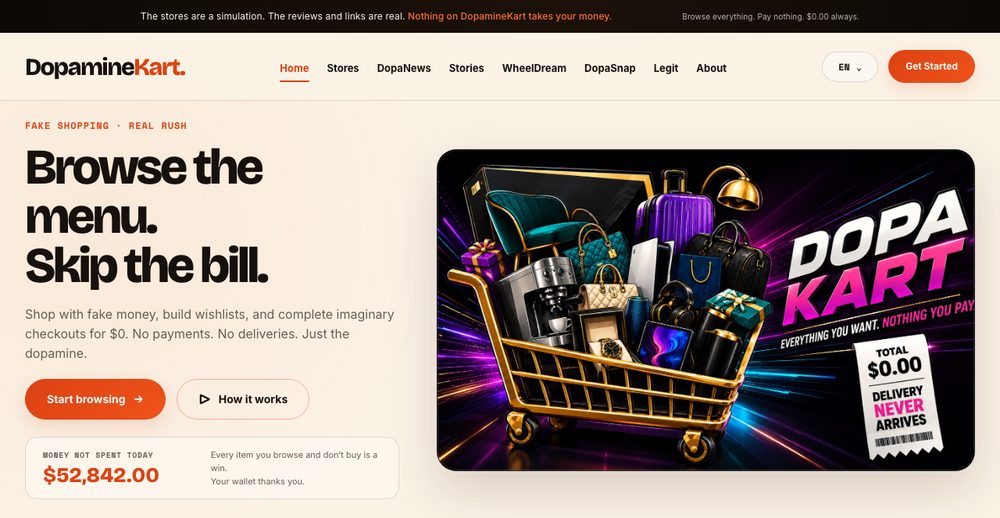
Six storefronts — general goods, luxury, cars, homes, travel and food. Fake money, real ritual, $0.00 checkout. Nothing ships and nothing is charged, and there is no payment field to fill in because there is no payment.
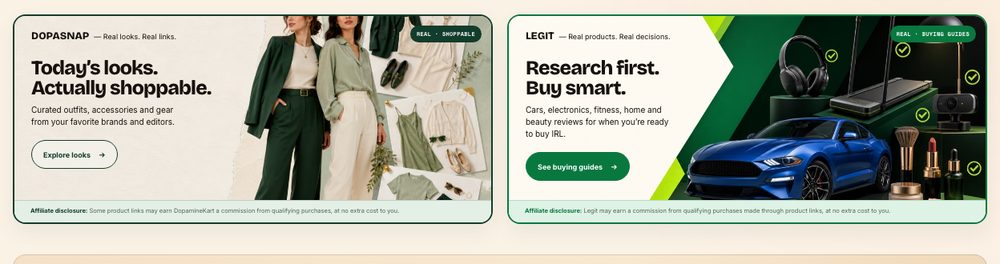
Simulation254 researched buying guides and 219 shoppable looks, for when the want turns out to be a real need. Written from what the listings actually say, with the affiliate relationship disclosed on the page.
Real products · Real links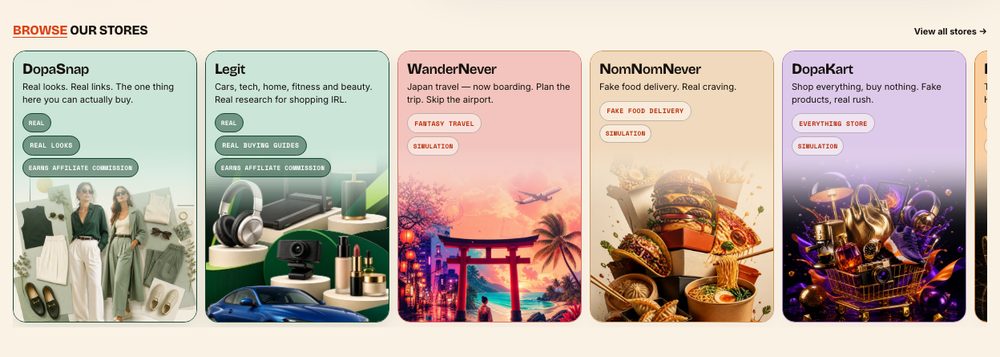
One urge, six categories
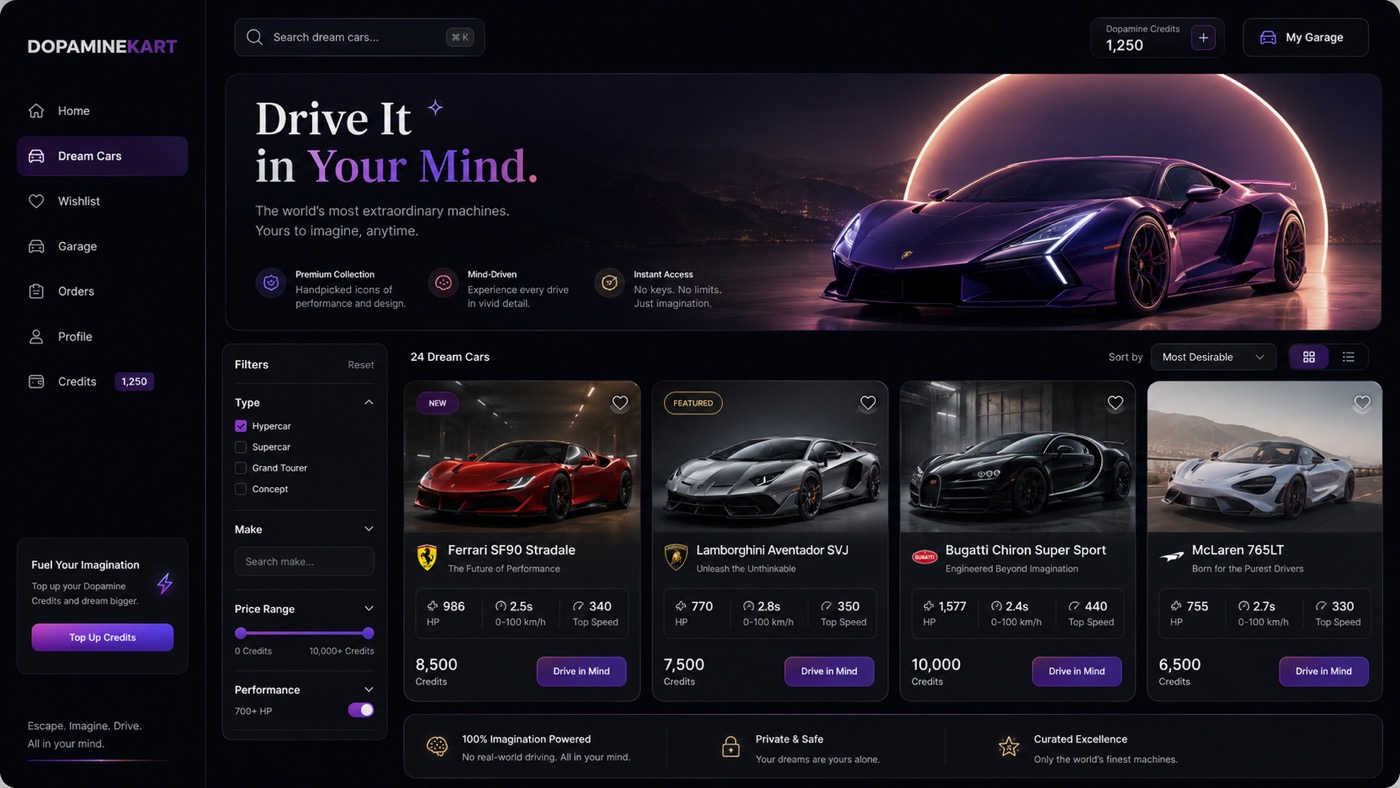
Most dopamine sites are a single fake store, which makes sense: they were built to scratch one specific itch. The trouble is that the itch moves. Some nights it is dinner. Some nights it is a car you will never own, or a flat in a city you have never visited.
So the simulation runs across six: general goods, luxury, cars, homes, travel and food. Same ritual, different appetite.
Where the want goes when it is real
This is the part that answers the rehearsal criticism. Sometimes you are not idly browsing — sometimes the washing machine has actually broken, and a simulation is the wrong answer to that.
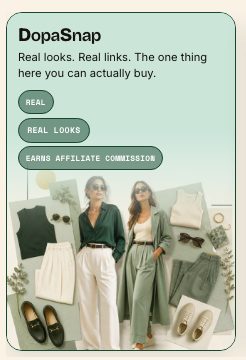
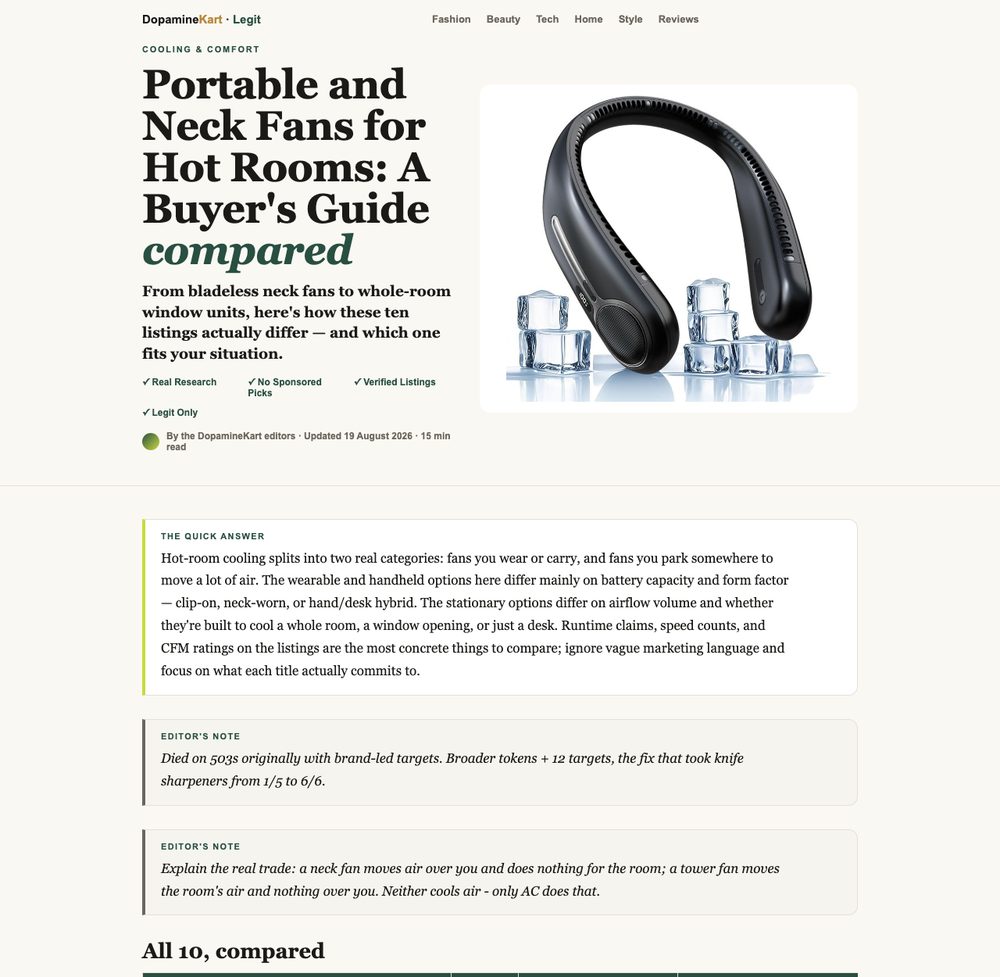
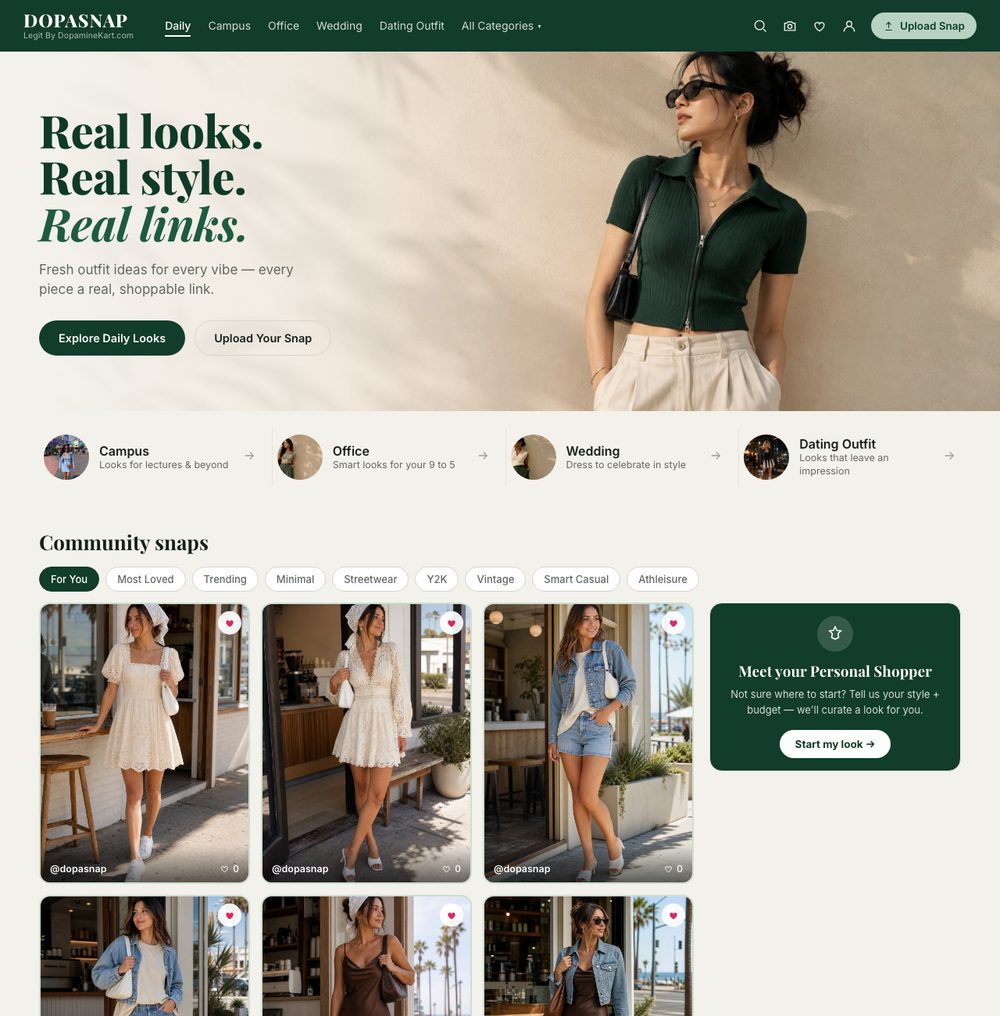
Legit is 254 buying guides built from what product listings actually state, carrying 1,569 links to specific products rather than vague search pages. DopaSnap is 219 shoppable outfit pages. Both disclose the affiliate relationship on the page. Neither pretends to be a simulation, and the simulation never pretends to be them.
It is also a publication
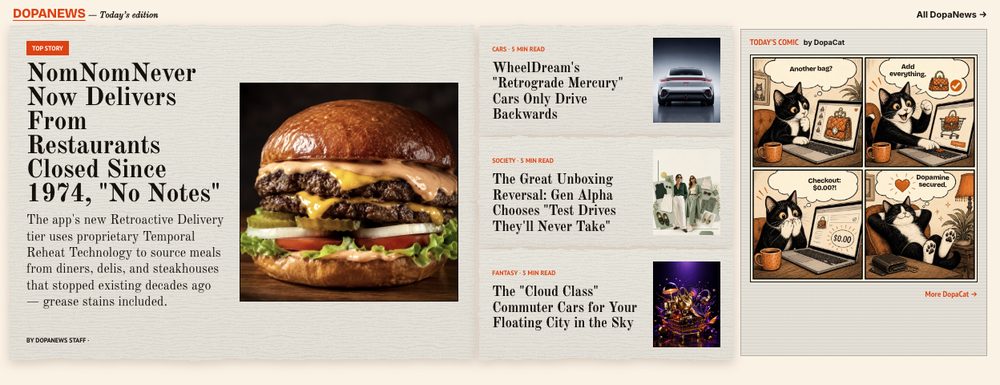
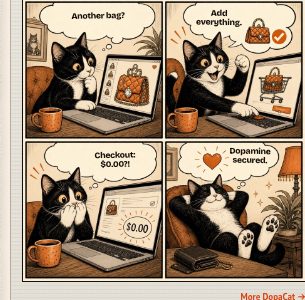
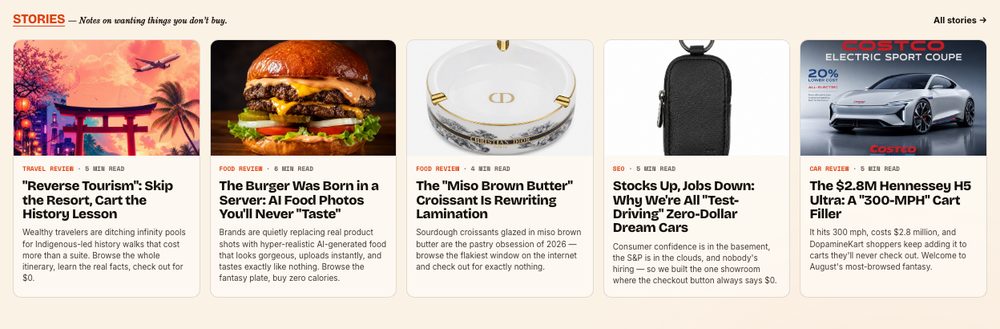
Alongside the stores there is a daily satirical paper, a daily comic strip, and a run of essays about wanting things you do not buy — including a straight account of how the fake food-delivery app was built. The commentary is part of the point: a site about consumer habits that never examines them is just a shop with the till removed.
Side by side
Both verifiable from the live sites as of August 2026, rather than asserted.
| FoodNeverComes | DopamineKart | |
|---|---|---|
| Category | Food delivery — 157 dishes and drinks, 12 cuisines | Six storefronts: general, luxury, cars, homes, travel, food |
| Beyond the simulation | 151 free recipes, a blog, and a habit-quitting sister project | 254 buying guides, 219 shoppable looks, daily paper and comic |
| Where the want goes | Cook the dish yourself | Buy it for real if you decide to — or don’t |
| Checkout | Pre-filled fake demo card; the courier calls to explain it is not real | No payment field at all; the total is $0.00 |
| Accounts | None; data stays in your browser | None; no signup, no premium tier |
They are different products solving the same itch from different ends. If the craving is dinner, a site with 151 recipes is the better tool and we would say so. If it ranges wider than that — and if you want honest research on the far side of it — that is what this one is for.
How to tell a good dopamine site from a trap
- Is there a payment field anywhere? There should not be. A simulation has no reason to ever ask for card details, and one that does is not a simulation.
- Does it want you back daily? Streaks, wheels and login rewards are engagement mechanics. They serve the site, not the habit you came to manage.
- Does it tell you what it is? Clearly, on the page, before you work it out yourself.
- What happens when the want is real? A dead end is a fine answer for an idle Tuesday and a bad one for a broken appliance.
- Is it honest about the limits? Any site claiming to cure compulsive shopping is overselling. The research does not support that, and the psychologists quoted above say so directly.
Common questions
Do dopamine sites actually save you money?
They can, in the narrow sense that a cart you never pay for costs nothing. What the research does not show is that they fix the underlying impulse. Psychologists caution that satisfying an urge through rehearsal is not the same as reducing it, and that relief without addressing the cause behaves rather like social media.
Is a dopamine site the same as window shopping?
Close, with one difference that seems to matter: the checkout. Plain browsing leaves the session unresolved. Completing a fake order closes the loop, which is why these sites include a checkout at all rather than stopping at the product page.
Are they safe to use?
A genuine one never asks for payment details, because it has no payment to take. Treat any “fake shop” that requests card information as exactly what that would make it. The real caution is behavioural rather than financial: watch whether it is displacing things you would rather be doing.
Where did the name come from?
From dopamine’s role in anticipation. It is not the chemistry of getting the parcel; it is the chemistry of the twenty minutes before you order it. These sites keep that part and drop the rest.
Does DopamineKart charge for anything?
No. There is no payment field, no subscription and no premium tier. The stores cannot take money. The buying guides and looks carry affiliate links to real retailers, disclosed on those pages, which is how the site is paid for.
Six storefronts, fake money, a checkout that ends at $0.00 every time. And when the want turns out to be real, honest research instead of a dead end.
Start browsing →Sources
- Pamela B. Rutledge, Ph.D. — “Dopamine Sites: The Emotional Pay-Off of Fake Food Orders”, Psychology Today. On anticipation, ritual, and when simulated purchases become harmful.
- “Dopamine Sites Explained”, Open Magazine. Origin of the trend, Malhee, FoodNeverComes, and Dr. Gabrielle Schreyer-Hoffman on ritual and reward.
- Fast Company and Rest of World on the spread of the trend beyond South Korea.
- Digital Trends on first-hand use of the viral sites.