Legit Trend Report
Bathroom Shower Tile Trends 2026: What's Cool and What's Trending
Five directions actually showing up in real shower renovations right now — plus the color palettes, mood boards, and the exact supplies you'd need to tile a shower yourself.
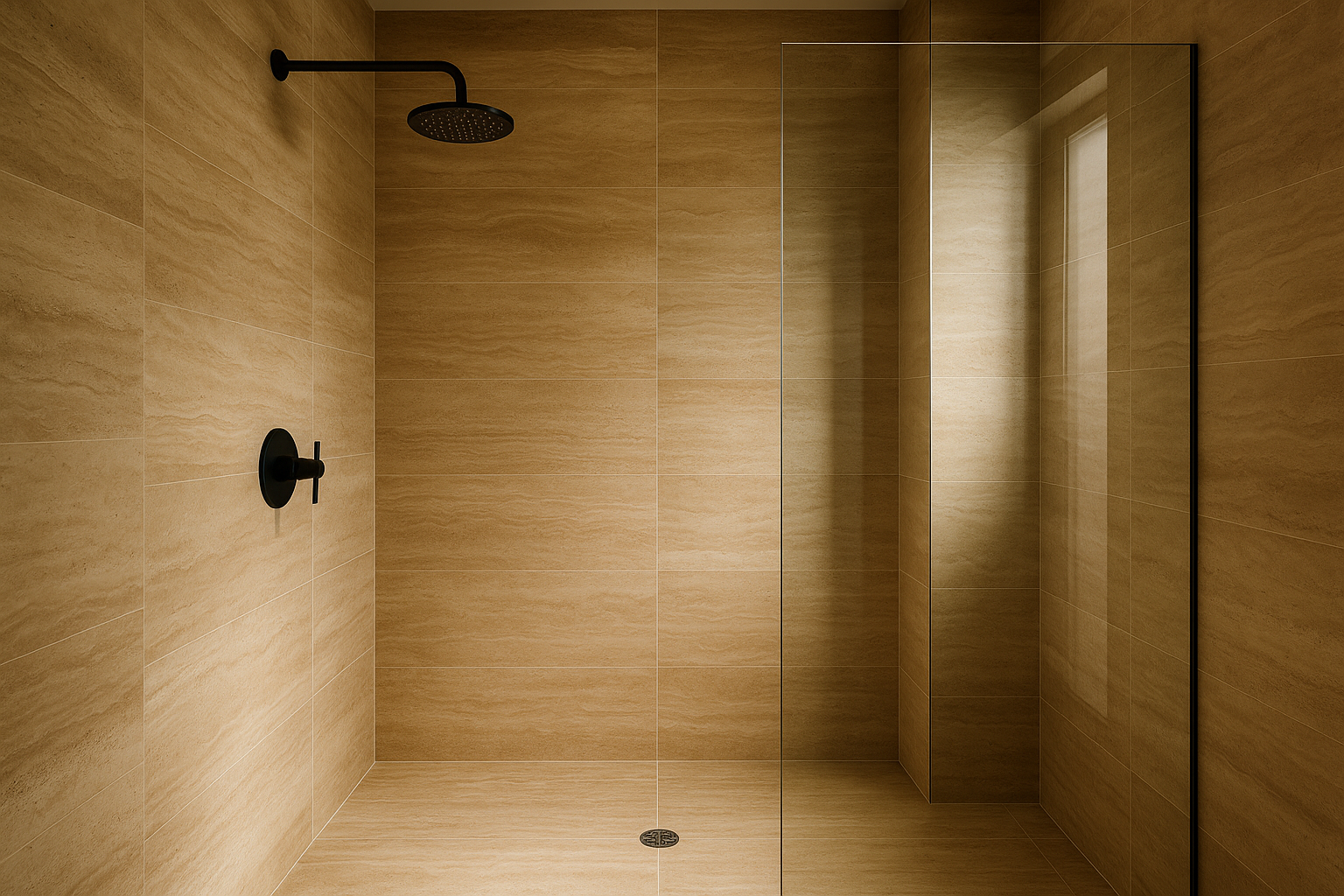
AI-generated concept image — large-format warm travertine, a defining 2026 shower material.
The Short Version
- Warm natural stone (travertine especially) has replaced the all-white subway tile shower as the default aspirational look — texture and veining are doing the work that grout patterns used to.
- Dark, moody showers (charcoal, black, deep bronze) are a genuine trend, not a niche — paired with warm metal fixtures to keep them from reading cold.
- Curved tiled niches and benches are the detail separating a builder-grade shower from a custom one — the extra tile cuts are worth it for the finished look.
- Vertical fluted or ribbed tile is the texture trend of the year — it adds dimension without pattern or color.
Terrazzo
Terrazzo — a composite material with visible flecks of marble, quartz, or glass set in a cement or resin base — has moved from floors into shower walls as a full statement material. Its speckled, non-repeating pattern gives a shower genuine visual texture without needing a mosaic or feature wall.
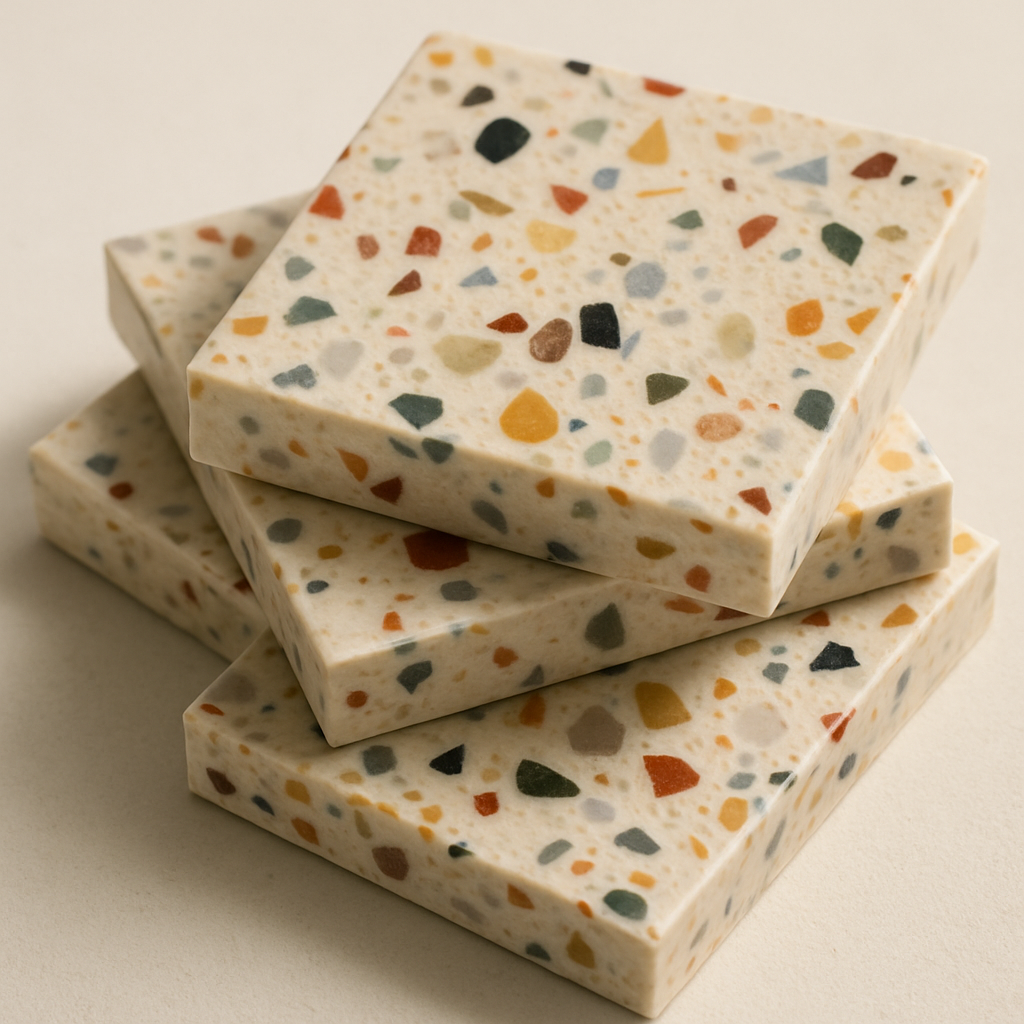
Terrazzo tile is available in both large-format slab-style panels (fewer grout lines, higher cost) and smaller tile formats (more affordable, more visible grout). The flecks can be sized and colored to match almost any palette, which is part of why it's shown up in both warm and cool shower schemes this year.
Dark & Moody
Charcoal, black, and deep bronze-toned tile is a genuine, growing direction for showers — not just a photo-friendly gimmick. The key to making a dark shower feel intentional rather than cave-like is warm accent lighting and metal fixtures (brass, unlacquered brass, or warm bronze) rather than cool chrome, which reads harsh against dark tile.
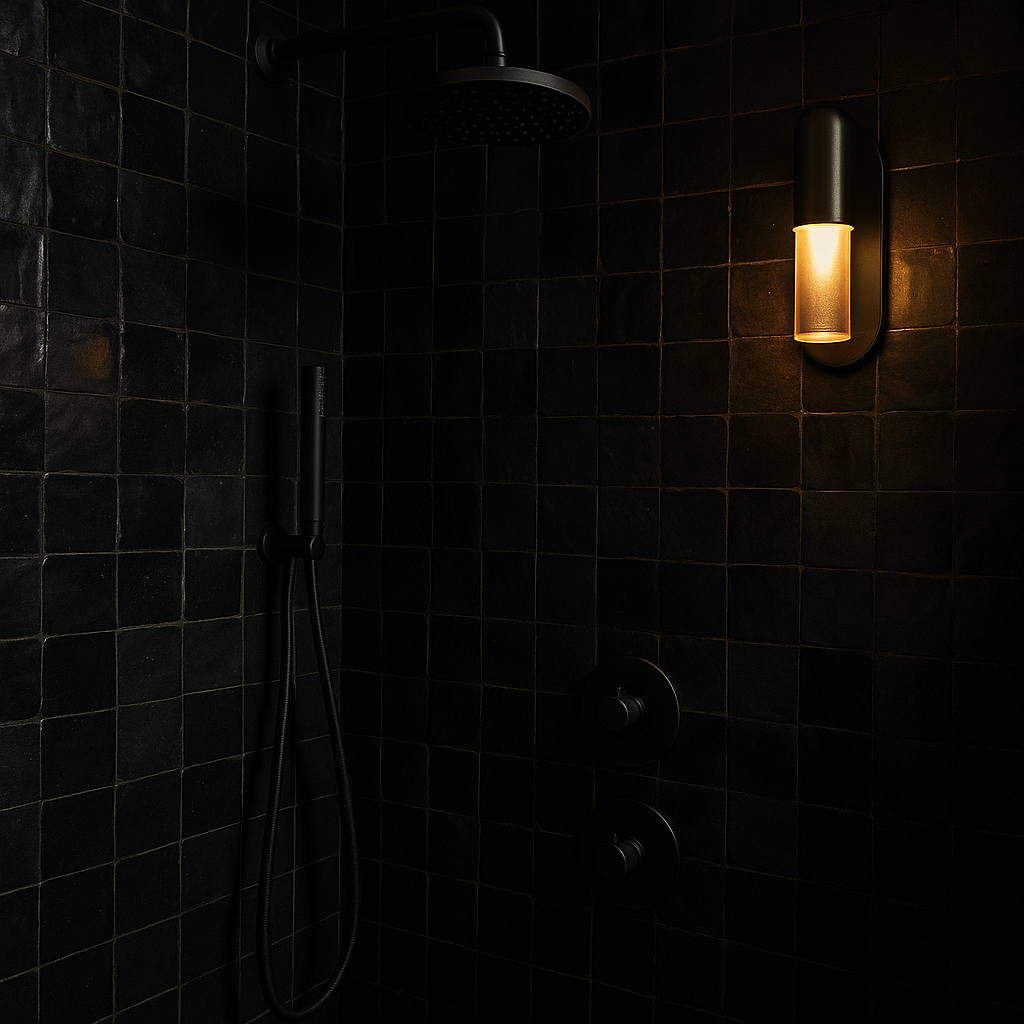
Dark tile does show water spots and soap scum more visibly than light tile, so a matte or textured finish (rather than high-gloss) is the more practical choice for a shower that gets daily use.
Curved Tiled Niche & Bench
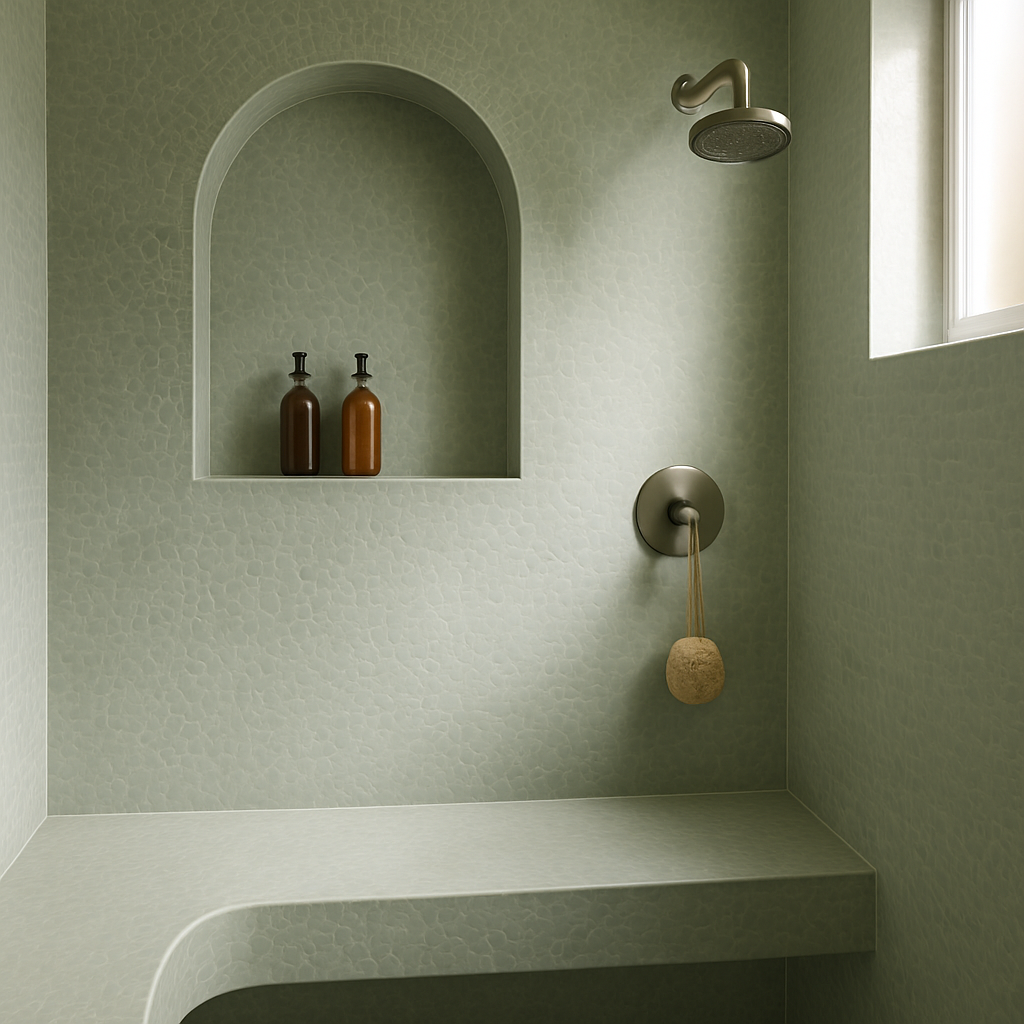
This is a detail trend more than a material trend: a rounded (rather than boxy, right-angled) built-in niche for shampoo bottles, and a curved integrated bench, both fully tiled to match the shower walls. It's a genuine step up in installation complexity — curved surfaces require more precise cuts — but it's the detail that most clearly signals a custom build rather than a standard remodel.
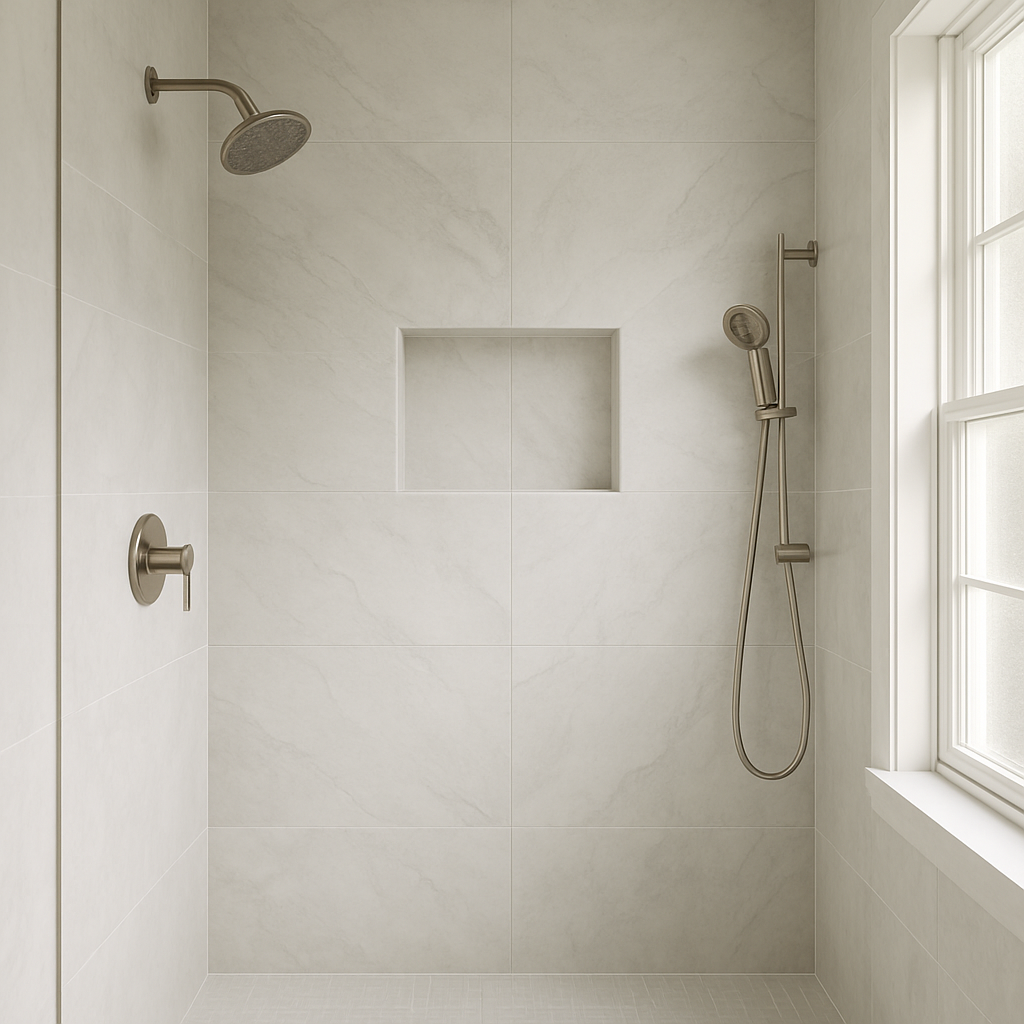
Large-Format, Minimal Grout
The opposite instinct from terrazzo and dark drama: large-format tile in a light, quiet tone, laid to minimize visible grout lines. Some installations use bookmatched panels — tiles cut from the same slab and mirrored — so the veining pattern flows continuously across a wall rather than repeating obviously.
Vertical Fluted / Ribbed Tile
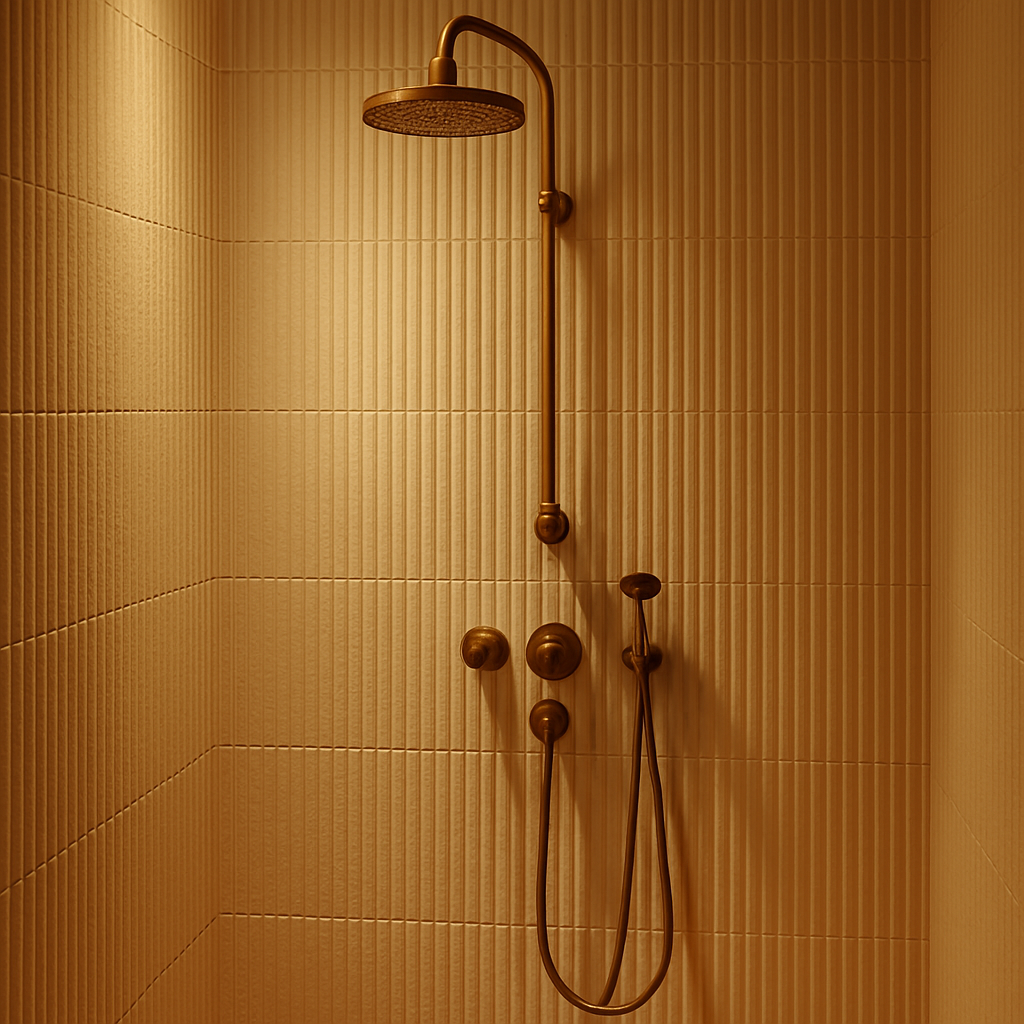
Textured tile with a repeating vertical ribbed or fluted profile — the shower-wall equivalent of fluted furniture and cabinetry that's been trending in broader interior design. It adds real dimension and shadow play without introducing pattern or extra color, which makes it a popular pairing with an otherwise simple, neutral palette.
Two Palettes Actually Competing This Year
Shower tile color choices this year split into two clear directions — both a departure from the all-white, all-gray showers that dominated the last several years.
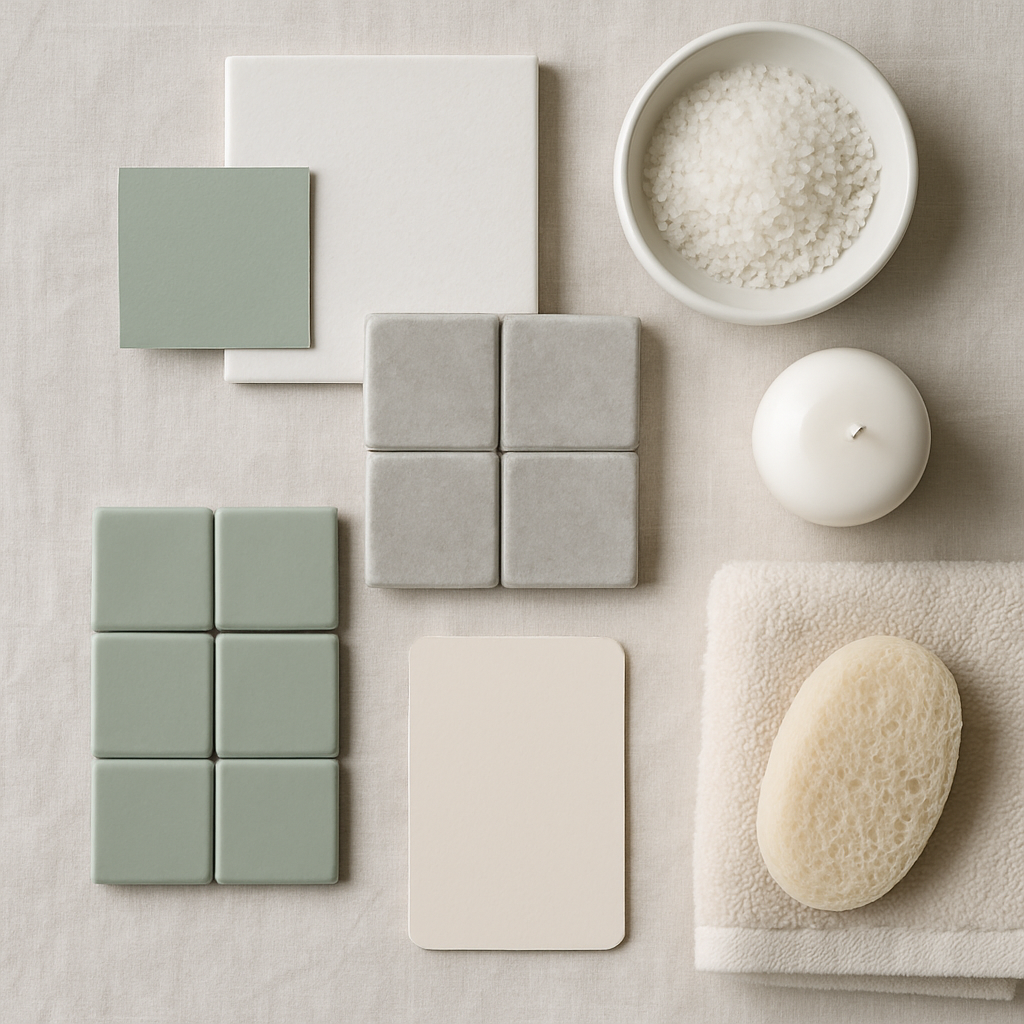
Spa & serene: soft sage, chalky white, warm stone gray, and pale sand. This is the palette behind the curved-niche and large-format trends above — calm, quiet, and meant to feel restorative rather than dramatic.
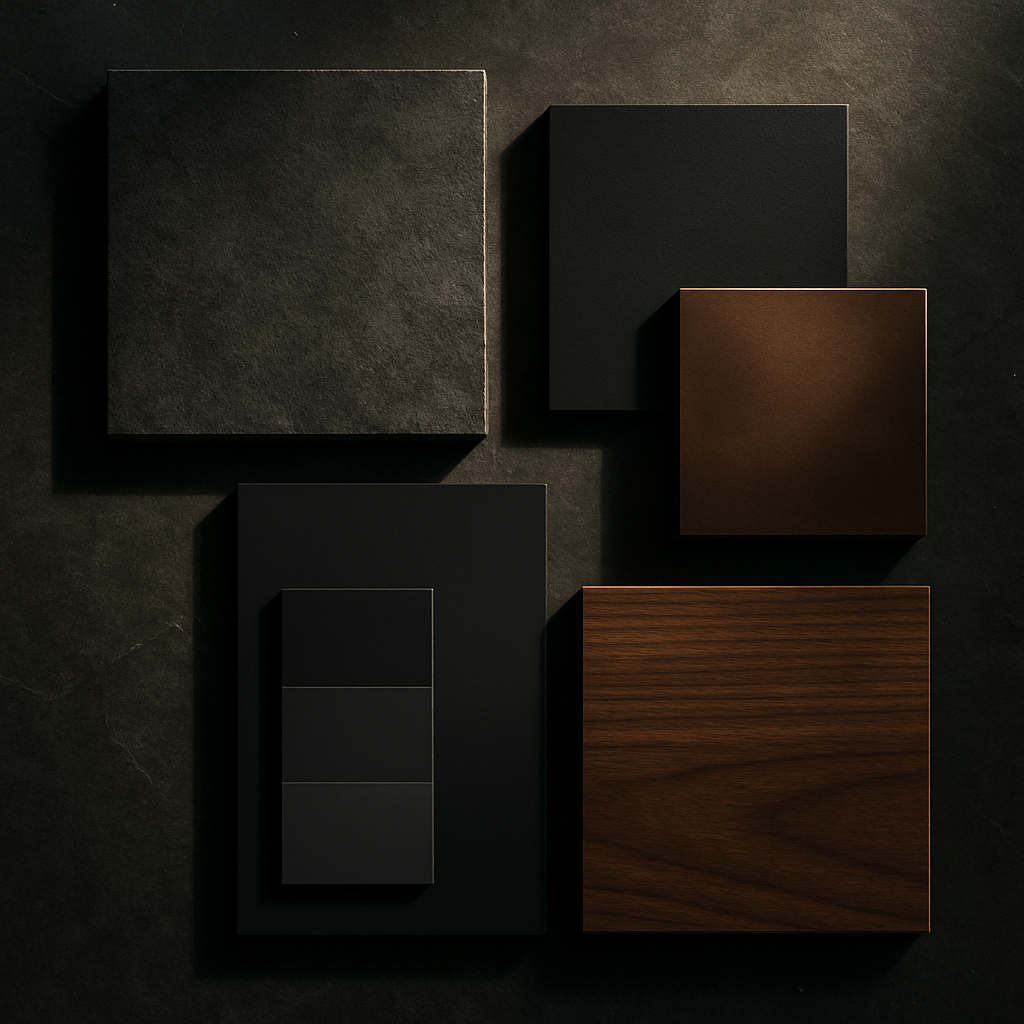
Moody & dramatic: charcoal, black, deep bronze, and warm walnut. Pairs directly with the dark-and-moody trend above, and works best with warm-toned metal fixtures rather than cool chrome or stainless.
Which Trend Fits Which Bathroom
| Trend | Best For | Skill Level |
|---|---|---|
| Terrazzo | Statement showers wanting texture without pattern repetition | Intermediate–Pro |
| Dark & moody | Dramatic, editorial-feeling bathrooms | Confident DIY (flat tile) to Pro |
| Curved niche/bench | Custom, spa-level remodels | Pro install recommended |
| Large-format minimal grout | Calm, bright, low-maintenance showers | Confident DIY |
| Vertical fluted | Neutral palettes wanting texture | Intermediate |
What You'd Actually Need to Tile a Shower Yourself
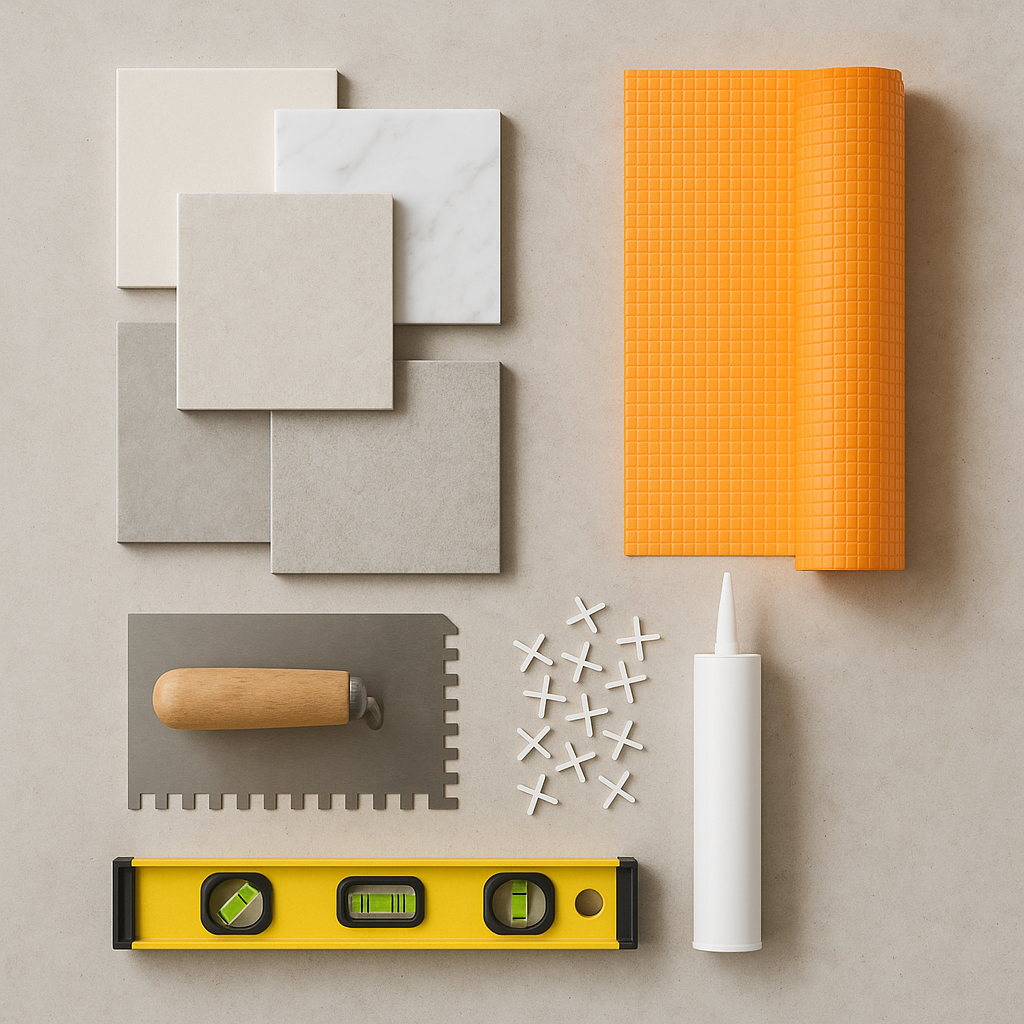
Core Toolkit for a DIY Shower Tile Install
- Tile of your chosen style — order 10–15% extra for a shower, since curved cuts and niches waste more material than flat walls.
- Waterproof membrane system — a non-negotiable layer behind shower tile; this is where DIY showers most commonly fail if skipped or done incorrectly.
- Notched trowel — notch size matched to your tile size per the manufacturer's spec sheet.
- Tile spacers — consistent spacing matters more in a shower, where sightlines are close and lighting is direct.
- Wet tile saw — genuinely necessary for shower work; curved niches and corner cuts are difficult with a manual cutter.
- Thinset mortar rated for wet areas — not all thinset is shower-rated; check the label specifically.
- Grout — epoxy grout resists moisture and staining better than standard cement grout, which matters more in a shower than anywhere else in a bathroom.
- 100% silicone caulk — used at corners and transitions instead of grout, since grout cracks at movement joints.
- Level and layout tools — critical for keeping fluted or bookmatched tile aligned across a full wall.
Waterproofing is the one place where cutting corners causes real, expensive damage later — most contractors recommend hiring a professional specifically for the waterproof membrane step even if you plan to tile the visible surface yourself.
Ready to install? See our step-by-step How to Install Tile guide for the full sequence — prep, layout, thinset, setting, cutting, curing, grouting, and sealing.
Frequently Asked Questions
Is terrazzo tile harder to install than regular ceramic tile?
Not necessarily for small-format terrazzo tile, but large-format terrazzo slabs require more precise handling due to their weight and size, similar to natural stone slabs.
Does dark tile make a small shower feel smaller?
It can, though good lighting design (recessed shower lighting plus warm accent light) offsets this significantly. Many dark showers use a lighter tile or larger niche opening to add visual relief.
What grout should I use in a shower specifically?
Epoxy grout is generally recommended for shower use over standard cement-based grout, because it resists water absorption and staining better — a meaningful difference in a space that's wet daily.
Can I skip the waterproof membrane if I'm using large-format tile with minimal grout lines?
No — grout lines aren't what keeps water out of a wall; the waterproof membrane behind the tile is the actual water barrier. Skipping it regardless of tile format risks water damage inside the wall over time.
This article contains no affiliate links and no buy buttons. All imagery is AI-generated concept photography meant to illustrate design directions, not photographs of a specific real installation or product. Installation guidance is general — always confirm specifications with your chosen tile and membrane manufacturer and, for waterproofing and structural questions, consult a licensed contractor.