The First 60 Seconds of an Earthquake
Almost every indoor case resolves to one action. The value of knowing it in advance is that you do not spend the first seconds deciding.

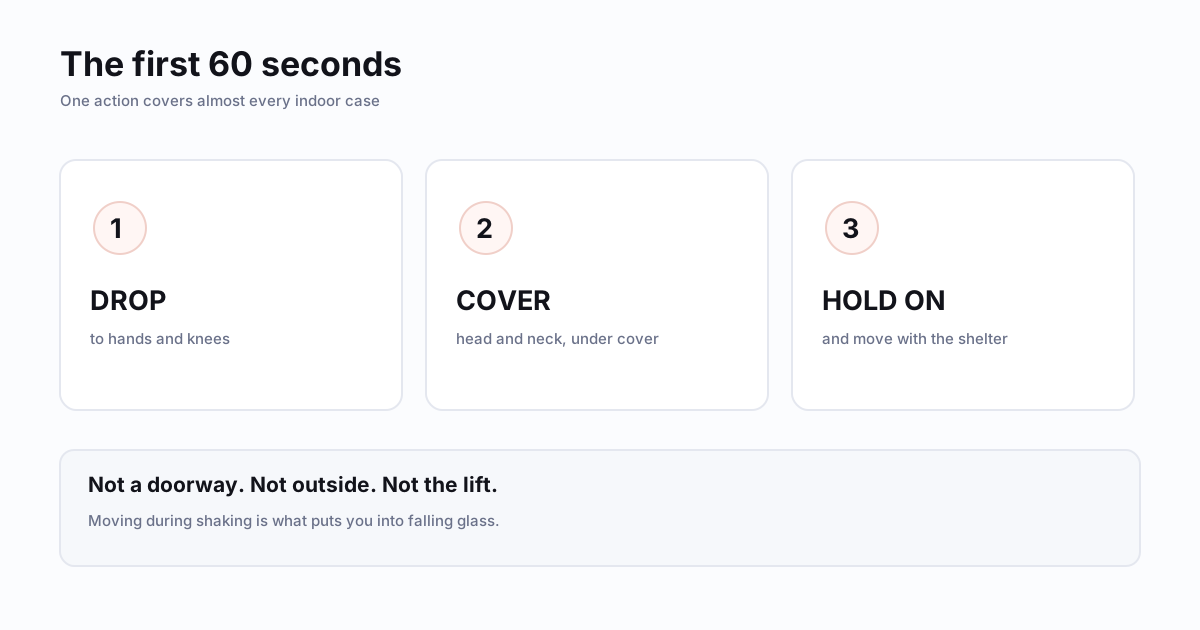
Quick answer. Drop, Cover, and Hold On. Get to your hands and knees before the shaking knocks you down, protect your head and neck under sturdy cover, and hold on. If you are indoors, stay indoors. Do not run outside, and do not stand in a doorway.
Indoors — stay in
Do not run outside or into another room. Drop to your hands and knees, cover your head and neck, and get under a sturdy table if one is within reach. Move only the short distance needed to get clear of glass or something heavy that can fall.
Then hold on to your cover and move with it if it shifts. Stay away from windows, glass, tall furniture and anything hanging.
If no table is nearby
Get low beside an interior wall or low furniture that will not fall on you, and cover your head and neck with your arms and hands. Do not stand in a doorway — a modern doorway is no stronger than the rest of the structure, and getting to it means moving through the exact hazards you are trying to avoid.
If you are in bed
Stay there. Protect your head and neck with a pillow. Getting up in the dark is how people put bare feet into broken glass — which is the whole argument for keeping sturdy shoes and a flashlight beside the bed before anything happens.
Outdoors — stay out
Move to an open area away from buildings, exterior walls, trees, streetlights and utility lines, then drop low and stay there until the shaking stops. The hazard outdoors is almost entirely things falling off buildings, so distance from the building is the whole objective.
Driving
Pull over safely, away from bridges, overpasses, power lines, signs and buildings. Set the parking brake and stay in the vehicle until the shaking ends. Afterwards, avoid damaged roads and follow official traffic instructions.
In a high-rise
Stay in the building. Move away from windows and outside walls, then Drop, Cover, and Hold On. Do not use the lifts. Expect alarms, sprinklers and power loss — none of those mean you should be moving during the shaking. Use stairs only after it stops and conditions have been checked.
When the shaking stops
Check for injuries and immediate hazards, and expect aftershocks. If the building is damaged, leave by the stairs and do not go back in until authorities or qualified inspectors say it is safe.
Use a flashlight rather than a match or a lighter — if gas is leaking, a flame is the second disaster.
Near the coast, add one step
Strong or long shaking near the coast is itself a natural tsunami warning. Once you can move safely, go inland or to higher ground on the posted route, without waiting for a phone alert. A nearby tsunami can arrive before any alert does.
Practise it once today
Pick the safe spot in every room and run a one-minute household drill. That is the entire exercise — and it is the difference between knowing the sequence and performing it while the floor moves.
| Do | Avoid |
|---|---|
| Drop, Cover, and Hold On | Running outside during shaking |
| Stay in bed and cover your head | Getting up in the dark onto broken glass |
| Get low beside low furniture | Standing in a doorway |
| Stay in the high-rise, away from windows | Taking the lift |
| Use a flashlight afterwards | Striking a match when gas may be leaking |
| Move uphill after coastal shaking | Waiting for a siren |
Why "drop, cover, hold on" and not a doorway
The doorway advice is genuinely obsolete, and it is worth knowing why so it does not resurface at the wrong moment. It came from photographs of collapsed adobe and unreinforced masonry buildings where the door frame was the one part left standing. In a modern framed building a doorway is not stronger than the rest of the structure, it puts you next to a swinging door, and it is usually further away than the floor beside you. The reason to drop where you are is that the greatest ordinary danger is not the building failing — it is being knocked over, or hit by something falling off a wall, while trying to cross a room that is moving.
Do not run outside
The most common serious injuries in earthquakes in well-built areas happen to people moving during the shaking, and the space immediately outside a building is the worst of it: that is where glass, cladding, parapets and roof tiles land. If you are inside, the guidance is to stay inside until the shaking stops. If you are outside already, stay outside and get away from anything that can fall on you.
What the aftershocks change
Assume there will be more, and assume the first one arrives while you are still deciding what just happened. Aftershocks are usually smaller but they act on a structure that has already been loaded once, which is why a building that came through the main shock can be damaged by a smaller follow-up. Two practical consequences: do not go back inside a damaged building to retrieve things, and when you do move, keep noticing what is above you.
After the shaking: the order that matters
Check yourself before others — you cannot help anyone while injured. Then the people near you. Then, before anything else, if you are on a coast and the shaking was strong or long, leave for high ground without waiting for an alert; that single step is covered in the natural tsunami warnings.
Put shoes on. Broken glass is the injury that turns a manageable night into a hospital trip, and it is on every floor near a window. Expect the power and the mobile network to be unreliable, and favour text messages over calls — they need a fraction of the bandwidth and will get through when voice will not.
What not to do afterwards
Do not use a lighter or a match to see. If there is a gas leak you will not smell it before you find it that way. Do not turn the gas off as a precaution either — official guidance in most countries is to shut it off only if you smell or hear a leak, because restoring supply requires a professional and needlessly cutting it can leave a household without heat or cooking for days. Do not drive unless you have somewhere you must be; roads are for emergency vehicles and for the people whose homes are gone.
Sources
This guide restates official preparedness guidance. It is not medical, structural, or emergency advice for your specific situation — follow the instructions of local authorities during an actual event.