The 30-second answer
Three cars, three different jobs — read in either direction, the honest recommendation is different.
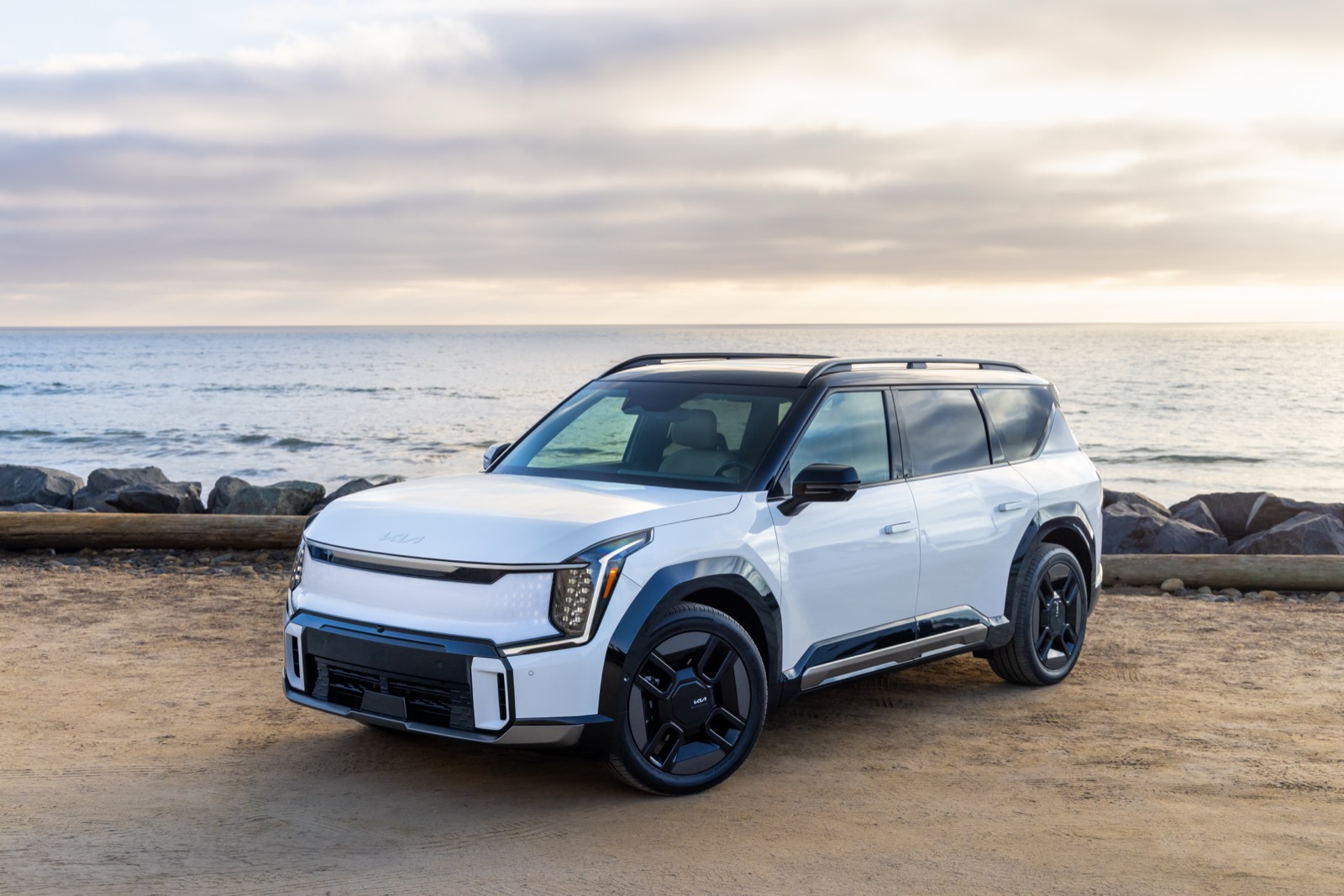
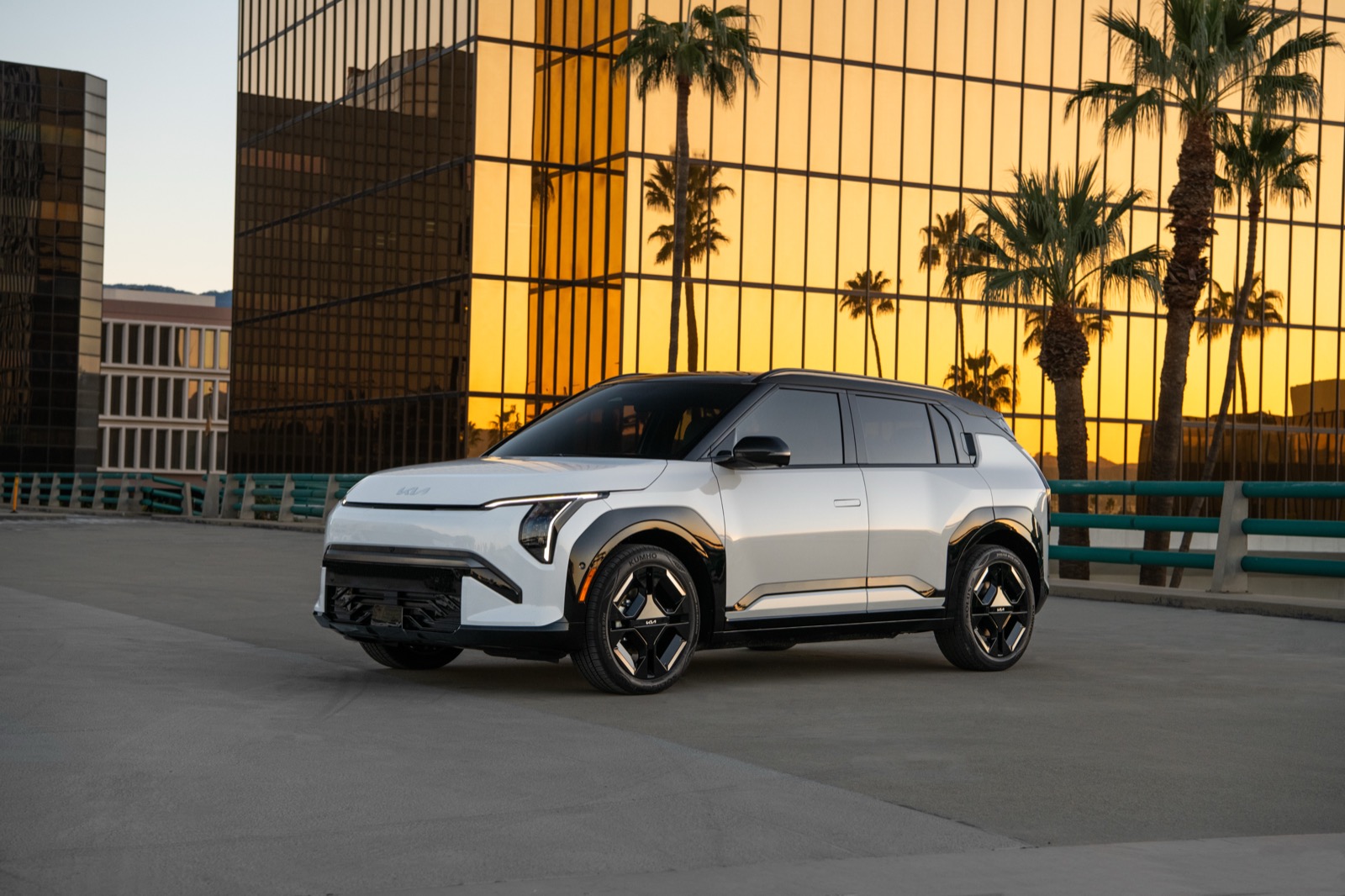
Kia EV9
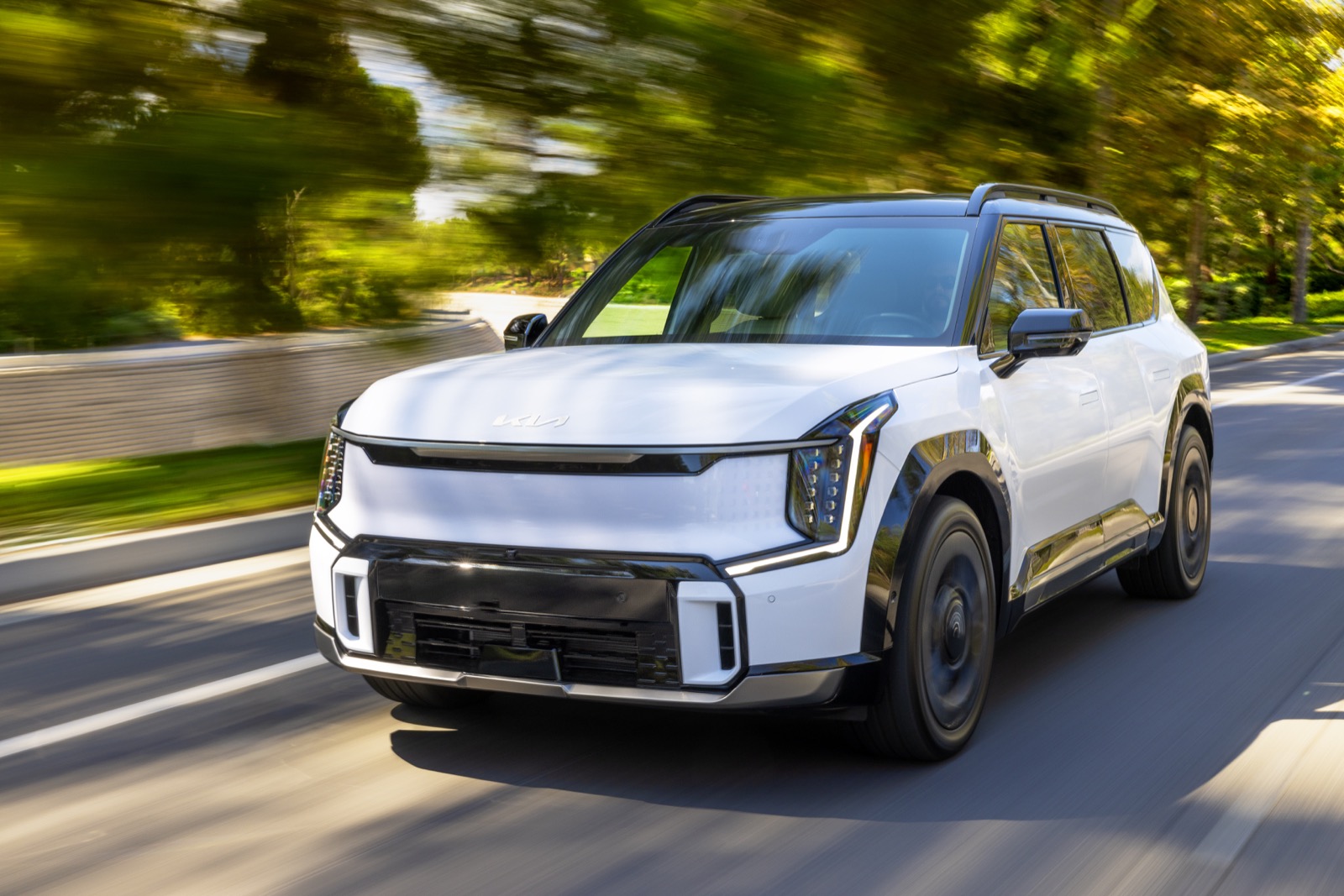
Cheaper than the IONIQ 9 at both ends of the lineup, with a Terrain Mode drive system standard on every AWD trim.
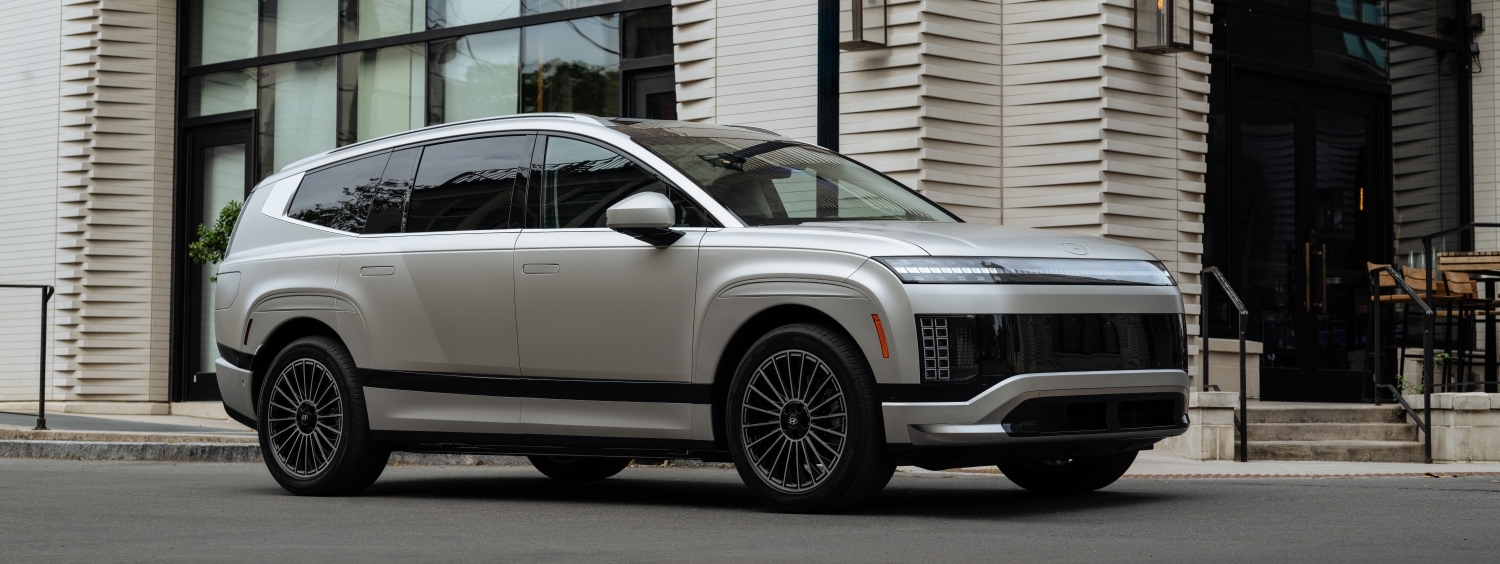
Hyundai IONIQ 9
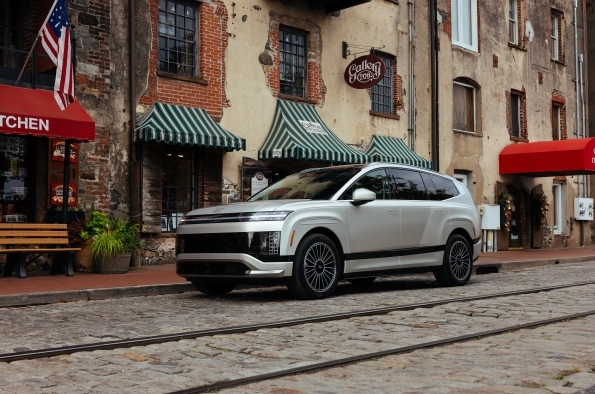
Bigger 110.3 kWh battery, longer range, more horsepower up top — and V2L power-out built in. Costs more.
Kia EV3
Not a rival to the other two — a smaller SUV that starts under $30k and still hits 321 miles of range.
The state of Korean EVs, right now
Kia and Hyundai share a parent company, a lot of engineering, and the E-GMP/eM platform underpinnings — but they're not building one lineup. They're building several, aimed at very different budgets and buyers.
In 2026 and into 2027, that lineup looks like this: at the top, two genuinely competitive full-size three-row electric SUVs — the Kia EV9 and the Hyundai IONIQ 9 — built for families who'd otherwise be shopping a three-row gas SUV or a Tesla Model X. At the bottom, the Kia EV3, a compact SUV that starts under $30,000 and exists to answer a completely different question: how cheap can a genuinely good, genuinely long-range Korean EV get? These aren't three trims of one car. They're a snapshot of a company (well, two companies) throwing real engineering at every price point at once. This piece treats them that way — a head-to-head between the EV9 and IONIQ 9, since they actually cross-shop, and a standalone look at the EV3, since it doesn't.
EV9 vs. IONIQ 9: the real fight
Both full-size, three-row, U.S.-market electric SUVs. Same job, same rough price band, different priorities — and the numbers don't split the way you'd guess at a glance.
| Comparable spec | Kia EV9 | Hyundai IONIQ 9 |
|---|---|---|
| Price range | $54,900 – $71,900 cheaper top & bottom | $58,955 – $76,490 |
| Battery | 76.1 kWh (Light) or 99.8 kWh (LR & up) | 110.3 kWh largest battery |
| Max EPA range | 305 mi (Light LR, RWD) | 335 mi (S, RWD) longest range |
| Peak horsepower | 379 hp (Wind/Land/GT-Line, AWD) | Up to 422 hp (Performance AWD) most power |
| Quickest 0–60 | 5.0 s (Wind/Land w/ Force-on-Demand, or GT-Line) | ~4.9 s (Performance AWD) |
| DC fast charge, 10–80% | 20–24 min on a 350kW charger | ~24 min on a 350kW charger |
| Seating | 6 or 7 passenger | 6 or 7 passenger |
| Signature feature | Terrain Mode (Snow/Mud/Sand) standard on all AWD trims | Vehicle-to-Load (V2L) power-out standard |
Prices exclude destination ($1,645 EV9 / not broken out identically for IONIQ 9 on every trim). EV9 has five ordered trims (Light, Light LR, Wind, Land, GT-Line); IONIQ 9 has six (S, SE, SEL, Performance Limited, Performance Calligraphy, Performance Calligraphy Design). Figures are the manufacturers' own U.S. numbers as published, checked August 2026. Full source list at the bottom.
Doing the actual math on price vs. range
It's tempting to eyeball "cheaper" and "longer range" as a simple tradeoff. It isn't quite that clean — here's where each car actually wins.
At the entry end, the EV9 Light starts at $54,900 against the IONIQ 9 S at $58,955 — the Kia is about $4,000 cheaper to get into. At the top of each lineup, the gap is bigger: EV9 GT-Line tops out at $71,900, while the IONIQ 9 Performance Calligraphy Design reaches $76,490, a roughly $4,600 spread. So the EV9 is the cheaper car at both ends of its own range — that part is simple. Range tells a different story: the IONIQ 9's 110.3 kWh battery is meaningfully larger than the EV9's 99.8 kWh pack, and it shows up on the window sticker — 335 miles for the base rear-drive IONIQ 9 S versus the EV9's best case of 305 miles on the Light LR. Once you add all-wheel drive, both cars land in a similar 280–320 mile band. The honest read: Kia is cheaper across the board, Hyundai goes further on a full charge and hits harder in its top trims. Neither claim cancels the other out.
Kia EV9: the value 3-row
Six trims, RWD or AWD, and the widest price spread of any Korean 3-row EV on sale.
Exterior, trims & drivetrain
Lineup & pricing
Five trims from Light ($54,900) to GT-Line ($71,900), plus a Light LR step at $57,900 that trades the base 76.1 kWh pack for the bigger 99.8 kWh one while staying rear-drive. Wind ($63,900) and Land ($68,900) sit in between, both all-wheel drive.
Power & range by trim
Light and Light LR make 201–215 hp on RWD with 258 lb-ft; Wind, Land and GT-Line jump to 379 hp and 443–516 lb-ft (torque varies with the Force-on-Demand drive mode) on AWD. Range spans 230 miles (base Light) to 305 miles (Light LR) down to roughly 280–283 miles once you add AWD.
Cargo & seating
20.2 cu ft behind the third row, 43.5 with it folded, 81.7 with the second row down too — plus a small frunk (1.8–3.2 cu ft depending on drivetrain). Configurable as a 6- or 7-seater.
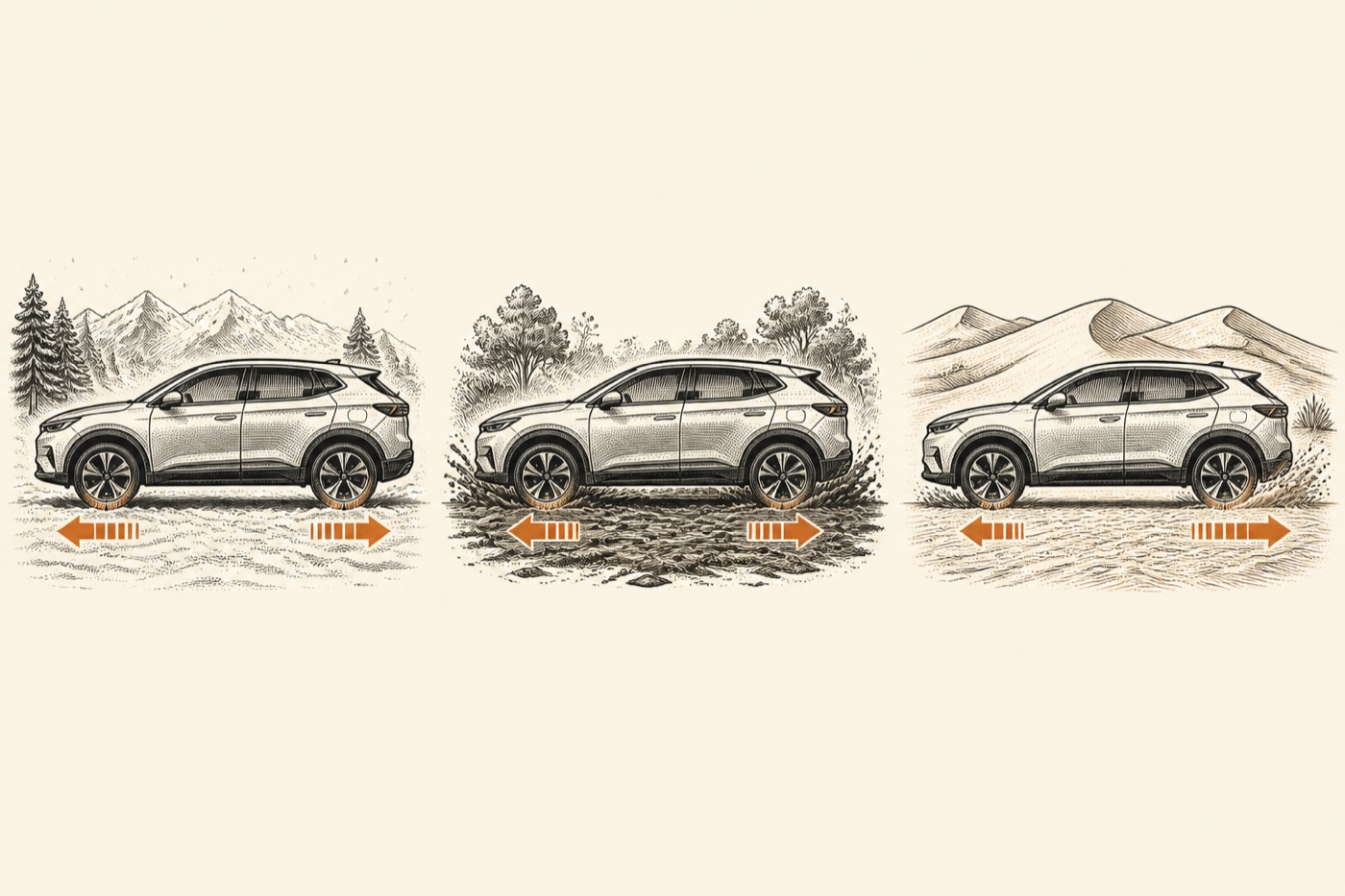
The feature worth knowing about: every AWD EV9 trim comes standard with Terrain Mode, a Snow/Mud/Sand drive-mode selector that replaces the old 4WD lockup system entirely. Pick a surface and the EV9 redistributes torque between the front and rear motors to match it — no separate low-range gearing, no manual locking, just a dial. It's the kind of feature that used to be reserved for gas SUVs with a transfer case, standard on a mainstream-priced electric three-row.
Hyundai IONIQ 9: the longer-range Hyundai
Six trims, one big 110.3 kWh battery across the whole lineup, and the most power of the two full-size Korean EVs.
Exterior, trims & drivetrain
Lineup & pricing
Six trims from S RWD ($58,955) up through SE AWD, SEL AWD, Performance Limited AWD, Performance Calligraphy AWD and Performance Calligraphy Design AWD at the top ($76,490). Every trim shares the same 110.3 kWh battery.
Power & range by trim
The S is a single-motor RWD car at 215 hp and a 9.4-second 0–60. Step up to SE/SEL's "Long-Range AWD" and you get roughly 316 combined hp and a 6.4-second 0–60. The Performance AWD trims (Limited, Calligraphy, Calligraphy Design) reach up to 422 hp and roughly 4.9 seconds. Range runs 335 miles on the RWD S down to 311–320 miles once AWD is added.
Charging & seating
10–80% DC fast charge in about 24 minutes on a 350kW charger. Configurable as a 6- or 7-seater, same as the EV9.
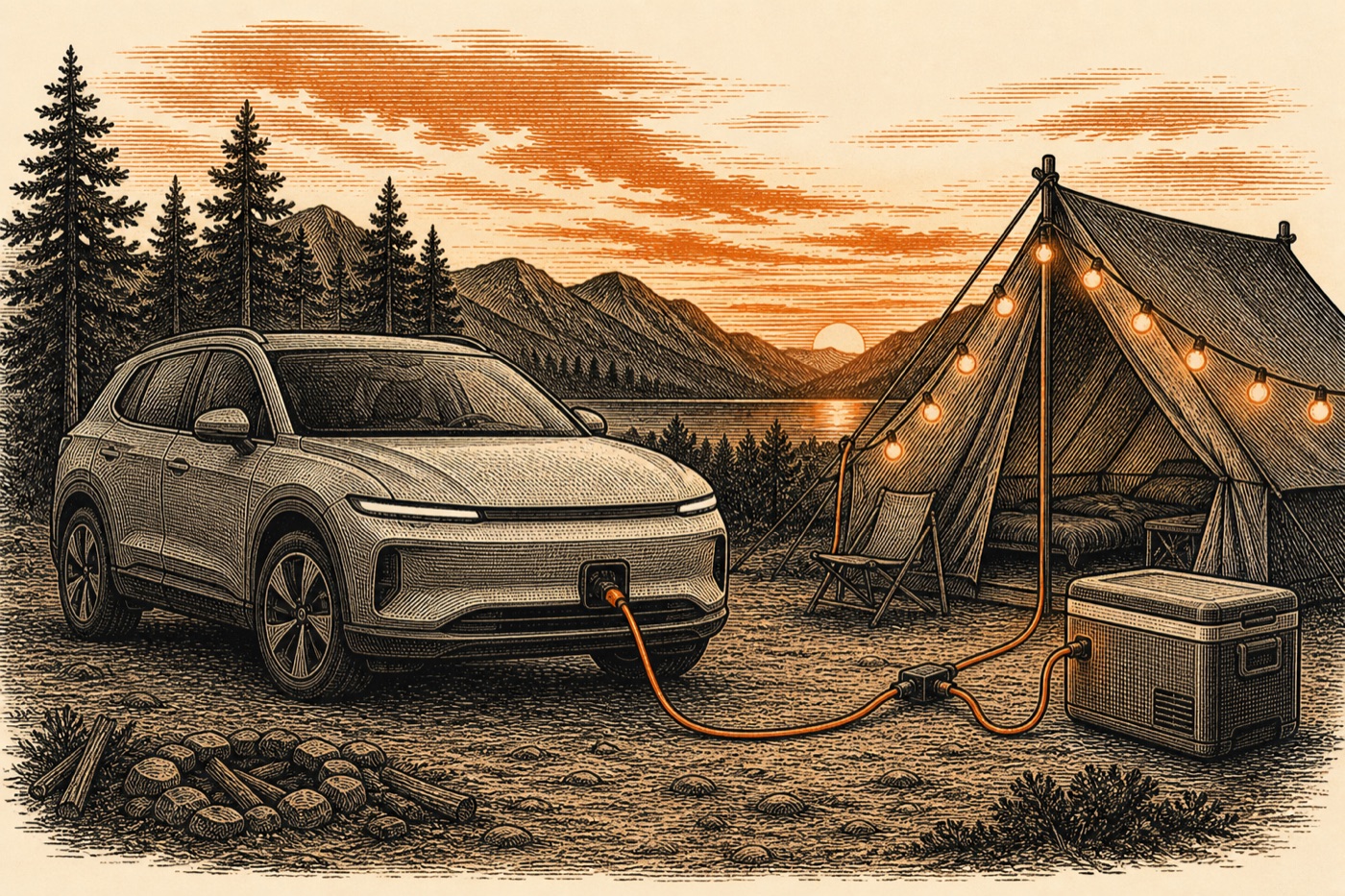
The feature worth knowing about: every IONIQ 9 comes with Vehicle-to-Load, which lets the car discharge power from its own battery to run external devices — a coffee maker at a campsite, a fridge during an outage, tools at a job site — through onboard outlets. It's not unique to Hyundai's EVs generally, but paired with the IONIQ 9's largest-in-class 110.3 kWh battery, it turns the car into a genuinely useful backup power source, not just a talking point.
Kia EV3: not the same fight
A smaller, cheaper, different car — and worth covering on its own terms rather than squeezed into the table above.
Exterior, trims & drivetrain
Lineup & pricing
Seven trims starting at $29,890 plus $1,495 destination. Light lists at $31,385, Wind FWD at $36,485, Wind AWD at $39,985, and GT AWD tops the range at $47,395 — the whole lineup undercuts even the cheapest EV9 or IONIQ 9 trim.
Power & range by trim
Light runs a 58.3 kWh battery for 221 miles and 201 hp. Every other trim steps up to an 81.4 kWh pack. Wind FWD is the range champion of the whole lineup at 321 miles; Wind AWD and GT AWD trade some of that range (280 miles each) for 261–288 hp and 0–60 times of 6.3 and 5.4 seconds respectively.
Charging
350kW DC fast-charge capable with a native NACS (Tesla-style) plug — no adapter needed — and a 10–80% charge time of about 29 minutes, competitive with cars costing twice as much.
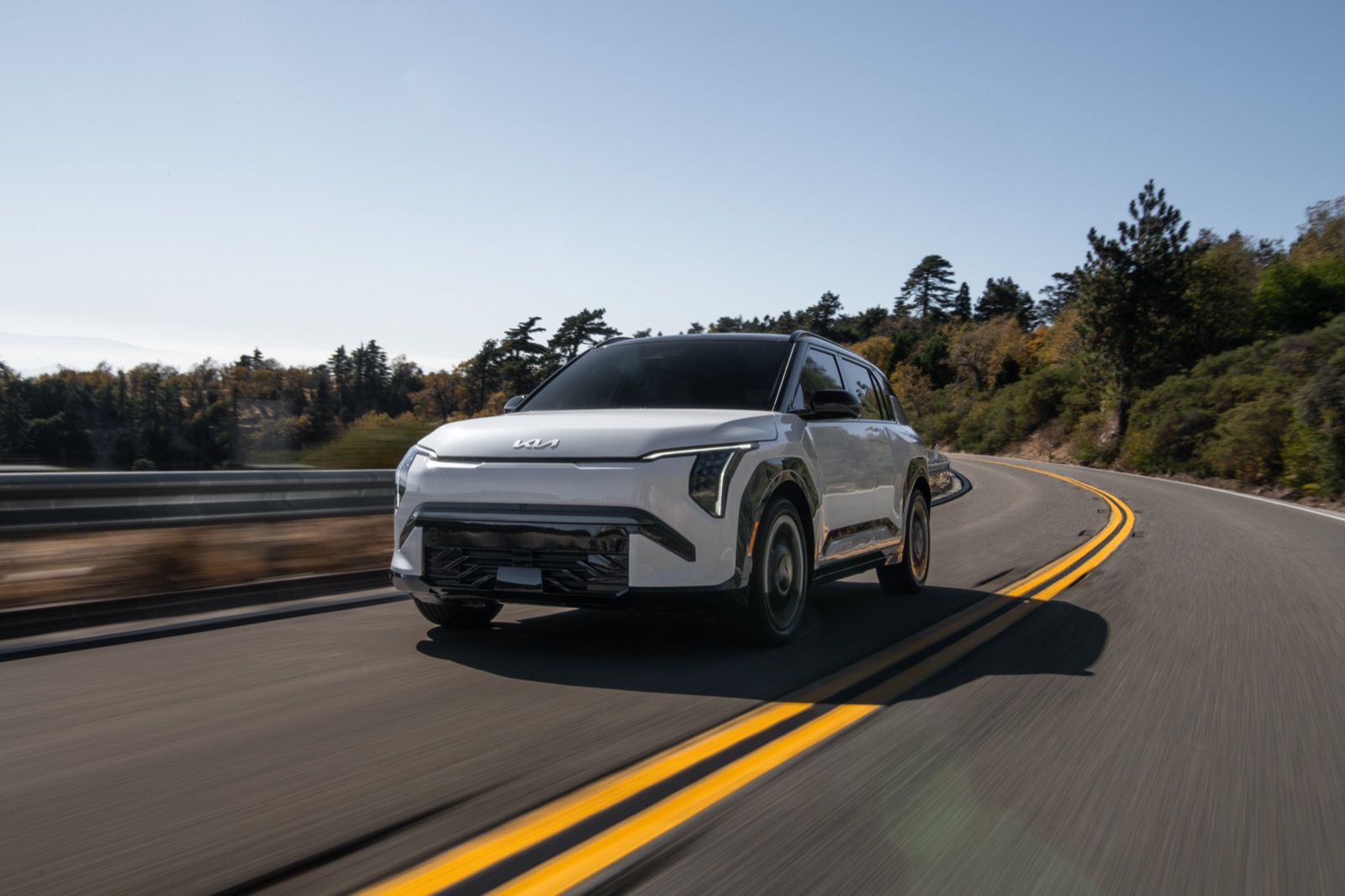
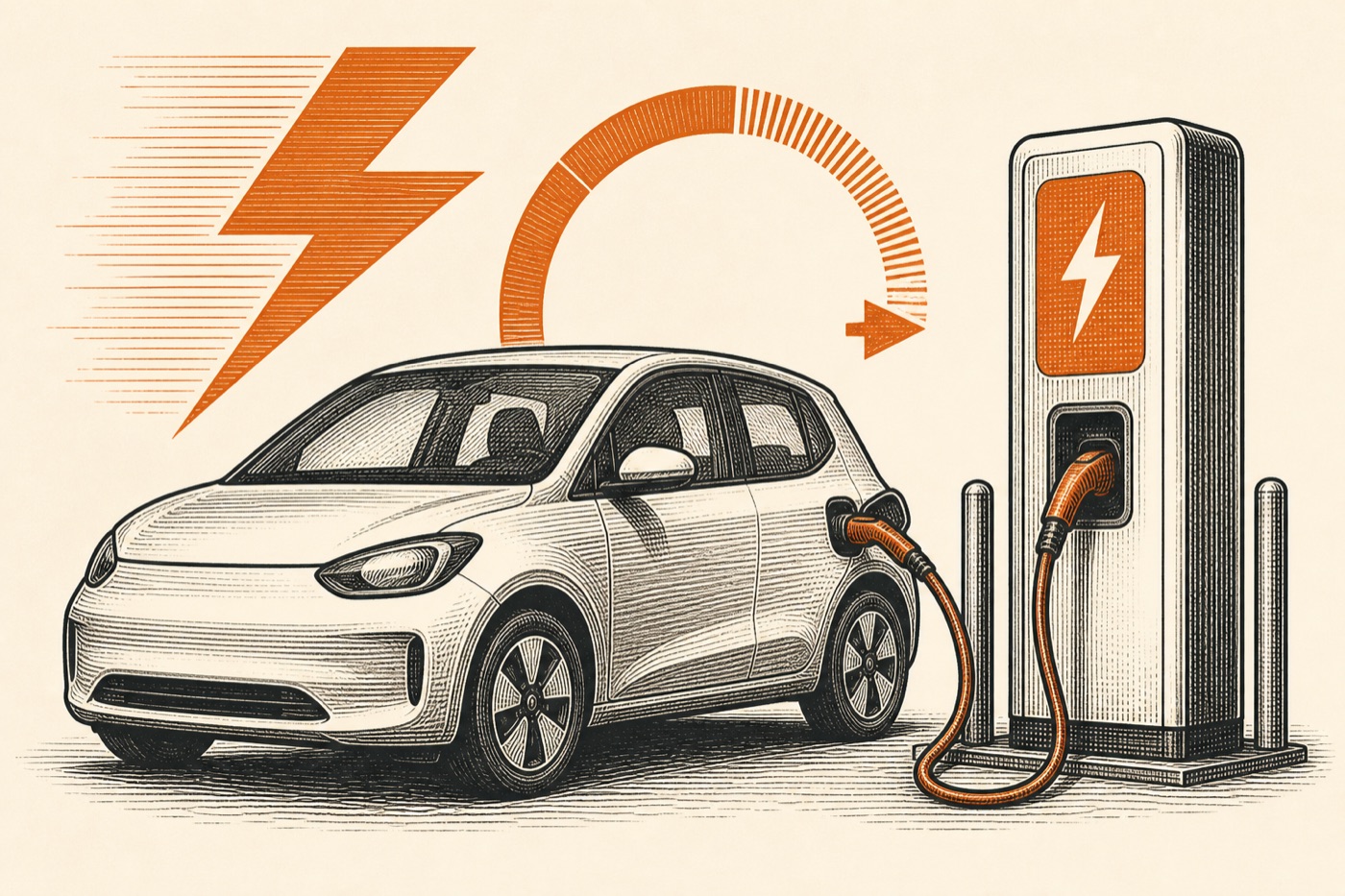
The feature worth knowing about: the EV3 Wind FWD is the cheapest way into a genuinely long-range (321-mile) Kia EV, and it does it with a native NACS plug and 350kW-capable charging that beats the charge speed of cars costing twice as much. There's no adapter to lose or buy separately — it plugs straight into the Tesla Supercharger network in the U.S. That combination of price, range and charging access is the real story of the EV3, more than any single spec number.
Who each one is actually for
Not a ranking — three different answers to three different questions.
If you want the cheaper 3-row Kia…
Lower price at every comparable trim, standard Terrain Mode, and Kia's familiar three-row layout — and you can accept slightly less range and less peak power than the IONIQ 9.
If range and power matter more than price…
The largest battery, the longest range, the most horsepower, and built-in V2L power-out — and you can accept paying roughly $4,000–4,600 more than the equivalent EV9.
If you don't need three rows…
The cheapest real path into a 300+ mile Korean EV, with native NACS fast charging — and you can accept a smaller, single-row-of-second-seats footprint instead of a full 3-row SUV.
No single winner
The verdict
There isn't one "best Korean EV" here, and forcing one would be dishonest to what these cars actually are. The EV9 and IONIQ 9 are the real head-to-head: pick the EV9 if price matters more than the last 30 miles of range, and pick the IONIQ 9 if you want the bigger battery, more power, and V2L, and don't mind paying a few thousand dollars more for it. The EV3 isn't competing with either — it's the answer for buyers who want a real, long-range Korean EV without spending three-row money, and at $29,890 to start with 321 miles of range on the right trim, it's arguably the most impressive value of the three.
Methodology & sources
This is a researched lineup report, not a first-hand road test. DopamineKart has not driven these three vehicles. Every specification — pricing, battery size, range, horsepower, 0–60 times, cargo volume, charging speed — is sourced directly to Kia America's or Hyundai's own published U.S. figures, current as of August 2026. Prices are MSRP and exclude destination charges except where noted; both automakers can and do adjust trims, pricing and availability during a model year. This report deliberately does not name a single "winner" across all three vehicles, because the EV9/IONIQ 9 pairing and the EV3 are not cross-shopped by the same buyer. Corrections: email us.
Primary specifications & pricing
- Kia America Newsroom — EV9
- Kia USA — EV9
- Kia America Newsroom — EV3
- Kia USA — EV3
- Hyundai Newsroom — IONIQ 9
- Hyundai USA — IONIQ 9
Independent reference
DopamineKart has not conducted a hands-on test drive of any vehicle covered here; this article is a research-based breakdown, not a road test.
Affiliate disclosure. This report contains no product or affiliate links and no "buy" buttons — it's editorial only. All figures are the manufacturers' own published numbers as of August 2026 and may change with trim updates, model-year rollover, or final certification. Press photographs are used with their required credit (Kia America, Hyundai Motor America) for editorial purposes; DopamineKart did not photograph these vehicles. The three illustration images accompanying the feature callouts are AI-generated and clearly labeled as such — they depict general concepts (terrain drive modes, Vehicle-to-Load, DC fast charging) and are not photographs of any real EV9, IONIQ 9, or EV3.